Nevada Instructions to the Sheriff
What this document covers
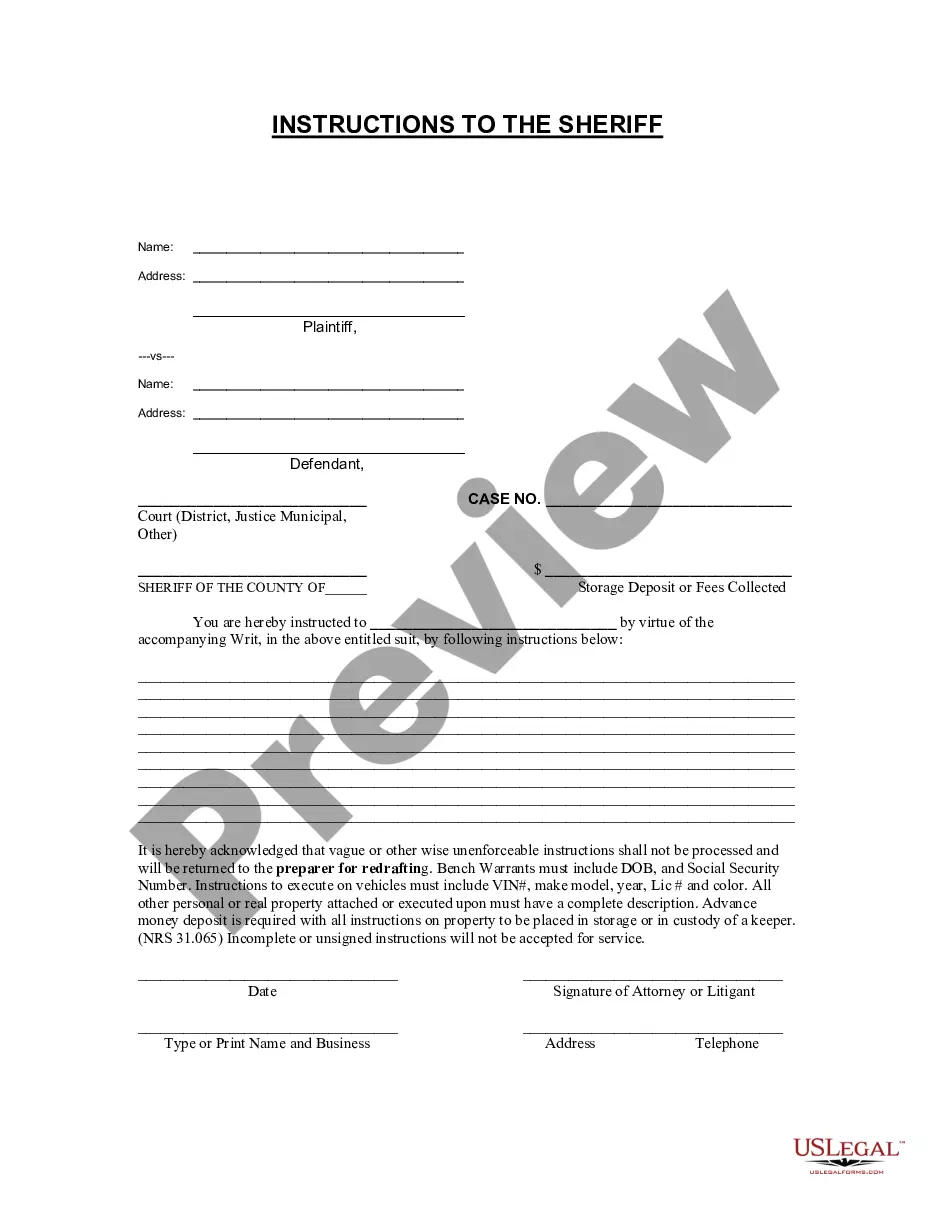
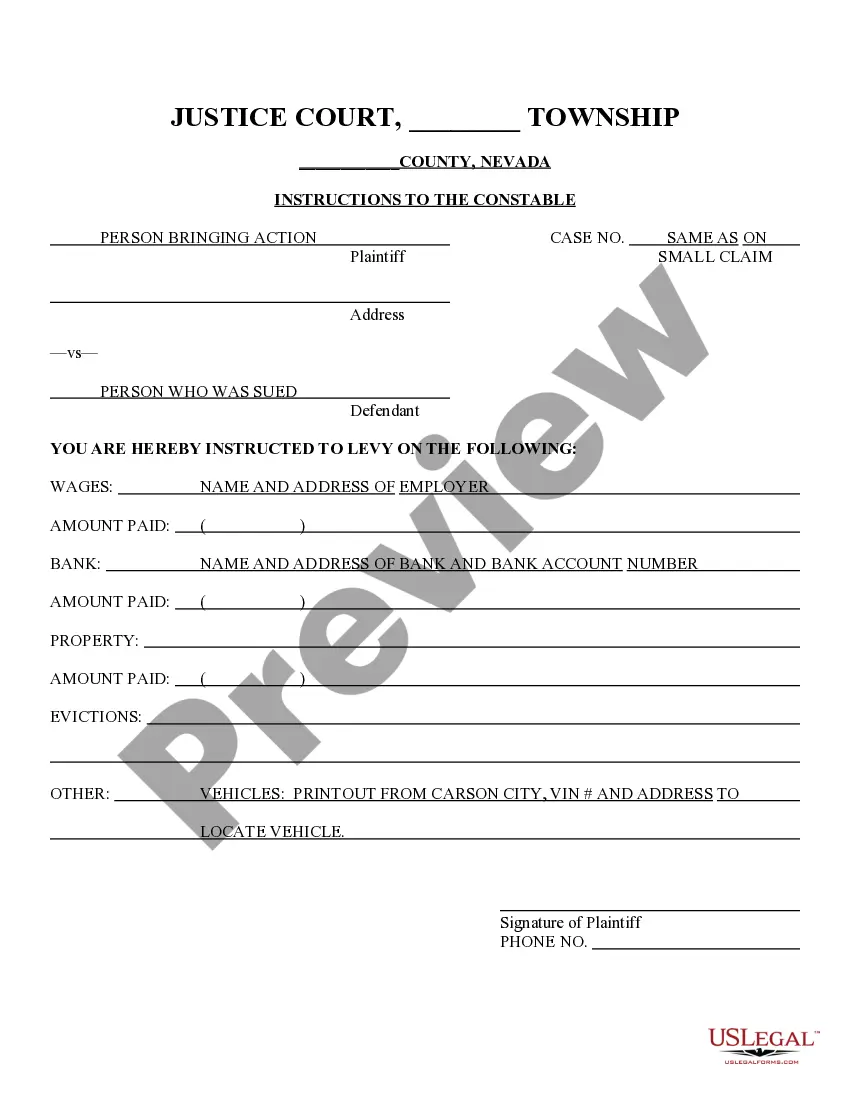
The Instructions to the Sheriff form is a legal document used in Nevada small claims court proceedings. This form provides detailed instructions to a sheriff regarding the execution of a court order, such as serving a writ or seizing property. It is distinct from other forms as it allows the user to specify particular actions and descriptions necessary for effective enforcement of a court judgment.
Key components of this form
- Names and addresses of the plaintiff and defendant.
- Case number and court information.
- Specific instructions for the sheriff, including actions to be taken and descriptions of property.
- Acknowledgment regarding vague instructions that may be returned for clarification.
- Signature and contact information of the attorney or litigant.
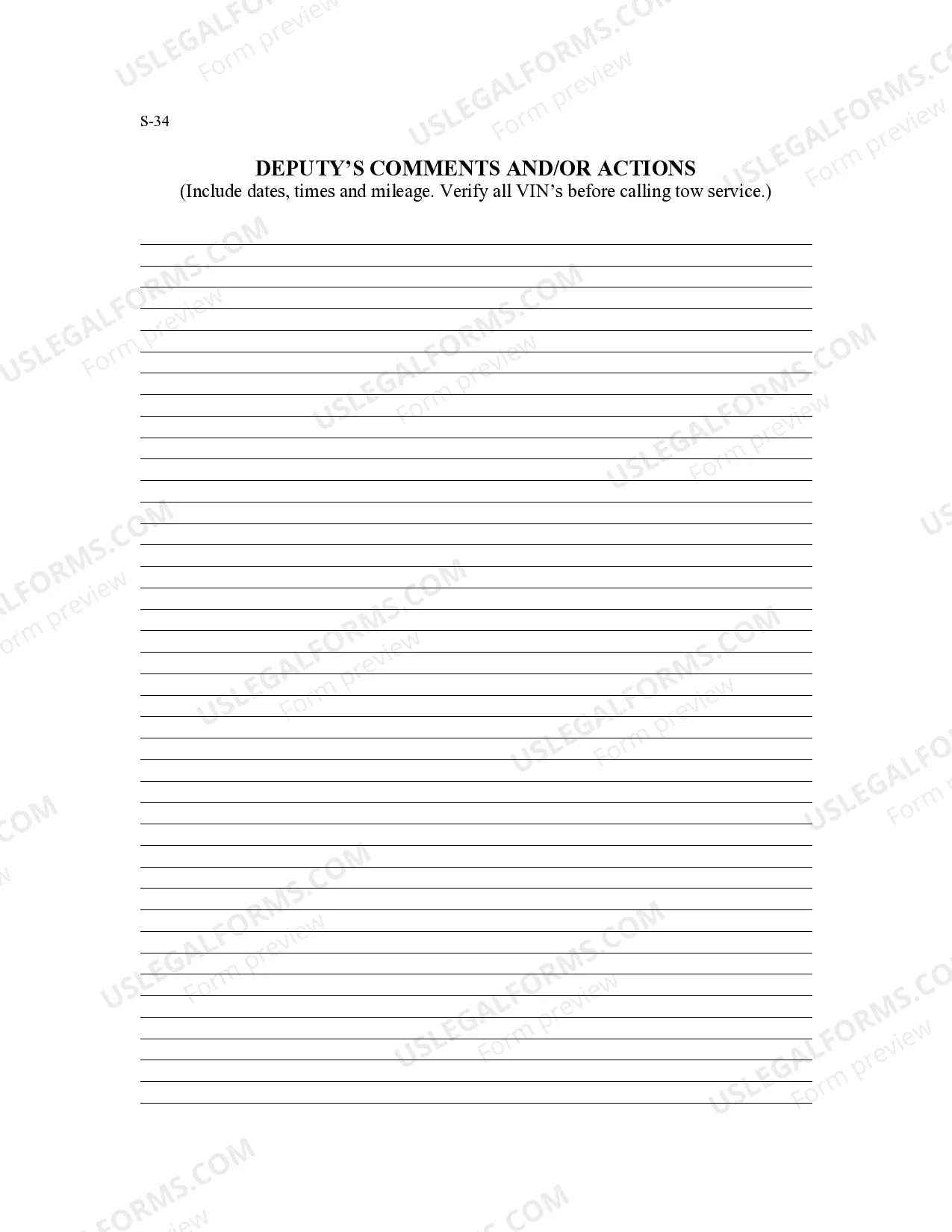
- Section for deputyâs comments or actions including dates, times, and mileage.
Situations where this form applies
This form is used when a court has issued a writ, and the plaintiff needs the sheriff to enforce this order, such as by seizing property or executing a judgment. You would typically require this form in situations involving collections of unpaid debts or repossession of property after obtaining a court order.
Who this form is for
- Individuals or businesses who have obtained a judgment in small claims court.
- Attorneys representing clients in enforcement actions.
- Litigants who need to obtain a writ for property recovery or service of legal documents.
How to prepare this document
- Identify the parties involved by filling in the names and addresses of both the plaintiff and defendant.
- Enter the case number and specify the court where the case is filed.
- Clearly outline the instructions for the sheriff, including detailed descriptions for any property involved.
- Complete the signature section by signing and dating the form, adding your printed name and contact details.
- Make any necessary notes in the deputy's comments section regarding specific actions to be taken.
Does this form need to be notarized?
This form does not typically require notarization unless specified by local law. Be sure to check local requirements to ensure compliance.
Get your form ready online
Our built-in tools help you complete, sign, share, and store your documents in one place.
Make edits, fill in missing information, and update formatting in US Legal Forms—just like you would in MS Word.
Download a copy, print it, send it by email, or mail it via USPS—whatever works best for your next step.
Sign and collect signatures with our SignNow integration. Send to multiple recipients, set reminders, and more. Go Premium to unlock E-Sign.
If this form requires notarization, complete it online through a secure video call—no need to meet a notary in person or wait for an appointment.
We protect your documents and personal data by following strict security and privacy standards.

Make edits, fill in missing information, and update formatting in US Legal Forms—just like you would in MS Word.

Download a copy, print it, send it by email, or mail it via USPS—whatever works best for your next step.

Sign and collect signatures with our SignNow integration. Send to multiple recipients, set reminders, and more. Go Premium to unlock E-Sign.

If this form requires notarization, complete it online through a secure video call—no need to meet a notary in person or wait for an appointment.

We protect your documents and personal data by following strict security and privacy standards.
Mistakes to watch out for
- Leaving sections incomplete or blank.
- Providing vague instructions that may not be enforceable.
- Failing to include all required details about property, such as VIN for vehicles.
- Not signing or dating the form, leading to rejection by the sheriff.
Benefits of using this form online
- Immediate access allows for quick completion without needing to visit a physical office.
- Editability ensures that you can make adjustments specific to your situation.
- Reliability of using templates drafted by licensed attorneys, enhancing legal compliance.
Key takeaways
- The Instructions to the Sheriff form is essential for enforcing court orders in small claims cases.
- Accurate and detailed instructions are vital to avoid delays or rejection of the form.
- Prepare all necessary information thoroughly for smooth processing by the sheriff.
Looking for another form?
Form popularity
FAQ
If your dispute is for slightly more than the limit, it may still be worth it to file a small claims suit.You won't be able to sue for the full amount, but you'll avoid the expense of a regular lawsuit. The small claims filing fee varies from state to state.
You can file an answer or a general denial. Filing an answer. You can file a motion In certain situations, you can respond to the lawsuit by filing a motion (a request) that usually tells the court that the plaintiff made a mistake in the lawsuit. Talk to a lawyer!
There is a filing fee that must be paid when the form is filed with the Court. The fee is $53 for claims of $2,500 or less, and $95 for claims between $2,500 and $10,000.
200b200b200b200bthe defendant's name. the correct street address for the defendant (not a post office box) dates and events for your claim. the details of what you are claiming including the amount of money claimed.
If you do not agree with all or some of the Plaintiff's claims you need to fill out a court form called a Defence. You can get the Defence form from a local court registry or from the Lawlink website. You must file the Defence with the court within 28 days of being served with the Statement of Claim.
How Much Does A Criminal Defense Lawyer Cost? The average cost of a criminal defense lawyer is $8,000 with average prices ranging from $1,000 $15,000 in the US for 2020 according to LegalMatch 1.
Prepare your case in writing before your court date. Come into court in neat, clean clothes; always be respectful to the judge and call him "Your Honor." Be prepared to tell the judge why you should win. The plaintiff will have already told his or her story. USE YOUR RIGHT OF CROSS-EXAMINATION.
To recover a security deposit. To recover unpaid rent after a tenant vacates a property. To recover for medical bills after an injury accident. To recover money spent to repair or replace damaged or destroyed personal property. To recover a relatively small, unpaid debt.