New Mexico Protecting Minors from Identity Theft Package
Understanding this form package
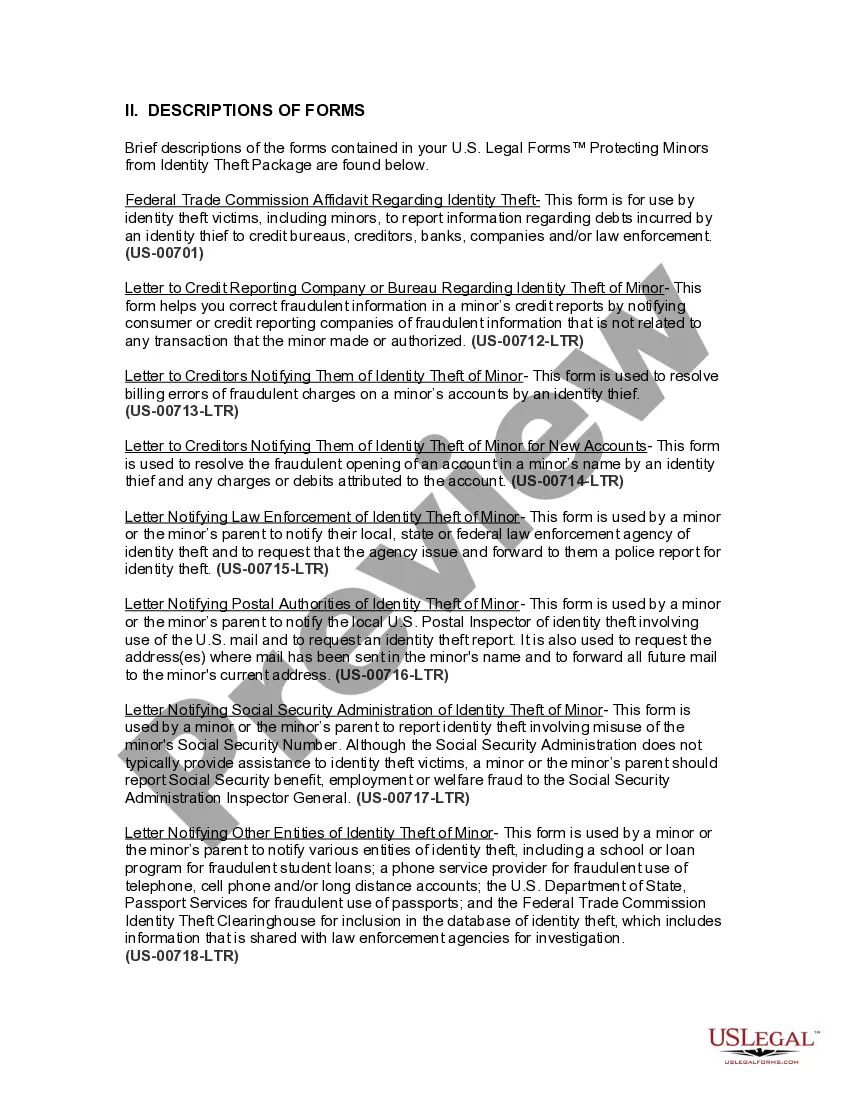
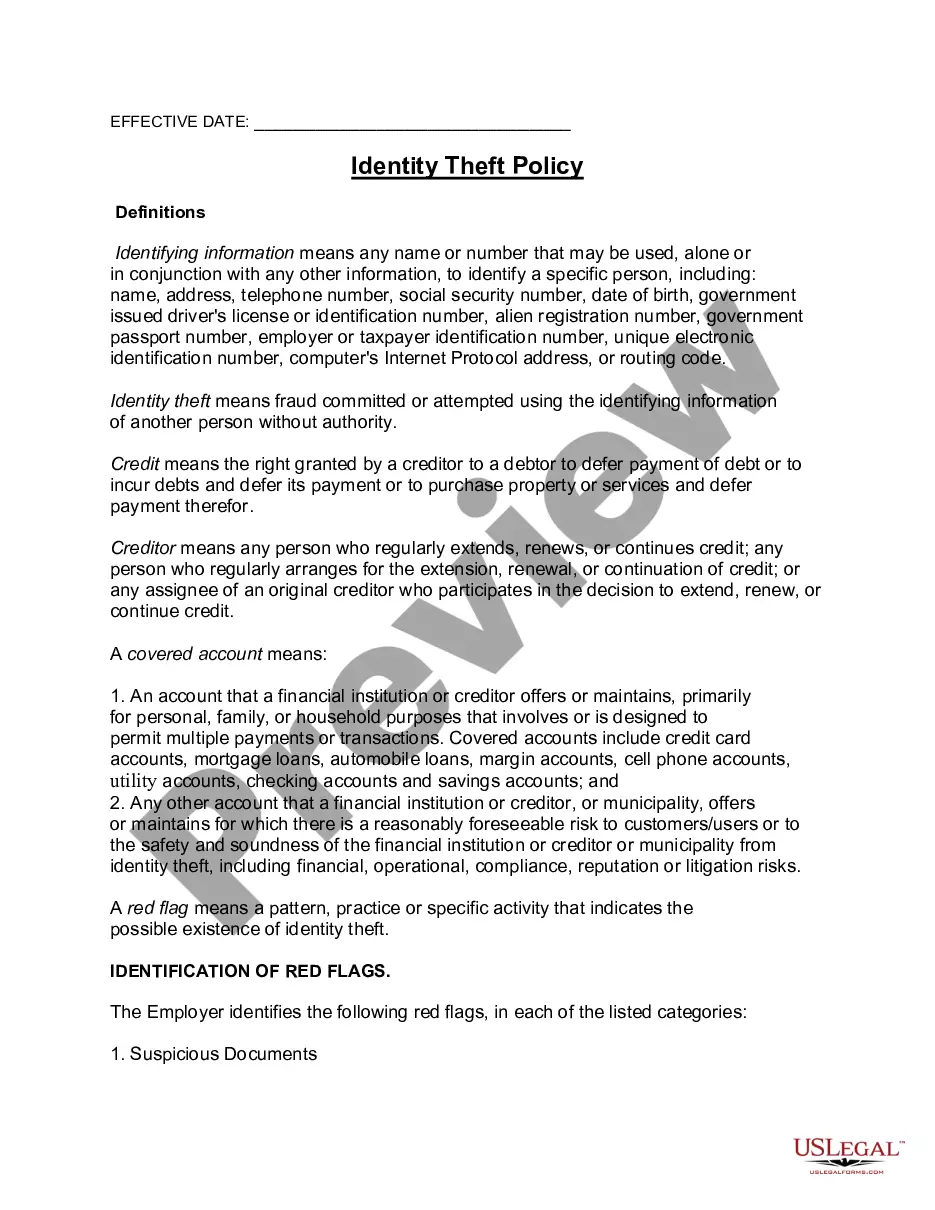
The New Mexico Protecting Minors from Identity Theft Package is a comprehensive set of legal forms designed to help minors and their parents manage situations related to lost or stolen identification. This package provides vital documentation to deal with identity theft, specifically protecting minors from the subsequent complications such as fraudulent financial activities and misuse of benefits. Unlike generic identity theft forms, this package is tailored to address the unique challenges faced by minors and their families in New Mexico, ensuring that all necessary procedures are covered to safeguard their financial integrity and opportunities.
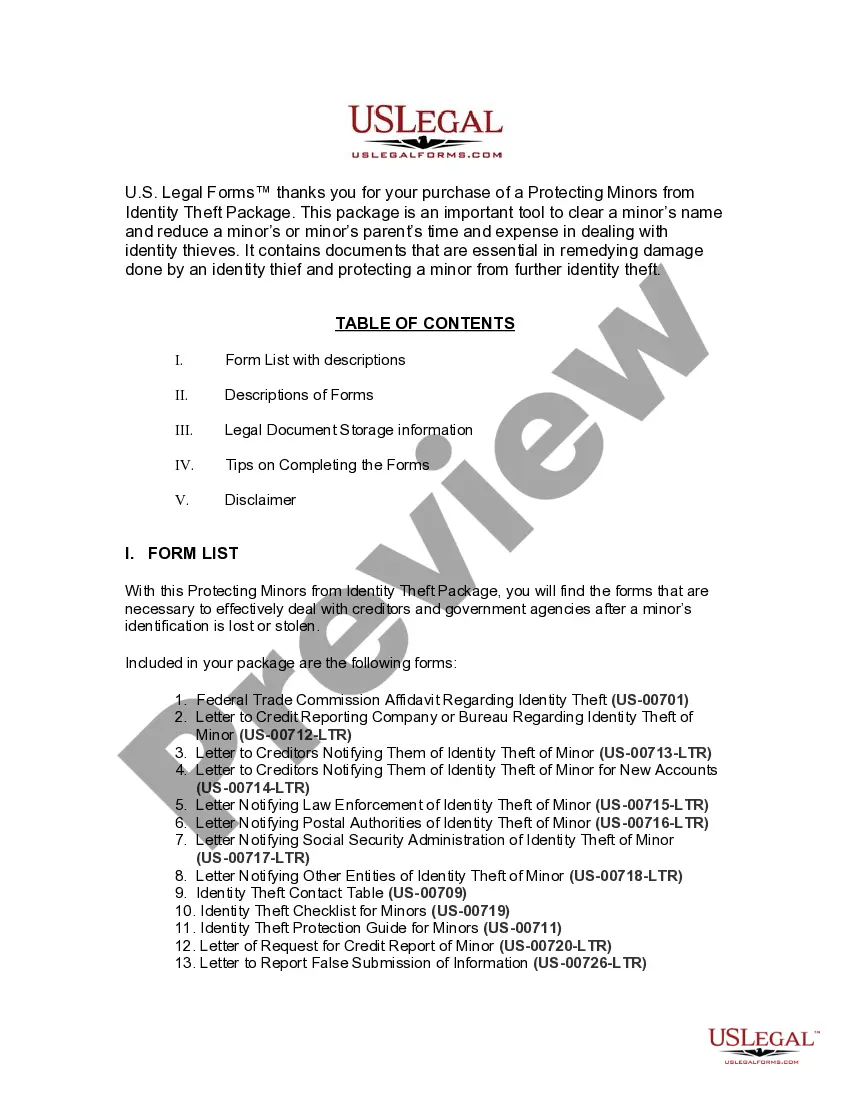
Documents contained in this package
- Federal Trade Commission Affidavit regarding Identity Theft
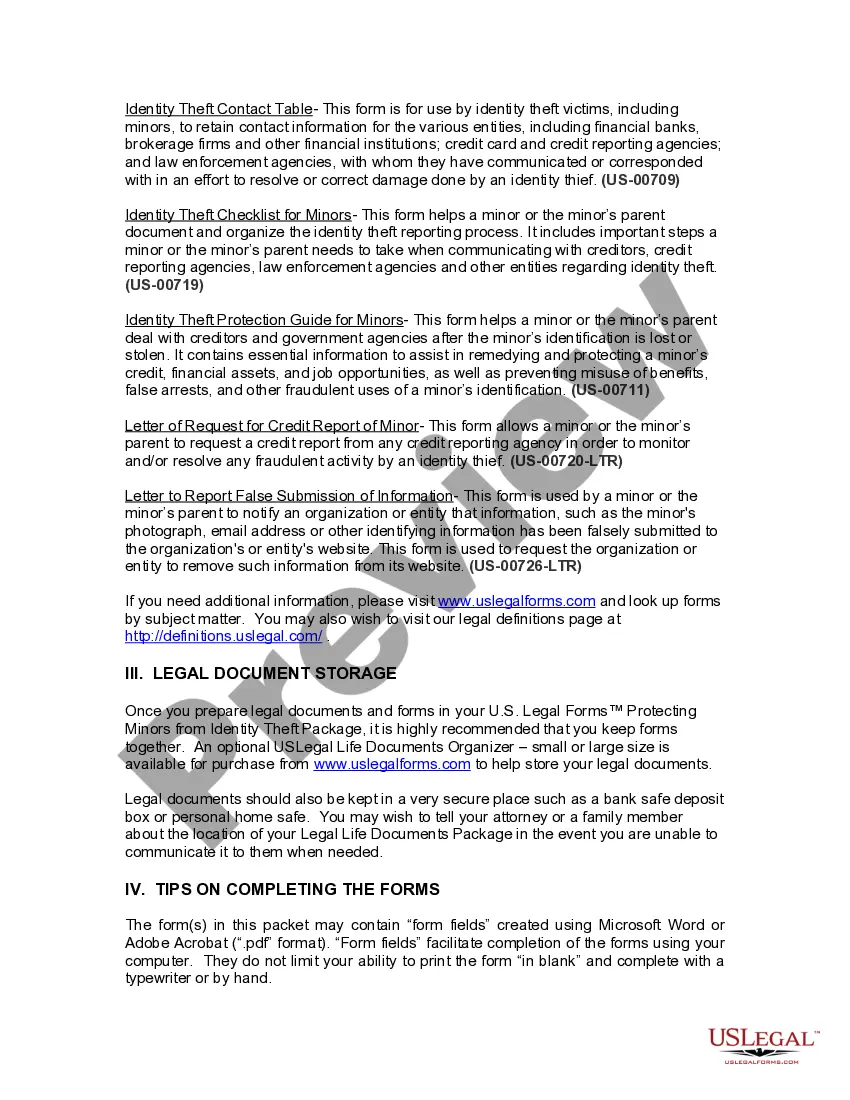
- Identity Theft Contact Table
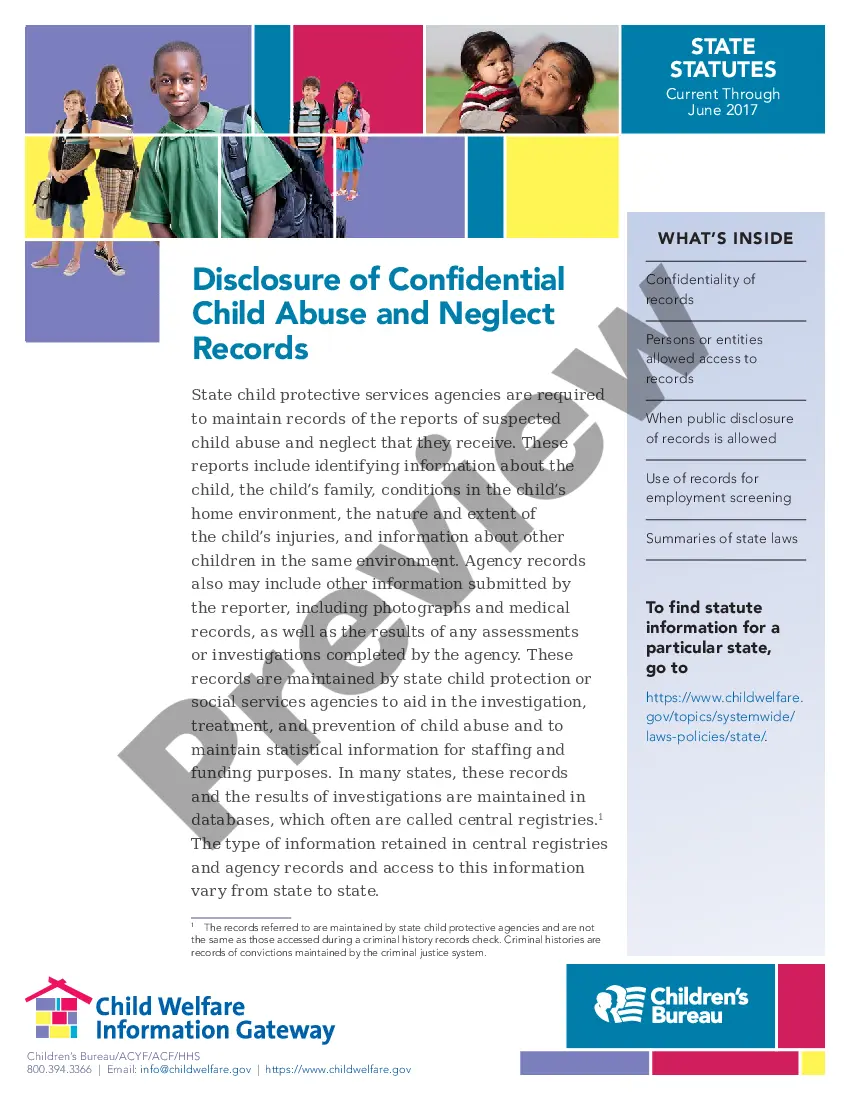
- Guide for Protecting Minors from Identity Theft
- Letter to Credit Reporting Company or Bureau Regarding Identity Theft of Minor
- Letter to Creditors Notifying Them of Identity Theft of Minor
- Letter to Creditors Notifying Them of Identity Theft of Minor for New Accounts
- Letter Notifying Law Enforcement of Identity Theft of Minor
- Letter Notifying Postal Authorities of Identity Theft of Minor
- Letter Notifying Social Security Administration of Identity Theft of Minor
- Letter to Other Entities Notifying Them of Identity Theft of Minor
- Identity Theft Checklist for Minors
- Sample Letter for Request for Credit Report of a Minor
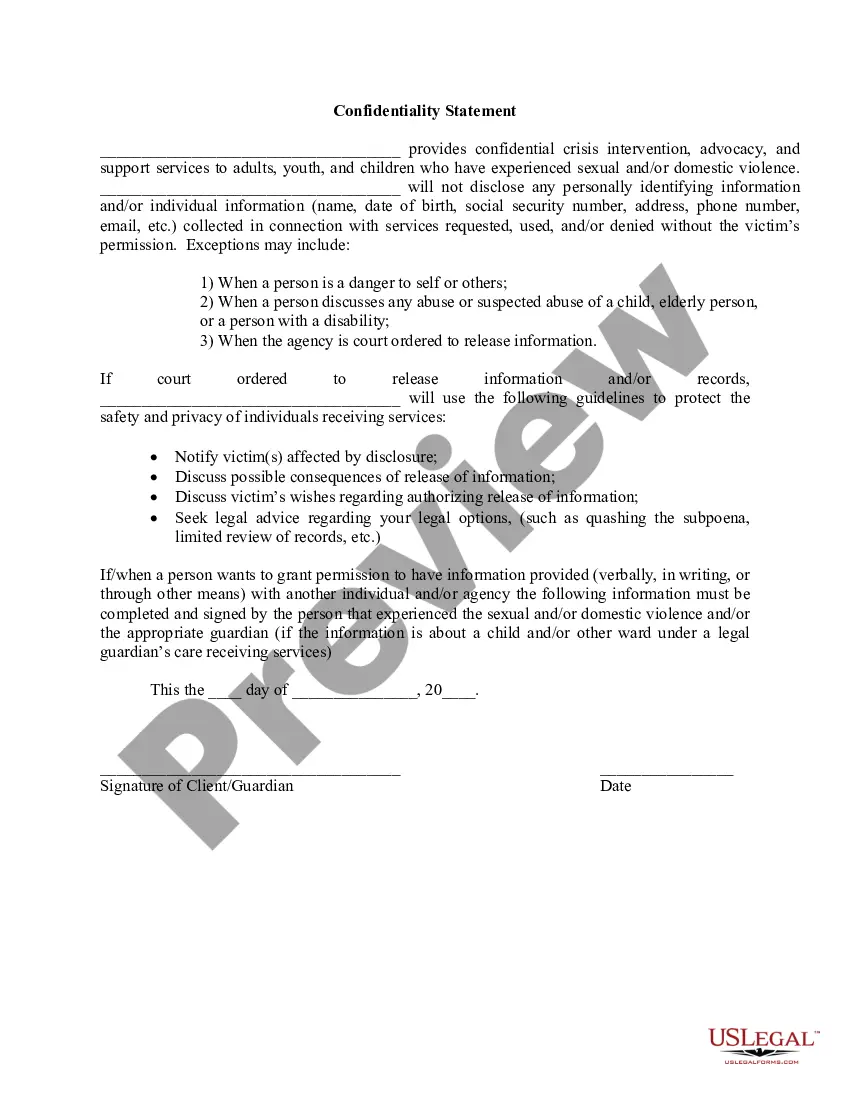
- Sample Letter to Report False Submission of Minor's Information

When to use this form package
This form package should be utilized in several situations, including:
- When a minor's identification is lost or stolen.
- When you suspect that your child's identity has been misused or compromised.
- When dealing with creditors or government agencies regarding fraudulent activity in a minor's name.
- When you need to clear a minor's name from fraudulent accounts or charges.
Who this form package is for
- Parents or guardians of minors whose identification has been lost or stolen.
- Minors who have experienced identity theft or believe their information has been compromised.
- Individuals seeking to protect a minor's financial well-being and future opportunities.
Completing these forms step by step
- Review the included forms to understand their purpose and contents.
- Identify your minor and gather relevant identification information.
- Complete each form accurately with the required details related to the identity theft incidents.
- Send the completed forms to the appropriate entities, as instructed in each form.
- Keep a record of all communications and submitted documents for future reference.
Notarization details for included forms
Forms in this package typically do not require notarization unless required by local law. However, it is advisable to check specific requirements based on the situation and jurisdiction to ensure compliance.
Get your form ready online
Our built-in tools help you complete, sign, share, and store your documents in one place.
Make edits, fill in missing information, and update formatting in US Legal Forms—just like you would in MS Word.
Download a copy, print it, send it by email, or mail it via USPS—whatever works best for your next step.
Sign and collect signatures with our SignNow integration. Send to multiple recipients, set reminders, and more. Go Premium to unlock E-Sign.
If this form requires notarization, complete it online through a secure video call—no need to meet a notary in person or wait for an appointment.
We protect your documents and personal data by following strict security and privacy standards.

Make edits, fill in missing information, and update formatting in US Legal Forms—just like you would in MS Word.

Download a copy, print it, send it by email, or mail it via USPS—whatever works best for your next step.

Sign and collect signatures with our SignNow integration. Send to multiple recipients, set reminders, and more. Go Premium to unlock E-Sign.

If this form requires notarization, complete it online through a secure video call—no need to meet a notary in person or wait for an appointment.

We protect your documents and personal data by following strict security and privacy standards.
Mistakes to watch out for
- Failing to notify all relevant entities about the identity theft.
- Not keeping copies of all submitted forms and correspondence.
- Errors in personal information, such as misspelled names or incorrect addresses.
- Delaying action after discovering identity theft, which might complicate recovery efforts.
Benefits of completing this package online
- Convenient access to legally vetted documents that save time and effort.
- Edit and personalize forms easily to suit specific needs.
- Reliable forms created by licensed attorneys who specialize in identity theft issues.
Main things to remember
- This form package addresses the unique needs of minors affected by identity theft.
- It includes essential forms for communicating with various agencies and creditors.
- Using this package can expedite the resolution of identity theft issues for minors.
Looking for another form?


Form popularity
FAQ
Now a child's number can more easily be used to establish a credit history. Minors are especially vulnerable because they are likely to have an unblemished credit history.In some cases, thieves get access to a child's stolen Social Security number.
First, you need to check with the Social Security Administration once a year to make sure no one is using your child's SSN. Secondly, you need to check your child's credit report (free Equifax -1-800-525-6285; Experian-1-888-397-3742; TransUnion-1-800-680-7289.)
File a Police a Report. Identity theft is a crime, and if a family member steals your identity, you are that crime's victim. Alert Credit Bureaus. Contact Creditors. Change Your Passwords. Consider Freezing Your Credit.
If your child is a victim of identity theft Contact the fraud departments of companies where accounts were opened in your child's name. Ask them to close the account and send you a letter of confirmation. You may need to provide a copy of your child's birth certificate and a police report.
Contact the Federal Trade Commission (FTC) to report the ID theft and get a recovery plan. Contact your local law enforcement and get a police report. Contact the fraud departments of companies where accounts were opened in your child's name.
Parents and legal guardians have unfettered access to their children's personal information. In many cases, a parent, a close relative, or a legal guardian might use the child's Social Security number to commandeer their identity (and clean credit history).
A conviction for an identity theft crime can result in time spent in jail or prison. In general, a conviction for a misdemeanor offense can lead to up to a year in jail, while felony sentences can result in several years or more in prison.
If someone steals your identity, you have the right to: create an FTC Identity Theft Report. place a one-year fraud alert on your credit report. place a seven-year extended fraud alert on your credit report.
No, you cannot stop someone from claiming a dependent.