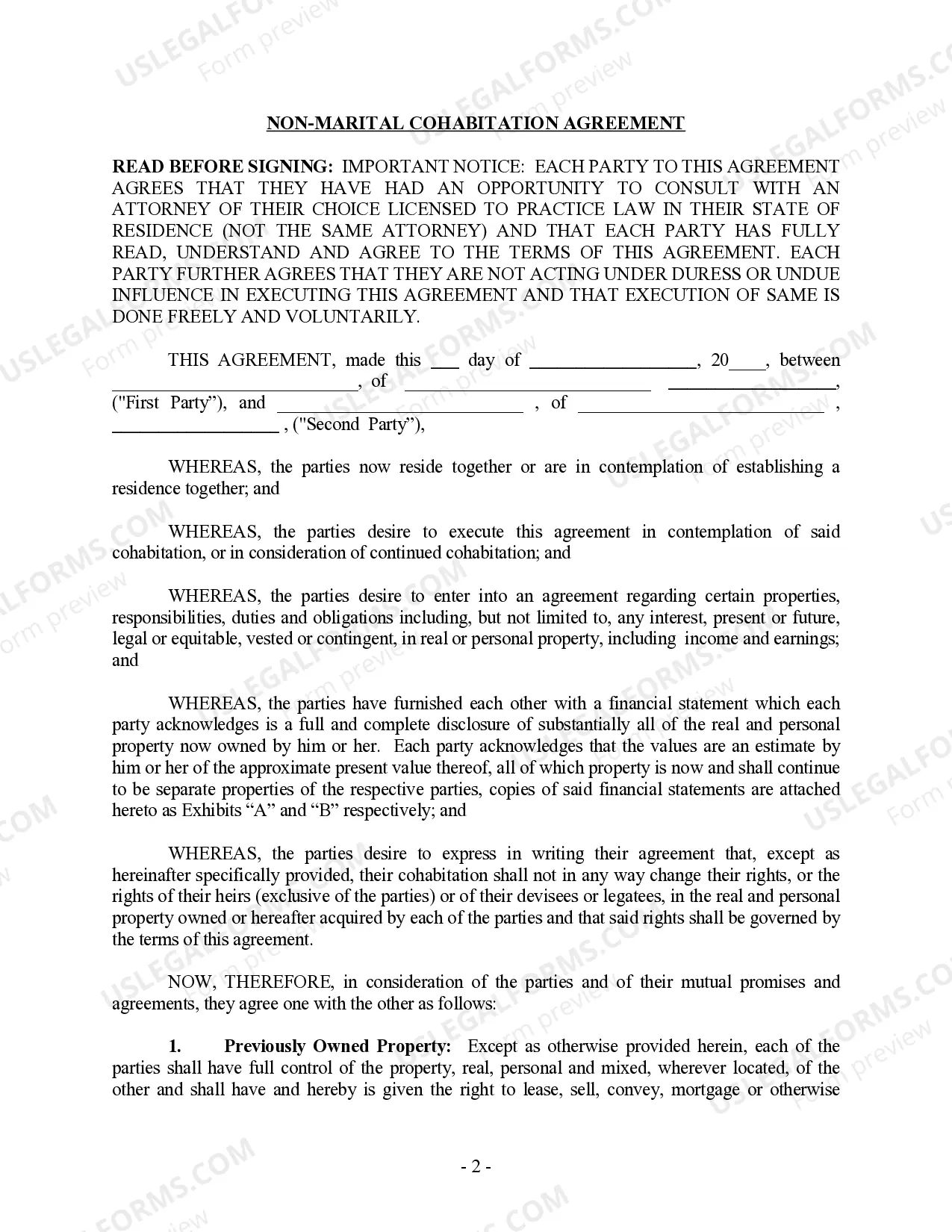
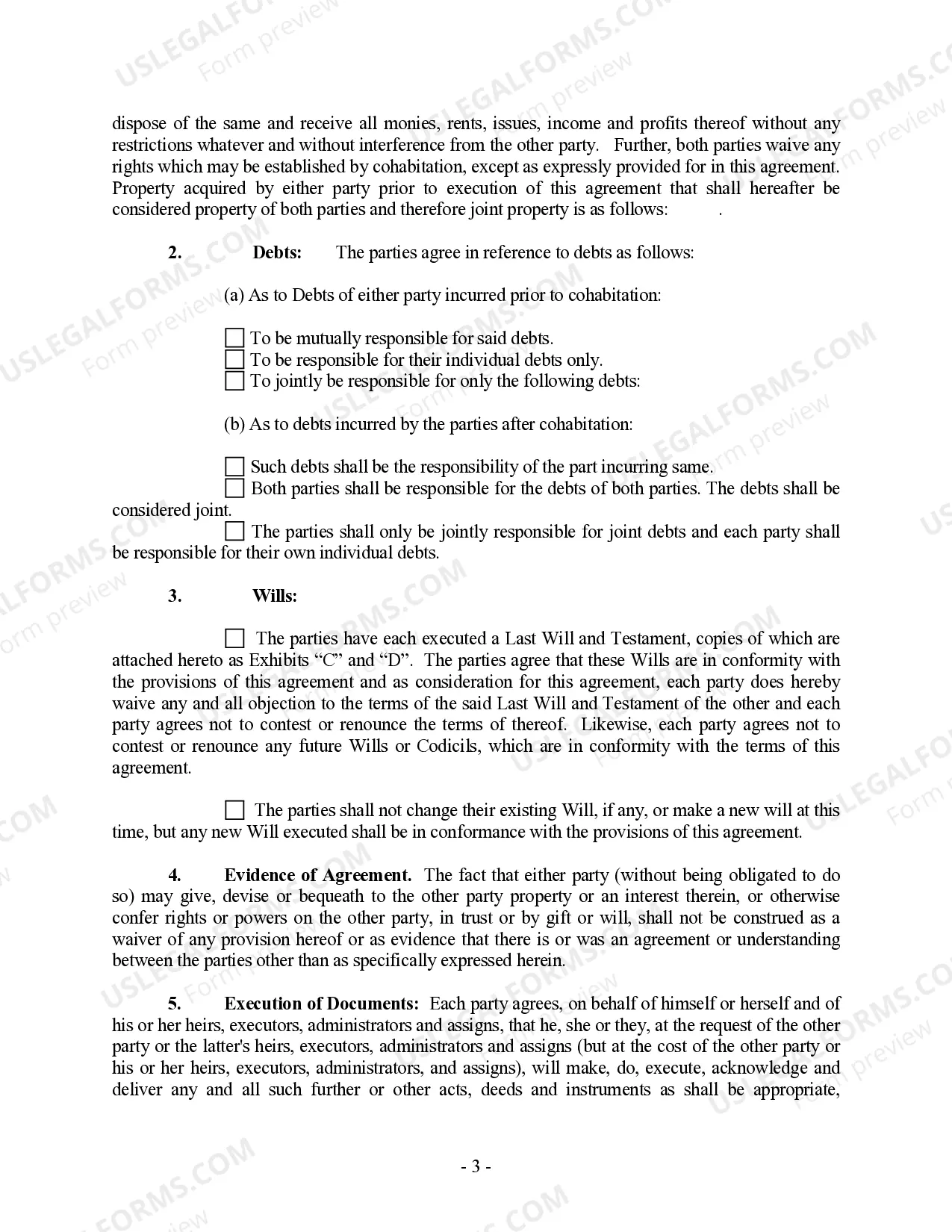
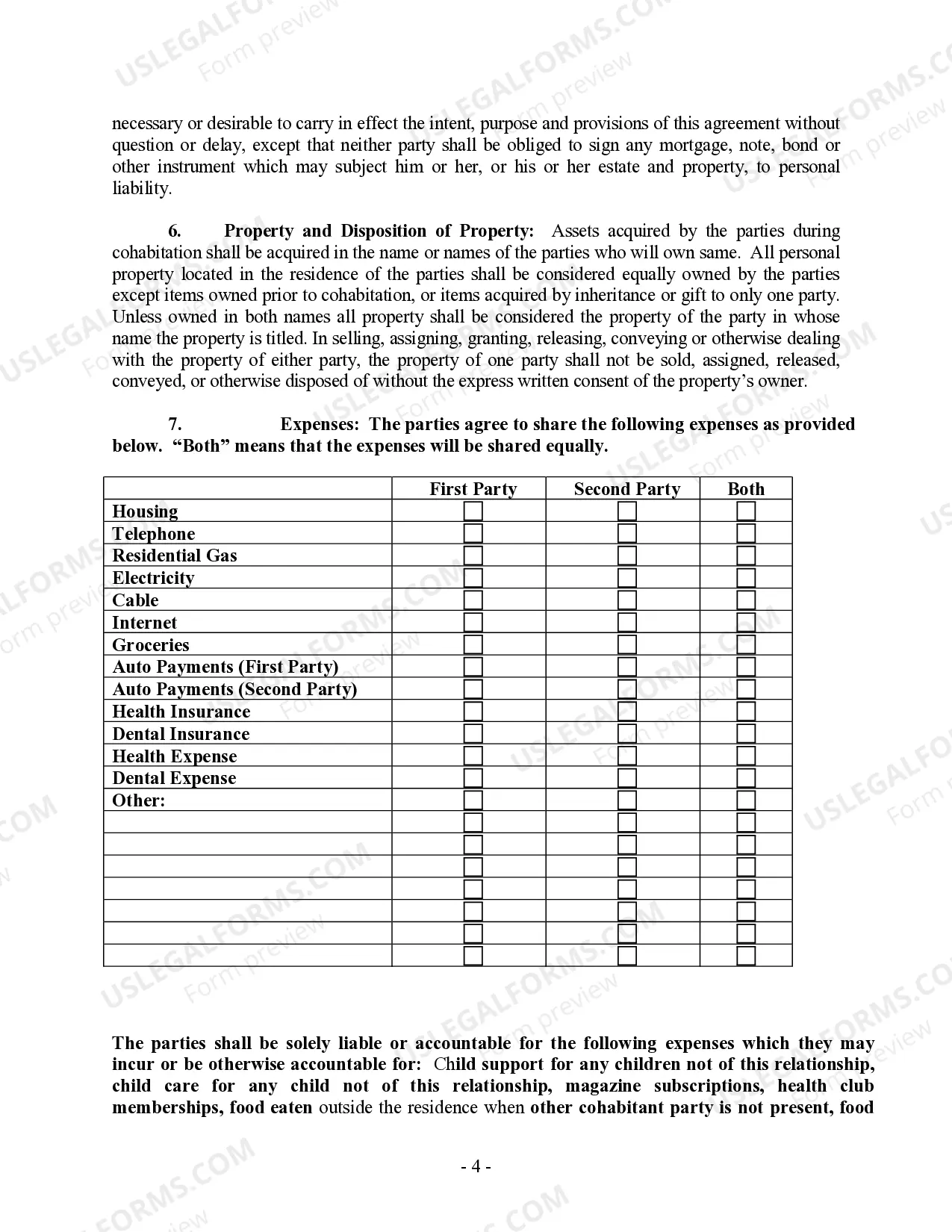
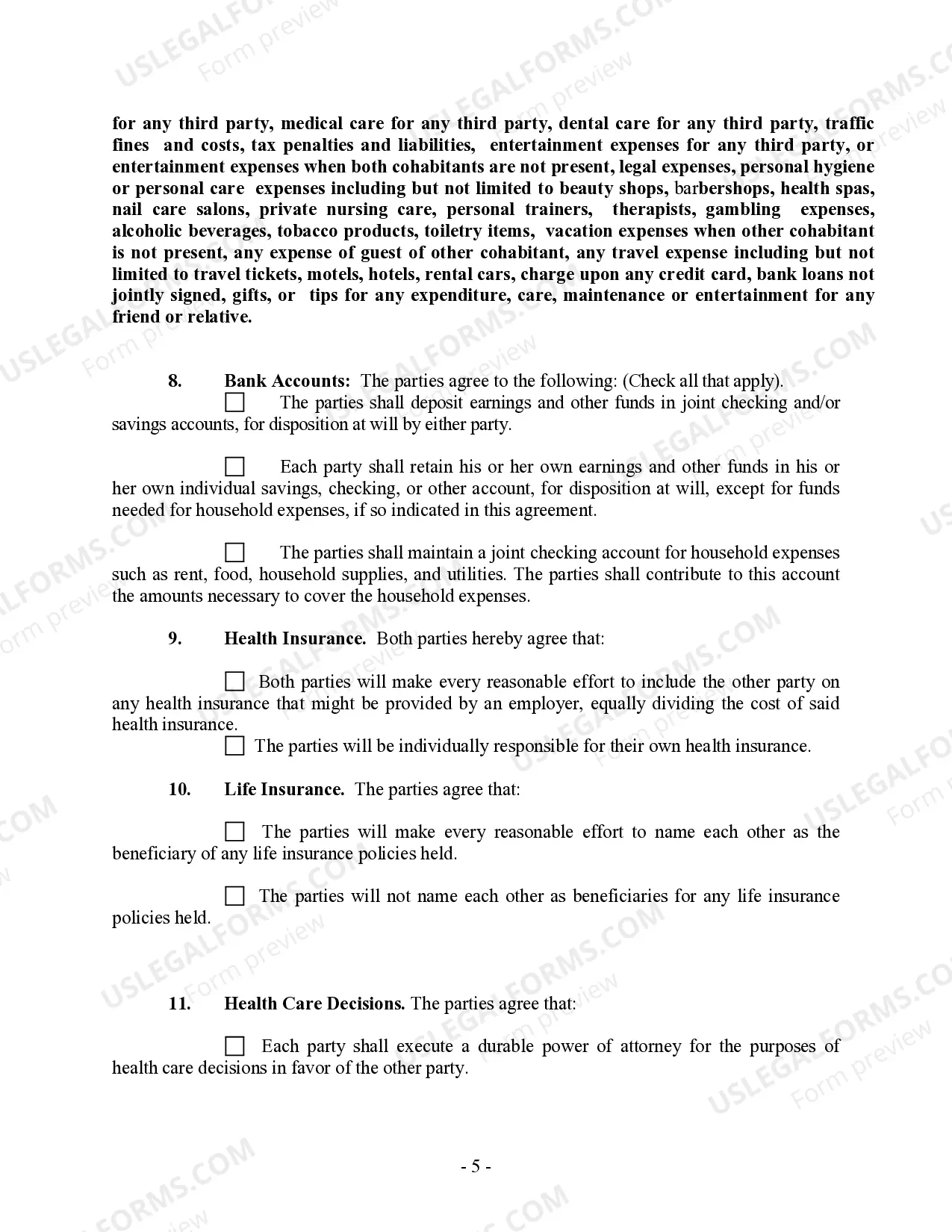
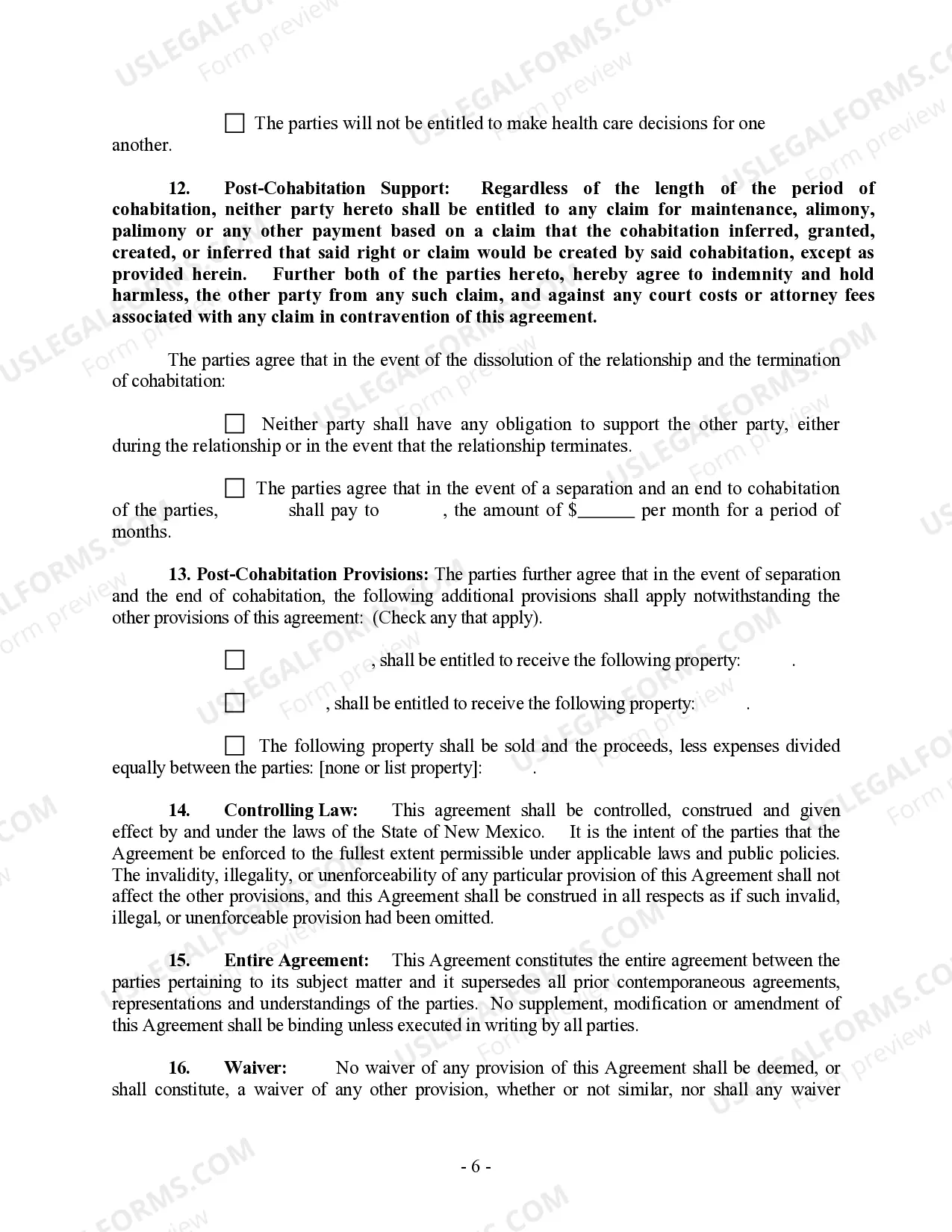
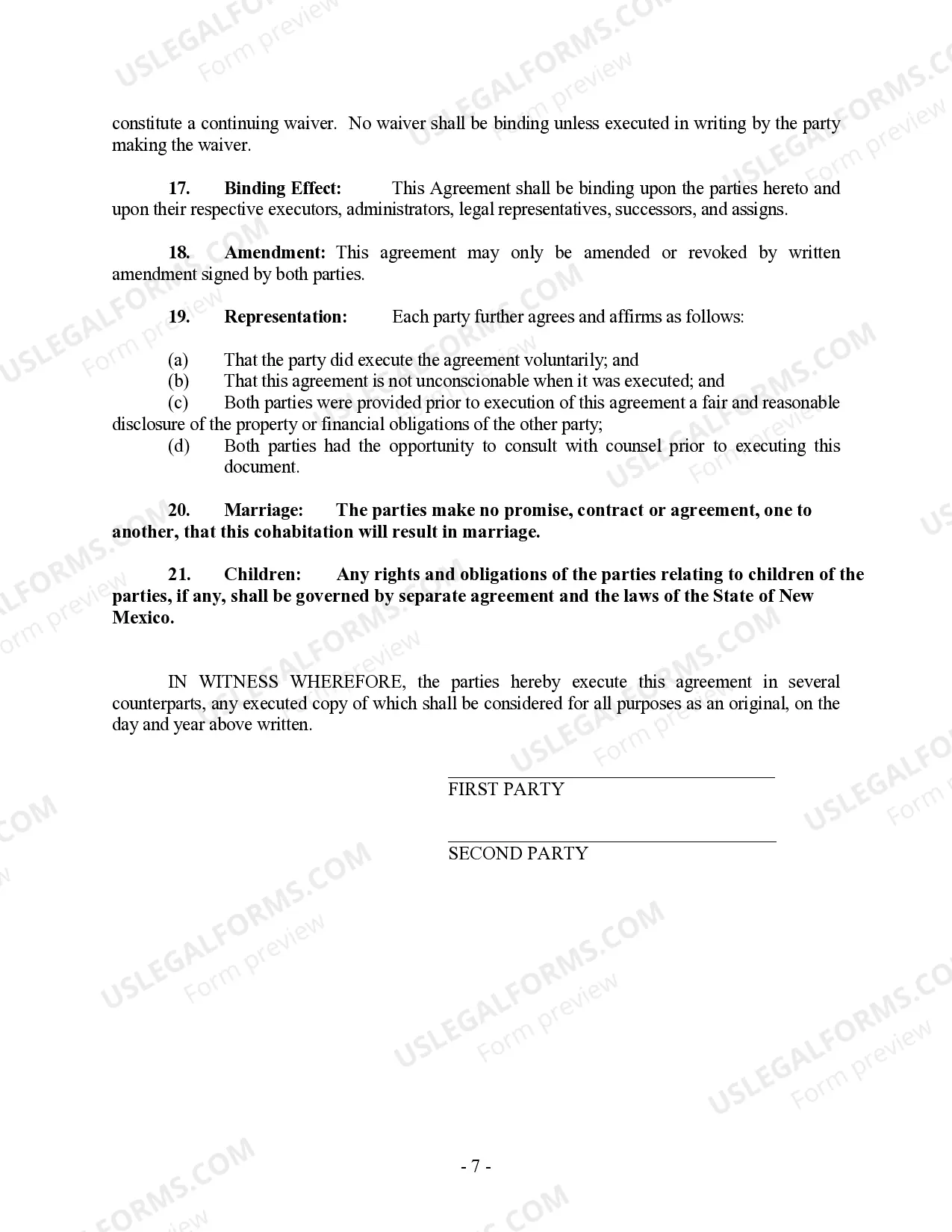
The Non-Marital Cohabitation Agreement helps clarify what is expected of each party. It contains provisions relating to expenses, assets and what happens if the parties discontinue the living arrangement, including ownership and division of property acquired during the course of the relationship.
New Mexico Non-Marital Cohabitation Living Together Agreement
Instant download
Description
Non-Marital Cohabitation Agreement: Many disputes can arise from forming a living arrangement with another person. Expectations are often not clear causing disharmony and other problems.
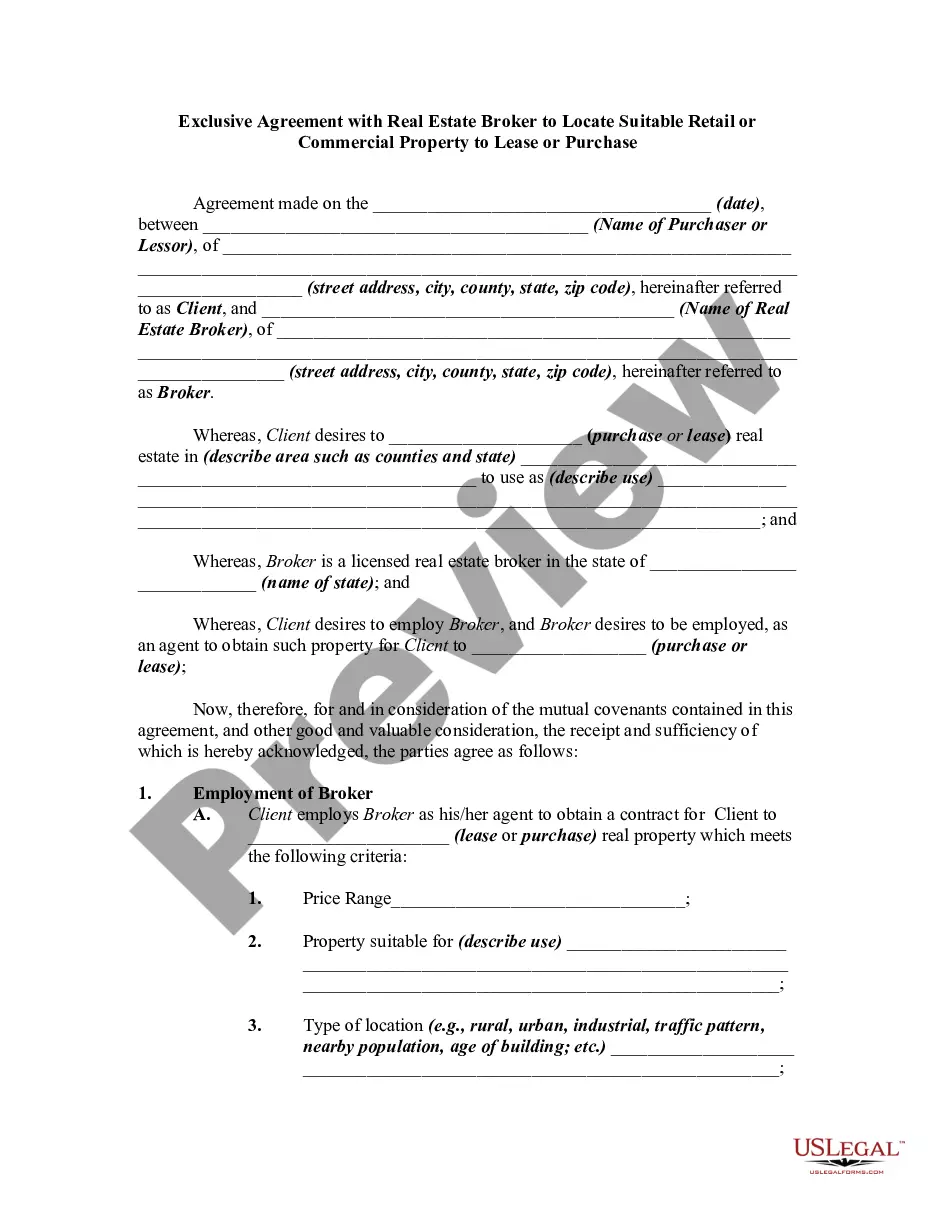
Free preview






How to fill out New Mexico Non-Marital Cohabitation Living Together Agreement?
US Legal Forms is a special platform where you can find any legal or tax document for filling out, including New Mexico Non-Marital Cohabitation Living Together Agreement. If you’re tired with wasting time seeking ideal samples and spending money on document preparation/lawyer charges, then US Legal Forms is exactly what you’re looking for.
To reap all the service’s advantages, you don't need to download any application but simply select a subscription plan and sign up an account. If you already have one, just log in and get the right template, save it, and fill it out. Saved documents are kept in the My Forms folder.
If you don't have a subscription but need New Mexico Non-Marital Cohabitation Living Together Agreement, take a look at the guidelines below:
- Double-check that the form you’re looking at applies in the state you need it in.
- Preview the form and read its description.
- Click on Buy Now button to get to the sign up webpage.
- Select a pricing plan and proceed registering by providing some information.
- Decide on a payment method to finish the sign up.
- Download the file by choosing the preferred format (.docx or .pdf)
Now, complete the document online or print it. If you feel uncertain concerning your New Mexico Non-Marital Cohabitation Living Together Agreement sample, contact a legal professional to review it before you send or file it. Start hassle-free!
Form popularity
FAQ
In general, unmarried couples can't claim ownership of each other's property in the event of a breakup. This applies to big investments (such as a house) and smaller items (such as furniture). Gifts made during the relationship remain the property of the recipient.
Some couples choose not to enter into a marriage or legally recognized domestic partnership but choose to enter into a cohabitation agreement instead. Oftentimes, these agreements are made orally and difficult to enforce after the relationship has ended.
Whether you've been living together for 1 year, 10 years or even 50 years, if you're not married, you have no automatic legal right over your partner's assets.Often someone will move into a property that their partner already owns, or it may be that one person can't afford to contribute to the purchase of a new house.
If you rent your home, you may not have an automatic right to stay if you separate from your partner.If the tenancy is in your sole name, or jointly with your partner, you are entitled to stay.
In both types of agreements, the disclosure requirements are onerous but necessary. Full disclosure includes things such as income tax returns, pay stubs, banks account and credit card statements, RRSP/investment statements and a statutory declaration of all income, assets and debts, among others.
Whether you've been living together for 1 year, 10 years or even 50 years, if you're not married, you have no automatic legal right over your partner's assets.Often someone will move into a property that their partner already owns, or it may be that one person can't afford to contribute to the purchase of a new house.
Cohabitation is an arrangement where two people are not married but live together.
The term non-marital agreement simply refers to an agreement between two people who are living together and are not married.They specify how the couple will divide their property, debts, income, and expenses if the marriage dissolves.
Legal Rules that Govern Property Rights of Unmarried Couples Each unmarried partner is presumed to own his or her own property and debts unless you've deliberately combined your assets--for example, by opening a joint account or putting both names on a deed to your home.