New Mexico Deed of Sale - Personal Representative to One or More Individuals
Understanding this form
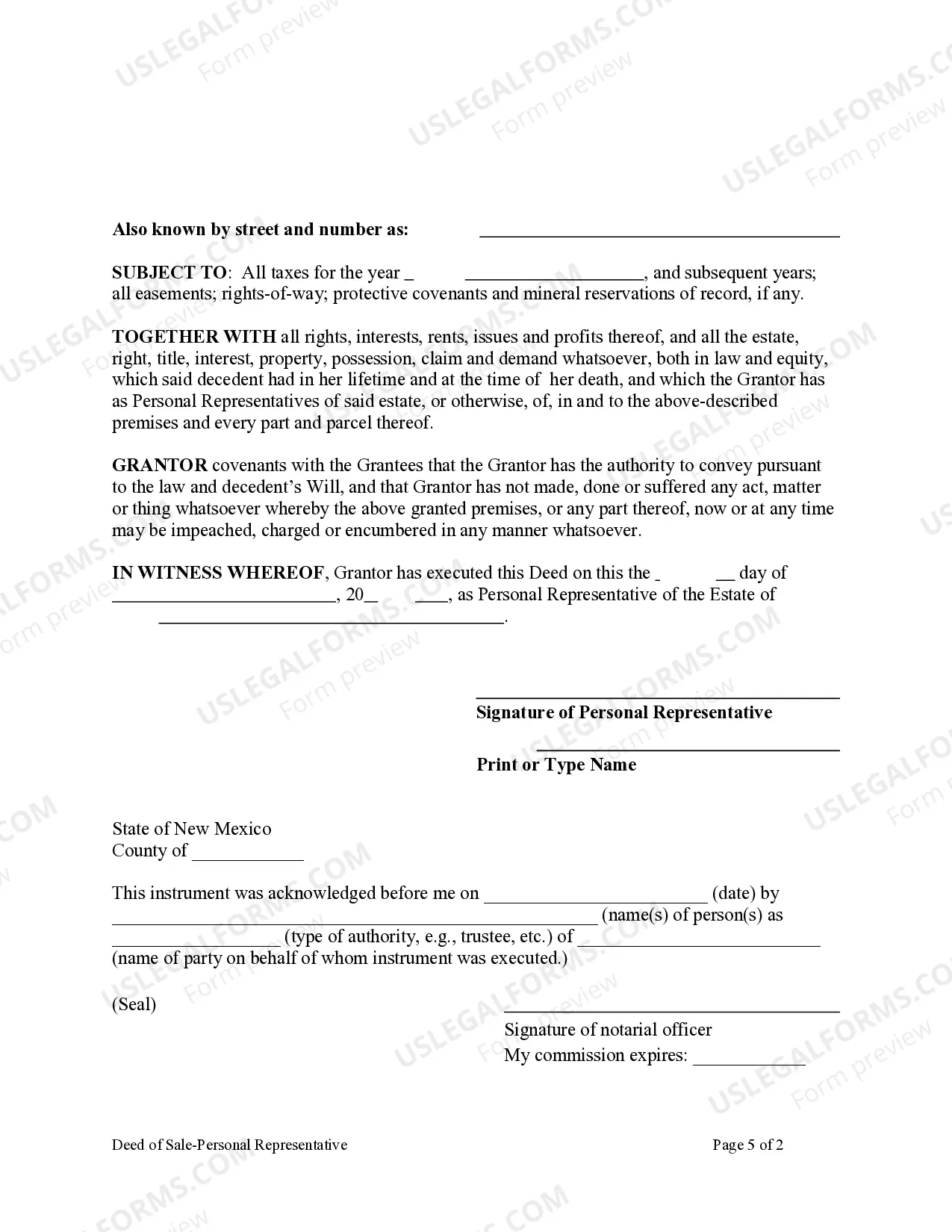
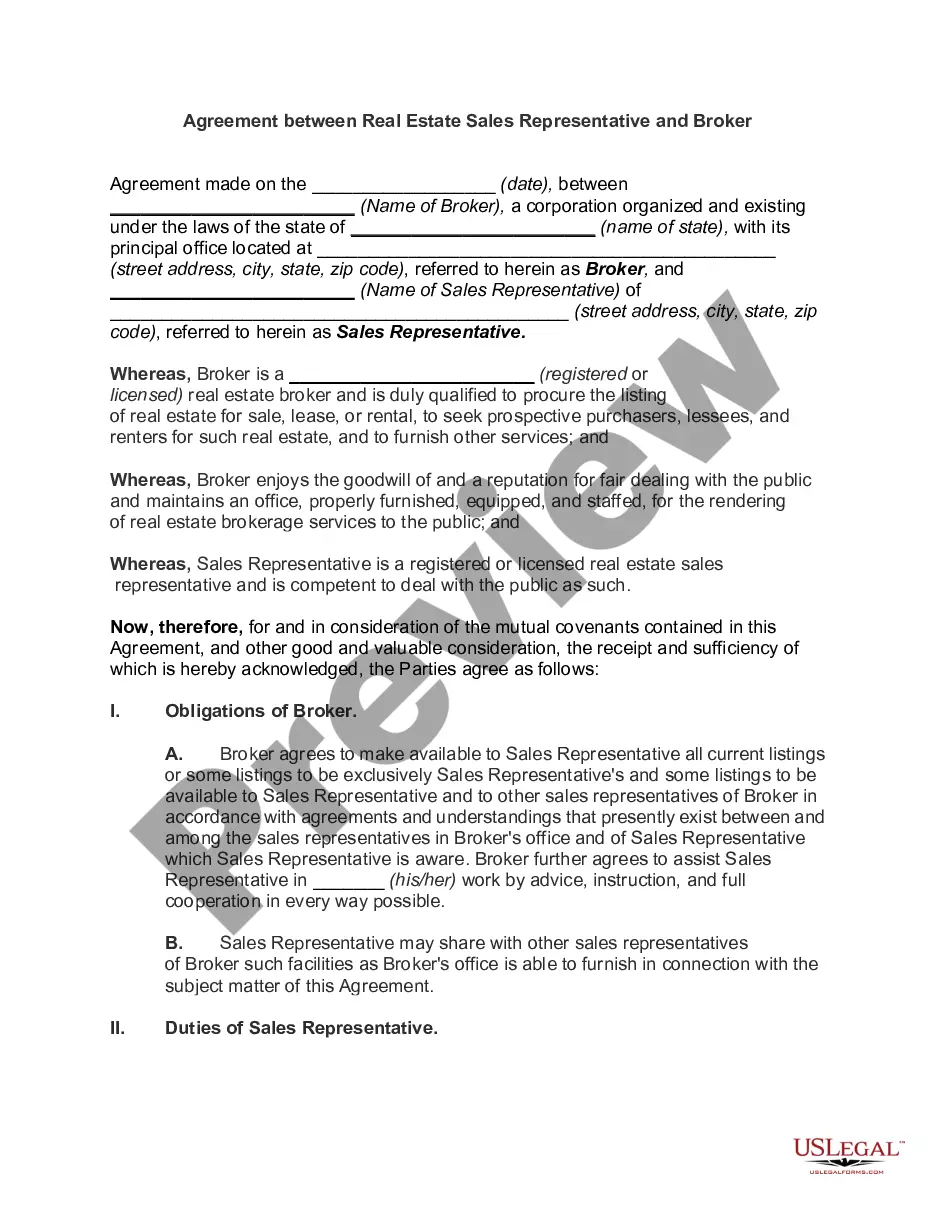
The Deed of Sale - Personal Representative to One or More Individuals is a legal document that enables a personal representative of an estate (the Grantor) to convey property to one or more individuals (the Grantees) who are purchasing that property. This deed is essential in estate management, providing a clear transfer of ownership from the estate to the Grantee(s) and ensures compliance with state laws regarding property transfer.
Main sections of this form
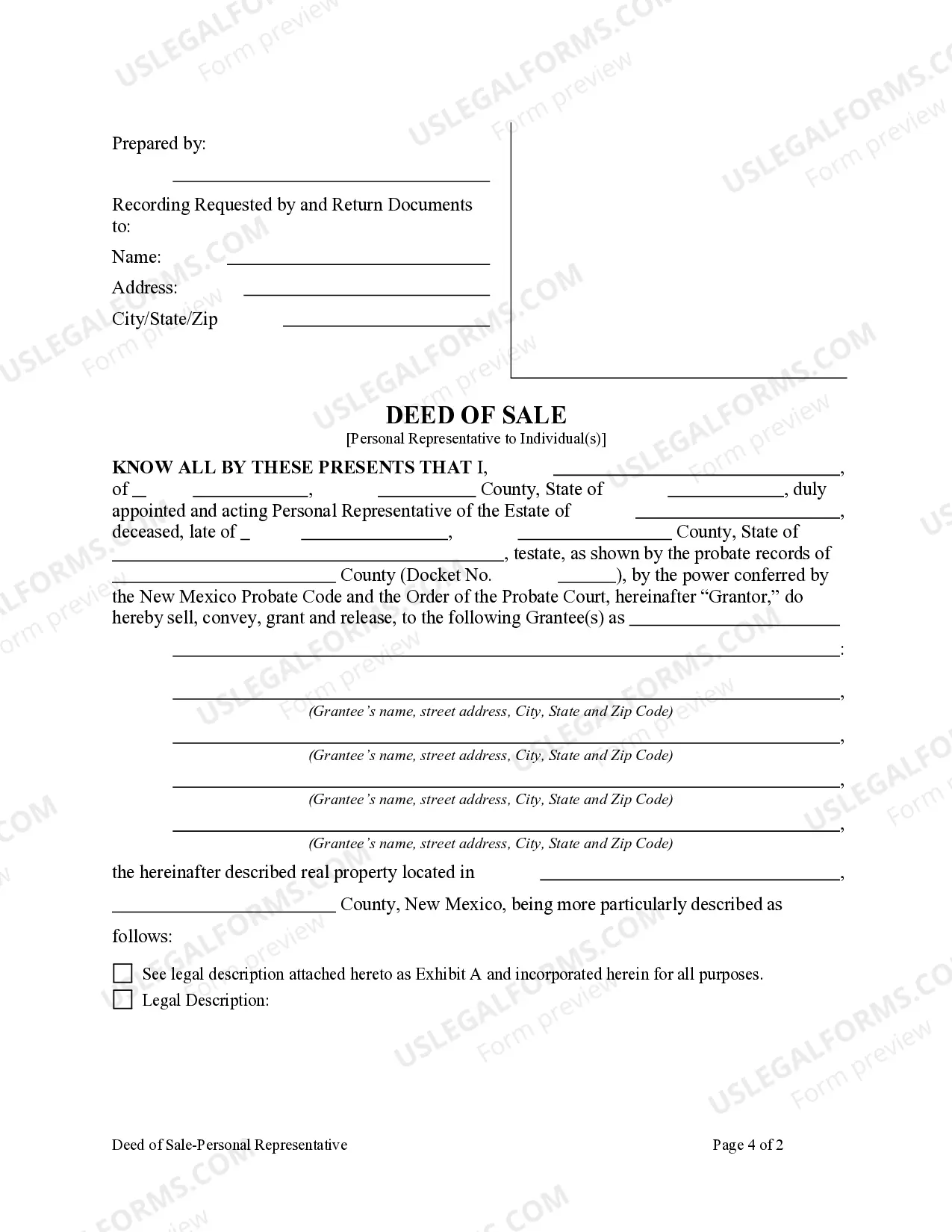
- Name and address of the Grantor (Personal Representative).
- Name(s) and address(es) of the Grantee(s) (buyers).
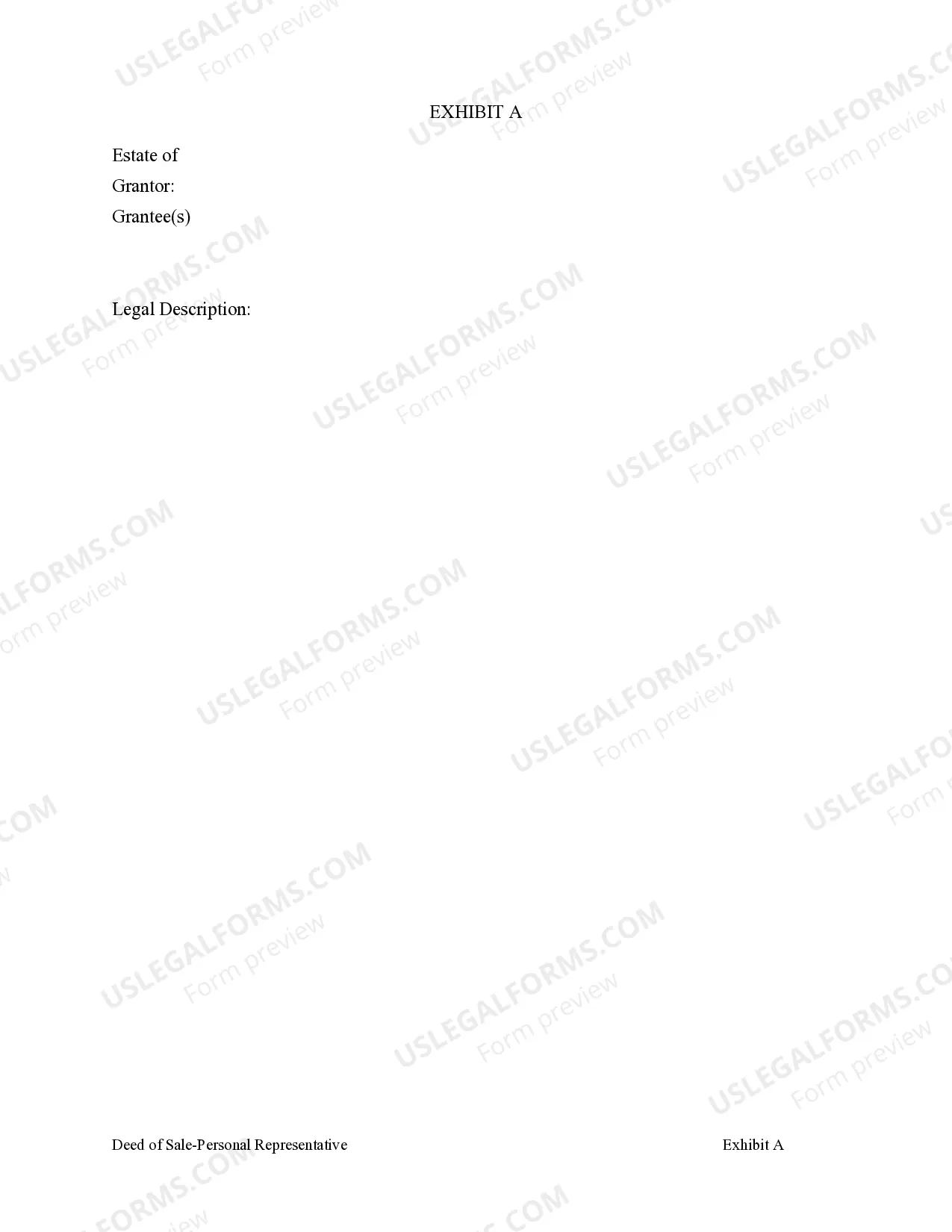
- Description of the property being sold.
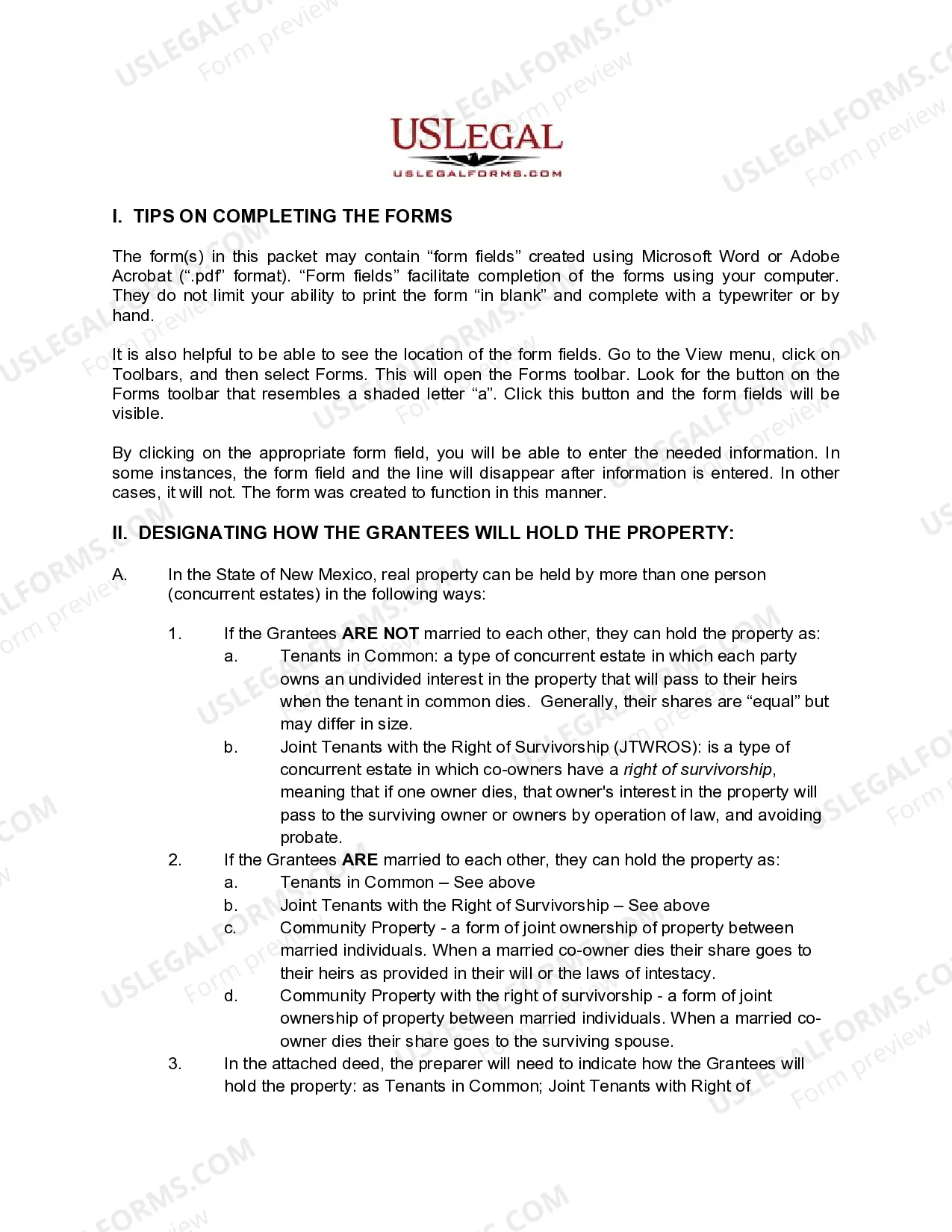
- Details on how the Grantees will hold the property (e.g., joint tenancy, tenancy in common).
- Signature and date fields for the Grantor.


When this form is needed
This deed should be used when a personal representative is selling estate property to individuals following the death of the estate owner. It is particularly applicable in situations where the estate is being liquidated, or assets are being distributed as per the decedent's will or state law.
Who should use this form
- Personal representatives or executors managing an estate.
- Individuals or buyers acquiring property from an estate.
- Anyone looking to document the transfer of real estate in accordance with statutory regulations.
Steps to complete this form
- Identify the Grantor as the Personal Representative of the estate.
- Specify the Grantees and their addresses.
- Provide a complete description of the property being conveyed.
- Indicate how the Grantees will hold the property (tenants in common, joint tenants, etc.).
- Include the date and obtain the necessary signatures from the Grantor.
Does this form need to be notarized?
This form does not typically require notarization unless specified by local law. However, check state-specific laws to confirm any notarization requirements for property sales.
Get your form ready online
Our built-in tools help you complete, sign, share, and store your documents in one place.
Make edits, fill in missing information, and update formatting in US Legal Forms—just like you would in MS Word.
Download a copy, print it, send it by email, or mail it via USPS—whatever works best for your next step.
Sign and collect signatures with our SignNow integration. Send to multiple recipients, set reminders, and more. Go Premium to unlock E-Sign.
If this form requires notarization, complete it online through a secure video call—no need to meet a notary in person or wait for an appointment.
We protect your documents and personal data by following strict security and privacy standards.

Make edits, fill in missing information, and update formatting in US Legal Forms—just like you would in MS Word.

Download a copy, print it, send it by email, or mail it via USPS—whatever works best for your next step.

Sign and collect signatures with our SignNow integration. Send to multiple recipients, set reminders, and more. Go Premium to unlock E-Sign.

If this form requires notarization, complete it online through a secure video call—no need to meet a notary in person or wait for an appointment.

We protect your documents and personal data by following strict security and privacy standards.
Common mistakes
- Failing to accurately describe the property being sold.
- Not specifying how the Grantees will hold the property.
- Omitting signatures or dates, which can render the deed invalid.
Why complete this form online
- Convenient access to legally drafted forms without the need for an attorney visit.
- Edit and personalize the form directly on your computer.
- Immediate download and printing options once completed.
Legal use & context
- This deed facilitates legal transfer of property from an estate, ensuring compliance with probate laws.
- It is enforceable and valid in the State of New Mexico when completed correctly.
- This form serves as a critical element in estate management, helping to resolve heirs' claims effectively.
Looking for another form?
Form popularity
FAQ
A personal representative is appointed by a judge to oversee the administration of a probate estate.When a personal representative is nominated to the position in a will, he's commonly called the executor of the estate.
In order to provide finality to the termination of a trust or the closing of an estate, the form of deed given by a personal representative or a trustee simply calls for the seller to convey as opposed to convey and warrant the property.Again, all the buyer gets is whatever the trust or estate owned.
A personal representative deed and warranty deed are the same only in that they both convey ownership of land. The types of title assurance that the different deeds provide to the new owner are very different.
As the Personal Representative, you are responsible for doing the following: 2022 Collecting and inventorying the assets of the estate; 2022 Managing the assets of the estate during the probate process; 2022 Paying the bills of the estate. Making distribution to the heirs or beneficiaries of the estate.
Yes, It's Possible for an Executor to Sell Property To Themselves Here's How. If you've been named the executor of an estate, you have a crucial job.In most cases, the executor sets about putting the house on the market and selling it so the proceeds can be distributed to any heirs.
No. The person must be appointed by the probate court as the personal representative and letters issued for the appointment as personal representative to be effective. California Probate Code §8400(a).To learn about the duties of a personal representative in California probate, click here.