Illinois Termination of Rights Agreement
What is this form?
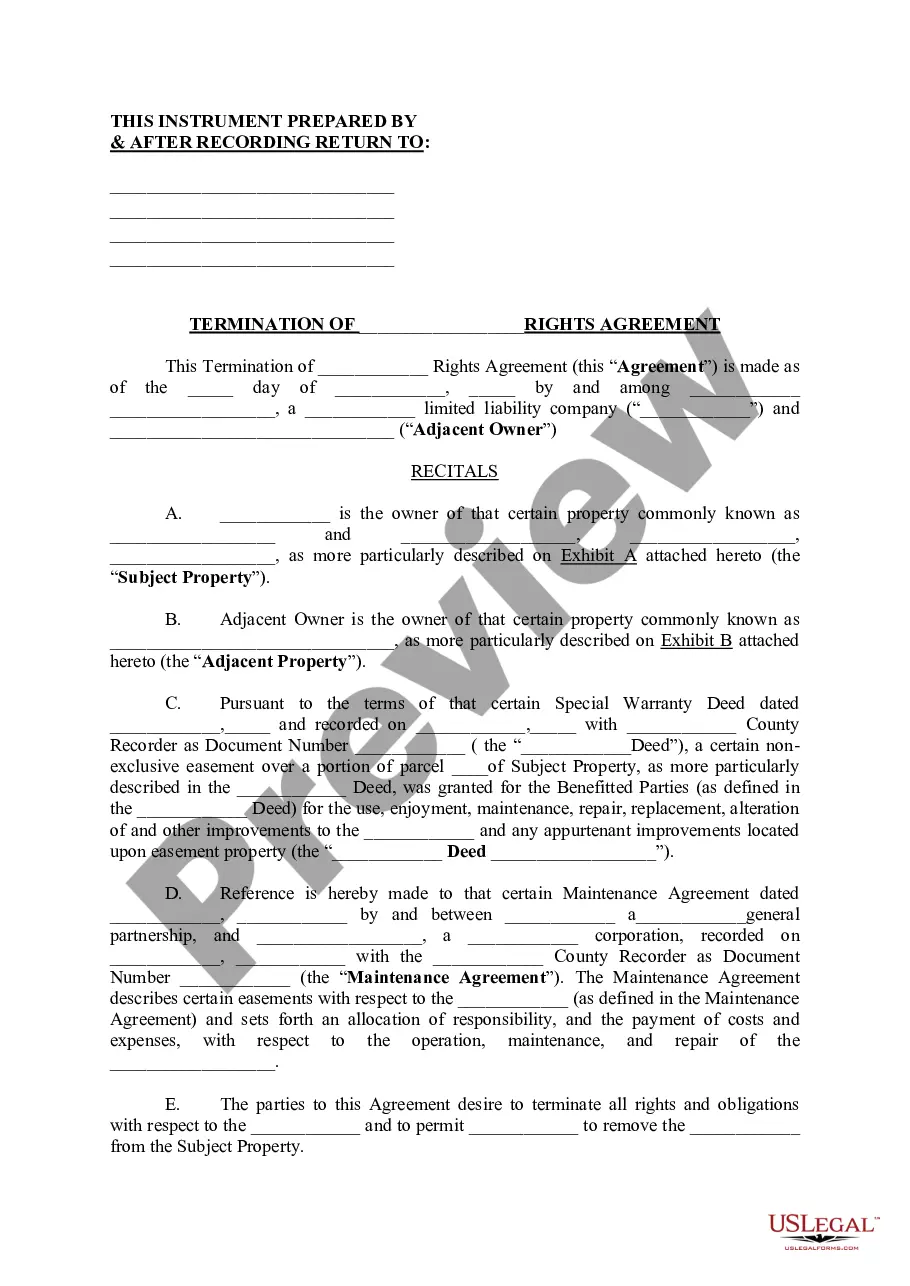
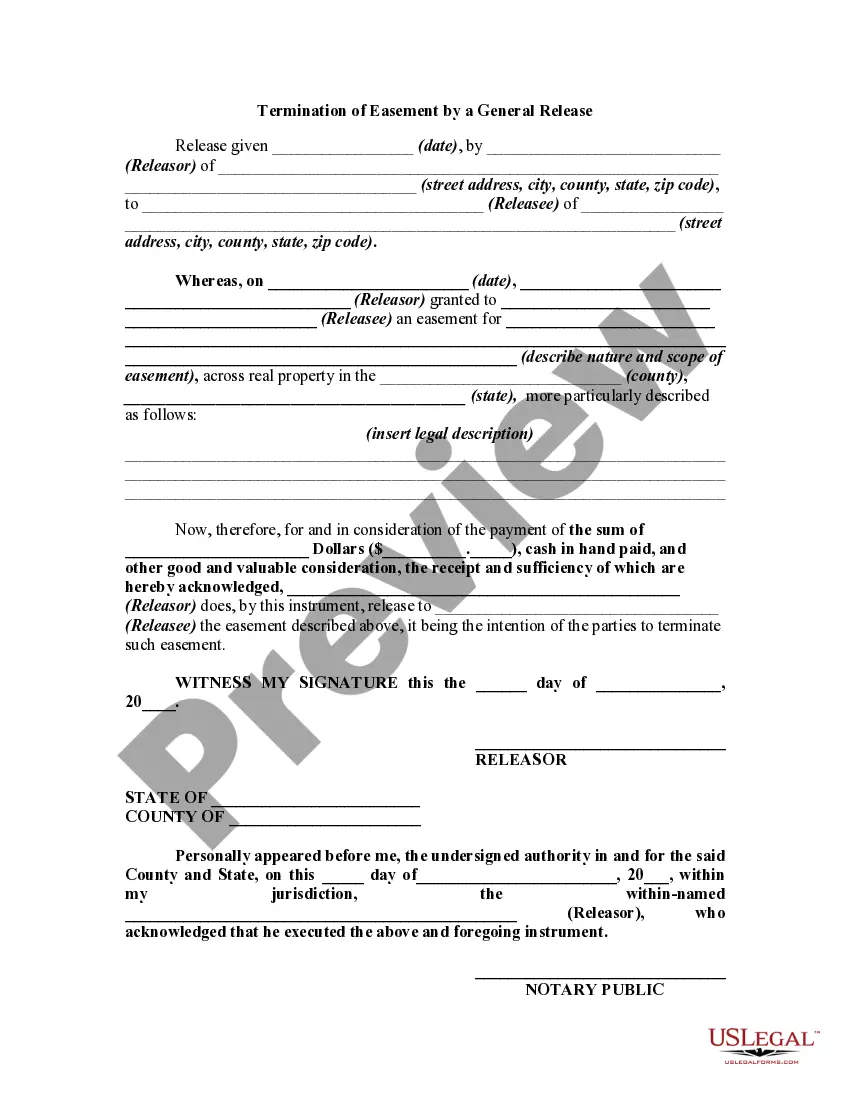
The Termination of Rights Agreement is a legal document that allows the owner of an easement to formally terminate their easement rights in favor of the real property owner. This agreement serves to clarify the end of all rights and obligations associated with the easement, distinguishing it from other easement-related forms which may not include termination provisions. This form ensures that all parties are on the same page regarding the relinquishment of these rights.
Form components explained
- Identification of parties involved, including the easement owner and adjacent property owner.
- Detailed descriptions of the properties related to the easement.
- Recitals that provide background context for the agreement.
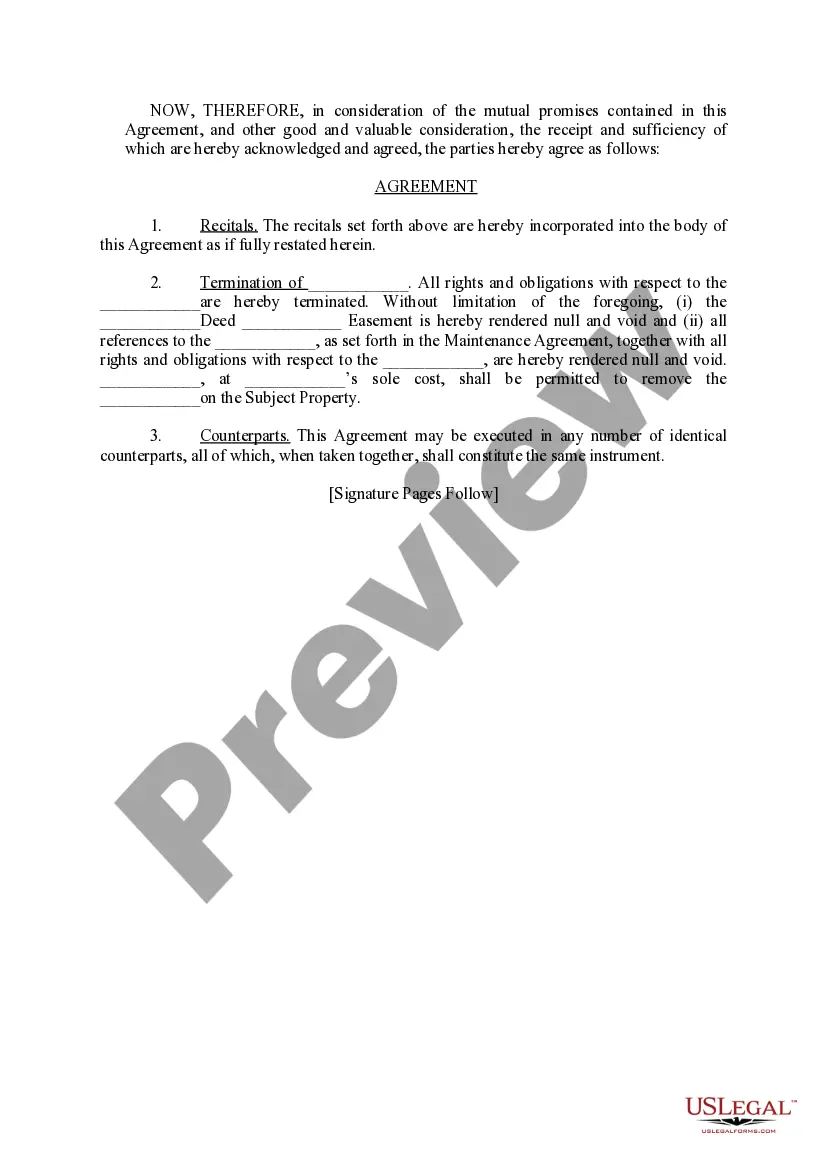
- Clear termination clauses that define the end of easement rights.
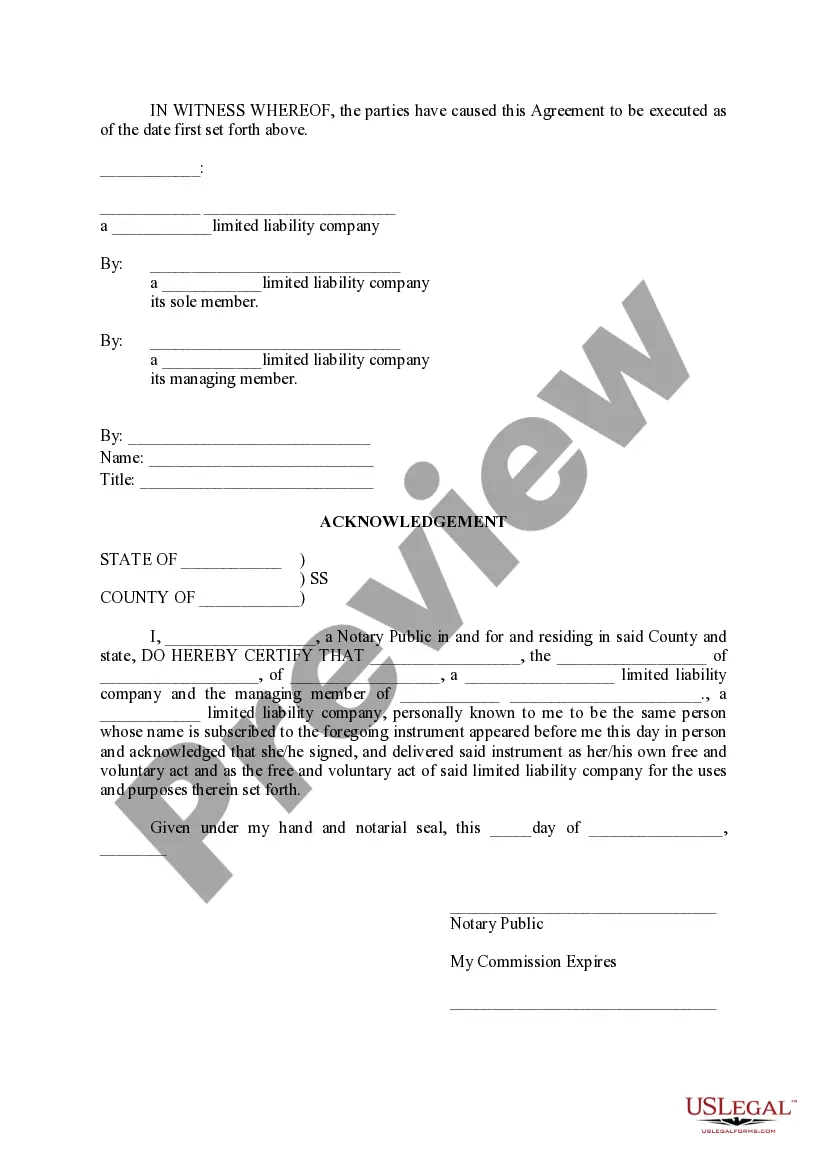
- Signature lines for all parties to confirm agreement.
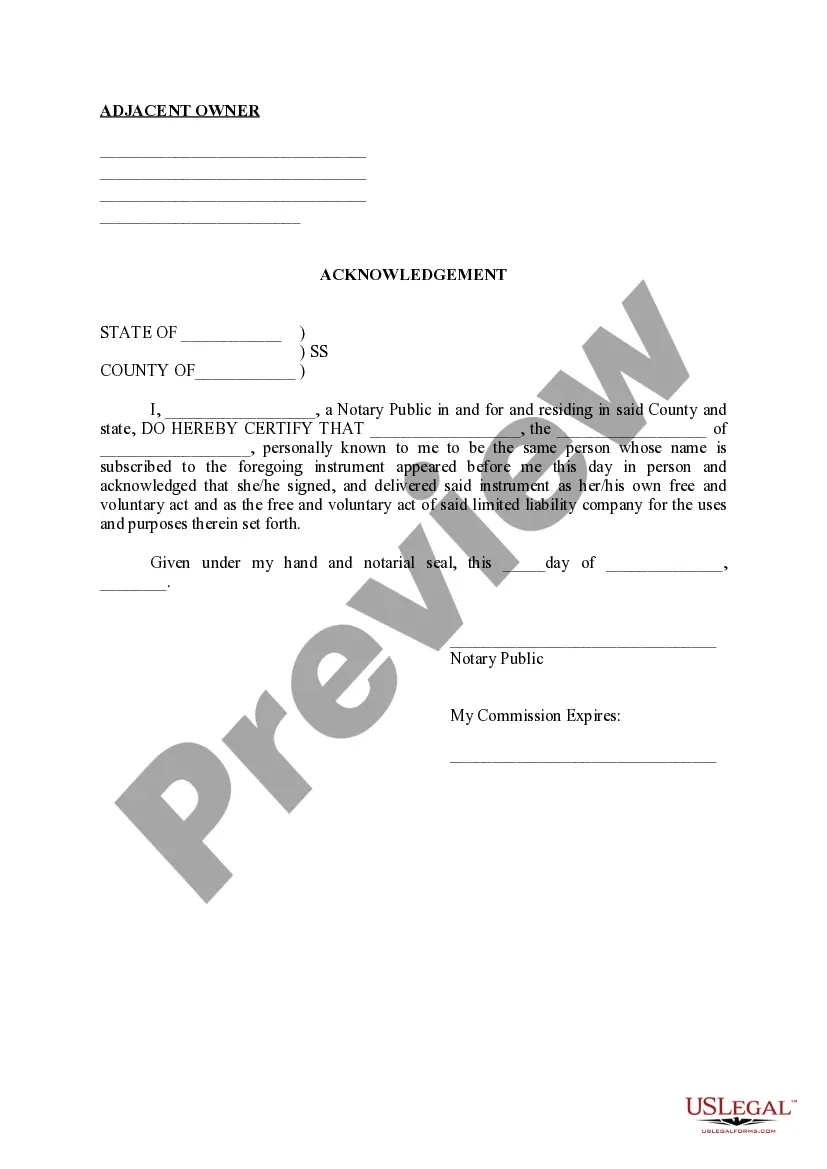
- Notarization sections to authenticate the document.

Common use cases
This form is typically used when an easement owner decides they no longer wish to maintain easement rights over a property, allowing the adjacent property owner to use that land without restrictions. It may be necessary in situations where land use changes, properties are sold, or when the easement is no longer desired by the owner.
Who needs this form
- Property owners looking to terminate existing easement rights.
- Adjacent property owners affected by the easement who need clarity on property usage.
- Real estate professionals managing property rights for clients.
- Individuals involved in property transactions where easements are relevant.
Steps to complete this form
- Identify the parties by entering their names and roles in the agreement.
- Specify the properties involved, including addresses and legal descriptions.
- Enter the date of the agreement for proper documentation.
- Include necessary references to any related deeds or agreements.
- Have all parties sign the document for validation.
- Ensure the document is notarized to meet legal requirements.
Is notarization required?
Yes, this form must be notarized to be legally valid. US Legal Forms provides online notarization services, allowing you to complete this step securely via video call, ensuring a smooth process without the need for travel.
Get your form ready online
Our built-in tools help you complete, sign, share, and store your documents in one place.
Make edits, fill in missing information, and update formatting in US Legal Forms—just like you would in MS Word.
Download a copy, print it, send it by email, or mail it via USPS—whatever works best for your next step.
Sign and collect signatures with our SignNow integration. Send to multiple recipients, set reminders, and more. Go Premium to unlock E-Sign.
If this form requires notarization, complete it online through a secure video call—no need to meet a notary in person or wait for an appointment.
We protect your documents and personal data by following strict security and privacy standards.

Make edits, fill in missing information, and update formatting in US Legal Forms—just like you would in MS Word.

Download a copy, print it, send it by email, or mail it via USPS—whatever works best for your next step.

Sign and collect signatures with our SignNow integration. Send to multiple recipients, set reminders, and more. Go Premium to unlock E-Sign.

If this form requires notarization, complete it online through a secure video call—no need to meet a notary in person or wait for an appointment.

We protect your documents and personal data by following strict security and privacy standards.
Typical mistakes to avoid
- Failing to complete all portions of property descriptions.
- Not having all parties sign the agreement.
- Omitting the notarization step, which may invalidate the form.
- Using the wrong version of the form for your specific state needs.
Benefits of using this form online
- Convenience of downloading and completing the form at your own pace.
- Editability allows for easy customization to suit your needs.
- Instant access to attorney-drafted templates ensures reliability and legal compliance.
Looking for another form?

Form popularity
FAQ
You may voluntarily give up your parental rights if someone else wants to adopt the child, or if someone else has filed a petition to terminate your rights. You will typically need to go to a court hearing to let the judge know your wishes in person.
In order to terminate their rights, a petition to terminate an absent parent's parental rights will need to be filed in family court.However, in situations where the other parent is also absent or deceased, another family member, legal guardian or state agency can request that parental rights be terminated.
In most states, the biological parent must show that the absent parent has not seen or contacted the child for at least four months);
(a) A person commits child abandonment when he or she, as a parent, guardian, or other person having physical custody or control of a child, without regard for the mental or physical health, safety, or welfare of that child, knowingly leaves that child who is under the age of 13 without supervision by a responsible
Child abandonment occurs when a parent, guardian, or person in charge of a child either deserts a child without any regard for the child's physical health, safety or welfare and with the intention of wholly abandoning the child, or in some instances, fails to provide necessary care for a child living under their roof.
Physical Abandonment Child abandonment is defined in Illinois as any time that someone having physical custody or control of a child under age 13 knowingly leaves that child without supervision, or in the supervision of someone irresponsible (or underaged) for 24 hours or more.
In the parent-child relationship, parents have some basic rights and responsibilities.However, a court can take these rights away from a parent if either one violates the law or if the father fails to claim paternity. A parent also may voluntarily terminate these rights.
Typically, a parent is only allowed to voluntarily terminate his or her parental rights if there is another person willing to adopt the child. However, a parent does have the option to surrender his or her parental rights to the state of Illinois and place the child up for adoption if he or she chooses.
He or she has attempted to create a relationship with the child; He or she has been paying child support;