New Mexico Warranty Deed from a Trust to a Limited Liability Company
What is this form?
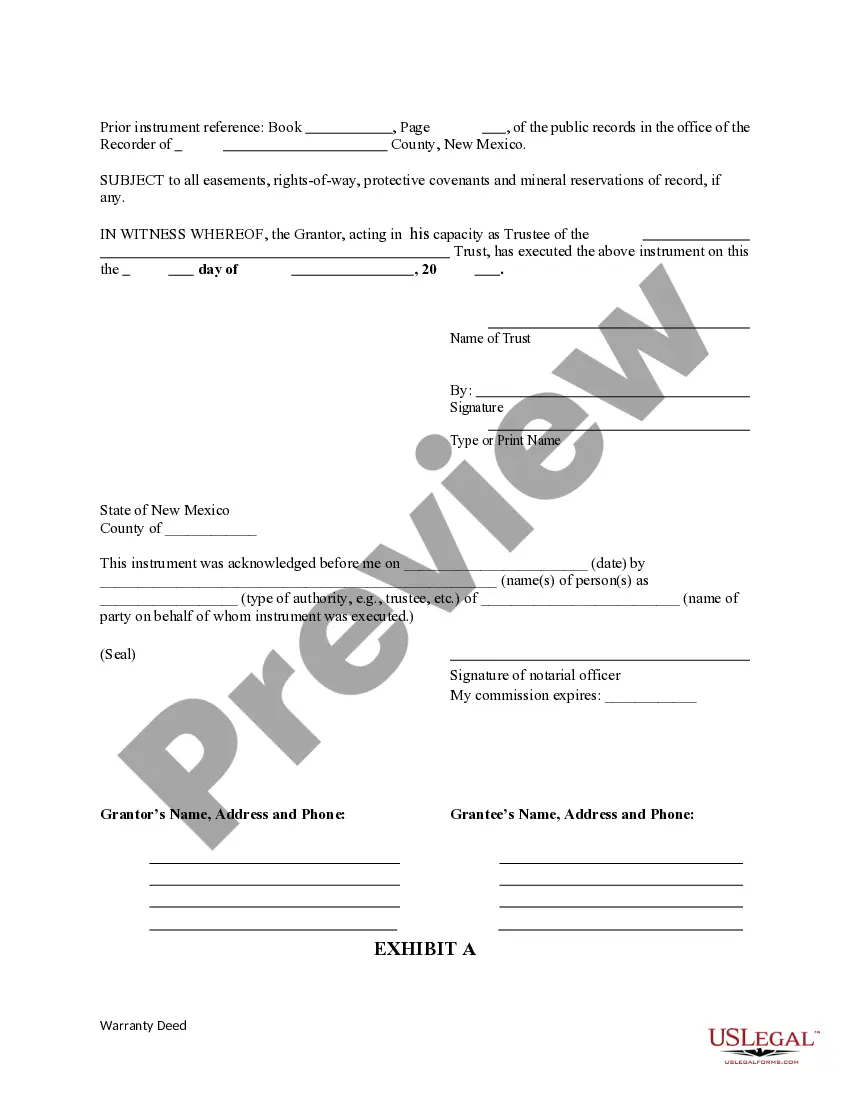
This Warranty Deed from a Trust to a Limited Liability Company is a legal document that facilitates the transfer of property ownership from a trust (the Grantor) to a limited liability company (the Grantee). Unlike other deed forms, this warranty deed specifically conveys and warrants the property, ensuring the Grantee receives clear and unencumbered title. It is essential for legally documenting property transfers between these two entities while complying with state statutory laws.
What’s included in this form
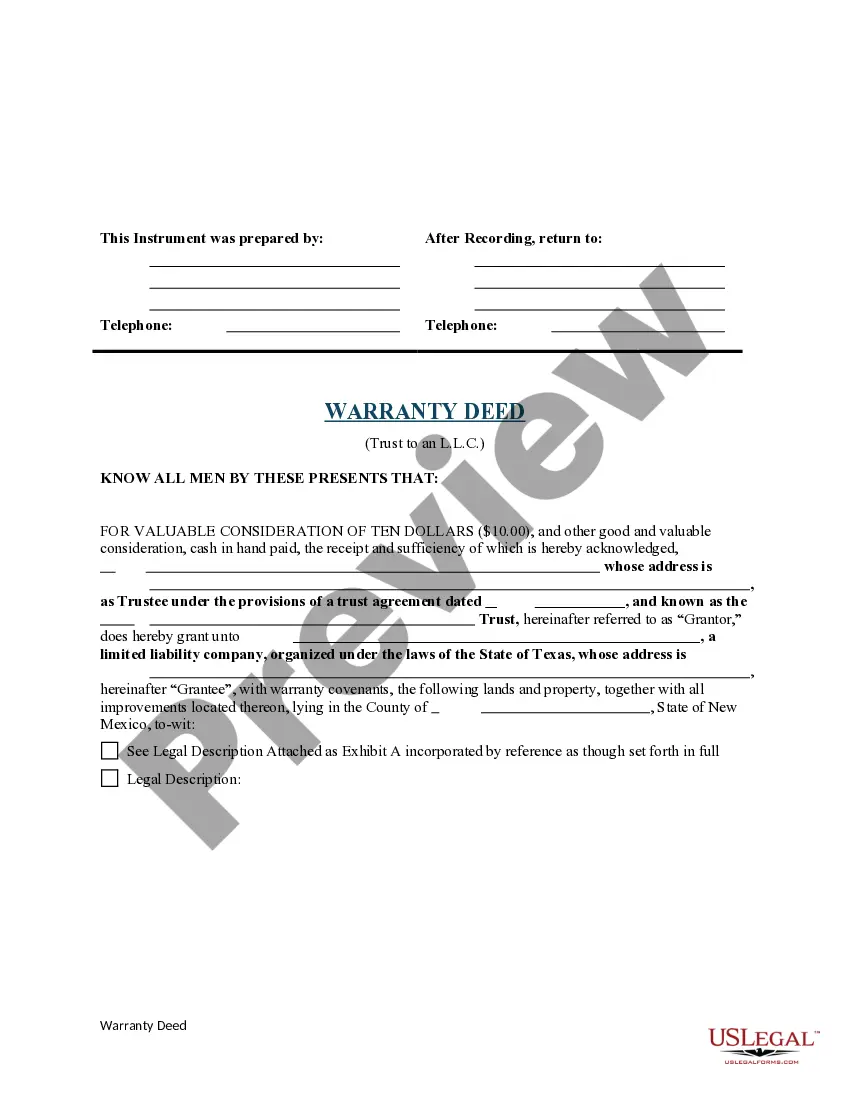
- Details of the Grantor (Trust name and information).
- Information about the Grantee (LLC name and registration details).
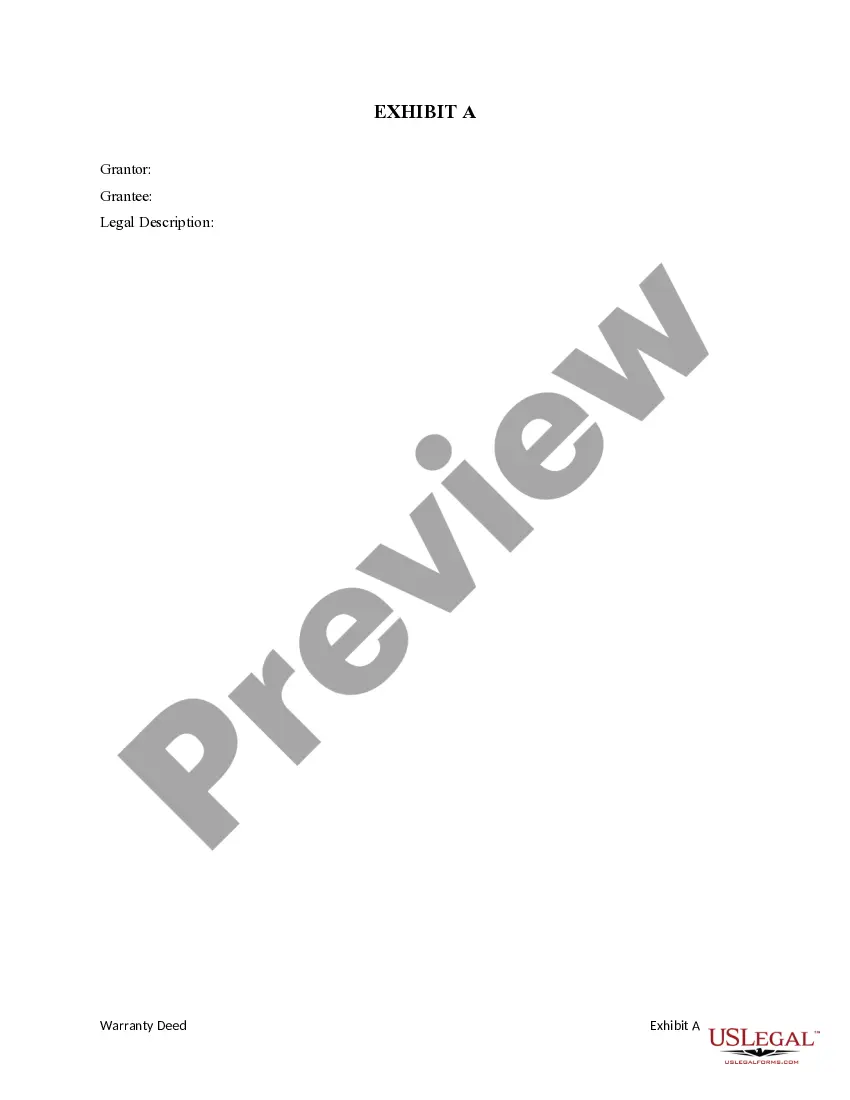
- Description of the property being transferred (location, legal description).
- Warranties and covenants clause affirming the Grantor's title to the property.
- Signature lines for the authorized representative of the Trust and witness (if required).





Common use cases
This form is typically used in scenarios where a Trust holds real property and intends to convey that property to a Limited Liability Company. It is commonly utilized in estate planning, business formation, or real estate transactions where property ownership needs to be transferred from the trust to the LLC for operational or managerial purposes.
Intended users of this form
- Trustees wishing to transfer property from a trust to an LLC.
- Business owners establishing an LLC that intends to hold real estate.
- Individuals involved in estate planning who want to manage inherited properties through an LLC.
Completing this form step by step
- Identify the Grantor by providing the full name of the Trust.
- Specify the Grantee by entering the name of the Limited Liability Company.
- Enter a complete legal description of the property being transferred.
- Include any relevant dates, such as the effective date of the transfer.
- Ensure the form is signed by the authorized trustee of the Trust and any required witnesses.
Does this form need to be notarized?
This form must be notarized to be legally valid. US Legal Forms provides secure online notarization powered by Notarize, allowing you to complete the process through a verified video call.
Get your form ready online
Our built-in tools help you complete, sign, share, and store your documents in one place.
Make edits, fill in missing information, and update formatting in US Legal Forms—just like you would in MS Word.
Download a copy, print it, send it by email, or mail it via USPS—whatever works best for your next step.
Sign and collect signatures with our SignNow integration. Send to multiple recipients, set reminders, and more. Go Premium to unlock E-Sign.
If this form requires notarization, complete it online through a secure video call—no need to meet a notary in person or wait for an appointment.
We protect your documents and personal data by following strict security and privacy standards.

Make edits, fill in missing information, and update formatting in US Legal Forms—just like you would in MS Word.

Download a copy, print it, send it by email, or mail it via USPS—whatever works best for your next step.

Sign and collect signatures with our SignNow integration. Send to multiple recipients, set reminders, and more. Go Premium to unlock E-Sign.

If this form requires notarization, complete it online through a secure video call—no need to meet a notary in person or wait for an appointment.

We protect your documents and personal data by following strict security and privacy standards.
Typical mistakes to avoid
- Failing to include a complete legal description of the property.
- Not properly identifying the parties involved.
- Missing signatures or witness lines where applicable.
Benefits of using this form online
- Immediate access to legally vetted templates drafted by licensed attorneys.
- Ability to edit and fill out the form easily on your computer before printing.
- Compliance with state laws, minimizing the risk of errors in legal documents.
Looking for another form?
Form popularity
FAQ
Like all deeds, these two legal documents are both used to transfer titles from one owner to another. A warranty deed protects property owners from future claims that someone else actually owns a portion (or all) of their property, while trustee deeds protect lenders when borrowers default on their mortgage loans.
A warranty deed protects property owners from future claims that someone else actually owns a portion (or all) of their property, while trustee deeds protect lenders when borrowers default on their mortgage loans.
In the context of a California mortgage transaction, a trust deed also transfer ownership. Only this time, the title is being placed in the hands of a third-party trustee, who holds the property on behalf of the lender and the homeowner-borrower until the mortgage is paid.
Typically, the lender will provide you with a copy of the deed of trust after the closing. The original warranty deeds are often mailed to the grantee after they are recorded. These are your original copies and should be kept in a safe place, such as a fireproof lockbox or a safe deposit box at a financial institution.
The mortgage company usually prepares this deed as part of the loan package and delivers it to the title company for you to sign at closing. The title company is commonly the trustee to the deed and holds legal title to the property until the loan gets fully repaid.
A trustee deed offers no such warranties about the title.
Trustee's deeds convey real estate out of a trust.This type of conveyance is named for the person using the form the trustee who stands in for the beneficiary of the trust and holds title to the property.
A deed conveys ownership; a deed of trust secures a loan.
In a Limited Warranty Deed, the seller usually gives two warranties. The seller only warrants to the buyer that:This is a very limited warranty in comparison to the broad warranty in a General Warranty Deed where the seller warrants that the seller not only owns the property, but also all rights in the property.