New Mexico Discovery Interrogatories for Divorce Proceeding for either Plaintiff or Defendant
What this document covers
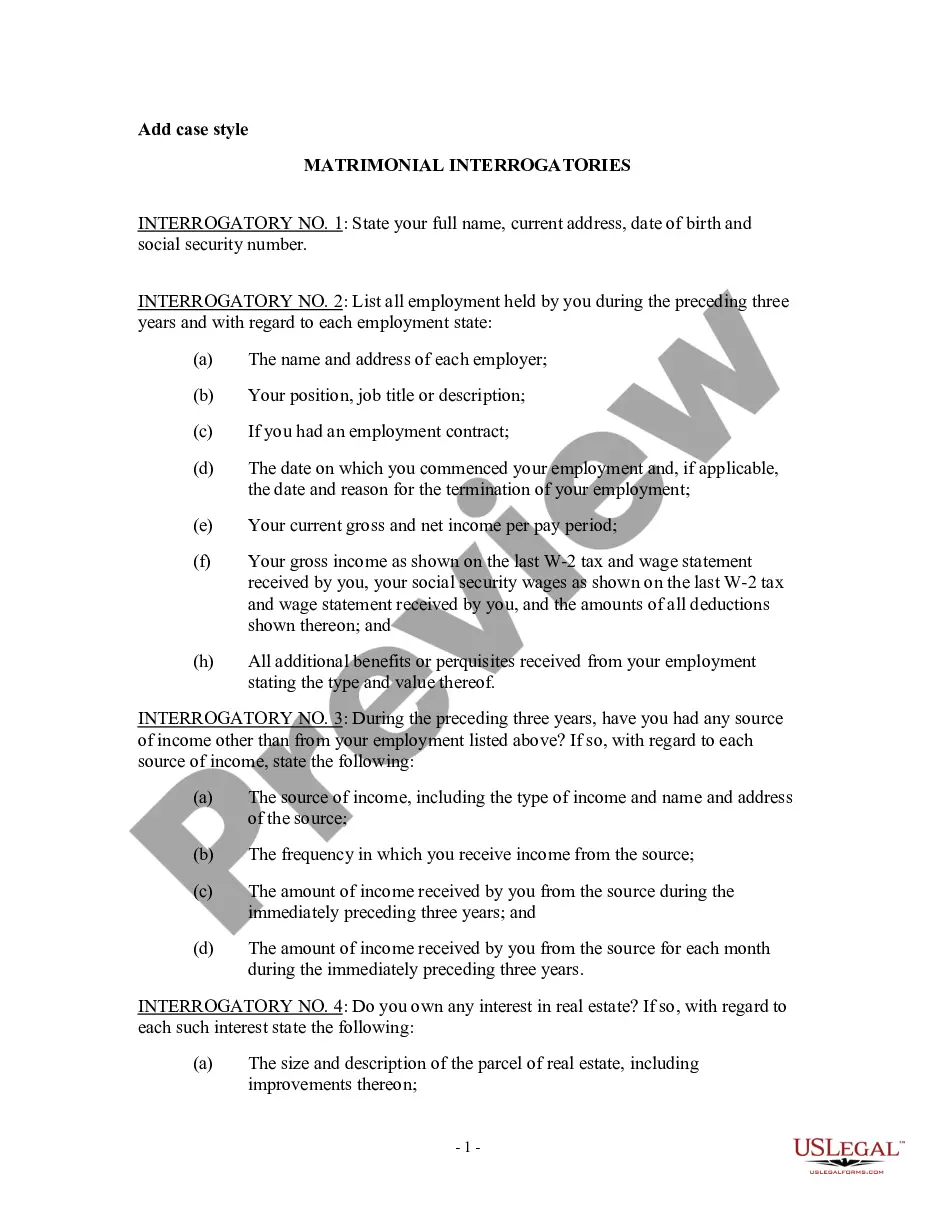
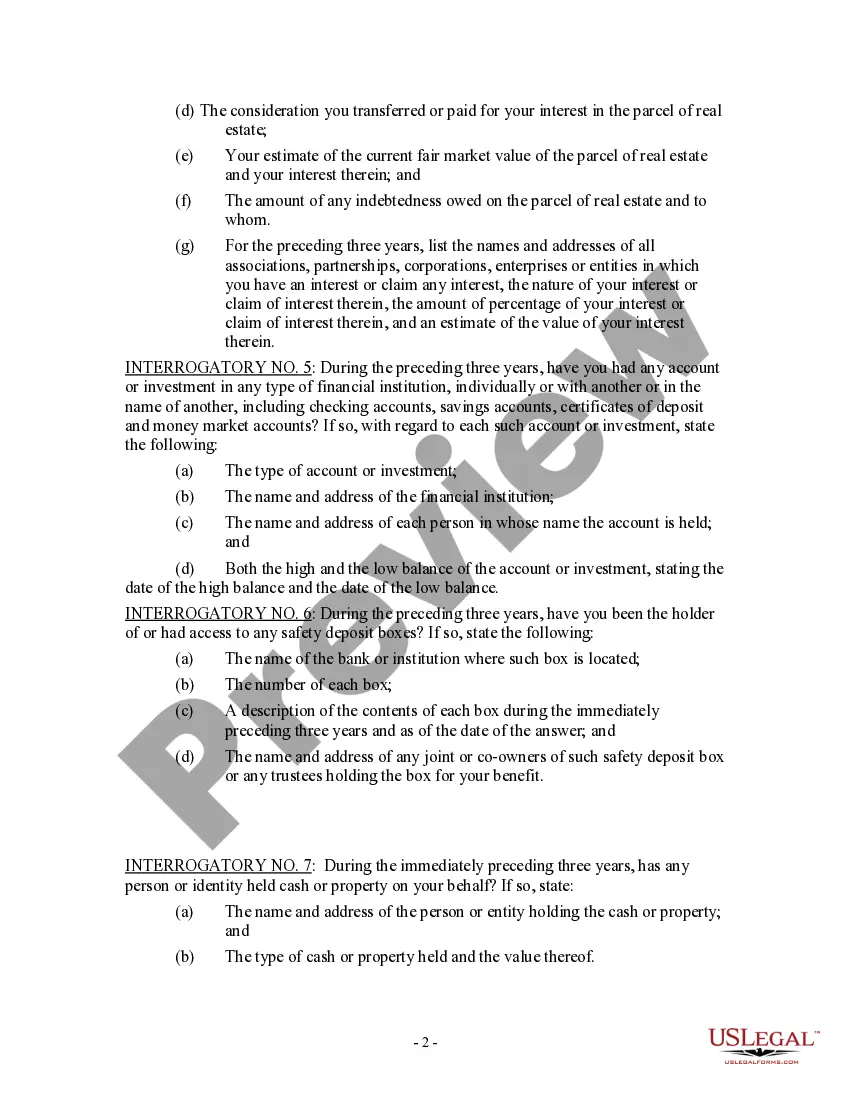
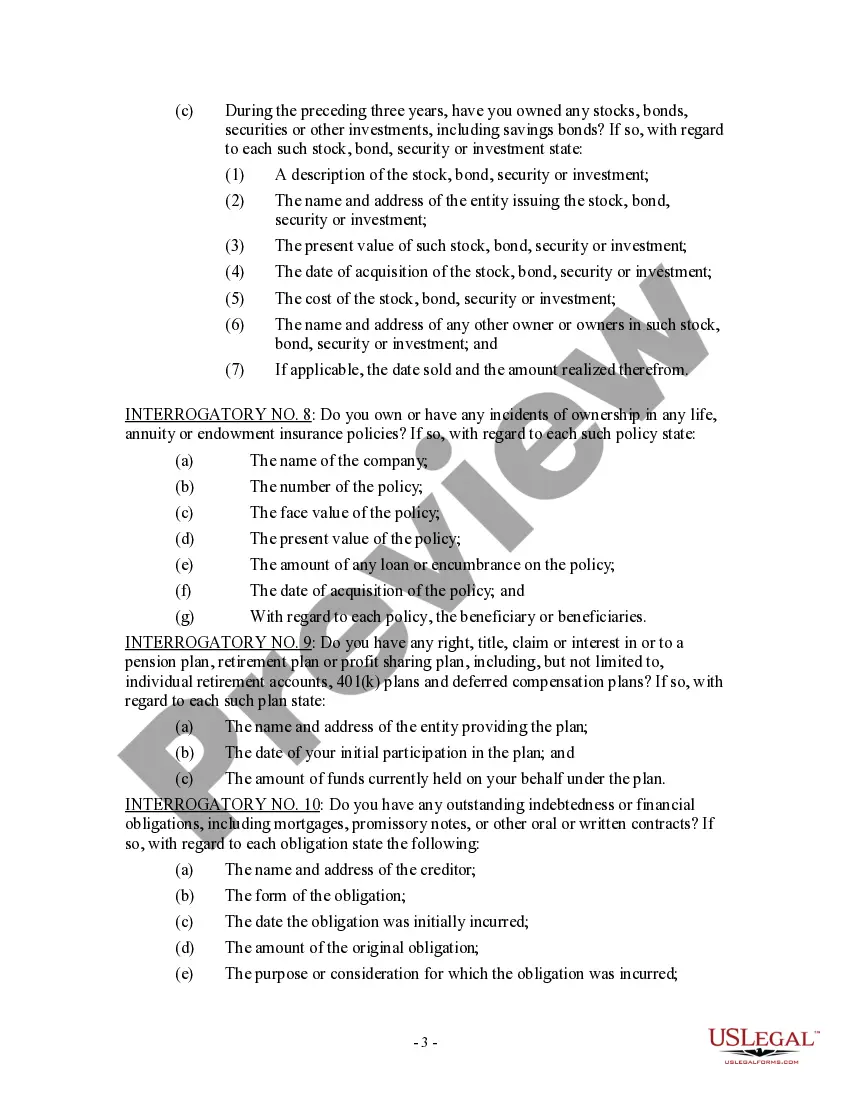
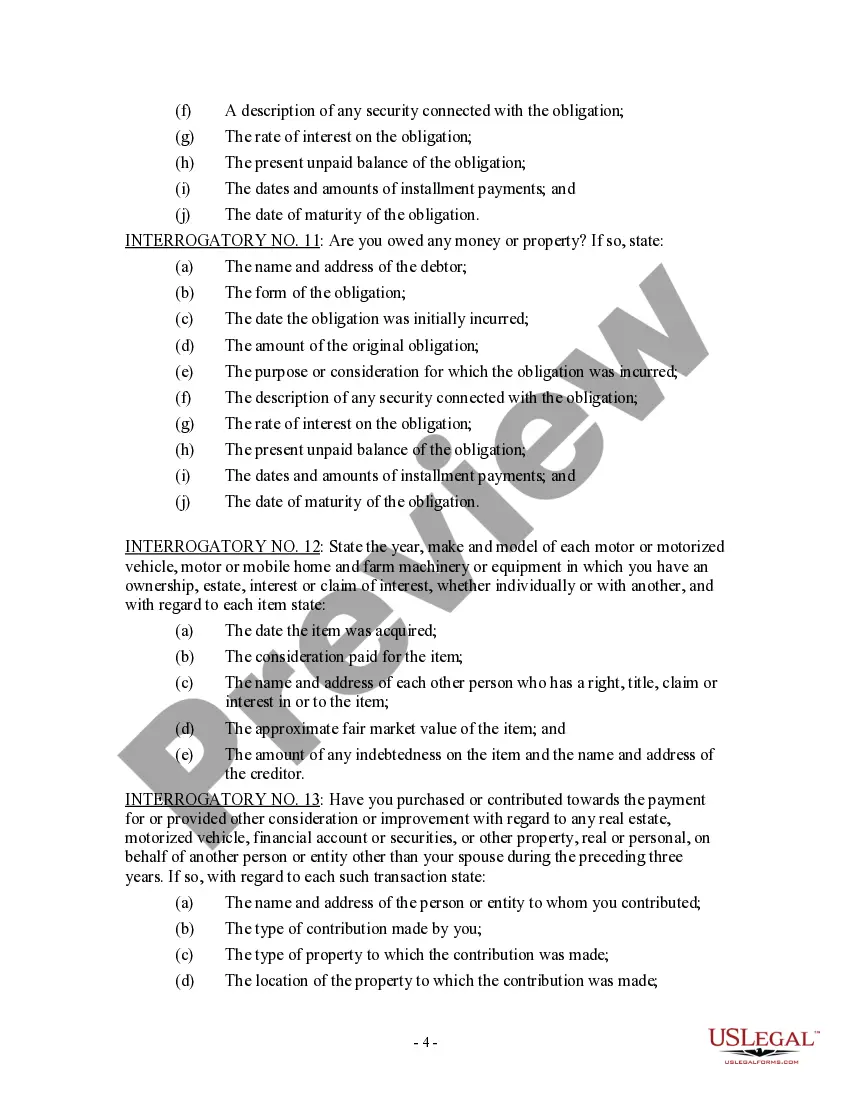
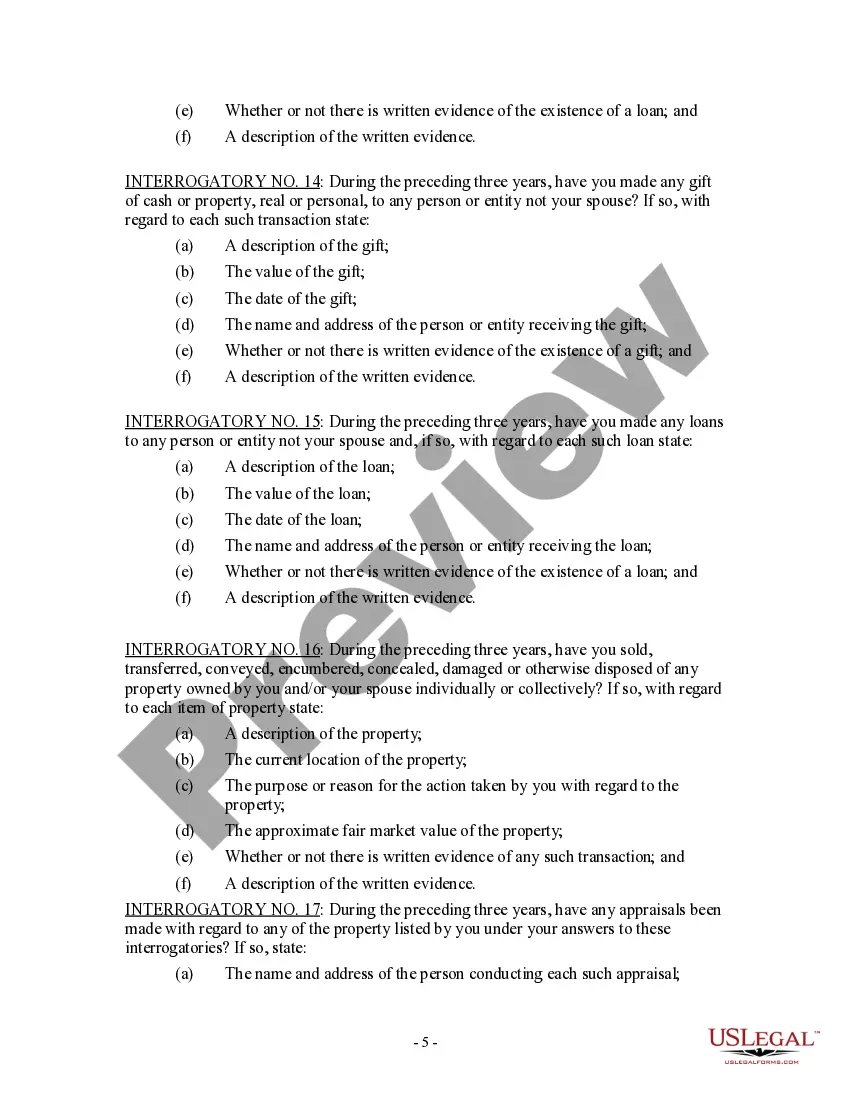
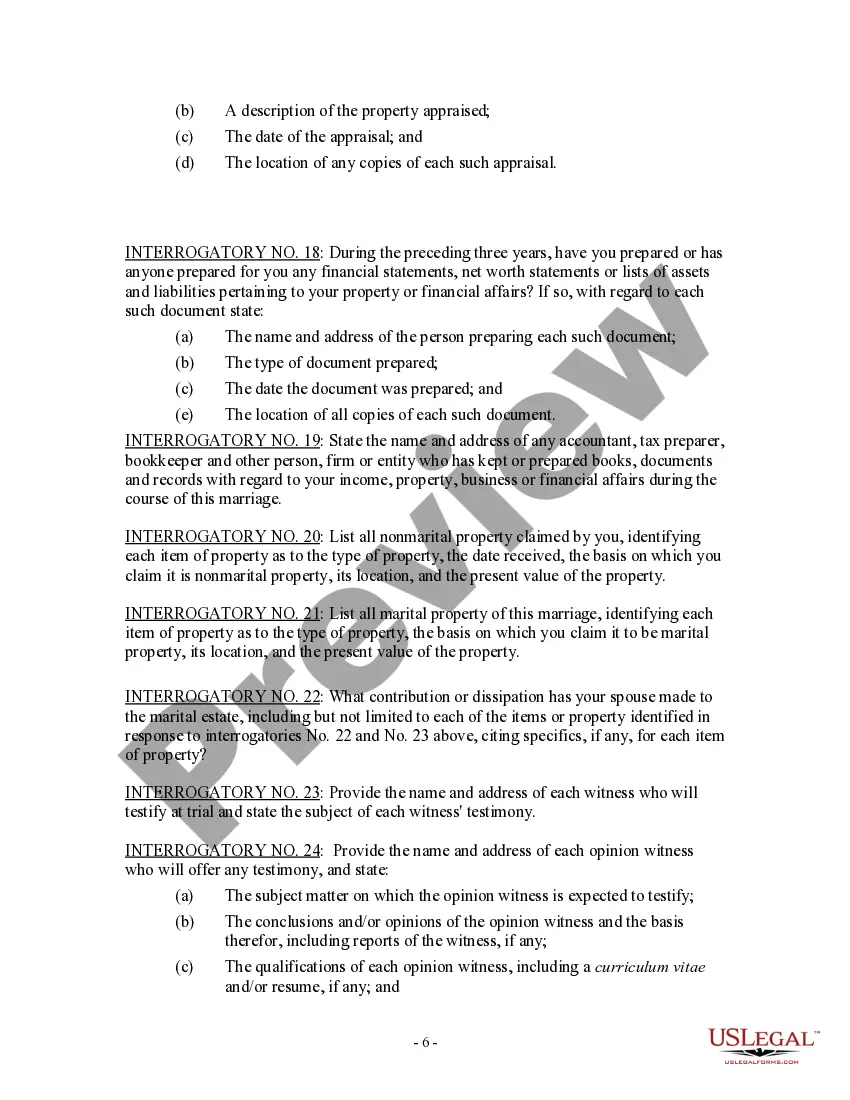
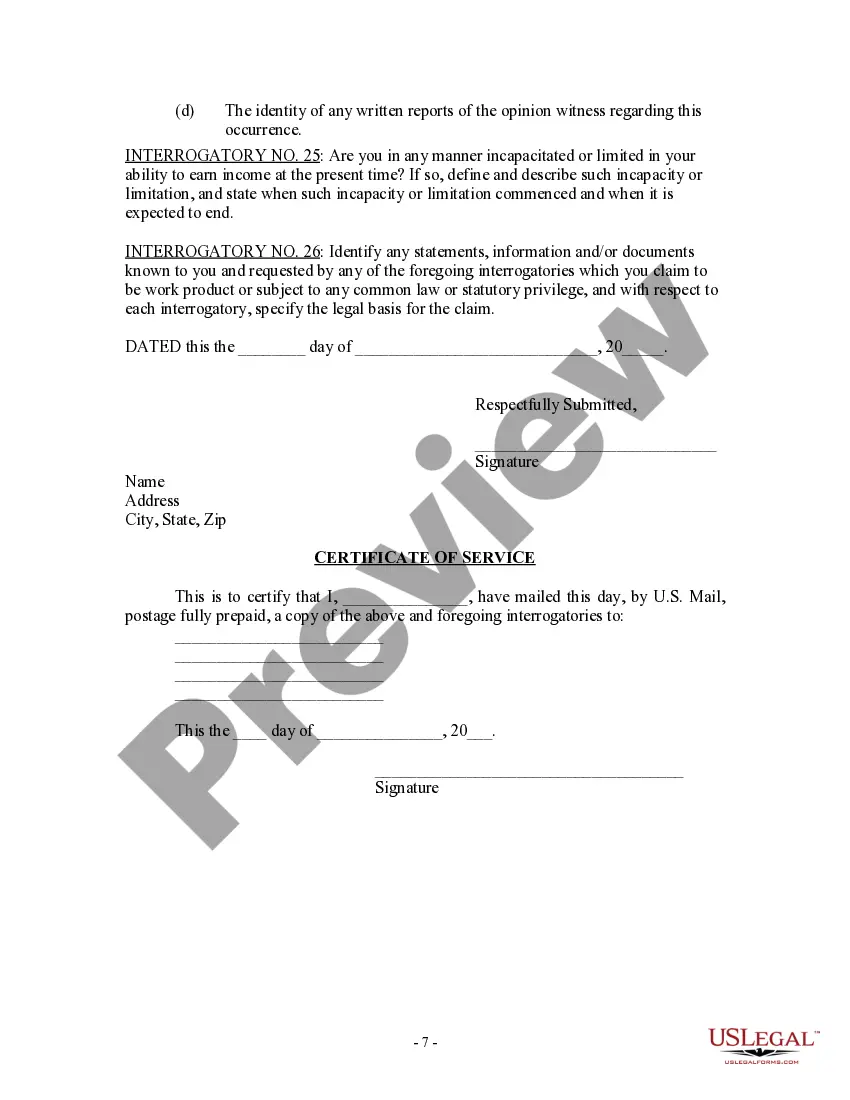
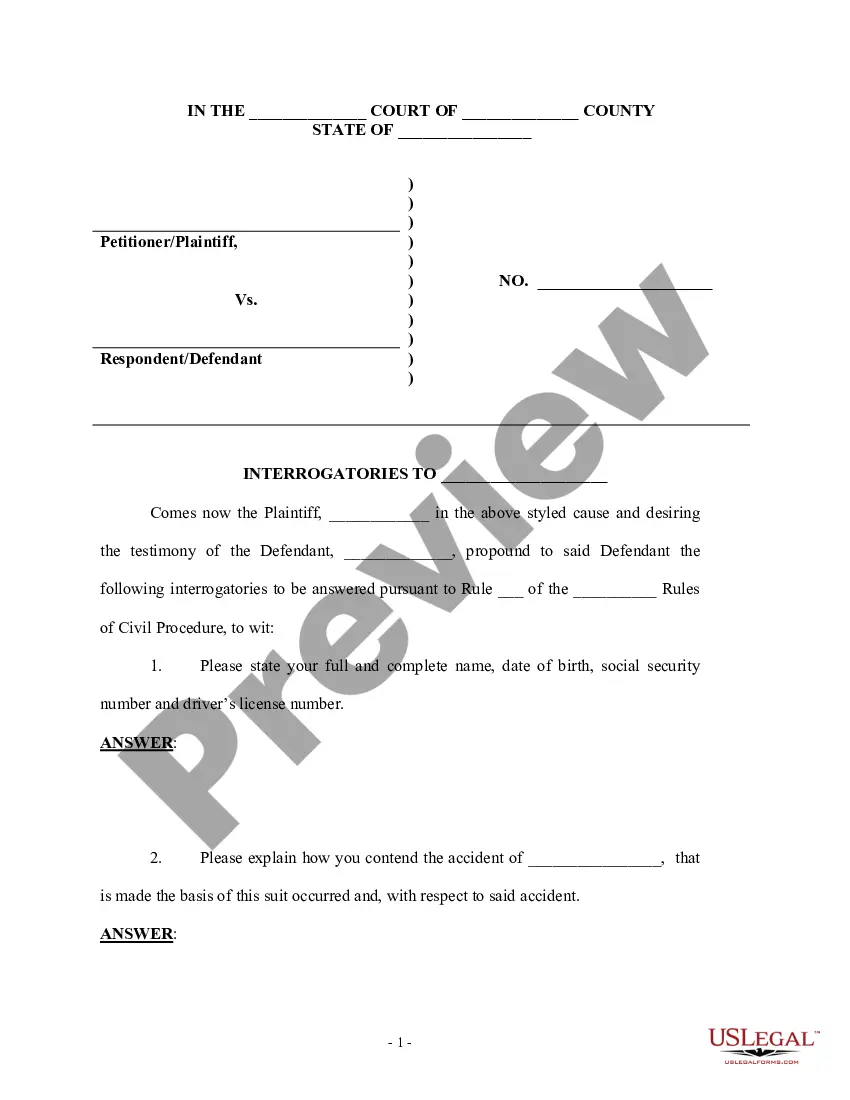
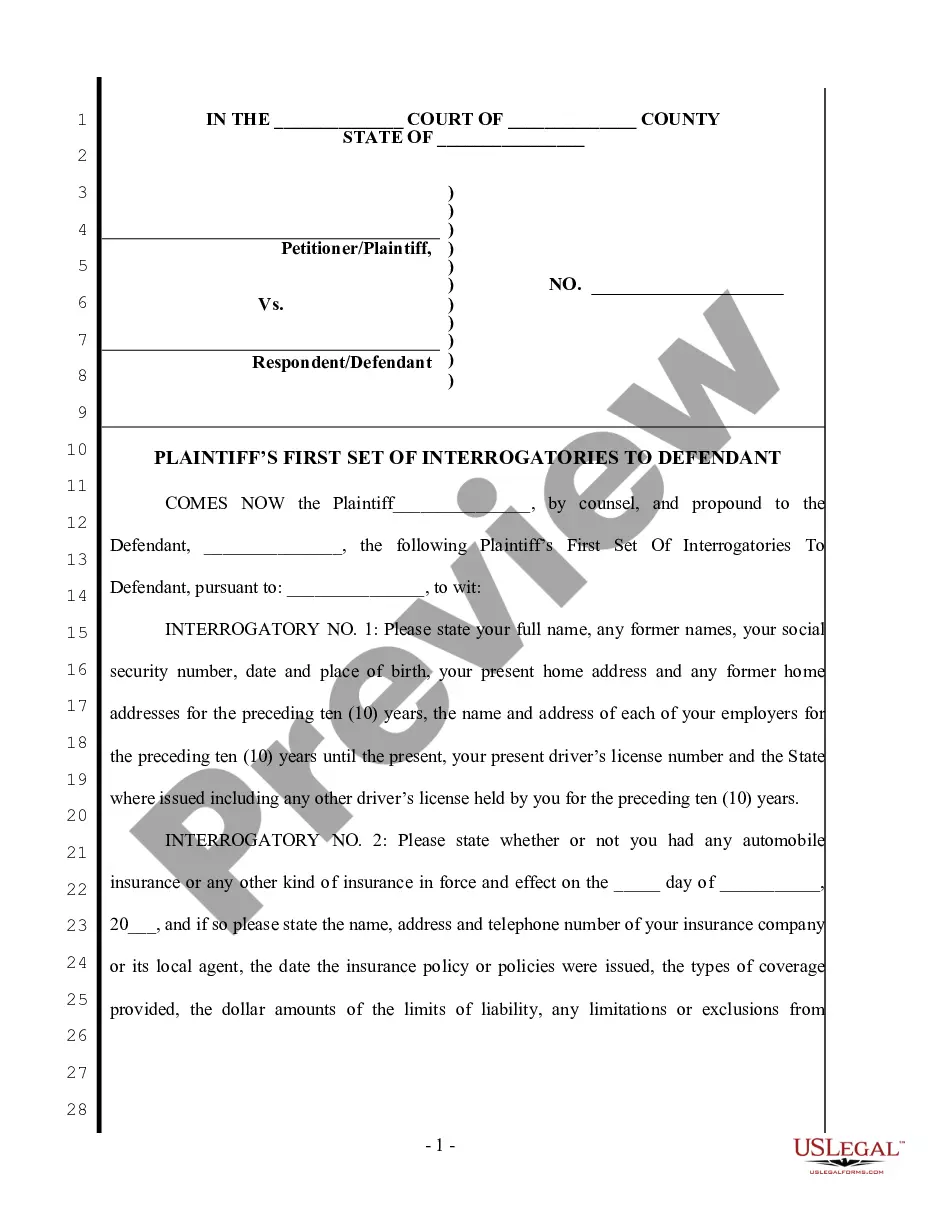
The Discovery Interrogatories for Divorce Proceeding is a legal document designed for plaintiffs or defendants in a divorce case to obtain critical information from the other party. This form includes a series of detailed questions, known as interrogatories, that require written answers. It differs from other divorce-related forms by focusing specifically on uncovering financial information and personal circumstances key to resolving the divorce. This structured approach helps streamline the discovery process during litigation.
Form components explained
- Identification of the responding party, including full name and address.
- Employment history, including income and benefits over the past three years.
- Details on real estate interests and valuations.
- Information on other sources of income and financial accounts.
- Assets including vehicles, insurance, and investments.
- Questions addressing marital and nonmarital property claims.
Common use cases
This form is useful during a divorce proceeding when one party seeks to gather pertinent information from the other party. It is typically utilized after the divorce petition has been filed but before the trial. By using this form, a party can help ensure that all financial resources and obligations are disclosed, which is essential for equitable distribution and support calculations.
Who should use this form
This form is intended for:
- Plaintiffs in a divorce who need information from the defendant.
- Defendants in a divorce who wish to respond to interrogatories from the plaintiff.
- Representatives or attorneys assisting clients in divorce proceedings.
How to complete this form
- Identify the parties involved, including their full names and contact information.
- Answer each interrogatory completely, providing accurate and truthful information.
- Include any additional questions relevant to your case that may not be covered in the template.
- Attach the Notice of Service of Interrogatories to your completed form.
- File the completed form with the court and serve a copy to the other party.
Does this form need to be notarized?
This form does not typically require notarization unless specified by local law. Make sure to check your stateâs regulations to confirm whether notarization is necessary for your jurisdiction.
Get your form ready online
Our built-in tools help you complete, sign, share, and store your documents in one place.
Make edits, fill in missing information, and update formatting in US Legal Forms—just like you would in MS Word.
Download a copy, print it, send it by email, or mail it via USPS—whatever works best for your next step.
Sign and collect signatures with our SignNow integration. Send to multiple recipients, set reminders, and more. Go Premium to unlock E-Sign.
If this form requires notarization, complete it online through a secure video call—no need to meet a notary in person or wait for an appointment.
We protect your documents and personal data by following strict security and privacy standards.

Make edits, fill in missing information, and update formatting in US Legal Forms—just like you would in MS Word.

Download a copy, print it, send it by email, or mail it via USPS—whatever works best for your next step.

Sign and collect signatures with our SignNow integration. Send to multiple recipients, set reminders, and more. Go Premium to unlock E-Sign.

If this form requires notarization, complete it online through a secure video call—no need to meet a notary in person or wait for an appointment.

We protect your documents and personal data by following strict security and privacy standards.
Common mistakes
- Failing to provide complete and accurate answers to each interrogatory.
- Not attaching the Notice of Service of Interrogatories.
- Overlooking to serve the completed form on the other party.
- Not seeking clarification for questions that are unclear or complicated.
Benefits of using this form online
- Convenience of accessing and completing the form from any location.
- Editability to personalize the form according to your specific case needs.
- Reliability of using professionally drafted templates to ensure legal compliance.
Key takeaways
- The Discovery Interrogatories are essential for obtaining key financial and personal information in divorce cases.
- Accuracy and completeness of responses are vital to avoid complications and delays.
- Users should ensure compliance with local court rules during the completion and submission of this form.
Looking for another form?

Form popularity
FAQ
How long does a divorce take in New Mexico? Once the divorce paperwork has been filed in court, it usually takes 30 to 90 days for a divorce to be final. The start to finish time of the divorce may vary depending on the caseload of the court and the availability of judges to sign the final Decree of Dissolution.
Ultimately, the cost of the divorce is based on the duration of the divorce process and the amount of conflict. Generally speaking, a New Mexico Divorce will cost between $2500 and $8000.
How long does a divorce take in New Mexico? Once the divorce paperwork has been filed in court, it usually takes 30 to 90 days for a divorce to be final. The start to finish time of the divorce may vary depending on the caseload of the court and the availability of judges to sign the final Decree of Dissolution.
For those seeking an inexpensive divorce in the state of New Mexico, online divorce is an easy, affordable and fast solution. Online divorce may be appropriate for couples who have an uncontested case. The step-by-step process of preparing divorce documents at Onlinedivorce.com makes it easy on you.
Are physically present in New Mexico and have a home in New Mexico; intend to live in New Mexico permanently or indefinitely; serve in the U.S. military and have been stationed in New Mexico for six months; or.
There is a thirty (30) day waiting period after the divorce papers are filed until the judge can sign the Final Decree. However, if there are no minor children, this waiting period can be waived by the Respondent. The basic steps for filing your uncontested New Mexico divorce are as follows: 1.
Since New Mexico is a "Community Property" state, all marital property will be divided in a 50-50 fashion according to the court unless agreed to otherwise by the divorcing spouses. This means that everything that is considered "up for grabs" in the dissolution of marriage will be distributed equally to each spouse.