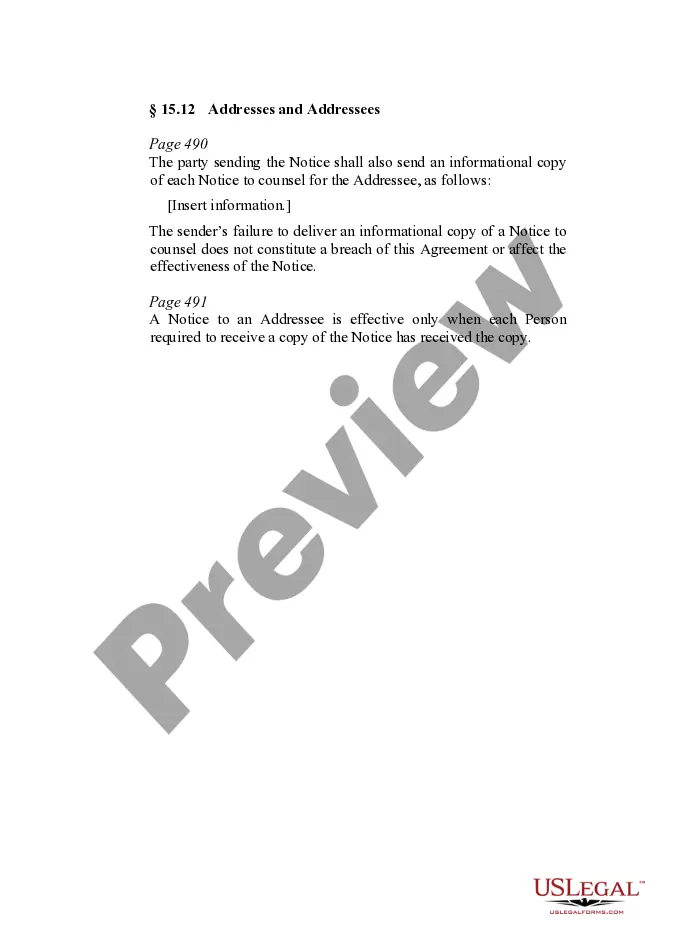
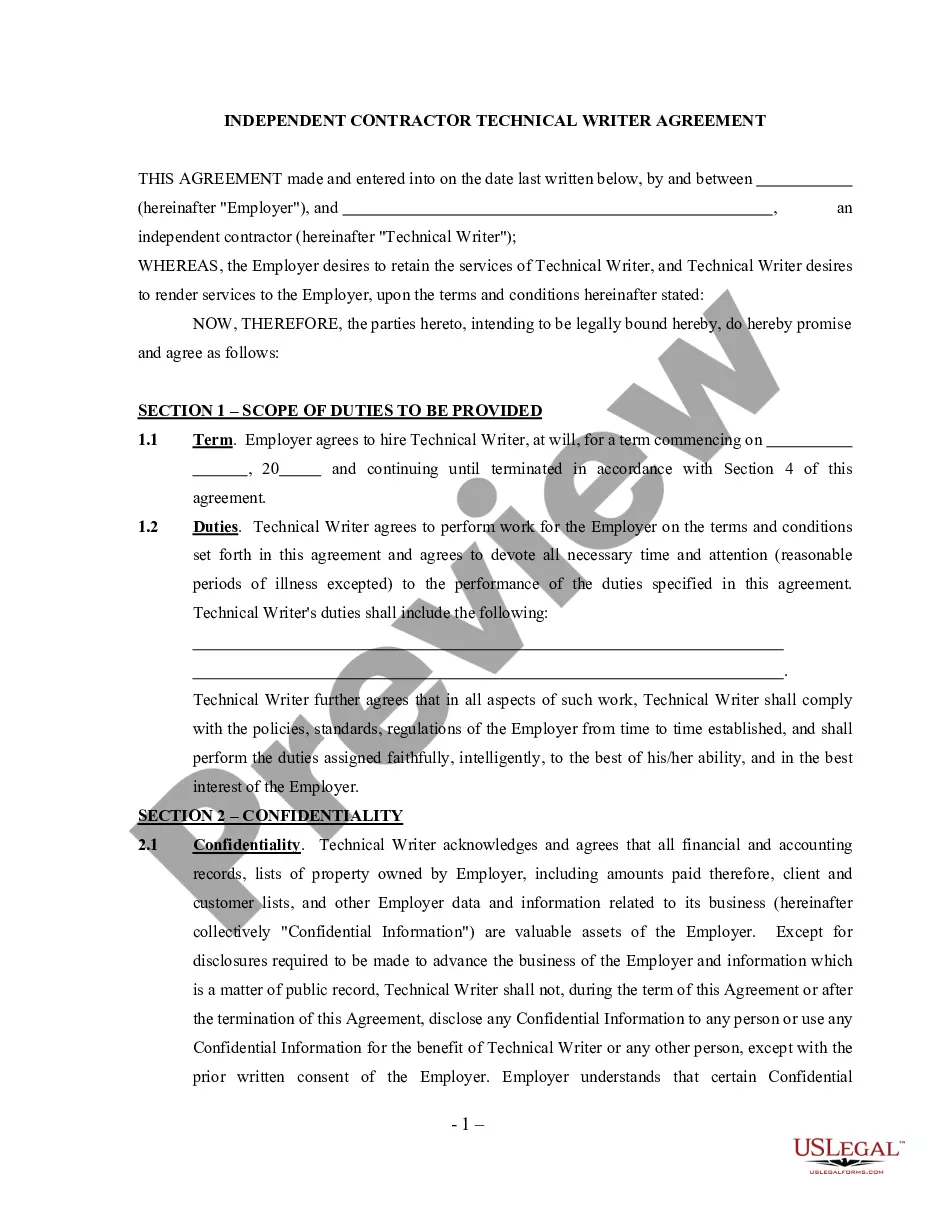
Employer hires a grant writer on an independent contractor basis to provide grant writing services as specified in the contract.
New Jersey Grant Writer Agreement - Self-Employed Independent Contractor
State:
Multi-State
Control #:
US-INDC-236
Format:
Word;
Rich Text
Instant download
Description
Free preview
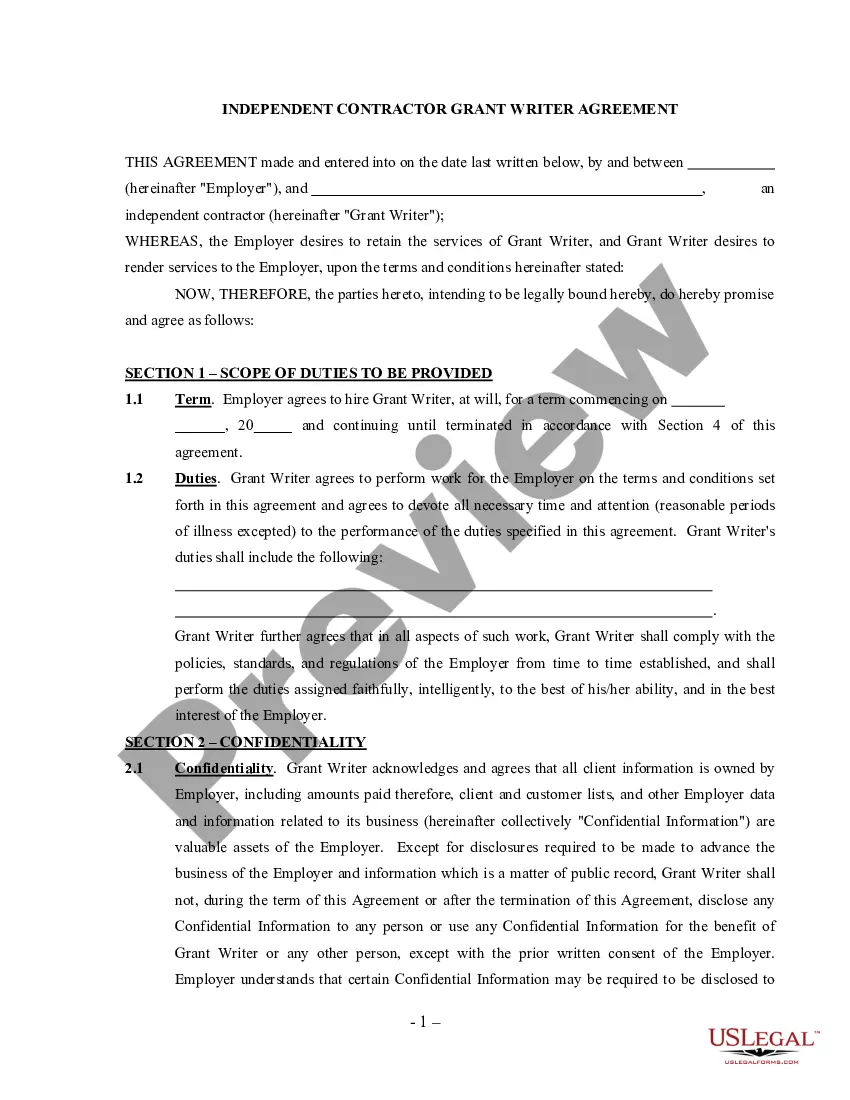
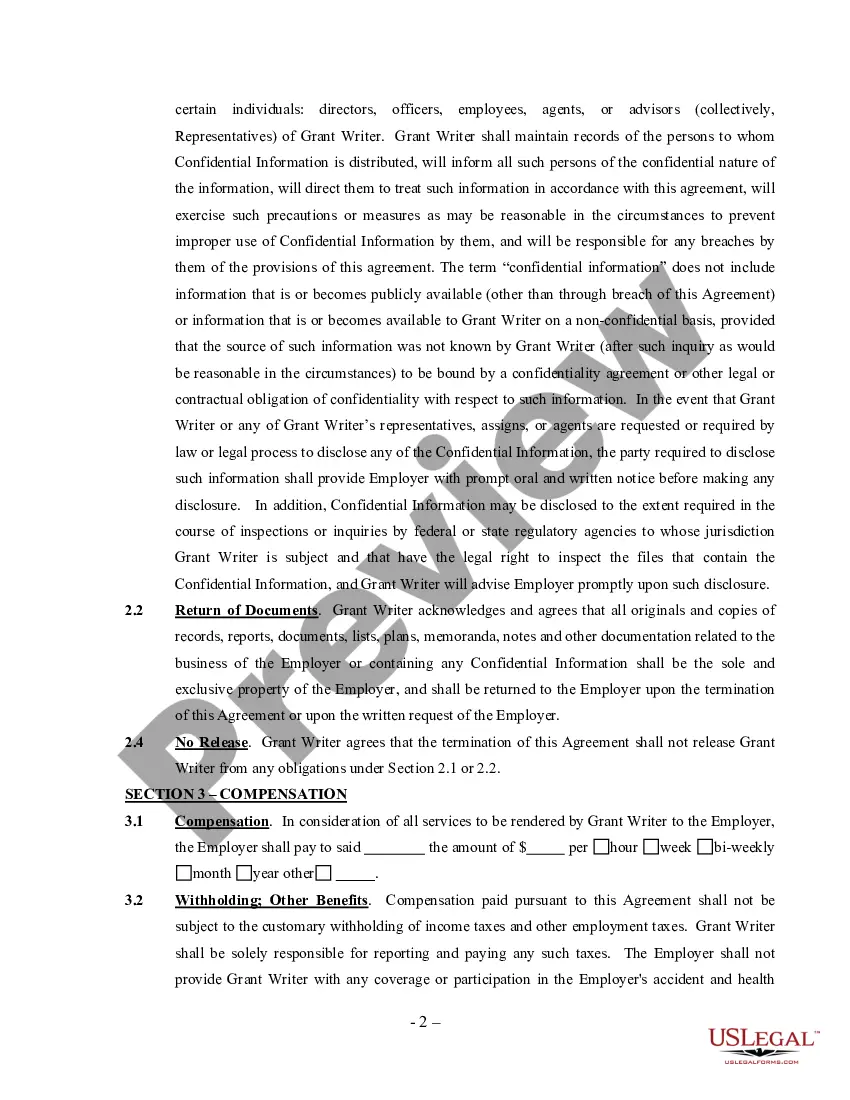
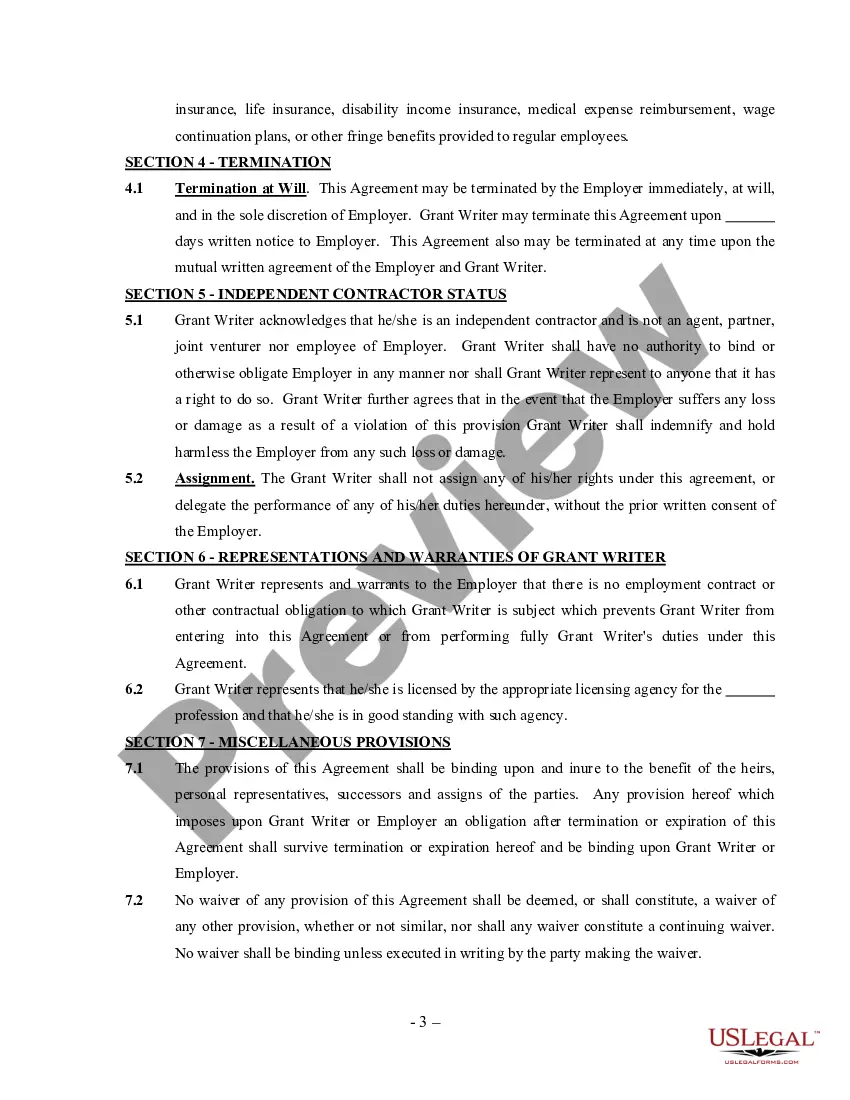
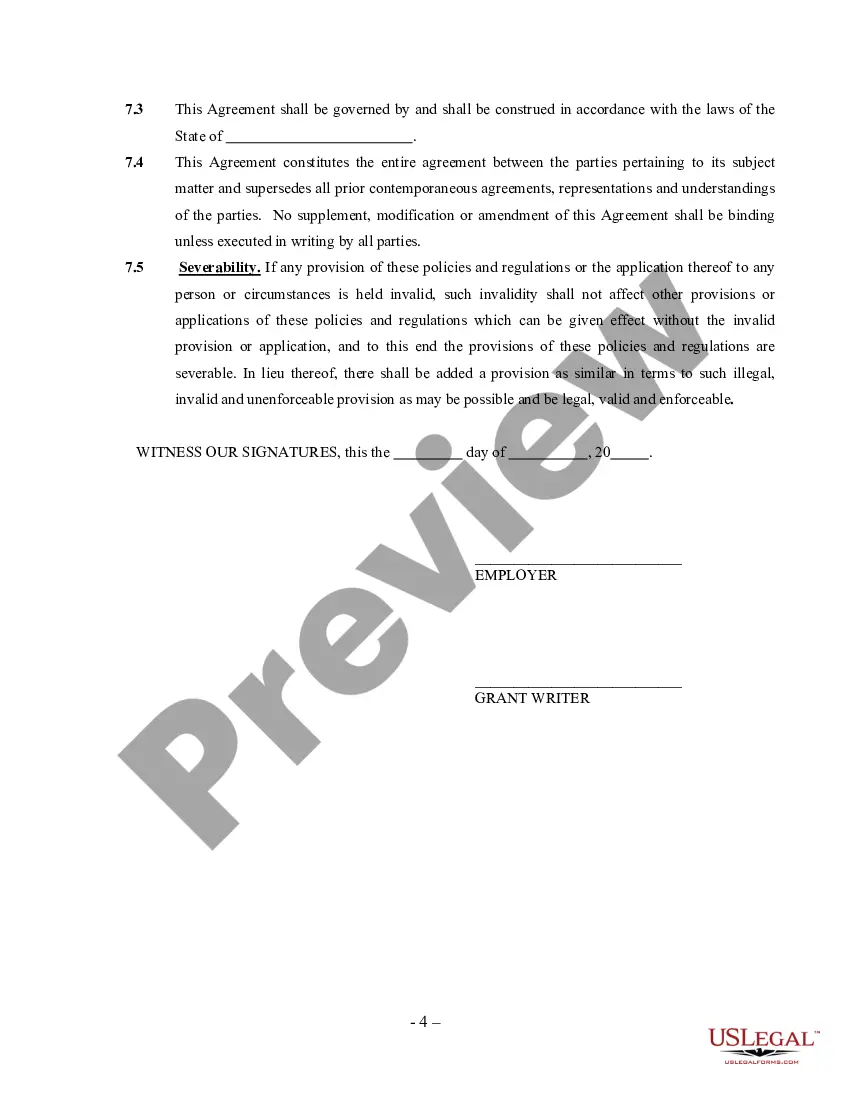
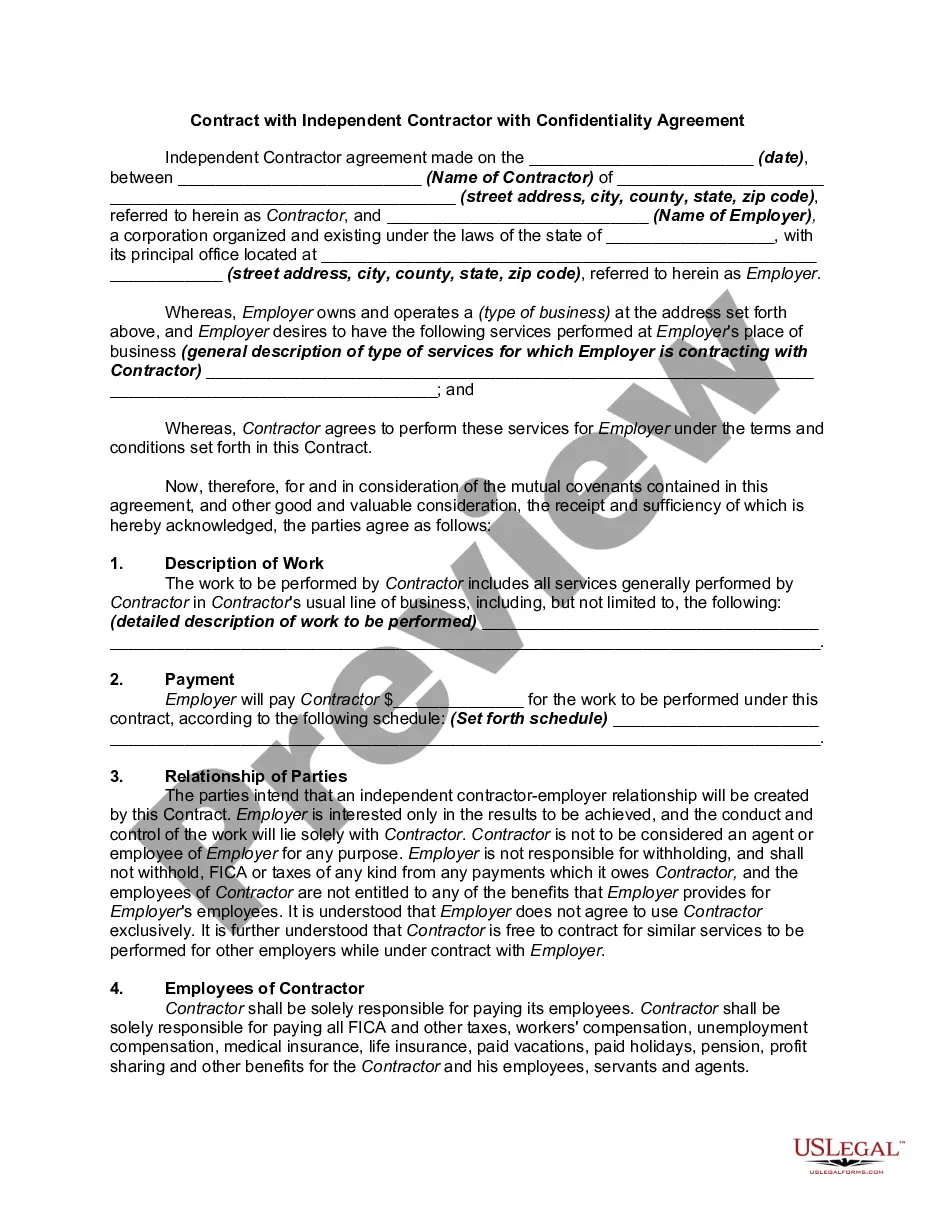
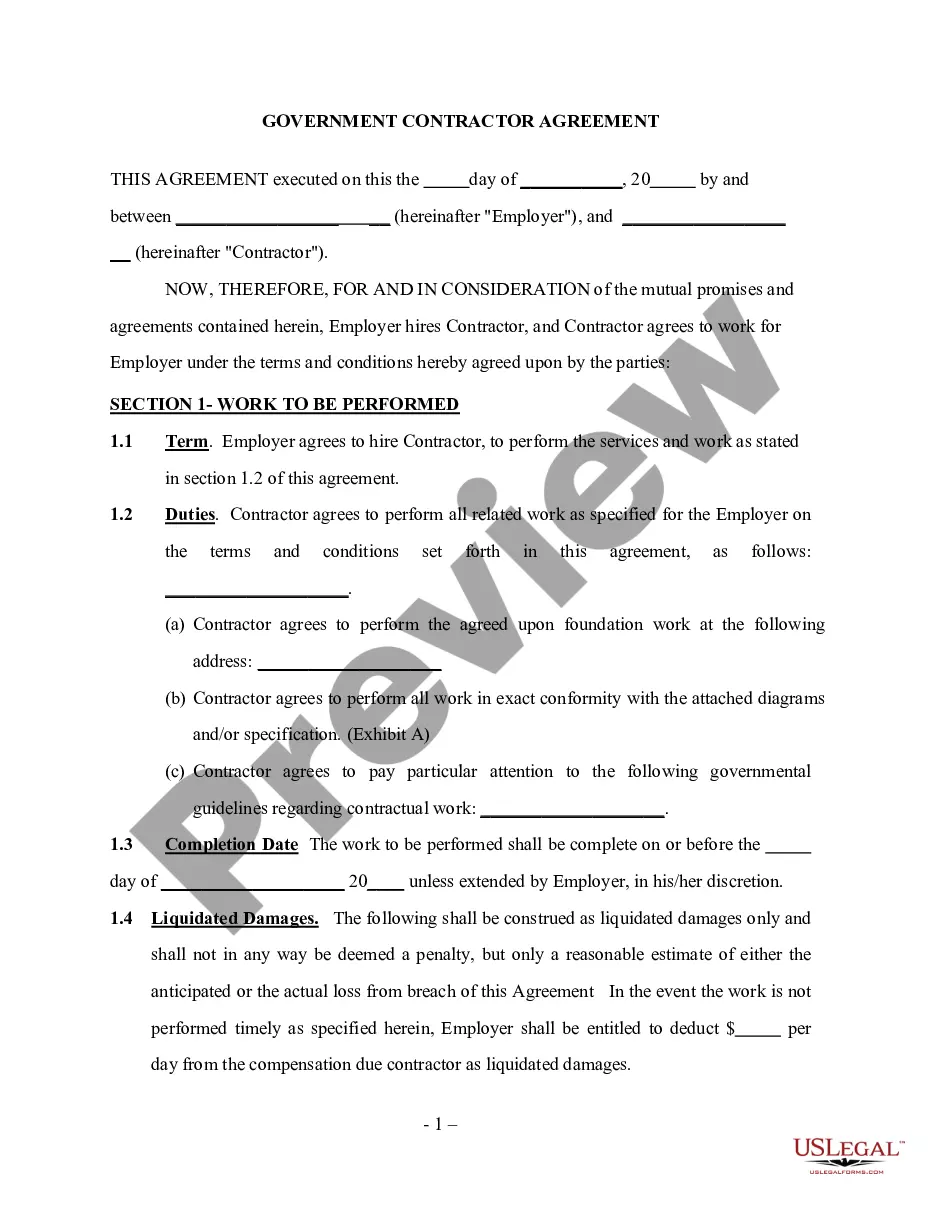
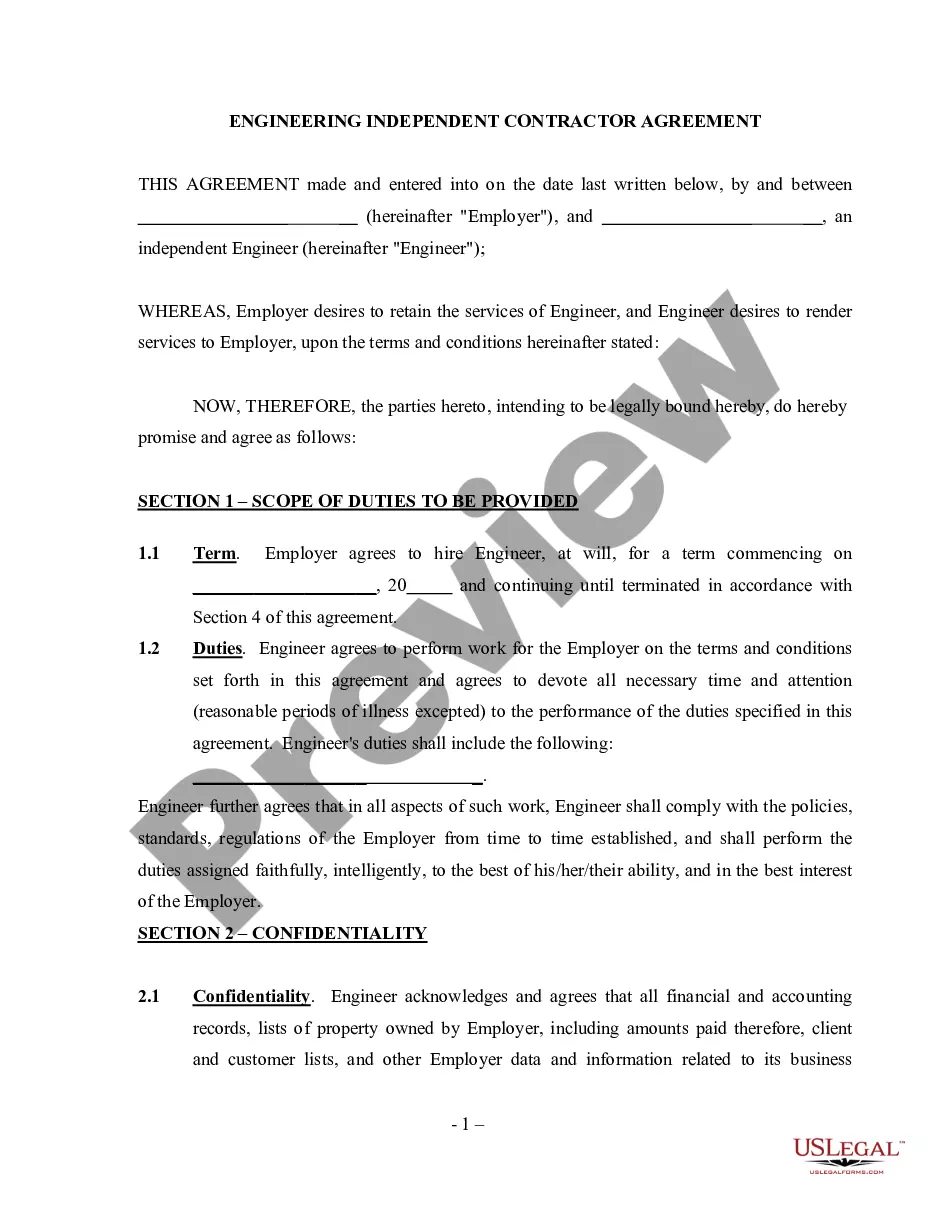
How to fill out Grant Writer Agreement - Self-Employed Independent Contractor?
Are you presently in a situation where you require documentation for either business or personal reasons nearly all the time.
There are numerous legal document templates accessible online, but finding forms you can trust is not simple.
US Legal Forms offers a vast array of form templates, such as the New Jersey Grant Writer Agreement - Self-Employed Independent Contractor, which are crafted to comply with state and federal regulations.
- If you are already familiar with the US Legal Forms website and possess an account, simply Log In.
- After that, you can download the New Jersey Grant Writer Agreement - Self-Employed Independent Contractor template.
- If you do not have an account and wish to start using US Legal Forms, follow these instructions.
- Locate the form you need and ensure it is for your specific city/region.
- Use the Review button to examine the form.
- Check the details to confirm you have selected the correct form.
- If the form is not what you are looking for, use the Search box to find the form that suits your needs.
- Once you find the right form, click on Buy now.
- Select the pricing plan you want, fill in the required information to create your account, and complete your purchase using your PayPal or credit card.
- Choose a convenient file format and download your copy.
- Access all the document templates you have purchased in the My documents section. You can download an additional copy of the New Jersey Grant Writer Agreement - Self-Employed Independent Contractor at any time if needed. Simply follow the necessary form to download or print the document template.
- Utilize US Legal Forms, one of the most extensive collections of legal forms, to save time and avoid mistakes. The service provides professionally created legal document templates that you can use for various purposes. Create your account on US Legal Forms and start making your life a bit easier.
Form popularity
FAQ
Filling out an independent contractor agreement requires attention to detail. Begin by entering the names and addresses of both parties, followed by a detailed description of the services provided, like those in a New Jersey Grant Writer Agreement - Self-Employed Independent Contractor. Be sure to include payment terms, timelines, and any confidentiality clauses before signing the agreement.
To write an independent contractor agreement, start by clearly stating the parties involved and the scope of work. Include payment terms, deadlines, and conditions for termination. When drafting this document, focus on the specifics of your arrangement, especially those relevant to a New Jersey Grant Writer Agreement - Self-Employed Independent Contractor, to ensure clarity and legal compliance.
Filling out an independent contractor form involves several key steps. You should include your full name, address, and the nature of your work, like that specified in a New Jersey Grant Writer Agreement - Self-Employed Independent Contractor. Additionally, ensure you provide your tax identification number and any other relevant information requested in the form.
To fill out a declaration of independent contractor status form, begin by entering your personal information, including your name and contact details. Next, provide a description of your services, such as those outlined in a New Jersey Grant Writer Agreement - Self-Employed Independent Contractor. Finally, sign and date the form to validate your status as an independent contractor.
Yes, a freelance writer is typically classified as an independent contractor. This means they work on a contractual basis, providing services without being an employee of a company. In the context of a New Jersey Grant Writer Agreement - Self-Employed Independent Contractor, this classification allows writers flexibility and autonomy over their work.
Writing an independent contractor agreement involves outlining the scope of work, payment terms, and deadlines. Start by detailing the project description and the responsibilities of both parties. Incorporating elements from the New Jersey Grant Writer Agreement - Self-Employed Independent Contractor can provide clarity and structure. For a comprehensive solution, consider using platforms like uslegalforms, which offer templates and guidance to ensure your agreement meets legal standards.
Freelance work and independent contracting share similarities, but they are not identical. Both involve providing services on a project basis rather than as an employee. However, a freelancer may work with multiple clients at once, while an independent contractor often has a more formal agreement, like the New Jersey Grant Writer Agreement - Self-Employed Independent Contractor, outlining specific terms and conditions. Understanding these distinctions can help you navigate your freelance career effectively.
Freelance writers do not necessarily need to establish an LLC, but it can offer significant benefits. Forming an LLC can protect your personal assets and provide tax advantages. However, if you operate under a New Jersey Grant Writer Agreement - Self-Employed Independent Contractor, you can choose to work as a sole proprietor without the added complexity of an LLC. It ultimately depends on your business goals and preferences.
Yes, an independent contractor is classified as self-employed. This means you work for yourself rather than being an employee of a company. Under the New Jersey Grant Writer Agreement - Self-Employed Independent Contractor, you have the flexibility to manage your own business and decide how to complete your work. This arrangement allows you to build your client base and set your own rates.
In New Jersey, having an operating agreement for your LLC is not mandatory, but it is highly recommended. This document outlines the management structure and operating procedures of your business, providing clarity and preventing potential disputes. By drafting an operating agreement, you establish guidelines that benefit everyone involved. To assist you, platforms like US Legal Forms can provide templates tailored to New Jersey's legal requirements.