New Jersey Apartment Lease for One Month
Description
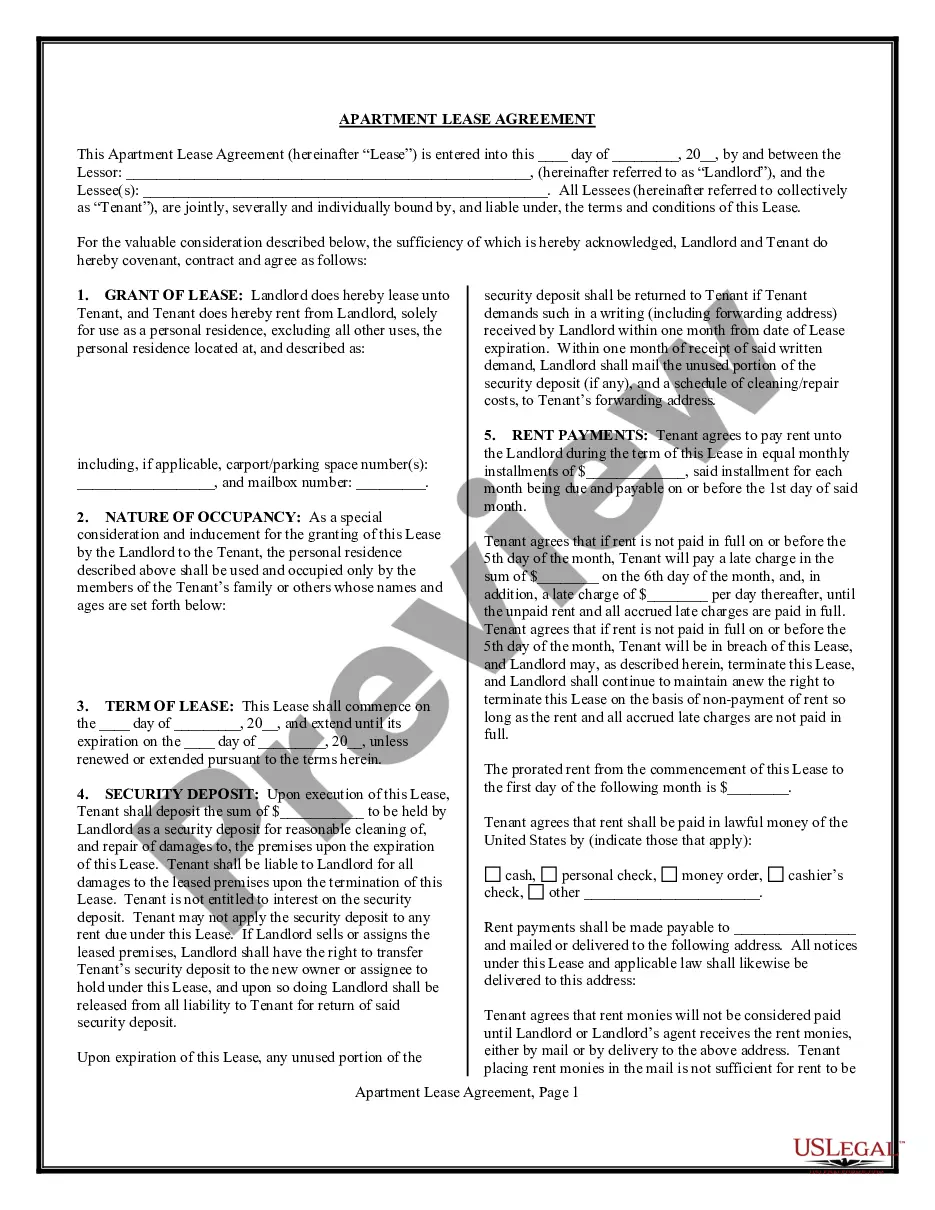
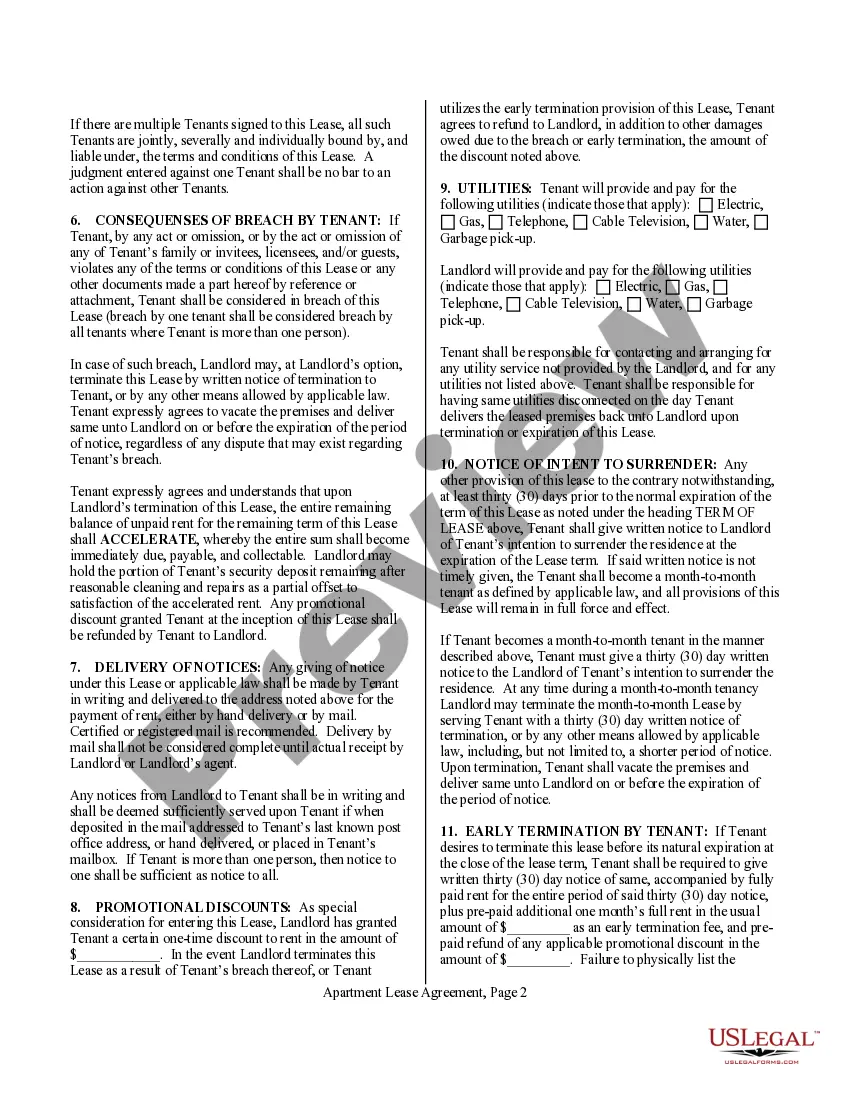
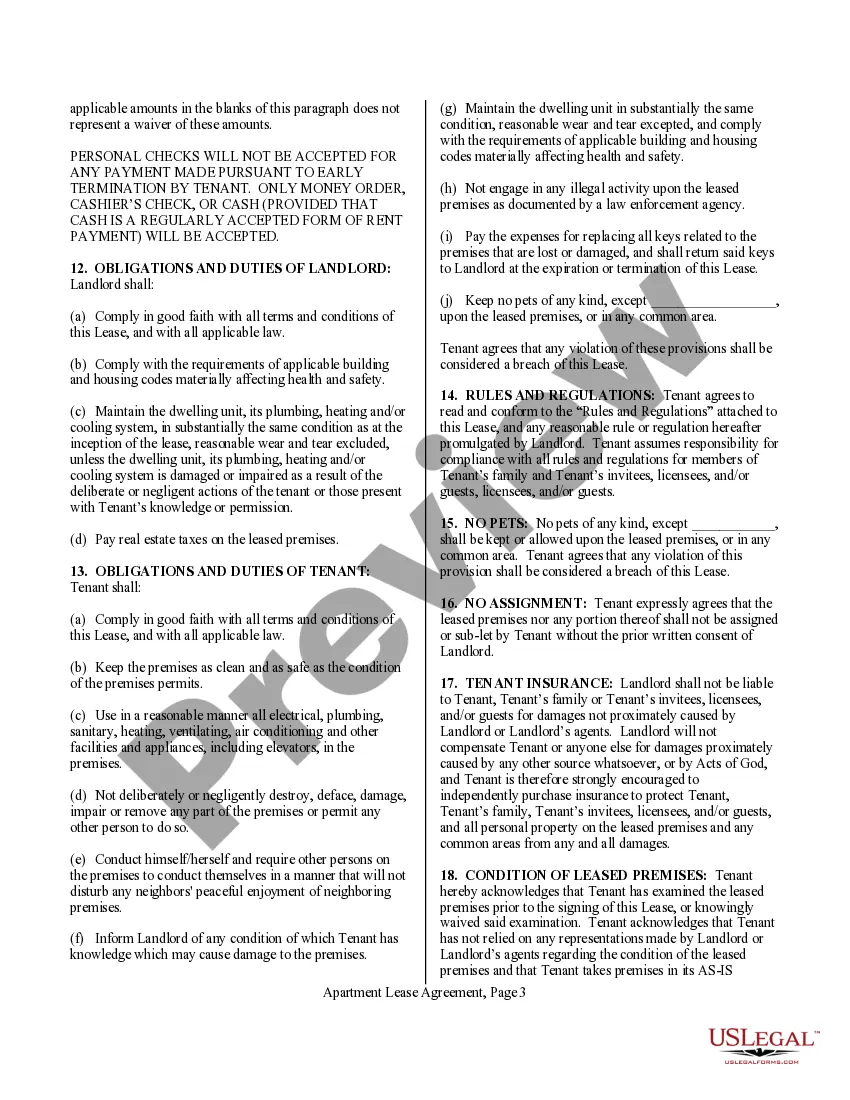
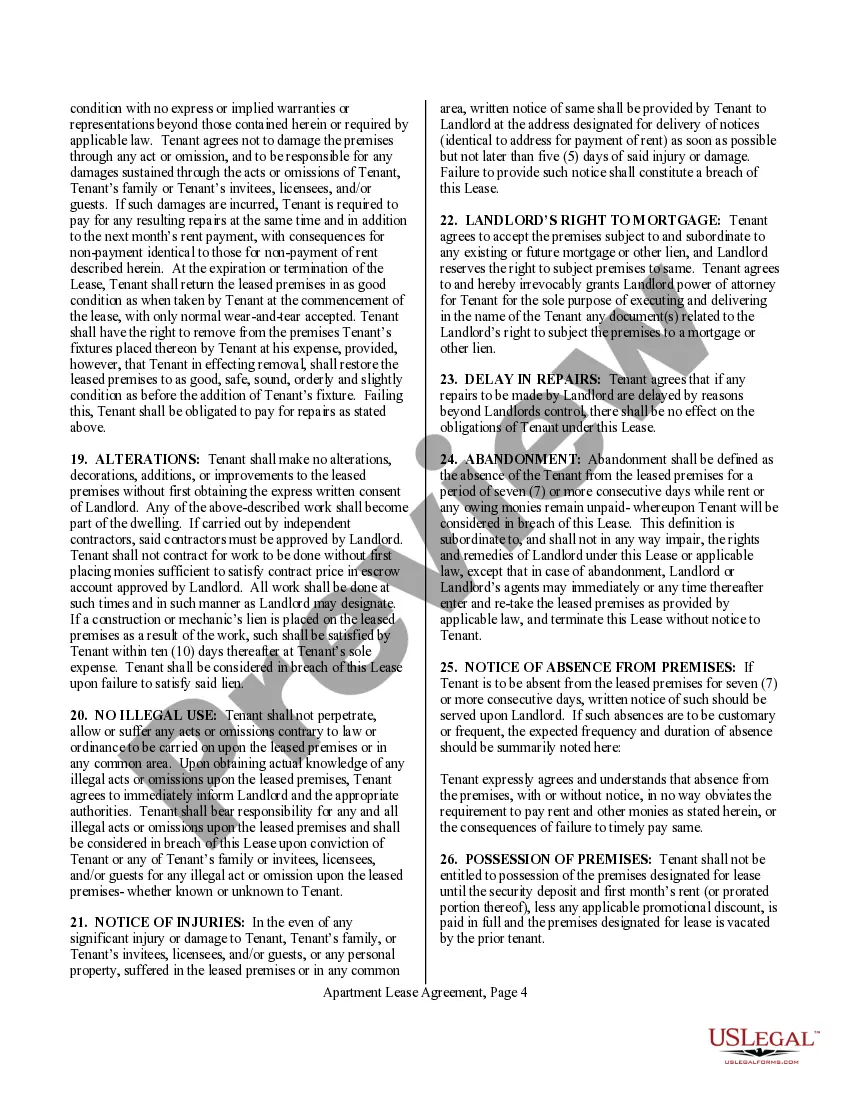
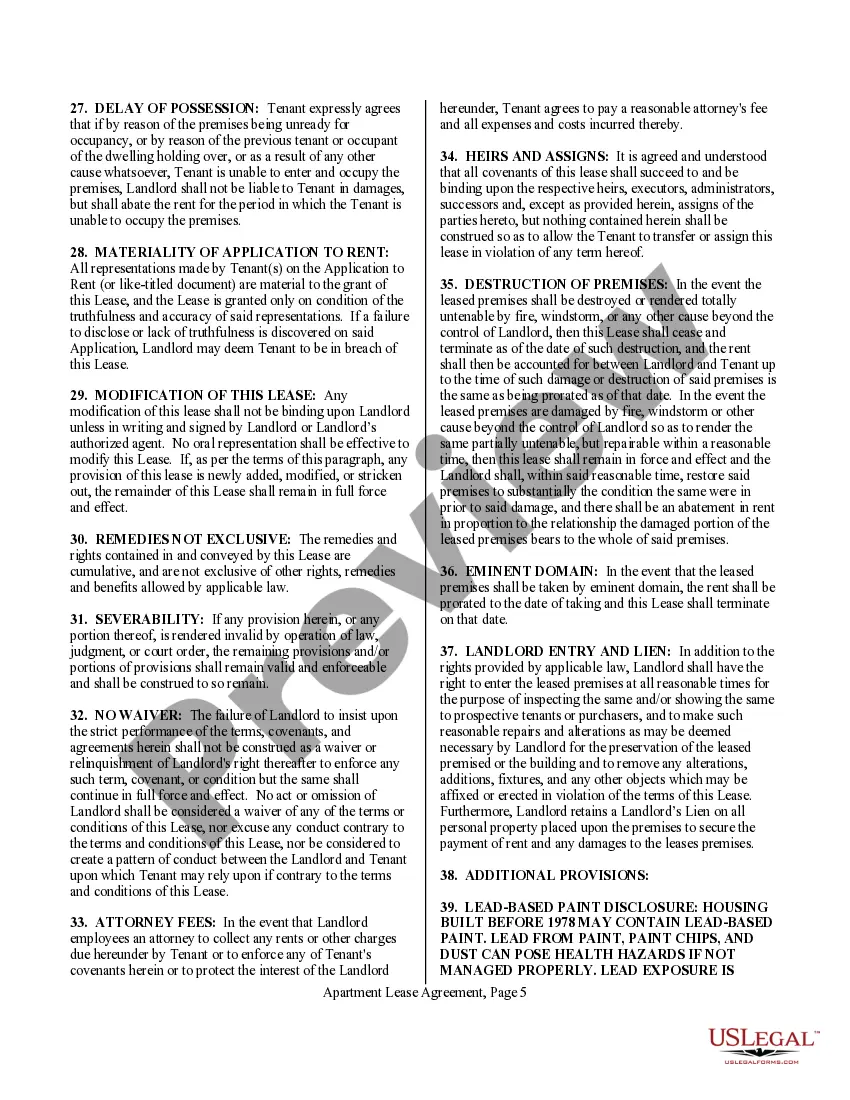
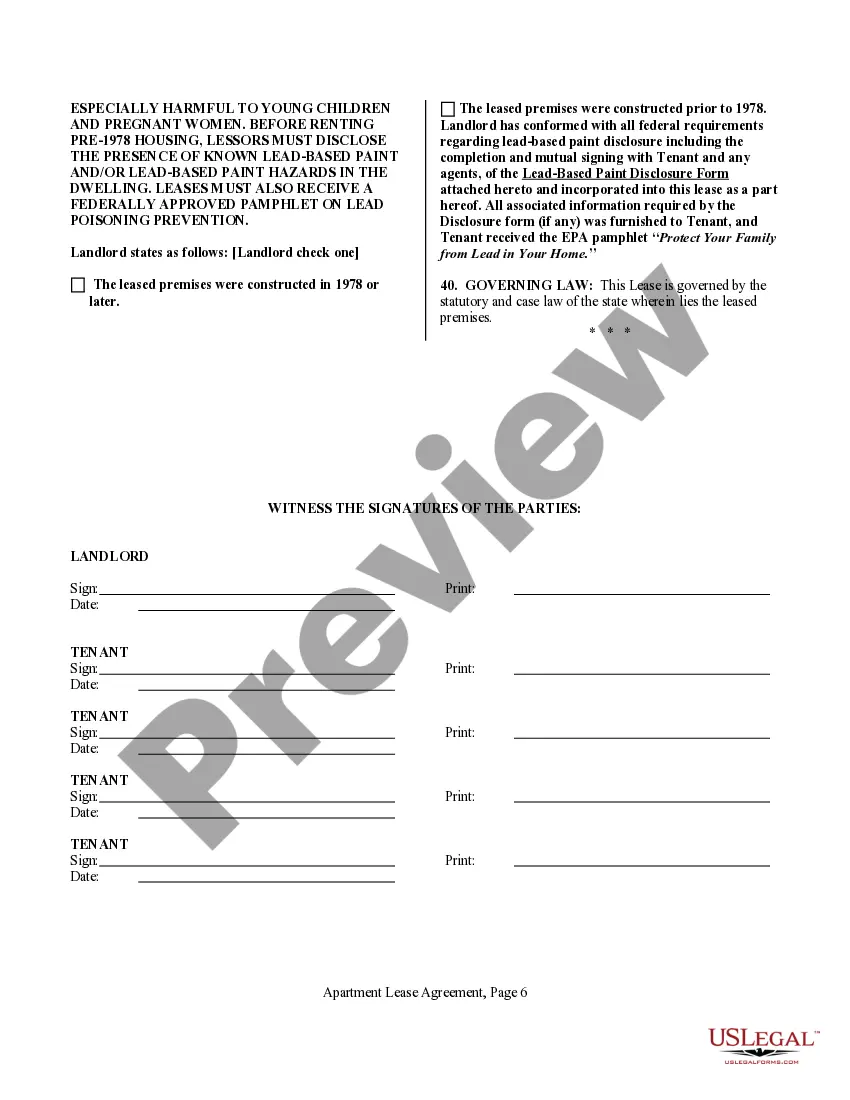
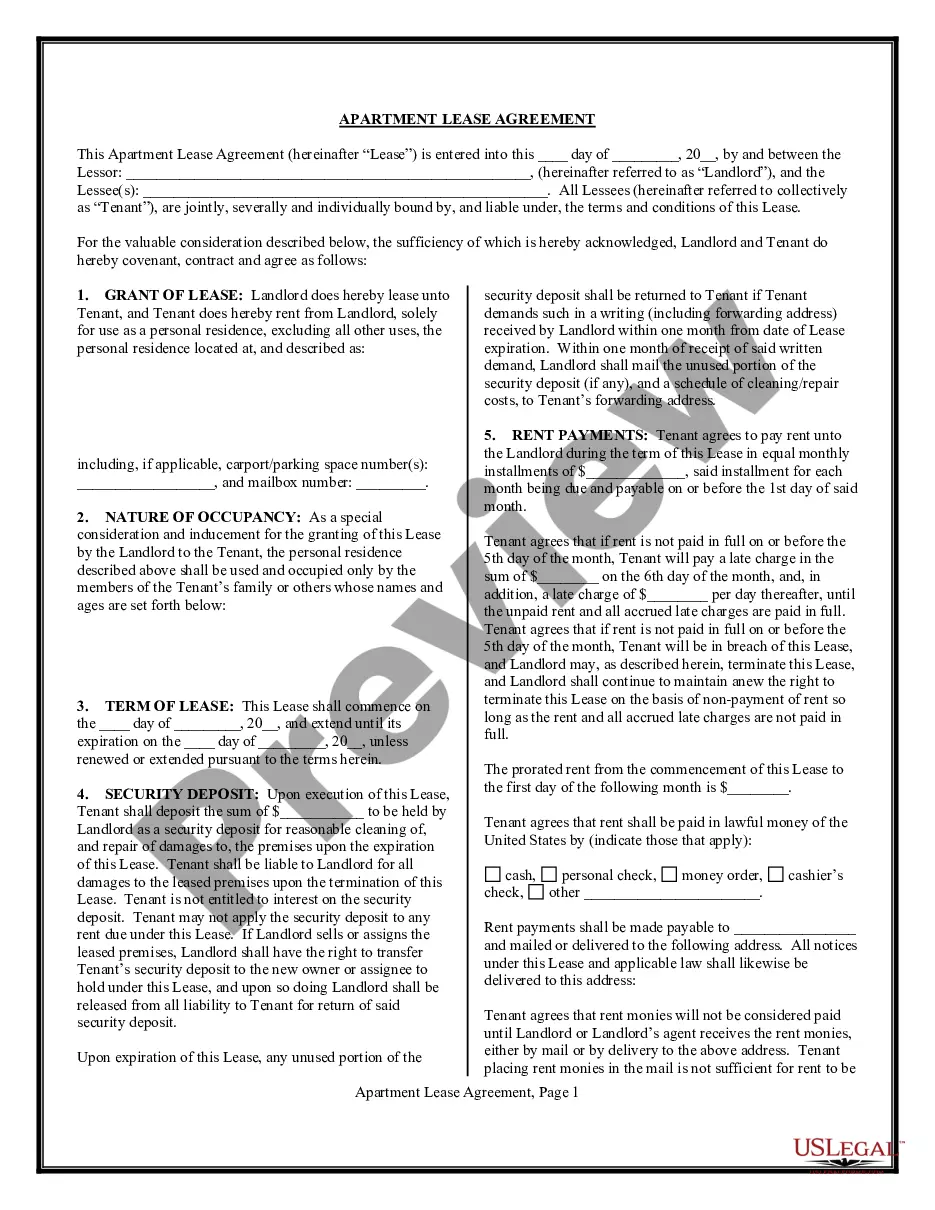

How to fill out Apartment Lease For One Month?
If you require to accumulate, retrieve, or produce legal document templates, utilize US Legal Forms, the largest repository of legal forms accessible online.
Utilize the site’s straightforward and user-friendly search feature to locate the documents you need.
Various templates for business and personal purposes are organized by categories and states, or keywords.
Step 3. If you are not satisfied with the form, use the Search area at the top of the screen to find other templates in the legal form repository.
Step 4. Once you have found the form you need, select the Get now button. Choose your preferred pricing plan and enter your details to register for an account.
- Use US Legal Forms to locate the New Jersey Apartment Lease for One Month with just a few clicks.
- If you are currently a US Legal Forms member, sign in to your account and click the Download button to find the New Jersey Apartment Lease for One Month.
- You can also access forms you previously downloaded in the My documents section of your account.
- If you are using US Legal Forms for the first time, follow the instructions below.
- Step 1. Ensure you have selected the form for the correct city/state.
- Step 2. Use the Preview feature to review the form’s contents. Make sure to read the description.
Form popularity
FAQ
term lease agreement in New Jersey typically covers rental periods of fewer than six months. It offers flexibility for both landlords and tenants, particularly in fluctuating rental markets. If you seek a New Jersey apartment lease for one month, using a service like US Legal Forms can streamline the creation and management of your lease.
In New Jersey, the state law (§ .2) limits landlords to charging no more than one and a half months of rent for a month-to-month rental agreement of up to one year. In addition, the security deposit must be returned to the renter within 30 days of the renter moving out of the real estate.
The Eviction Process in NJ with No LeaseYour landlord is required to go through the court in order to legally evict you. Your landlord is also not permitted from unilaterally locking you out of your home, removing your personal belongings, or shutting off any utilities.
Non-renewal of the lease after the rental period ends New Jersey law states that landlords cannot evict a tenant or force them to vacate the property without probable cause. As long as the tenant does not violate any rules, they can stay until their rental period ends.
For those without a lease, you are vulnerable to the rent being increased at any point during your rental period. However, it's important to know that even without a lease your landlord is still required to give you a 30-day notice for ending your lease or for increasing your rent.
Cite: N.J.S.A -9.4. Under the law, a tenant must give the landlord written notice to end a lease early. The lease will then end 30 days after the landlord receives this notice. You are required to pay the rent until this 30th day.
No residential landlord may evict or fail to renew a lease, whether it is a written or an oral lease without good cause. The landlord must be able to prove in court that he has grounds for an eviction.
Renters who do not have leases and pay rent on a monthly basis are called month-to-month tenants. In localities without rent regulation, tenants who stay past the end of a lease are treated as month-to-month tenants if the landlord accepts their rent (Real Property Law § 232-c).
Bishop, 15 N.J. Super. 266. A month-to-month tenant must give written notice of lease termination at least one full month prior to moving. Most yearly leases require a 60 to 90 day notice from the tenants in order to terminate the lease.
Under rent reform laws passed by the New York state legislature in 2019, landlords must give advance written notice to tenants, including those renting month-to-month, if they intend to terminate their leases. If you've been in possession of the apartment for less than a year, you're entitled to 30 days notice.