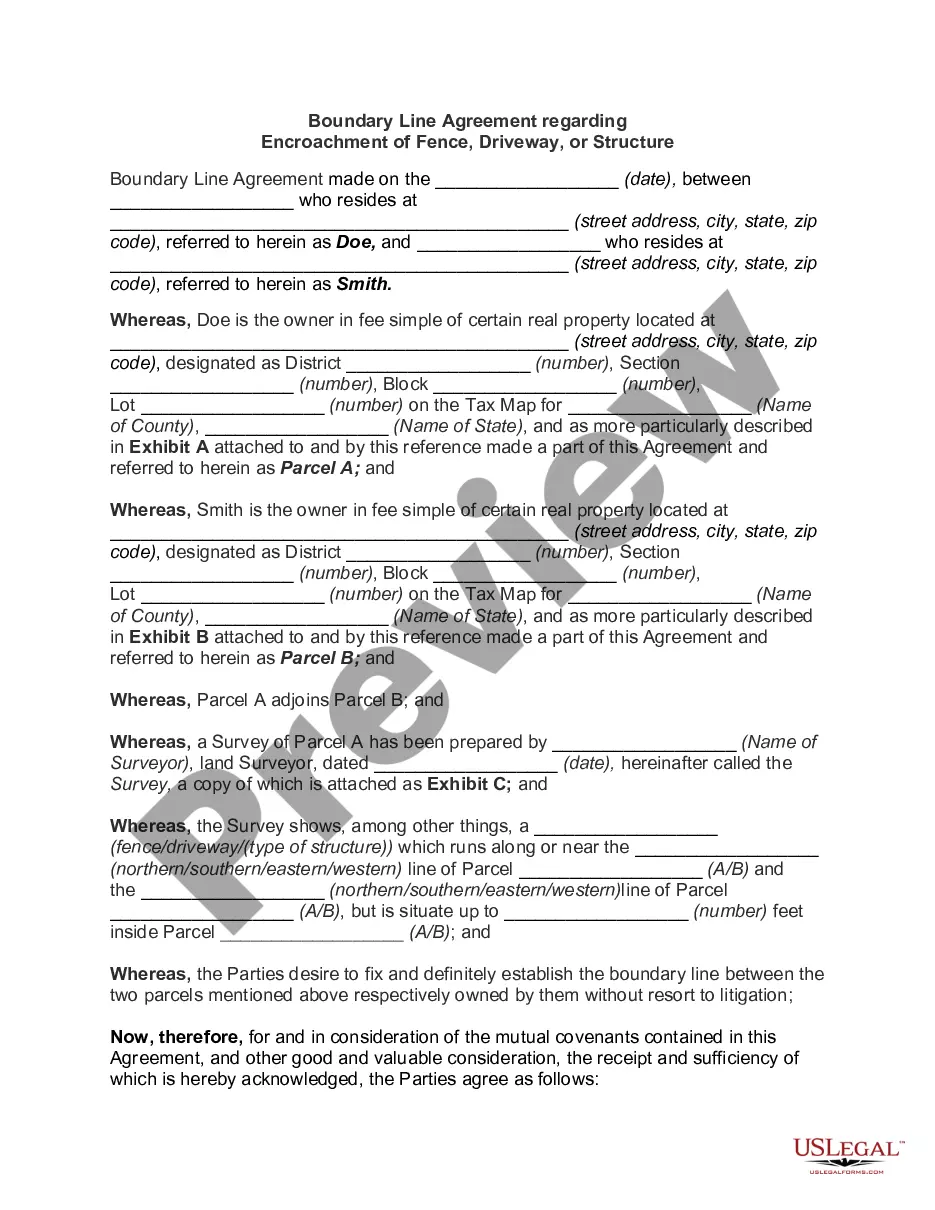
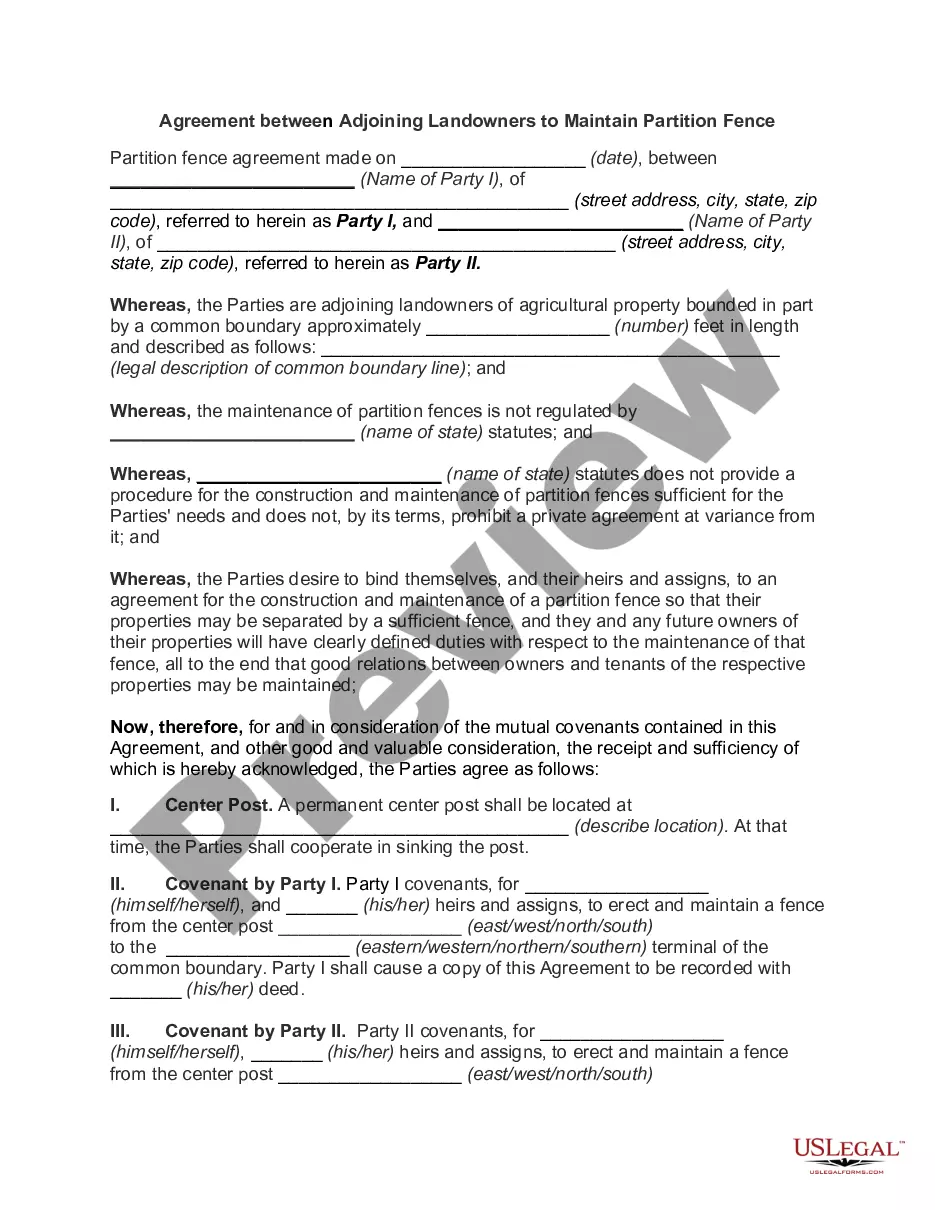
New Jersey Fence Line Agreement
Description

Get your form ready online
Our built-in tools help you complete, sign, share, and store your documents in one place.
Make edits, fill in missing information, and update formatting in US Legal Forms—just like you would in MS Word.
Download a copy, print it, send it by email, or mail it via USPS—whatever works best for your next step.
Sign and collect signatures with our SignNow integration. Send to multiple recipients, set reminders, and more. Go Premium to unlock E-Sign.
If this form requires notarization, complete it online through a secure video call—no need to meet a notary in person or wait for an appointment.
We protect your documents and personal data by following strict security and privacy standards.
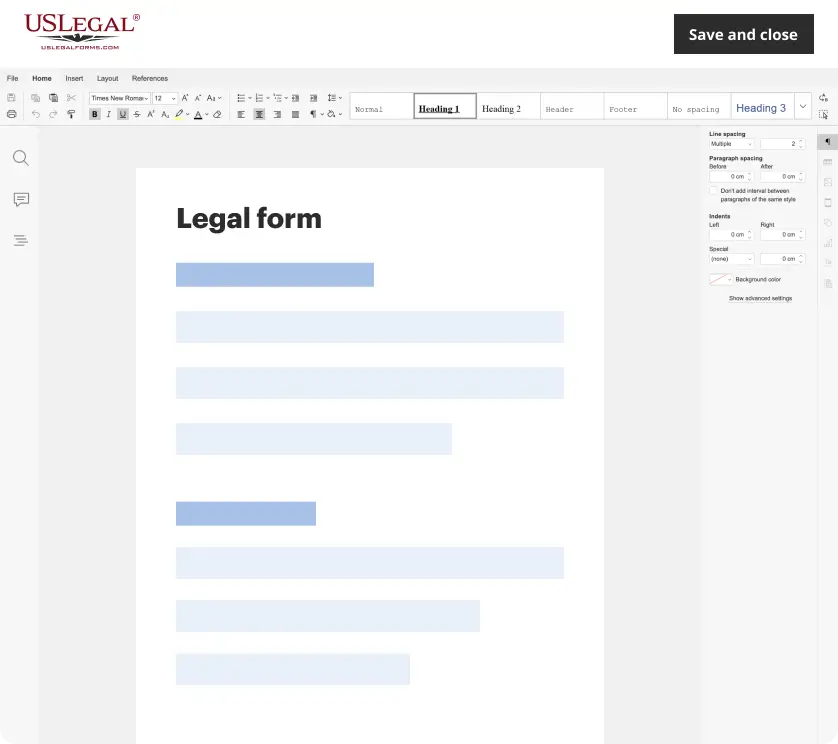
Make edits, fill in missing information, and update formatting in US Legal Forms—just like you would in MS Word.
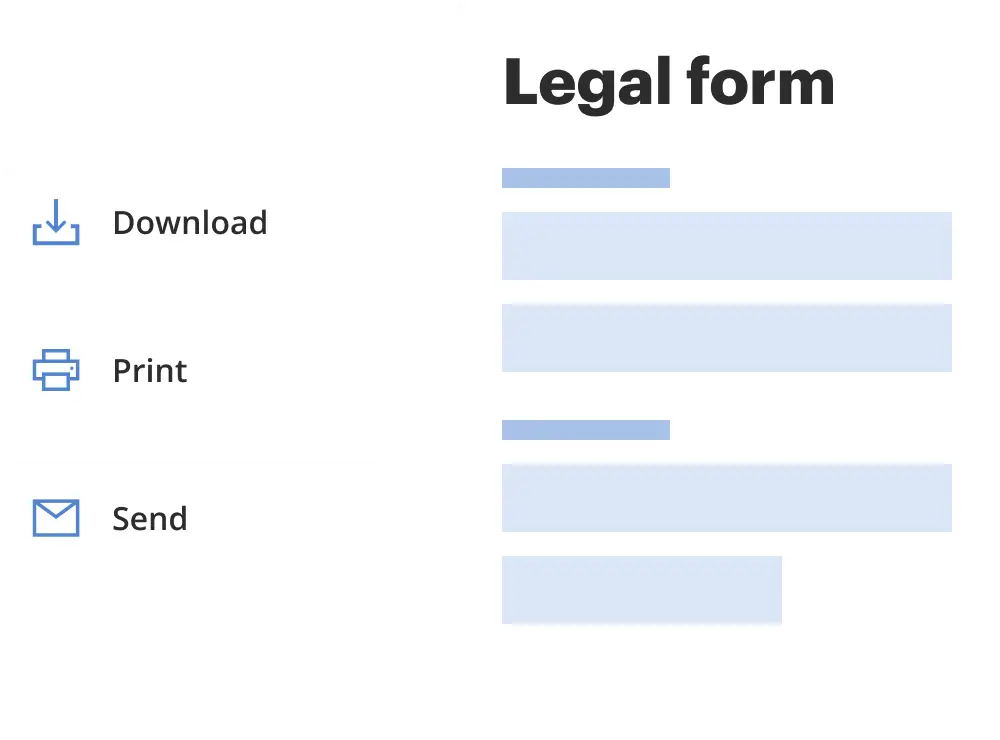
Download a copy, print it, send it by email, or mail it via USPS—whatever works best for your next step.
Sign and collect signatures with our SignNow integration. Send to multiple recipients, set reminders, and more. Go Premium to unlock E-Sign.

If this form requires notarization, complete it online through a secure video call—no need to meet a notary in person or wait for an appointment.
We protect your documents and personal data by following strict security and privacy standards.
Looking for another form?
How to fill out Fence Line Agreement?
You may spend hours online attempting to locate the legal document template that meets your state and federal needs.
US Legal Forms offers a vast array of legal forms that are reviewed by experts.
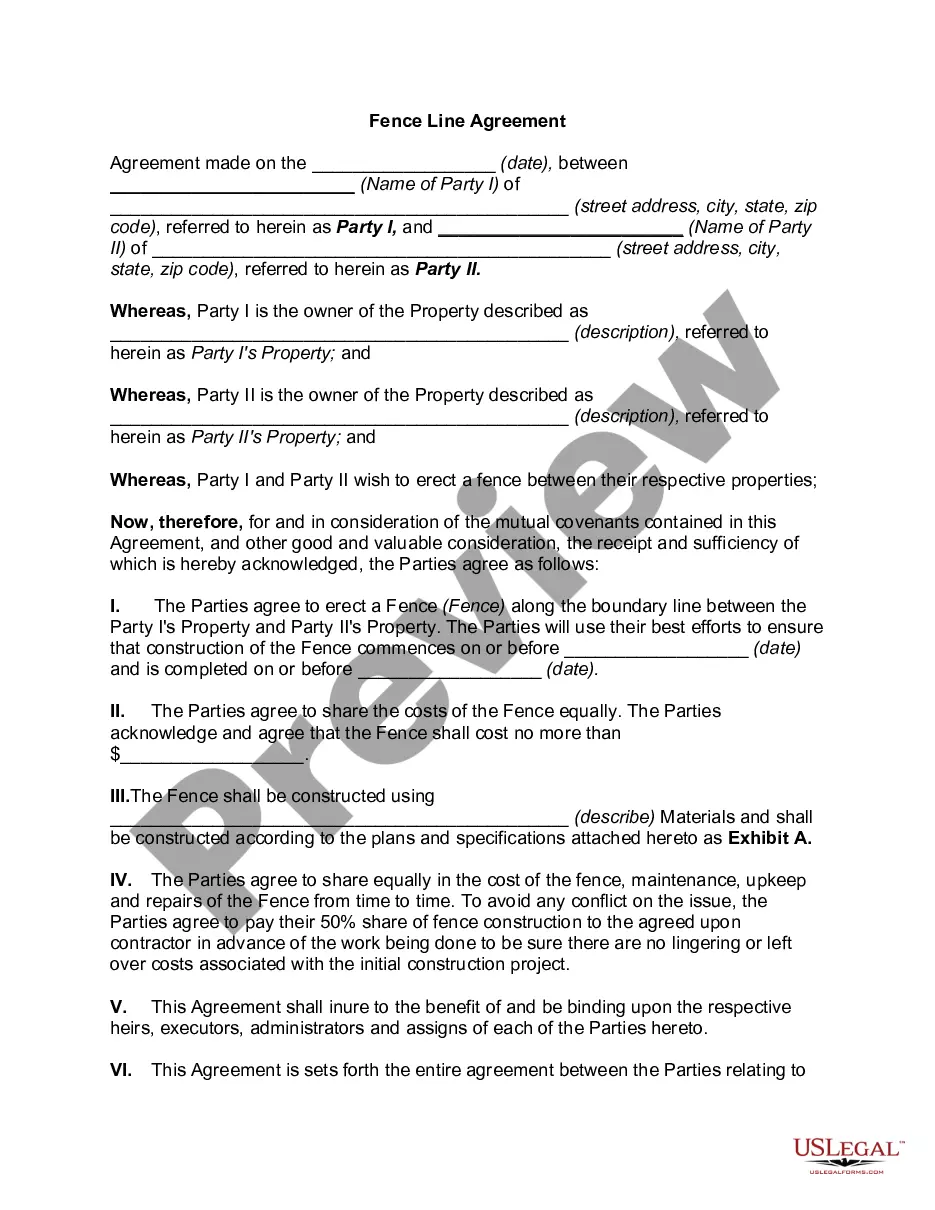
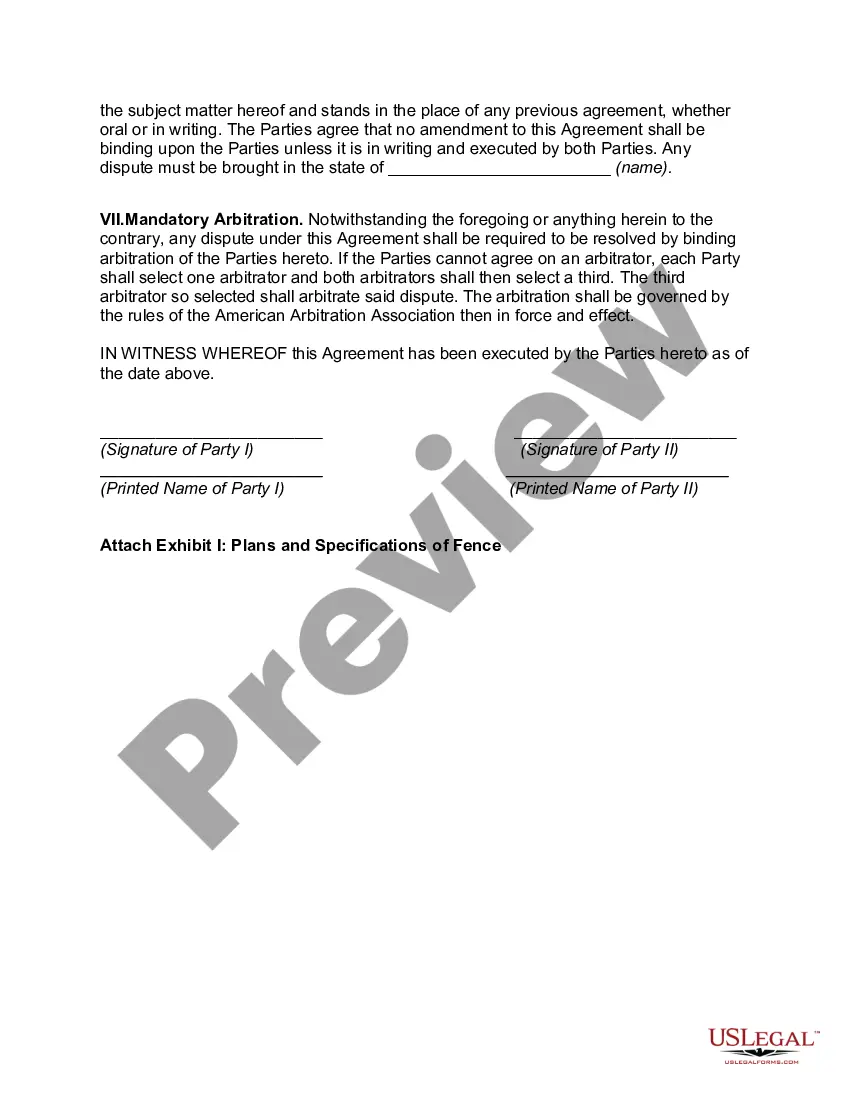
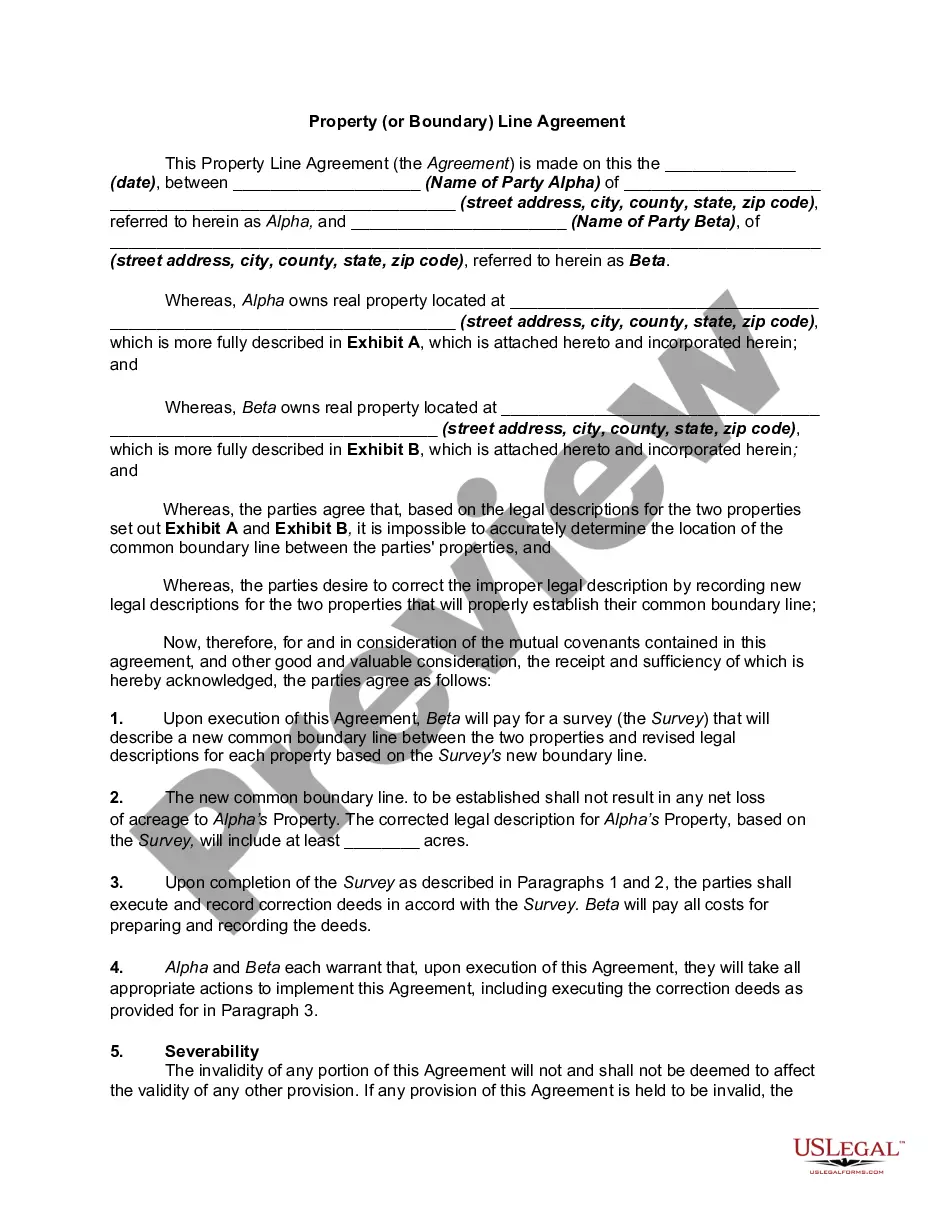
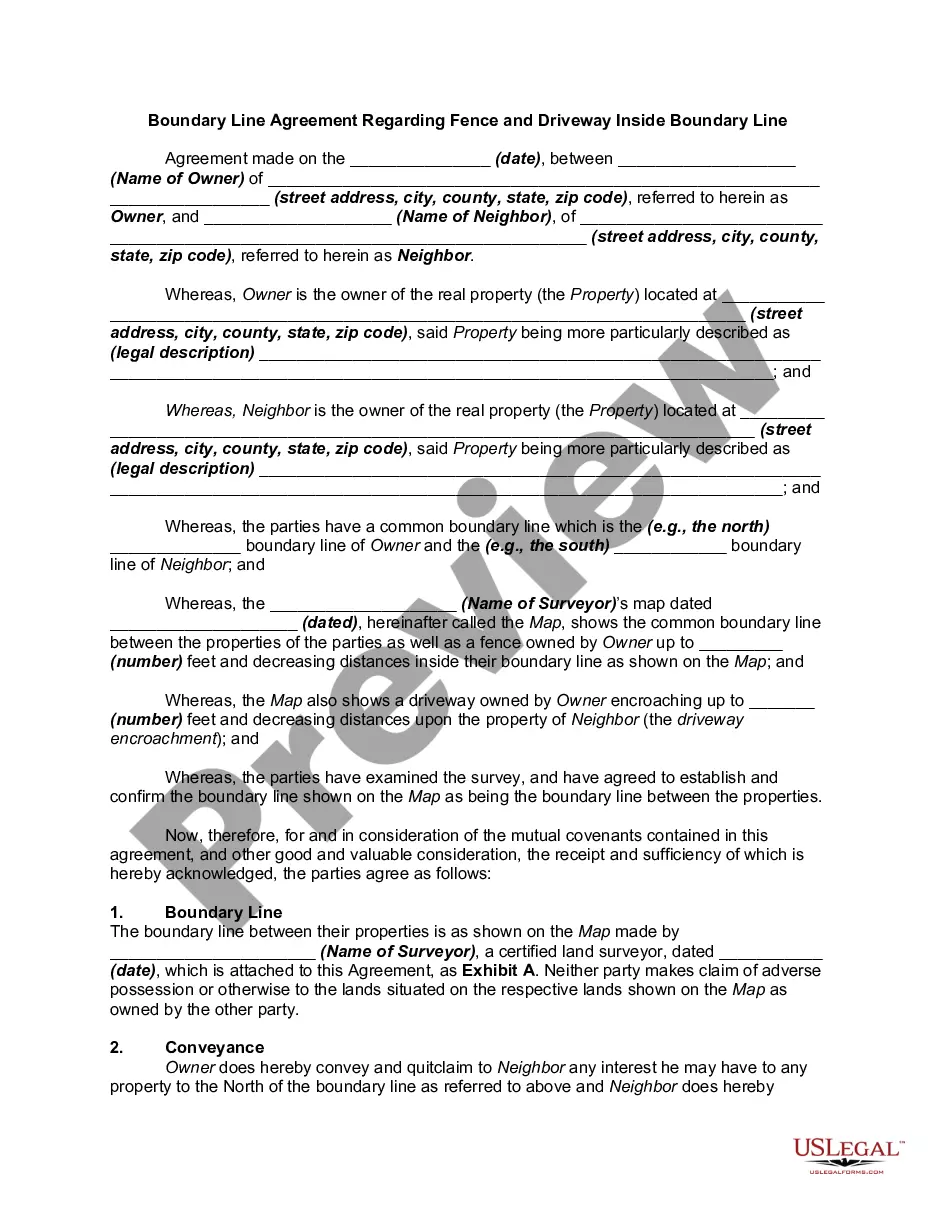
You can actually obtain or print the New Jersey Fence Line Agreement from our service.
Browse the form details to confirm you have selected the correct type.
- If you already have a US Legal Forms account, you can Log In and click the Download button.
- After that, you can fill out, modify, print, or sign the New Jersey Fence Line Agreement.
- Every legal document template you buy is yours permanently.
- To get another copy of the purchased form, go to the My documents tab and click the appropriate button.
- If you're accessing the US Legal Forms site for the first time, follow the simple instructions below.
- First, ensure that you have selected the correct document template for the county/city of your choice.
Form popularity
FAQ
No, your neighbor cannot attach anything to your fence without your consent. Any modifications to your property, including additional structures or attachments on your fence, require authorization from the property owner. A New Jersey Fence Line Agreement can outline rules about such matters, ensuring that both parties understand their rights and responsibilities. Open communication can help strengthen neighborly relationships and prevent conflicts.
If your fence is right on the property line between your property and your neighbor, neither of you owns a side the fence can be considered a shared responsibility. If the fence falls to one side of the property line, it is wholly owned by the property owner whose side it's on.
No fence higher than four feet shall be erected in any front yard in a residential zone. With the exception of rear property lines, no fence higher than four feet shall be erected along a public right-of-way. Any fence erected along a public right-of-way shall be set back at least five feet from the property line.
You should try to figure out where the boundary between the two properties is. As long as it's not higher than 2m, your neighbour is free to put up a fence on their property. If you have an issue with the fence, you should always try to resolve the situation in an informal way.
Fences can be placed on the property line or attached to a neighbor's fence only with the neighbor's written consent. Otherwise fences should be placed six inches to one foot away from the property line to avoid disputes in the future.
When looking at the plans, the ownership is indicated by a T marked on the plans on one side of a boundary. If the T is written on your side of the boundary, you're responsible for maintaining it. If there's an H (although actually it's two joined Ts) the boundary is the joint responsibility of both parties.
Customers having new fencing installed often ask us exactly where they should position their new fence. Getting it right avoids (potentially costly) disputes over encroachment in the future. As a rule of thumb, the outer face of the fence should be placed along the boundary. The posts should stand on your land.
How Close To The Property Line Can I Build? Fences are typically built between 2 and 8 inches from the line between properties. Some areas will allow the building of fences directly on the property line, but in this case, you'll have to cooperate with your neighbor and potentially share the cost of the fence.
Fences can be placed on the property line or attached to a neighbor's fence only with the neighbor's written consent. Otherwise fences should be placed six inches to one foot away from the property line to avoid disputes in the future.
The exact amount a building needs to be set back from the property line will vary from one location to another. However, the required setback on the side is typically between 5 10 feet, while the front and back require around 10 20 feet at a minimum.