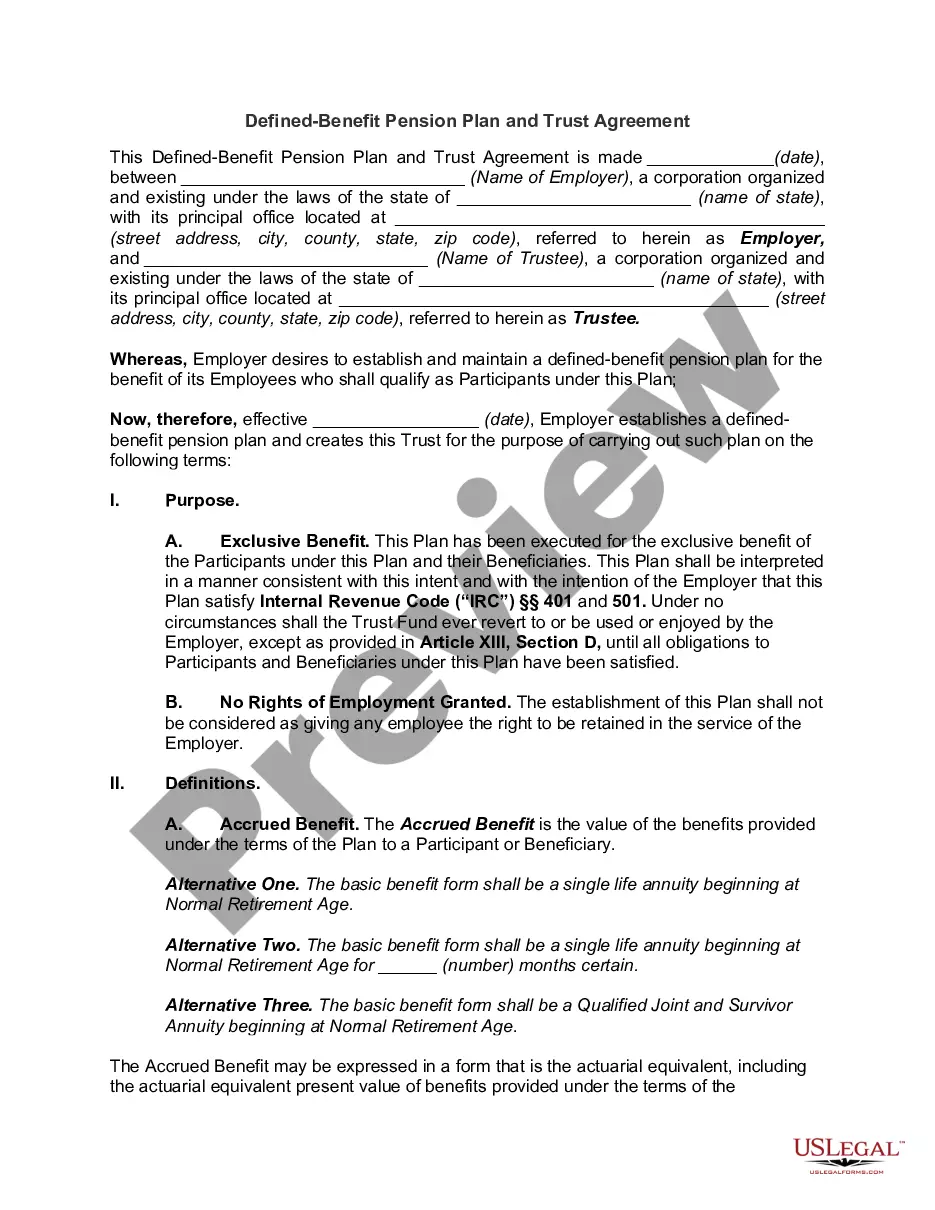
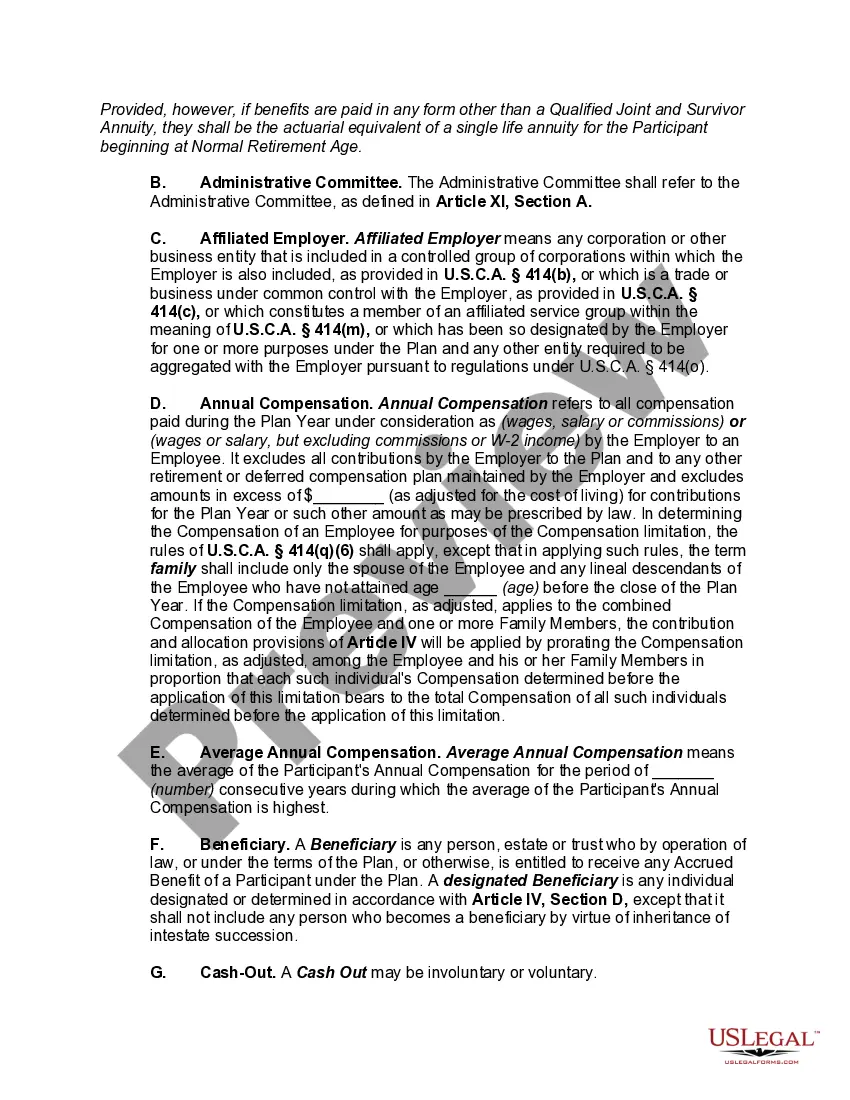
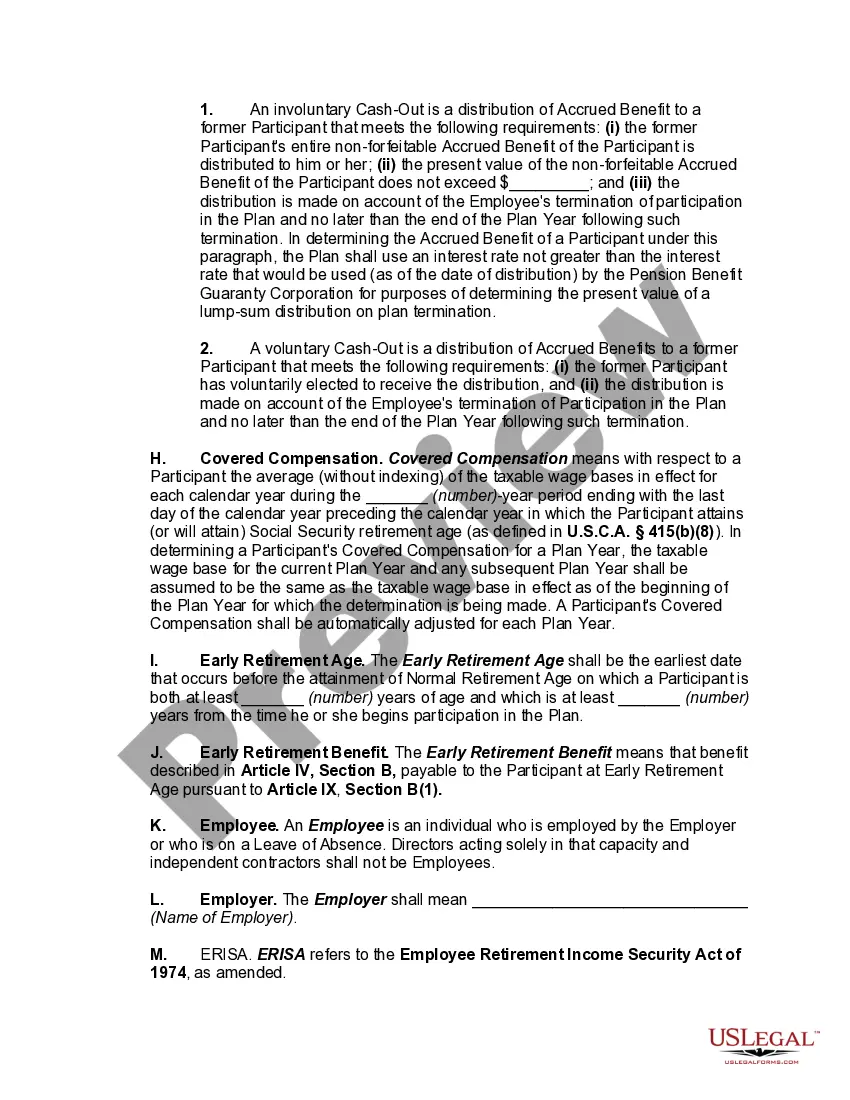
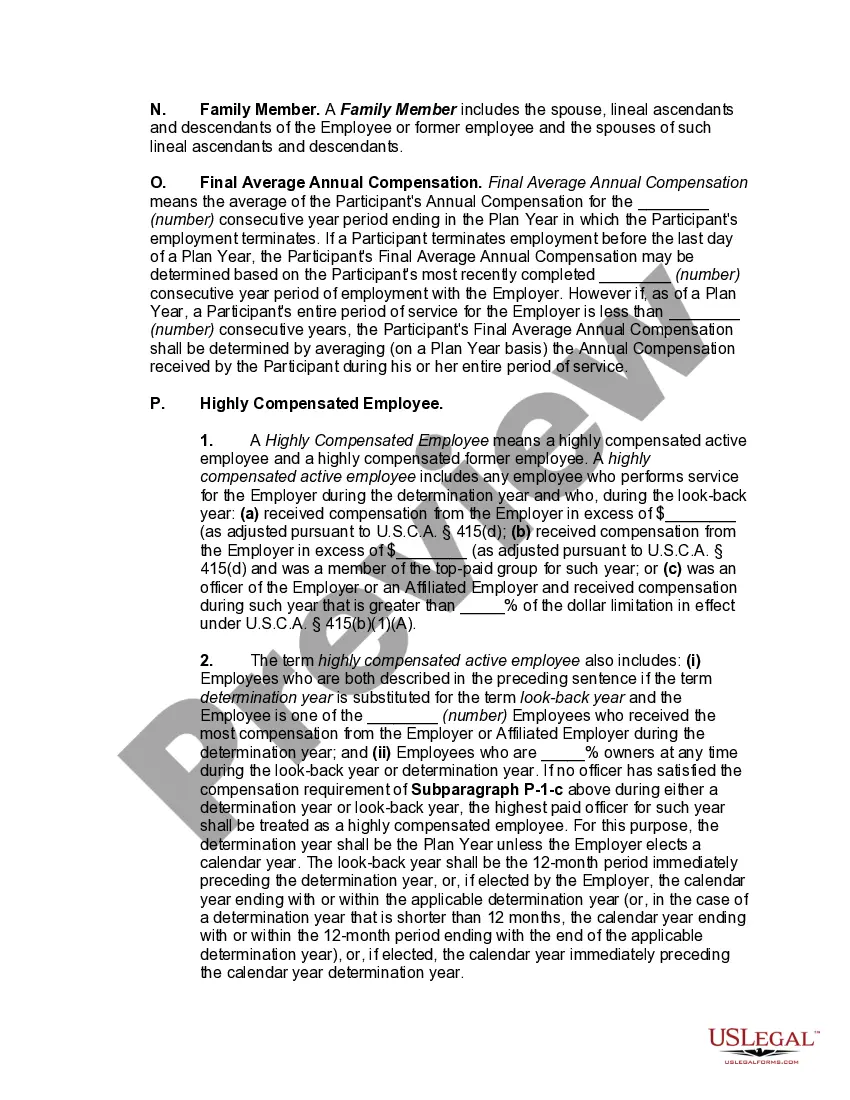
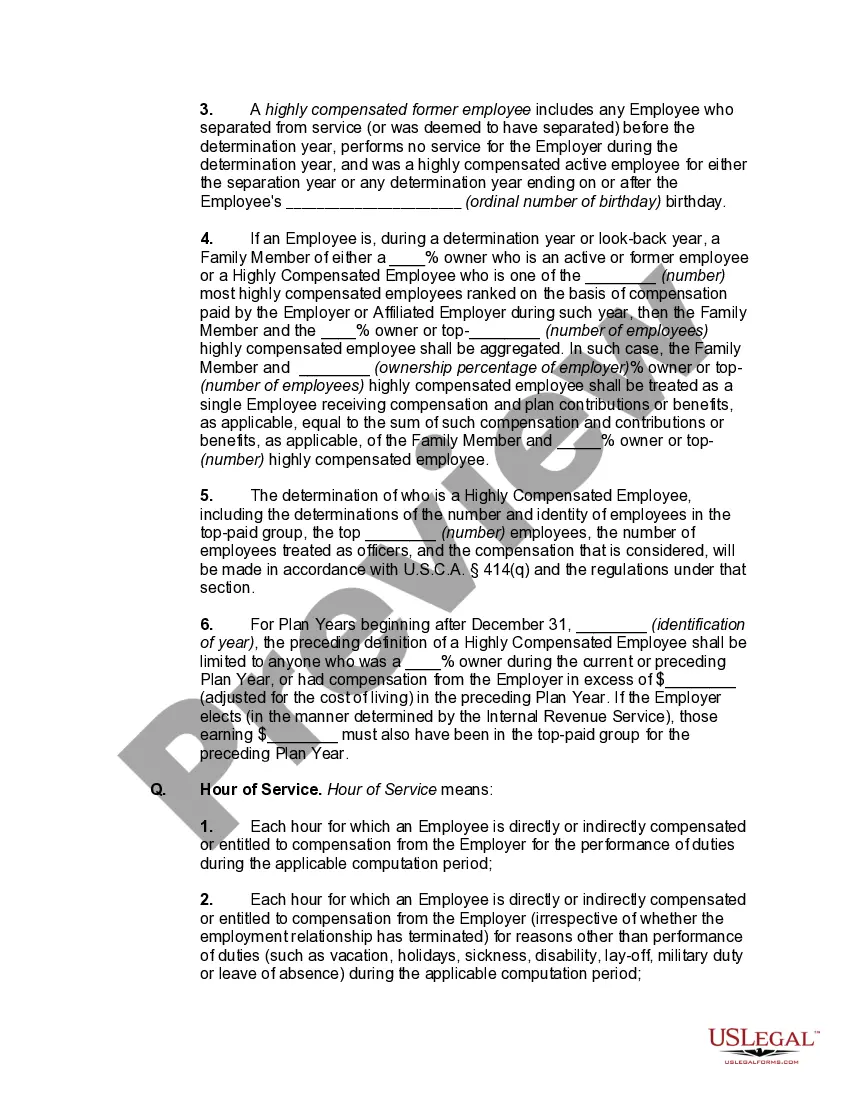
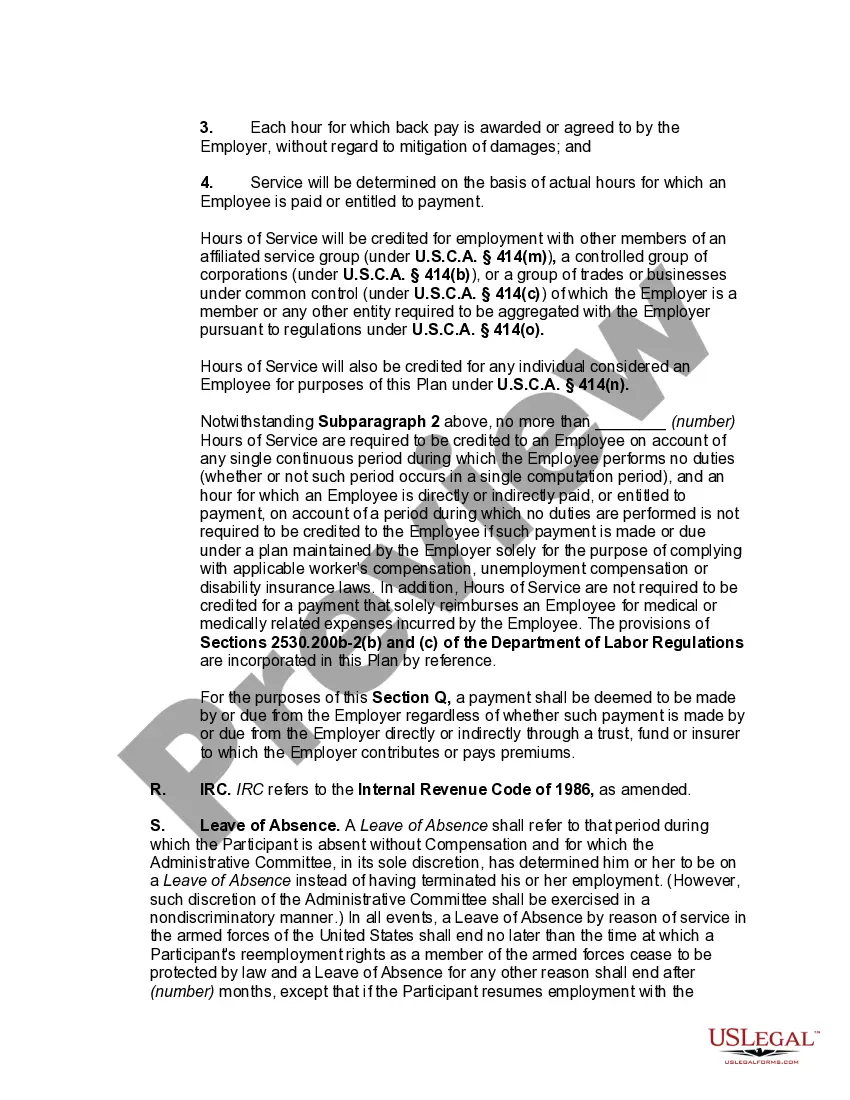
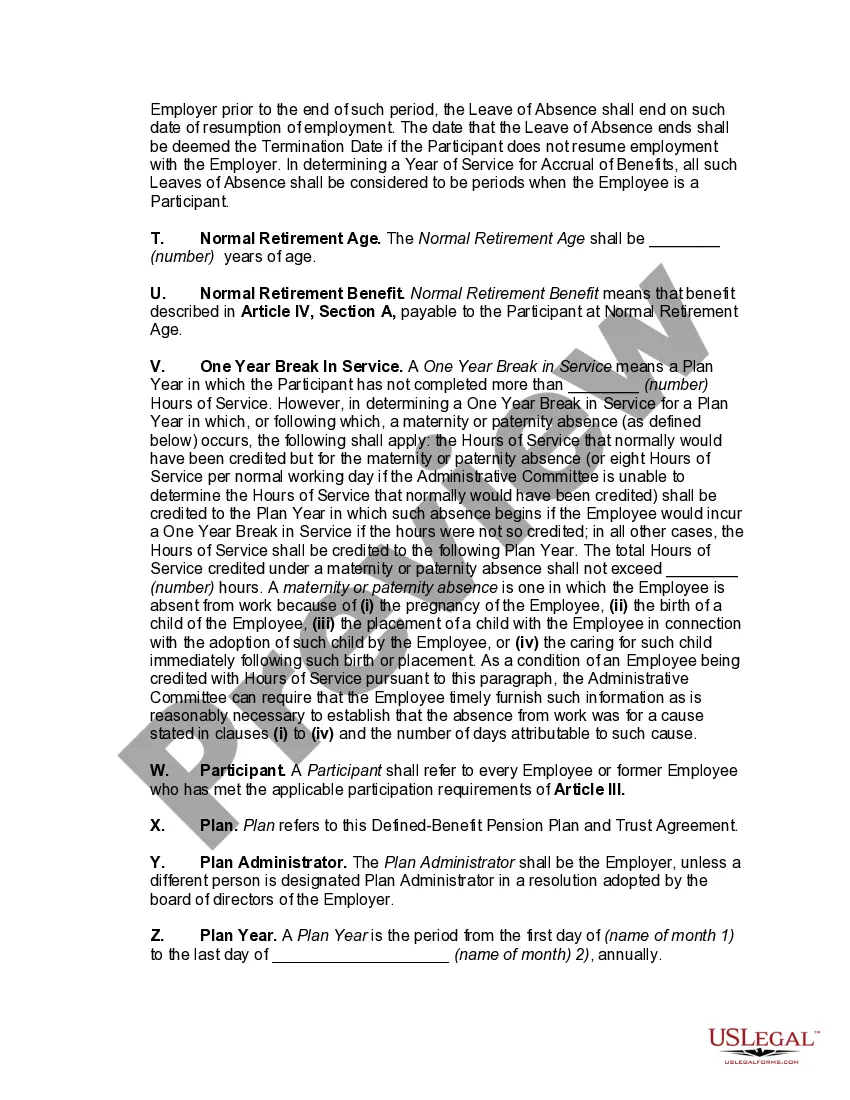
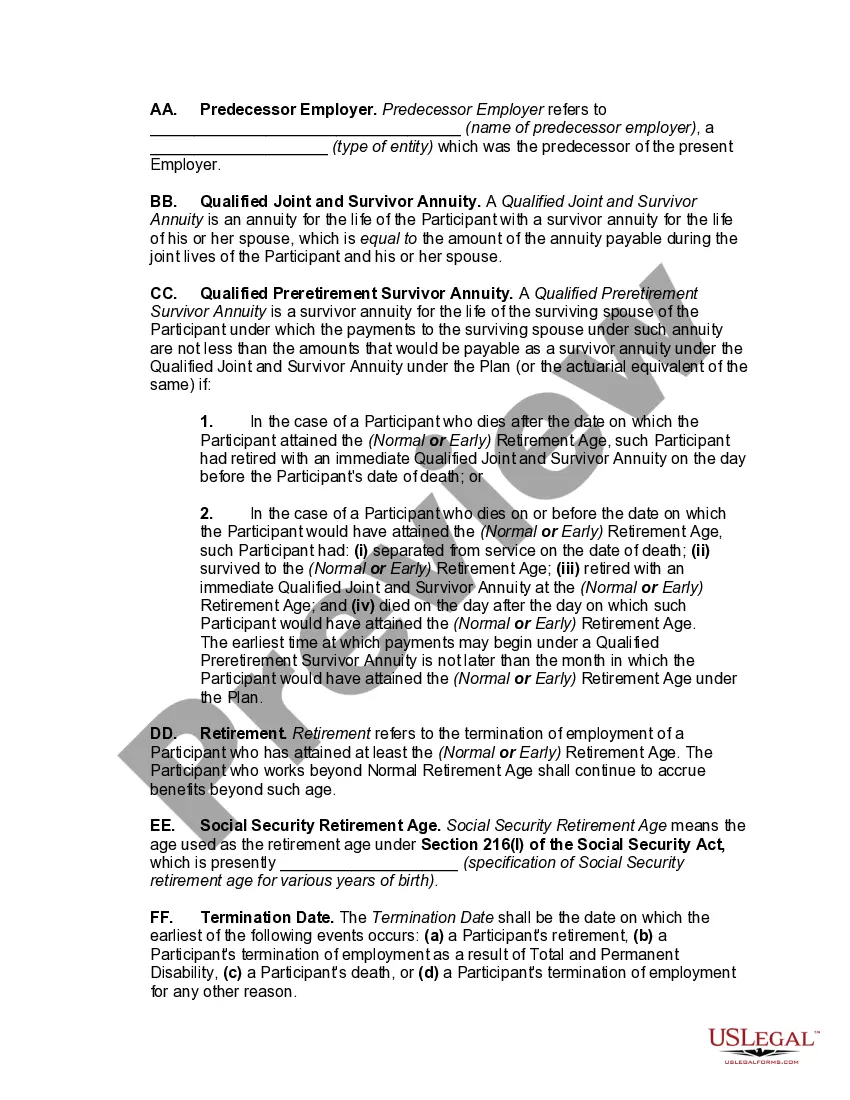
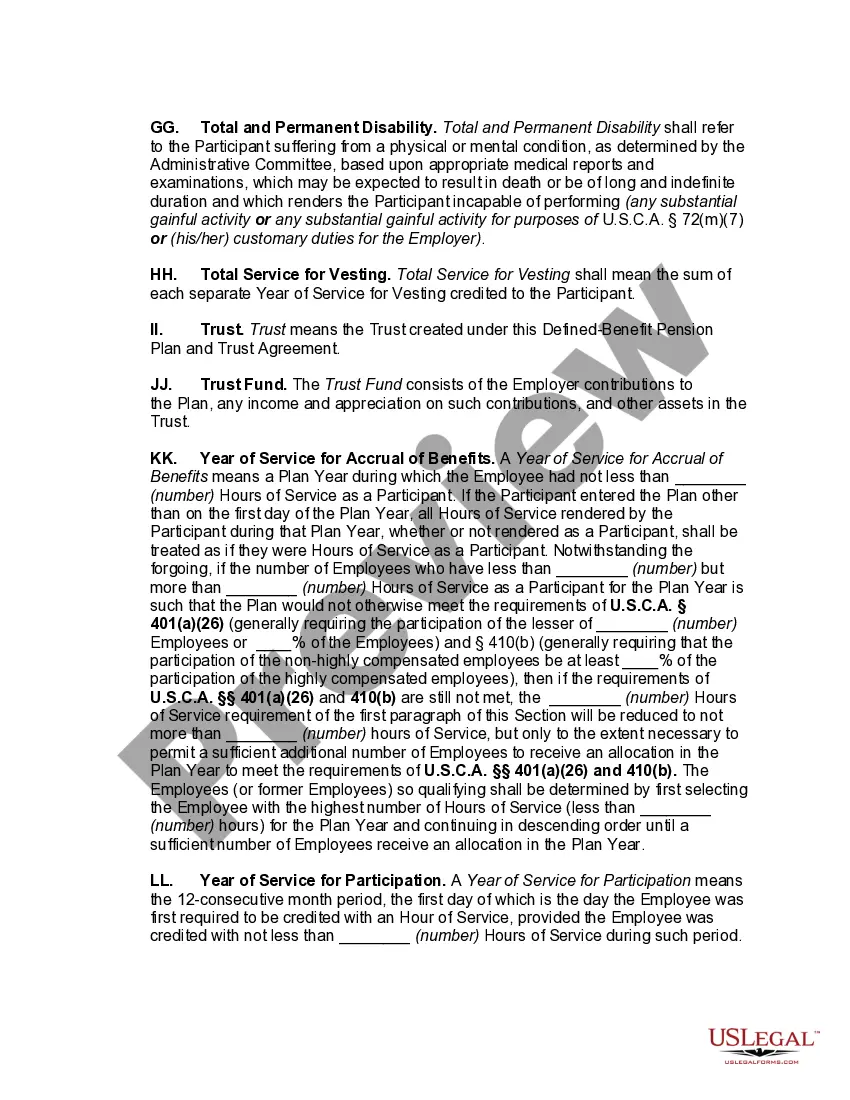
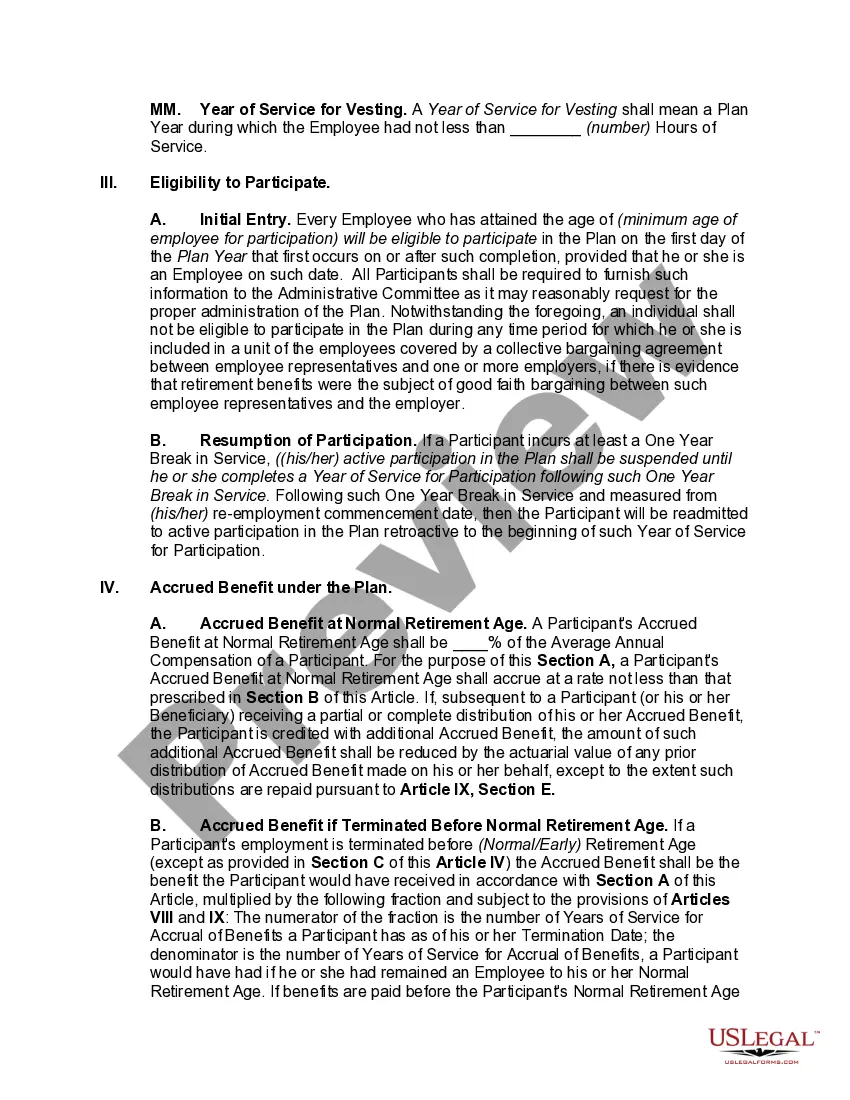
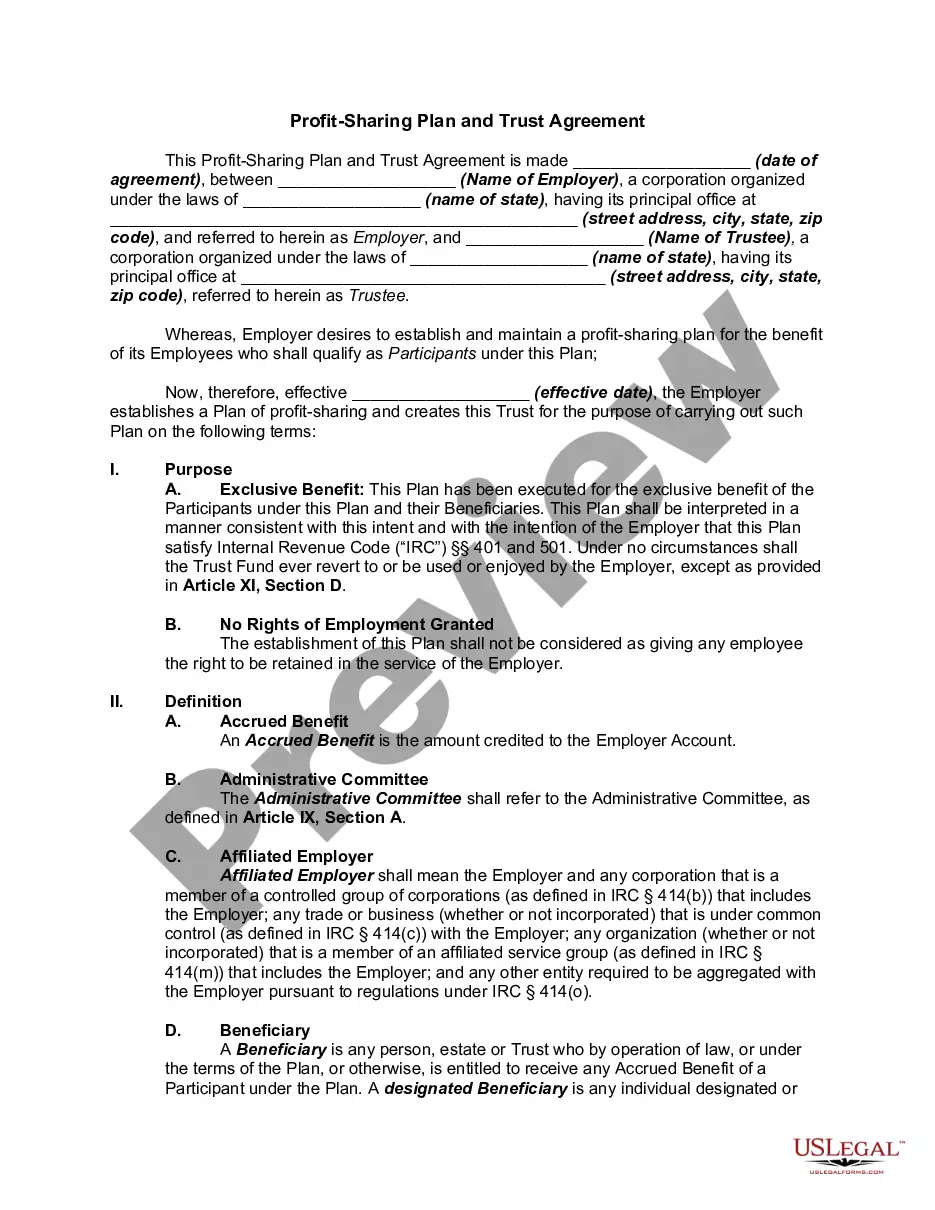
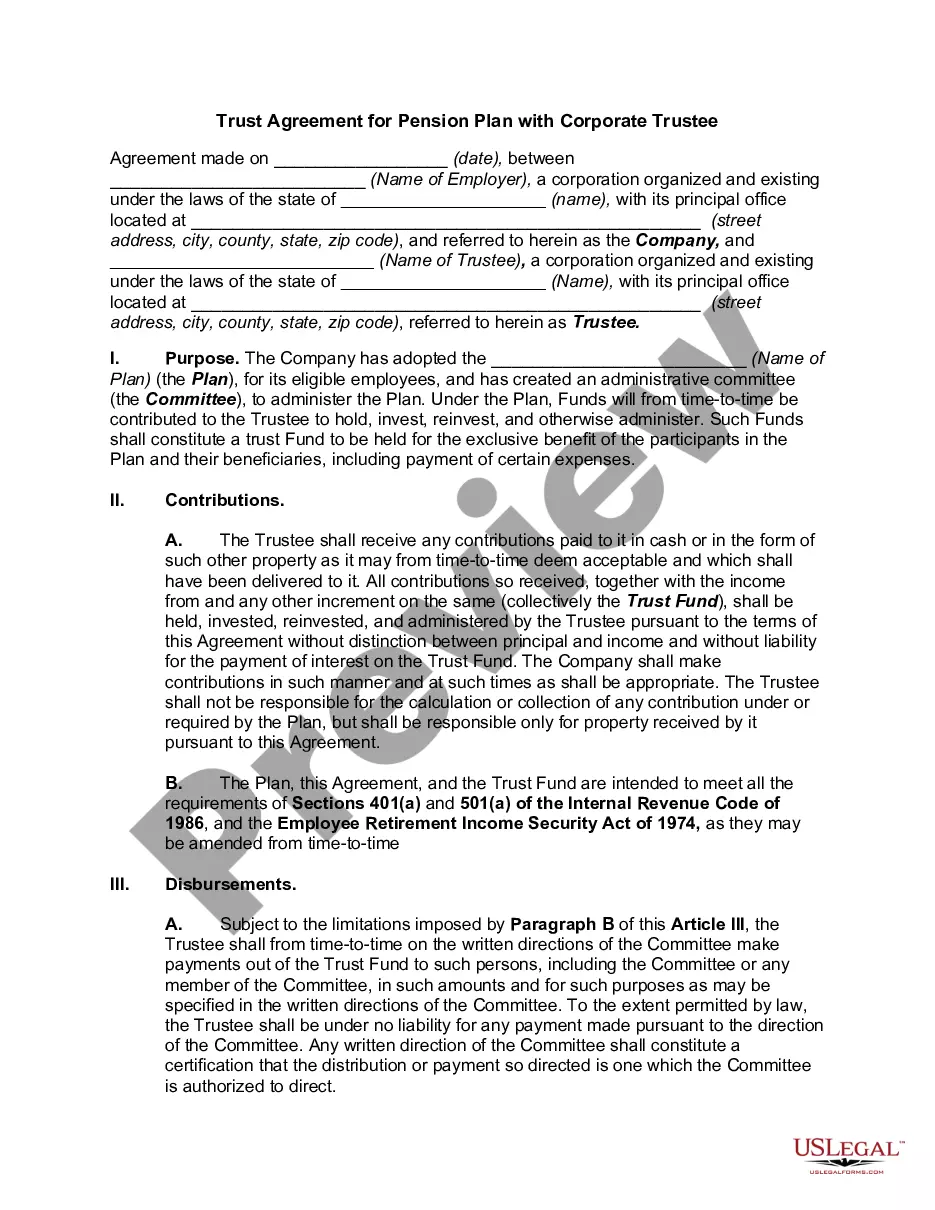
New Jersey Defined-Benefit Pension Plan and Trust Agreement
Description

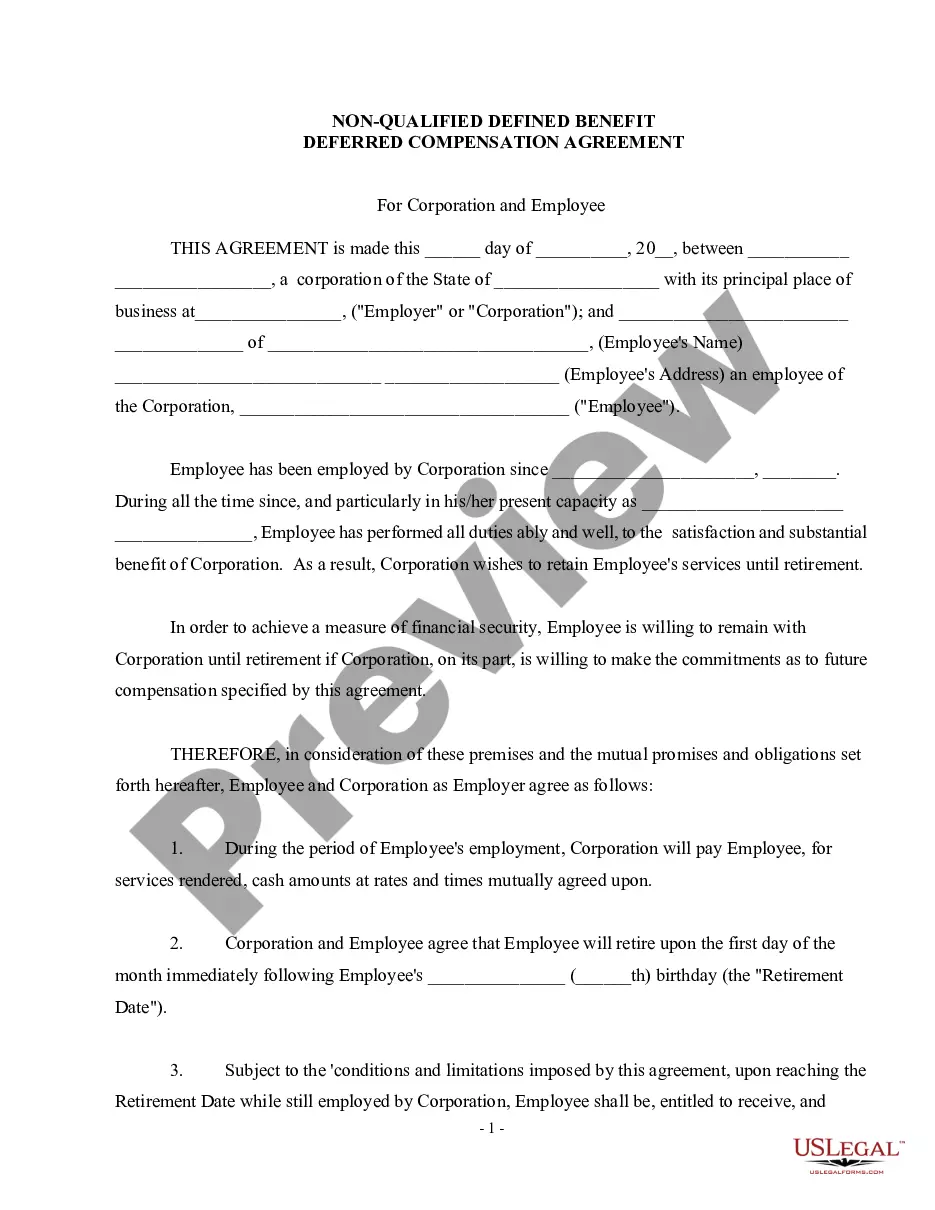
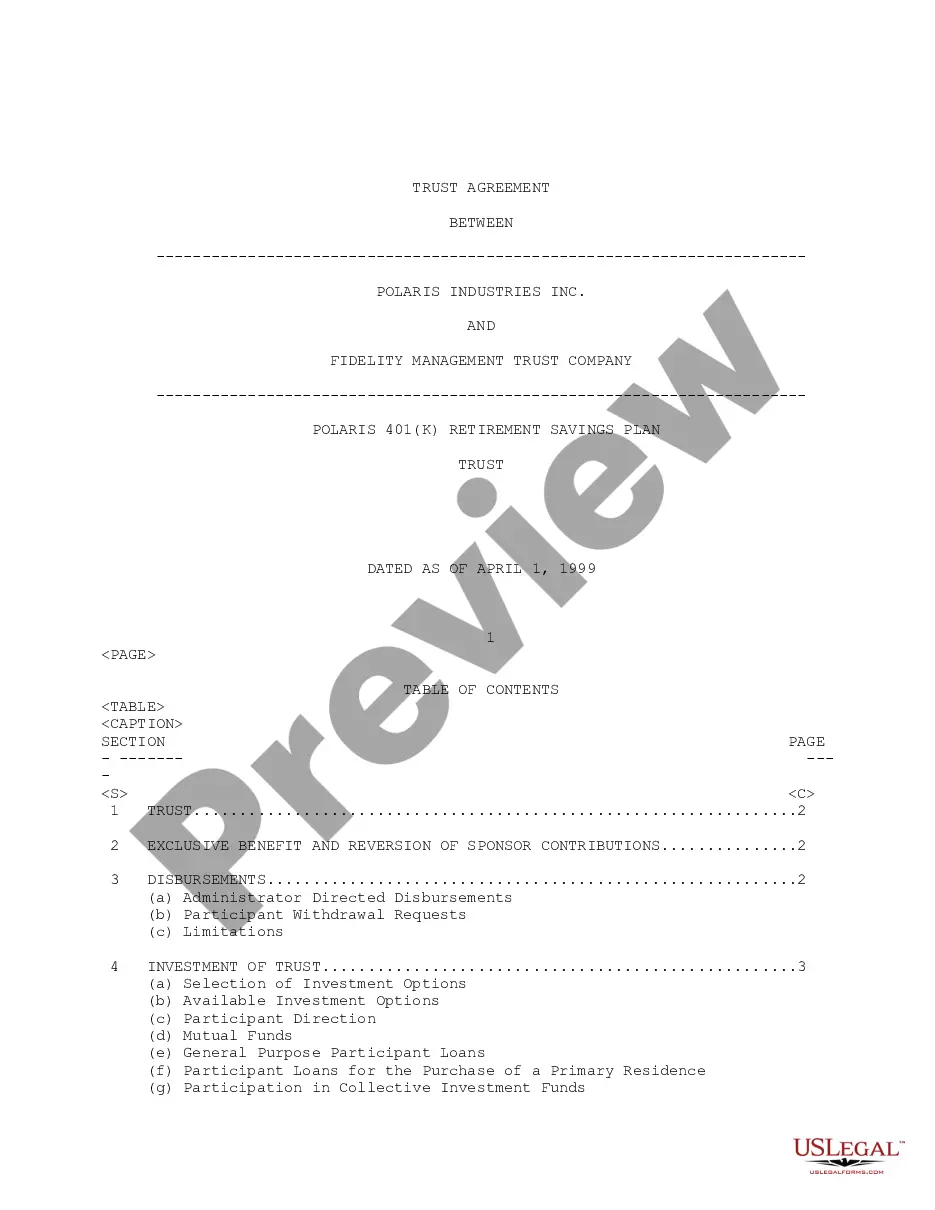
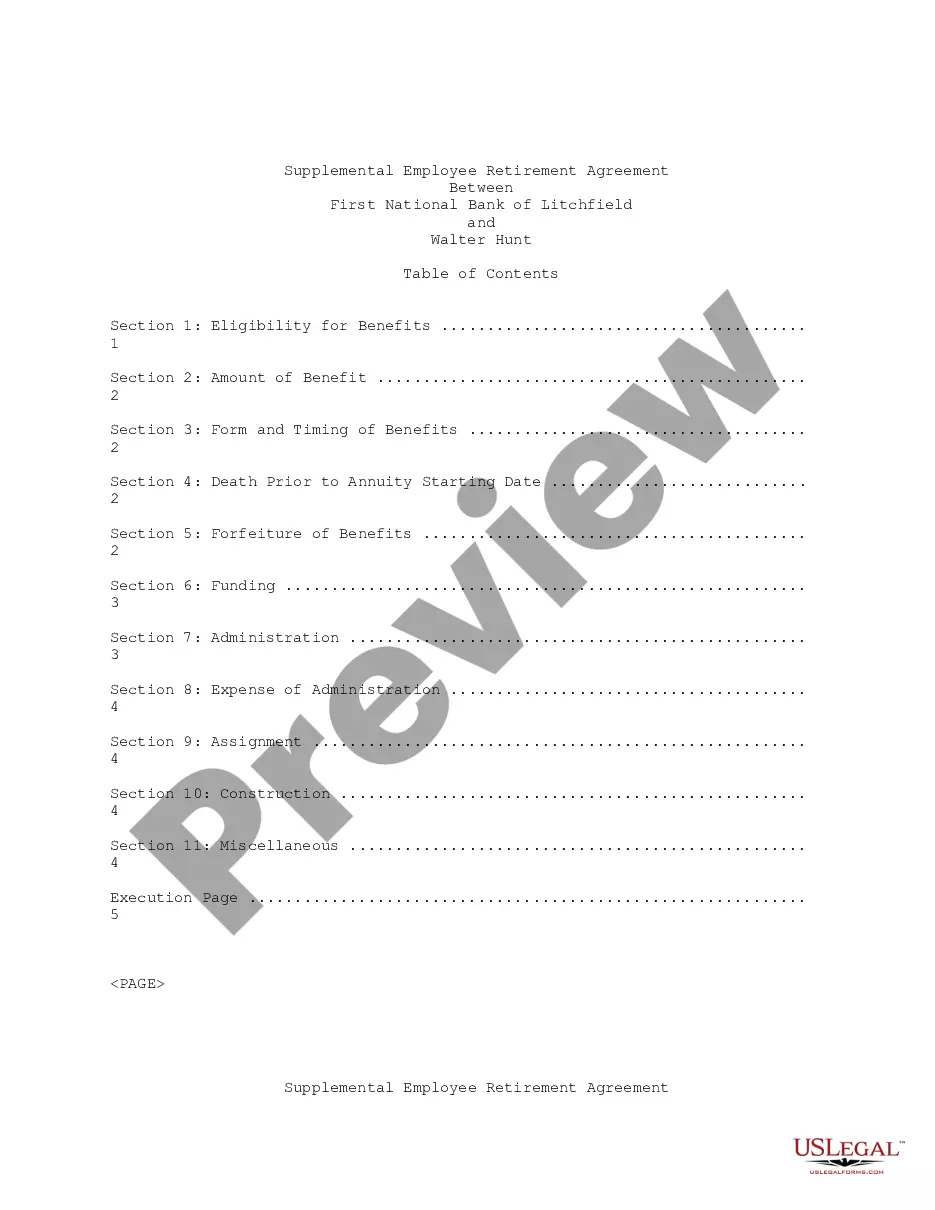
Get your form ready online
Our built-in tools help you complete, sign, share, and store your documents in one place.
Make edits, fill in missing information, and update formatting in US Legal Forms—just like you would in MS Word.
Download a copy, print it, send it by email, or mail it via USPS—whatever works best for your next step.
Sign and collect signatures with our SignNow integration. Send to multiple recipients, set reminders, and more. Go Premium to unlock E-Sign.
If this form requires notarization, complete it online through a secure video call—no need to meet a notary in person or wait for an appointment.
We protect your documents and personal data by following strict security and privacy standards.

Make edits, fill in missing information, and update formatting in US Legal Forms—just like you would in MS Word.

Download a copy, print it, send it by email, or mail it via USPS—whatever works best for your next step.

Sign and collect signatures with our SignNow integration. Send to multiple recipients, set reminders, and more. Go Premium to unlock E-Sign.

If this form requires notarization, complete it online through a secure video call—no need to meet a notary in person or wait for an appointment.

We protect your documents and personal data by following strict security and privacy standards.
Looking for another form?
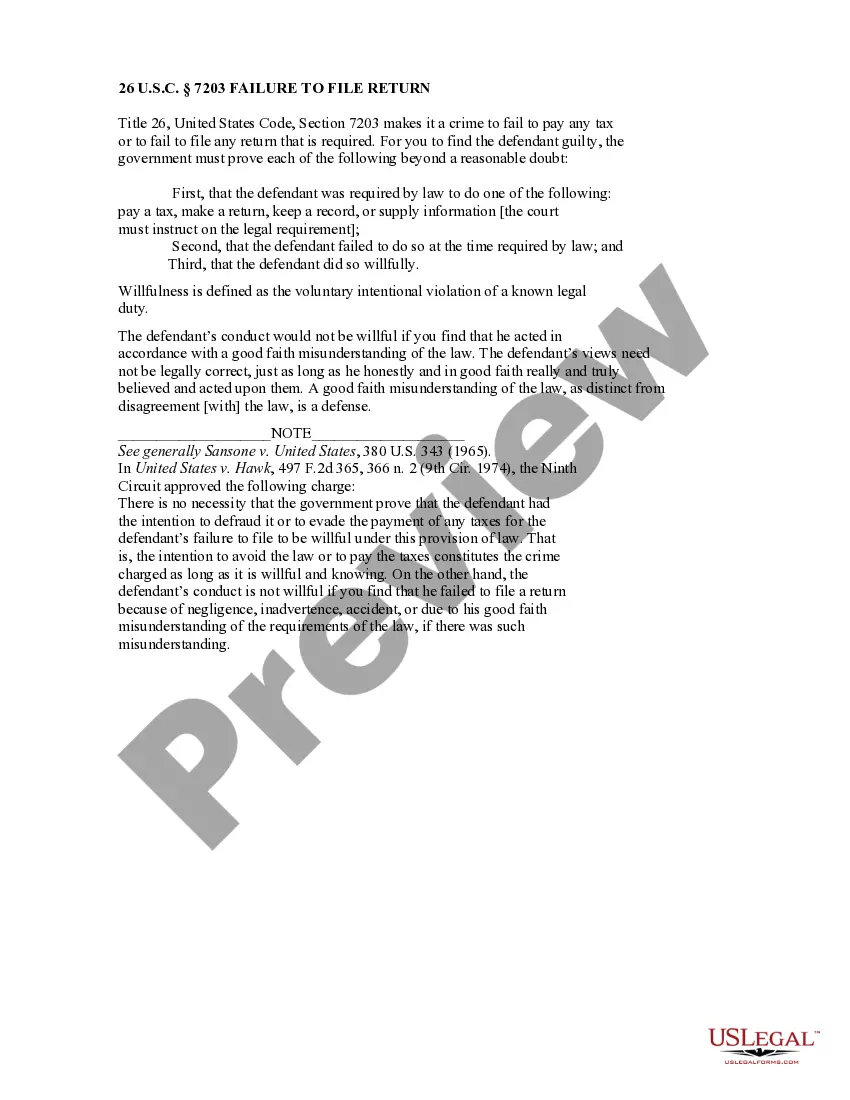

How to fill out Defined-Benefit Pension Plan And Trust Agreement?
You can dedicate numerous hours online trying to locate the legal document template that meets the federal and state requirements you need.
US Legal Forms offers an extensive collection of legal forms that are reviewed by professionals.
You can conveniently download or print the New Jersey Defined-Benefit Pension Plan and Trust Agreement from our platform.
To search for another version of the form, utilize the Search box to find the template that meets your needs and specifications.
- If you have a US Legal Forms account, you can sign in and click the Download button.
- Then, you can complete, edit, print, or sign the New Jersey Defined-Benefit Pension Plan and Trust Agreement.
- Every legal document template you acquire is yours forever.
- To obtain another copy of a purchased form, navigate to the My documents section and click the corresponding button.
- If you are using the US Legal Forms site for the first time, follow the simple instructions below.
- First, ensure that you have selected the correct document template for your desired state/city.
- Read the form description to confirm you have chosen the appropriate form.
Form popularity
FAQ
Adding MBOs, or Management by Objectives, to your New Jersey pension plan involves aligning employee performance with the plan's goals. You'll want to consult with a qualified professional who can guide you through the integration process while ensuring it aligns with the New Jersey Defined-Benefit Pension Plan and Trust Agreement requirements. This step can enhance the effectiveness of your plan and the benefits it offers.
4 Types Of Pension Plans Most Preferred For Retirement PlanningNPS. Regulated by Pension Fund Regulatory and Development Authority (PFRDA), the National Pension Scheme or NPS is a popular option if you want to receive a regular pension after retirement.Pension Funds.Annuity Plans.Pension Plans with Life Cover.
The law generally allows state courts to revoke or reduce the pension of a state, municipal, or quasi-public agency employee who is (1) convicted of, or pleads guilty or no contest to, certain crimes related to his or her employment and (2) entitled to a pension benefit under the general statutes for service as a
A 401(k) and a pension are both employer-sponsored retirement plans. The most significant difference between the two is that a 401(k) is a defined-contribution plan, and a pension is a defined-benefit plan.
The Defined Contribution Retirement Program (DCRP) was established July 1, 2007, under the provisions of N.J.S.A. C-1 et seq. The DCRP provides eligible members with a tax-sheltered, de- fined contribution retirement benefit, along with life insurance and long-term disability coverage.
Public Employee Retirement System (PERS)
When the Trust Fund Is a Pension Plan A pension plan is designed to help employees build retirement income over time and then withdraw it in the form of annuity payments for life. It is perhaps the best-known form of an employee trust fund.
The three types of pensionDefined contribution pension. Sometimes called a 'money purchase' pension or referred to as a pension pot, these schemes are very common today.Defined benefit pension. This type of pension scheme has declined in popularity.State pension.
A fund that is made up of money that has been contributed to by both the employer and the employee for pension benefits. A trustee takes the funds and invests the money, collects the earnings and interest and distributes the benefits.
While defined benefit plans generally guarantee either a monthly payment or set lump-sum payout, depending on your salary or how long you remain with a company, defined contribution plan payouts aren't guaranteedthey depend on employee contributions and the performance of the underlying investments.