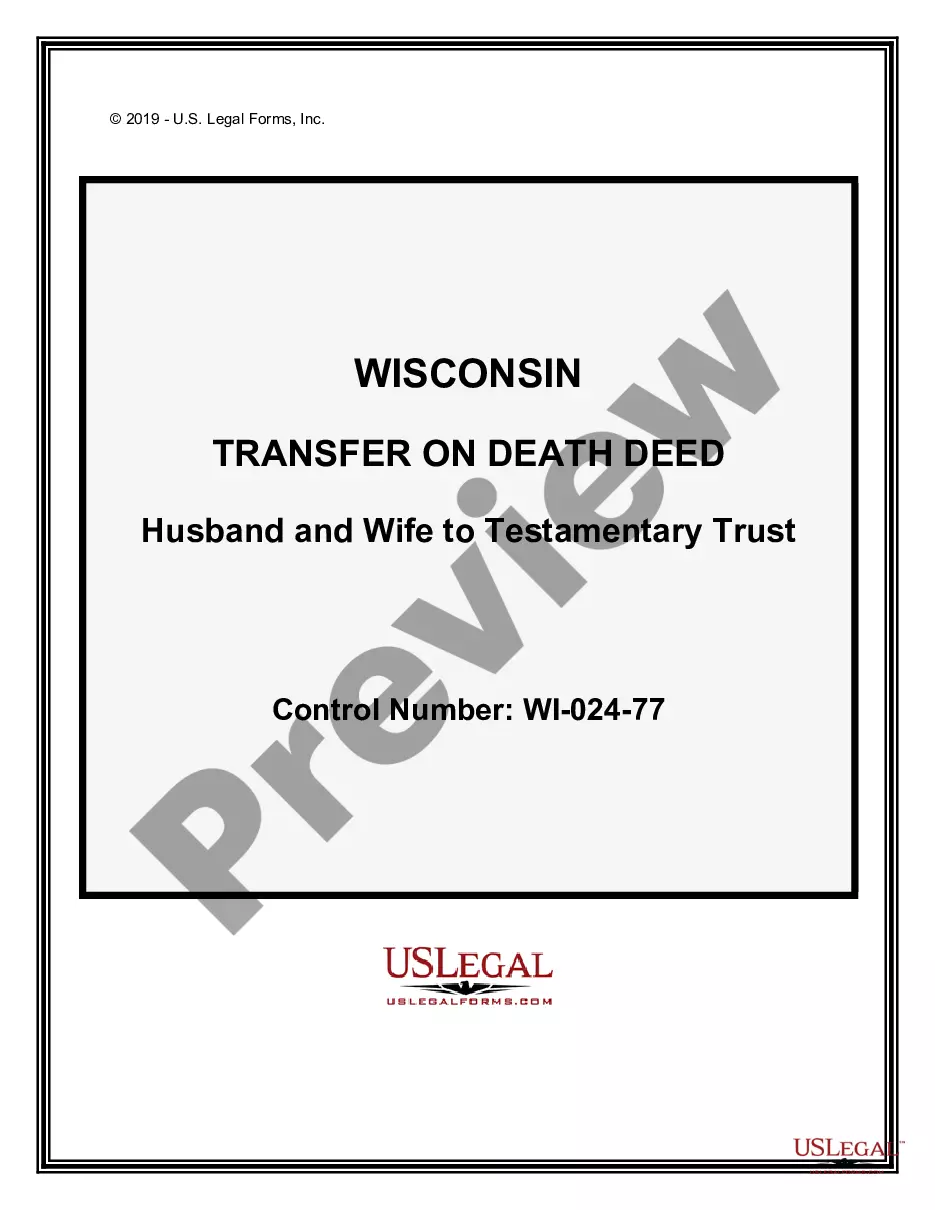
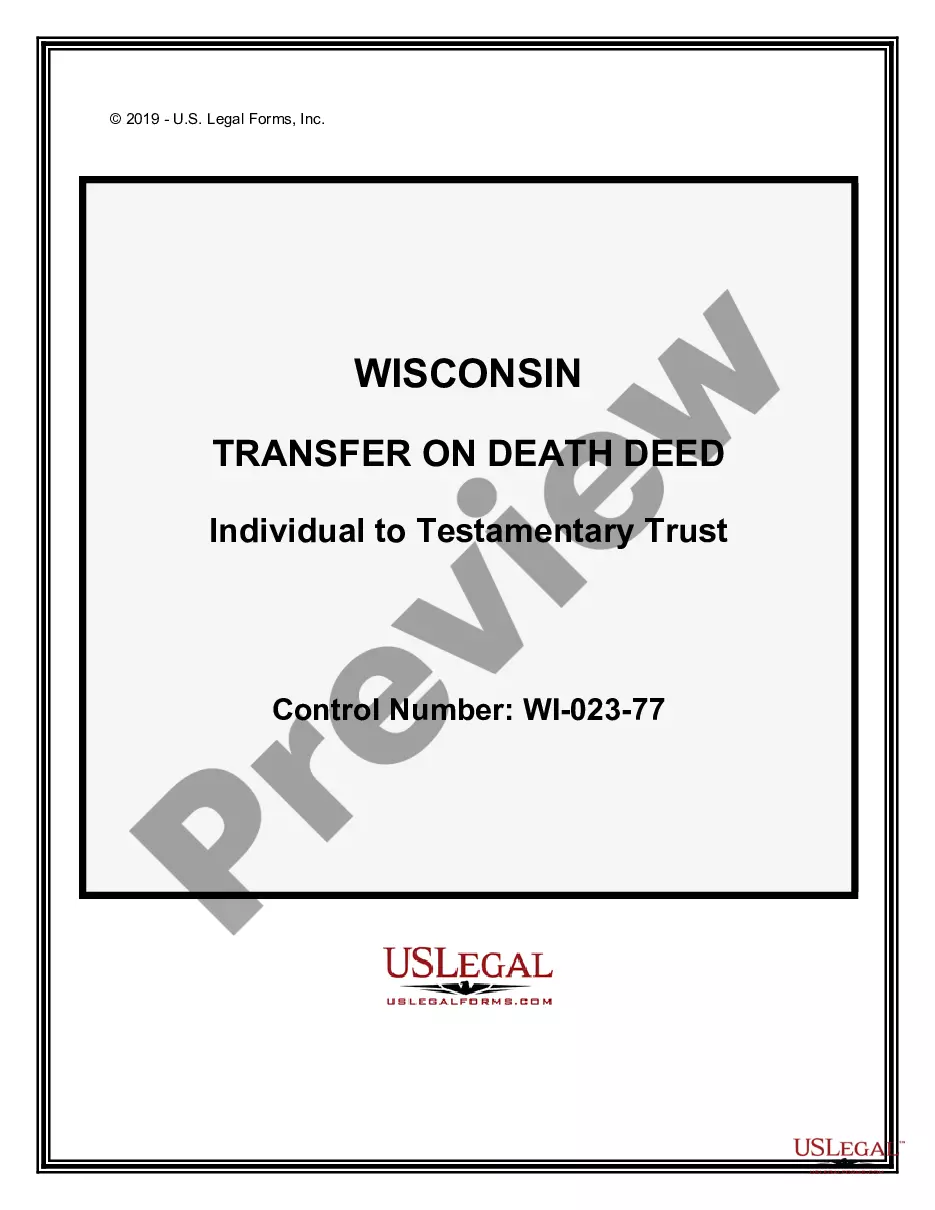
Wisconsin Transfer on Death Deed or TOD - Beneficiary Deed for Husband and Wife to Testamentary Trust
Overview of this form
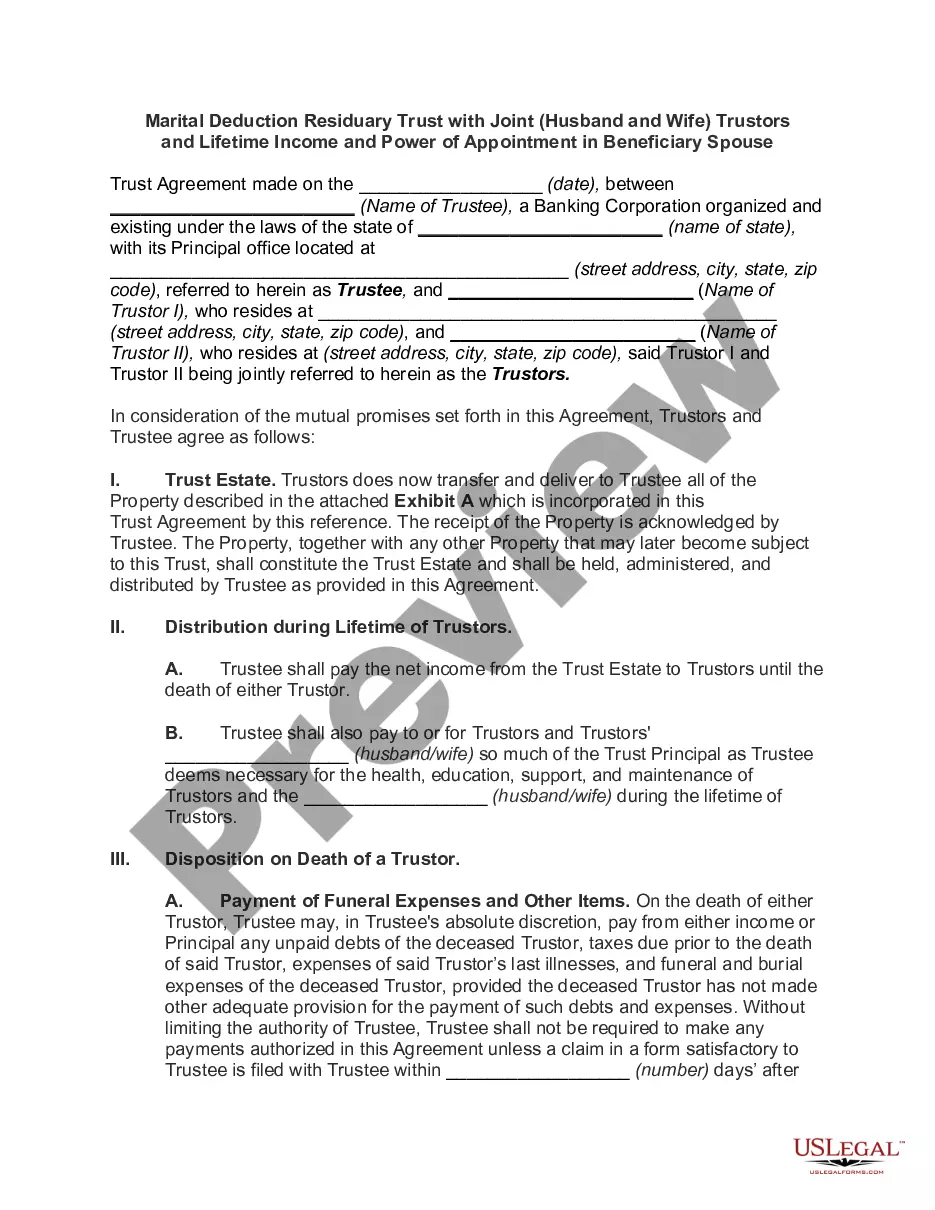
The Transfer on Death Deed (TOD) for Husband and Wife to Testamentary Trust is a legal document that allows a couple to transfer property to a trust upon their passing. This deed works differently than a standard will, as it takes effect only when the last spouse dies and can be revoked during their lifetime. This form ensures that property is transferred seamlessly to beneficiaries, avoiding the probate process, thus providing an efficient way to manage estate planning for couples.
Key components of this form
- Information about the Grantors (Husband and Wife).
- Details of the Grantee (the testamentary trust).
- Revocation clause allowing changes during the Grantors' lifetime.
- Conditions under which the transfer becomes effective.
- Signature lines for both Grantors to validate the deed.



When to use this form
This form should be used when a husband and wife wish to ensure that their jointly owned property is transferred directly to a testamentary trust upon the death of the last surviving spouse. It is beneficial for couples looking to simplify estate planning, avoid probate, and ensure their property is managed according to their wishes after they pass away.
Who this form is for
This form is suitable for:
- Married couples who wish to create a testamentary trust.
- Couples looking to manage their estate planning efficiently.
- Individuals wanting to avoid probate for property transfer.
- Those who prefer flexibility in their property transfer methods.
Steps to complete this form
- Identify and enter the names of both Grantors (the husband and wife).
- Specify the details of the Grantee (the testamentary trust) in the appropriate sections.
- Complete the property description that will be transferred.
- Include any specific conditions related to the transfer, if applicable.
- Sign the form in the presence of a witness if required.
Notarization guidance
This form does not typically require notarization unless specified by local law. However, it is essential to check your stateâs requirements to ensure legal compliance.
Get your form ready online
Our built-in tools help you complete, sign, share, and store your documents in one place.
Make edits, fill in missing information, and update formatting in US Legal Forms—just like you would in MS Word.
Download a copy, print it, send it by email, or mail it via USPS—whatever works best for your next step.
Sign and collect signatures with our SignNow integration. Send to multiple recipients, set reminders, and more. Go Premium to unlock E-Sign.
If this form requires notarization, complete it online through a secure video call—no need to meet a notary in person or wait for an appointment.
We protect your documents and personal data by following strict security and privacy standards.

Make edits, fill in missing information, and update formatting in US Legal Forms—just like you would in MS Word.

Download a copy, print it, send it by email, or mail it via USPS—whatever works best for your next step.

Sign and collect signatures with our SignNow integration. Send to multiple recipients, set reminders, and more. Go Premium to unlock E-Sign.

If this form requires notarization, complete it online through a secure video call—no need to meet a notary in person or wait for an appointment.

We protect your documents and personal data by following strict security and privacy standards.
Avoid these common issues
- Failing to provide an accurate description of the property.
- Not signing the deed, which can render it invalid.
- Overlooking state-specific requirements for additional witnesses or notarization.
Why use this form online
- Easy downloading and filling out at your convenience.
- Editable fields that allow for accurate completion.
- Instant access to legal documents without the need for an attorney visit.
Legal use & context
- Transfers property to a trust upon death, avoiding probate.
- Revocable until the death of the last spouse.
- Recognized as a legal instrument in several states, complying with property laws.
What to keep in mind
- This form facilitates the transfer of property to a testamentary trust after the last spouse's death.
- Both grantors retain control over the property until death.
- Understanding state-specific requirements is essential for proper execution.
Looking for another form?

Form popularity
FAQ
Get a Deed Form or Prepare Your Own. You can buy a state-specific TOD deed form for your state or type up your own document. Name the Beneficiary. Describe the Property. Sign the Deed. Record the Deed.
If you'd like to avoid having your property going through the probate process, it's a good idea to look into a transfer on death deed. A transfer on death deed allows you to select a beneficiary who will receive your property, but only when you've passed away.
Deed of Sale (if the property has been sold to a third party) Deed of Extrajudicial Settlement of Estate. Owner's Duplicate Copy of Title.
1Get a Deed Form or Prepare Your Own. You can buy a state-specific TOD deed form for your state or type up your own document.2Name the Beneficiary.3Describe the Property.4Sign the Deed.5Record the Deed.
If the deceased was sole owner, or co-owned the property without right of survivorship, title passes according to his will. Whoever the will names as the beneficiary to the house inherits it, which requires filing a new deed confirming her title. If the deceased died intestate -- without a will -- state law takes over.
All you need to do is fill out a simple form, provided by the bank, naming the person you want to inherit the money in the account at your death. As long as you are alive, the person you named to inherit the money in a payable-on-death (POD) account has no rights to it.
The California TOD deed form allows property to be automatically transferred to a new owner when the current owner dies, without the need to go through probate. It also gives the current owner retained control over the property, including the right to change his or her mind about the transfer.
When a joint owner dies, the process is relatively simple you just need to inform the Land Registry of the death. You should complete a 'Deceased joint proprietor' form on the government's website and then send the form to the Land Registry, with an official copy of the death certificate.
Death Certificate. The first thing in the list is Death Certificate. Claim Application Form. Claim form is the form which needs to be filled by you at the time of making the claim. Probate of WILL. Succession Certificate.