New Jersey Consent Order in Law Division
About this form
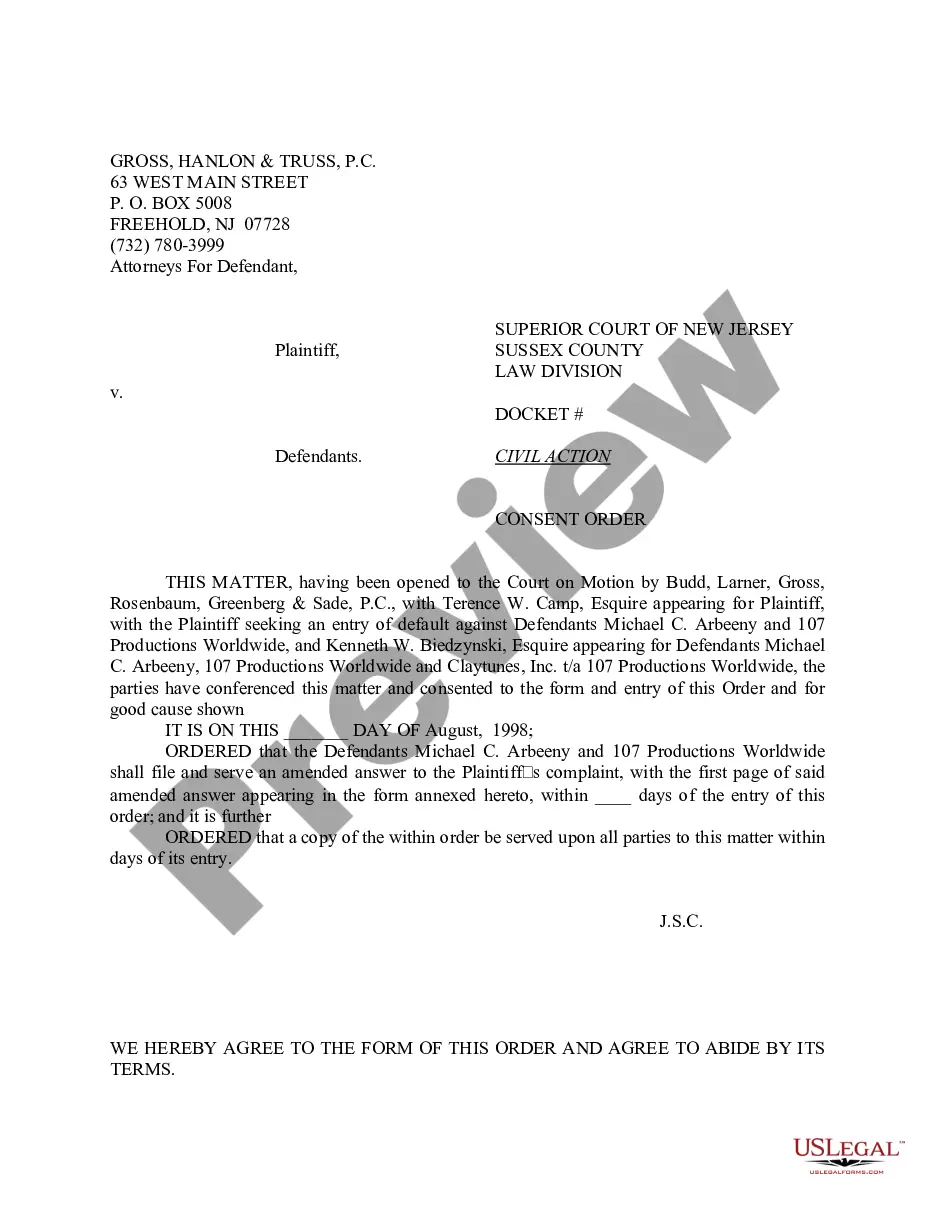
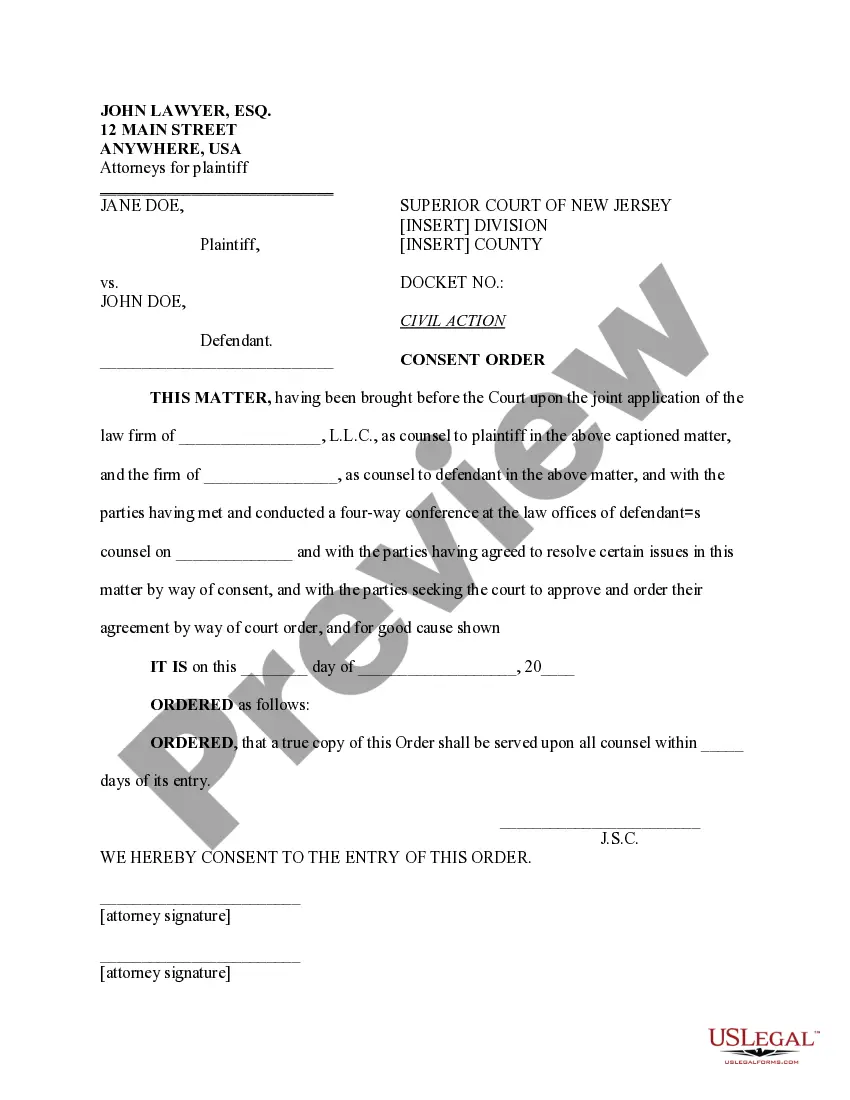
The Consent Order in Law Division is a legal document used in civil proceedings specifically for the state of New Jersey. This form allows parties in a legal dispute to agree on certain terms and submit those terms to the court for approval. Unlike other types of orders, this consent order reflects the mutual agreement between the parties involved, promoting cooperation and efficiency in the resolution of legal matters.
Key components of this form
- Case Identification: Includes the names of the parties, court details, and docket number.
- Terms of Agreement: Specifies what the defendants must do in response to the plaintiff's complaint.
- Timeframe: Indicates deadlines for the defendants to respond or comply with the court's order.
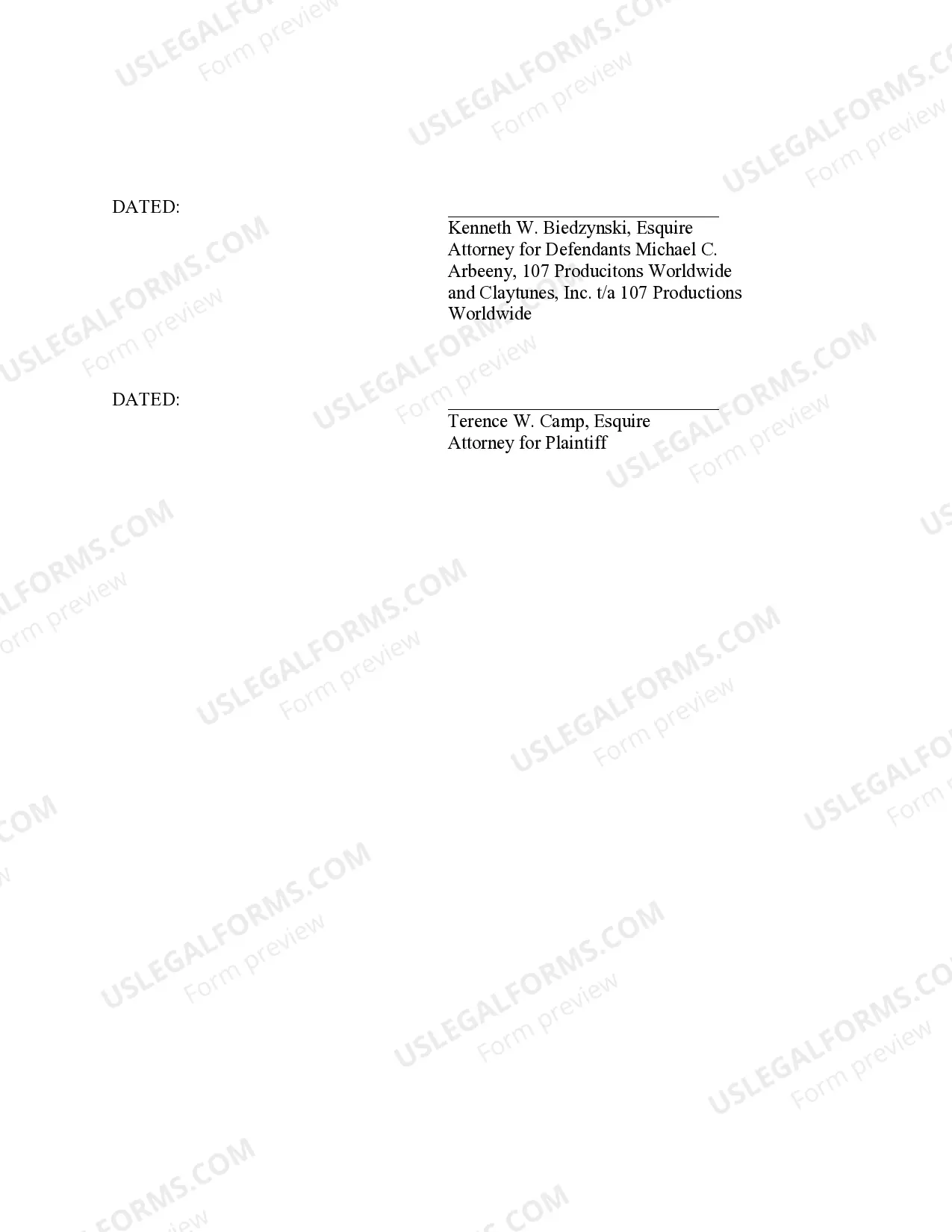
- Signature Blocks: Contains areas for attorneys representing both parties to sign, affirming their agreement to the terms.
Common use cases
This form should be used when both parties in a civil lawsuit have reached a mutual agreement on specific terms and wish to formalize that agreement in front of the court. It is particularly useful in scenarios where the defendant needs to respond to a complaint, and the parties prefer to resolve the matter amicably without further litigation.
Who can use this document
- Plaintiffs seeking to resolve disputes with defendants in a civil lawsuit.
- Defendants who have reached an agreement with the plaintiff regarding the terms of their response to a complaint.
- Attorneys representing either party who need to formalize their agreement through a court order.
Instructions for completing this form
- Identify the parties involved by entering their names in the appropriate sections.
- Fill in the docket number and case details at the top of the form.
- Clearly state the terms both parties have agreed upon.
- Specify the timeframe in which the defendants must respond or take action as outlined.
- Ensure both attorneys sign and date the bottom of the form to validate the agreement.
Does this document require notarization?
This form does not typically require notarization unless specified by local law. Make sure to check with your specific court or legal advisor for any additional requirements.
Get your form ready online
Our built-in tools help you complete, sign, share, and store your documents in one place.
Make edits, fill in missing information, and update formatting in US Legal Forms—just like you would in MS Word.
Download a copy, print it, send it by email, or mail it via USPS—whatever works best for your next step.
Sign and collect signatures with our SignNow integration. Send to multiple recipients, set reminders, and more. Go Premium to unlock E-Sign.
If this form requires notarization, complete it online through a secure video call—no need to meet a notary in person or wait for an appointment.
We protect your documents and personal data by following strict security and privacy standards.

Make edits, fill in missing information, and update formatting in US Legal Forms—just like you would in MS Word.

Download a copy, print it, send it by email, or mail it via USPS—whatever works best for your next step.

Sign and collect signatures with our SignNow integration. Send to multiple recipients, set reminders, and more. Go Premium to unlock E-Sign.

If this form requires notarization, complete it online through a secure video call—no need to meet a notary in person or wait for an appointment.

We protect your documents and personal data by following strict security and privacy standards.
Mistakes to watch out for
- Failing to include the correct docket number and case details.
- Not specifying the deadlines clearly.
- Leaving the agreement unsigned by one or both parties' attorneys.
- Inaccurately representing the terms agreed upon by the parties.
Benefits of completing this form online
- Convenience: Downloadable and printable format allows for immediate access.
- Editability: Tailor the form to your specific case and needs before submission.
- Reliability: Templates are drafted by licensed attorneys to ensure legal compliance.
Key takeaways
- The Consent Order in Law Division is essential for formalizing agreements in civil lawsuits in New Jersey.
- Ensure all parties accurately complete and sign the form to avoid invalidity.
- This form promotes resolution of disputes without further litigation.
Looking for another form?



Form popularity
FAQ
Consent orders are approved by courts, so a breach of one is effectively a breach of a court order - something that courts look very unfavourably upon. Unless there is a good reason for breaking the agreement, the person would be liable to fulfil his or her responsibilities immediately.
A consent order is an agreement negotiated out of court, regarding the terms of a custody arrangement that is submitted to the court for the judge's signature.A consent order is valid and enforceable because it evidences the signed consent of the parties and approval of the judge.
Judges can reject a consent order if they do not think it is fair.Once the judge is satisfied, the consent order is 'sealed' and becomes legally binding. At this point, the order is final and neither you, nor the judge, can usually change the agreement.
How much does a consent order cost? The court fees for submitting a consent order are currently £50. A solicitor will usually need to draft your order and the cost of this will vary depending on the complexity of the order, the number of re-drafts and whether it includes a pensions sharing annex.
A consent order is a legal document that states how you intend to separate your assets and finances when ending your marriage and is made by agreement.For a consent order to be made legally binding by a judge, it will need to be drafted by a solicitor.
A consent order can be filed without the assistance of a solicitor, however, the legal paperwork outlining your financial agreement must be drafted by qualified solicitors.
You can file an application for consent orders at a family law registry, or electronically on the Commonwealth Courts portal. Currently the fee is $160. The court will not automatically make the consent orders you have agreed upon.
If the Court judges that the proposed consent order is fair, then it will approve it without the need for either party to attend Court. The Court will return an approved consent order to both parties (and solicitors if involved). The Court can change your proposed agreement. Make sure you re-read the document.