New Jersey Complaint Pregnancy Discrimination
What is this form?
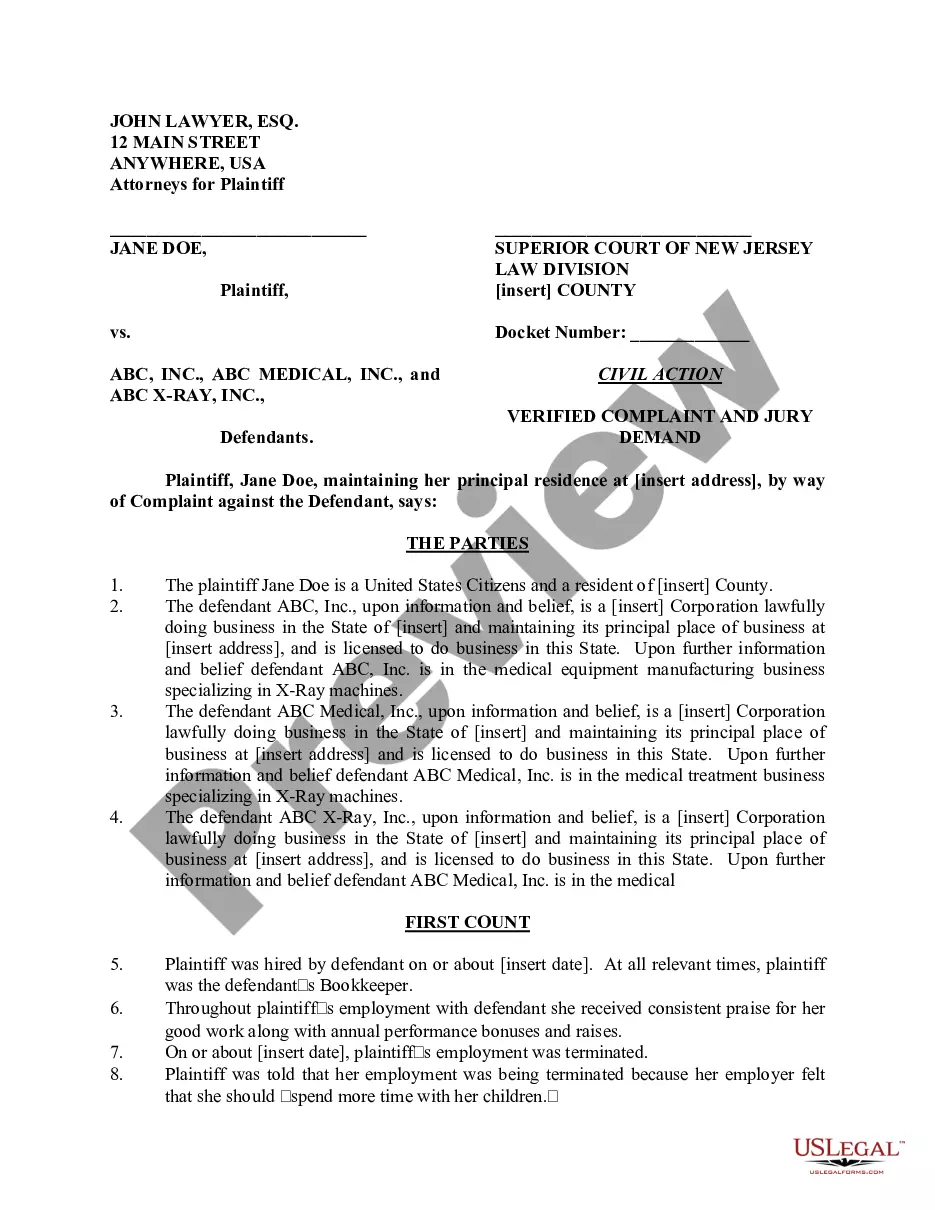
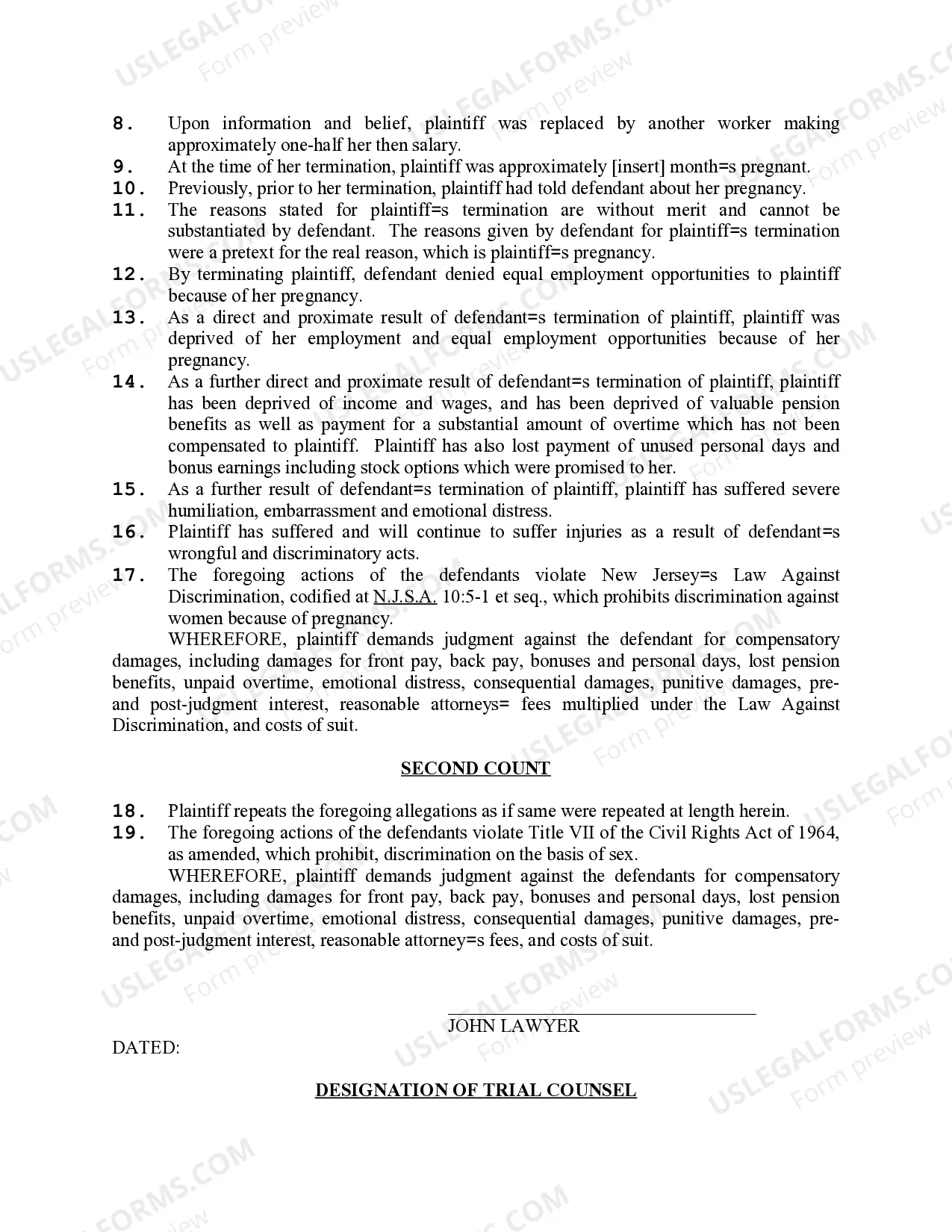
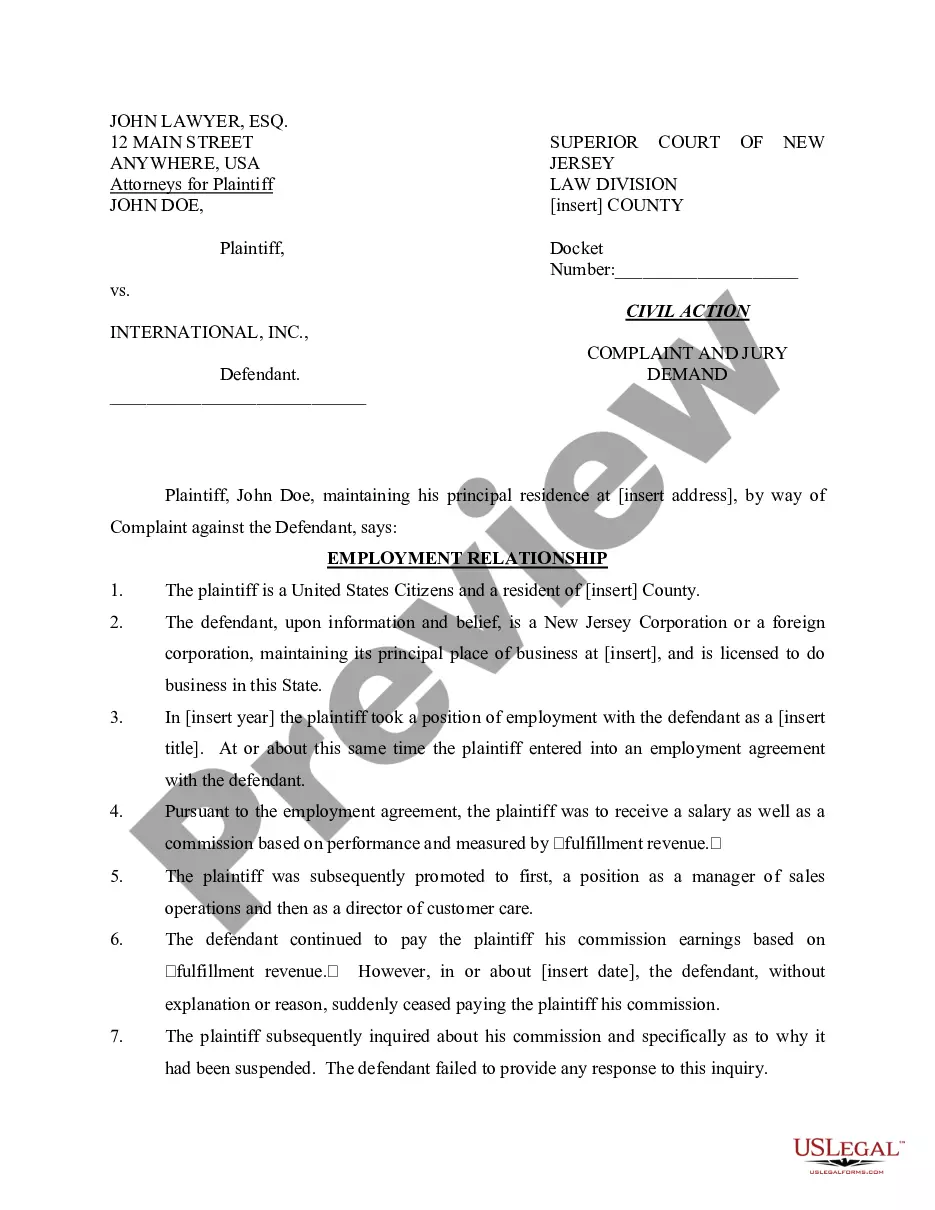
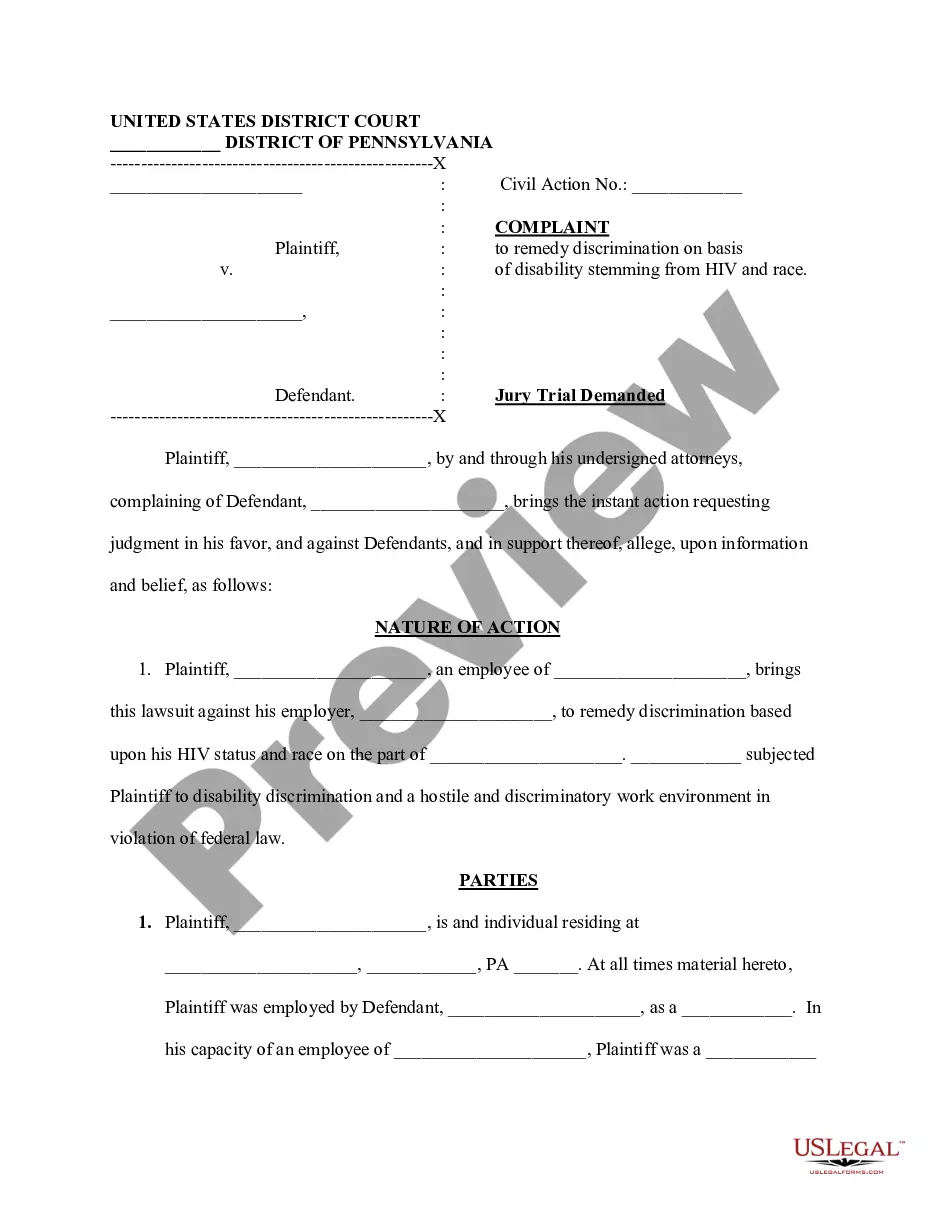
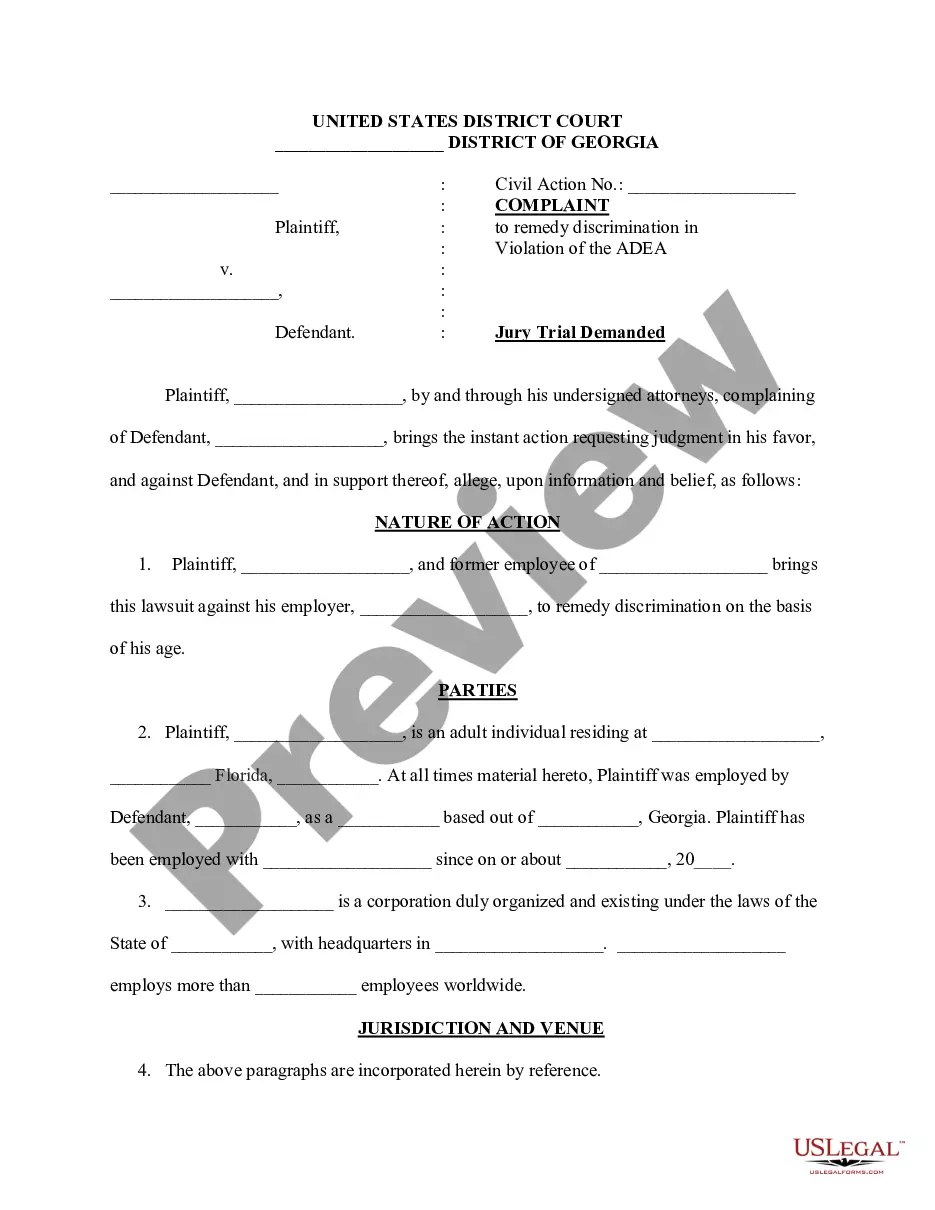
The Complaint for Pregnancy Discrimination is a legal document used in New Jersey to initiate a lawsuit against an employer for discrimination based on pregnancy. This form outlines the plaintiff's allegations against the defendants, including details about the plaintiff's employment, termination circumstances, and the resultant damages. It is specifically designed for individuals seeking legal recourse after experiencing workplace discrimination due to pregnancy, differentiating it from other forms of employment-related complaints.
Main sections of this form
- Identification of the plaintiff and defendants, including their addresses and business information.
- A detailed description of the employment relationship, including hire date and job performance.
- Specific allegations outlining how the plaintiff was discriminated against due to pregnancy.
- Claims for damages, including lost wages, emotional distress, and other compensatory elements.
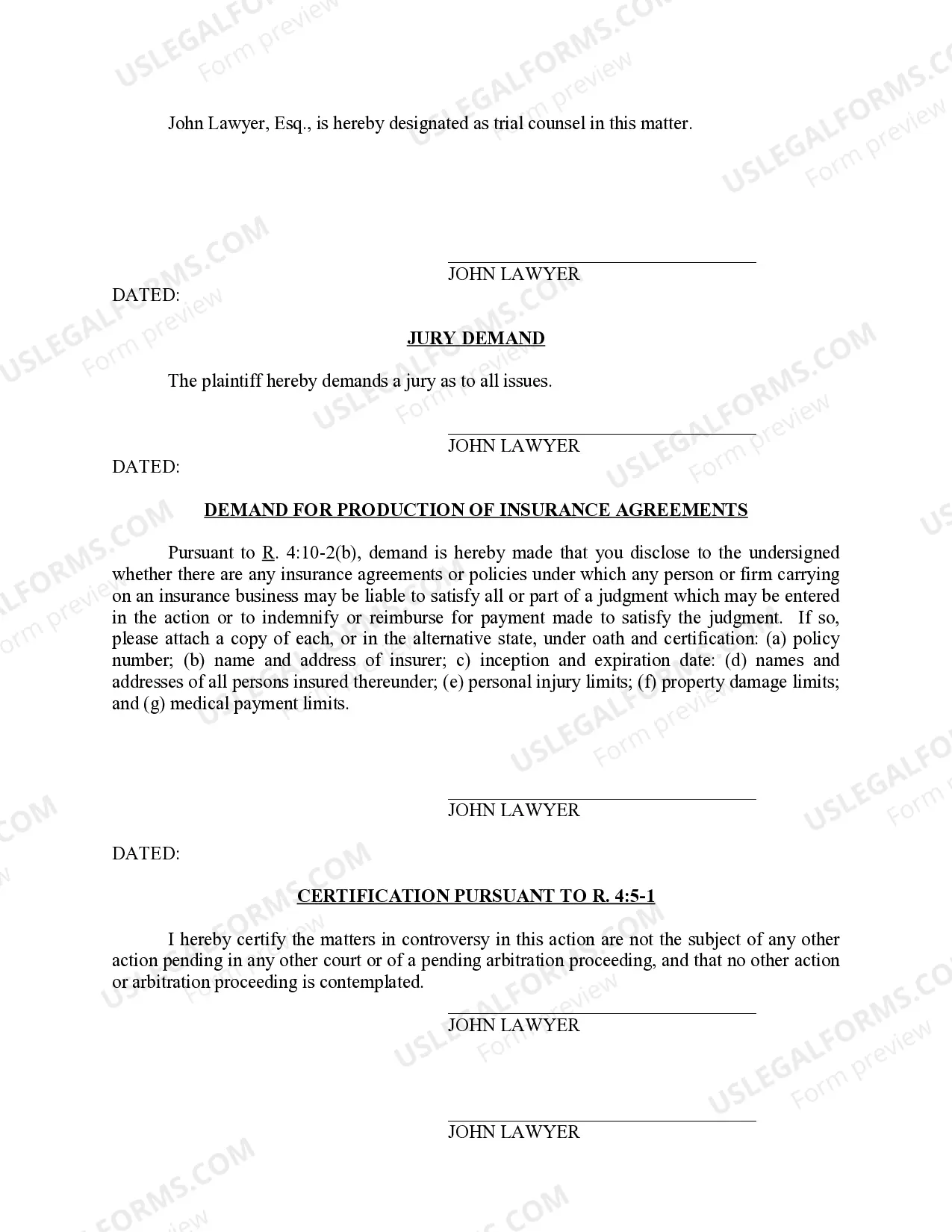
- Designations for trial counsel and jury demand.
- Certification that no other related actions are pending.


Common use cases
This form should be used by individuals who believe they have been discriminated against in the workplace due to pregnancy. Common scenarios include being terminated, demoted, or denied benefits because of a pregnancy announcement. It is essential when seeking to file a formal lawsuit in New Jersey and to assert rights under state and federal laws against pregnancy discrimination.
Who should use this form
- Pregnant individuals whose employment has been adversely affected due to their pregnancy.
- Employees who believe they have been unfairly treated or terminated on the basis of their pregnancy.
- Any individual seeking compensation for damages related to pregnancy discrimination in the workplace.
Completing this form step by step
- Identify the parties involved: provide names and addresses for both the plaintiff and defendants.
- Detail the circumstances of employment: include dates of hire, termination, and job title.
- Describe the discriminatory actions: clearly outline how the employment was affected by the pregnancy.
- Specify the damages sought: list all financial losses and emotional distress claims.
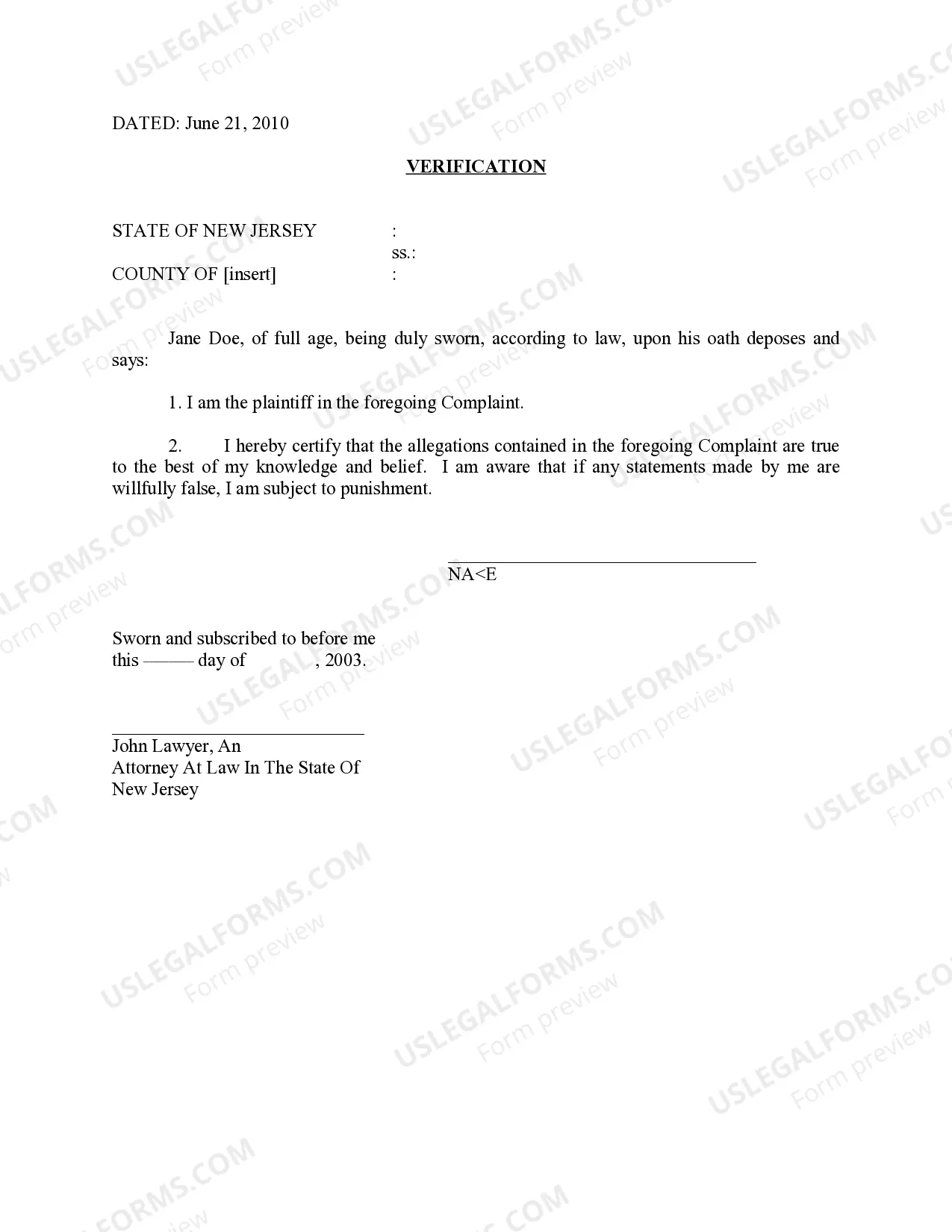
- Include necessary signatures: ensure all parties sign where indicated, including the verification section.
Does this form need to be notarized?
To make this form legally binding, it must be notarized. Our online notarization service, powered by Notarize, lets you verify and sign documents remotely through an encrypted video session.
Get your form ready online
Our built-in tools help you complete, sign, share, and store your documents in one place.
Make edits, fill in missing information, and update formatting in US Legal Forms—just like you would in MS Word.
Download a copy, print it, send it by email, or mail it via USPS—whatever works best for your next step.
Sign and collect signatures with our SignNow integration. Send to multiple recipients, set reminders, and more. Go Premium to unlock E-Sign.
If this form requires notarization, complete it online through a secure video call—no need to meet a notary in person or wait for an appointment.
We protect your documents and personal data by following strict security and privacy standards.

Make edits, fill in missing information, and update formatting in US Legal Forms—just like you would in MS Word.

Download a copy, print it, send it by email, or mail it via USPS—whatever works best for your next step.

Sign and collect signatures with our SignNow integration. Send to multiple recipients, set reminders, and more. Go Premium to unlock E-Sign.

If this form requires notarization, complete it online through a secure video call—no need to meet a notary in person or wait for an appointment.

We protect your documents and personal data by following strict security and privacy standards.
Common mistakes
- Failing to include complete and accurate identifying information for all parties.
- Not providing clear details about the discriminatory actions and their impact.
- Omitting claims for damages, which can weaken your case.
- Neglecting to sign the form or properly certify its contents where necessary.
Benefits of using this form online
- Convenience of downloading and completing the form at your own pace.
- Editability allows for easy updates and corrections as needed.
- Access to professionally drafted templates ensures you meet legal standards.
- Quick access to legal forms reduces the time and hassle of paper filing.
Looking for another form?

Form popularity
FAQ
You can file a formal job discrimination complaint with the EEOC whenever you believe you are: Being treated unfairly on the job because of your race, color, religion, sex (including pregnancy, gender identity, and sexual orientation), national origin, disability, age (age 40 or older) or genetic information; or.
2. Complaints of prohibited discrimination/harassment can be reported to either (Name of State Agency's EEO/AA Officer), the EEO/AA Officer, (Authorized Designee) or to any supervisory employee of the State Agency or through the State's Hotline (833-691-0404).
Pregnancy and maternity discrimination is when you're treated unfairly because you're pregnant, breastfeeding or because you've recently given birth. You must suffer a disadvantage as a result of the unfair treatment.
Discrimination is prejudicial treatment in the workplace, which may affect hiring, firing, promotions, salary, job assignments, training, benefits and/or layoffs, based on a person's age, gender, sexual orientation, race, religion, national origins or disabilities.
Proving Pregnancy Discrimination. To win a pregnancy discrimination case, you must show that you were treated differently than other employees who were similarly situated, and that the difference in treatment was based on your pregnancy.
Dial 711 and ask the Relay Operator to contact the Division at (609) 292-7701. To file a claim with the EEOC, contact your local EEOC office below. More information about filing a claim with the EEOC can be found at the EEOC Filing a Charge page.
The New Jersey Law Against Discrimination (LAD) prohibits discrimination and harassment based on actual or perceived race, religion, national origin, gender, sexual orientation, gender identity or expression, disability, and other protected characteristics.
You need to file with the Equal Employment Opportunity Commission (EEOC) or your state's administrative agency first. Filing with the EEOC or your state's administrative agency is the required first step if you want to bring a formal pregnancy discrimination lawsuit against your employer.
Pregnancy discrimination involves treating a woman (an applicant or employee) unfavorably because of pregnancy, childbirth, or a medical condition related to pregnancy or childbirth.