New Jersey Complaint for Rescission, Specific Performance, Damages
What this document covers
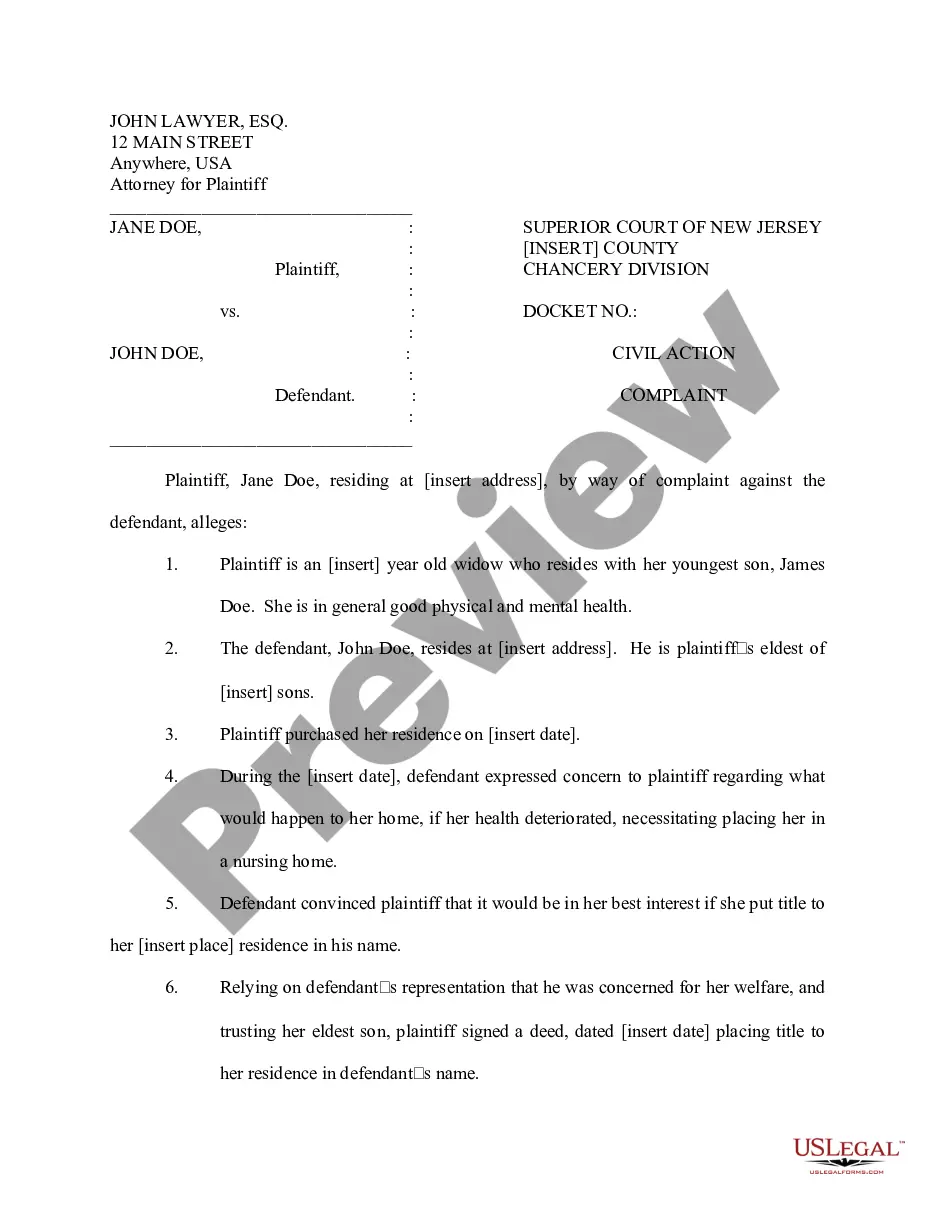
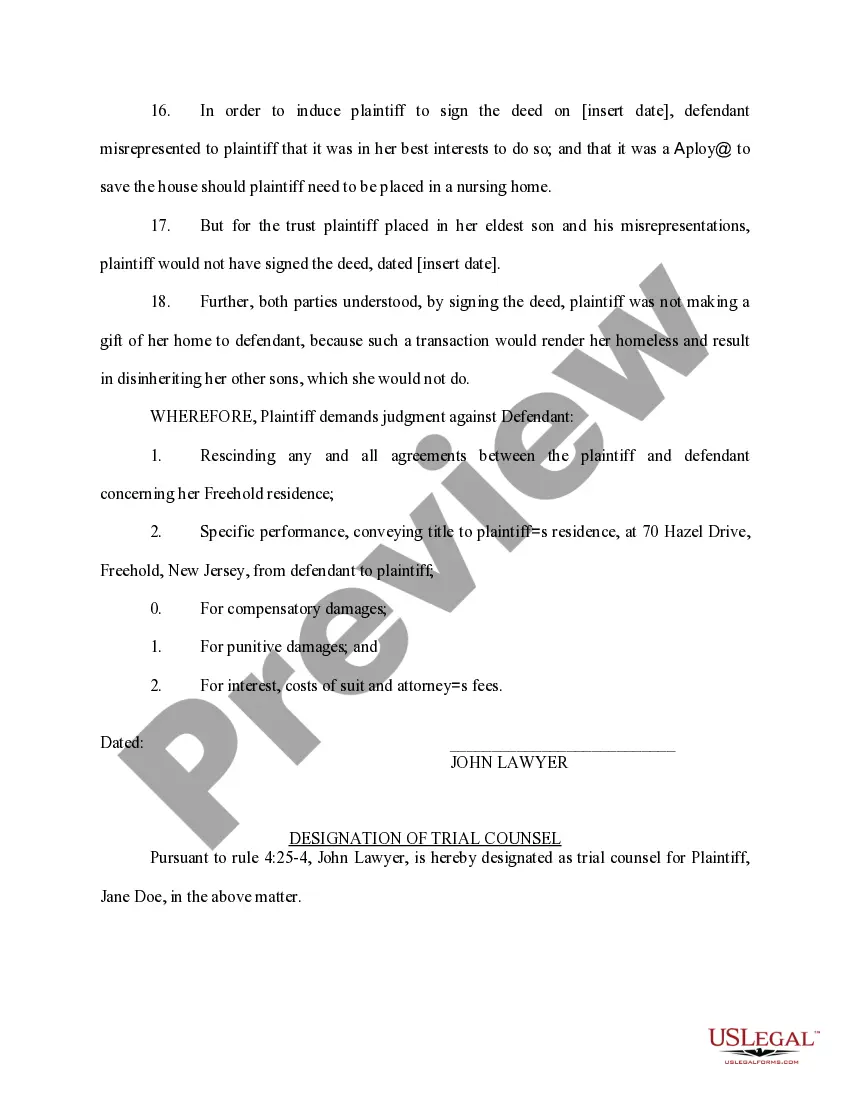
The Complaint for Rescission, Specific Performance, Damages is a legal document used when a plaintiff seeks to reverse a transaction and recover their property due to misrepresentation or undue influence. This form specifically addresses requests for rescission, specific performance of an agreement, and claims for damages, making it distinct from other complaint forms that may not encompass these specific remedies.
Main sections of this form
- Identification of the plaintiff and defendant, including relevant addresses.
- Statement of jurisdiction and case information, such as court details and docket number.
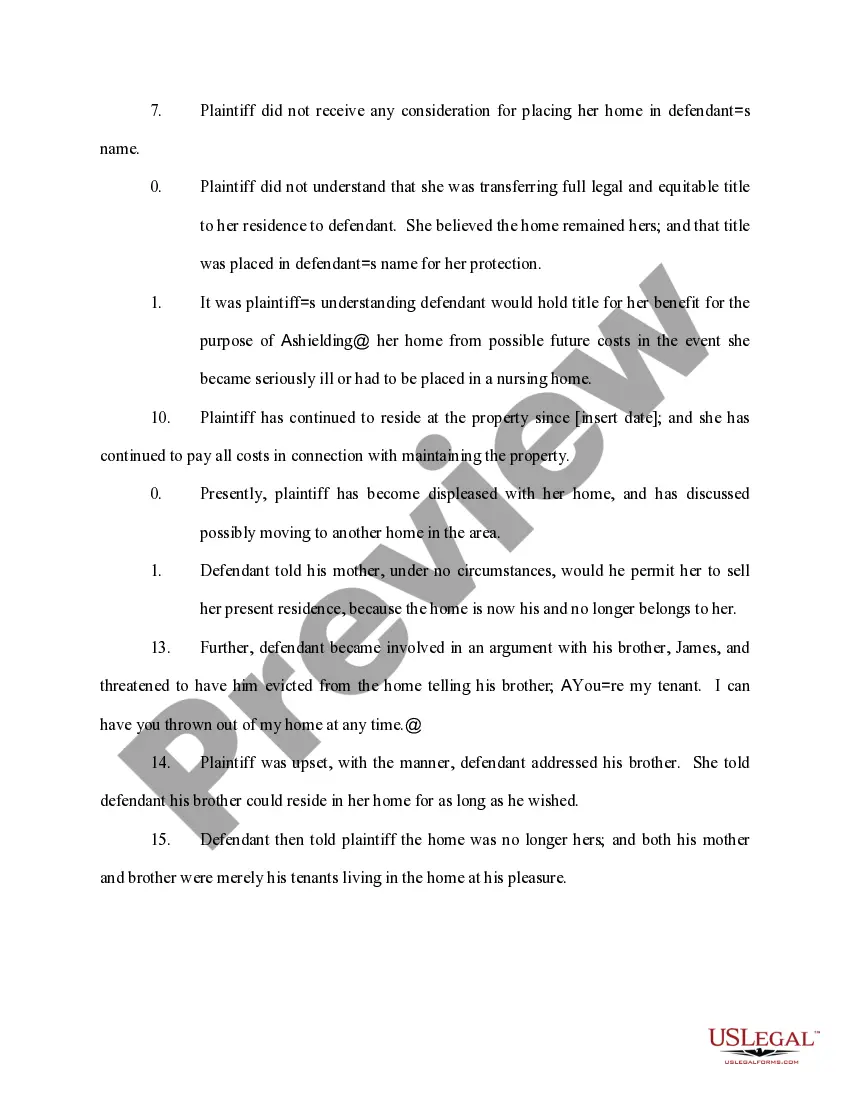
- Allegations regarding the transfer of property and the circumstances surrounding the decision.
- Specific requests for legal remedies, including rescission of agreements and monetary damages.
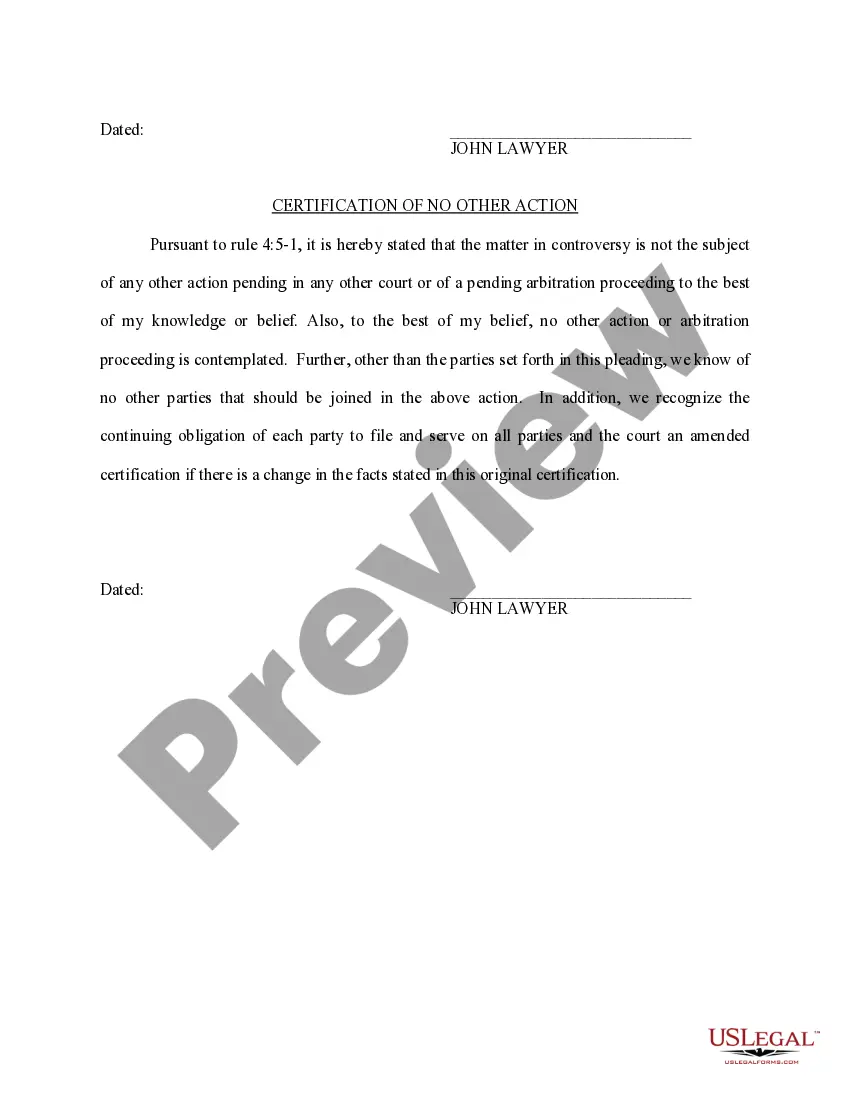
- Certification of no other actions pending relating to the same matter.



Common use cases
This form should be used when an individual has transferred title to their property under duress or misleading pretenses and wants to reclaim ownership. Examples include scenarios where family members or trusted individuals convince the owner to sign over property rights, falsely assuring them that it is for their protection. If the property owner later wishes to sell or move and is denied their rights, this form is appropriate for seeking legal recourse.
Who this form is for
- Individuals who have transferred property title based on false representations or undue influence.
- Homeowners looking to reclaim property that they inadvertently signed over to a family member or friend.
- Anyone seeking compensatory or punitive damages related to the misrepresentation in a property transfer.
How to complete this form
- Identify the parties involved by providing their names and addresses.
- Clearly state the nature of the complaint and the specific reasons for seeking rescission.
- Detail the desired remedies, including any requests for damages or attorney fees.
- Include relevant dates for the property transfer and any agreements made.
- After completing, sign and date the form in the designated sections for both the plaintiff and the attorney.
Is notarization required?
This form must be notarized to be legally valid. US Legal Forms provides secure online notarization powered by Notarize, allowing you to complete the process through a verified video call.
Get your form ready online
Our built-in tools help you complete, sign, share, and store your documents in one place.
Make edits, fill in missing information, and update formatting in US Legal Forms—just like you would in MS Word.
Download a copy, print it, send it by email, or mail it via USPS—whatever works best for your next step.
Sign and collect signatures with our SignNow integration. Send to multiple recipients, set reminders, and more. Go Premium to unlock E-Sign.
If this form requires notarization, complete it online through a secure video call—no need to meet a notary in person or wait for an appointment.
We protect your documents and personal data by following strict security and privacy standards.

Make edits, fill in missing information, and update formatting in US Legal Forms—just like you would in MS Word.

Download a copy, print it, send it by email, or mail it via USPS—whatever works best for your next step.

Sign and collect signatures with our SignNow integration. Send to multiple recipients, set reminders, and more. Go Premium to unlock E-Sign.

If this form requires notarization, complete it online through a secure video call—no need to meet a notary in person or wait for an appointment.

We protect your documents and personal data by following strict security and privacy standards.
Typical mistakes to avoid
- Failing to provide complete addresses for plaintiff and defendant.
- Omitting details about the circumstances that led to the property transfer.
- Not including specific dates related to the transaction or agreements.
- Neglecting to sign or date the form appropriately.
Advantages of online completion
- Convenient access to the form without the need for in-person visits to legal offices.
- Editability allows users to customize the form to suit their specific situations before downloading.
- Reliability of professionally drafted templates ensures compliance with legal standards.
Legal use & context
- This complaint can be used to challenge improperly executed property transfers in court.
- It provides a legal basis for plaintiffs to reclaim possessions and seek damages.
- Ensuring accurate completion and adherence to local rules enhances enforceability in court.
What to keep in mind
- The Complaint for Rescission is crucial for recovering incorrectly transferred property.
- Understanding the legal basis for your complaint can strengthen your position in court.
- Accurate details and proper formatting are essential in legal documents for successful outcomes.
Looking for another form?
Form popularity
FAQ
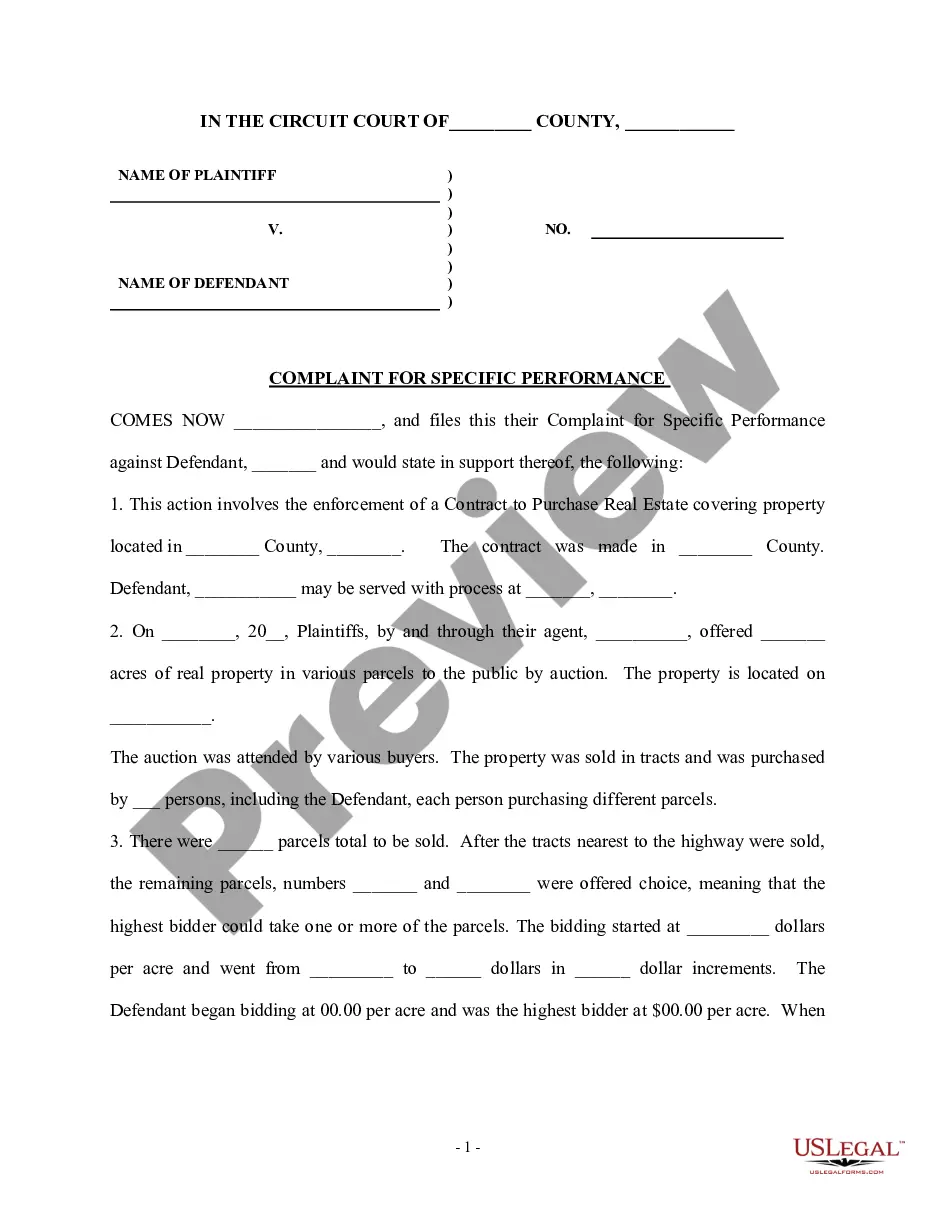
In order to enforce a contract, a party must have met his obligations under the contract to show a reason why his performance is excused. The defendant must have breached the agreement. The failure to convey the property will usually constitute a breach of the purchase and sale agreement.
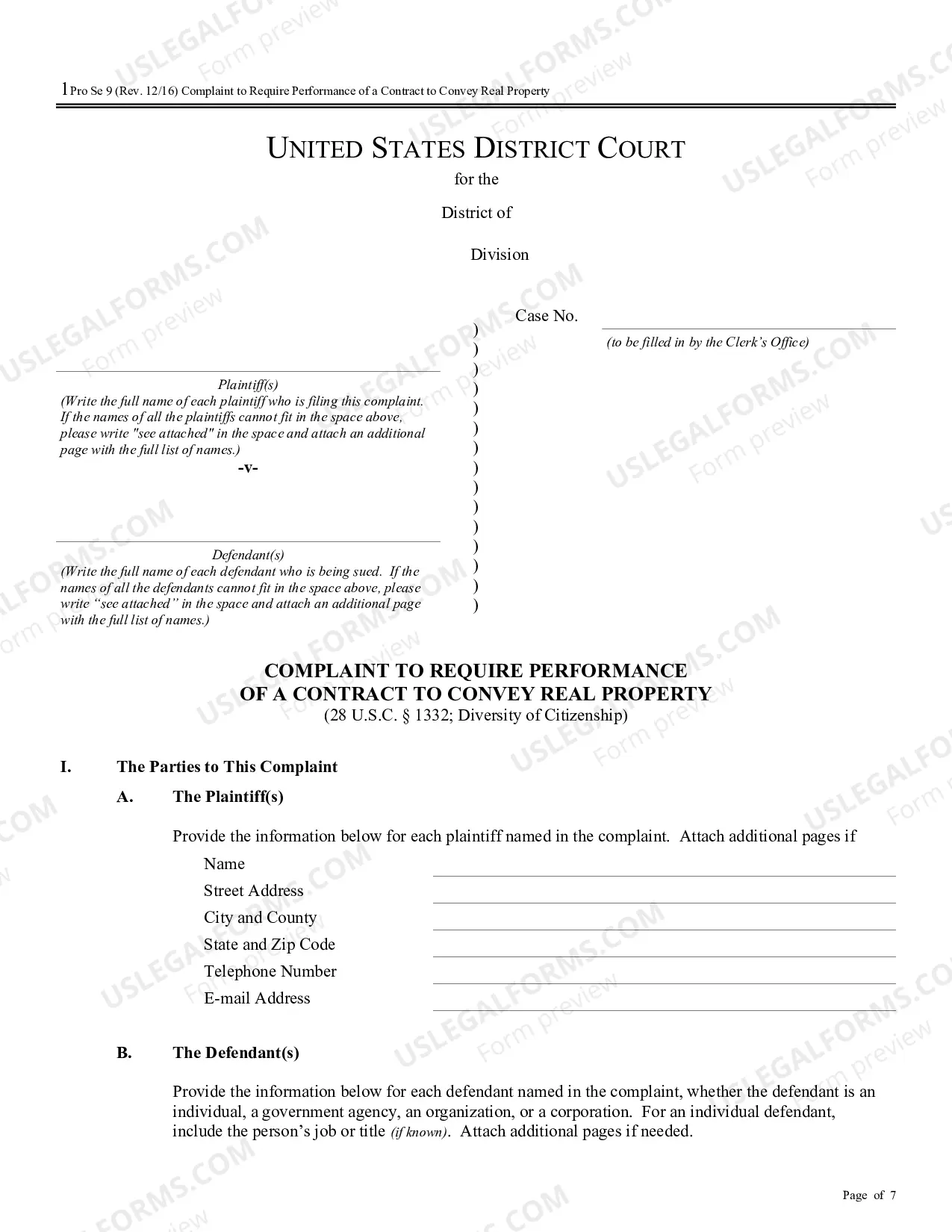
A suit for specific performance can be filed by any party, in a court of competent jurisdiction, who has suffered loss due to non-performance of contract on part of the other party to the contract. Remedy of specific performance which is affected in case of breach of contracts is provided by the equity courts.
Specific performance is only ordered in situations in which monetary damages would be inadequate to compensate the injured party. When specific performance is ordered, money damages are usually not ordered as the moving party is typically not entitled to both types of damages.
However, to win a specific performance lawsuit the buyer`s sales contract must be exact enough for the court to order its performance. To prevent the seller from selling the property to another buyer, most specific performance lawsuits also involve recording a lis pendens against the home`s title.
Specific performance is only ordered in situations in which monetary damages would be inadequate to compensate the injured party. When specific performance is ordered, money damages are usually not ordered as the moving party is typically not entitled to both types of damages.
Suing for Specific Performance as a Buyer The buyer is allowed to sue for specific performance if the seller refuses to move forward with her obligations under the agreed upon contract.
Although the plaintiff can elect to claim specific performance from the defendant, the court has a discretion to grant or decline the order of specific performance.Plaintiff has a right of election whether to claim specific performance from the defendant or damages for breach of contract.
Specific performance is an equitable remedy in the law of contract, whereby a court issues an order requiring a party to perform a specific act, such as to complete performance of the contract.