New Jersey Complaint Consumer Fraud Act Damage to Property
What is this form?
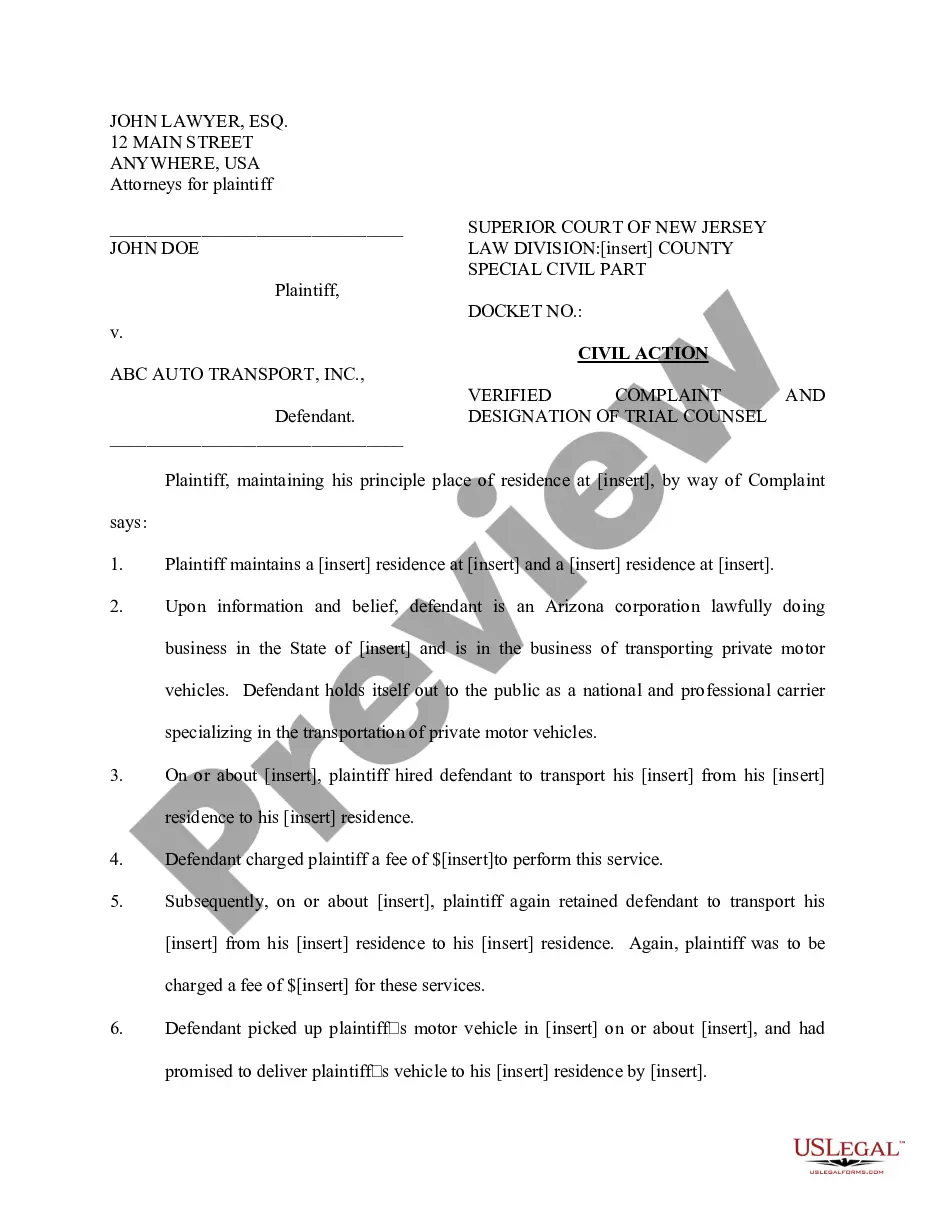
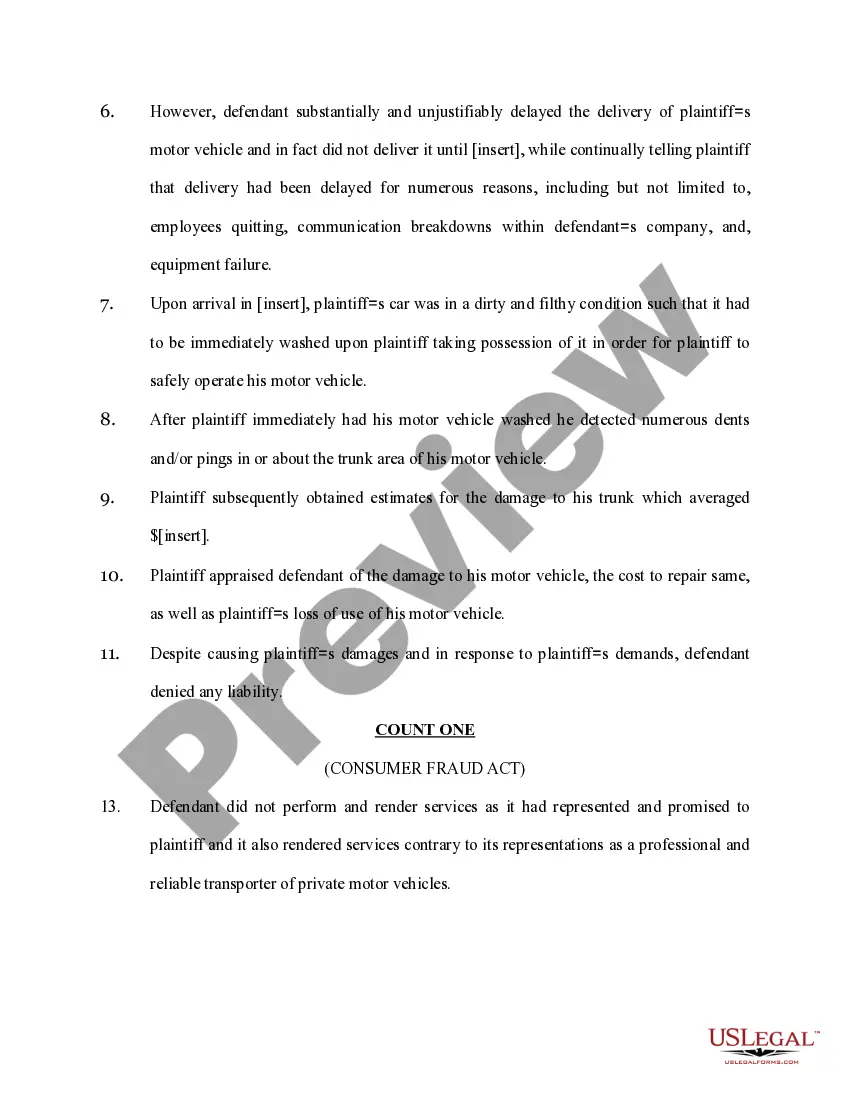
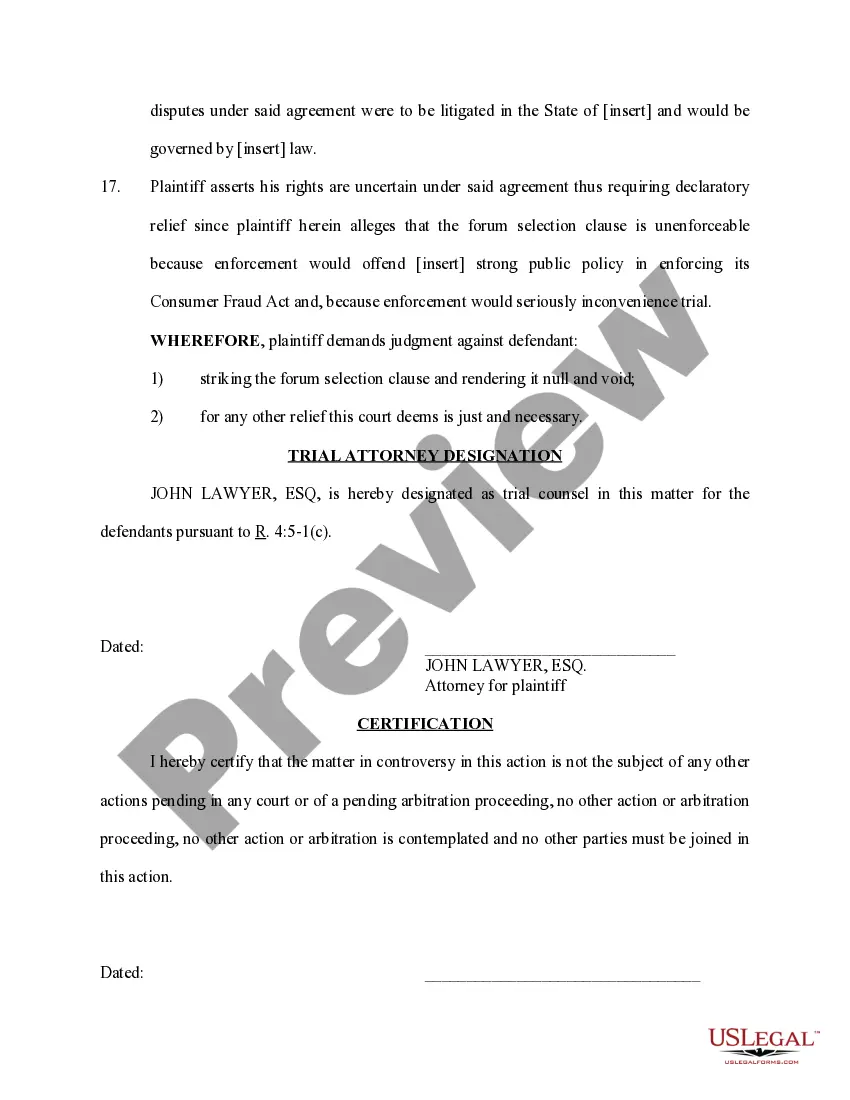
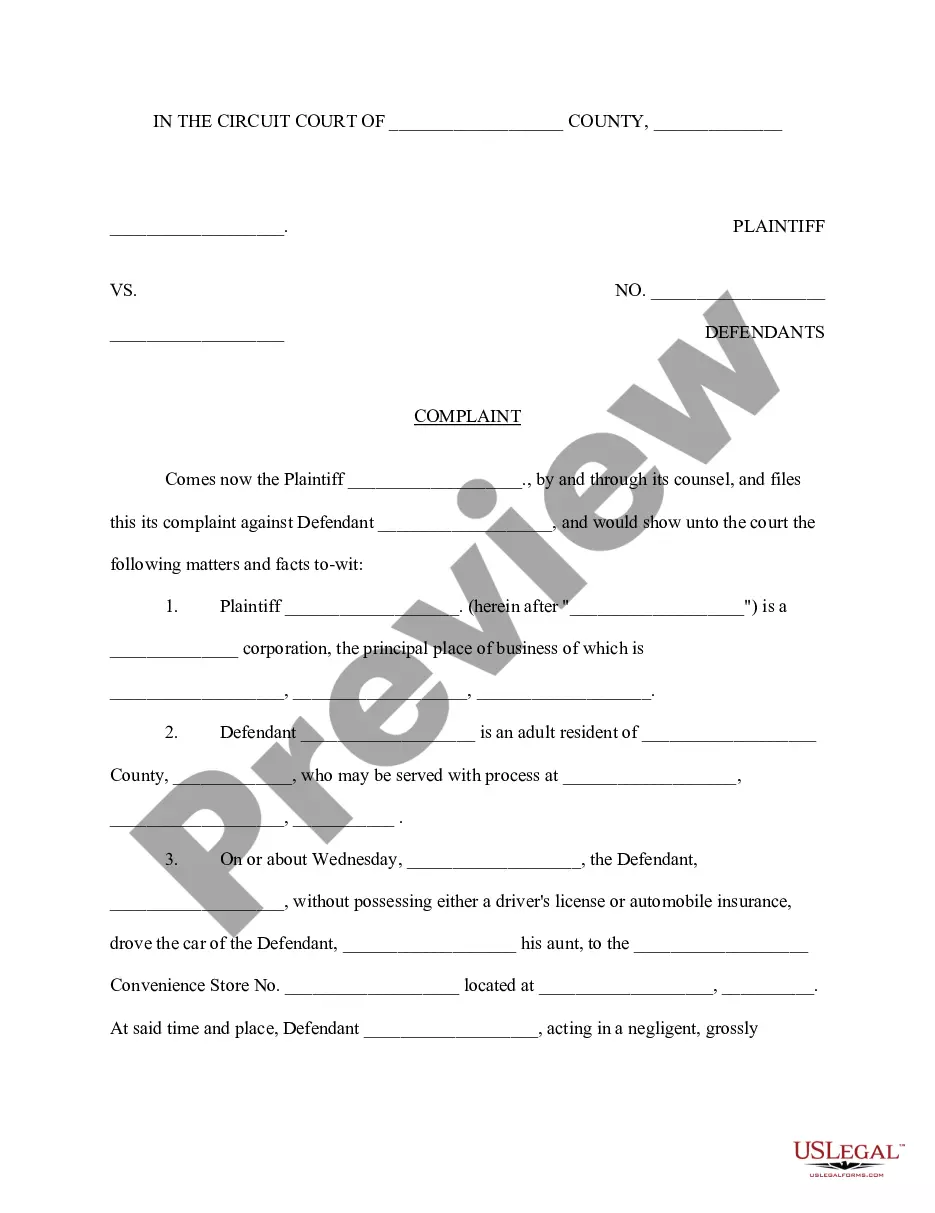
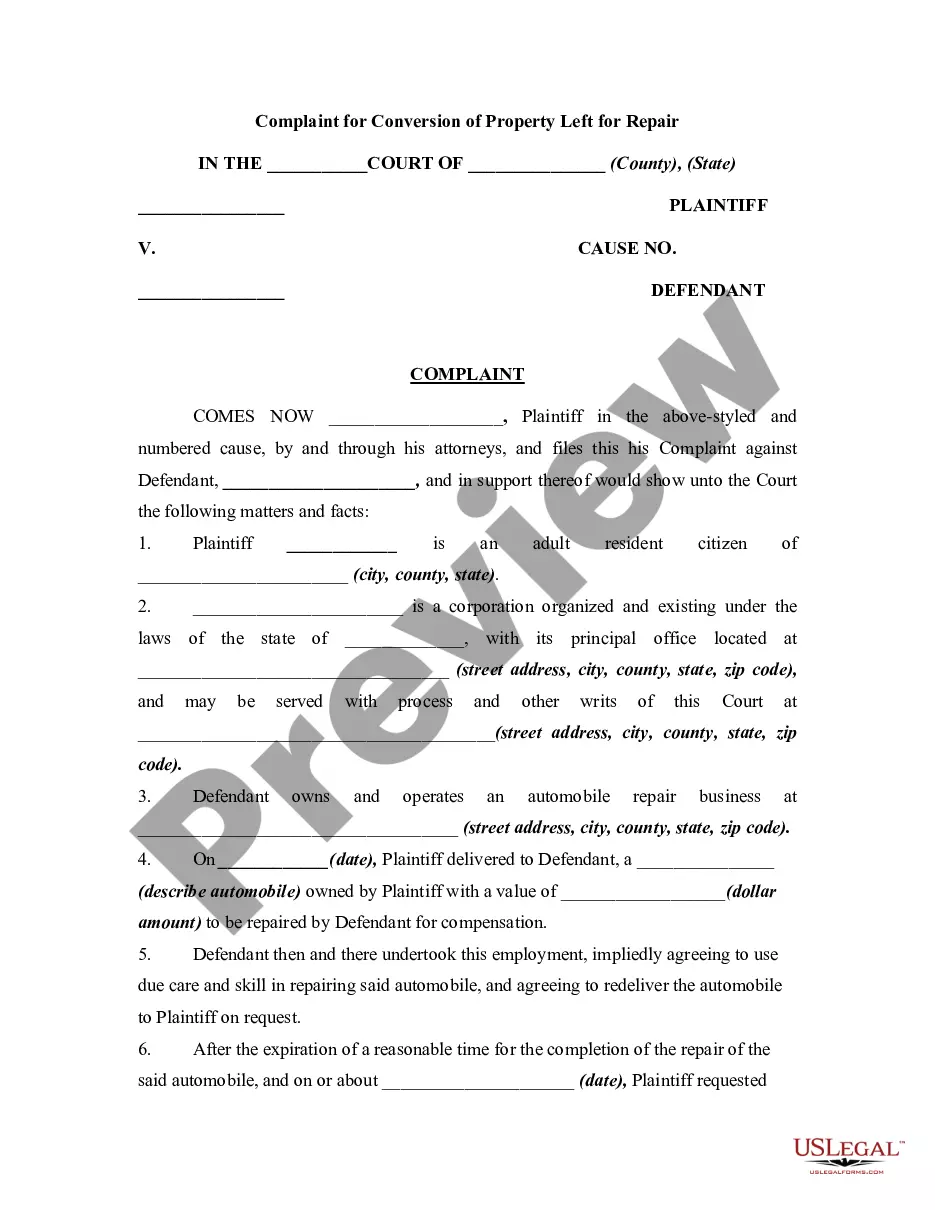
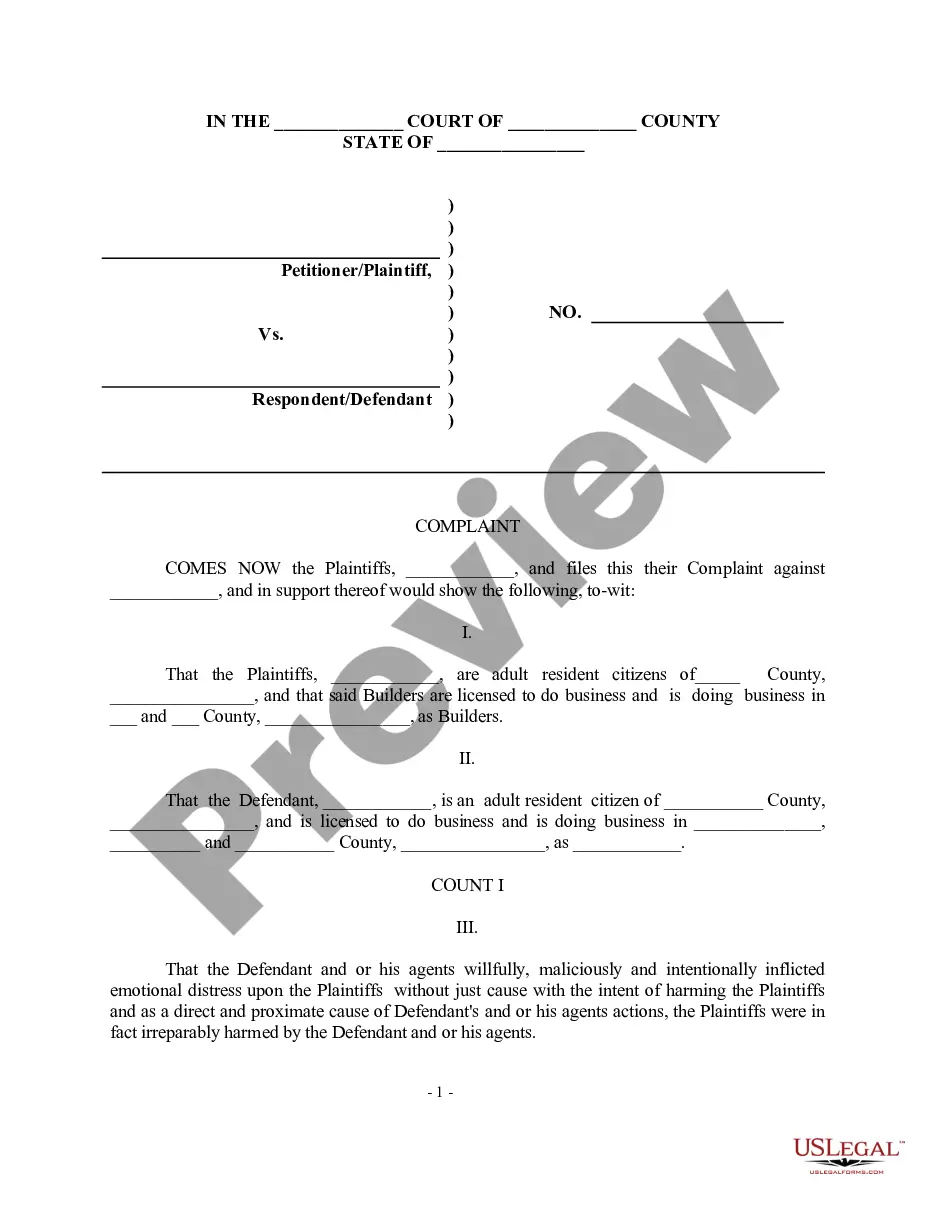
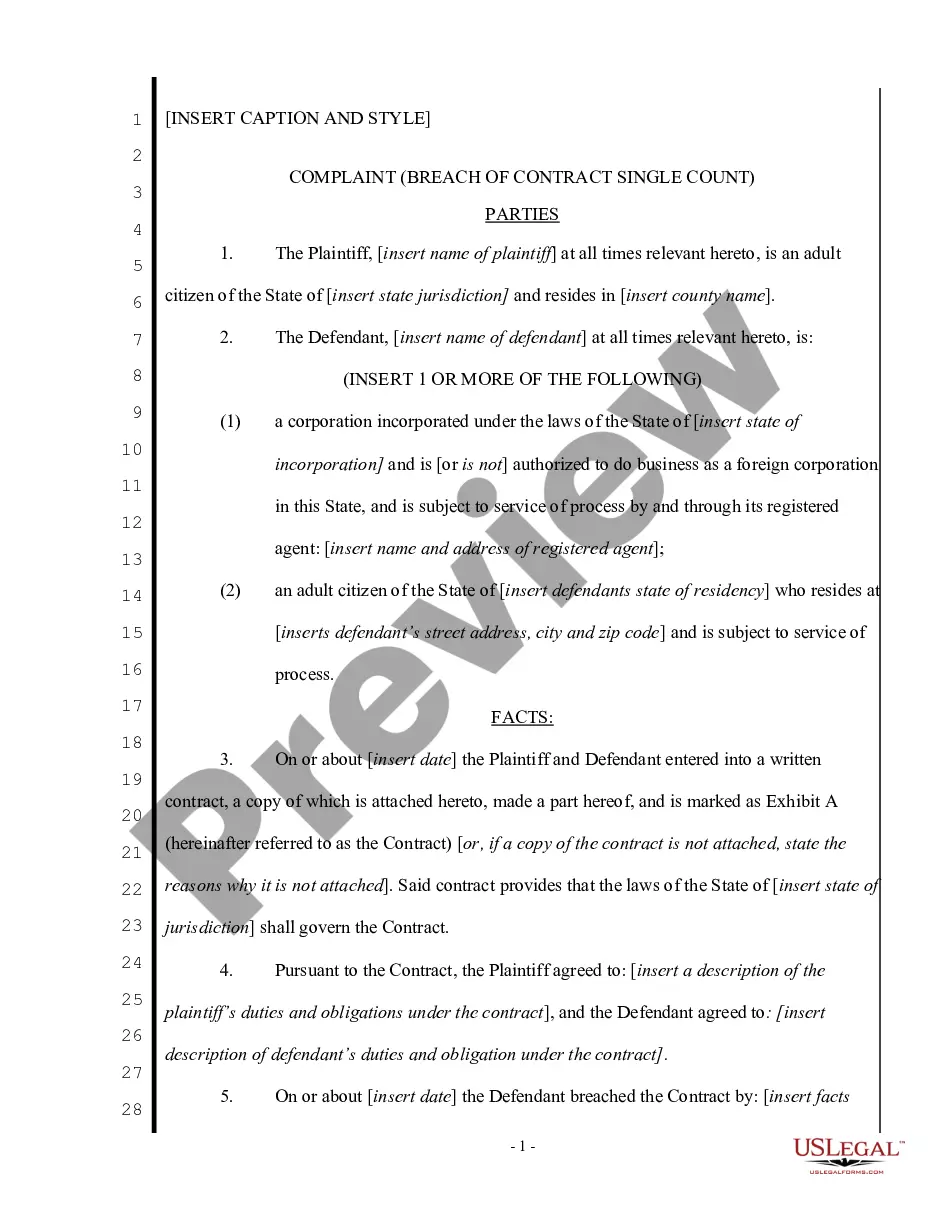
This form is a Complaint for Consumer Fraud Act Damage to Property. It is used by a plaintiff to initiate a legal action against a defendant for violations related to consumer fraud and breach of contract specifically concerning property damage. This form is distinct from other complaints as it focuses on the deficiencies in services provided by the defendant in their professional capacity as a transporter of private vehicles.
Key components of this form
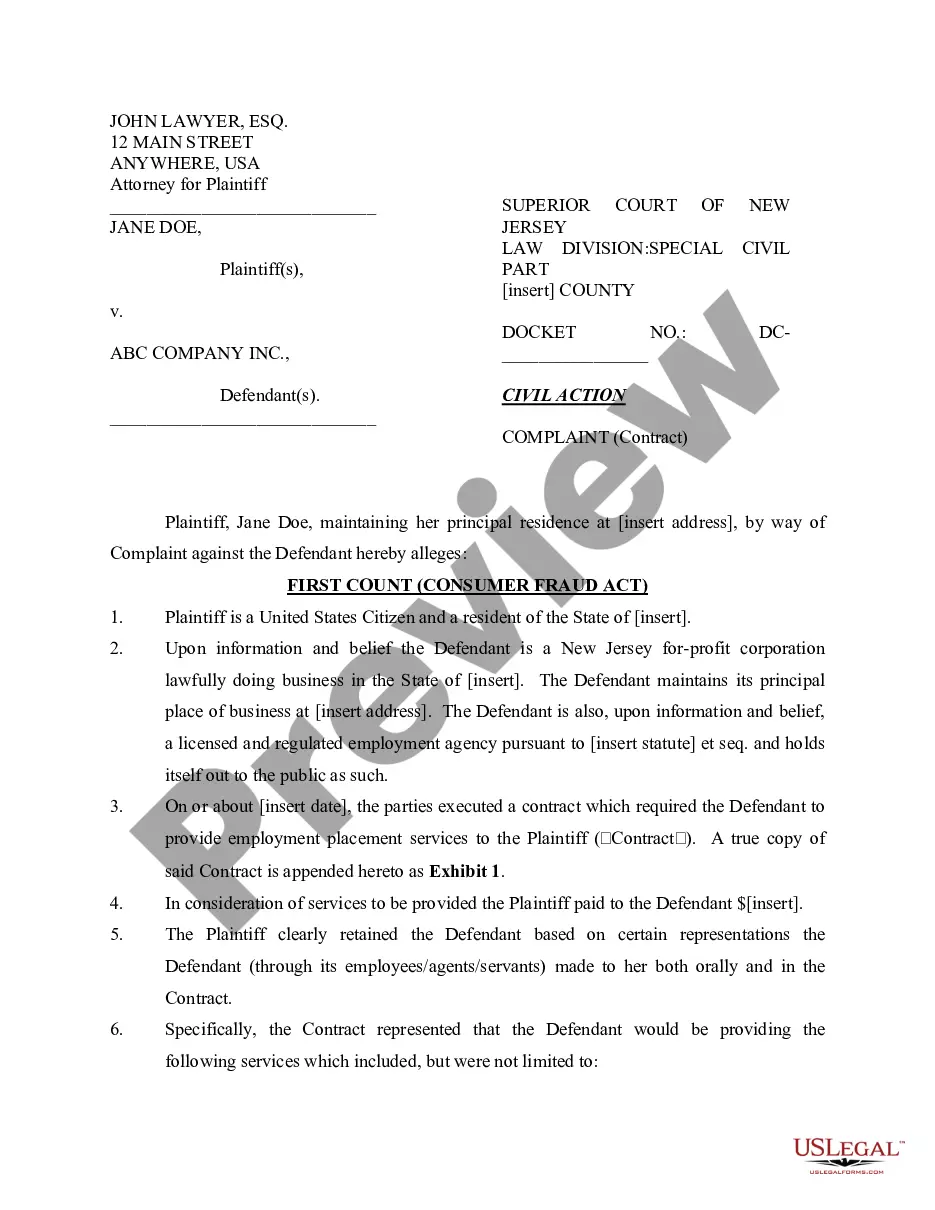
- Identification of parties involved: Plaintiff and Defendant details.
- Statement of jurisdiction: Specifies the court and legal context.
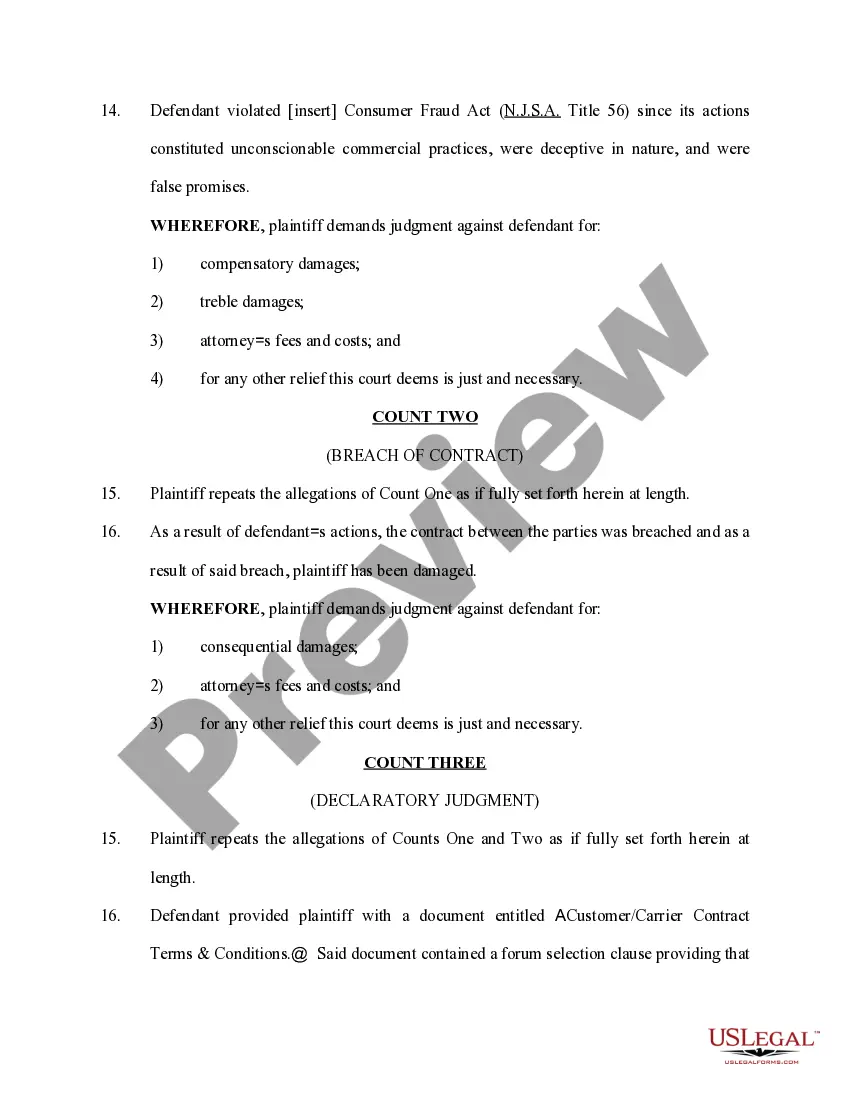
- Claims made: Detailed allegations under the Consumer Fraud Act and breach of contract.
- Demand for relief: What the plaintiff seeks, including damages and attorney fees.
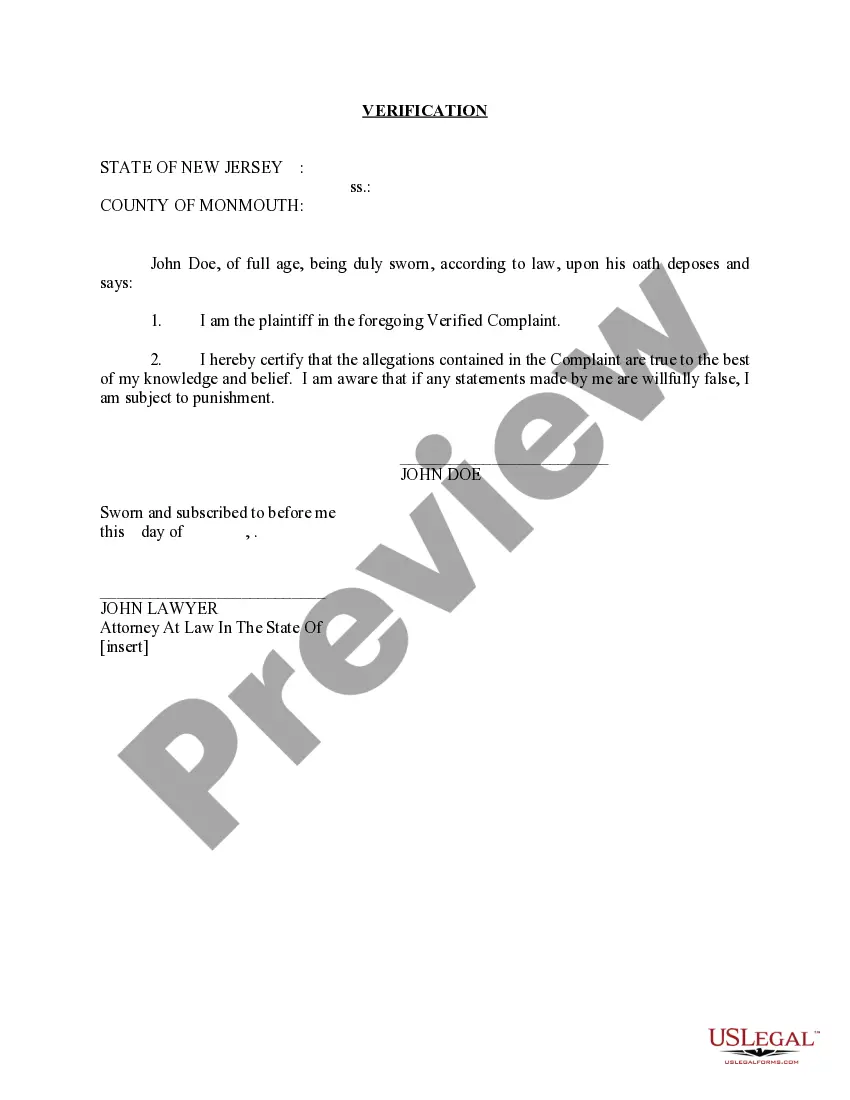
- Verification section: Certifies the truthfulness of the complaint's allegations.
- Designated trial attorney: Information about the attorney representing the plaintiff.
When to use this form
This form should be used when an individual has hired a transportation service that failed to deliver a vehicle as promised, resulting in damages. This includes scenarios where the service was negligent, resulting in property damage or significant delays. If the plaintiff believes that they have been a victim of consumer fraud or have suffered breaches of contract related to vehicle transport, this form is appropriate to initiate legal proceedings.
Who can use this document
This form is intended for:
- Individuals who have contracted a transport service for their vehicles.
- Plaintiffs seeking to claim damages due to breaches of consumer protection laws.
- People wishing to pursue legal action after experiencing property damage during vehicle transport.
- Consumers who want to understand their rights under state consumer fraud laws.
How to prepare this document
- Identify and fill in the names and addresses of the plaintiff and defendant.
- Detail the specific dates and circumstances related to the transport service and any delays.
- List the damages incurred and the costs associated with repairs or loss of use.
- Clearly specify the relief sought, including any compensatory or treble damages.
- Sign and date the verification section to affirm the accuracy of the information provided.
Notarization guidance
This form does not typically require notarization unless specified by local law. However, it is advisable to check with your local court to confirm if notarization is necessary for submission.
Get your form ready online
Our built-in tools help you complete, sign, share, and store your documents in one place.
Make edits, fill in missing information, and update formatting in US Legal Forms—just like you would in MS Word.
Download a copy, print it, send it by email, or mail it via USPS—whatever works best for your next step.
Sign and collect signatures with our SignNow integration. Send to multiple recipients, set reminders, and more. Go Premium to unlock E-Sign.
If this form requires notarization, complete it online through a secure video call—no need to meet a notary in person or wait for an appointment.
We protect your documents and personal data by following strict security and privacy standards.

Make edits, fill in missing information, and update formatting in US Legal Forms—just like you would in MS Word.

Download a copy, print it, send it by email, or mail it via USPS—whatever works best for your next step.

Sign and collect signatures with our SignNow integration. Send to multiple recipients, set reminders, and more. Go Premium to unlock E-Sign.

If this form requires notarization, complete it online through a secure video call—no need to meet a notary in person or wait for an appointment.

We protect your documents and personal data by following strict security and privacy standards.
Typical mistakes to avoid
- Failing to provide complete and accurate details about the transport service.
- Not specifying the dates of service or delays clearly.
- Missing to sign the verification section, which could render the form invalid.
- Omitting to properly calculate and list damages incurred.
- Ignoring local court rules regarding format and submission of complaints.
Why complete this form online
- Convenience of downloading and filling out the form at your own pace.
- Editability allows for easy corrections before finalizing the document.
- Forms are drafted by licensed attorneys, ensuring legal accuracy.
- Access to multi-state variations if needed, accommodating legal requirements.
Legal use & context
- The Complaint for Consumer Fraud Act Damage to Property is designed to hold defendants accountable for failing to meet legal obligations.
- This form lays the groundwork for pursuing justice through civil courts for damages caused by deceptive practices.
- Understanding the Consumer Fraud Act is essential to validate the claims made in this complaint.
Quick recap
- This complaint form addresses consumer fraud and property damage specifically related to transportation services.
- Completing it accurately is crucial for successful legal action and potential recovery of damages.
- Always be aware of state-specific laws that may affect the use of this form.
Looking for another form?
Form popularity
FAQ
To promote consumer education, To establish a legal framework for the achievement of a consumer market that is fair, accessible, efficient, sustainable and responsible, To promote fair business practices, To protect consumers from unfair, unreasonable and/or improper trade practices.
Consumer Rights the right to be protected against the marketing of goods, products or services which are hazardous to life and property;the right to seek redressal against unfair trade practice or restrictive trade practices or unscrupulous exploitation of consumers; and.
The eight consumer rights are: Right to basic needs, Right to safety, Right to information, Right to choose, Right to representation, Right to redress, Right to consumer education, and Right to healthy environment.
The New Jersey Division of Consumer Affairs (DCA) is a governmental agency in the U.S. state of New Jersey that is responsible for protecting the public "from fraud, deceit and misrepresentation in the sale of goods and services." The DCA operates within the New Jersey Department of Law and Public Safety in the office
Some key federal consumer protection statutes include the Federal Trade Commission Act (FTC Act), the Dodd-Frank Wall Street Reform and Consumer Protection Act (Dodd-Frank Act), the Gramm-Leach-Bliley Act (GLB Act), the Truth in Lending Act (TILA), the Fair Credit Reporting Act (FCRA), the Fair Debt
The Consumer Protection Act is provincial legislation that governs consumer transactions in the Province of Alberta. Its intention is to prevent consumers from being taken advantage of through unfair business practices.Employment Agency Businesses.
Consumer protection is the practice of safeguarding buyers of goods and services, and the public, against unfair practices in the marketplace.Such laws are intended to prevent businesses from engaging in fraud or specified unfair practices in order to gain an advantage over competitors or to mislead consumers.
On July 20th, 2020, the new Consumer Protection Act, 2019 came into force in India, replacing the previous enactment of 1986. The new Act overhauls the administration and settlement of consumer disputes in India. It provides for strict penalties, including jail terms for adulteration and for misleading advertisements.
Some key federal consumer protection statutes include the Federal Trade Commission Act (FTC Act), the Dodd-Frank Wall Street Reform and Consumer Protection Act (Dodd-Frank Act), the Gramm-Leach-Bliley Act (GLB Act), the Truth in Lending Act (TILA), the Fair Credit Reporting Act (FCRA), the Fair Debt