Evidence (What is; is Not)
Overview of this form
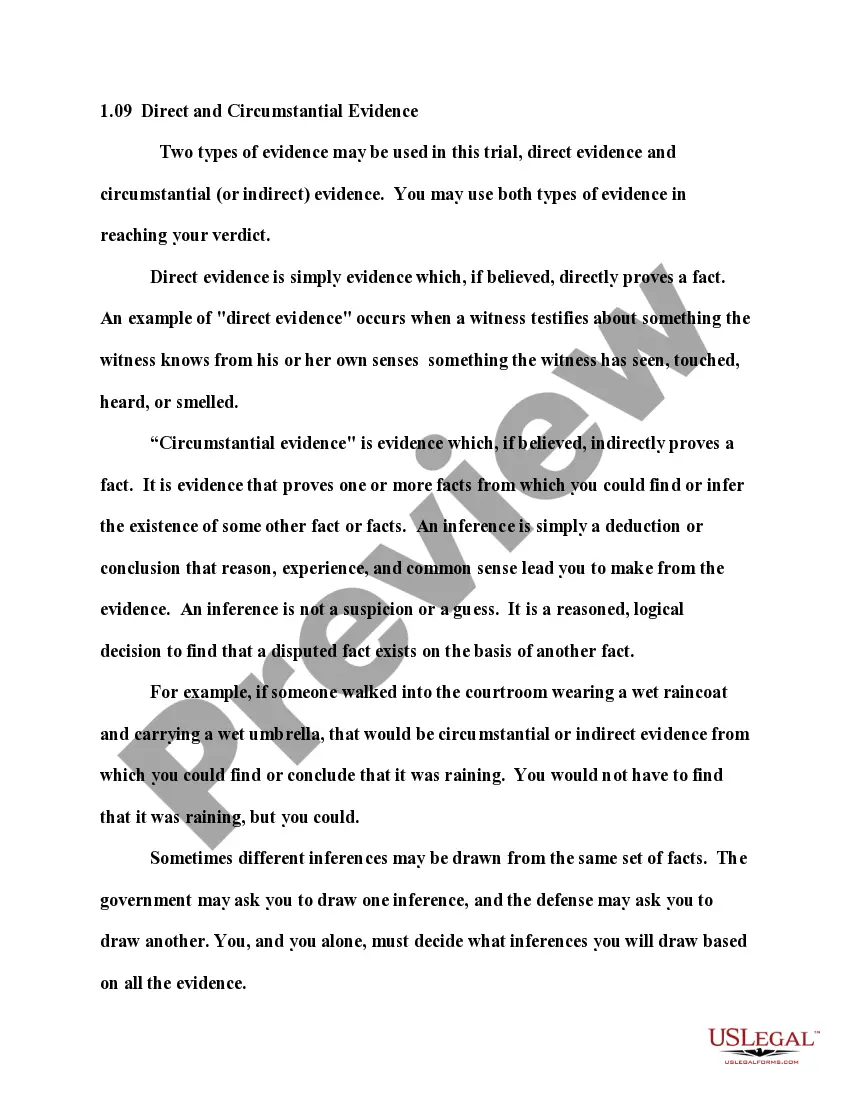
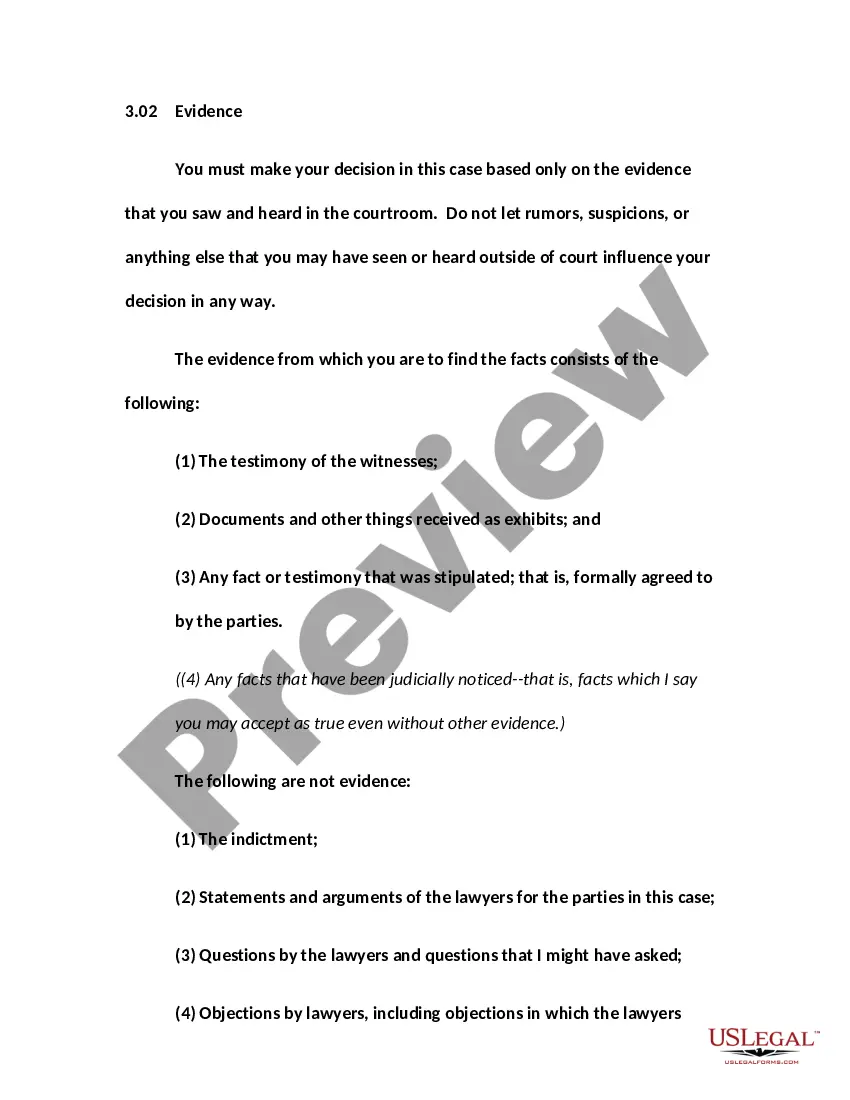
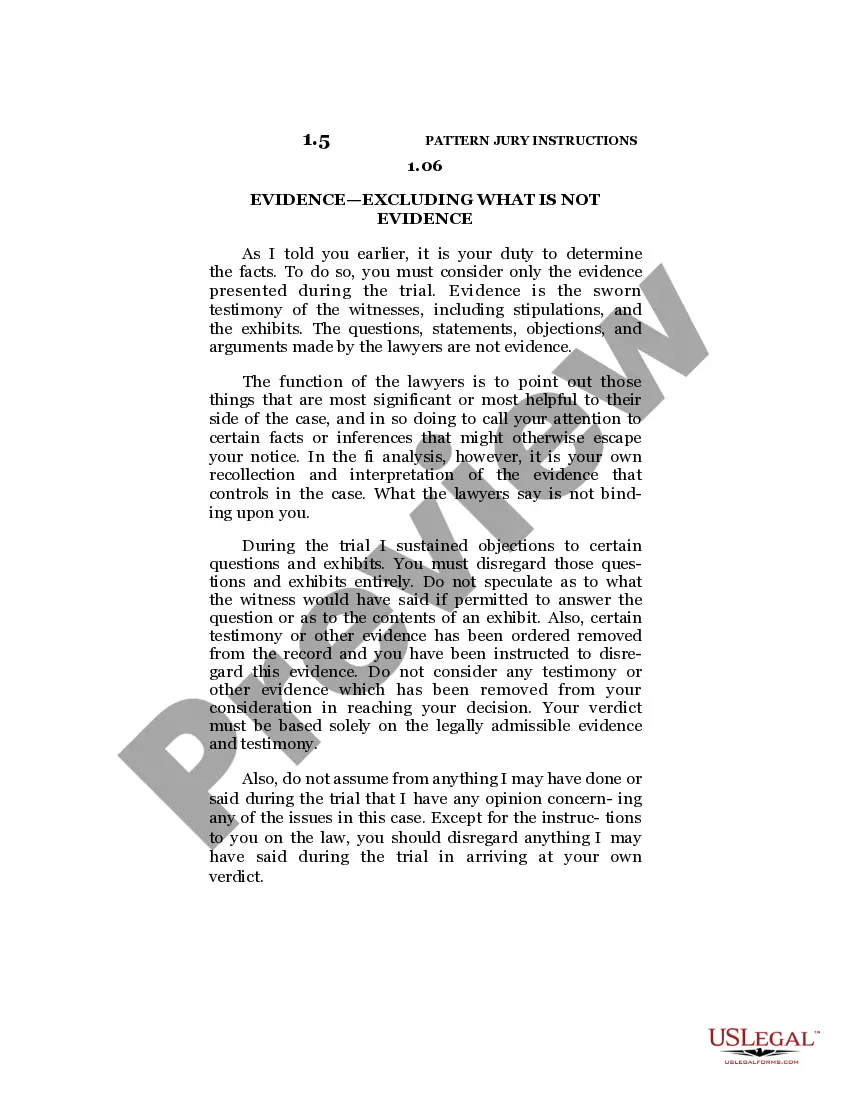
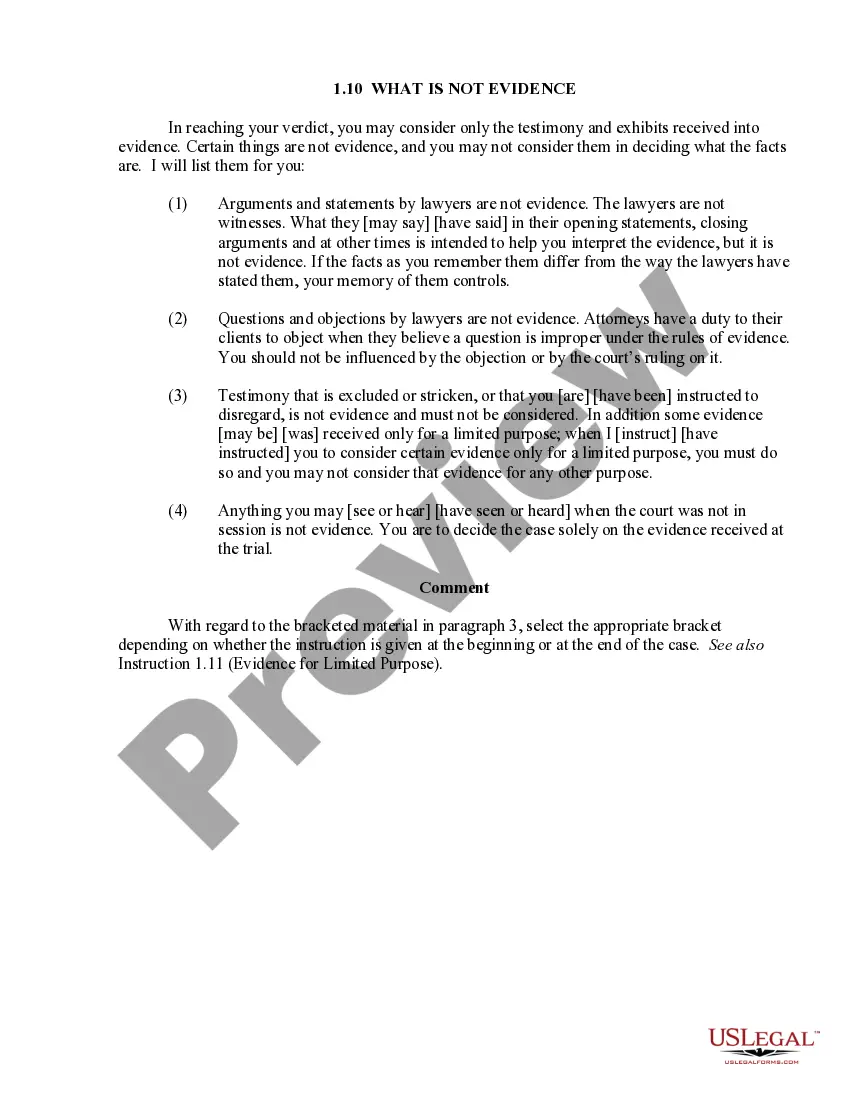
The Evidence (What is; is Not) form is a legal guide that clarifies what constitutes evidence in a courtroom setting. It differentiates between admissible evidence and items that should not influence a jury's decision-making process. This form is essential for understanding the boundaries of evidence in legal proceedings, providing clarity amid the complexities of legal jargon and courtroom dynamics.
Form components explained
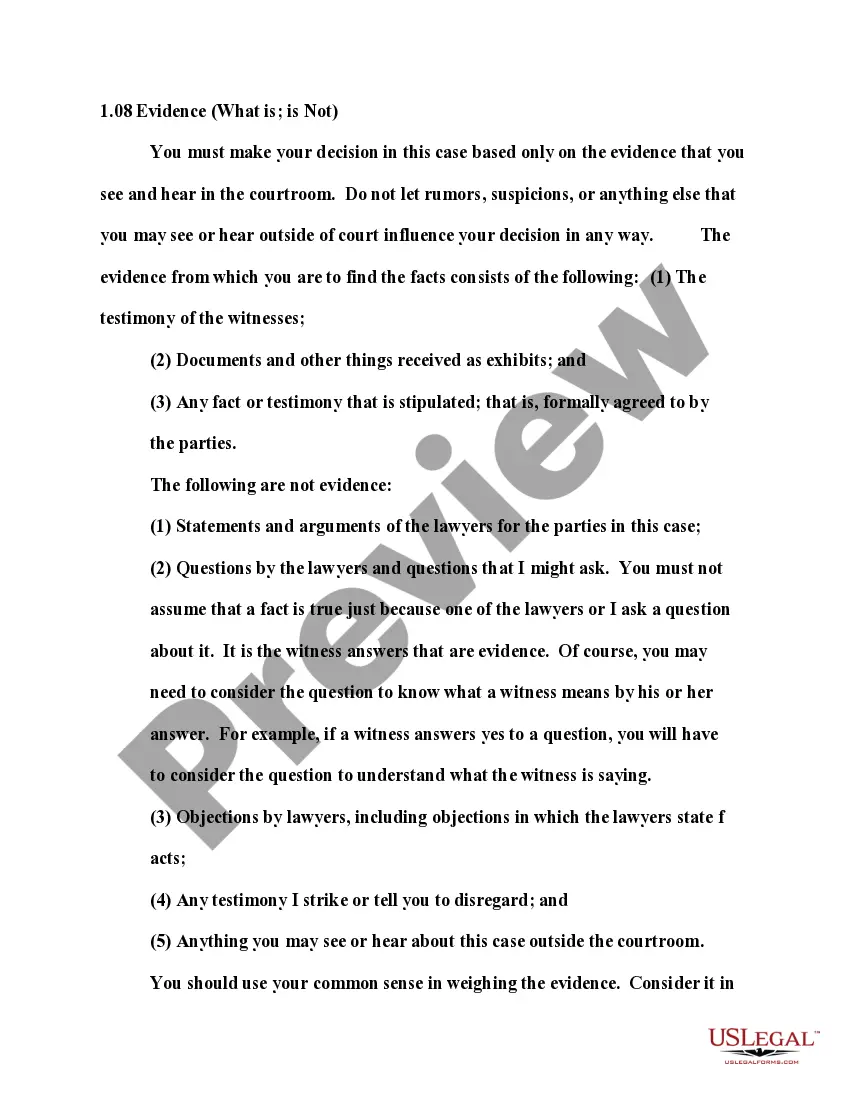
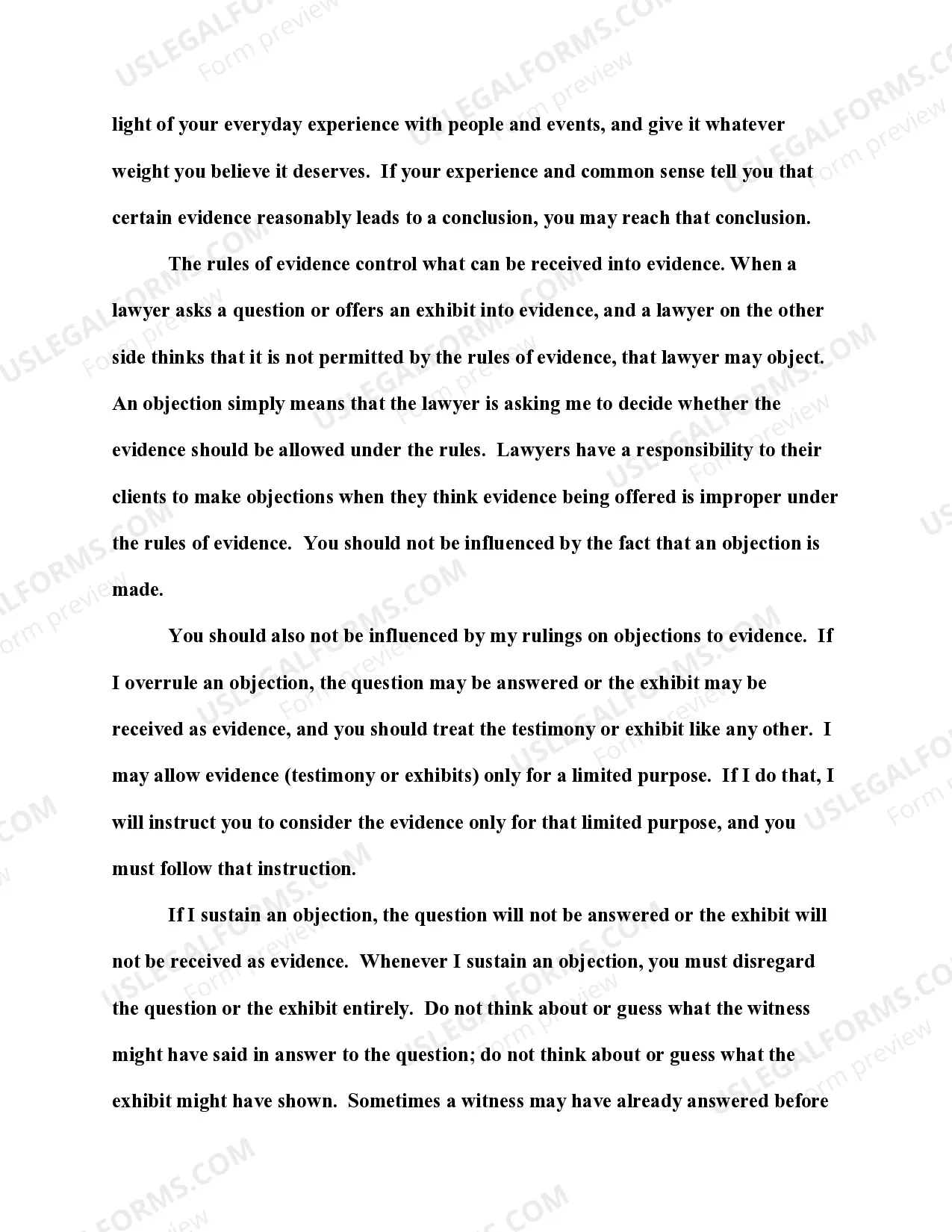
- Definition of admissible evidence, including witness testimony, documents, and stipulations.
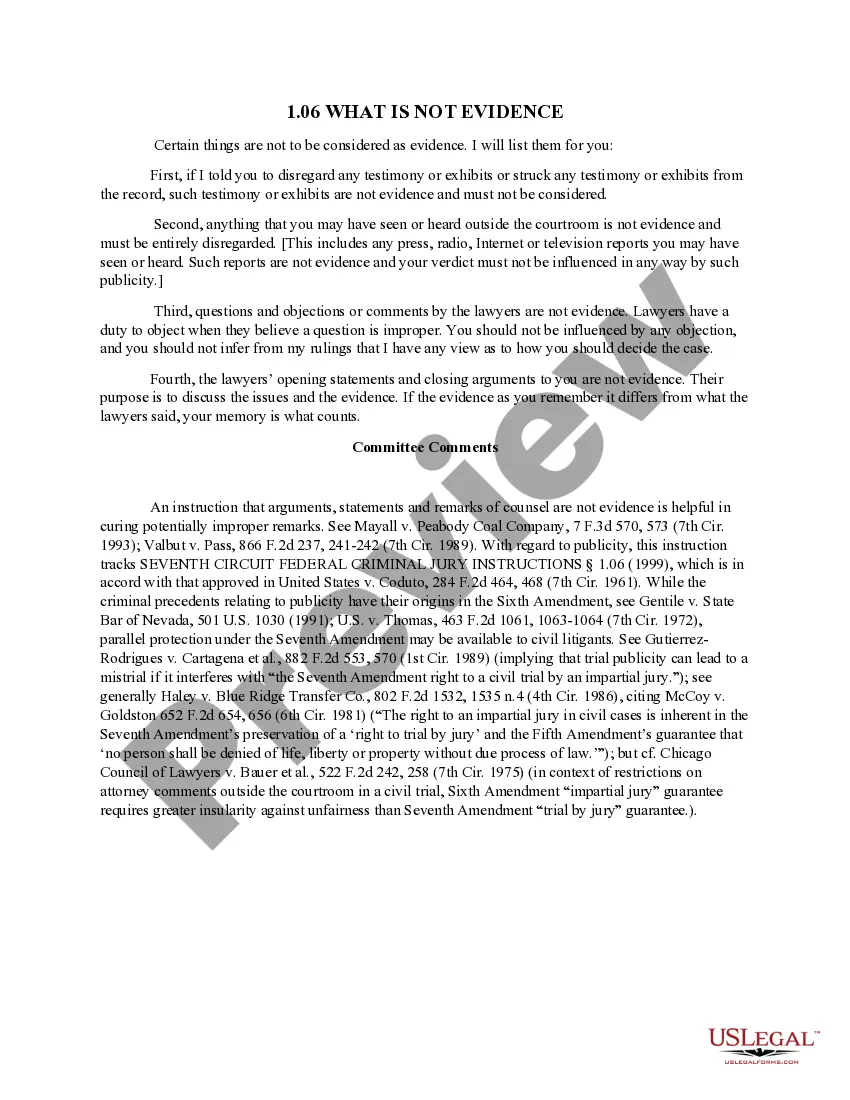
- Clarification on what does not qualify as evidence, such as lawyer statements and irrelevant facts.
- Guidance on how to assess and weigh the evidence presented during a case.
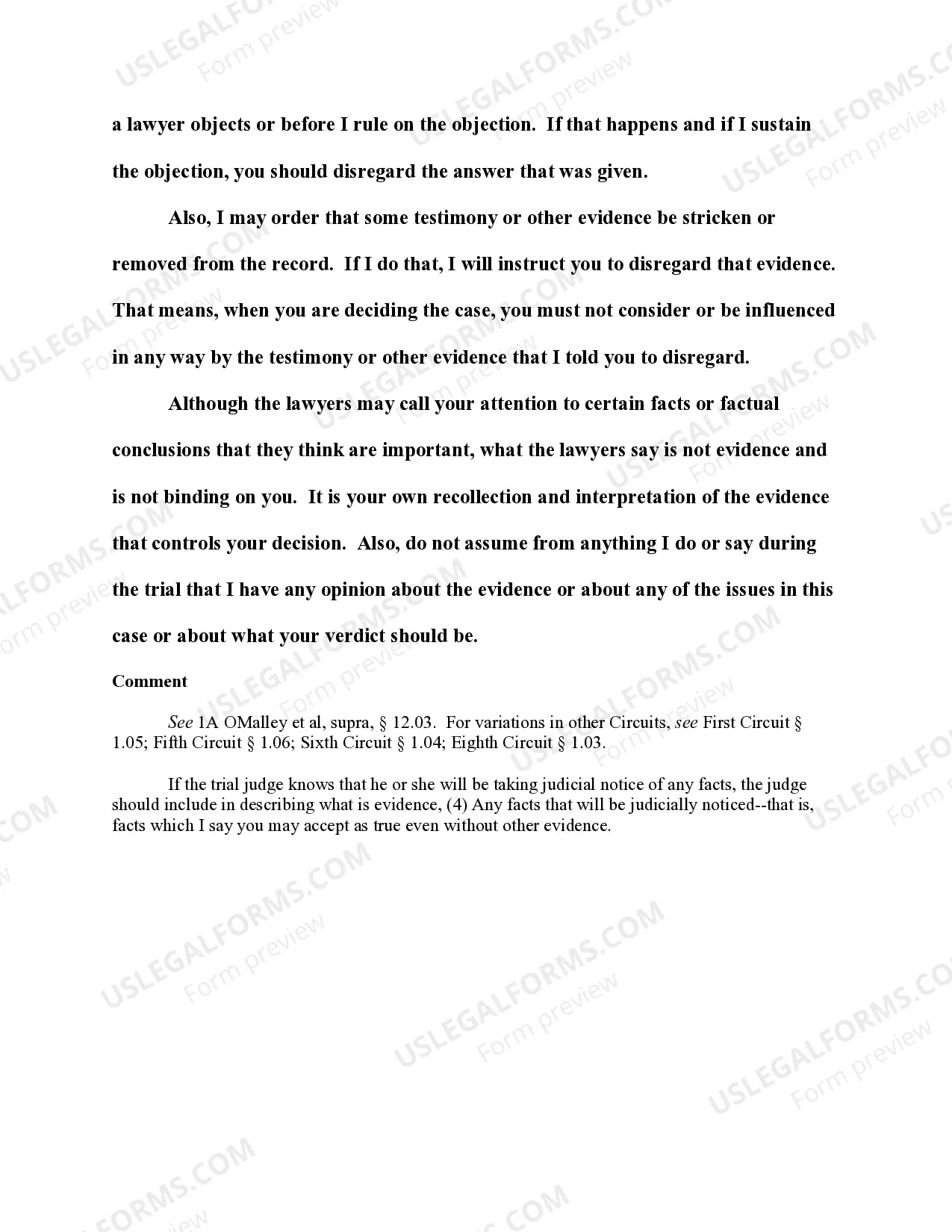
- Explanation of the role of objections and how they affect the evidence considered by the jury.
- Instructions on judicial notice and the scope of what can be accepted as true without further evidence.

When to use this form
This form should be used during a trial or legal proceeding when jurors are tasked with making decisions based solely on the evidence presented in court. It is crucial in scenarios where understanding the nature of evidence can impact the verdict, such as criminal trials, civil lawsuits, and arbitration hearings.
Who should use this form
- Jurors involved in a trial who need to understand the parameters of evidence.
- Attorneys seeking to educate clients about what constitutes valid evidence in court.
- Individuals preparing for court who wish to be informed about courtroom procedures regarding evidence.
How to prepare this document
- Review the definitions of what constitutes evidence and what does not.
- Identify the types of evidence presented during the trial: witness testimony, documents, and stipulations.
- Understand the significance of objections and how they may affect which evidence is considered.
- Take note of any judicial directions provided by the judge regarding the acceptance of evidence.
- Evaluate all evidence brought forth using common sense and personal experience to reach a fair conclusion.
Notarization requirements for this form
This form does not typically require notarization to be legally valid. However, some jurisdictions or document types may still require it. US Legal Forms provides secure online notarization powered by Notarize, available 24/7 for added convenience.
Get your form ready online
Our built-in tools help you complete, sign, share, and store your documents in one place.
Make edits, fill in missing information, and update formatting in US Legal Forms—just like you would in MS Word.
Download a copy, print it, send it by email, or mail it via USPS—whatever works best for your next step.
Sign and collect signatures with our SignNow integration. Send to multiple recipients, set reminders, and more. Go Premium to unlock E-Sign.
If this form requires notarization, complete it online through a secure video call—no need to meet a notary in person or wait for an appointment.
We protect your documents and personal data by following strict security and privacy standards.

Make edits, fill in missing information, and update formatting in US Legal Forms—just like you would in MS Word.

Download a copy, print it, send it by email, or mail it via USPS—whatever works best for your next step.

Sign and collect signatures with our SignNow integration. Send to multiple recipients, set reminders, and more. Go Premium to unlock E-Sign.

If this form requires notarization, complete it online through a secure video call—no need to meet a notary in person or wait for an appointment.

We protect your documents and personal data by following strict security and privacy standards.
Common mistakes to avoid
- Assuming statements made by lawyers are considered evidence.
- Failing to disregard information introduced during objections.
- Misunderstanding the role of judicial notice in evidence acceptance.
Benefits of using this form online
- Convenient access to legal definitions and evidence procedures from anywhere.
- Easy to download and use directly in court preparations.
- Reliability through templates drafted by licensed attorneys to ensure legal soundness.
Legal use & context
- The form is a vital reference for jurors to understand the boundaries of what is admissible in court.
- It helps ensure that jurors base their decisions strictly on the evidence presented, upholding the fairness of the legal process.
Looking for another form?


Form popularity
FAQ
Evidence an item or information proffered to make the existence of a fact more or less probable. Evidence can take the form of testimony, documents, photographs, videos, voice recordings, DNA testing, or other tangible objects.
There are four types evidence by which facts can be proven or disproven at trial which include: Real evidence; Demonstrative evidence; Documentary evidence; and. Testimonial evidence.
Absence of evidence is not evidence of absence.
Questions, statements, objections, and arguments by the lawyers are not evidence. The lawyers are not witnesses. Although you must consider a lawyer's questions to understand the answers of a witness, the lawyer's questions are not evidence.
The general rule is that all relevant evidence is admissible and irrelevant evidence is inadmissible. So, to be admissible, every item of evidence must tend to prove or disprove a fact at issue in the case. If the evidence is not related to a fact at issue in a case, it is irrelevant and is, therefore, inadmissible.
?Absence of Evidence does not mean Evidence of Absence?, an old quote by Dr Carl Sagan, means, in a very simple term,that, if there is lack of evidence of presence of a thing, does not always conclude to the absence of that thing totally.
3.08 What Is Not Evidence (1) Arguments and statements by lawyers are not evidence. The lawyers are not witnesses. What they say in their opening statements, closing arguments and at other times is intended to help you interpret the evidence, but it is not evidence.
For example, the court in Rashid v. Reed decided that evidence of a person being injured in an automobile accident was irrelevant in proving that the plaintiff was injured in the same accident, as one person's injuries do not prove another's.