Contract for Construction of Building Designed by an Engineer
Understanding this form
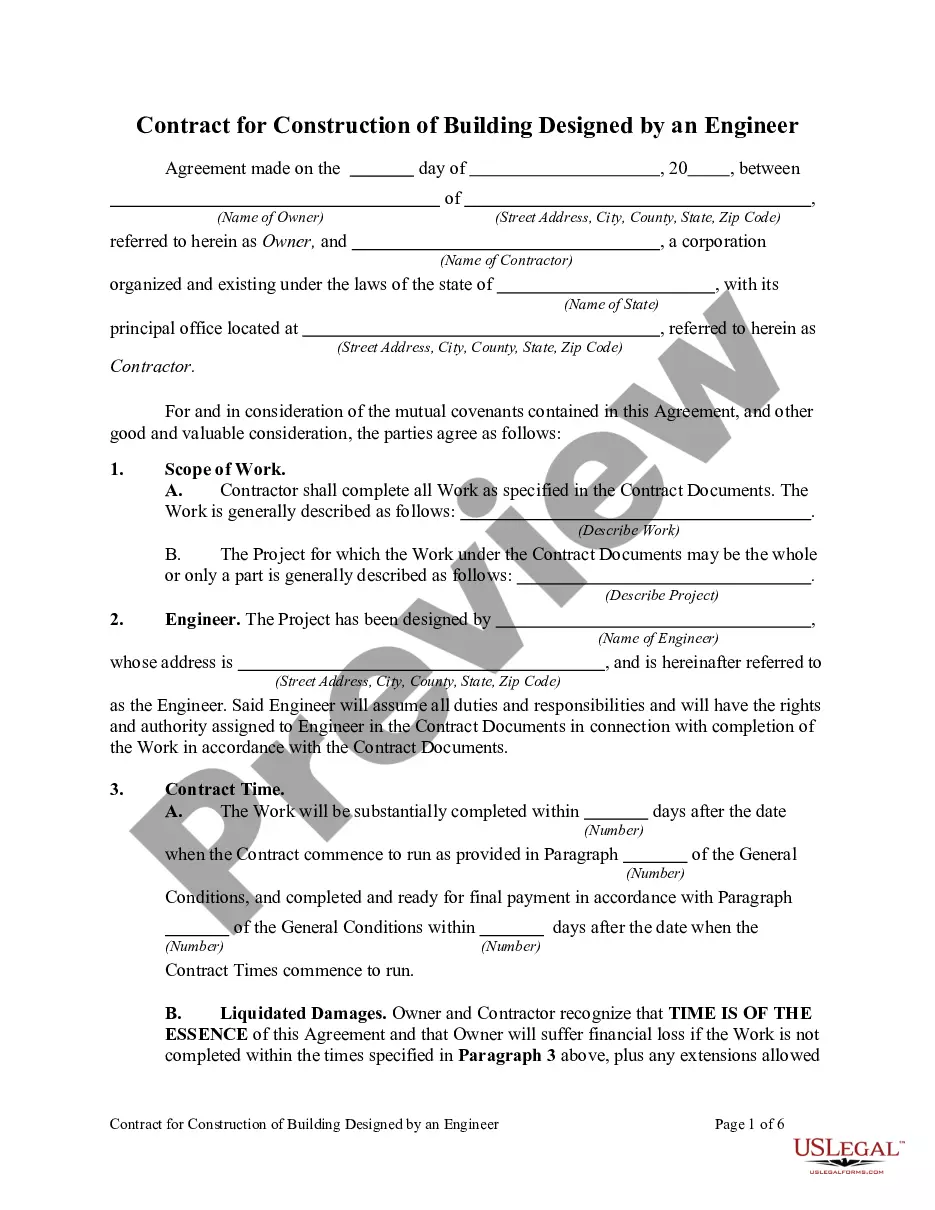
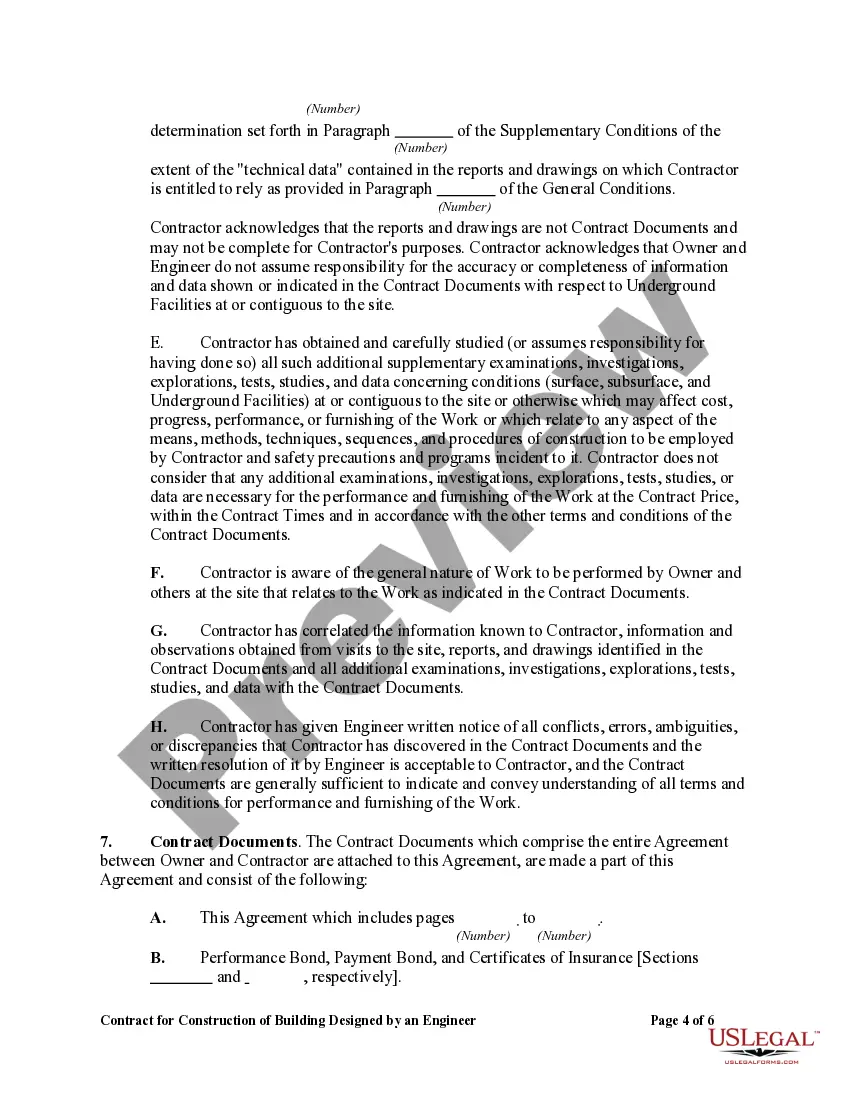
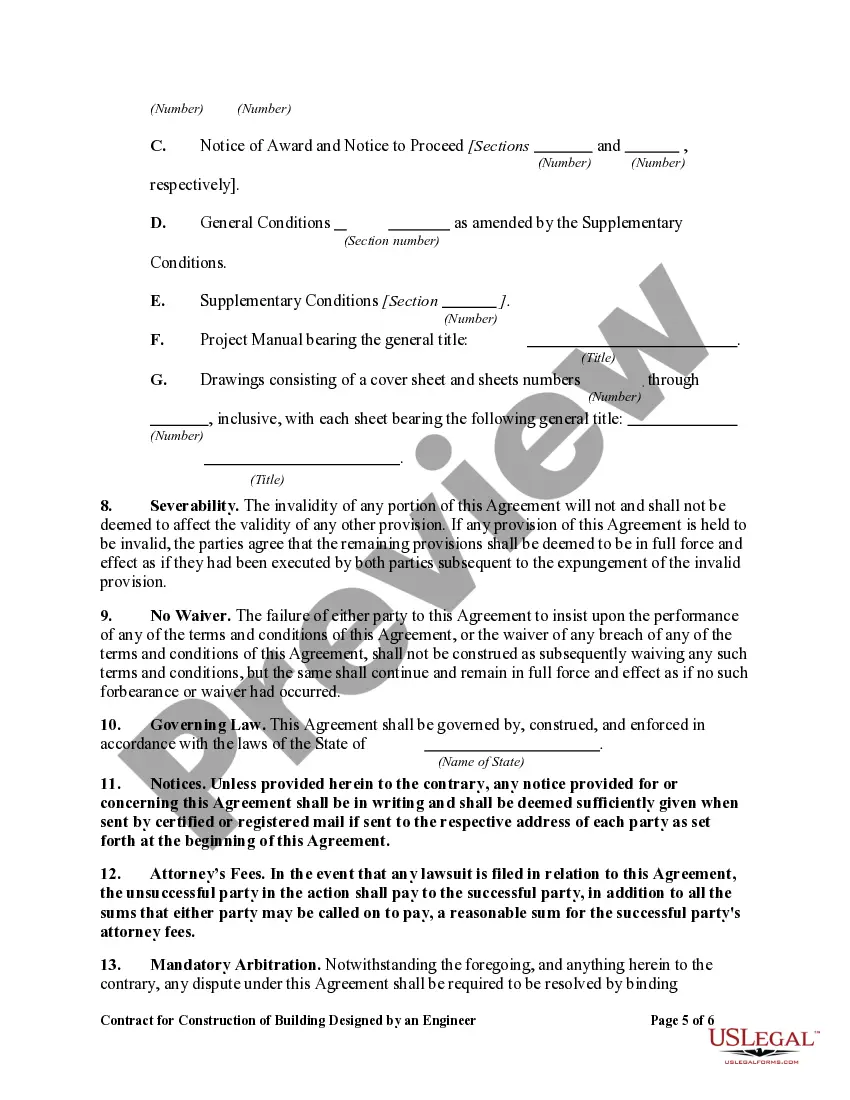
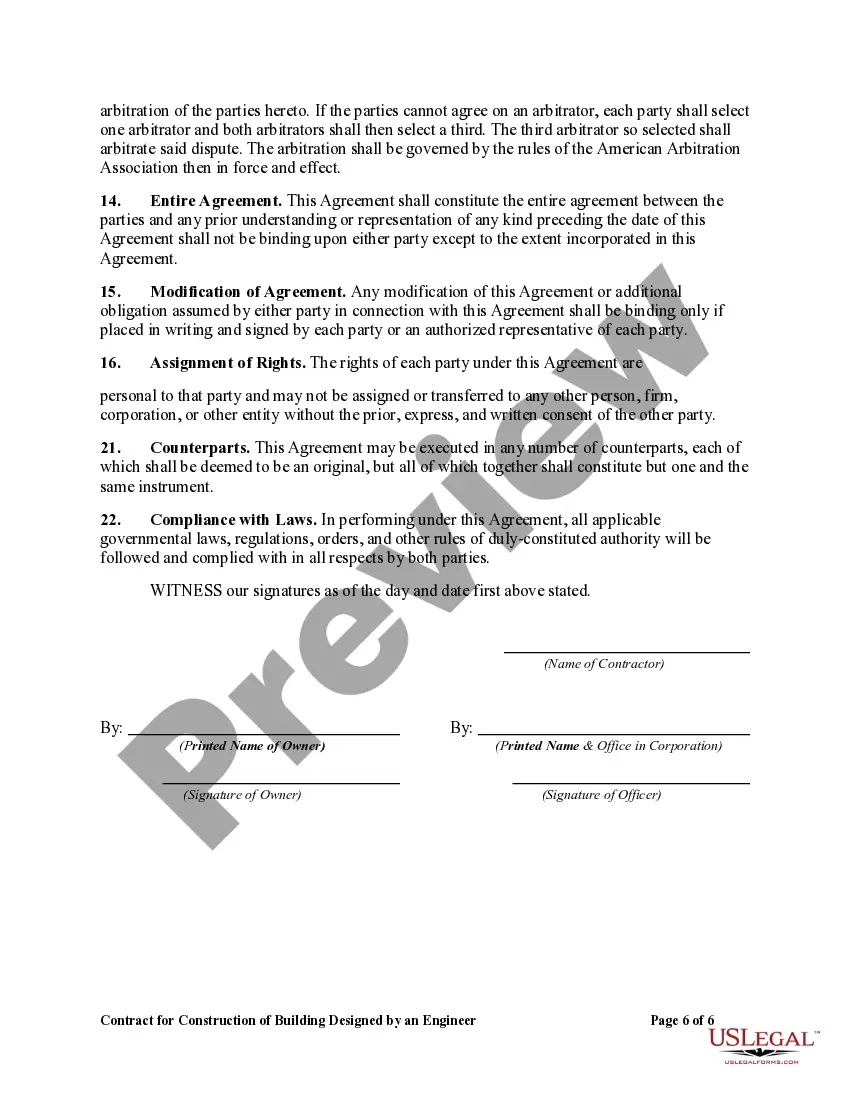
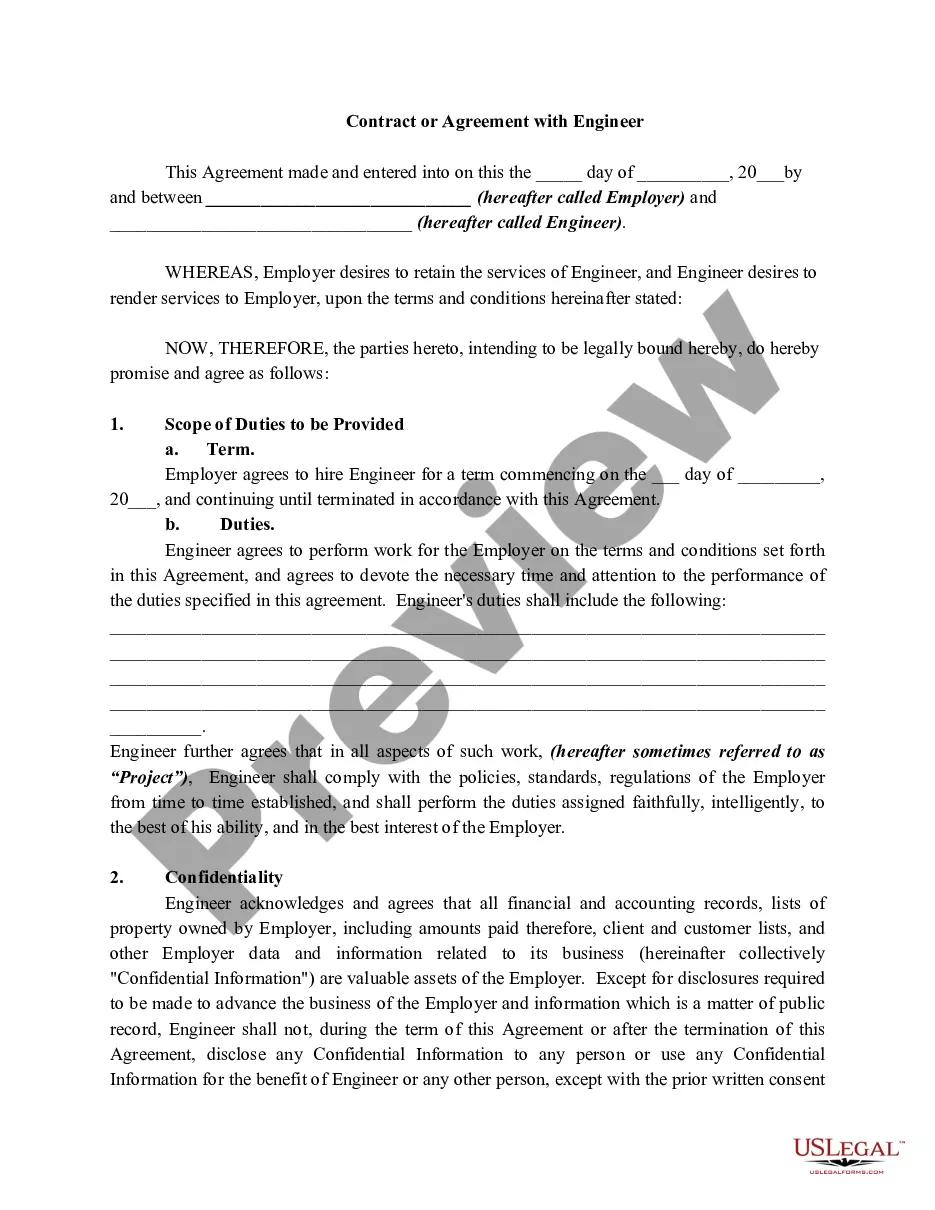
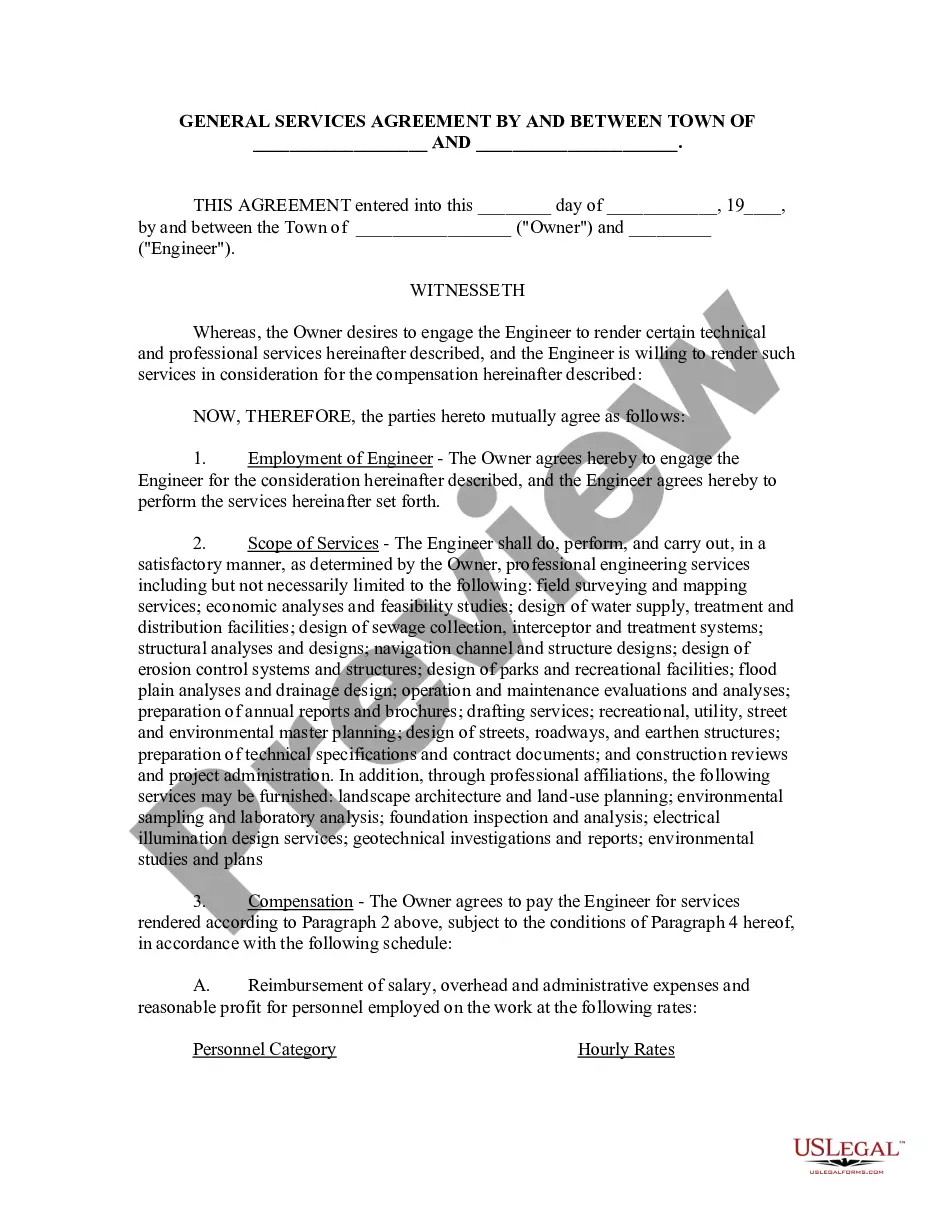
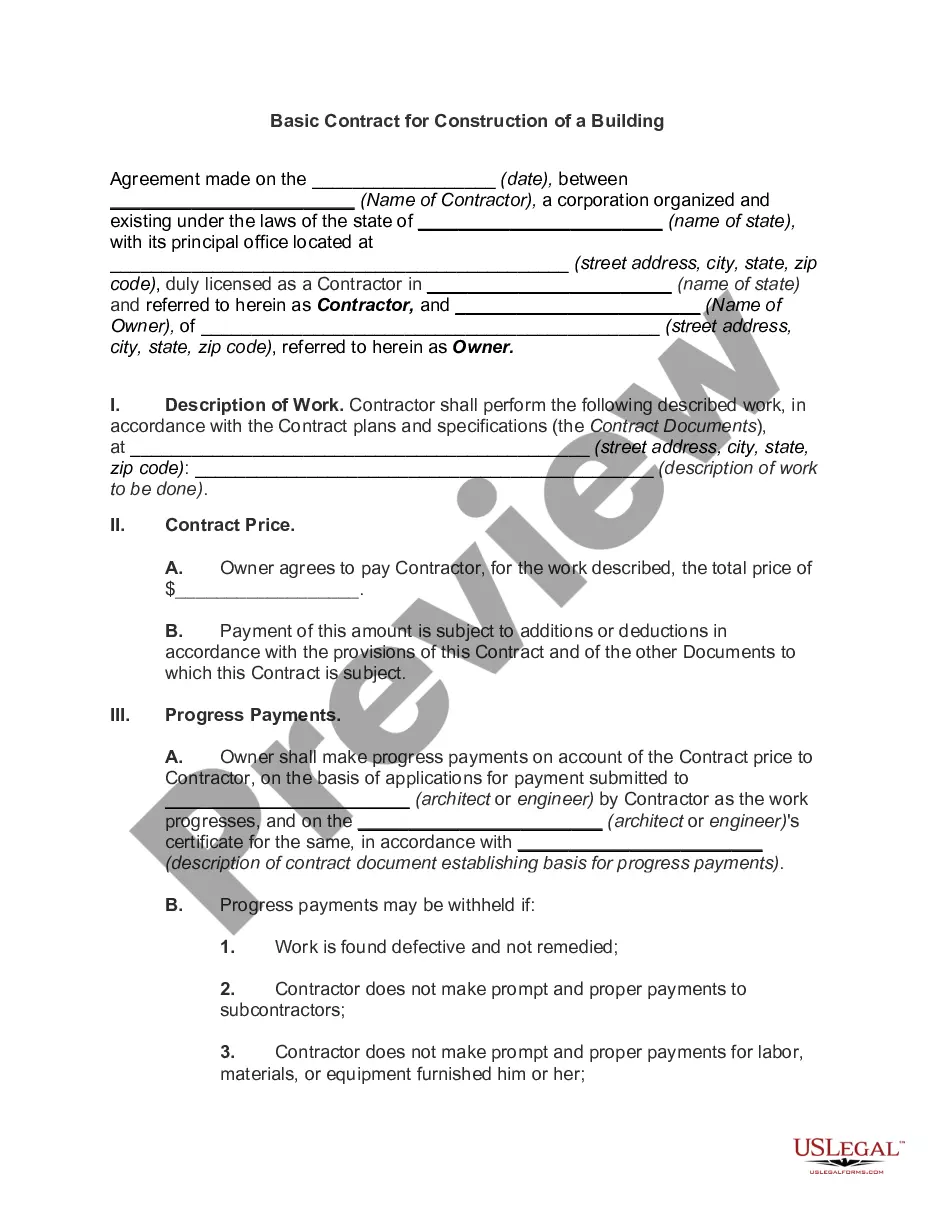
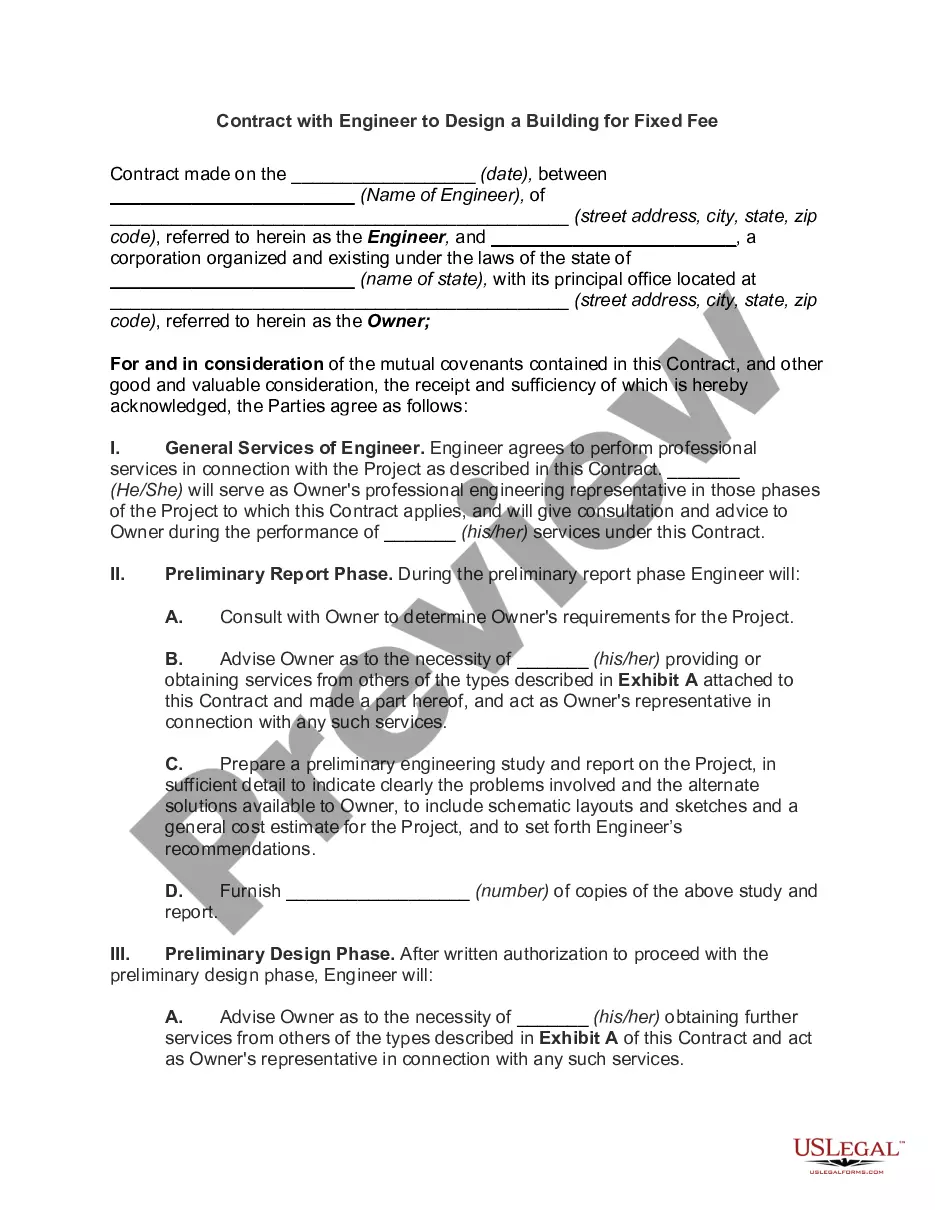
The Contract for Construction of Building Designed by an Engineer is a key legal document that outlines the agreement between the engineer and the contractor for building projects. This form sets the groundwork for responsibilities, rights, and payment structures, distinguishing it from other general construction contracts by focusing explicitly on projects designed by an engineer. It helps ensure that all parties have a clear understanding of their obligations, thus promoting successful project completion.
Form components explained
- Identification of the Engineer and Contractor with their contact information.
- Detailed description of the scope of work and responsibilities assigned to the engineer.
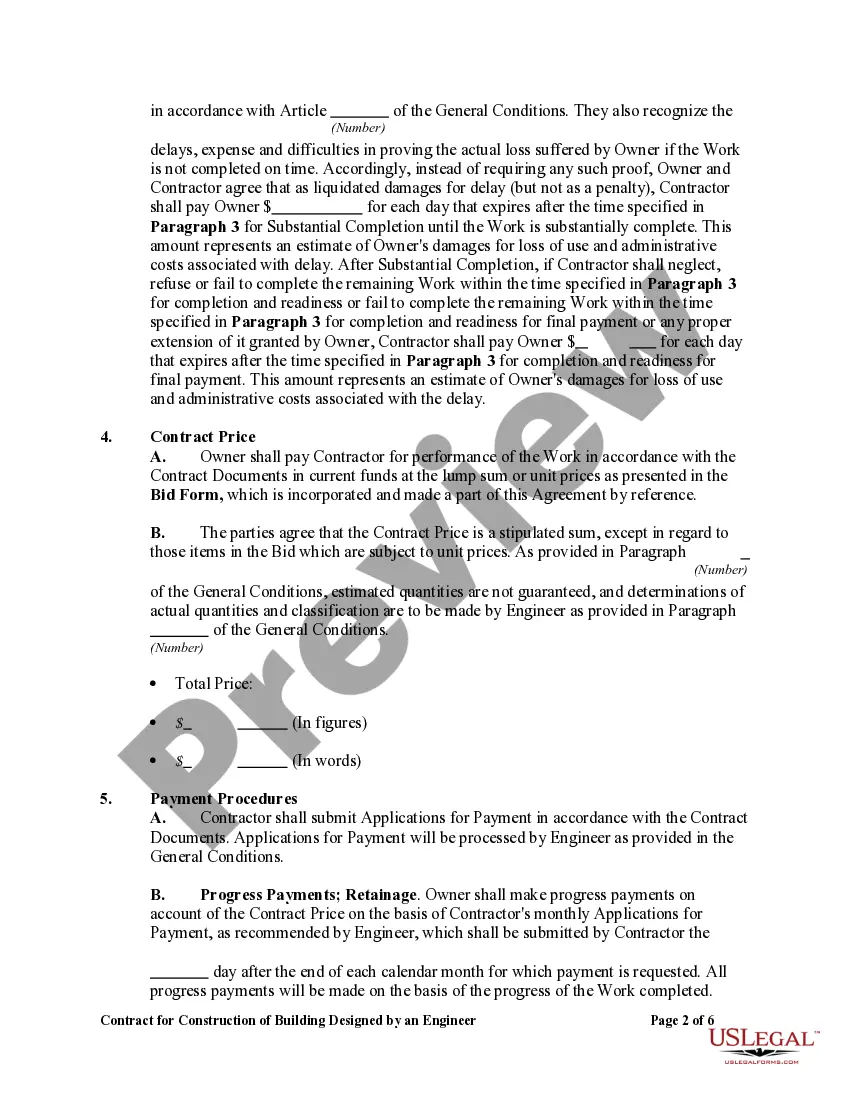
- Provisions for progress payments based on contractor applications and engineer recommendations.
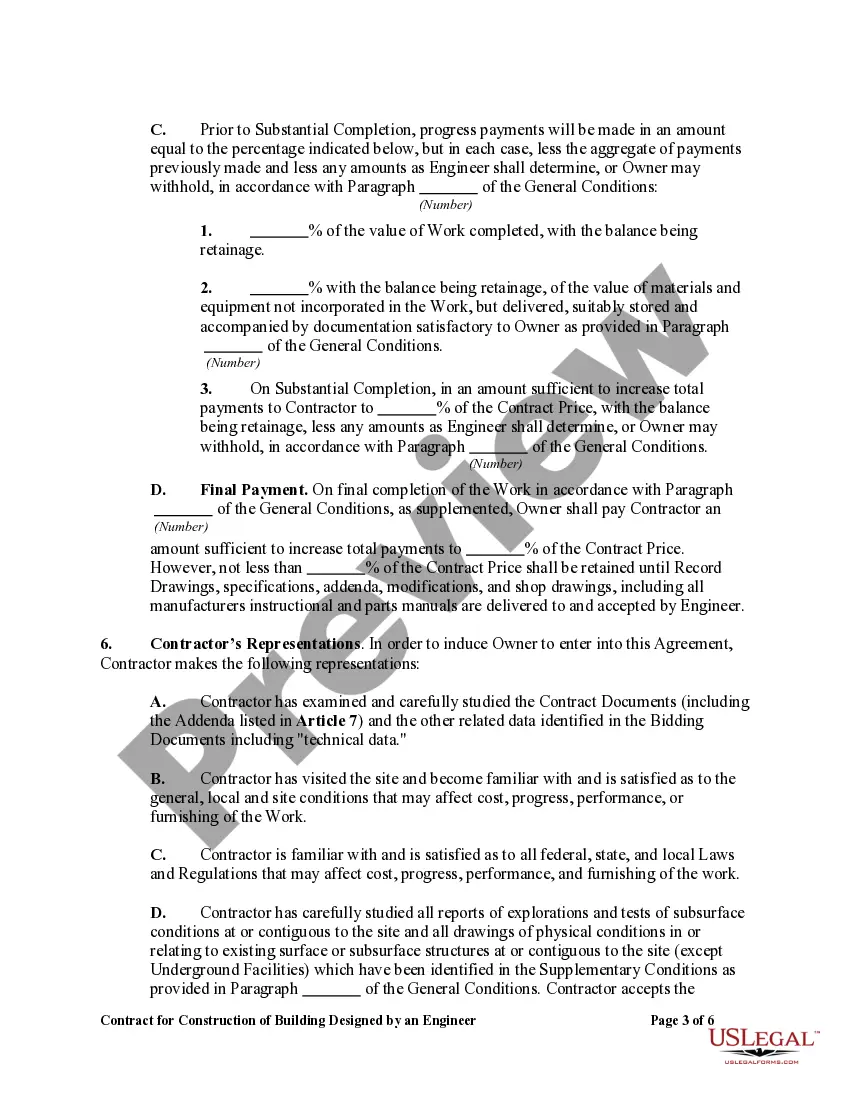
- Contractor's representations regarding site conditions and compliance with laws.
- Retainage clauses outlining payment withholdings until project completion.
Common use cases
This form should be used when entering into a construction project designed by an engineer, ensuring that all parties involved understand their roles and responsibilities. Examples include residential building projects, commercial constructions, or any infrastructure development requiring engineering oversight. It is essential when you want to establish clear payment terms and legal obligations upfront.
Who this form is for
- Contractors responsible for executing construction work.
- Engineers hired to design the building or infrastructure project.
- Property owners seeking to formalize their agreements with contractors and engineers.
- Developers involved in real estate projects requiring engineering services.
How to complete this form
- Identify the parties involved, including the engineer and contractor details.
- Specify the scope of work and any associated project details.
- Enter the payment terms, including progress payment schedules and retainage amounts.
- Include any representations made by the contractor regarding site conditions and legal compliance.
- Ensure all parties sign and date the agreement appropriately.
Notarization guidance
This form usually doesn’t need to be notarized. However, local laws or specific transactions may require it. Our online notarization service, powered by Notarize, lets you complete it remotely through a secure video session, available 24/7.
Get your form ready online
Our built-in tools help you complete, sign, share, and store your documents in one place.
Make edits, fill in missing information, and update formatting in US Legal Forms—just like you would in MS Word.
Download a copy, print it, send it by email, or mail it via USPS—whatever works best for your next step.
Sign and collect signatures with our SignNow integration. Send to multiple recipients, set reminders, and more. Go Premium to unlock E-Sign.
If this form requires notarization, complete it online through a secure video call—no need to meet a notary in person or wait for an appointment.
We protect your documents and personal data by following strict security and privacy standards.

Make edits, fill in missing information, and update formatting in US Legal Forms—just like you would in MS Word.

Download a copy, print it, send it by email, or mail it via USPS—whatever works best for your next step.

Sign and collect signatures with our SignNow integration. Send to multiple recipients, set reminders, and more. Go Premium to unlock E-Sign.

If this form requires notarization, complete it online through a secure video call—no need to meet a notary in person or wait for an appointment.

We protect your documents and personal data by following strict security and privacy standards.
Avoid these common issues
- Failing to provide clear descriptions of the scope of work.
- Neglecting to state payment terms or retainage conditions.
- Not reviewing local laws that may impact contract enforceability.
- Omitting necessary signatures or dates from the completed form.
Benefits of using this form online
- Convenient access to a legally vetted template that saves time.
- Editability allows for customization based on specific project needs.
- Reliable source of information, ensuring compliance with legal standards.
Legal use & context
The Contract for Construction of Building Designed by an Engineer is enforceable under contract law, provided all parties understand and agree to the terms. However, it is limited by local construction laws, which may impose additional requirements such as permits and inspections.
Quick recap
- This form establishes a clear and legal agreement for construction projects involving engineered designs.
- Clearly outline the responsibilities of both parties to avoid misunderstandings.
- Always confirm compliance with local laws to ensure the contract's enforceability.
- The form is easily accessible online and can be customized to specific project needs.
Looking for another form?

Form popularity
FAQ
General Requirements are used as the clearinghouse for items that do not apply directly to construction, the cost of which are customarily spread out over the entire project. These costs are also referred to as project overhead. For estimating purposes, either term is acceptable.
Identifying/Contact Information. Title and Description of the Project. Projected Timeline and Completion Date. Cost Estimate and Payment Schedule. Stop Work Clause and Stop Payment Clause. Act of God Clause. Change Order Agreement. Warranty.
#1: Review Your Bid. #2: Review Complete Plans. #3: Review All Specifications. #4: Visit the Job Site. #5: Review the Job Schedule. #6: Complete a Project Checklist. #7: Verify Project Funding. #8: Read Complete Contract.
Standard construction contracts should have the following information and clauses: Name of contractor and contact information. Include the contractor's license number along with phone number, email address, and company address. Name of homeowner and contact information.
A construction contract agreement is a principal document that sets a date and specifies which parties are going to participate in the construction process. Usually, the contract agreement is executed between the owner of the project and the contractor (or supplier) that is providing the requested service.
1#1: Review Your Bid.2#2: Review Complete Plans.3#3: Review All Specifications.4#4: Visit the Job Site.5#5: Review the Job Schedule.6#6: Complete a Project Checklist.7#7: Verify Project Funding.8#8: Read Complete Contract.9 Steps to Signing a Successful Construction Contract AWCI's\nwww.awci.org > media-archives > construction-dimensions > 548-9-steps-t...
1Identifying/Contact Information.2Title and Description of the Project.3Projected Timeline and Completion Date.4Cost Estimate and Payment Schedule.5Stop Work Clause and Stop Payment Clause.6Act of God Clause.7Change Order Agreement.8Warranty.Everything You Need to Know about Drawing up a Construction\nwww.freshbooks.com > blog > construction-contract
The five requirements for creating a valid contract are an offer, acceptance, consideration, competency and legal intent.
Name of contractor and contact information. Name of homeowner and contact information. Describe property in legal terms. List attachments to the contract. The cost. Failure of homeowner to obtain financing. Description of the work and the completion date. Right to stop the project.