New Jersey Deed of Easement For Agricultural Use and Compliance
Understanding this form
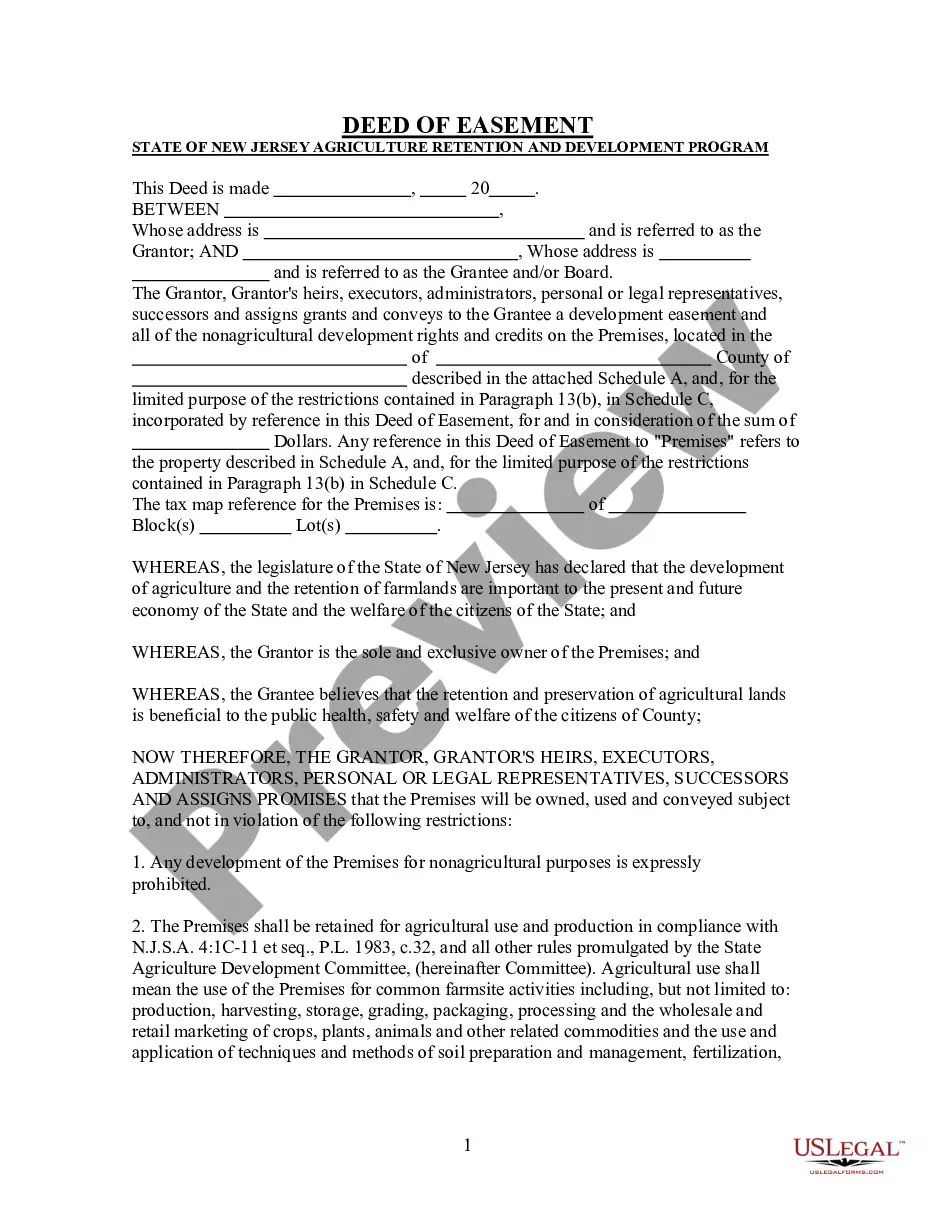
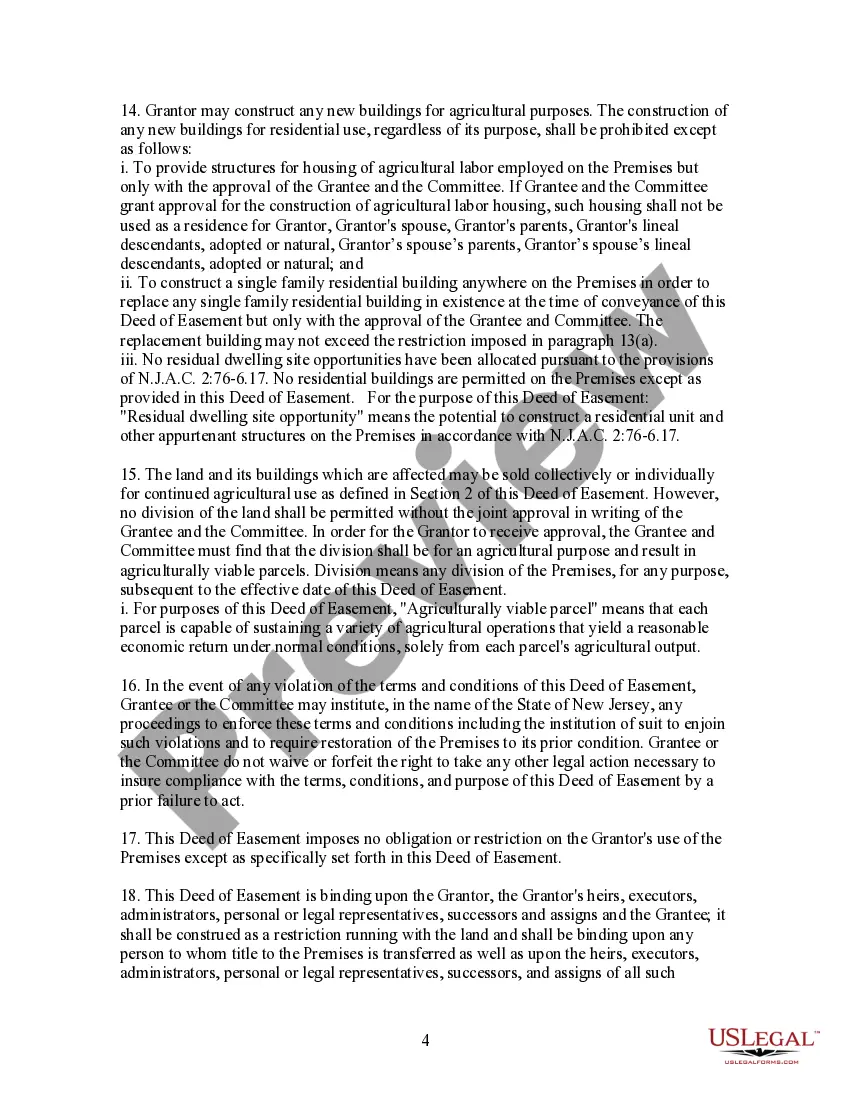
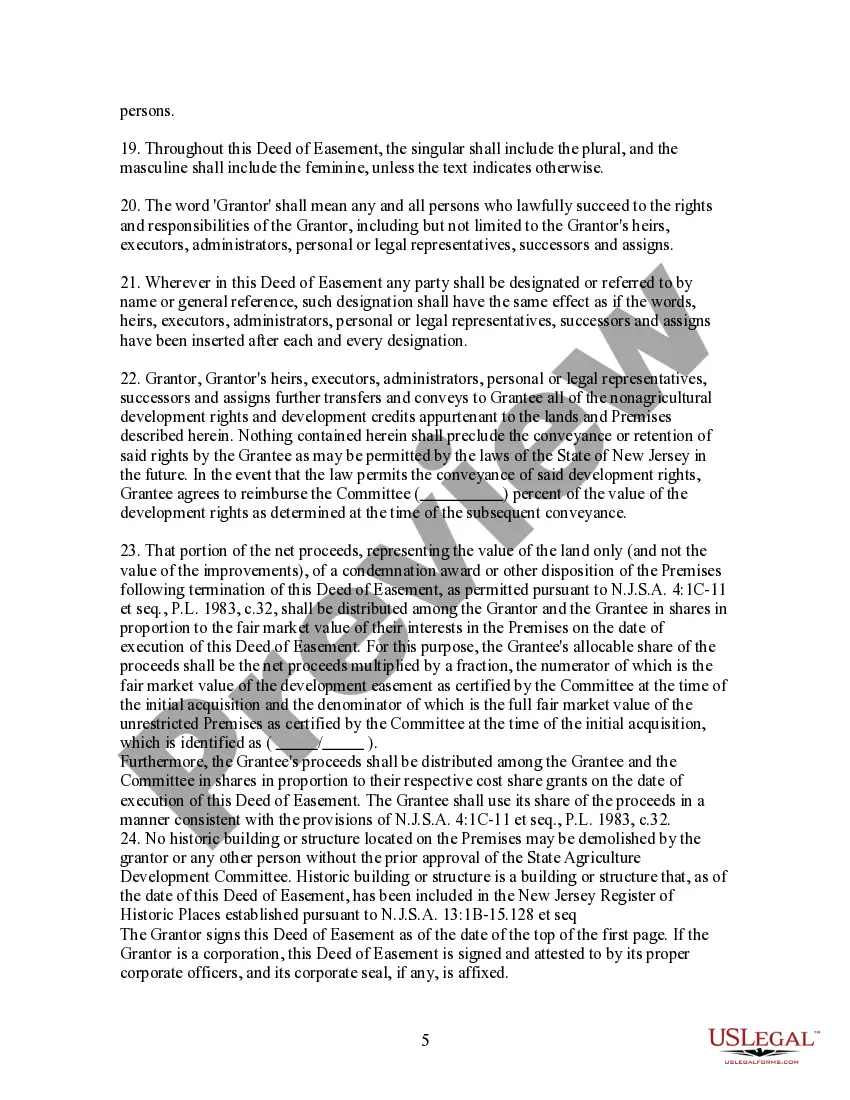
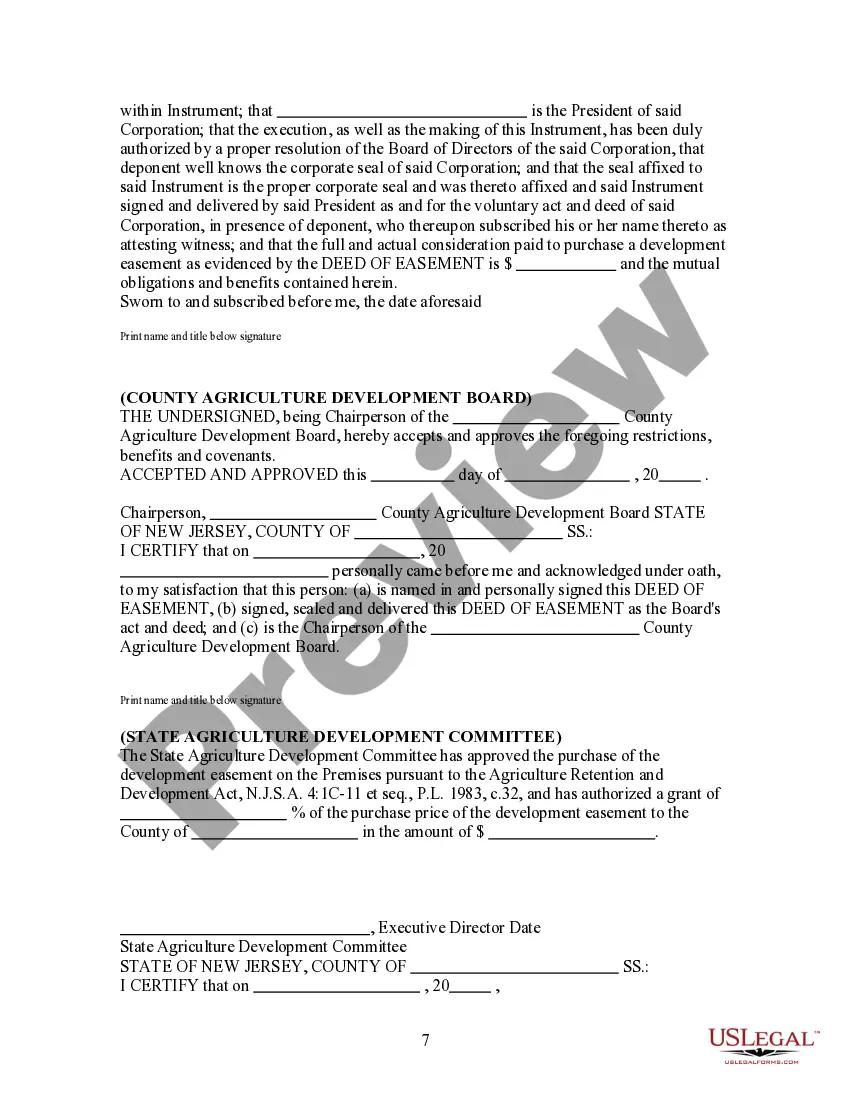
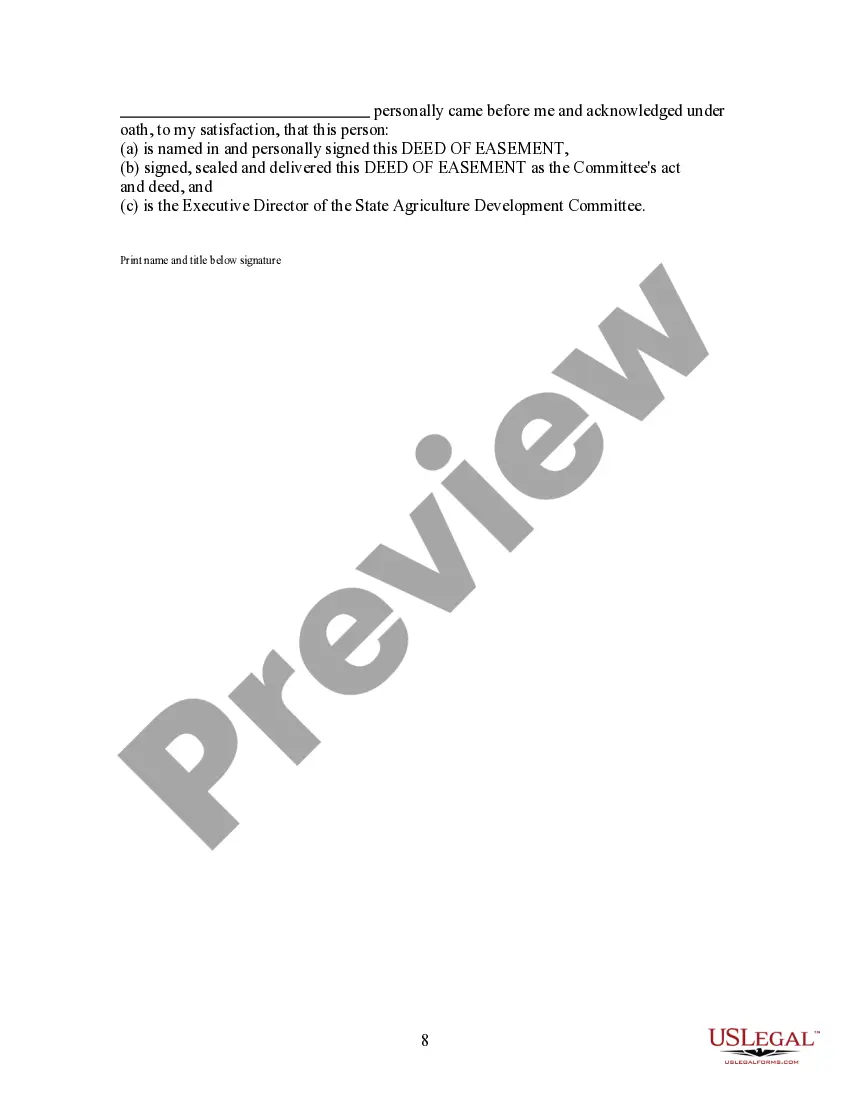
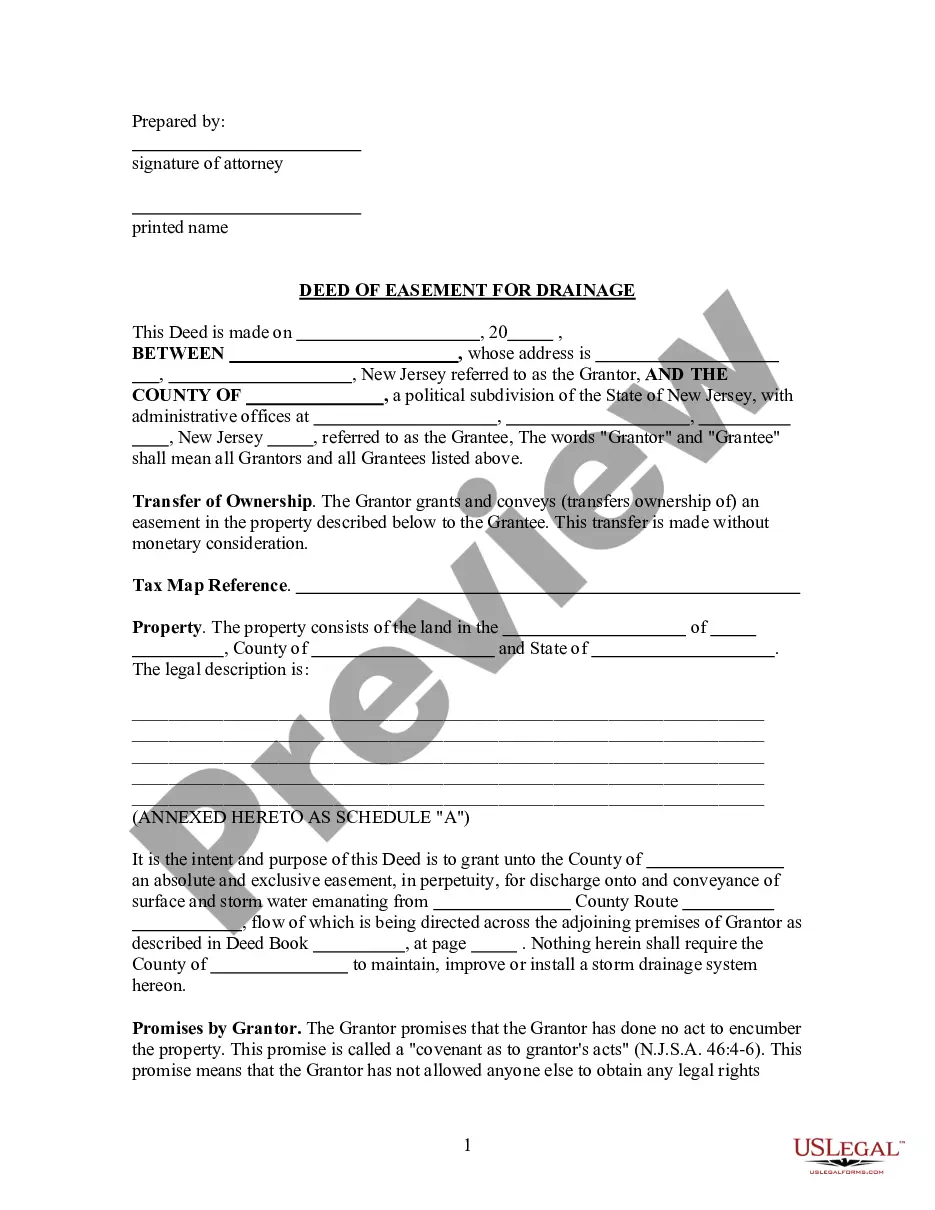
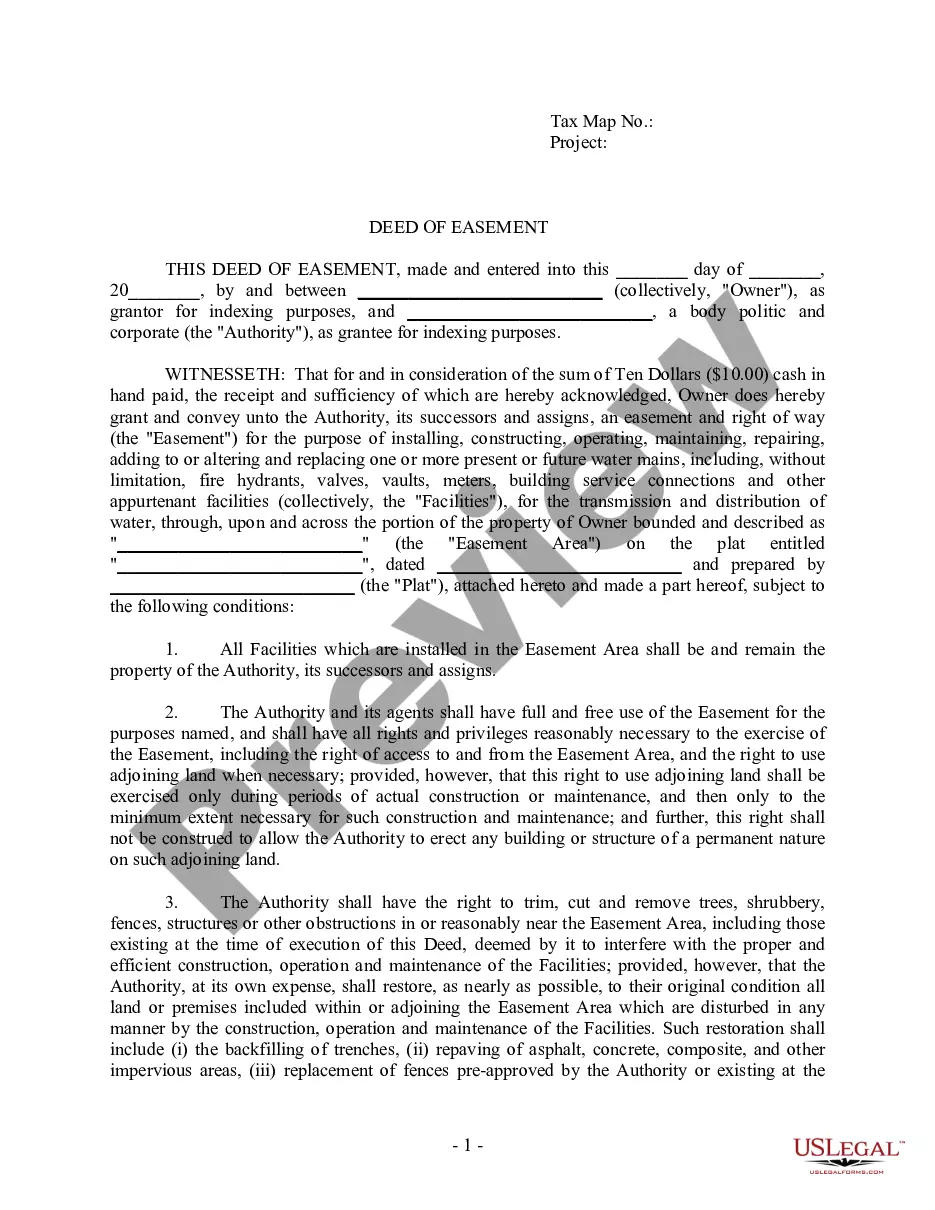
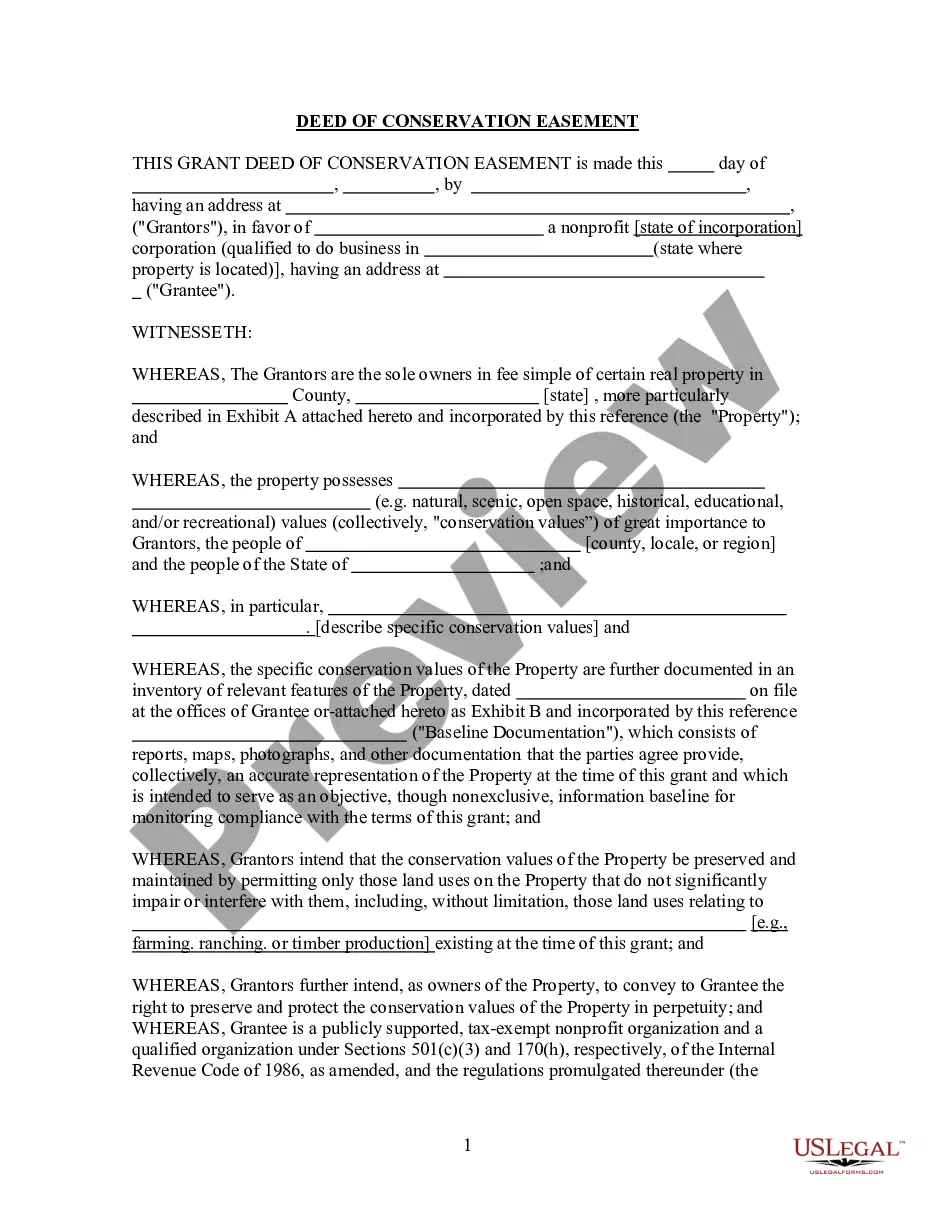
The Deed of Easement for Agricultural Use and Compliance is a legal document that grants an easement allowing land to be used strictly for agricultural purposes. This form differs from other easement agreements by prohibiting nonagricultural uses and ensuring compliance with relevant state regulations, specifically in New Jersey. It aims to preserve agricultural land for farming and related activities while outlining certain restrictions to protect the land's use for agriculture.
Key components of this form
- Grantorâs agreement to retain the land exclusively for agricultural use.
- Restrictions on nonagricultural development and the handling of materials on the property.
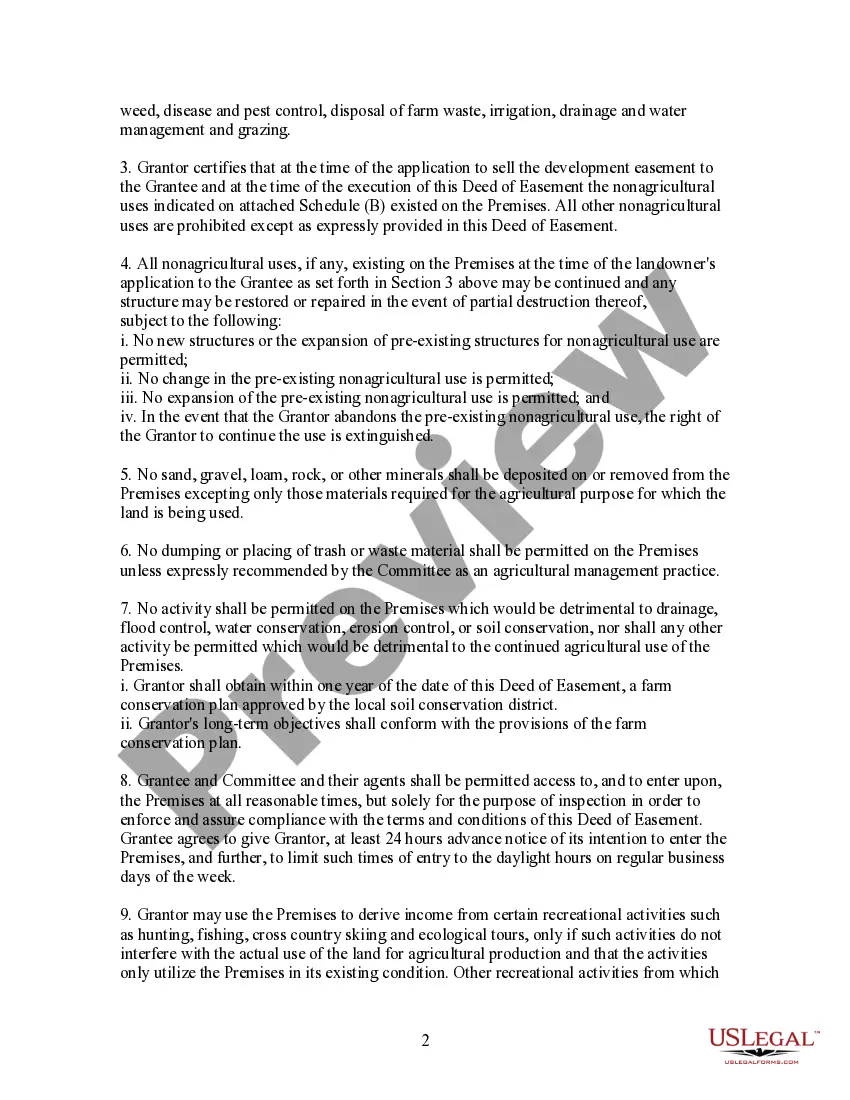
- Requirements for maintaining soil and water conservation practices.
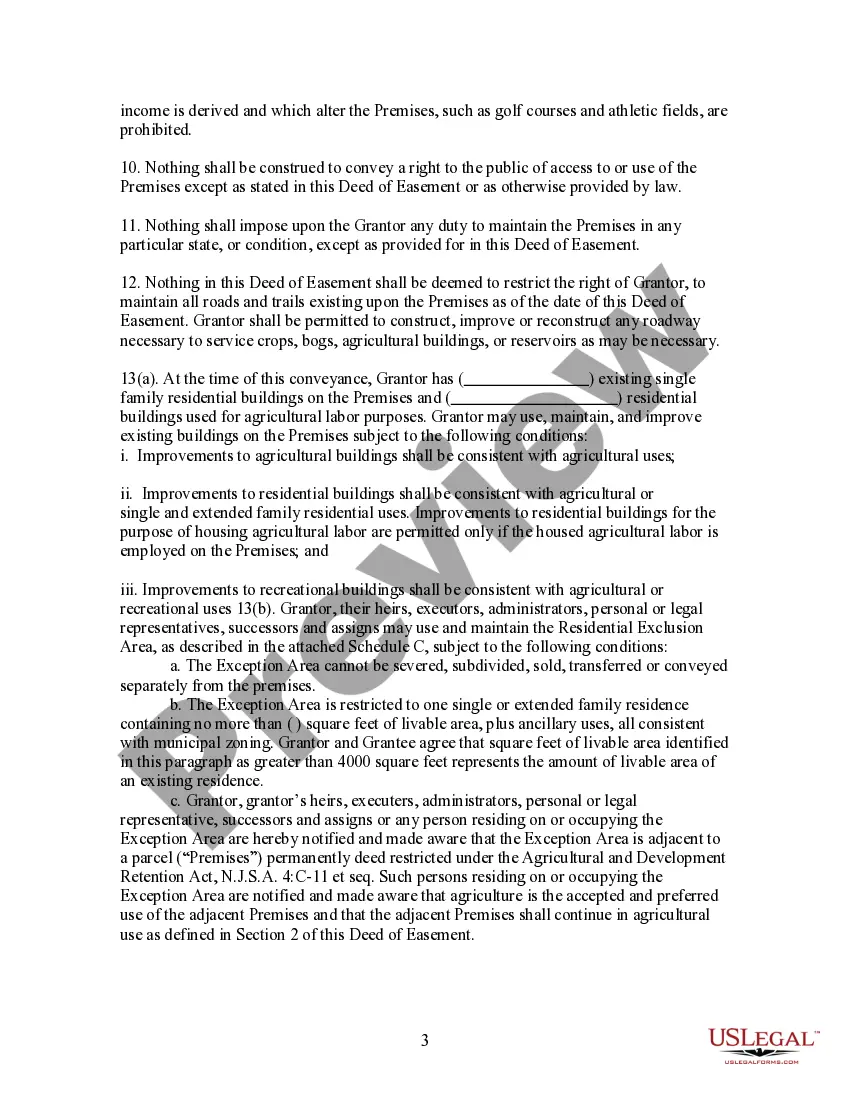
- Ability for the Grantor to derive income from certain recreational activities that do not interfere with agricultural production.
- Conditions under which the Grantee may inspect the premises to ensure compliance.
Common use cases
This form should be used when a landowner wishes to preserve their property for agricultural purposes and needs to formalize the restrictions on nonagricultural uses. It is particularly important when dealing with state regulations concerning agricultural land to ensure compliance and protection of the land's primary use.
Who can use this document
- Landowners who wish to maintain their property for agricultural activities.
- Farmers and agricultural operators looking to secure easements that restrict nonagricultural development.
- Legal representatives assisting landowners with compliance and conservation measures.
How to prepare this document
- Identify the parties involved: the Grantor (landowner) and Grantee (the entity receiving the easement).
- Clearly specify the property involved by providing its legal description.
- Include existing nonagricultural uses as applicable.
- Outline any agricultural practices planned for the property.
- Sign and date the document, ensuring all parties acknowledge and agree to the terms.
Does this document require notarization?
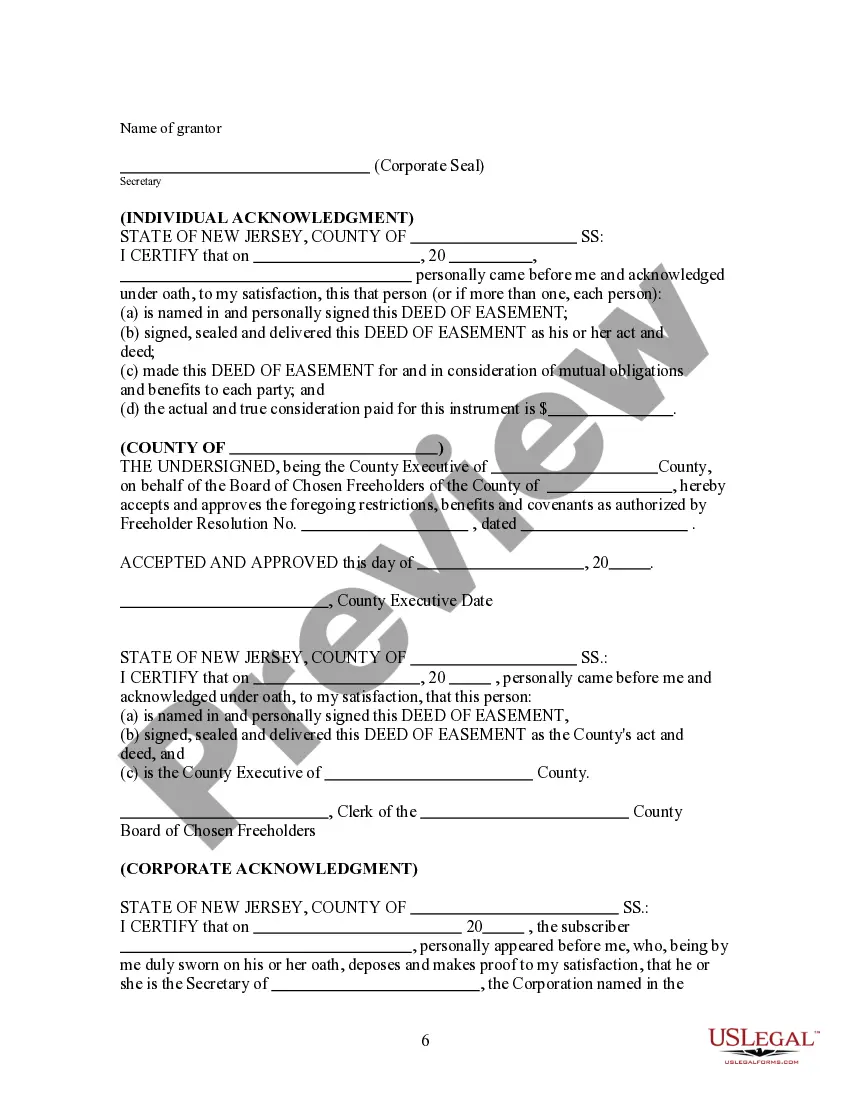
This form does not typically require notarization unless specified by local law. However, it is advisable to consult with a legal expert regarding notarization for added legal security.
Get your form ready online
Our built-in tools help you complete, sign, share, and store your documents in one place.
Make edits, fill in missing information, and update formatting in US Legal Forms—just like you would in MS Word.
Download a copy, print it, send it by email, or mail it via USPS—whatever works best for your next step.
Sign and collect signatures with our SignNow integration. Send to multiple recipients, set reminders, and more. Go Premium to unlock E-Sign.
If this form requires notarization, complete it online through a secure video call—no need to meet a notary in person or wait for an appointment.
We protect your documents and personal data by following strict security and privacy standards.

Make edits, fill in missing information, and update formatting in US Legal Forms—just like you would in MS Word.

Download a copy, print it, send it by email, or mail it via USPS—whatever works best for your next step.

Sign and collect signatures with our SignNow integration. Send to multiple recipients, set reminders, and more. Go Premium to unlock E-Sign.

If this form requires notarization, complete it online through a secure video call—no need to meet a notary in person or wait for an appointment.

We protect your documents and personal data by following strict security and privacy standards.
Common mistakes
- Failing to provide a complete legal description of the property.
- Not identifying all existing nonagricultural uses, which could lead to disputes.
- Missing signatures or dates, which can render the document unenforceable.
Why use this form online
- Easy access to a customizable template drafted by experienced attorneys.
- Immediate downloads allow for quick completion and submission.
- Cost-effective compared to hiring a lawyer for drafting a similar document.
Quick recap
- The Deed of Easement For Agricultural Use and Compliance is crucial for preserving farmland.
- Details about property use and restrictions are vital for compliance and enforcement.
- Notarization is required to validate the easement legally.
Looking for another form?
Form popularity
FAQ
Nine Essential Property Easement Agreement Considerations. Legal Description of Properties. Depiction of the Easement Area. Covenant Not to Disturb the Use of the Easement. Determination of Maintenance Obligations. Payment of Property Taxes.
Agricultural Conservation Easements. A conservation easement is a deed restriction landowners voluntarily place on their property to protect resources such as productive agricultural land, ground and surface water, wildlife habitat, historic sites or scenic views.
Affirmative agricultural easements are one of several different legal tools to help farmers balance goals of: 1) generating revenue for farming or retirement; 2) making their land more affordable to future farmers; 3) keeping their farmland in farming; and 4) maintaining a treasured legacy of sustainable farm
Agricultural land is typically land devoted to agriculture, the systematic and controlled use of other forms of lifeparticularly the rearing of livestock and production of cropsto produce food for humans. It is generally synonymous with both farmland or cropland, as well as pasture or rangeland.
Secure land tenure Land ownership must eventually be part of the package of farming, so a farmer can put up buildings and infrastructure to support production and build equity in an appreciating long-term asset.
When a conservation easement is placed on a property, it typically lowers the property's value for federal estate tax purposes and may decrease estate tax liability. Therefore, easements may help heirs avoid being forced to sell off land to pay estate taxes and enable land to stay in the family.
We lead the National Agricultural Land Network that supports private agricultural land trusts that hold easements, and state, regional, and local programs that fund farmland protection. We protect agricultural land ourselves, acquiring and holding easements where that makes strategic sense.
There must be a dominant and a servient tenement; The easement must accommodate the dominant tenement, that is, be connected with its enjoyment and for its benefit; The dominant and servient owners must be different persons; The right claimed must be capable of forming the subject-matter of a grant.
A property easement is generally written and recorded with the local assessor's office. The documented easement will show up when a title search is conducted and it stays there indefinitely, unless both parties agree to remove it.