New Jersey Commercial Building or Space Lease

Overview of this form
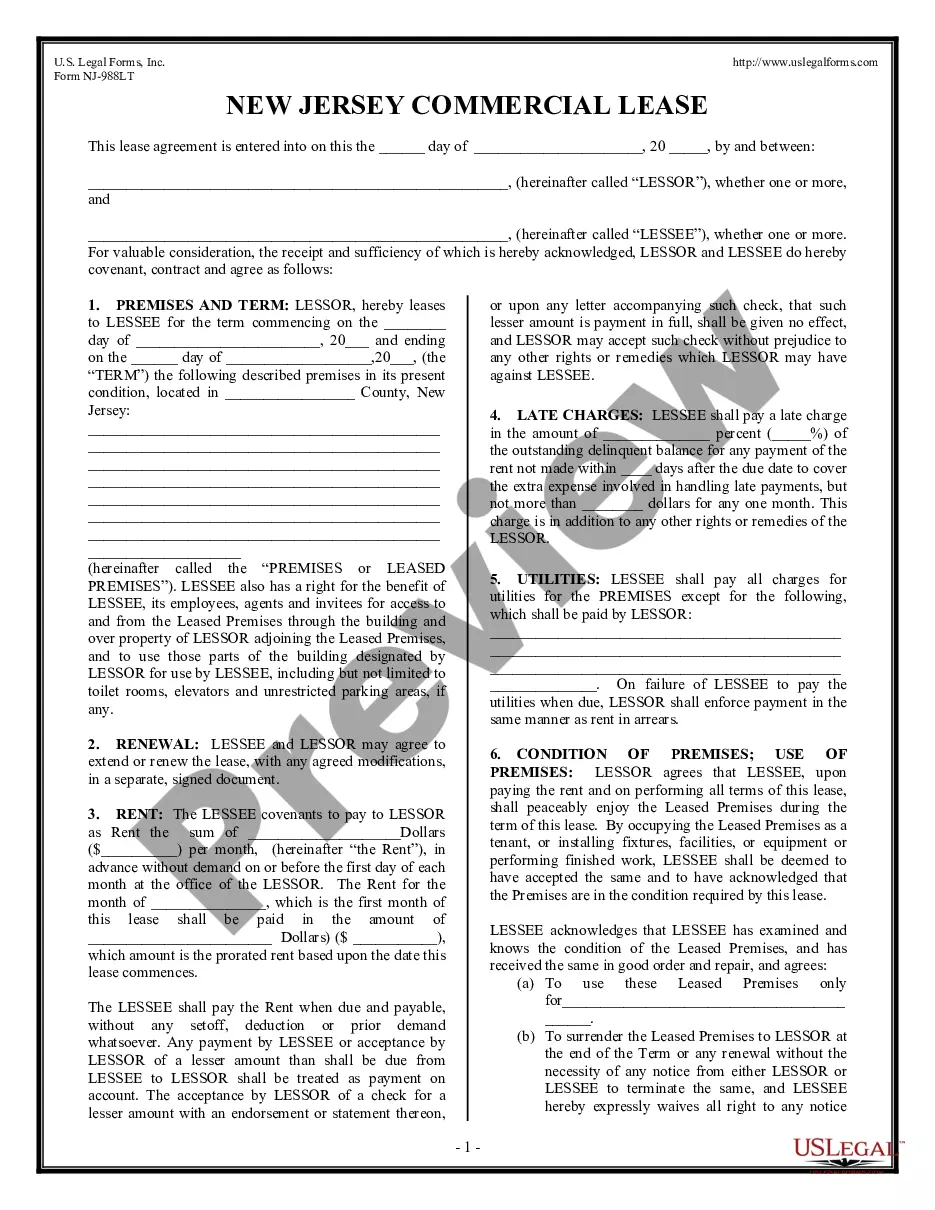
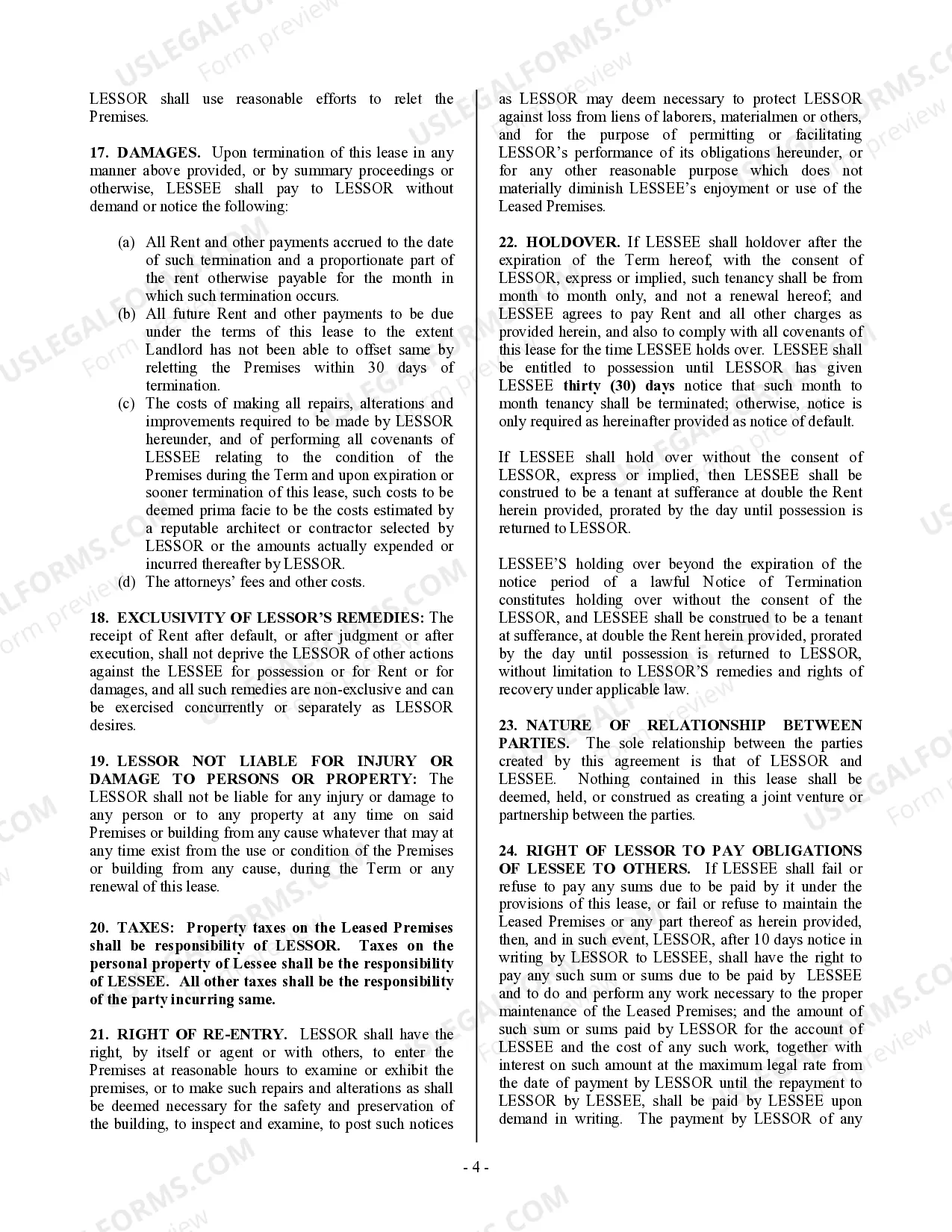
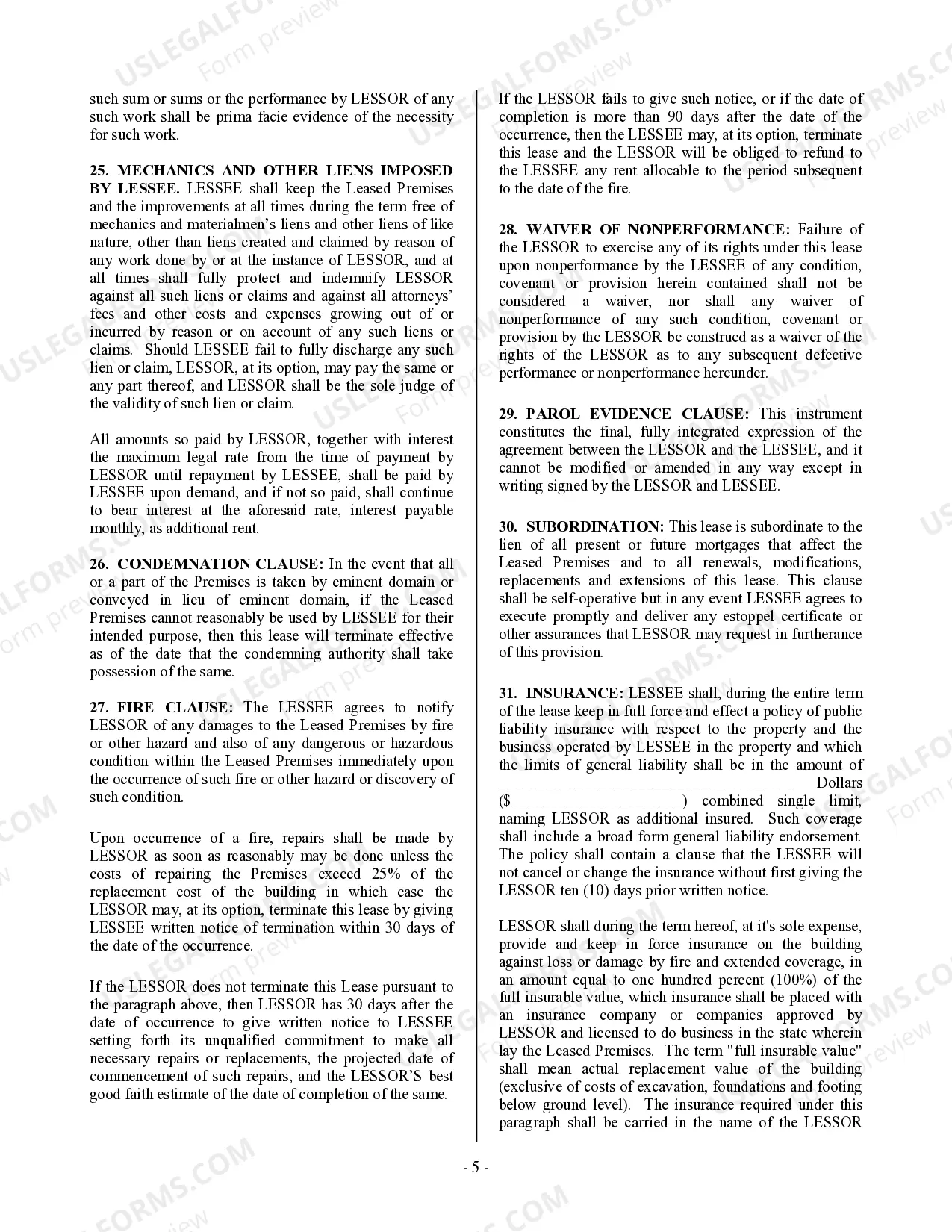
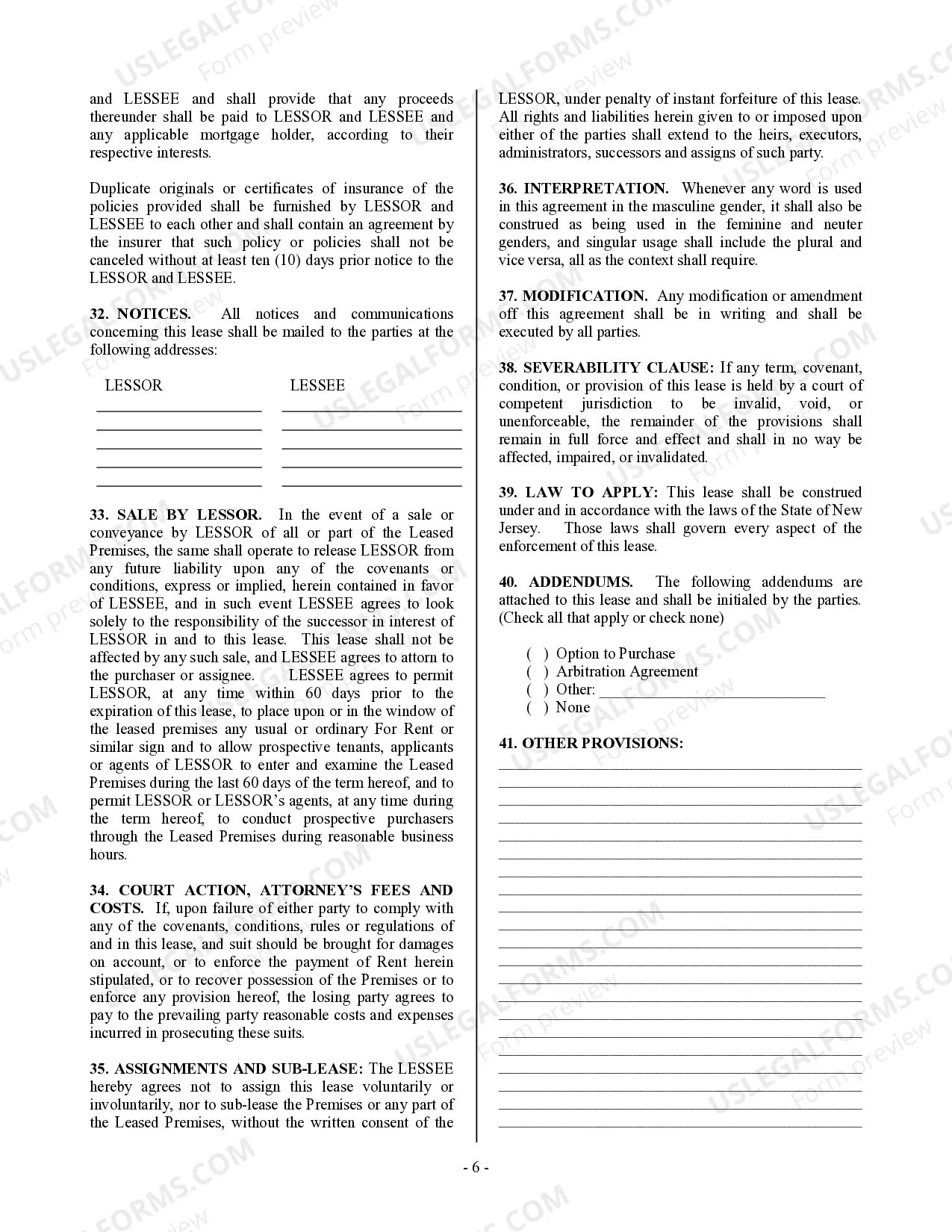
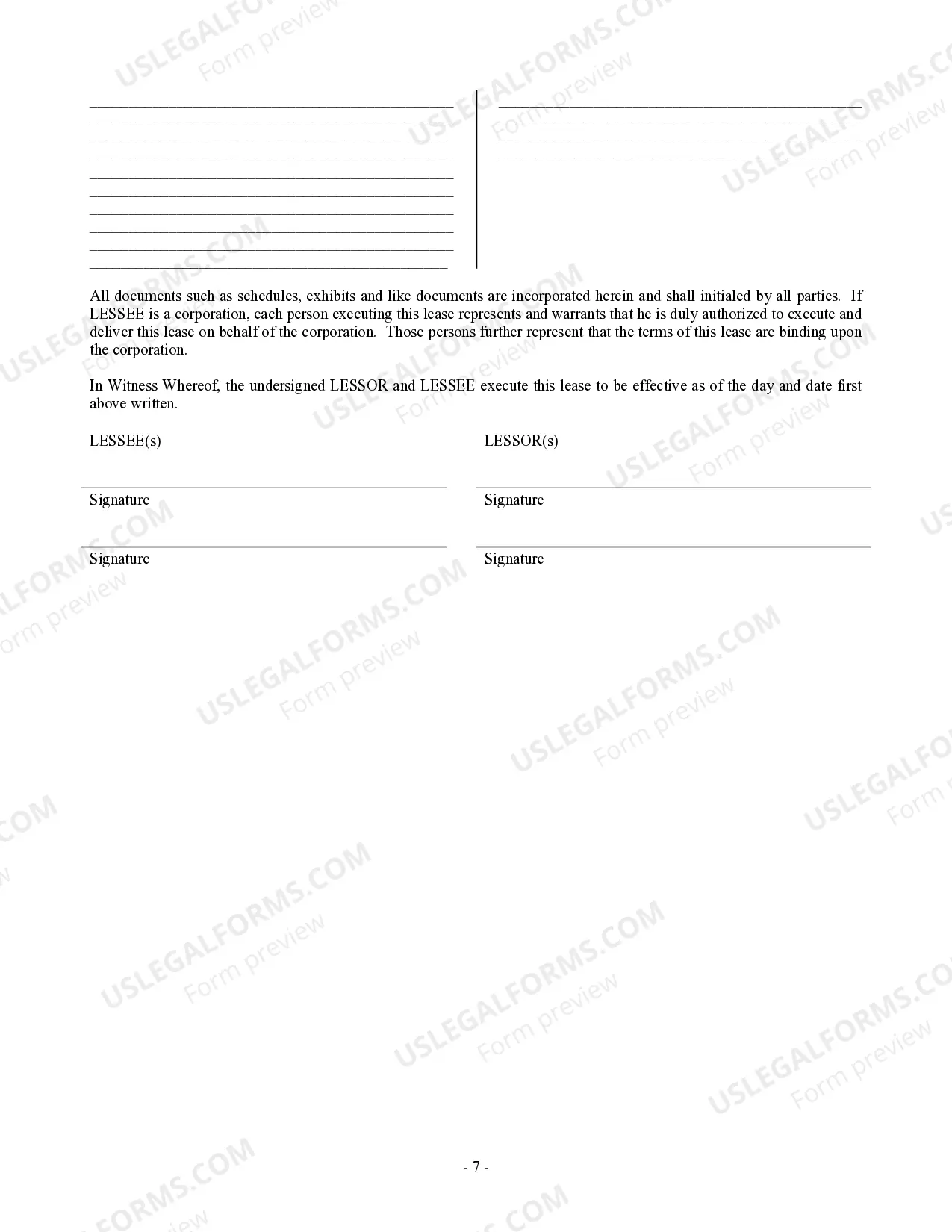
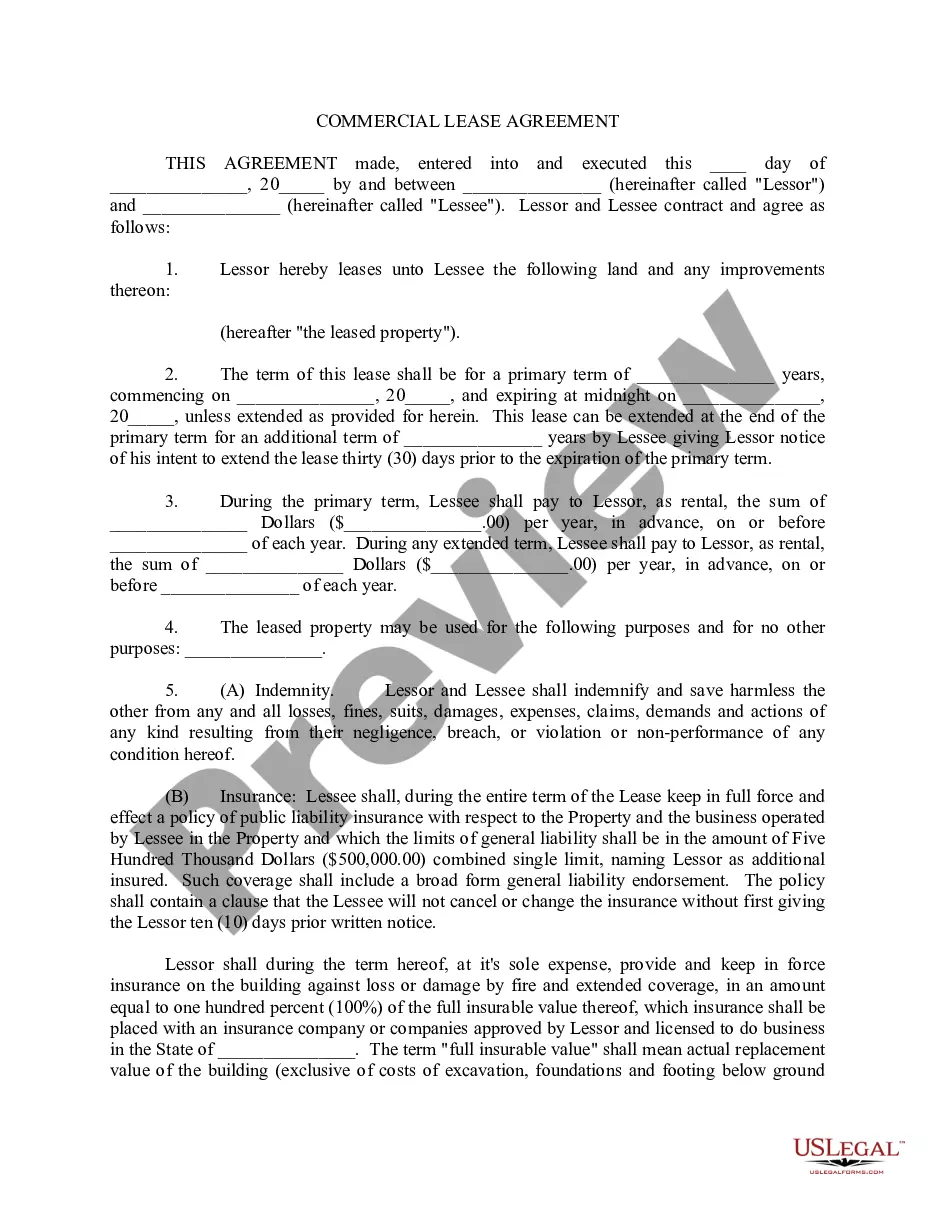
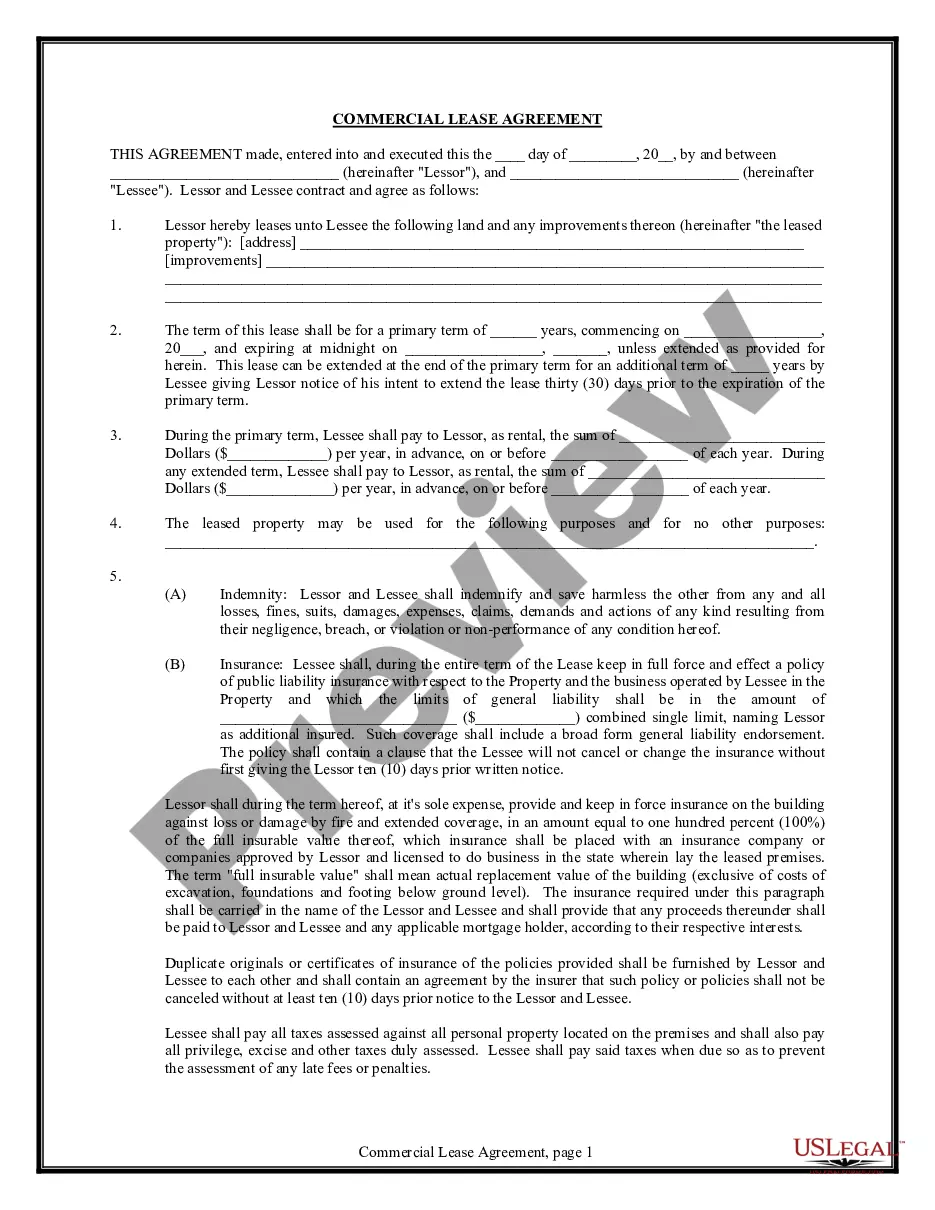
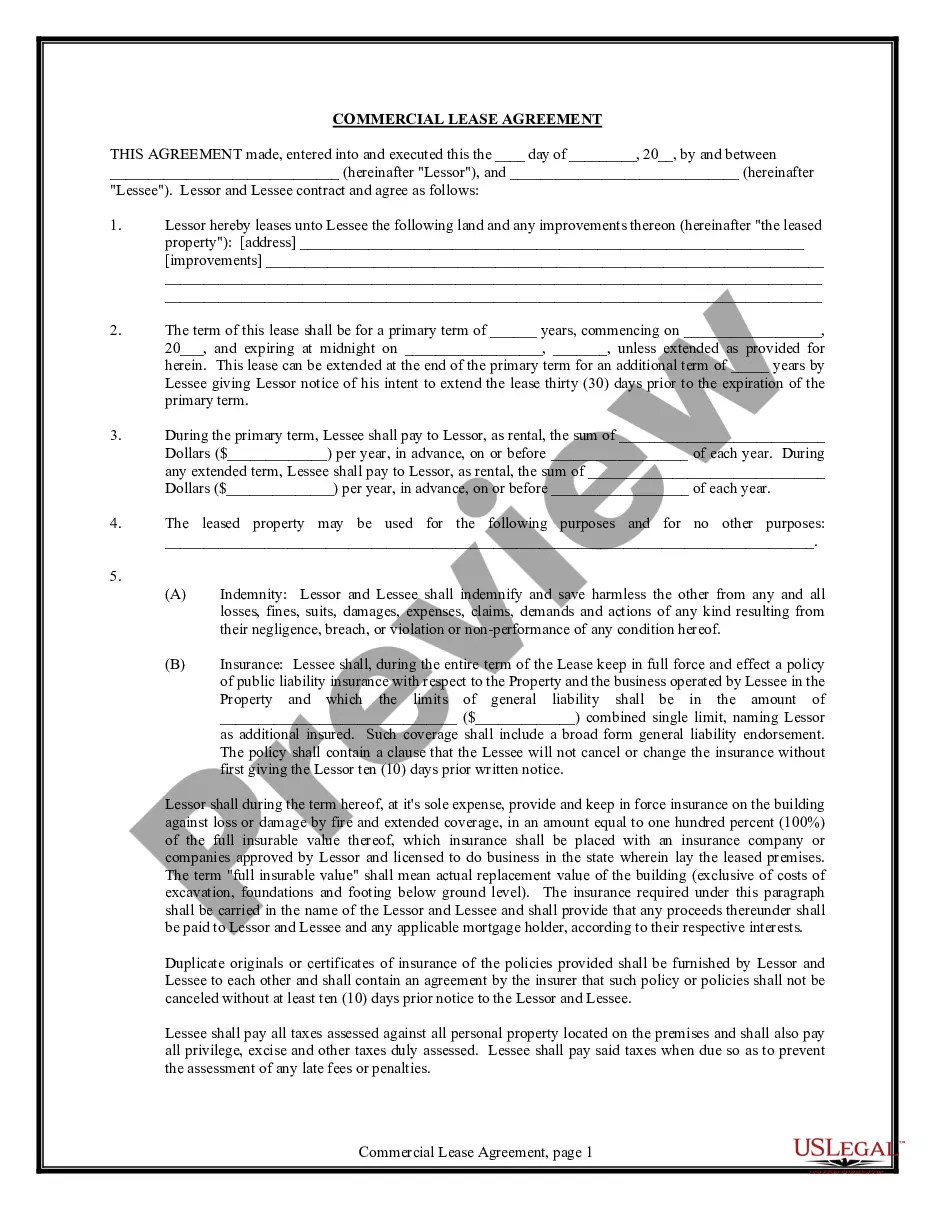
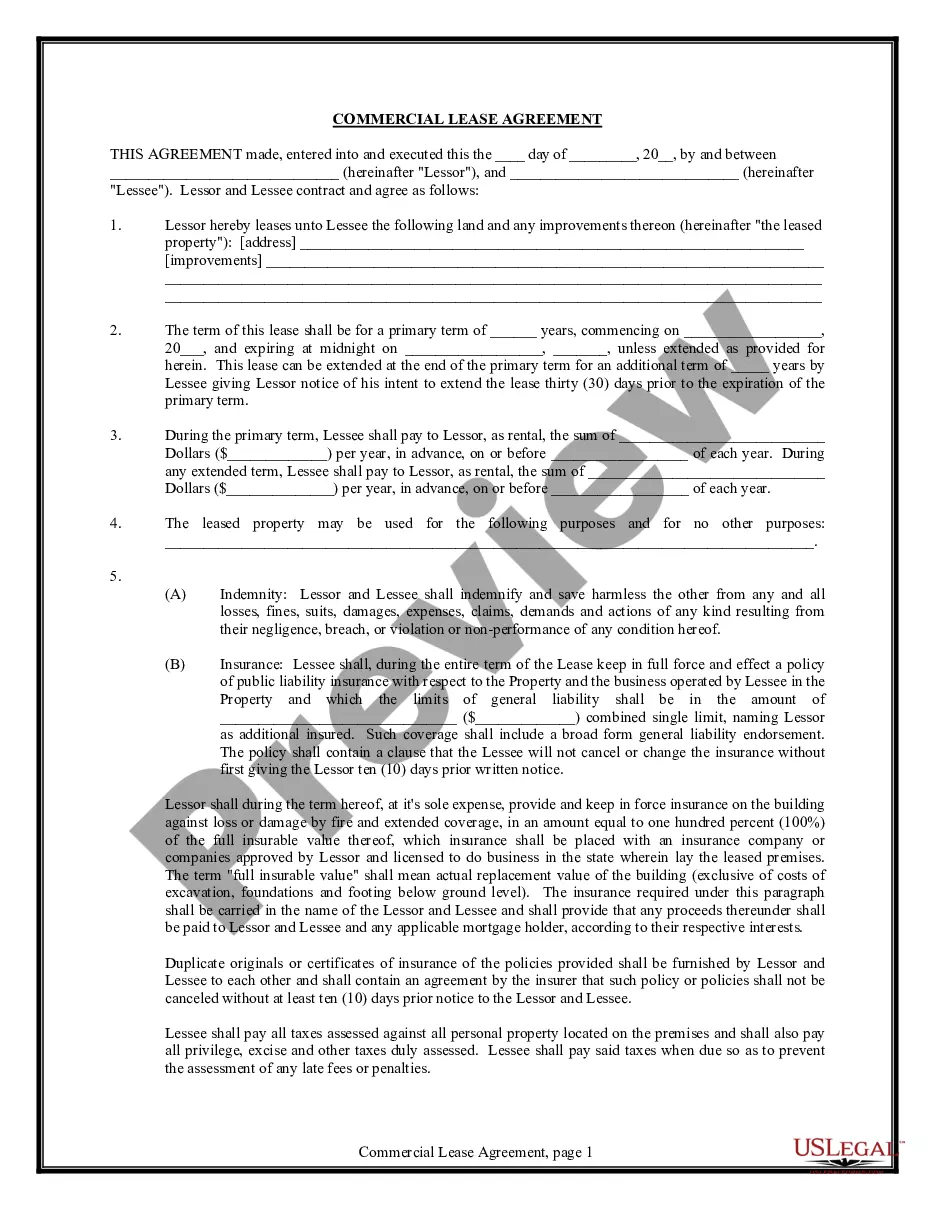
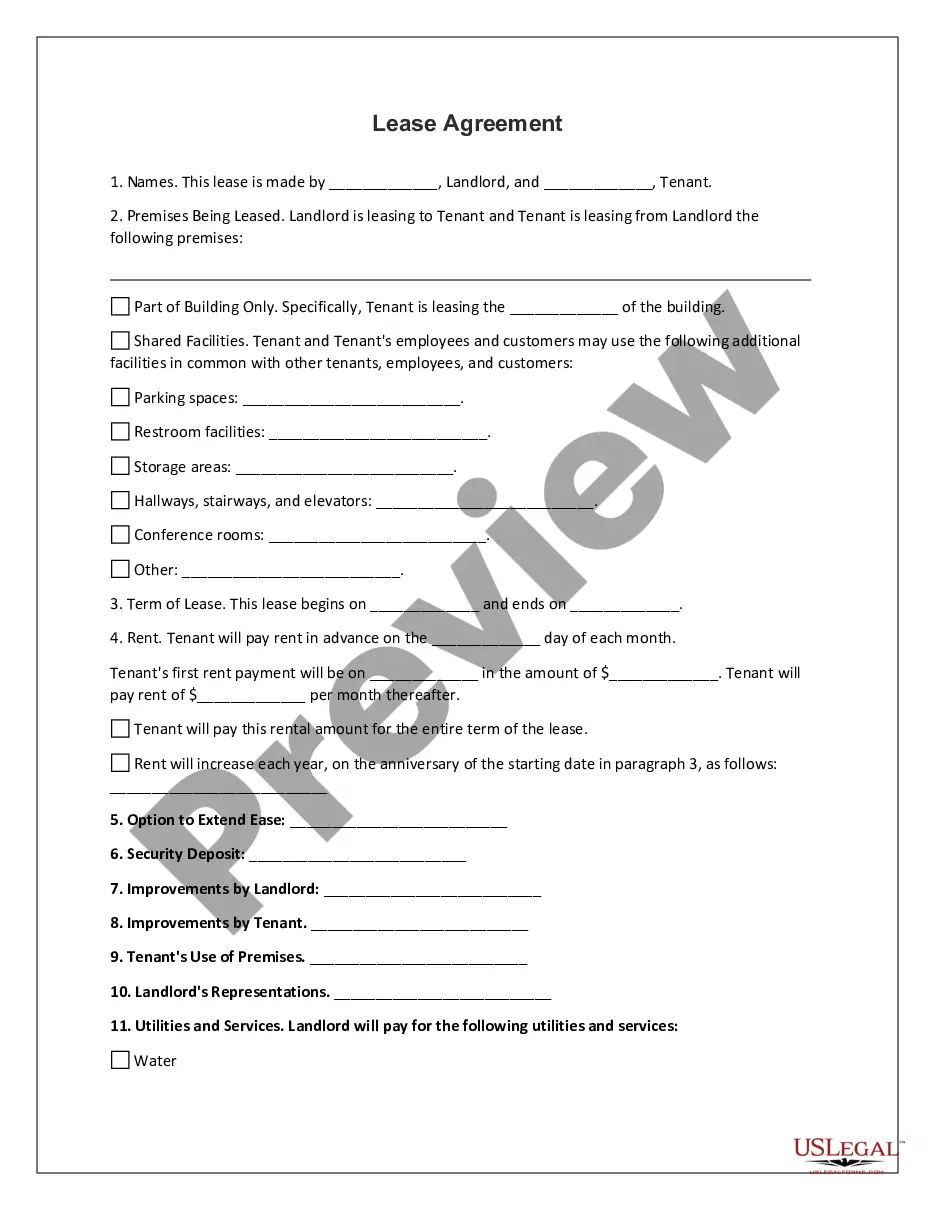
This Commercial Building or Space Lease form is a legally binding agreement tailored for use in New Jersey. It outlines the terms for leasing commercial space, such as an office or retail location. This lease differs from residential leases as it addresses unique commercial concerns and includes provisions about rent payments, security deposits, utilities, maintenance, and legal obligations of both the lessor and lessee.
What’s included in this form
- Identification of the lessor and lessee
- Detailed description of the leased premises
- Rental payment terms, including late charges
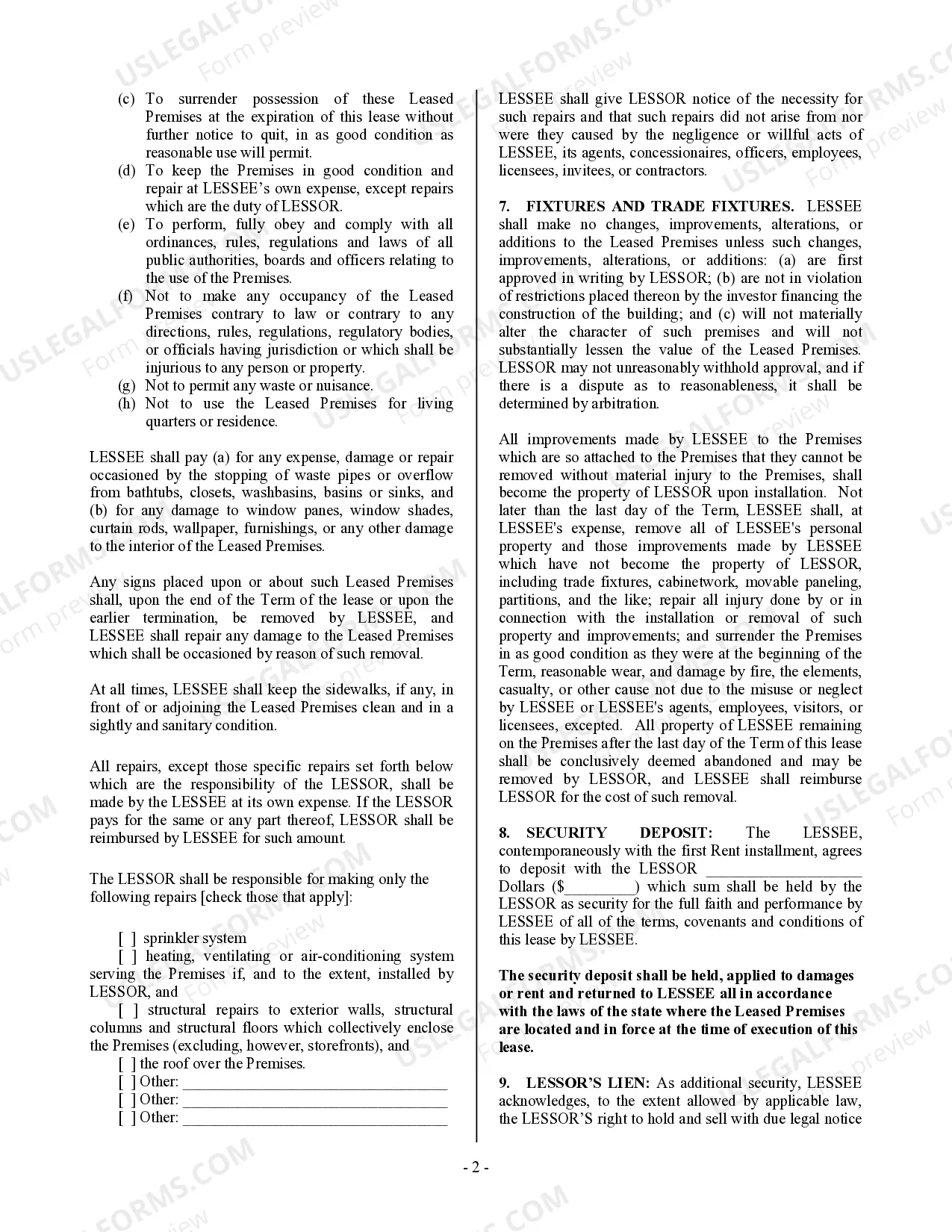
- Conditions governing the use and maintenance of the premises
- Security deposit requirements and conditions
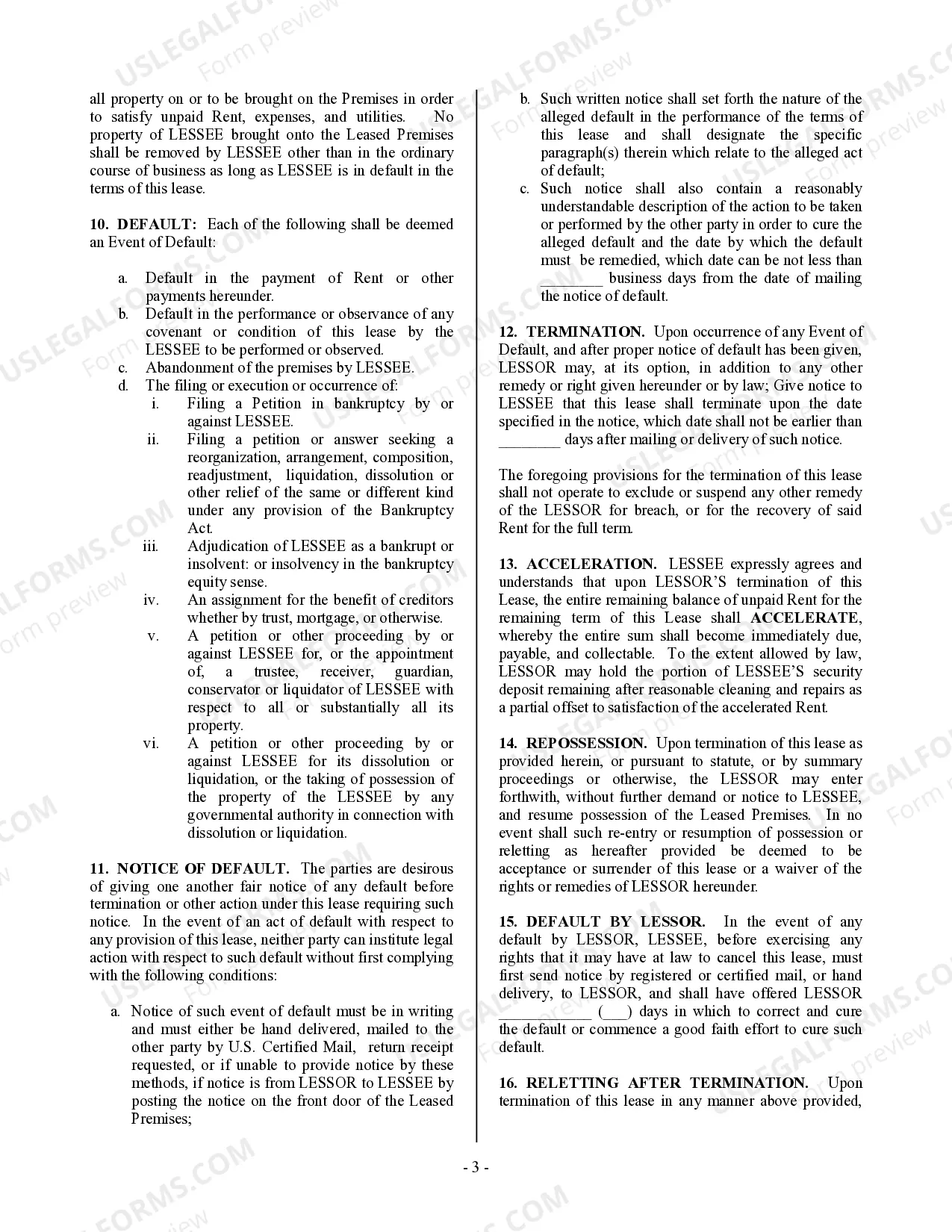
- Default and termination terms of the lease
- Provisions for renewal and modifications
Common use cases
This Commercial Building or Space Lease form is essential when a landlord and tenant agree to lease a commercial property in New Jersey. Use this form if you are renting office space, retail space, warehouse, or any other commercial premises where detailed terms need to be established to prevent disputes in the future.
Who should use this form
- Commercial landlords looking to lease their property
- Business owners seeking to rent commercial space
- Real estate agents facilitating commercial leases
- Legal professionals assisting clients with lease agreements
Instructions for completing this form
- Identify the parties involved: the lessor (landlord) and lessee (tenant).
- Describe the leased premises clearly, ensuring all relevant details are included.
- Specify the lease term, including start and end dates.
- Detail the rental payment amount and frequency, including any late charges.
- Include provisions for utilities, maintenance responsibilities, and security deposits.
- Sign and date the agreement, ensuring both parties retain a copy.
Does this form need to be notarized?
This form does not typically require notarization unless specified by local law. However, having it notarized may add an extra layer of verification that can be beneficial in disputes.
Get your form ready online
Our built-in tools help you complete, sign, share, and store your documents in one place.
Make edits, fill in missing information, and update formatting in US Legal Forms—just like you would in MS Word.
Download a copy, print it, send it by email, or mail it via USPS—whatever works best for your next step.
Sign and collect signatures with our SignNow integration. Send to multiple recipients, set reminders, and more. Go Premium to unlock E-Sign.
If this form requires notarization, complete it online through a secure video call—no need to meet a notary in person or wait for an appointment.
We protect your documents and personal data by following strict security and privacy standards.

Make edits, fill in missing information, and update formatting in US Legal Forms—just like you would in MS Word.

Download a copy, print it, send it by email, or mail it via USPS—whatever works best for your next step.

Sign and collect signatures with our SignNow integration. Send to multiple recipients, set reminders, and more. Go Premium to unlock E-Sign.

If this form requires notarization, complete it online through a secure video call—no need to meet a notary in person or wait for an appointment.

We protect your documents and personal data by following strict security and privacy standards.
Typical mistakes to avoid
- Failing to specify all costs associated with the lease, such as utilities or maintenance.
- Leaving out important clauses regarding default and termination.
- Not providing clear descriptions of the leased premises.
- Neglecting to signed by all parties involved.
Why use this form online
- Quick access to a professionally drafted lease agreement.
- User-friendly format that allows easy customization to meet specific needs.
- Time-efficient, with immediate download options available.
- Secure storage of the completed form for future reference.
Legal use & context
- The lease must comply with New Jersey landlord-tenant laws to ensure enforceability.
- Both parties should seek legal advice if uncertain about specific terms or implications.
- This document will serve as the primary evidence in any disputes arising from the rental agreement.
Key takeaways
- The Commercial Building or Space Lease is essential for any business renting commercial space in New Jersey.
- Clearly define terms related to rent, utilities, and responsibilities to avoid disputes.
- Utilize this form to protect legal rights and ensure a clear understanding between lessor and lessee.
Looking for another form?

Form popularity
FAQ
When a commercial office property is sold, the new owner has an expectation of returns on the property.You don't need to sign a new lease with the new owner, although the new owner may offer short term rent reductions or other concessions for tenants who extend their lease term or expand their square footage.
Even if the landlord sells the property, the lease would survive the sale of the property and the new landlord would step in the shoes of the old landlord and take on the responsibilities and the rights of the previous landlord without having to sign a new lease with the current tenant.
The process for retailers qualifying for a commercial lease can vary from landlord to landlord. Landlords consider several factors including tenant mix, personal credit history of the owner, company balance sheet, profit and loss statements, open credit lines, and growth projections.
A Triple Net Lease (NNN Lease) is the most common type of lease in commercial buildings. In a NNN lease, the rent does not include operating expenses. Operating expenses include utilities, maintenance, property taxes, insurance and property management.
Your lease remains valid in case a rental property is sold, and your former landlord is obliged to provide you with a name and address of a new landlord.This means that tenants cannot be forced to leave or asked to pay a different rent until the current lease expires.
What happens to your tenancy? Nothing will happen to your tenancy during the contractual term. Your landlord's interest will be sold subject to any existing leases, which means that the buyer will inherit you as a tenant and become your new landlord.
If the commercial tenant is a shell corporation and/or does not have any assets of value, the commercial tenant may choose to walk away from its commercial lease obligations.Often the landlord will require guarantees in order to prevent a commercial tenant from walking away from its lease obligations.
Summary. There are different types of leases, but the most common types are absolute net lease, triple net lease, modified gross lease, and full-service lease. Tenants and proprietors need to understand them fully before signing a lease agreement.