New Hampshire Last Will and Testament for a Widow or Widower with Adult Children
What this document covers
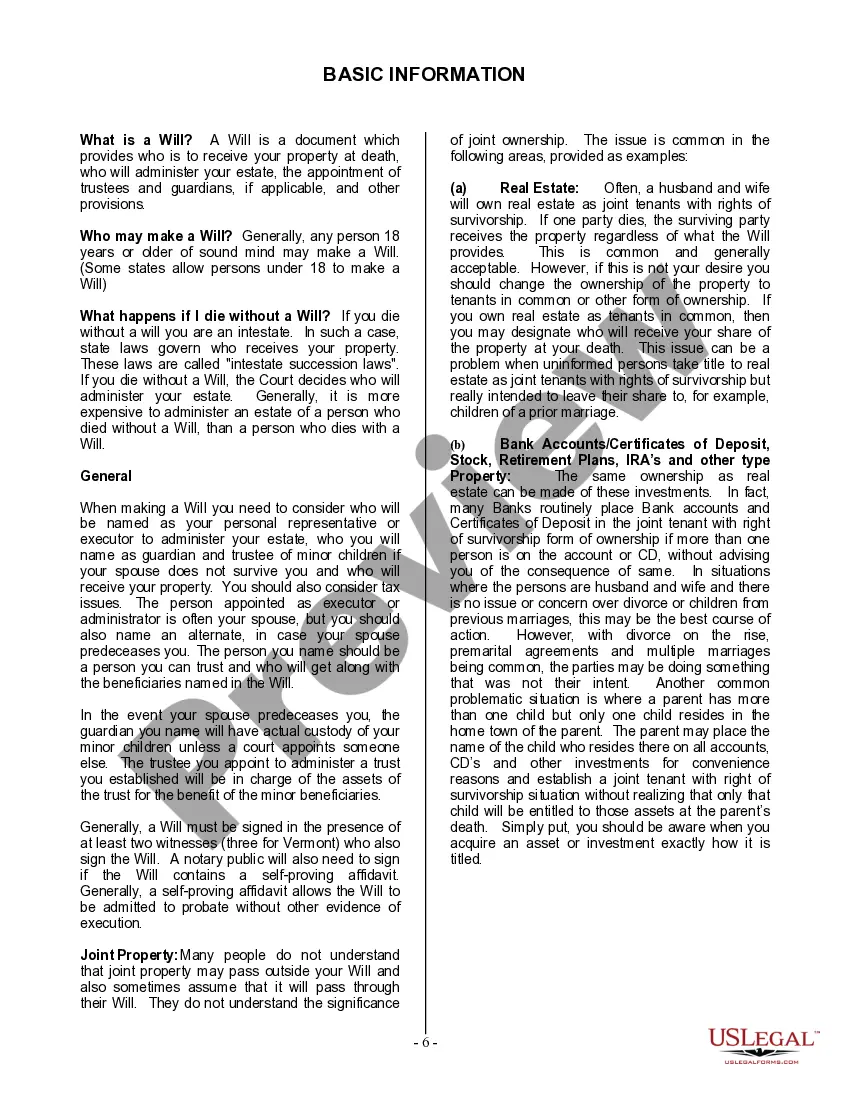
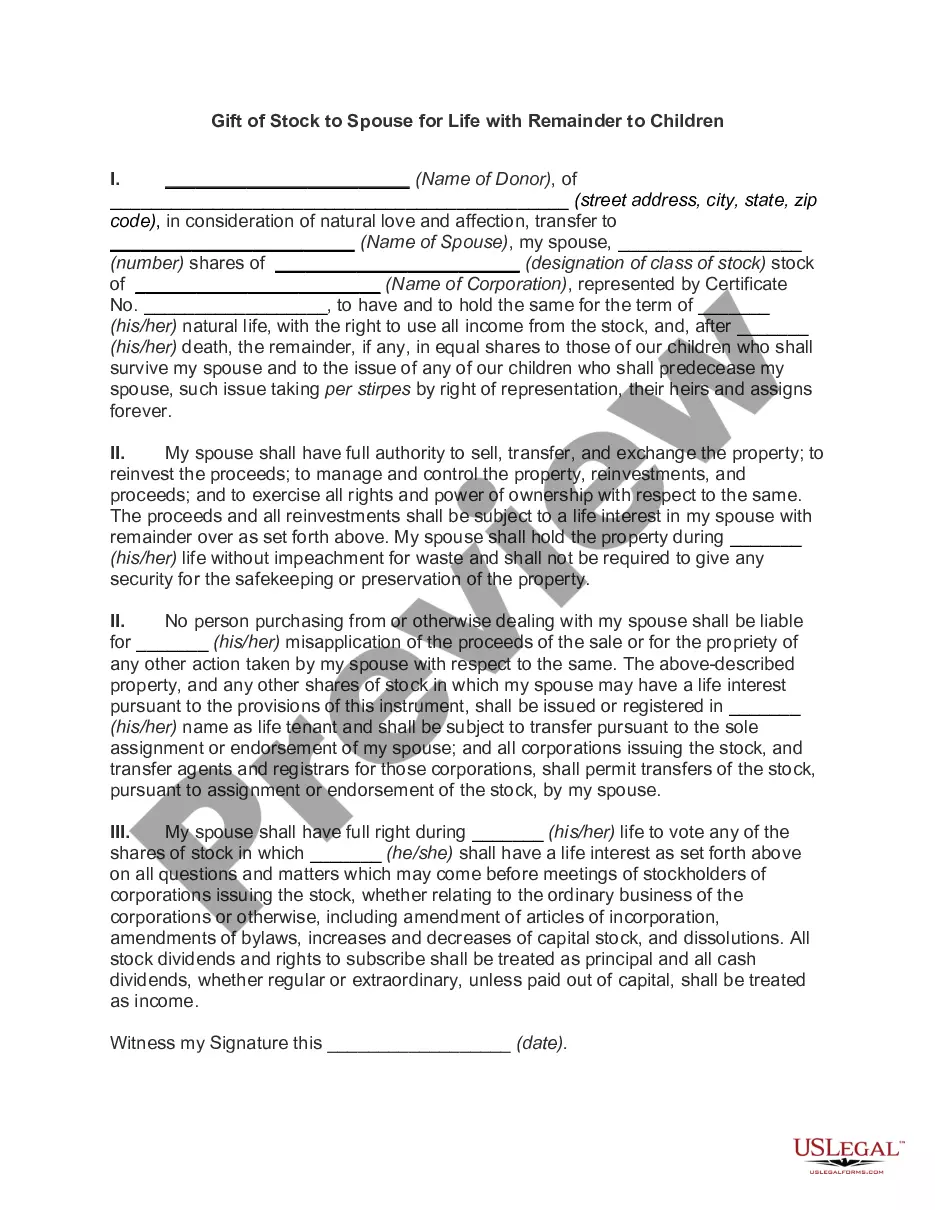
The Last Will and Testament for a Widow or Widower with Adult Children is a legal document that outlines how your property and assets will be distributed after your death. Unlike other wills, this specific form is designed for individuals who are widowed or widower and have adult children, ensuring your wishes are clearly stated and legally binding. This will includes provisions for appointing a personal representative or executor, as well as designating beneficiaries, including your adult children.
Form components explained
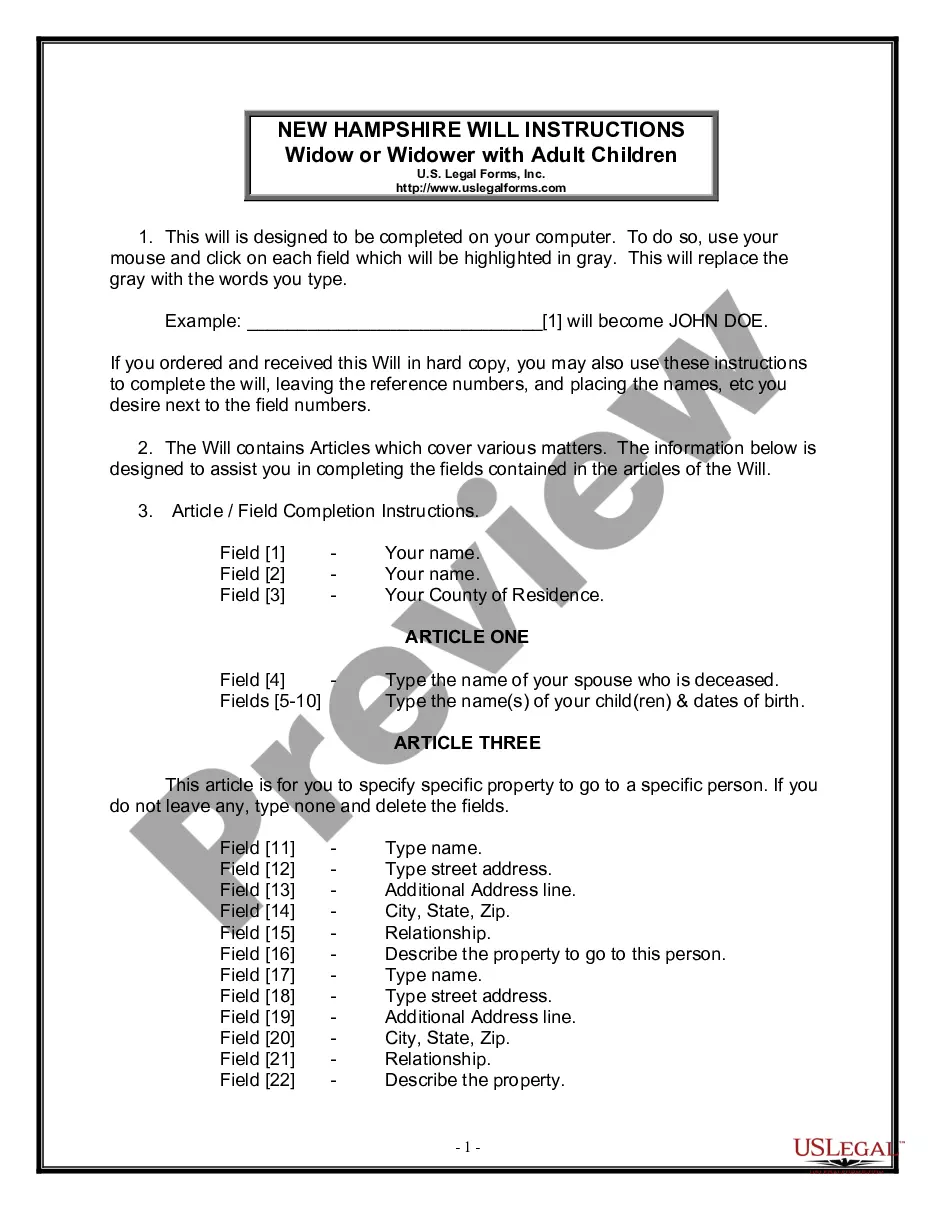
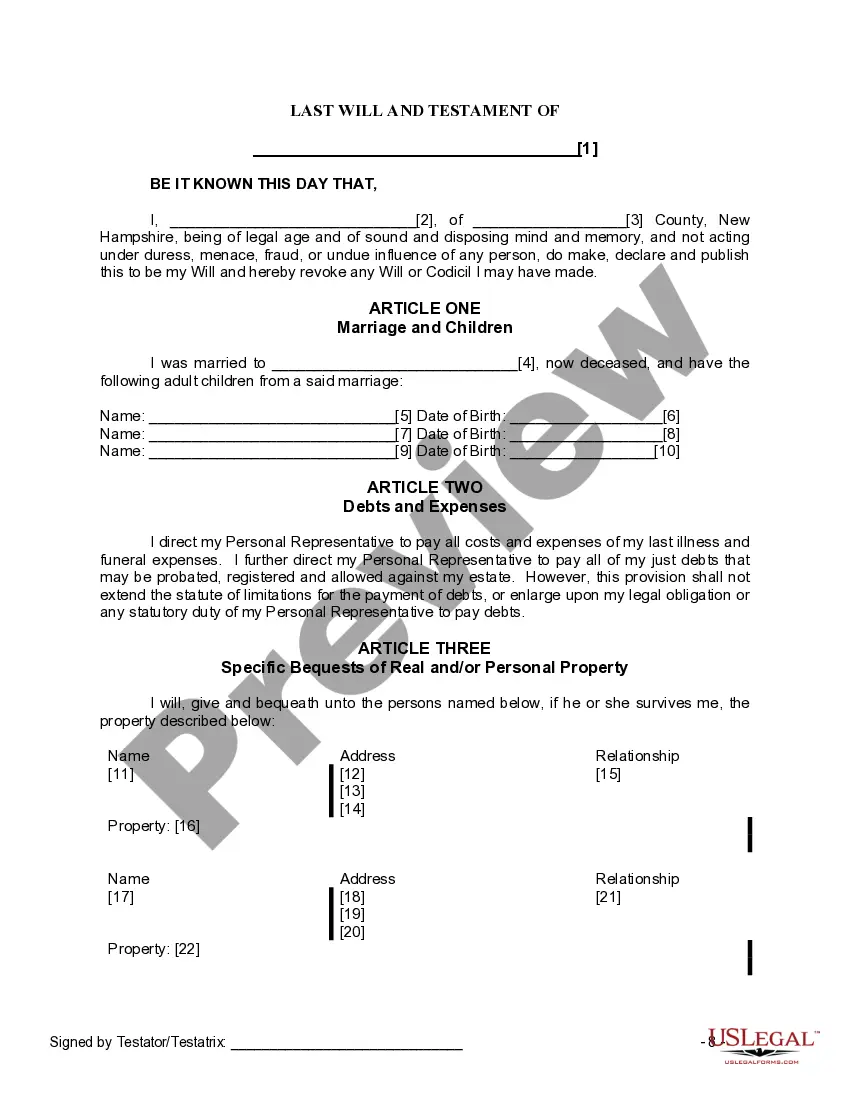
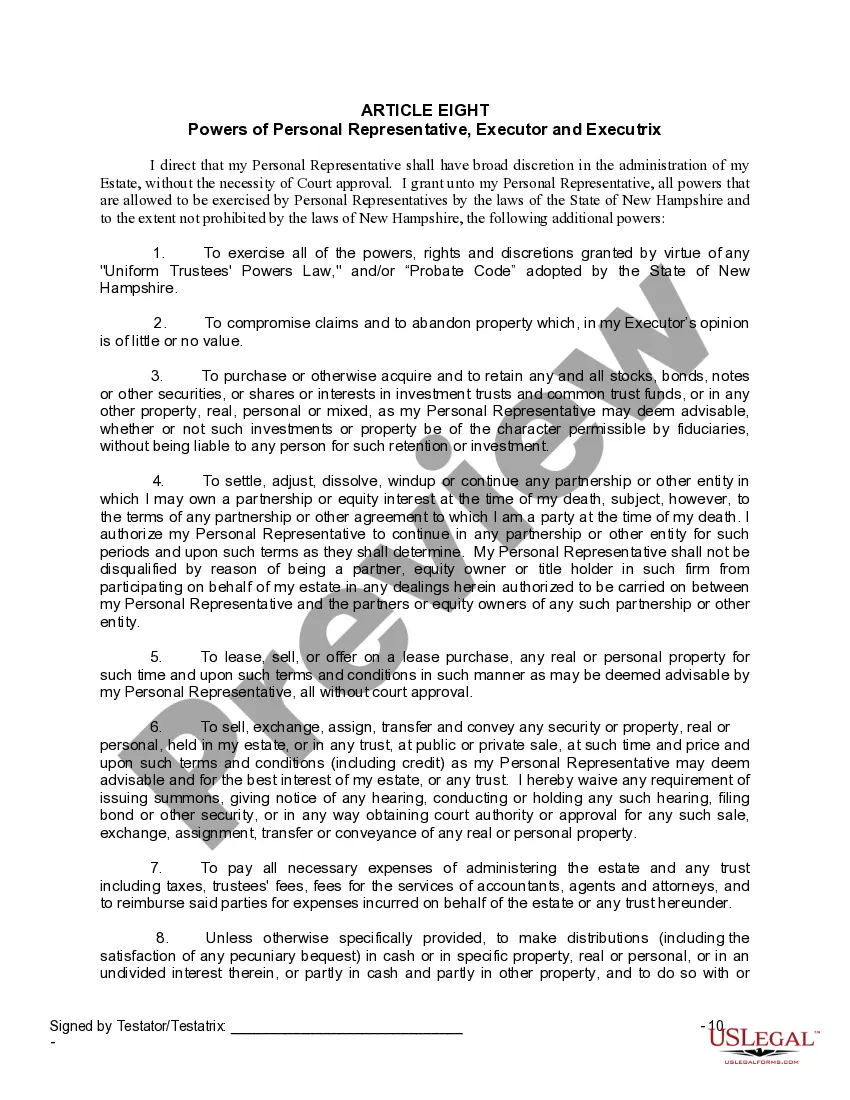
Article One: Personal information including your name, county of residence, and details about your deceased spouse and adult children.
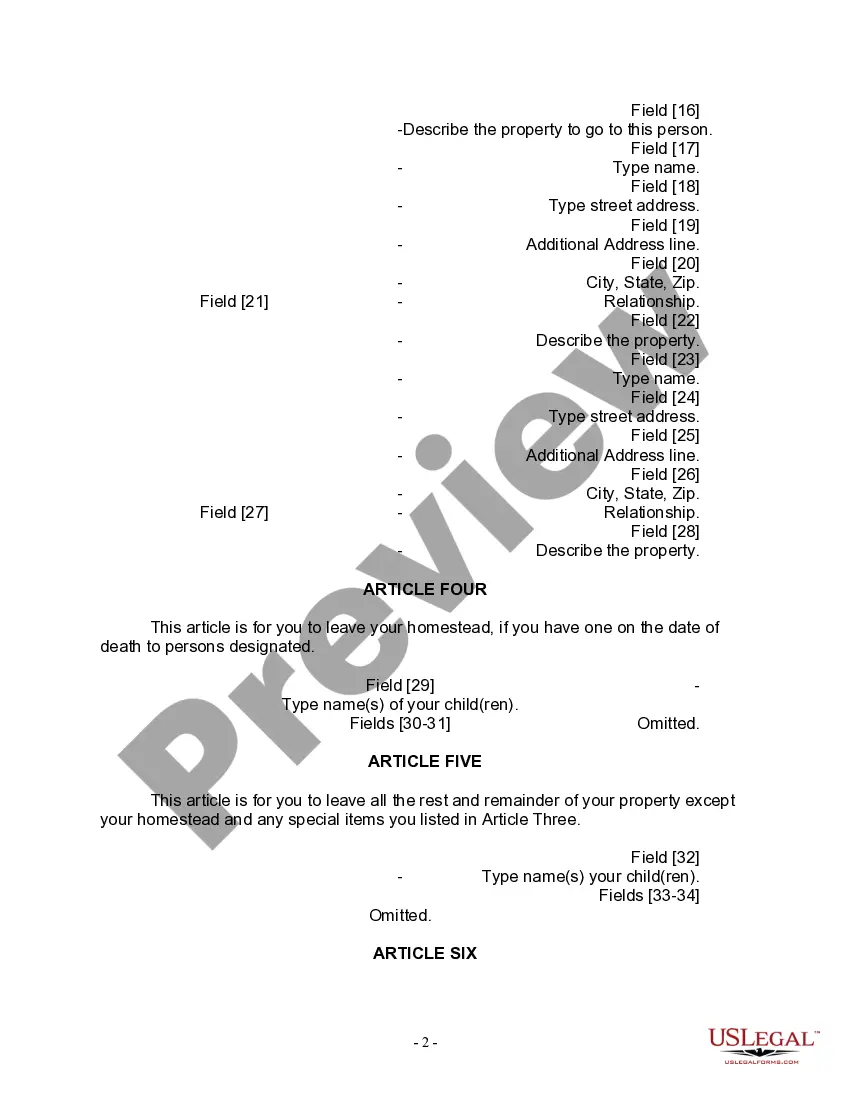
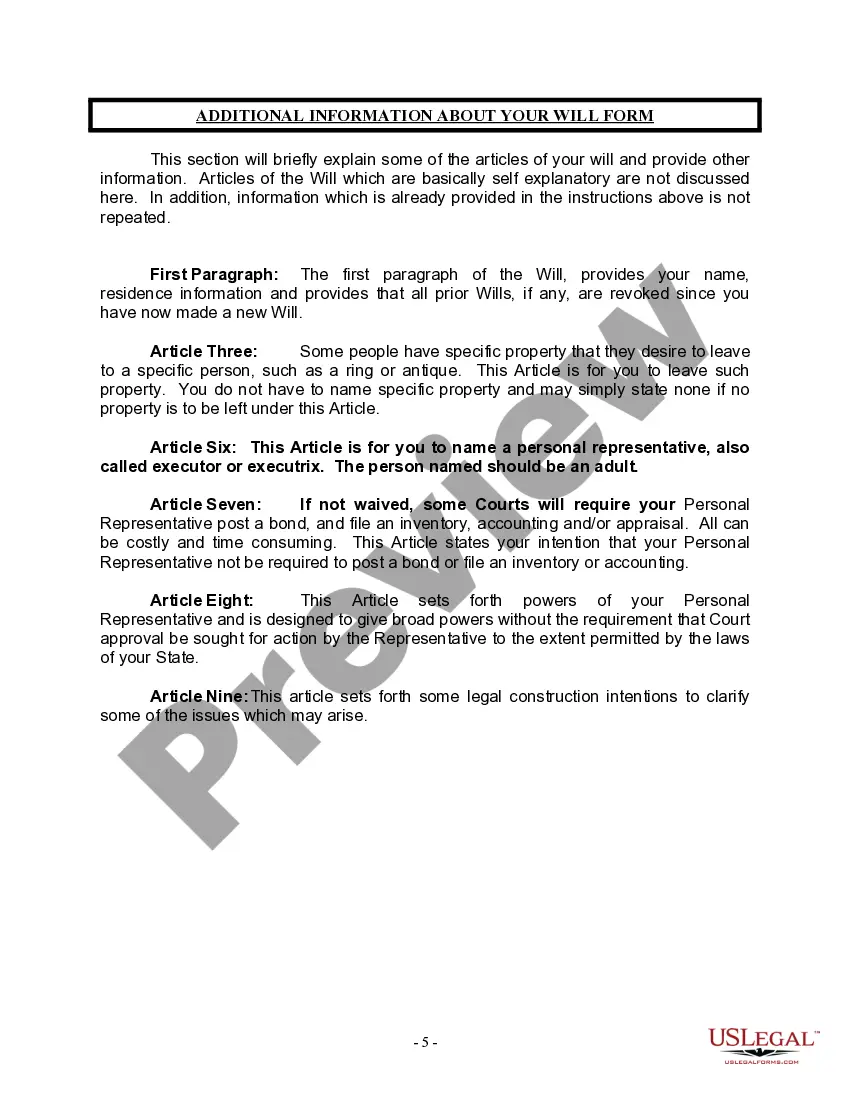
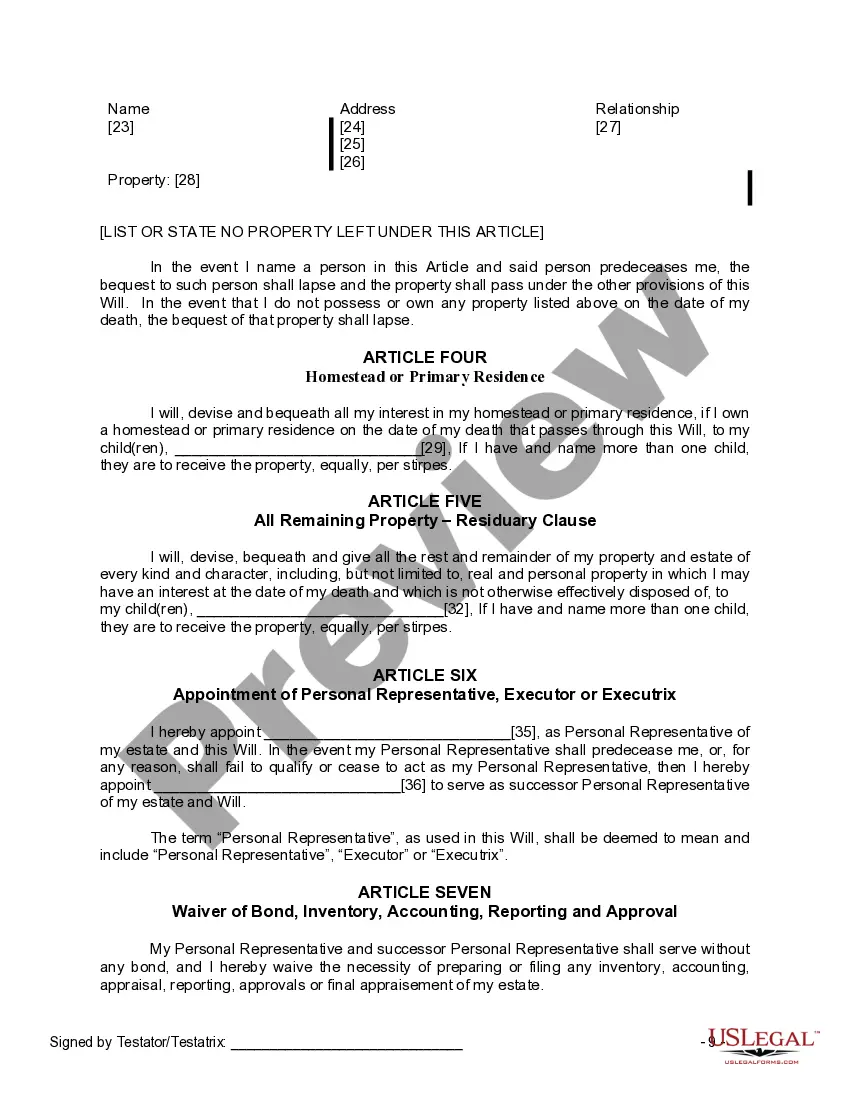
Article Three: Specifies any specific bequests of personal or real property to designated individuals.
Article Four: Addresses distribution of your homestead or primary residence.
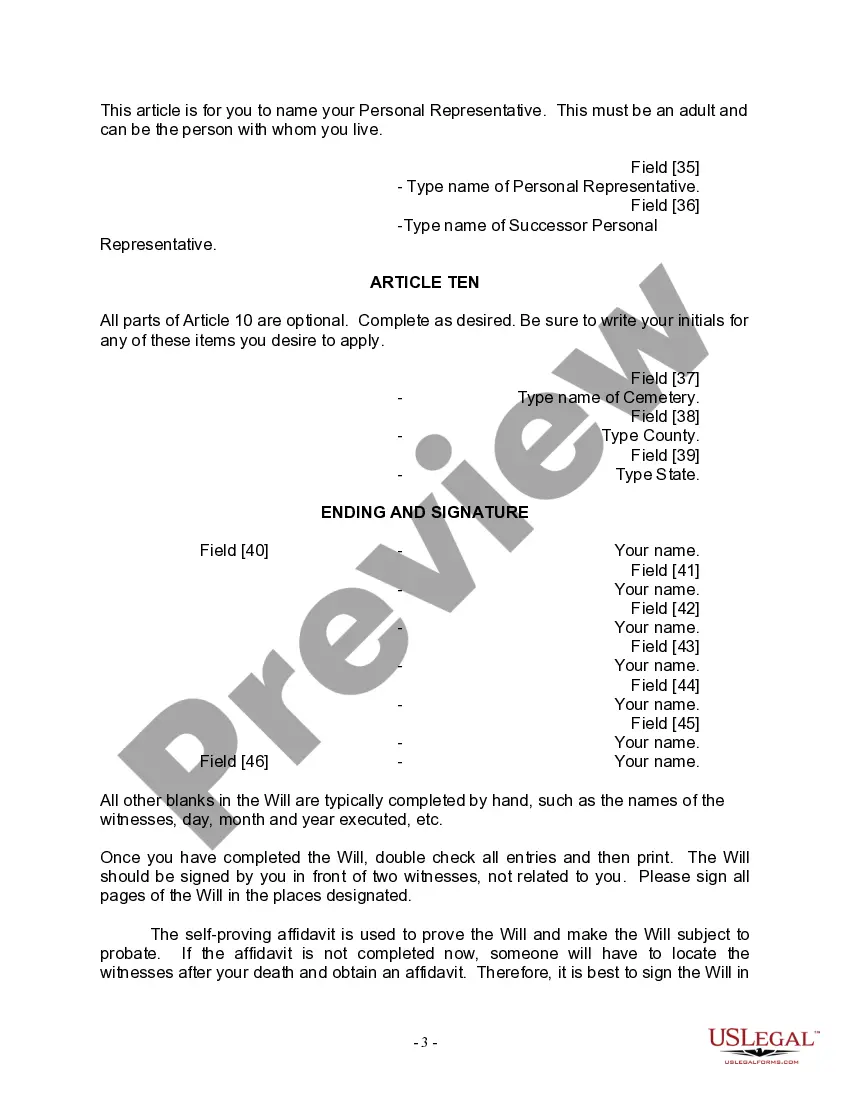
Article Six: Names your personal representative who will manage your estate.
Article Ten: Miscellaneous provisions regarding burial preferences and debt handling.







When this form is needed
This form is essential when a widow or widower with adult children wishes to ensure their estate is managed and distributed according to their specific wishes. It is particularly useful in situations where you have specific personal items or property to bequeath, wish to appoint an executor, or need to clarify how debts should be settled after your passing.
Who this form is for
- Individuals who are widowed or widowers.
- Those with adult children who need to be considered in property distribution.
- Anyone wanting to clarify their final wishes regarding estate management and distribution.
Completing this form step by step
- Identify yourself by entering your name and county of residence.
- Provide details about your deceased spouse and list the names and birth dates of your adult children.
- Specify any specific property you want to bequeath to specific individuals.
- Name your personal representative, who will be responsible for administering your estate.
- Ensure to sign the will in front of two non-related witnesses and note the date and location of signing.
Is notarization required?
To make this form legally binding, it must be notarized. Our online notarization service, powered by Notarize, lets you verify and sign documents remotely through an encrypted video session.
Get your form ready online
Our built-in tools help you complete, sign, share, and store your documents in one place.
Make edits, fill in missing information, and update formatting in US Legal Forms—just like you would in MS Word.
Download a copy, print it, send it by email, or mail it via USPS—whatever works best for your next step.
Sign and collect signatures with our SignNow integration. Send to multiple recipients, set reminders, and more. Go Premium to unlock E-Sign.
If this form requires notarization, complete it online through a secure video call—no need to meet a notary in person or wait for an appointment.
We protect your documents and personal data by following strict security and privacy standards.

Make edits, fill in missing information, and update formatting in US Legal Forms—just like you would in MS Word.

Download a copy, print it, send it by email, or mail it via USPS—whatever works best for your next step.

Sign and collect signatures with our SignNow integration. Send to multiple recipients, set reminders, and more. Go Premium to unlock E-Sign.

If this form requires notarization, complete it online through a secure video call—no need to meet a notary in person or wait for an appointment.

We protect your documents and personal data by following strict security and privacy standards.
Common mistakes to avoid
- Failing to have the will signed by two witnesses, which can invalidate the document.
- Not clearly specifying the properties to be distributed, leading to confusion or disputes among heirs.
- Not keeping the original signed will in a safe place or failing to share its location with the executor.
Why use this form online
- Easy access to customizable templates designed by licensed attorneys.
- Ability to complete the form on your computer, ensuring clarity and correctness.
- Quick retrieval and storage options for completed documents.
Legal use & context
- This form serves as a clear legal directive for asset distribution.
- By executing this will, the testator ensures their intentions are respected after death.
- Legal validation through witness and notarization is crucial for enforceability.
Quick recap
- Clearly outline your final wishes regarding asset distribution with this will.
- Ensure to follow legal requirements for signing, including witness signatures and notarization.
- Consider discussing your will with family members to prevent confusion or disputes later on.
Looking for another form?
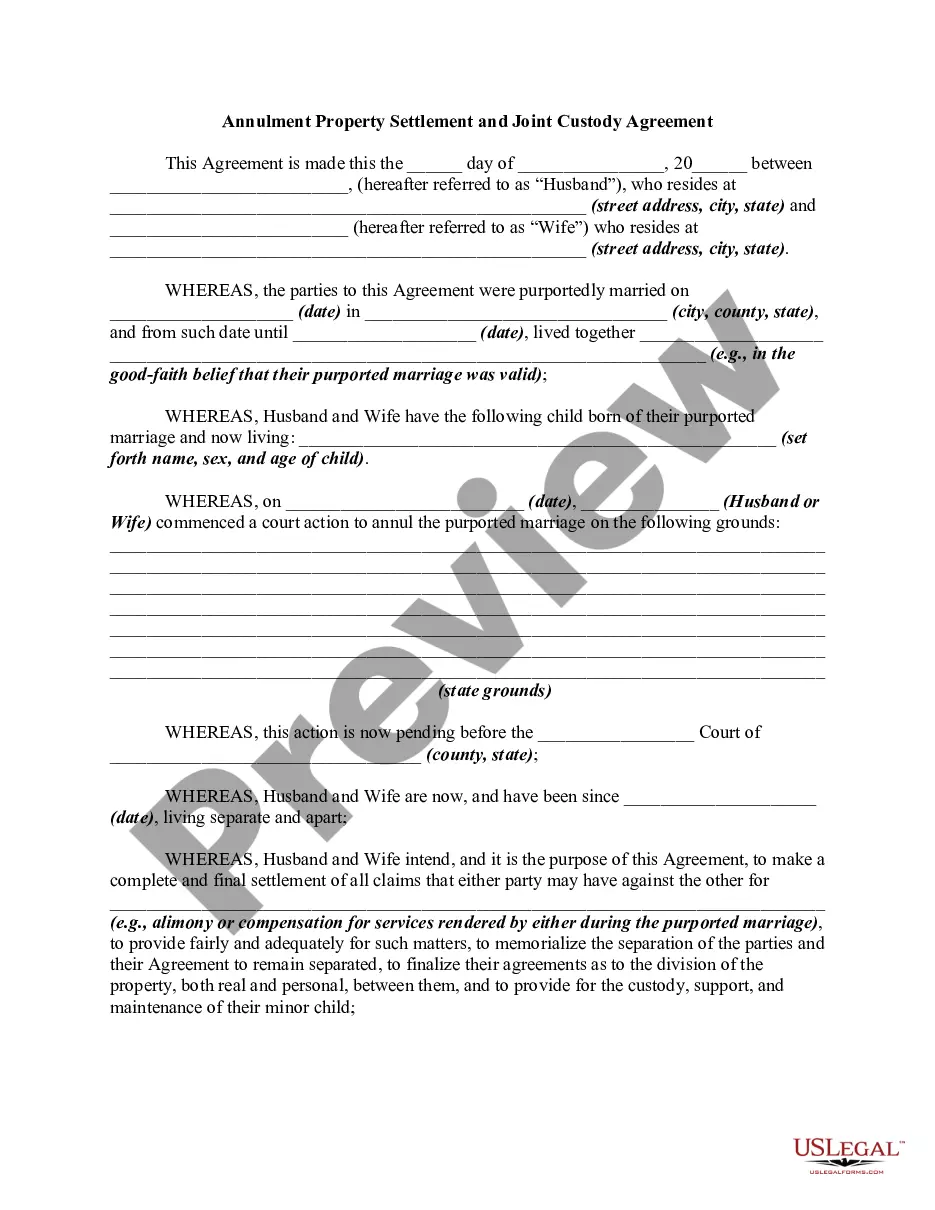
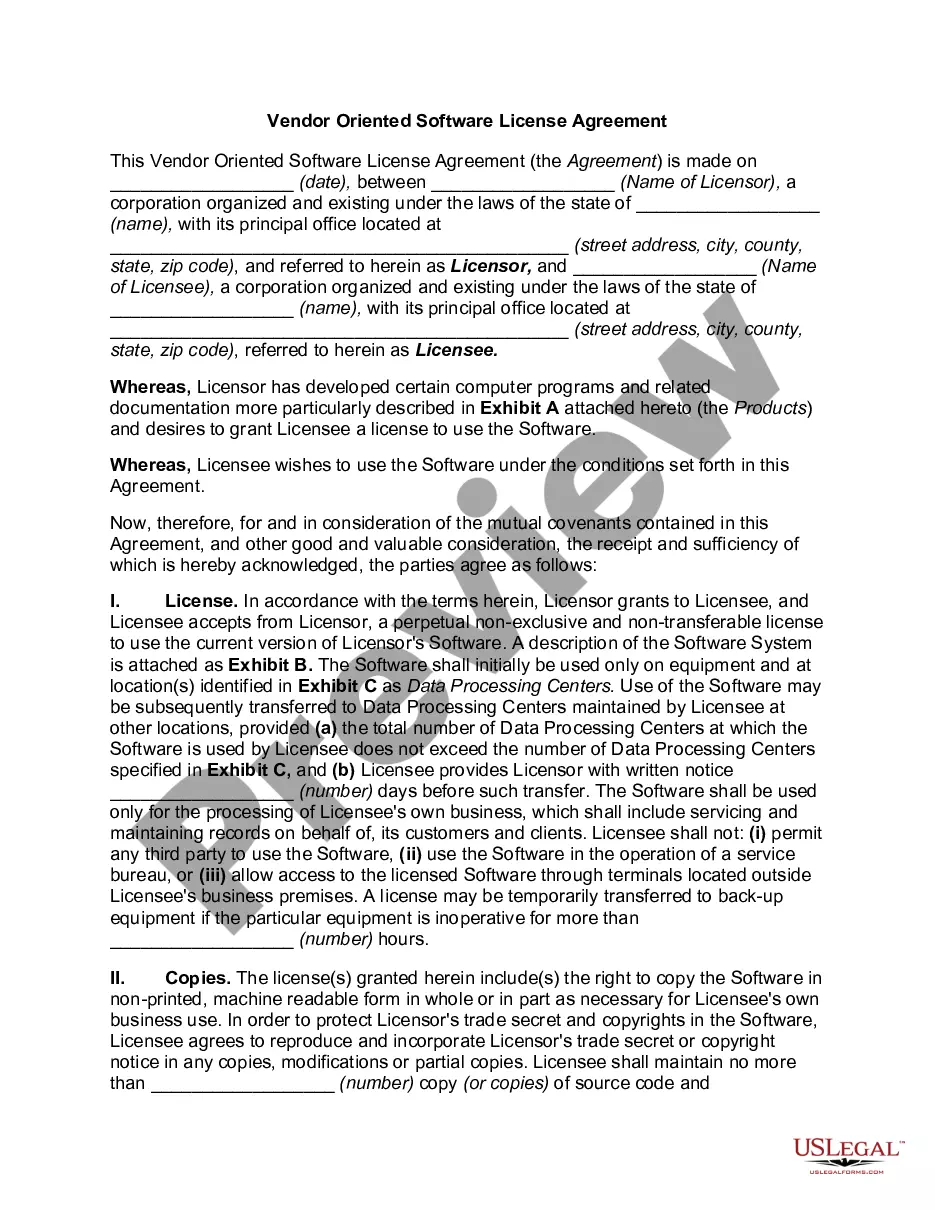
Form popularity
FAQ
A widow's will must meet her state's standards in order to be considered legally valid. Typically, this means the will must be in writing and signed. States generally require the signatures of two neutral witnesses who watch the widow sign the document, and a notary may also be required.
Choose an online legal services provider or locate a will template. Carefully consider your distribution wishes. Identify a personal representative/executor. Understand the requirements to make your will legal. Make sure someone else knows about your will. Consult a lawyer if you have a more complicated estate.
Yes, under some circumstances. If no consideration is provided for the mutual wills, except the mutual agreement of the spouses, either spouse can change the will prior to the death of the first spouse.After the first spouse dies, however, the surviving spouse cannot change the will.
Include personal identifying information. Include a statement about your age and mental status. Designate an executor. Decide who will take care of your children. Choose your beneficiaries. List your funeral details. Sign and date your Last Will and Testament.
Contrary to popular belief, you do not need to have an attorney draft a will for you. Anyone can write this document on their own, and as long as it meets all of the legal requirements of the state, courts will recognize one you wrote yourself.
The form may be downloaded in fillable Adobe PDF, Rich Text Format, and Microsoft Word templates and should be signed by the testator and at least two (2) witnesses or a notary public (See your State's Probate Code).
Find an online template or service. Make a list of your assets. Be specific about who gets what. If you have minor children, choose a guardian. Give instructions for your pet. Choose an executor. Name a 'residuary beneficiary' List your funeral preferences.
In most situations, a will template is an easy and inexpensive way to make sure your wishes are known and carried out. Most people can get everything they need by using a will template, with little cost or hassle.
Yes! Your Free Will Kit will be delivered to you at no-cost, no purchase necessary.