New Hampshire Last Will and Testament for Civil Union Partner with Minor Children from Prior Marriage
What this document covers
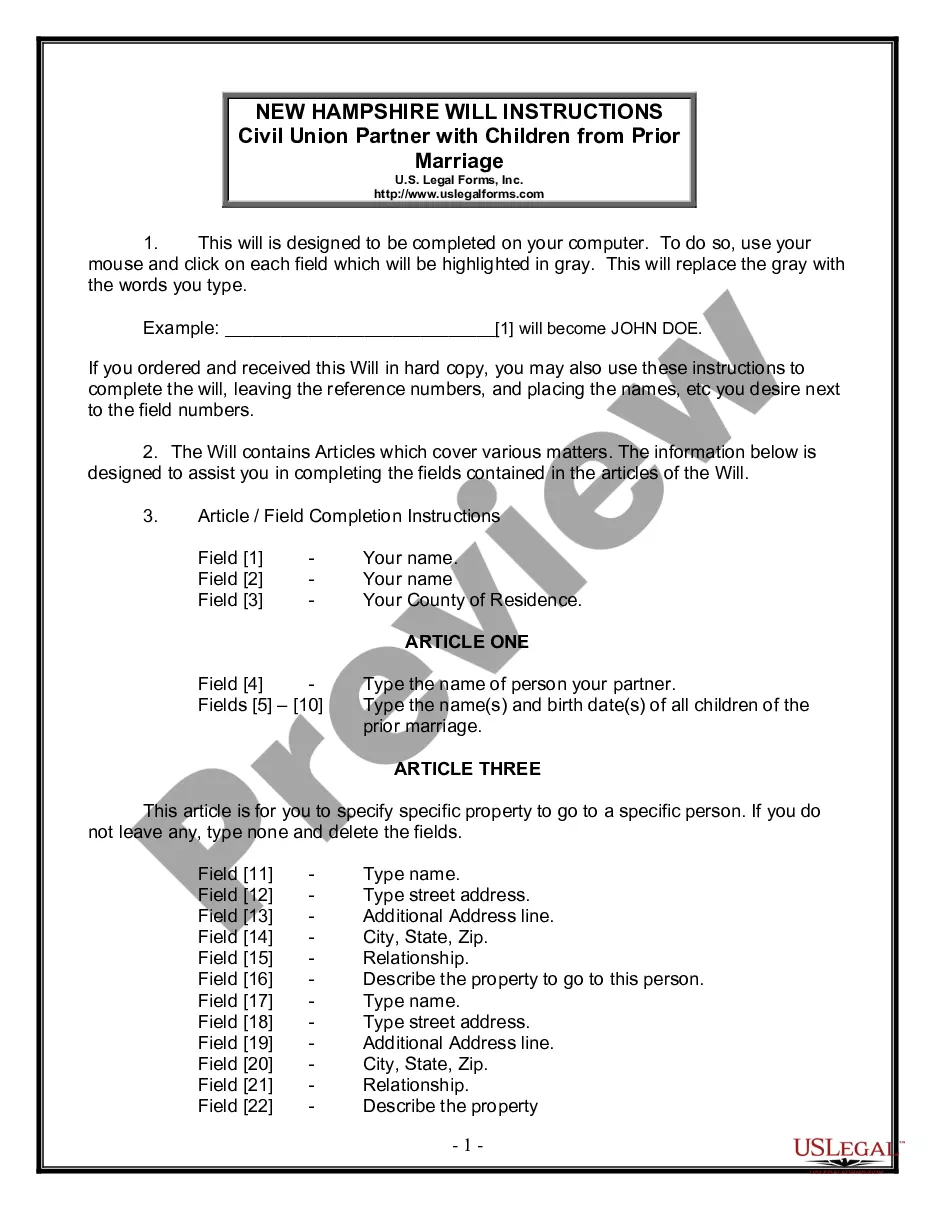
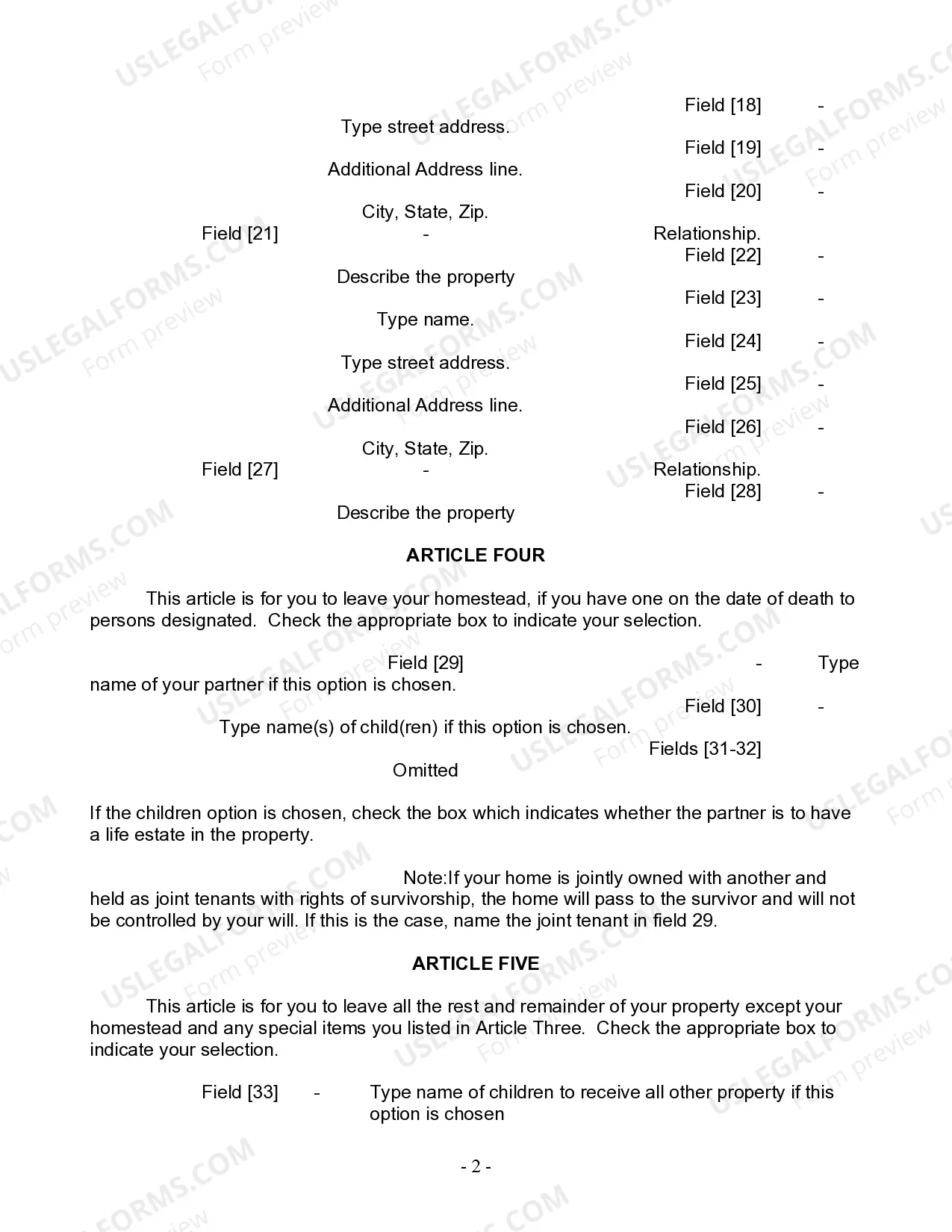
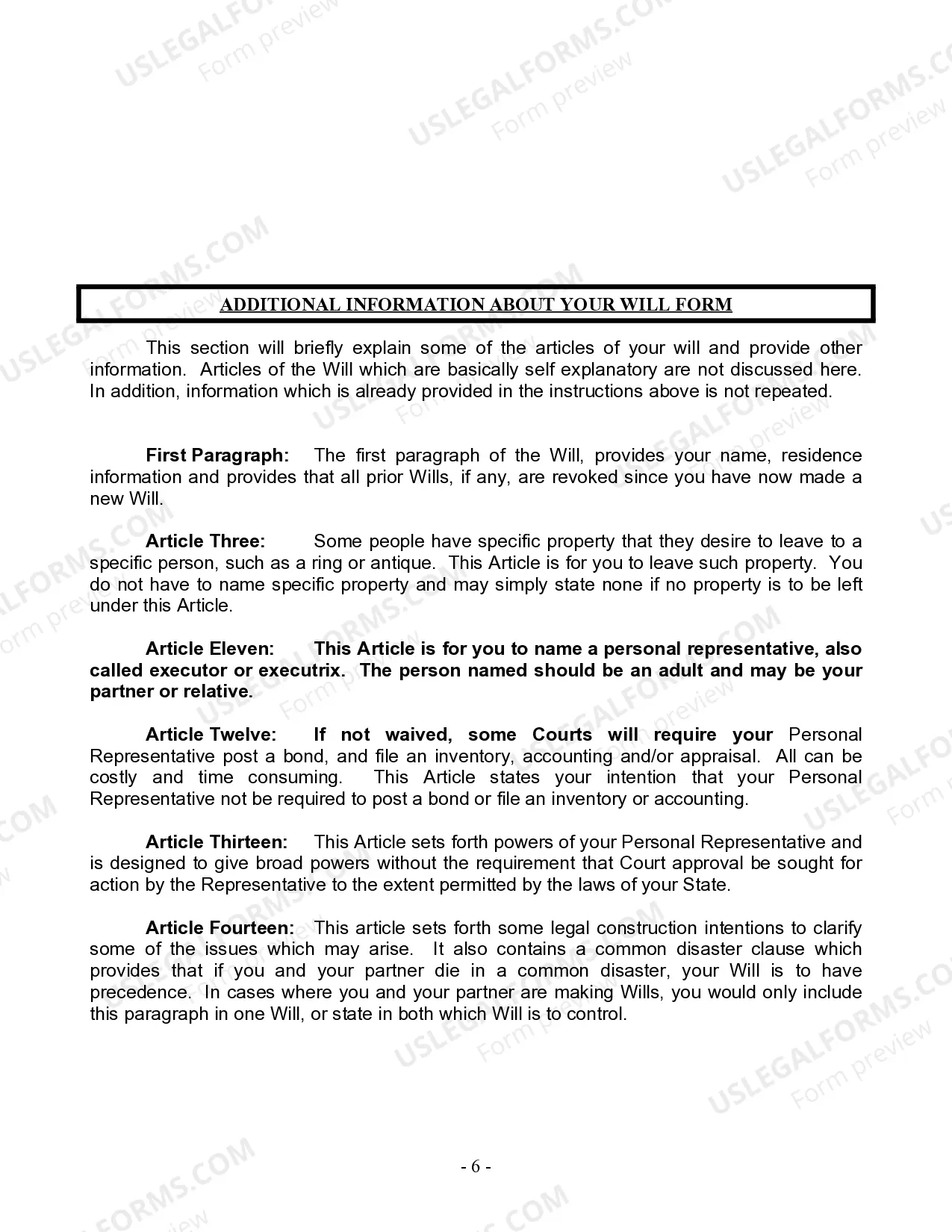
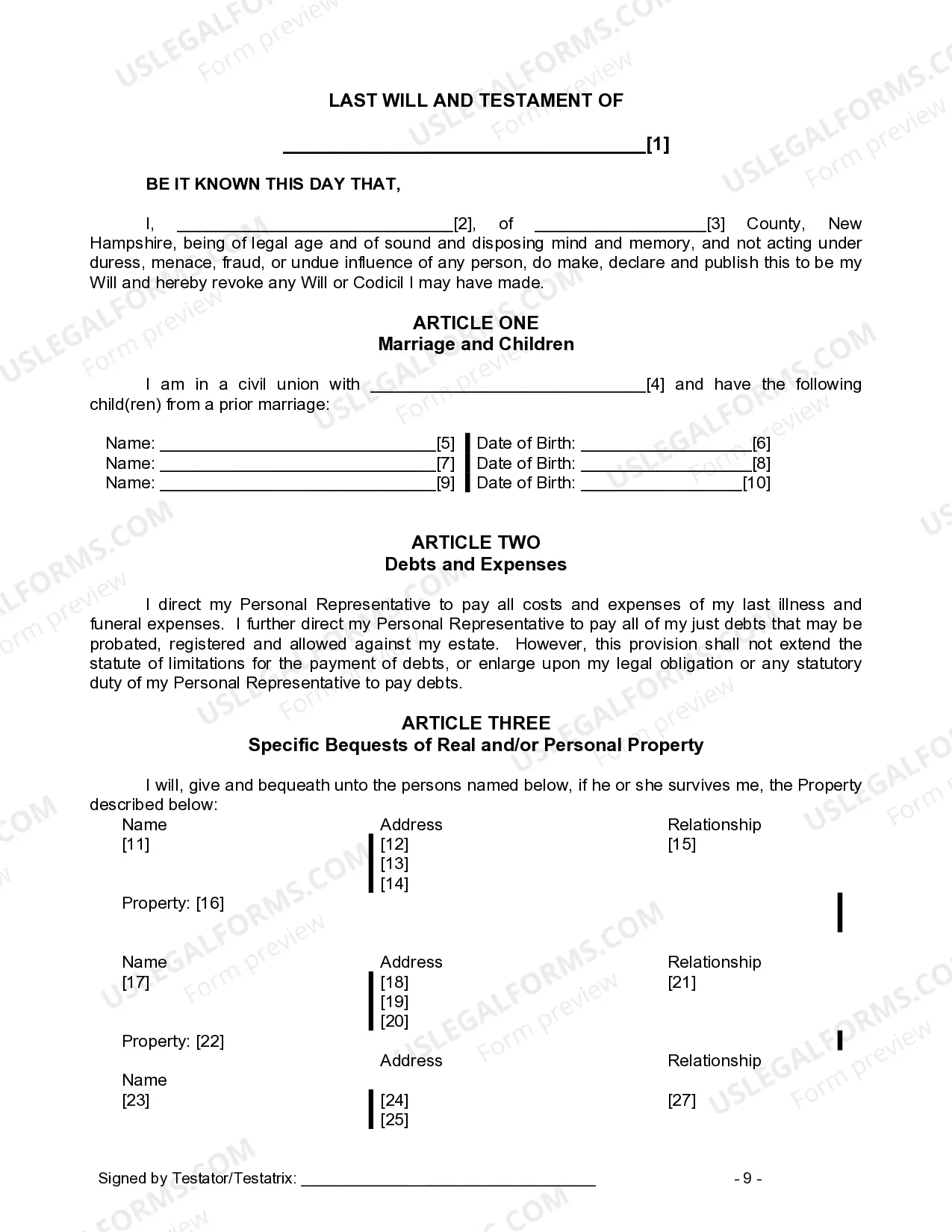
The Last Will and Testament for Civil Union Partner with Minor Children from Prior Marriage is a legal document that outlines how your assets will be distributed after your death, particularly when you are in a civil union and have minor children from a previous marriage. This form is specifically designed to address the complexities of joint relationships and prior family obligations, ensuring that both your partner and childrenâs interests are considered. Unlike a standard Will, this form includes provisions for appointing guardians and trustees for any minor children, making it a critical tool for those in blended family situations.
Form components explained
- Appointment of a personal representative or executor to manage your estate.
- Designation of beneficiaries, including your civil union partner and minor children from previous relationships.
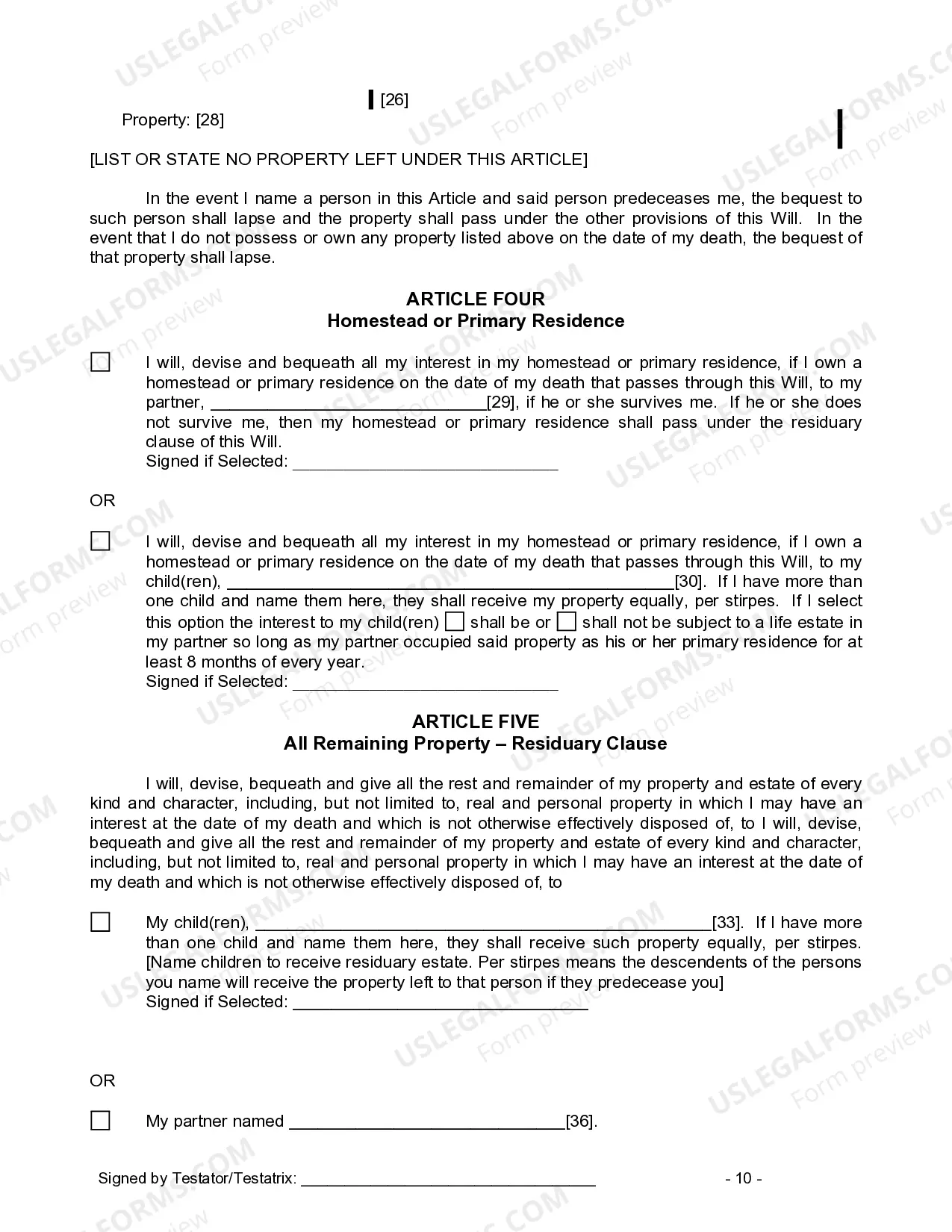
- Specific bequests of property or assets to designated individuals.
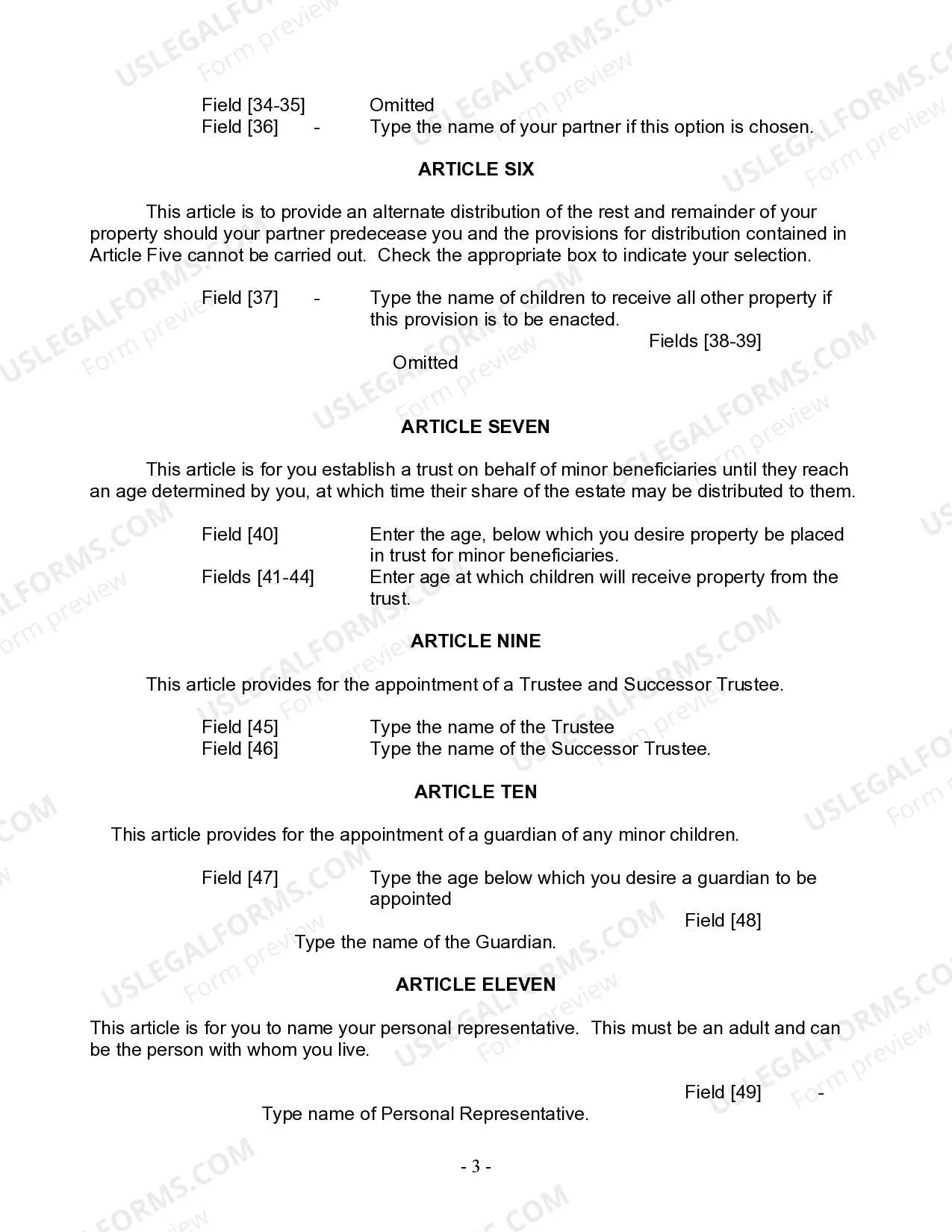
- Establishment of trusts for minor beneficiaries to ensure their financial well-being until they reach a certain age.
- Appointment of a guardian for minor children in the event of the parent's passing.
- Legal clauses to revoke previous Wills and clarify the interpretation of the document.






When to use this document
This form is necessary when a person in a civil union has minor children from a prior marriage, and they wish to ensure clear distribution of their assets upon death. It is particularly important to use this form if you want to avoid intestate succession laws, which can lead to unintended distribution of property. Additionally, if you have specific wishes about who should care for your children or how their inheritance should be managed, this Will serves to establish those directives legally.
Who needs this form
- Individuals in a civil union with minor children from a previous marriage.
- Parents wanting to ensure both their partner and children are provided for after their passing.
- Anyone seeking to create a legally binding document that outlines personal wishes regarding asset distribution and guardianship.
- Persons looking to address complicated family structures and ensure clarity in estate management.
Completing this form step by step
- Begin by entering your full name and county of residence at the beginning of the document.
- Identify and list your civil union partnerâs name and your minor childrenâs names and birth dates.
- Specify any particular assets you wish to leave to designated beneficiaries in the appropriate sections of the Will.
- Determine who will serve as the guardian for your minor children and the trustee for their assets, if applicable.
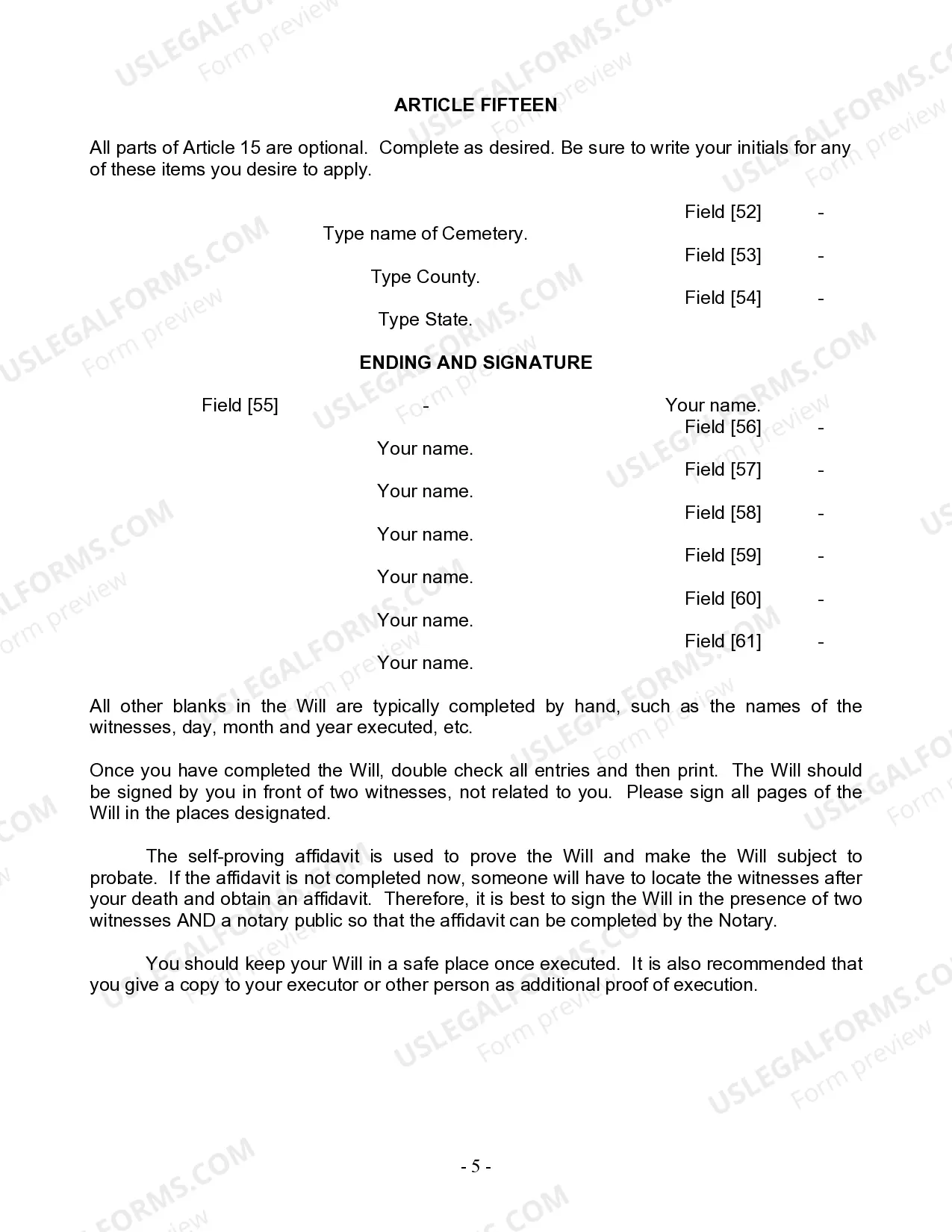
- Review all entries for accuracy and completeness, then print the document for signing.
- Ensure you sign the Will in front of two witnesses who are not beneficiaries, and consider having the Will notarized.
Notarization requirements for this form
Yes, this form must be notarized to be legally valid if it includes a self-proving affidavit. This adds an extra layer of authenticity to your Will and can simplify the probate process. US Legal Forms offers integrated online notarization services for your convenience, allowing you to complete the notarization without leaving home.
Get your form ready online
Our built-in tools help you complete, sign, share, and store your documents in one place.
Make edits, fill in missing information, and update formatting in US Legal Forms—just like you would in MS Word.
Download a copy, print it, send it by email, or mail it via USPS—whatever works best for your next step.
Sign and collect signatures with our SignNow integration. Send to multiple recipients, set reminders, and more. Go Premium to unlock E-Sign.
If this form requires notarization, complete it online through a secure video call—no need to meet a notary in person or wait for an appointment.
We protect your documents and personal data by following strict security and privacy standards.

Make edits, fill in missing information, and update formatting in US Legal Forms—just like you would in MS Word.

Download a copy, print it, send it by email, or mail it via USPS—whatever works best for your next step.

Sign and collect signatures with our SignNow integration. Send to multiple recipients, set reminders, and more. Go Premium to unlock E-Sign.

If this form requires notarization, complete it online through a secure video call—no need to meet a notary in person or wait for an appointment.

We protect your documents and personal data by following strict security and privacy standards.
Mistakes to watch out for
- Failing to have the Will signed in front of the required witnesses and/or a notary.
- Not updating the Will after significant life changes such as marriage, divorce, or the birth of children.
- Leaving out important details, such as specific bequests or the appointment of guardians and trustees.
- Assuming previous Wills automatically revoke all prior documents without explicitly stating so.
Why use this form online
- The form can be completed at your convenience from home, providing flexibility in crafting your estate plan.
- It allows for easy customization to address your unique family dynamics and wishes.
- Digital access ensures your document is kept secure, with options for easy updates.
- Using online forms can simplify unnecessarily complex legal processes and save on potential attorney fees.
Summary of main points
- The Last Will and Testament is vital for those in a civil union with minor children from a previous relationship.
- It ensures your estate is managed according to your wishes, providing for your loved ones.
- Proper execution, including witness signatures and notarization, is essential for the Will's validity.
- Utilizing an online form allows easy customization and ensures adherence to legal standards.
Looking for another form?

Form popularity
FAQ
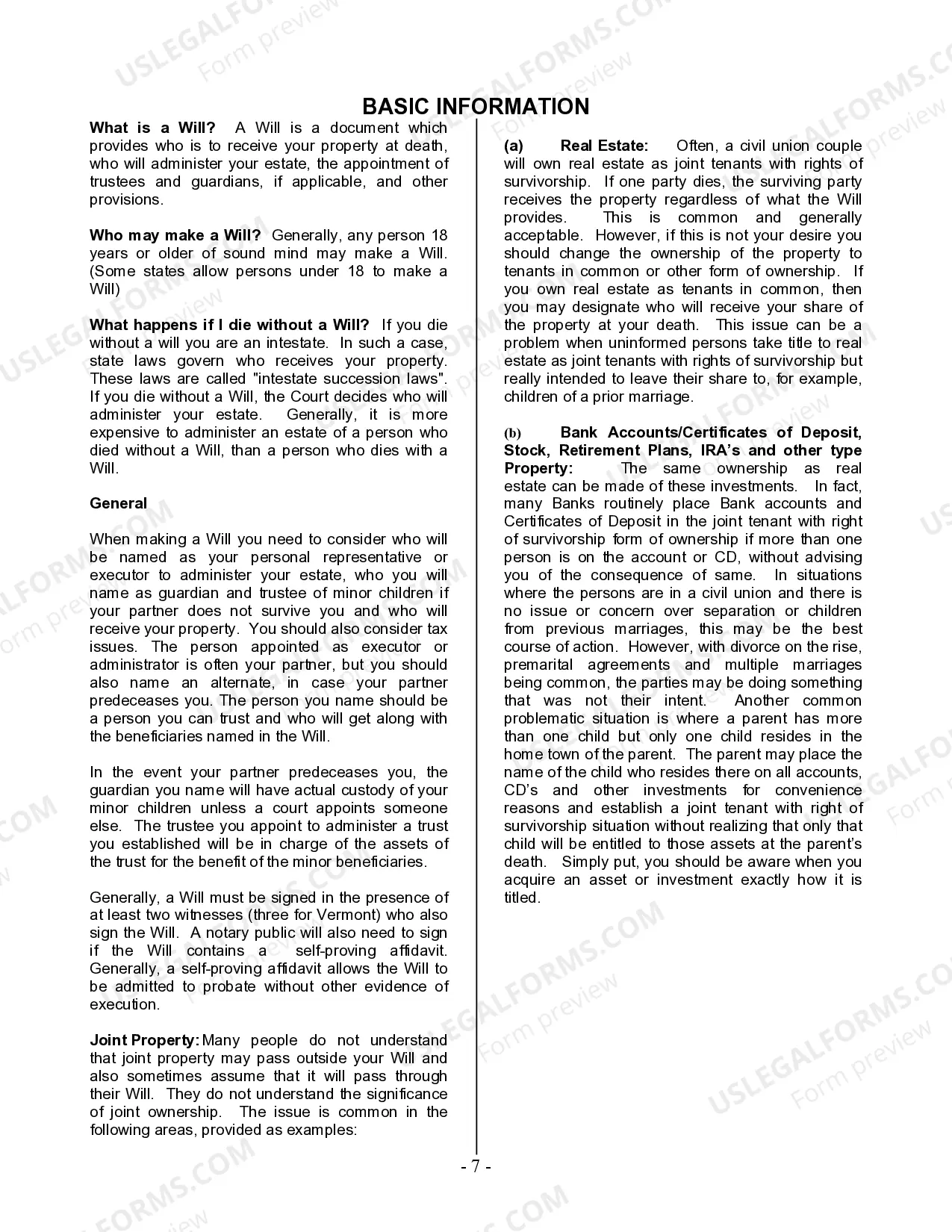
Property in a living trust. One of the ways to avoid probate is to set up a living trust. Retirement plan proceeds, including money from a pension, IRA, or 401(k) Stocks and bonds held in beneficiary. Proceeds from a payable-on-death bank account.
Include personal identifying information. Include a statement about your age and mental status. Designate an executor. Decide who will take care of your children. Choose your beneficiaries. List your funeral details. Sign and date your Last Will and Testament.
Under the new California law, anyone can enter into a domestic partnership except:People who are already married or in a domestic partnership with someone else (people who are in a domestic partnership with each other can later get married without dissolving the partnership)
A domestic partner is a term that refers to an unmarried partner regardless of gender."A domestic partnership is very similar to marriage. It can apply to couples who are not married but live together. Domestic partnerships provide some legal benefits that married couples enjoy.
While you can write your own last will and testament, it's very important to follow your state's requirements. If the court finds it invalid, someone other than your chosen executor could handle your estate and distribute your assets differently than you intended.
Create the initial document. Start by titling the document Last Will and Testament" and including your full legal name and address. Designate an executor. Appoint a guardian. Name the beneficiaries. Designate the assets. Ask witnesses to sign your will. Store your will in a safe place.
Opposite-sex domestic partners in California will have all the same state-granted legal rights as same-sex domestic partners. Examples include: Either person being able to take their domestic partner's last name, or a name combining the two individuals' last names.
The definition of a domestic partnership is when two people live together and are involved in an interpersonal relationship sharing their domestic life as if married, however they are not legally married. Domestic partner (DP) is a term that refers to an unmarried partner of the same or opposite sex.
A civil union is a legal relationship between two people that provides legal protections to the couple only at the state level. A civil union is not a marriage, though. Civil unions do not provide federal protections, benefits, or responsibilities to couples, and a civil union may not be recognized by all states.