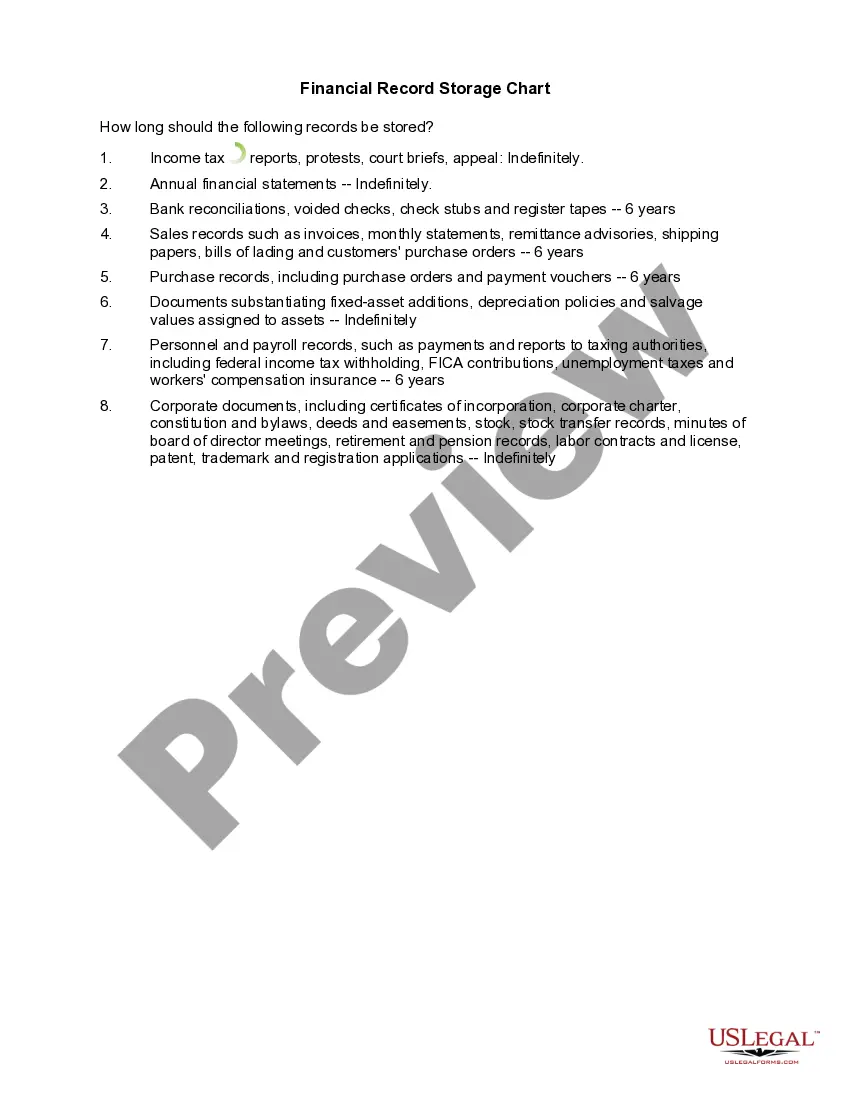
New Hampshire Financial Record Storage Chart
Description
Get your form ready online
Our built-in tools help you complete, sign, share, and store your documents in one place.
Make edits, fill in missing information, and update formatting in US Legal Forms—just like you would in MS Word.
Download a copy, print it, send it by email, or mail it via USPS—whatever works best for your next step.
Sign and collect signatures with our SignNow integration. Send to multiple recipients, set reminders, and more. Go Premium to unlock E-Sign.
If this form requires notarization, complete it online through a secure video call—no need to meet a notary in person or wait for an appointment.
We protect your documents and personal data by following strict security and privacy standards.

Make edits, fill in missing information, and update formatting in US Legal Forms—just like you would in MS Word.

Download a copy, print it, send it by email, or mail it via USPS—whatever works best for your next step.

Sign and collect signatures with our SignNow integration. Send to multiple recipients, set reminders, and more. Go Premium to unlock E-Sign.

If this form requires notarization, complete it online through a secure video call—no need to meet a notary in person or wait for an appointment.

We protect your documents and personal data by following strict security and privacy standards.
Looking for another form?




How to fill out Financial Record Storage Chart?
Have you ever been in a location where you need documents for business or specific purposes almost daily.
There are numerous legal document templates available online, but finding ones you can rely on is challenging.
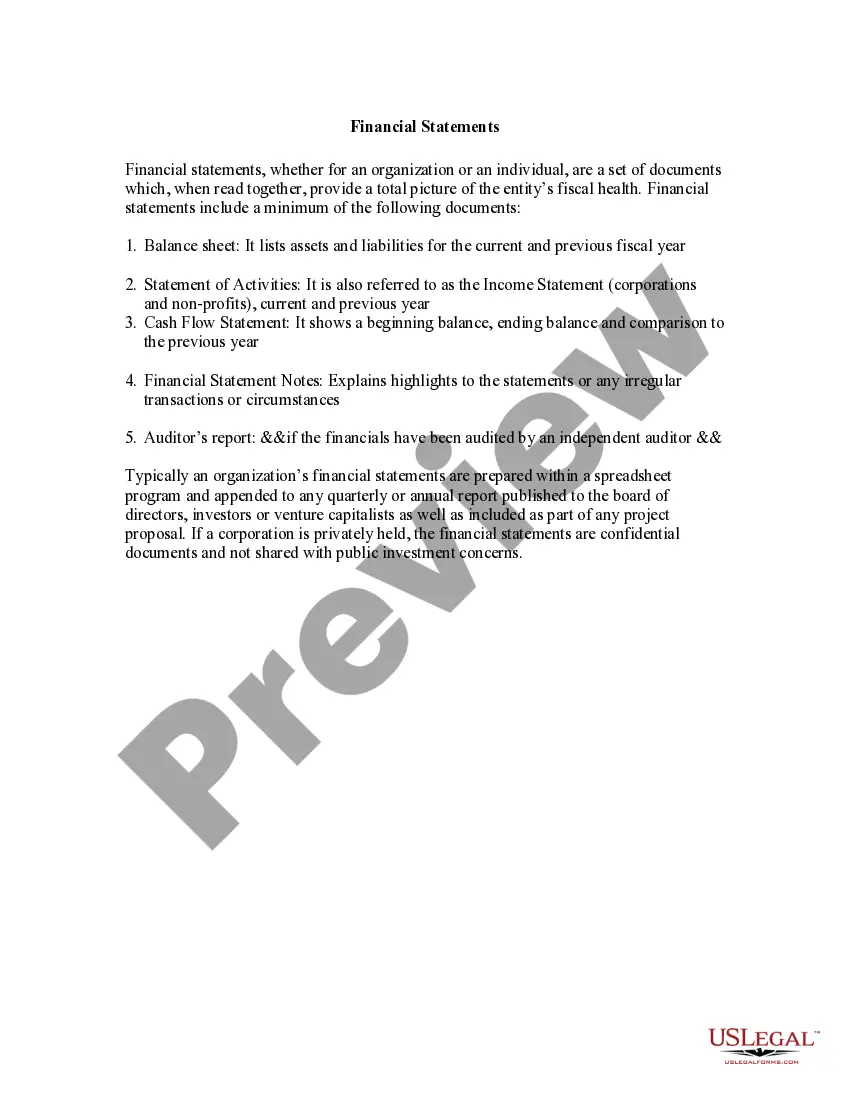
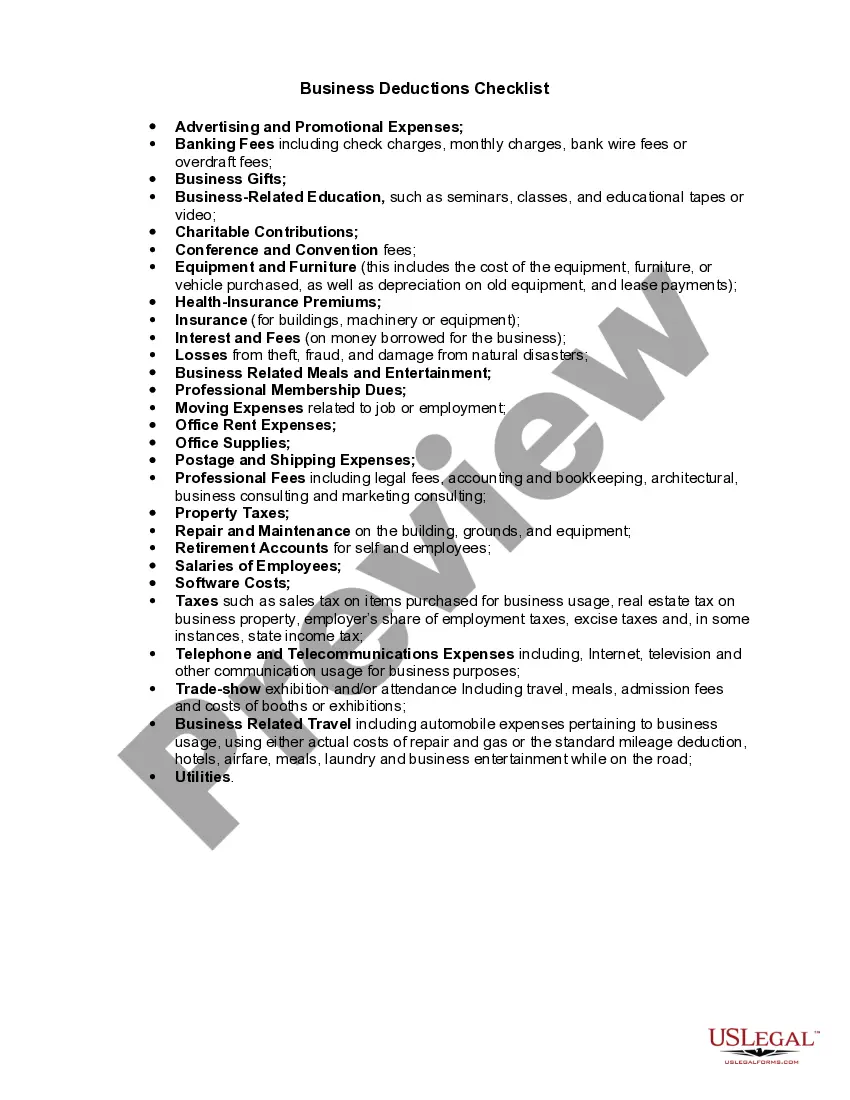
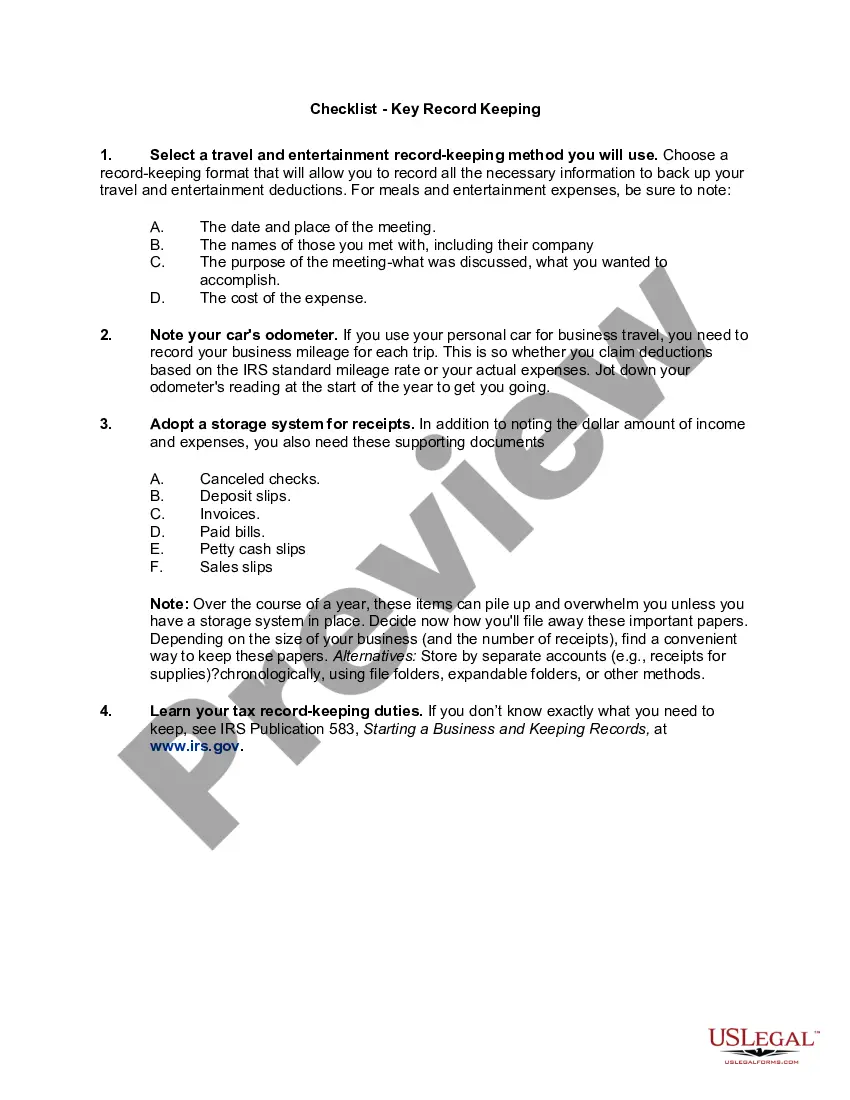
US Legal Forms offers thousands of form templates, including the New Hampshire Financial Record Storage Chart, designed to meet federal and state regulations.
Once you locate the correct form, click Buy now.
Choose the pricing plan you want, fill in the necessary information to create your account, and complete the purchase using your PayPal or Visa/MasterCard.
- If you are already familiar with the US Legal Forms website and have an account, simply Log In.
- Then, you can download the New Hampshire Financial Record Storage Chart template.
- If you don’t have an account and wish to start using US Legal Forms, follow these steps.
- Find the form you need and ensure it is for the correct city/county.
- Use the Review option to evaluate the document.
- Check the description to confirm you have selected the right form.
- If the form does not meet your needs, utilize the Search field to find the form that matches your requirements.
Form popularity
FAQ
Records that should be maintained for seven years include all forms of tax documentation, business contracts, and significant invoices. This timeframe ensures that you are covered in case of reviews or audits. Leveraging the New Hampshire Financial Record Storage Chart can empower you to manage your records effectively. A solid retention policy fosters trust and transparency in your financial practices.
You should keep records like financial statements, general ledgers, and tax documents for seven years. This retention period is crucial for compliance with both federal and state regulations. Consulting the New Hampshire Financial Record Storage Chart will help you categorize your documents appropriately. Retaining these records safeguards against potential financial discrepancies.
Records such as tax returns, accounts receivable reports, and payroll records generally should be retained for three to seven years. This duration allows businesses to maintain necessary documentation for compliance and financial audits. The New Hampshire Financial Record Storage Chart offers a detailed overview of specific records and their respective retention times. Managing these records effectively improves overall financial health.
In compliance with GAAP, you should keep financial records for at least seven years. This retention period allows for the review and audit of financial statements. For tailored advice, the New Hampshire Financial Record Storage Chart can provide insights into local practices. Keeping good records is essential for sound financial governance.
Financial document retention guidelines vary but generally recommend keeping records for seven years. This includes invoices, receipts, and bank statements that support your financial activities. The New Hampshire Financial Record Storage Chart provides specific recommendations tailored to the state’s regulations. Adhering to these guidelines strengthens your financial management practices.
The Generally Accepted Accounting Principles (GAAP) suggest retaining records that impact financial reporting for at least seven years. This includes documentation that supports entries in financial statements. Utilizing the New Hampshire Financial Record Storage Chart can guide your retention strategies. Following GAAP helps ensure compliance and reduces the risk of financial discrepancies.
Accounts Payable (AP) records should typically be kept for at least seven years. This duration aligns with general federal guidelines. Referencing the New Hampshire Financial Record Storage Chart will help you understand local variations or additional requirements. Keeping these records helps in managing finances efficiently and preparing for audits.
In New Hampshire, businesses are generally responsible for storing their own financial records. This responsibility often falls on the business owner or financial manager. The New Hampshire Financial Record Storage Chart suggests best practices for maintaining these records securely and accessibly. Proper storage ensures compliance and facilitates easy retrieval when needed.
Yes, retaining records for a minimum of seven years is often recommended, especially for tax-related documents. The New Hampshire Financial Record Storage Chart outlines this practice, emphasizing the importance of retaining such records in case of audits. Even if you think you might not need them, having these records can benefit you in various situations. If you find this overwhelming, consider using platforms like US Legal Forms for easy access to record-keeping guidelines.
The minimum number of years to retain records often falls between three to seven years, depending on state law and specific circumstances. According to the New Hampshire Financial Record Storage Chart, you should keep records related to taxes for at least seven years. This helps safeguard you against possible audits by tax authorities. Utilizing the storage chart ensures that your compliance is both informed and effective.