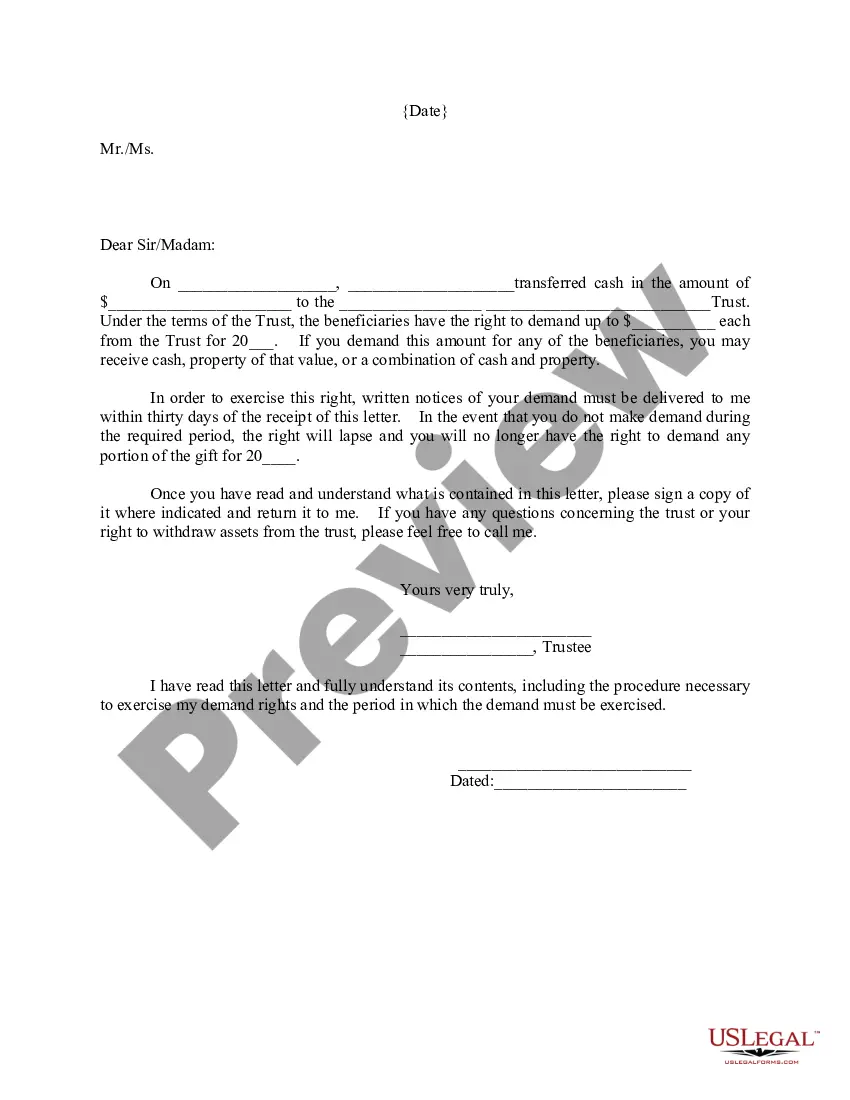
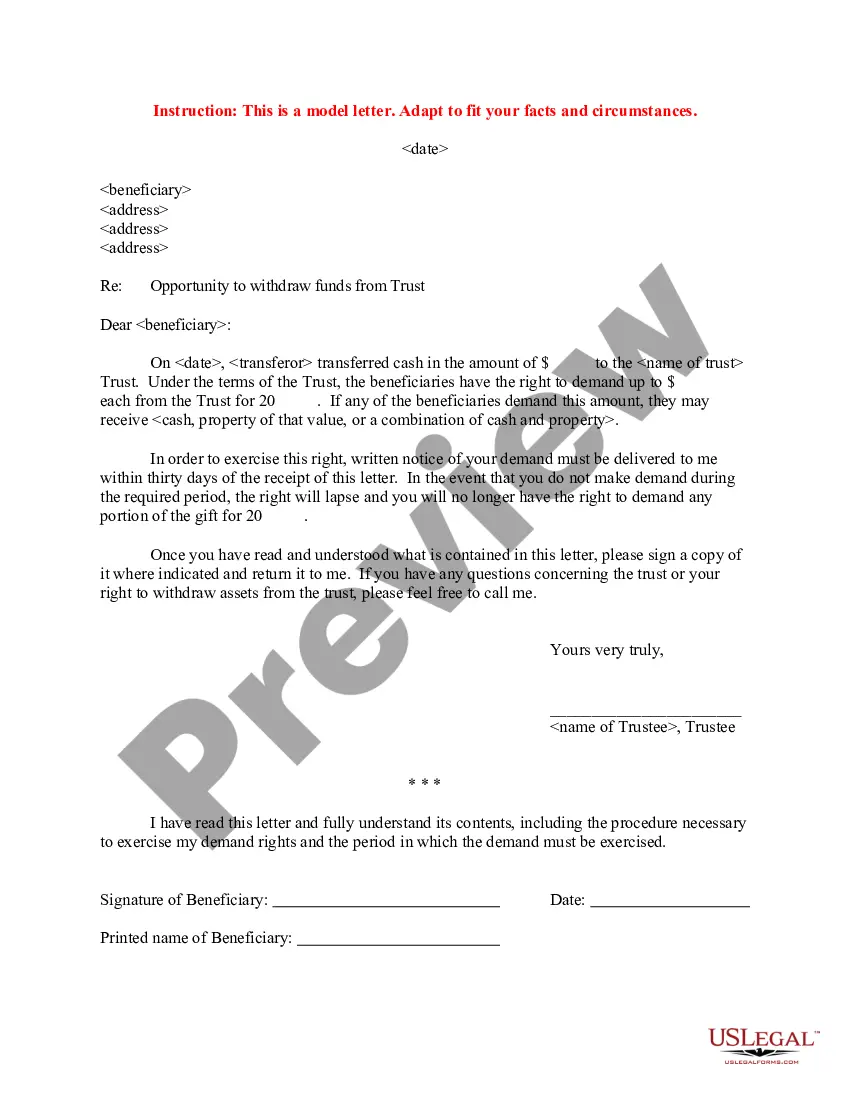
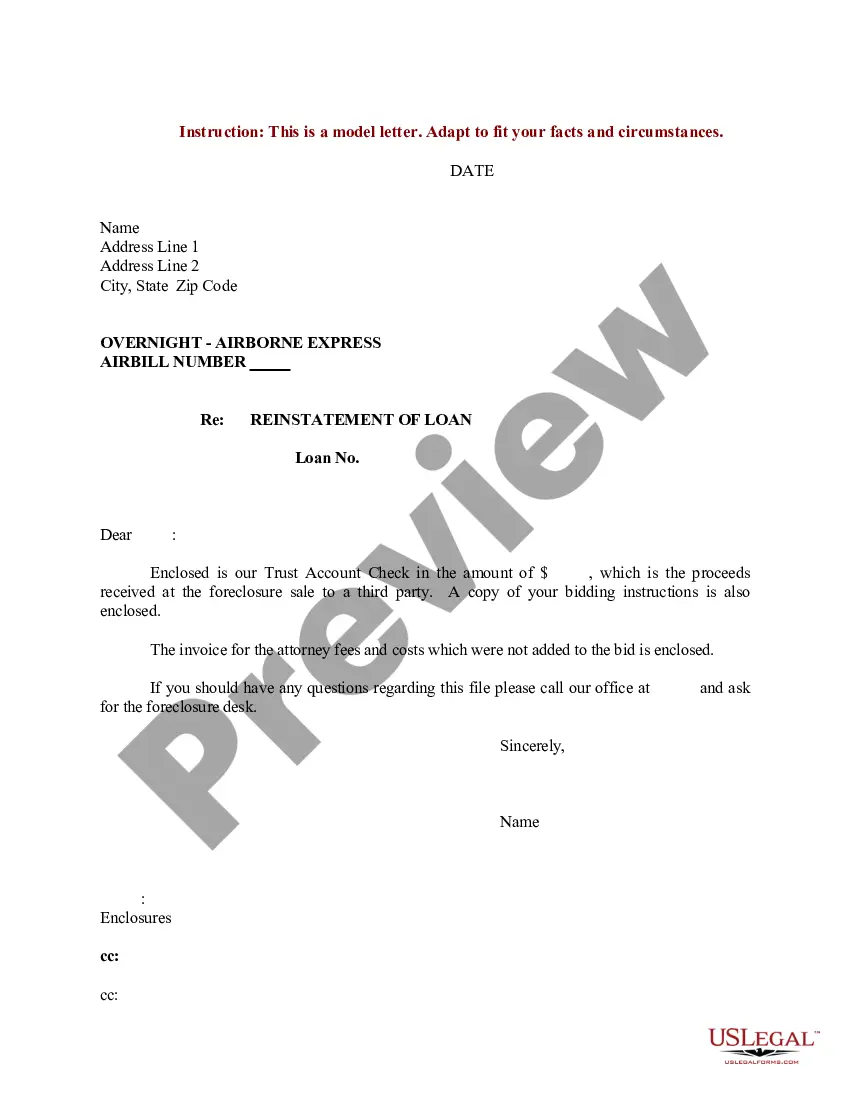
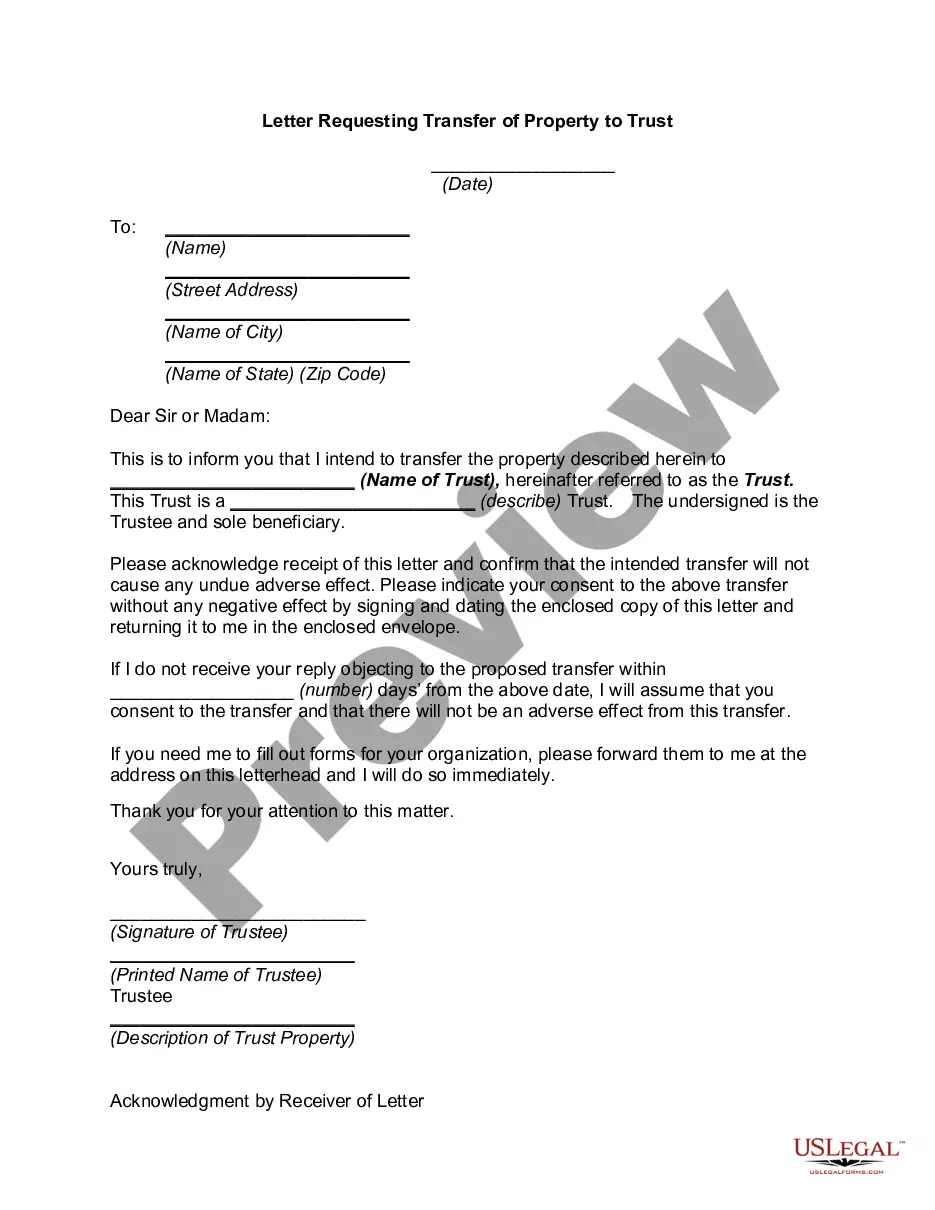
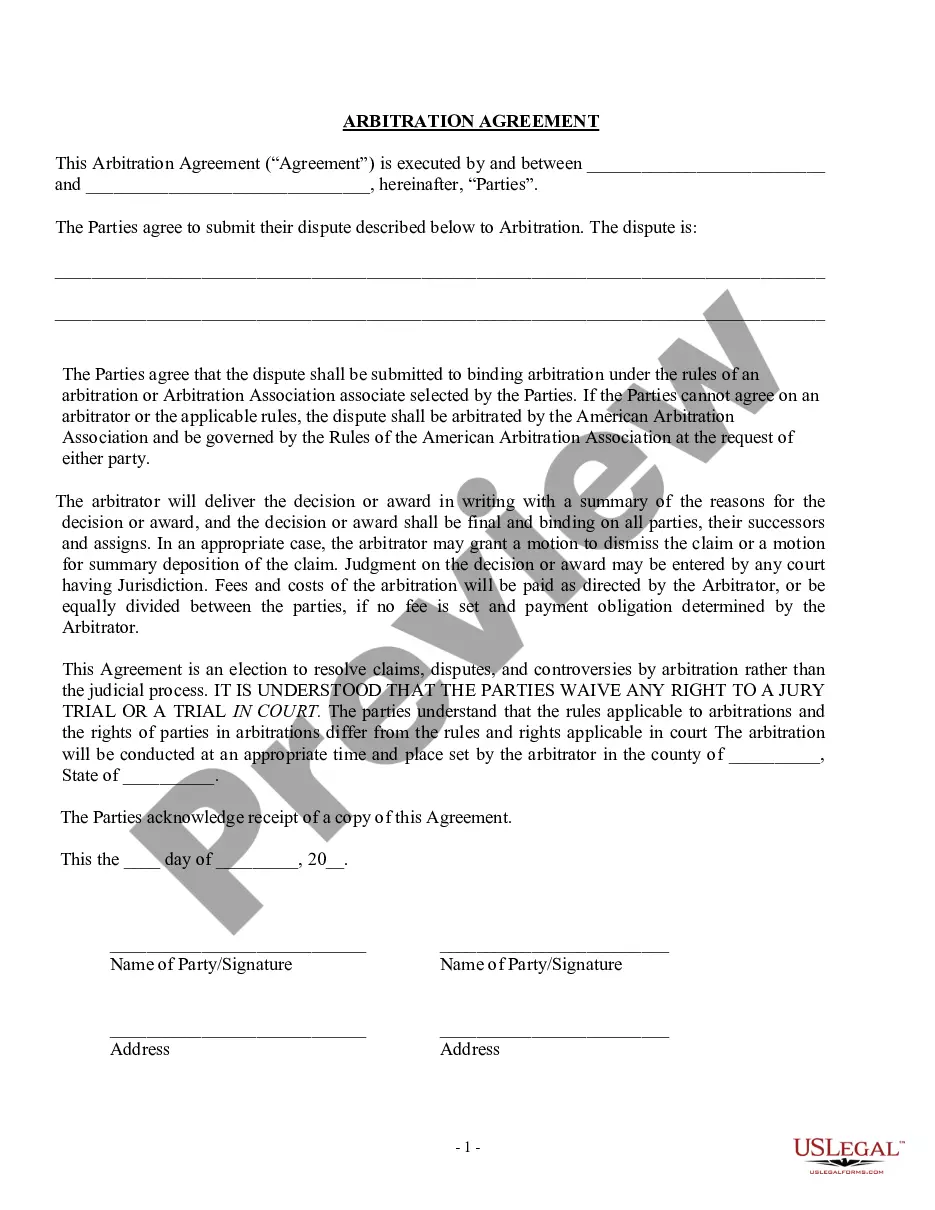
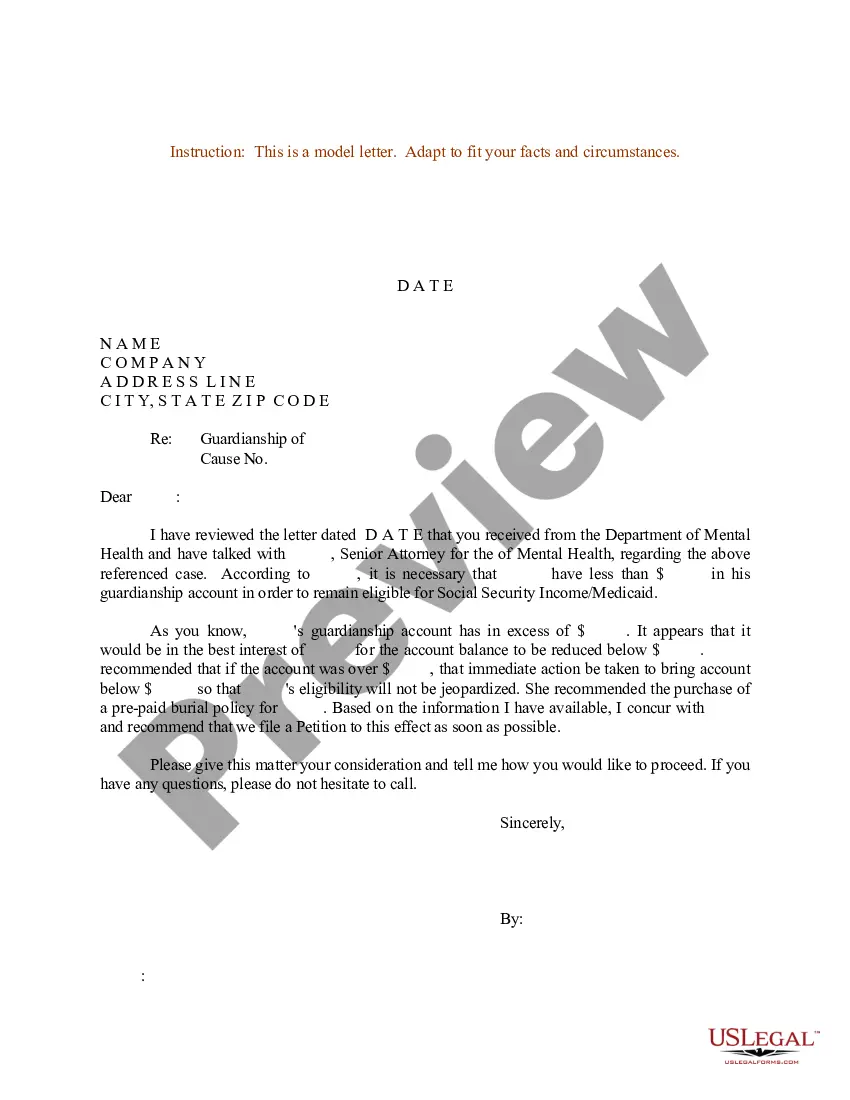
Trustee informs the trustor that he/she has the right to demand a certain amount of funds from the trust during the year. If the trustor demands a withdrawal for any of the beneficiaries, he/she may receive cash, property of that value, or a combination of cash and property.
New Hampshire Letter regarding trust money
Instant download
Description
Get your form ready online
Our built-in tools help you complete, sign, share, and store your documents in one place.
Built-in online Word editor
Make edits, fill in missing information, and update formatting in US Legal Forms—just like you would in MS Word.
Export easily
Download a copy, print it, send it by email, or mail it via USPS—whatever works best for your next step.
E-sign your document
Sign and collect signatures with our SignNow integration. Send to multiple recipients, set reminders, and more. Go Premium to unlock E-Sign.
Notarize online 24/7
If this form requires notarization, complete it online through a secure video call—no need to meet a notary in person or wait for an appointment.
Store your document securely
We protect your documents and personal data by following strict security and privacy standards.

Make edits, fill in missing information, and update formatting in US Legal Forms—just like you would in MS Word.

Download a copy, print it, send it by email, or mail it via USPS—whatever works best for your next step.

Sign and collect signatures with our SignNow integration. Send to multiple recipients, set reminders, and more. Go Premium to unlock E-Sign.

If this form requires notarization, complete it online through a secure video call—no need to meet a notary in person or wait for an appointment.

We protect your documents and personal data by following strict security and privacy standards.
Looking for another form?



How to fill out Letter Regarding Trust Money?
If you wish to be thorough, acquire, or create official document templates, utilize US Legal Forms, the largest repository of legal forms accessible online.
Take advantage of the site's straightforward and user-friendly search feature to locate the documents you require.
Various templates for business and personal needs are organized by categories and states, or keywords.
Step 4. When you have found the form you need, click the Acquire now button. Select the pricing plan you prefer and enter your details to create an account.
Step 5. Complete the transaction. You can use your credit card or PayPal account to finalize the purchase. Step 6. Choose the format of the legal form and download it to your device. Step 7. Complete, modify, and print or sign the New Hampshire Letter concerning trust funds. Every legal document template you purchase is yours indefinitely. You will have access to every form you downloaded in your account. Click on the My documents section and select a form to print or download again. Be proactive and download, then print the New Hampshire Letter concerning trust funds with US Legal Forms. There are numerous professional and state-specific forms available for your business or personal needs.
- Utilize US Legal Forms to find the New Hampshire Letter concerning trust funds in just a few clicks.
- If you are already a US Legal Forms user, sign in to your account and click the Obtain button to access the New Hampshire Letter concerning trust funds.
- You can also access forms you have previously downloaded in the My documents tab of your account.
- If you are using US Legal Forms for the first time, follow the instructions below.
- Step 1. Ensure you have chosen the form for the correct city/state.
- Step 2. Use the Preview option to review the form's content. Don't forget to read the description.
- Step 3. If you are not satisfied with the form, use the Lookup field at the top of the screen to find alternative versions of the legal form template.
Form popularity
FAQ
To file a trust in New Hampshire, you generally do not need to submit the trust document to a court unless a trust dispute arises. However, you should keep the trust document in a safe place and inform your trustee and beneficiaries about its existence. Utilizing tools like US Legal Forms can simplify this process by providing valuable resources and templates specifically designed for New Hampshire trusts.
Generally, a trust is considered to be a separate individual for tax purposes, meaning that any income earned on trust assets is taxed as if the income were earned by a person who is separate from the settlor, trustee, or beneficiaries.
New Hampshire has no income tax on wages and salaries. However, there is a 5% tax on interest and dividends. The state also has no sales tax. Homeowners in New Hampshire pay some of the highest average effective property tax rates in the country.
A trust is a separate tax entity, but the general principles of income taxation that apply to individual taxpayers also apply to trusts. For example: Preferential capital gains rates are available to trusts. Trusts can earn tax-exempt income.
No Income or Capital Gains Tax Generally, irrevocable trusts that are administered in New Hampshire (and which are not taxed to the grantor) are not subject to state income or capital gains tax.
Chapter 564-B - UNIFORM TRUST CODE :: 2014 New Hampshire Revised Statutes :: US Codes and Statutes :: US Law :: Justia.
Trust beneficiaries must pay taxes on income and other distributions that they receive from the trust. Trust beneficiaries don't have to pay taxes on returned principal from the trust's assets. IRS forms K-1 and 1041 are required for filing tax returns that receive trust disbursements.
The trust is established through a physical document. The trustee is in charge of managing the trust and distributing the property to the trust's beneficiaries according to its instructions. You can name yourself as trustee or you can give that job to someone else.
You do not need to be from New Hampshire to benefit from these laws, as residents of all states are able to establish a New Hampshire trust. In order to take full advantage of all of New Hampshire's trust and tax laws, however, the trust needs to be administered in New Hampshire by a New Hampshire based trustee.
Living trusts do not prevent your assets from being used for Medicaid spend down. To create a living trust in New Hampshire, you sign the trust document in front of a notary public. The trust is not in effect though until you actually transfer ownership of assets to its name.