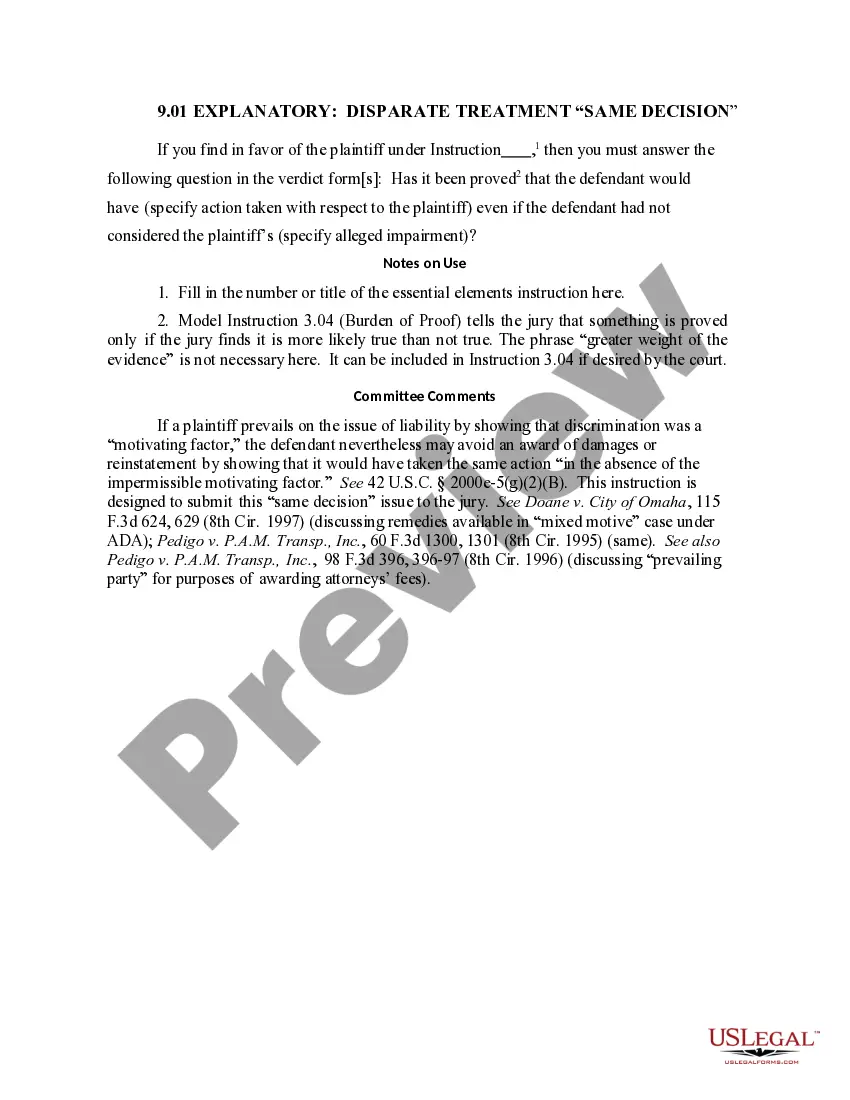
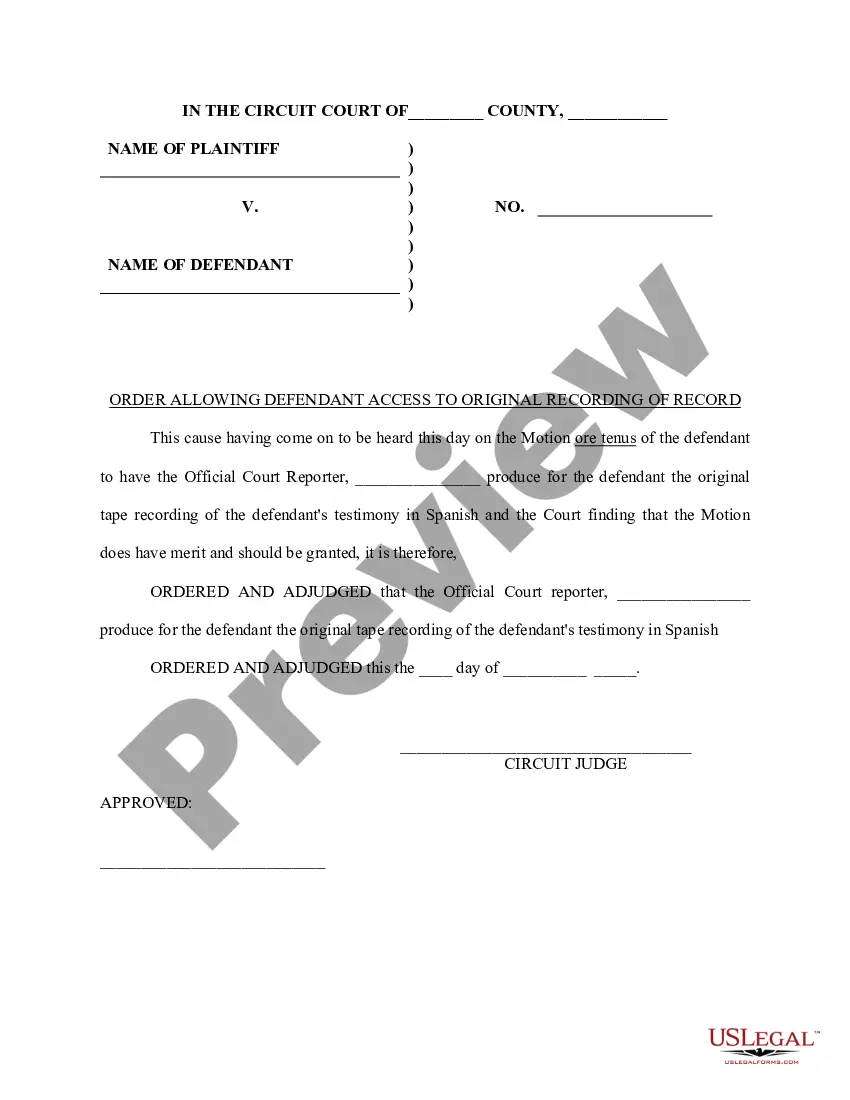
New Hampshire Order Allowing Defendant Access to Original Recording of Record
Description

How to fill out Order Allowing Defendant Access To Original Recording Of Record?
Are you presently in a position where you require documents for both professional or personal purposes almost every business day.
There are numerous legal document templates available online, but finding ones that you can rely on isn't simple.
US Legal Forms provides thousands of document templates, such as the New Hampshire Order Allowing Defendant Access to Original Recording of Record, which are designed to meet federal and state regulations.
- If you are already familiar with the US Legal Forms website and have an account, simply Log In.
- Then, you can download the New Hampshire Order Allowing Defendant Access to Original Recording of Record template.
- If you do not have an account and wish to start using US Legal Forms, follow these steps.
- Find the form you need and ensure it is for the correct city/county.
- Use the Preview button to review the form.
- Read the description to ensure you have selected the appropriate form.
- If the form isn't what you are looking for, use the Search field to find the form that suits your needs and requirements.
- When you find the correct form, click Purchase now.
- Choose the pricing plan you prefer, fill in the required information to create your account, and pay for your order with your PayPal or credit card.
- Select a convenient file format and download your copy.
- Access all the document templates you have purchased in the My documents list. You can obtain another copy of the New Hampshire Order Allowing Defendant Access to Original Recording of Record at any time if necessary. Just click the required form to download or print the document template.
- Utilize US Legal Forms, the largest collection of legal forms, to save time and avoid errors. The service provides professionally crafted legal document templates that can be used for various purposes. Create an account on US Legal Forms and start making your life a bit easier.
Form popularity
FAQ
Upon a sufficient showing of good cause, the court may at any time order that discovery required hereunder be denied, restricted, or deferred, or make such other order as is appropriate.
Probate Division | New Hampshire Judicial Branch.
The New Hampshire Judicial Branch is composed of one appellate court (the Supreme Court), two trial courts (the Circuit and Superior Courts), and an office with administrative duties to assist the courts (the Administrative Office of the Courts).
Electronic and paper court records retained at the court site can be viewed at the courthouse for free, however there is a fee of 10 cents per page to print from a public access terminal. There is a fee of 10 cents per page to access a file through PACER, with a maximum charge of $3.00 per document.
The New Hampshire Right to Know Law is a series of statutes designed to guarantee that the public has access to public records of governmental bodies. Public records are any information created, accepted, or obtained by, or on behalf of, any public body.
Electronic records can be viewed in the clerk of court's office for free, as can any paper records that have not been destroyed or transferred to the National Archives. But per-page fees are charged for printing or copying court documents in the clerk's office.
A unanimous Supreme Court, via Justice Charles Evans Hughes, held that, although the government cannot regulate the contents of speech, it can place reasonable time, place, and manner restrictions on speech for the public safety.
A presumption exists that all court records are subject to public inspection. The public right of access to specific court records must be weighed and balanced against nondisclosure interests as established by the Federal and/or New Hampshire Constitution or by statutory provision granting or requiring confidentiality.