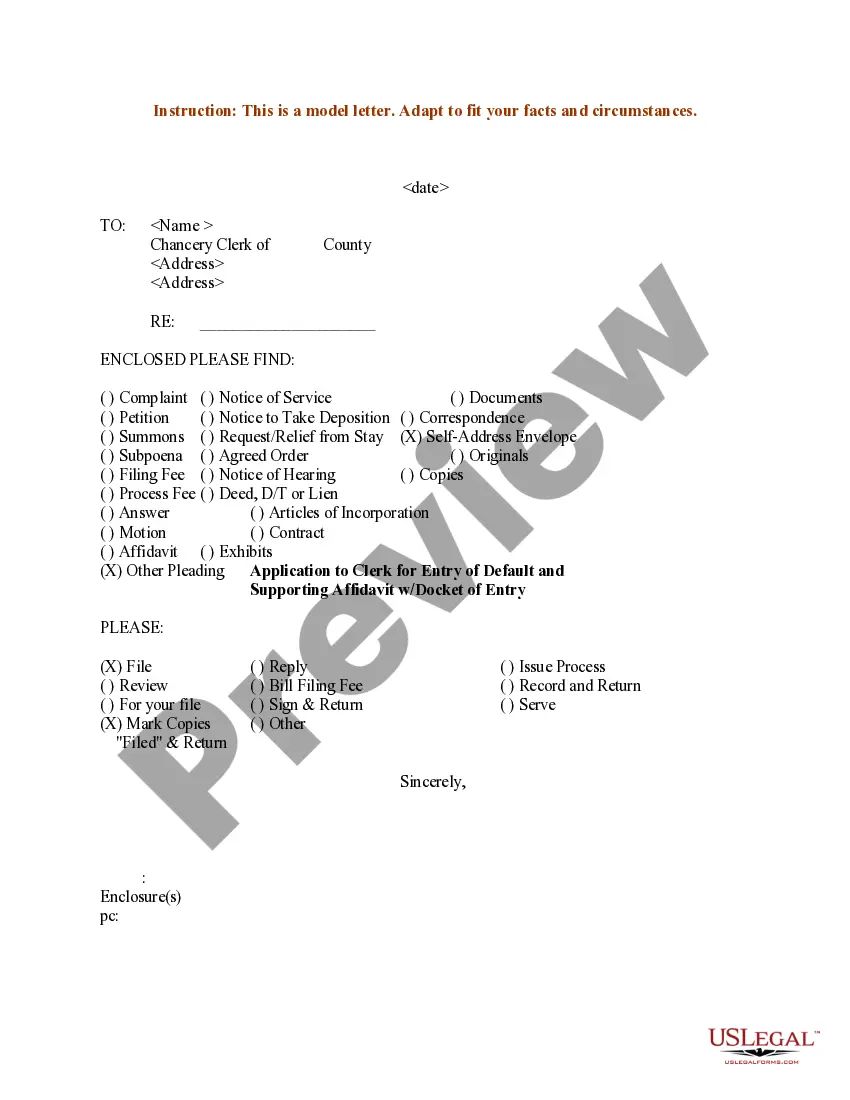
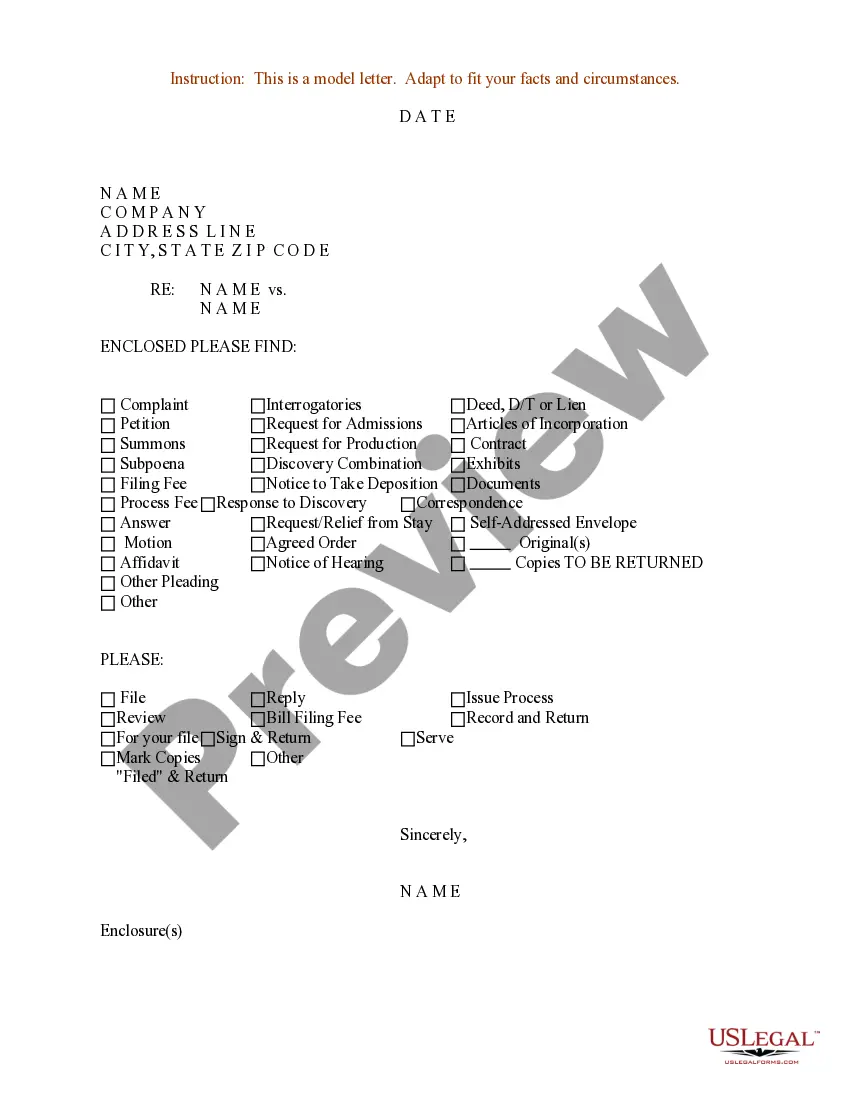
New Hampshire Sample Letter to Chancery Clerk with Checklist for Enclosed Pleadings and Filing Instructions
Description
How to fill out Sample Letter To Chancery Clerk With Checklist For Enclosed Pleadings And Filing Instructions?
You are able to spend time on the Internet trying to find the legitimate record format that suits the state and federal needs you will need. US Legal Forms gives a huge number of legitimate forms which can be reviewed by pros. You can easily acquire or print the New Hampshire Sample Letter to Chancery Clerk with Checklist for Enclosed Pleadings and Filing Instructions from our services.
If you have a US Legal Forms account, you may log in and then click the Acquire key. Next, you may total, modify, print, or indicator the New Hampshire Sample Letter to Chancery Clerk with Checklist for Enclosed Pleadings and Filing Instructions. Each and every legitimate record format you purchase is your own eternally. To get an additional version of the purchased develop, visit the My Forms tab and then click the corresponding key.
Should you use the US Legal Forms site the first time, keep to the basic guidelines under:
- First, be sure that you have chosen the best record format for that state/metropolis that you pick. See the develop information to make sure you have chosen the proper develop. If accessible, take advantage of the Preview key to appear with the record format also.
- If you wish to get an additional variation of the develop, take advantage of the Lookup area to find the format that meets your requirements and needs.
- Upon having discovered the format you desire, click Get now to continue.
- Select the rates strategy you desire, type in your qualifications, and sign up for your account on US Legal Forms.
- Comprehensive the purchase. You should use your Visa or Mastercard or PayPal account to pay for the legitimate develop.
- Select the file format of the record and acquire it in your gadget.
- Make adjustments in your record if necessary. You are able to total, modify and indicator and print New Hampshire Sample Letter to Chancery Clerk with Checklist for Enclosed Pleadings and Filing Instructions.
Acquire and print a huge number of record themes utilizing the US Legal Forms website, that provides the most important assortment of legitimate forms. Use skilled and express-certain themes to handle your organization or personal requirements.
Form popularity
FAQ
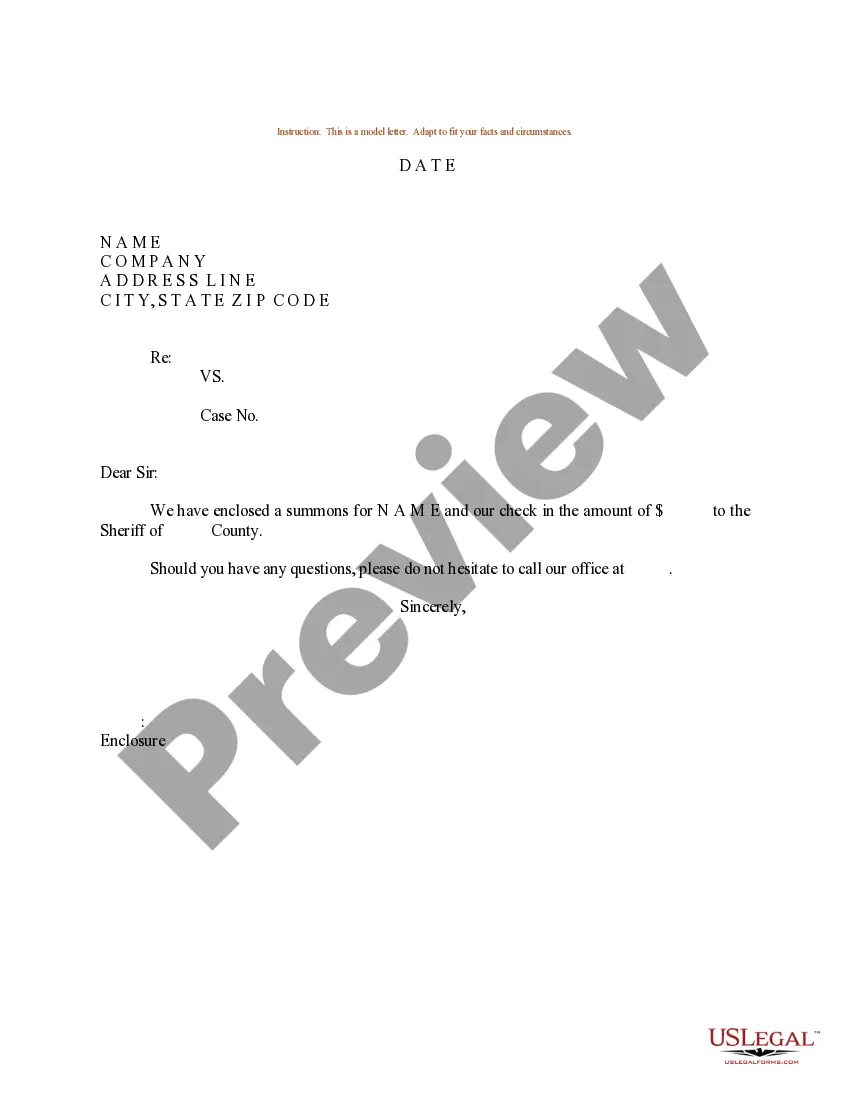
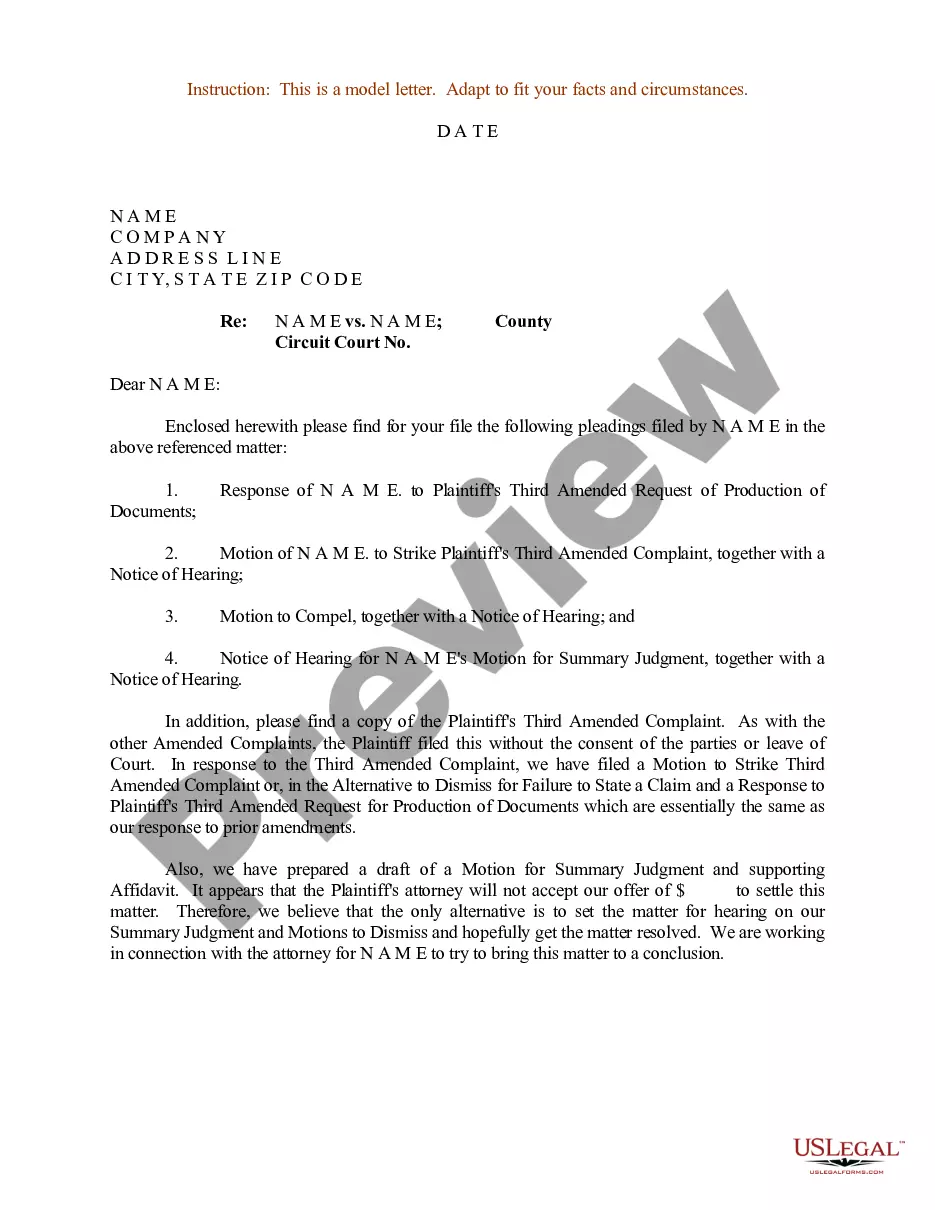
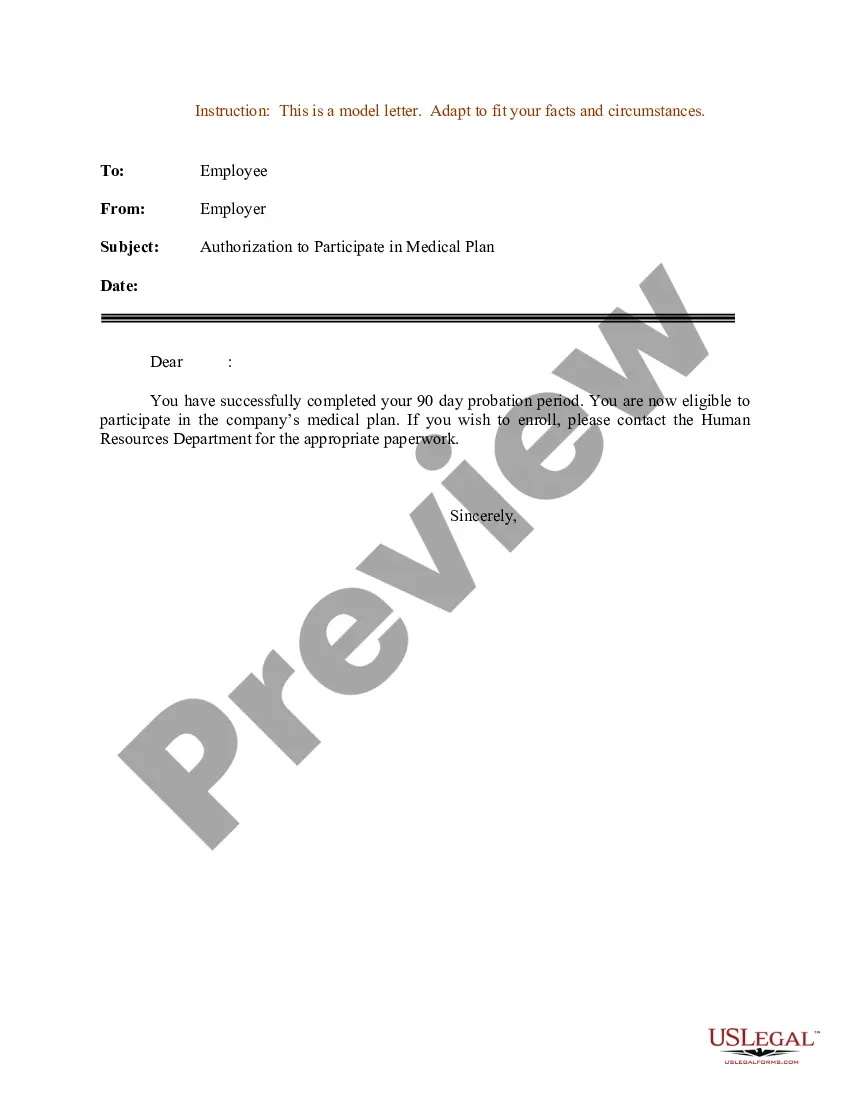
When writing a letter to the clerk of courts, format your letter with your information at the top, the date, and then the clerk's details. Make your purpose clear, and include any relevant case information. The New Hampshire Sample Letter to Chancery Clerk with Checklist for Enclosed Pleadings and Filing Instructions can guide you through this process effectively.
Writing a letter to the clerk of court involves starting with your address and the date, followed by the clerk's address. Clearly explain your purpose for writing, and be respectful in your tone. For a comprehensive approach, refer to the New Hampshire Sample Letter to Chancery Clerk with Checklist for Enclosed Pleadings and Filing Instructions to ensure your letter meets all requirements.
To properly write a letter to the court, organize your thoughts clearly and concisely. Begin with a clear subject line, and outline your request or information in a structured format. Utilize the New Hampshire Sample Letter to Chancery Clerk with Checklist for Enclosed Pleadings and Filing Instructions to ensure that you include all necessary details and follow court protocols.
Addressing a letter to the local court requires including the full name of the court, followed by the court's address. Make sure to use a formal salutation, such as 'Dear Clerk of Court.' For additional guidance, refer to the New Hampshire Sample Letter to Chancery Clerk with Checklist for Enclosed Pleadings and Filing Instructions, which provides specific examples.
In New Hampshire, papers can be served by an adult who is not involved in the case. This includes professional process servers or sheriff's deputies. Ensure that you follow the appropriate procedures as outlined in the New Hampshire Sample Letter to Chancery Clerk with Checklist for Enclosed Pleadings and Filing Instructions to avoid delays.
To write a letter to the local court, start with your contact information at the top. Include the date, the court's name, and address below your information. Clearly state the purpose of your letter, and if you are submitting documents, reference the New Hampshire Sample Letter to Chancery Clerk with Checklist for Enclosed Pleadings and Filing Instructions.
(a) An Answer or other responsive pleading shall be filed with the court within 30 days after the person filing said pleading has been served with the pleading to which the Answer or response is made.
Motions -- General. (a) A request for court order must be made by motion which must (1) be in writing unless made during a hearing or trial, (2) state with particularity the grounds for seeking the order, and (3) state the relief sought.
Rule 19 contemplates the transfer of whole cases, or of particular proceedings in cases, even in the absence of a related pending case or proceeding in the county to which transfer is sought.
Joinder of Offenses and Defendants. (C) Are alleged to have occurred during separate criminal episodes, but nonetheless, are logically and factually connected in a manner that does not solely demonstrate that the accused has a propensity to engage in criminal conduct. (2) Joinder of Related Offenses for Trial.