New Hampshire Minutes for Organizational Meeting
Overview of this form
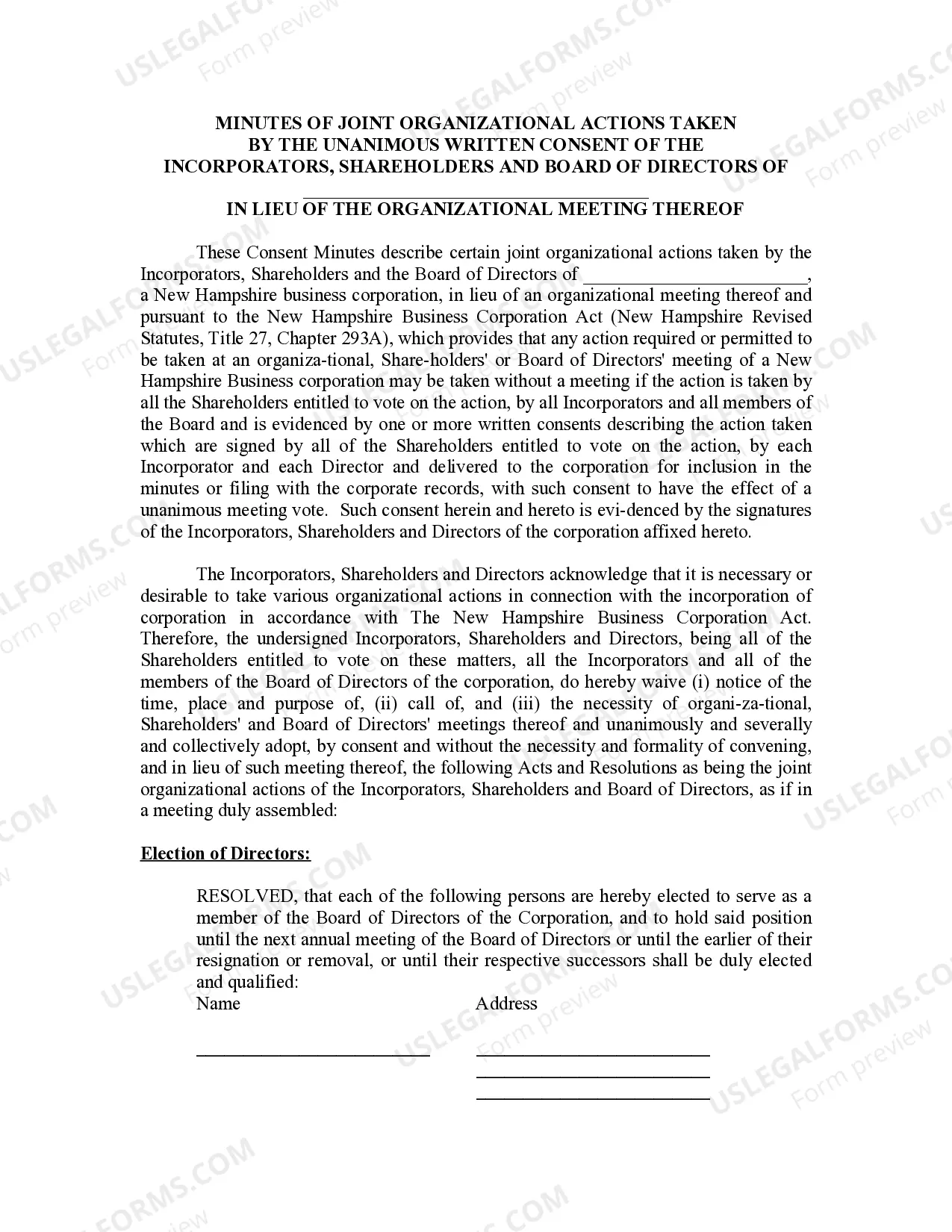
The Minutes for Organizational Meeting form is a legal document used to record various actions taken by the incorporators, shareholders, and Board of Directors of a New Hampshire corporation when an actual meeting is not feasible. This form allows for important organizational decisions to be documented officially and is in compliance with the New Hampshire Business Corporation Act, facilitating a smoother business formation process.
Key components of this form
- Identification of the corporation, including its name and address.
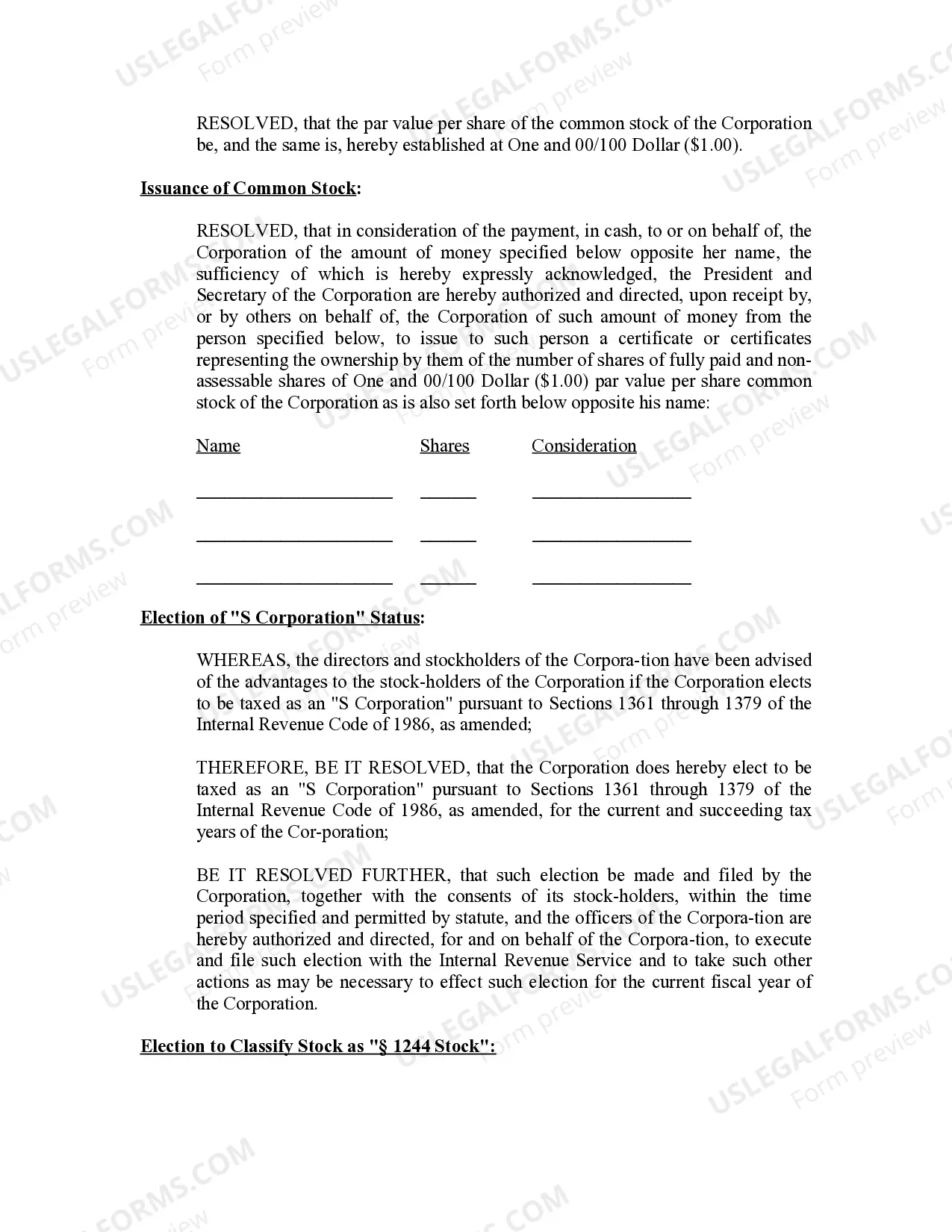
- List of directors, shareholders and their shareholding details.
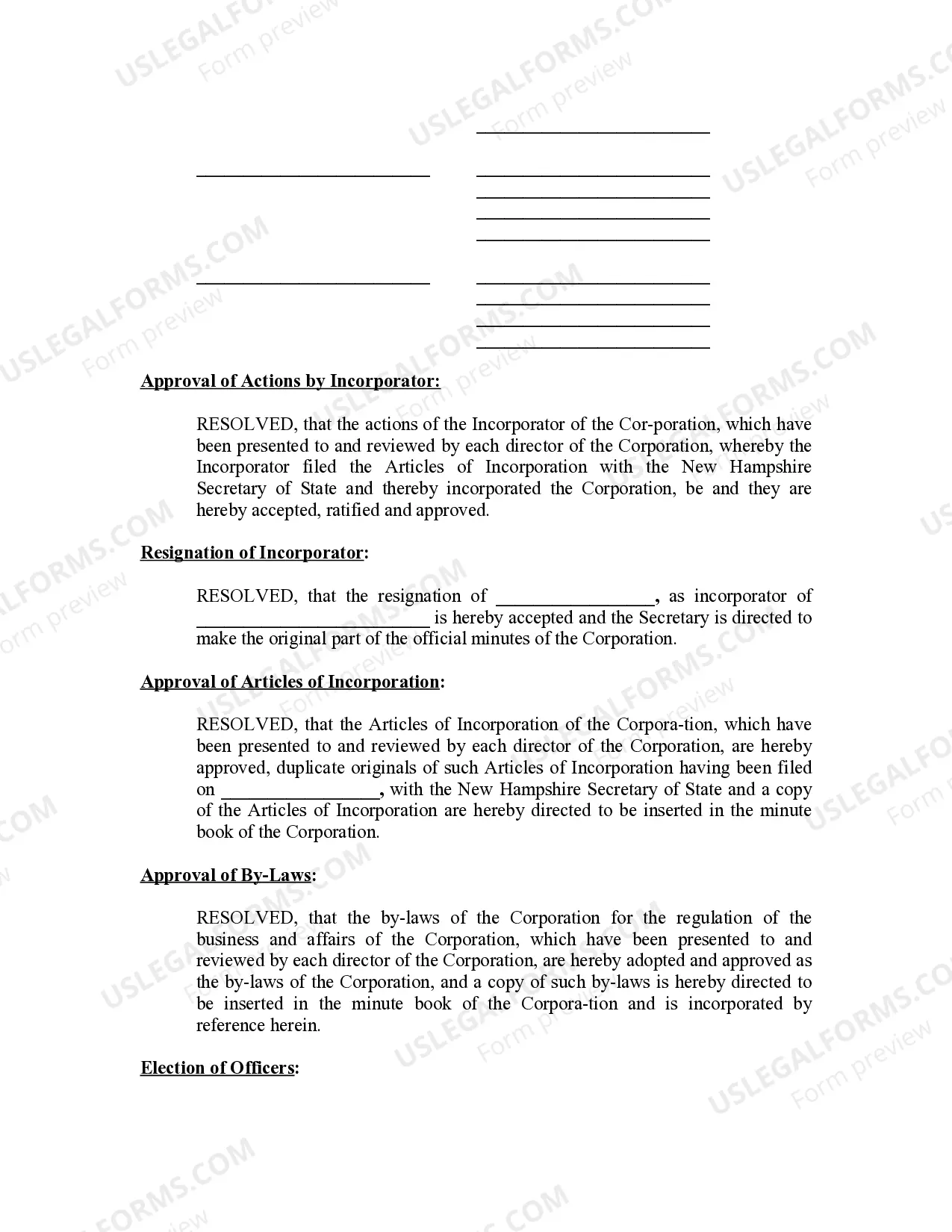
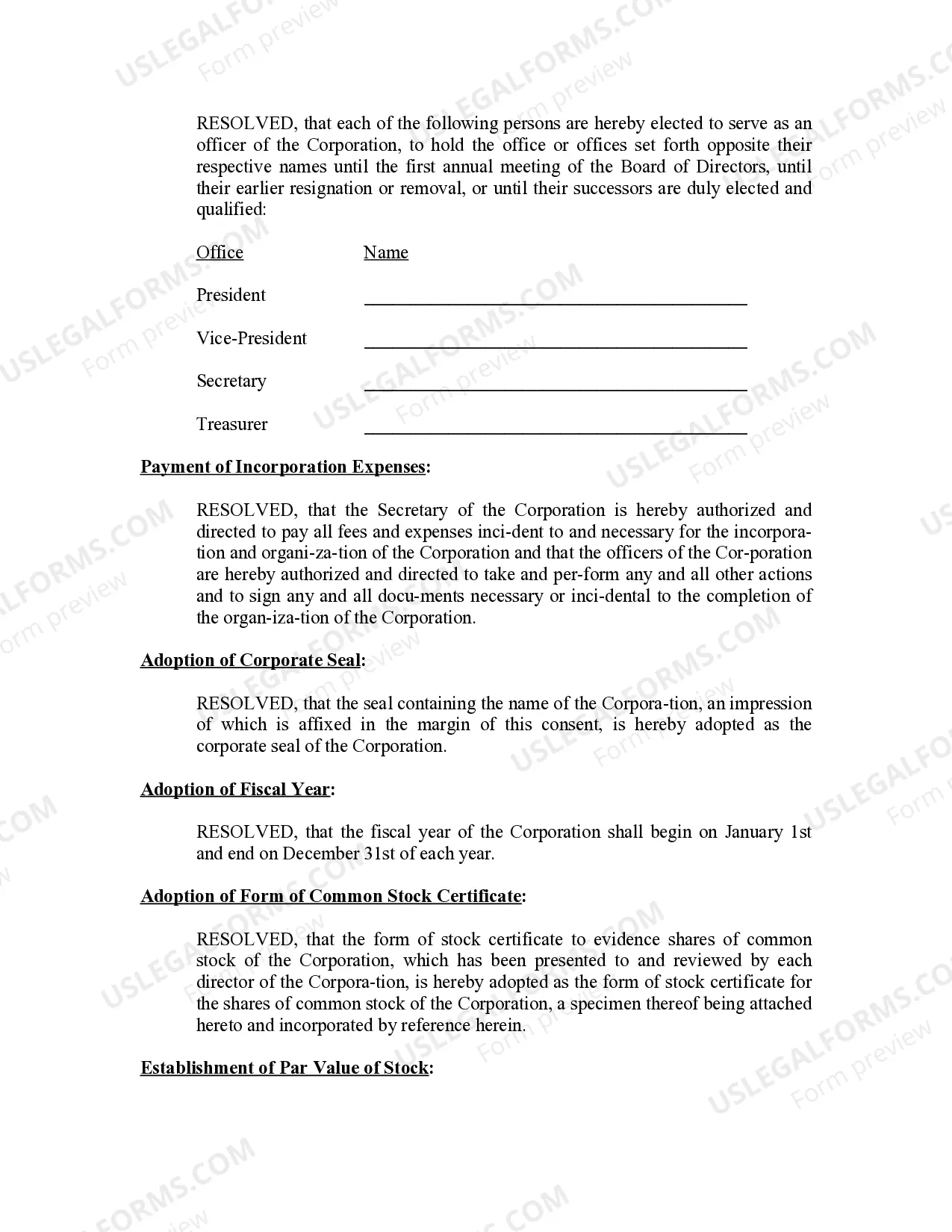
- Resolutions regarding the election of officers, approval of articles of incorporation, and adoption of by-laws.
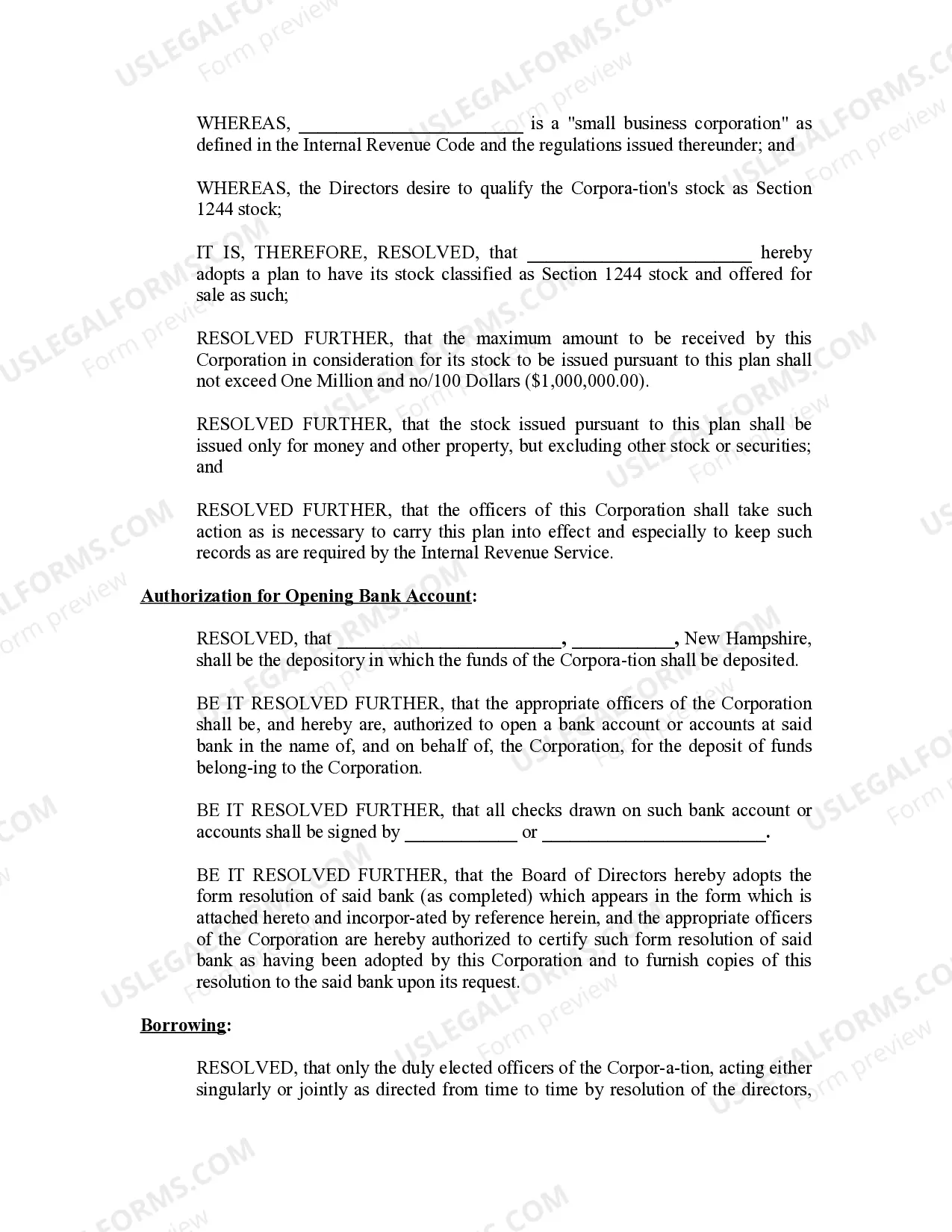
- Authorization for financial matters, including opening bank accounts and borrowing.
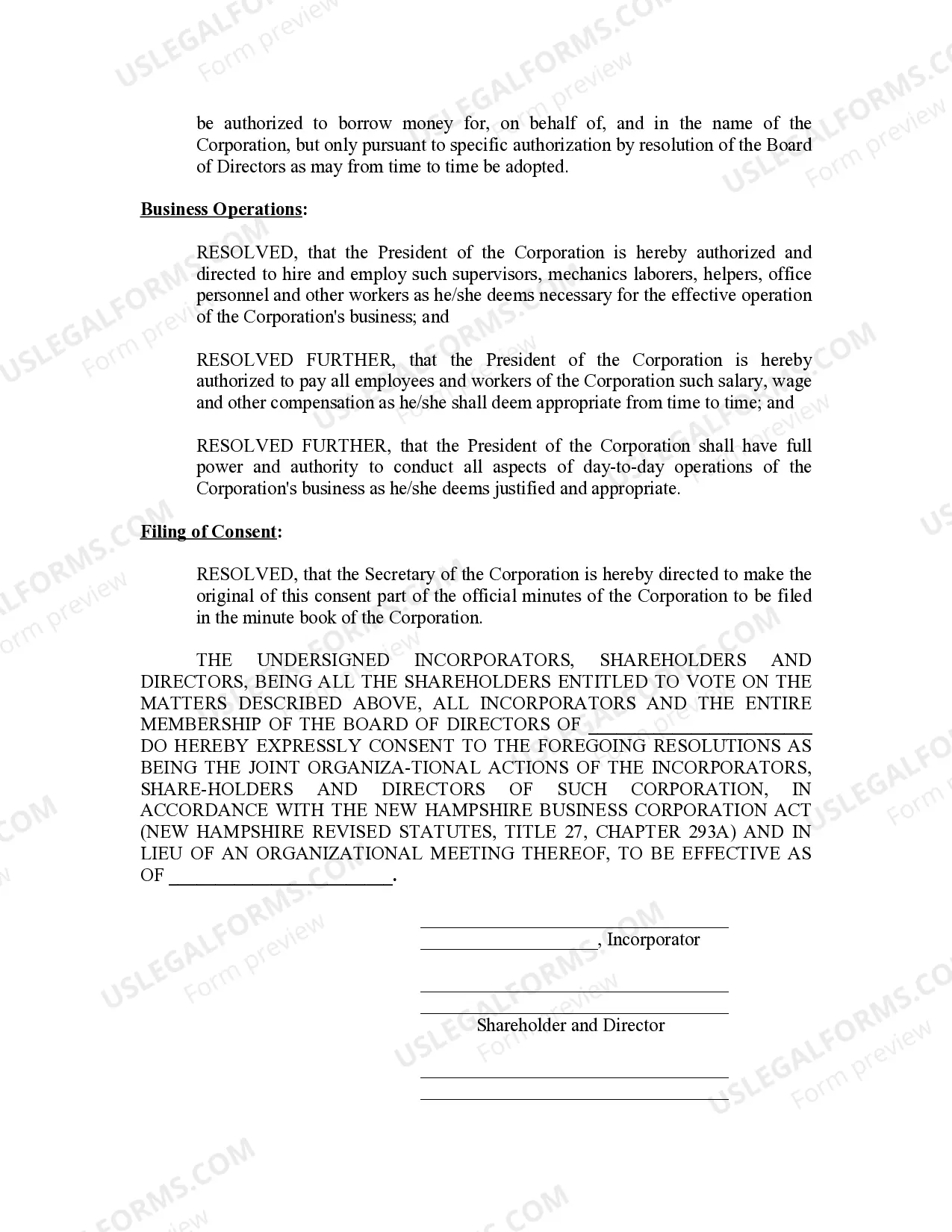
- Signatures of all incorporators, shareholders, and directors for consent.

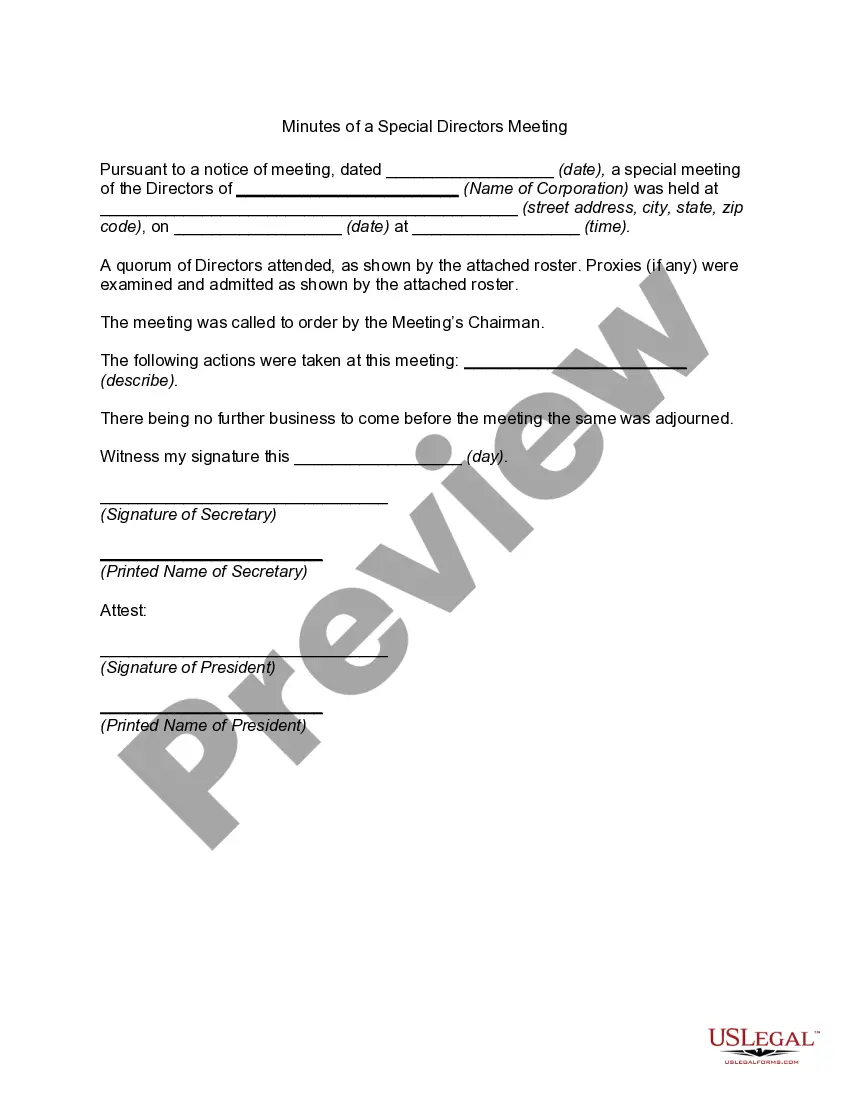
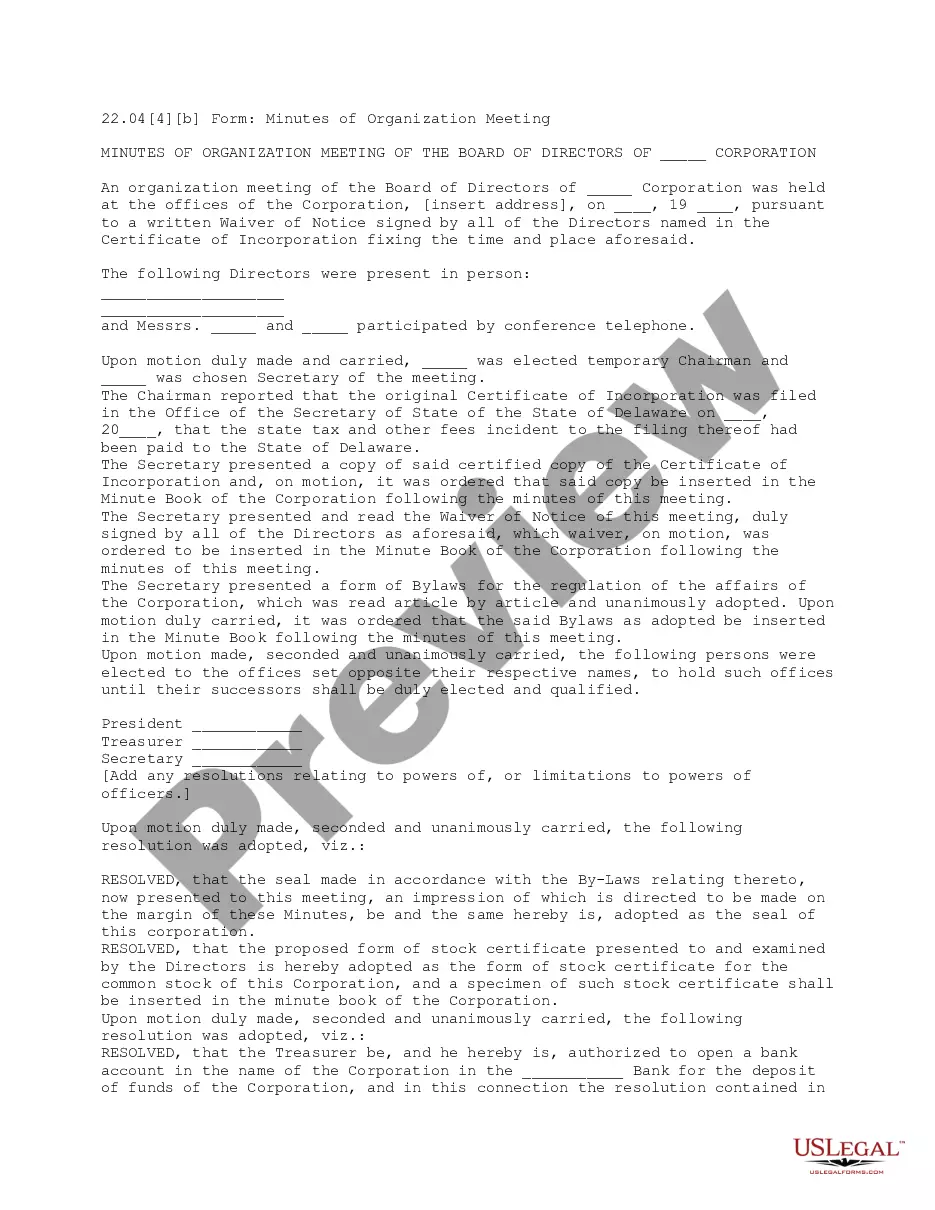
When to use this form
This form is necessary when establishing a corporation in New Hampshire and there is a need to document organizational actions without convening a formal meeting. It is particularly useful for startups that require immediate decision-making regarding governance, officer elections, and initial operational procedures.
Who needs this form
- Incorporators who are forming a new corporation in New Hampshire.
- Shareholders of the corporation who are involved in initial decision-making processes.
- Members of the Board of Directors who need to formalize resolutions without a physical meeting.
How to complete this form
- Identify the corporation by entering its name and address.
- List the names and addresses of at least one director and all shareholders along with their shares.
- Select individuals to serve as President and Secretary; note if the same person holds multiple offices.
- Document the resolutions by filling in the necessary details related to actions taken (e.g., approval of by-laws, appointment of officers).
- Ensure all shareholders, incorporators, and directors review and sign the document to validate organizational actions.
Notarization requirements for this form
Notarization is not commonly needed for this form. However, certain documents or local rules may make it necessary. Our notarization service, powered by Notarize, allows you to finalize it securely online anytime, day or night.
Get your form ready online
Our built-in tools help you complete, sign, share, and store your documents in one place.
Make edits, fill in missing information, and update formatting in US Legal Forms—just like you would in MS Word.
Download a copy, print it, send it by email, or mail it via USPS—whatever works best for your next step.
Sign and collect signatures with our SignNow integration. Send to multiple recipients, set reminders, and more. Go Premium to unlock E-Sign.
If this form requires notarization, complete it online through a secure video call—no need to meet a notary in person or wait for an appointment.
We protect your documents and personal data by following strict security and privacy standards.

Make edits, fill in missing information, and update formatting in US Legal Forms—just like you would in MS Word.

Download a copy, print it, send it by email, or mail it via USPS—whatever works best for your next step.

Sign and collect signatures with our SignNow integration. Send to multiple recipients, set reminders, and more. Go Premium to unlock E-Sign.

If this form requires notarization, complete it online through a secure video call—no need to meet a notary in person or wait for an appointment.

We protect your documents and personal data by following strict security and privacy standards.
Avoid these common issues
- Failing to include all necessary signatures of shareholders, incorporators, and directors.
- Not accurately recording the names and addresses required for directors and officers.
- Neglecting to attach supporting documents like articles of incorporation and by-laws.
Why use this form online
- Immediate access to a professionally drafted legal document.
- Easy customization to fit the unique needs of your corporation.
- Convenient download and printing options for personal records.
Looking for another form?
Form popularity
FAQ
Name Your Organization. Recruit Incorporators and Initial Directors. Appoint a Registered Agent. Prepare and File Articles of Incorporation. File Initial Report. Obtain an Employer Identification Number (EIN) Store Nonprofit Records. Establish Initial Governing Documents and Policies.
Organizational meetings are held to appoint officers, elect or appoint directors, issue shares in the corporation, approve bylaws, setup minute books, appoint or waive the appointment of auditors, set up bank accounts, etc.
A corporation's organizational meeting is meant to be the initial meeting of the owners of the corporation and management. Typically, the items on the meeting agenda include: The appointment of corporate officers. The acquisition of a minute book to record meeting minutes and actions. The approval of Corporate Bylaws.
Prepare just enough. The goal of a board meeting should be to maximize the value you get as a founder, while minimizing the amount of time you spend preparing. Focus on calibration. Take a step back. Don't overthink it. Share materials early. Structure the meeting.
12 Things You Must Do Before Your First Board Meeting. Do a mock board meeting with another startup founder or investor ally. Send your board documents two weeks in advance. Be confident. Keep control of the meeting. Reach out beforehand. Know who will be at the table. Prepare to discuss future growth.
The participants to the meetings have a reminder aid. The minutes say who will do what and when. They are the starting point of the following meeting. They are helpful for those absent to know was discussed and what decisions have been taken. In case of conflicts, they are useful to know what agreements were made.
Meeting name and place. Date and time of the meeting. List of meeting participants. Purpose of the meeting. For each agenda items: decisions, action items, and next steps. Next meeting date and place. Documents to be included in the meeting report.
There are three standard styles of minutes: action, discussion, and verbatim. Each style has a specific use.
Allow time for members to get settled and focused. Provide a way for members to share what's weighing on their minds. Include time for socializing. Clarify each person's specific role for the meeting. Take time to formally review and approve the agenda.