New Hampshire Eviction Notice
About this form
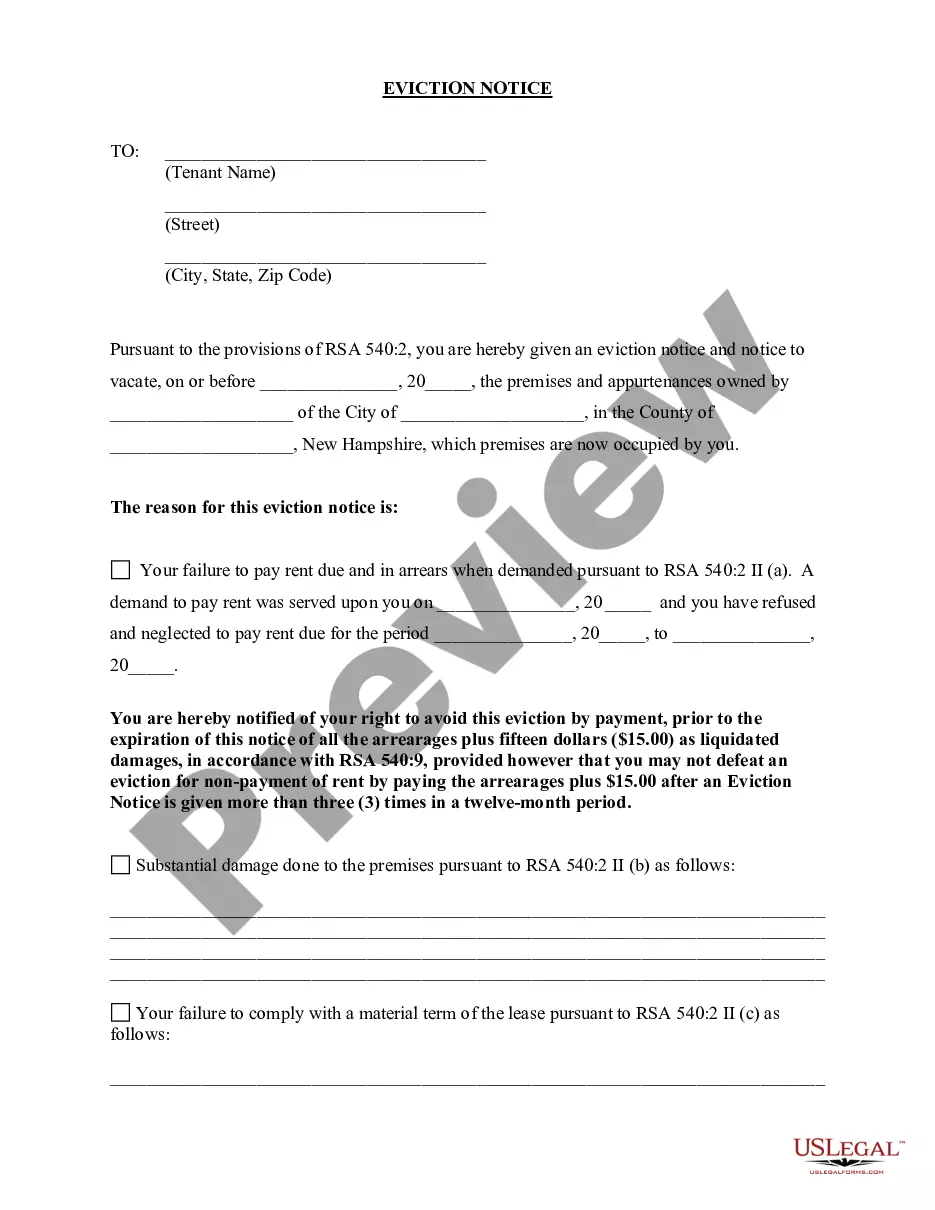
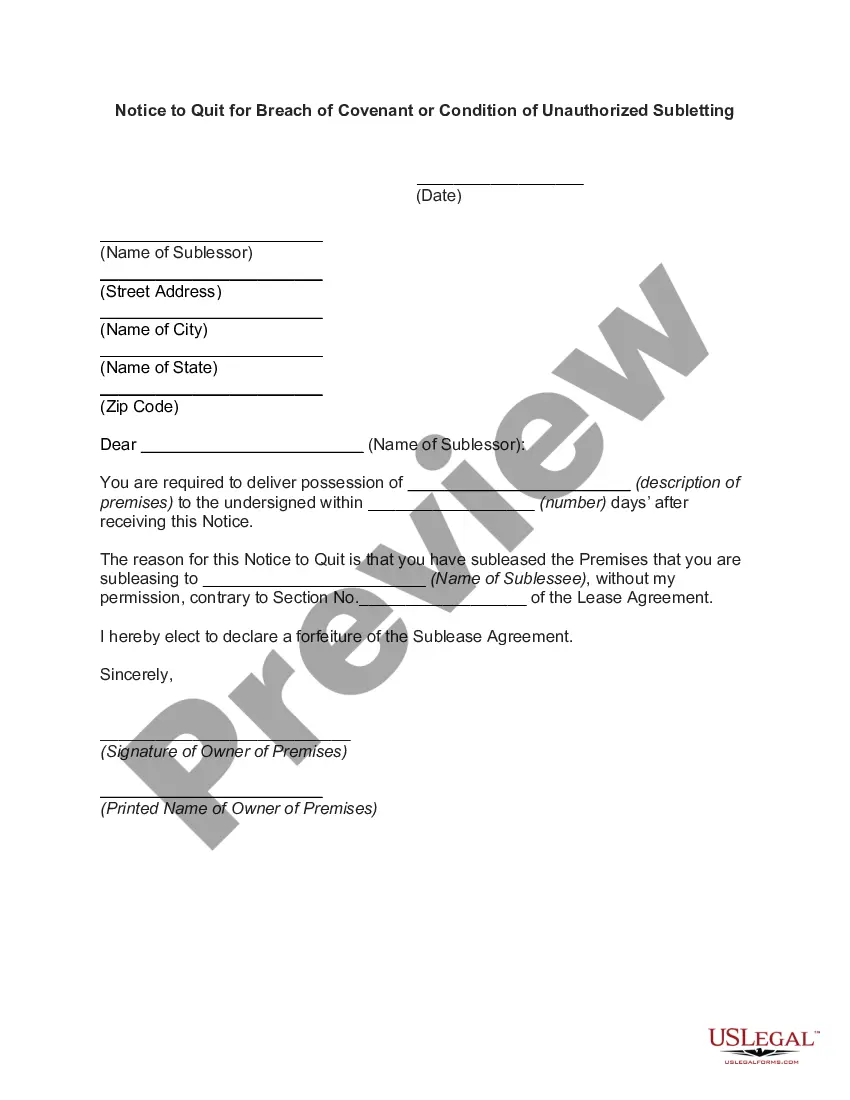
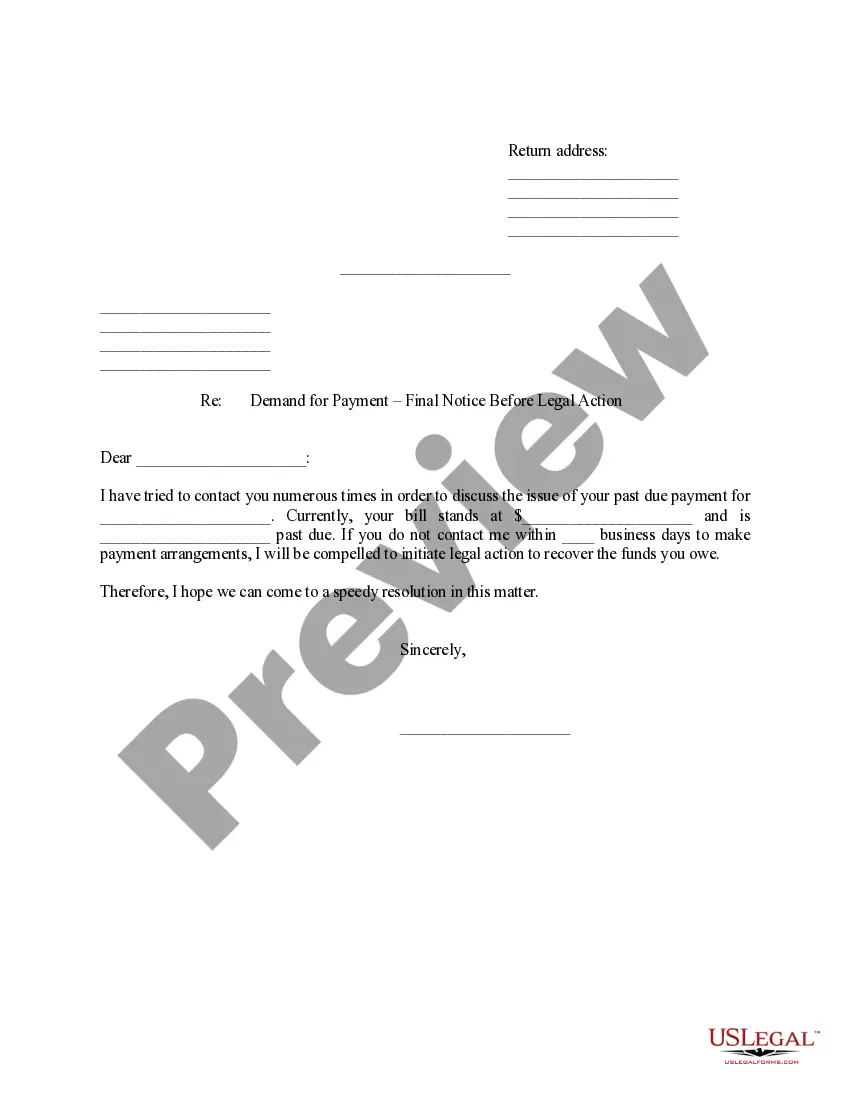
This Eviction Notice is a legal document that a landlord must provide to a tenant before initiating an eviction action. It formally alerts the tenant of their failure to pay rent on time or to comply with other significant lease obligations. This document differs from similar notices by specifying the grounds for eviction, which may include unpaid rent, property damage, or other lease violations.
What’s included in this form
- Tenant's name and address
- Landlord's name and contact information
- Specific eviction date
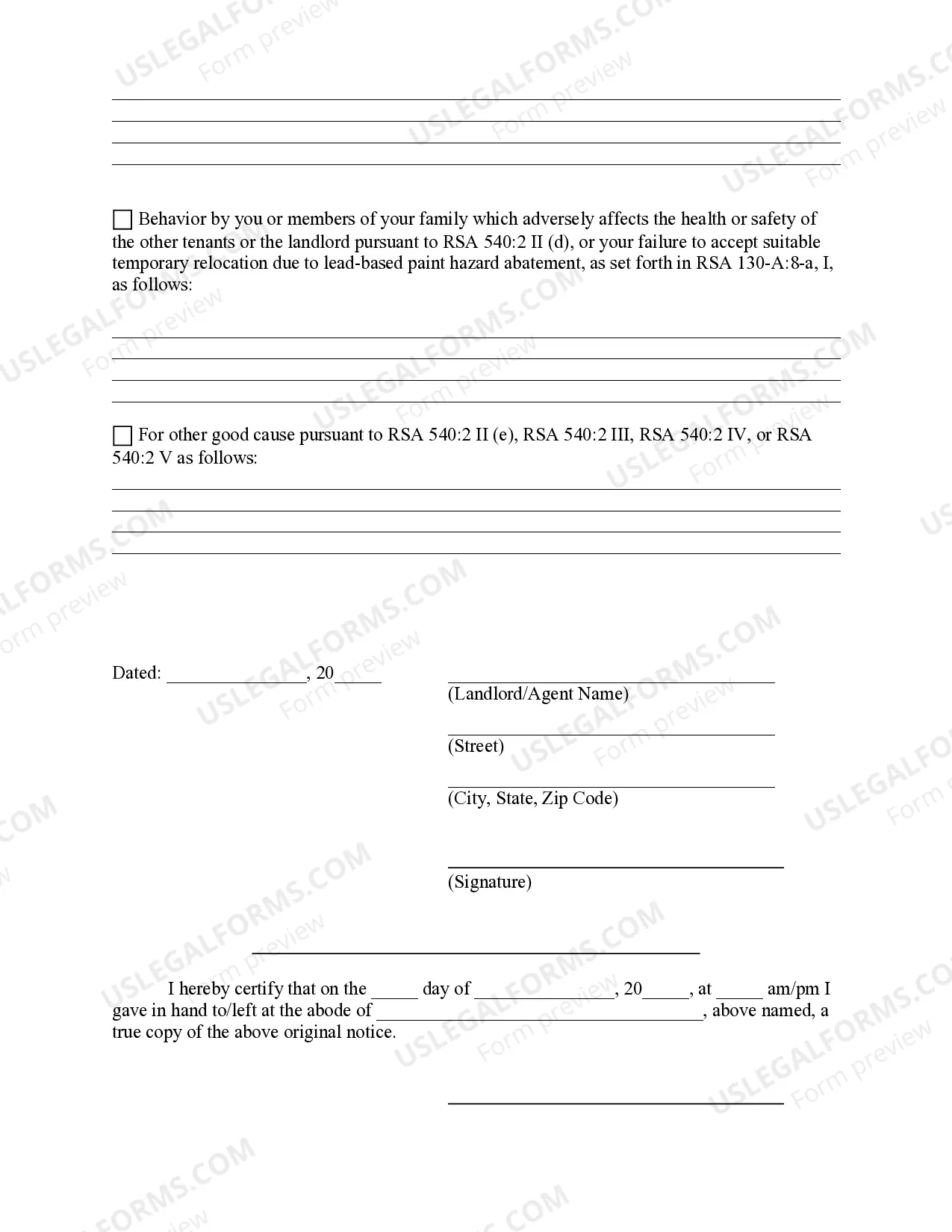
- Clear reasons for eviction, including rent arrears or lease violations
- Notice of tenant's right to remedy the situation by paying overdue rent
- Signatures of the landlord and the individual serving the notice

Situations where this form applies
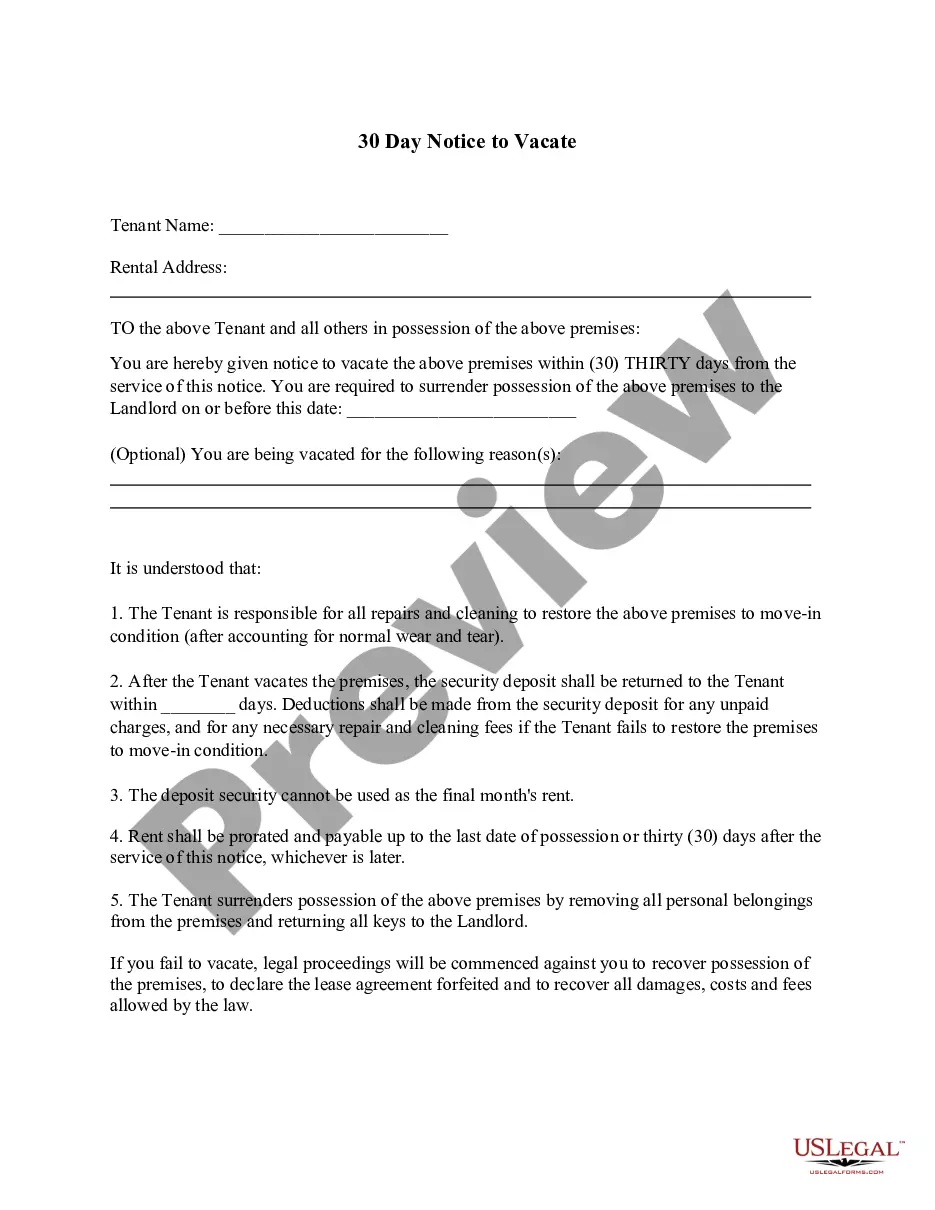
Use this Eviction Notice when a tenant has failed to pay their rent on time or has breached other critical terms of the lease agreement. This notice serves as a required step in the eviction process, giving the tenant a defined period to correct their behavior or vacate the property. It is essential to use this form before filing any legal eviction actions to comply with local laws.
Who needs this form
- Landlords who need to evict a tenant for non-payment of rent
- Property managers acting on behalf of landlords
- Landlords who need a formal record of notice served to tenants
How to prepare this document
- Identify the tenant's full name and complete address.
- Fill in your name and contact information as the landlord or property manager.
- Specify the date by which the tenant must vacate the premises.
- Clearly outline the reasons for the eviction.
- Sign and date the notice, ensuring it is delivered appropriately.
Is notarization required?
This form does not typically require notarization unless specified by local law. However, it is important to follow your local regulations regarding the delivery and acknowledgement of the eviction notice to ensure validity.
Get your form ready online
Our built-in tools help you complete, sign, share, and store your documents in one place.
Make edits, fill in missing information, and update formatting in US Legal Forms—just like you would in MS Word.
Download a copy, print it, send it by email, or mail it via USPS—whatever works best for your next step.
Sign and collect signatures with our SignNow integration. Send to multiple recipients, set reminders, and more. Go Premium to unlock E-Sign.
If this form requires notarization, complete it online through a secure video call—no need to meet a notary in person or wait for an appointment.
We protect your documents and personal data by following strict security and privacy standards.

Make edits, fill in missing information, and update formatting in US Legal Forms—just like you would in MS Word.

Download a copy, print it, send it by email, or mail it via USPS—whatever works best for your next step.

Sign and collect signatures with our SignNow integration. Send to multiple recipients, set reminders, and more. Go Premium to unlock E-Sign.

If this form requires notarization, complete it online through a secure video call—no need to meet a notary in person or wait for an appointment.

We protect your documents and personal data by following strict security and privacy standards.
Typical mistakes to avoid
- Failing to include specific reasons for eviction.
- Not providing the required notice period as mandated by law.
- Omitting necessary signatures from the landlord or agent.
- Delivering the notice improperly, such as not giving it directly to the tenant.
Why use this form online
- Convenient access to legal forms from anywhere, anytime.
- Easy to customize the document to fit specific circumstances.
- Instant download options for immediate use.
- Forms prepared by licensed attorneys ensuring legal compliance.
Legal use & context
- The Eviction Notice serves as a formal legal document required before proceeding with eviction lawsuits.
- Failure to provide this notice may result in legal challenges and delay the eviction process.
- This form helps maintain clear communication of lease violations and tenant obligations.
What to keep in mind
- The Eviction Notice is essential for initiating the eviction process legally.
- Filling out the form correctly helps avoid common legal pitfalls.
- Proper notification protects the landlord's legal rights and improves the chances of a successful eviction.
Looking for another form?




Form popularity
FAQ
New Hampshire has a special process for eviction. No landlord can lawfully evict a tenant without following the steps set out by state law (RSA 540). A tenant can be evicted for violating the lease. If the tenant has no written lease, she or he can be evicted for a variety of reasons.
The average cost of an eviction in New Hampshire for all filing, court, and service fees is $186....Cost of an Eviction in New Hampshire. FeeCircuitInitial Court Filing$125+Petition Service$30Writ of Possession Service$30Notice of Appeal Filing (Optional)$2251 more row ?
Thirty-Day Notice to Quit: If the tenant violates the lease or rental agreement, then the landlord can give the tenant a 30-day notice to cure or quit. This notice must inform the tenant that the landlord is terminating the tenancy and the tenant must move out of the rental unit by the end of 30 days.
Give you at least 7 days' notice to leave if the reason for the eviction is because: of nonpayment; your behavior has harmed the health or safety of other tenants or the landlord; or you have caused substantial damage to the premises; 5. Give you at least 30 days' notice to leave in all other cases; 6.
In New Hampshire, there are five "good" causes for eviction: Failure to pay the rent; Substantial damage to the premises; Behavior that affects the health and safety of others; Violation of the lease; Other good cause.
The tenant must be given written notice and may ask for a court hearing. WRITTEN NOTICE: Demand for rent: If you are being evicted for not paying rent, your landlord must serve you with a Demand for Rent. The demand tells you how much rent you owe, and cannot ask for more rent than you actually owe.
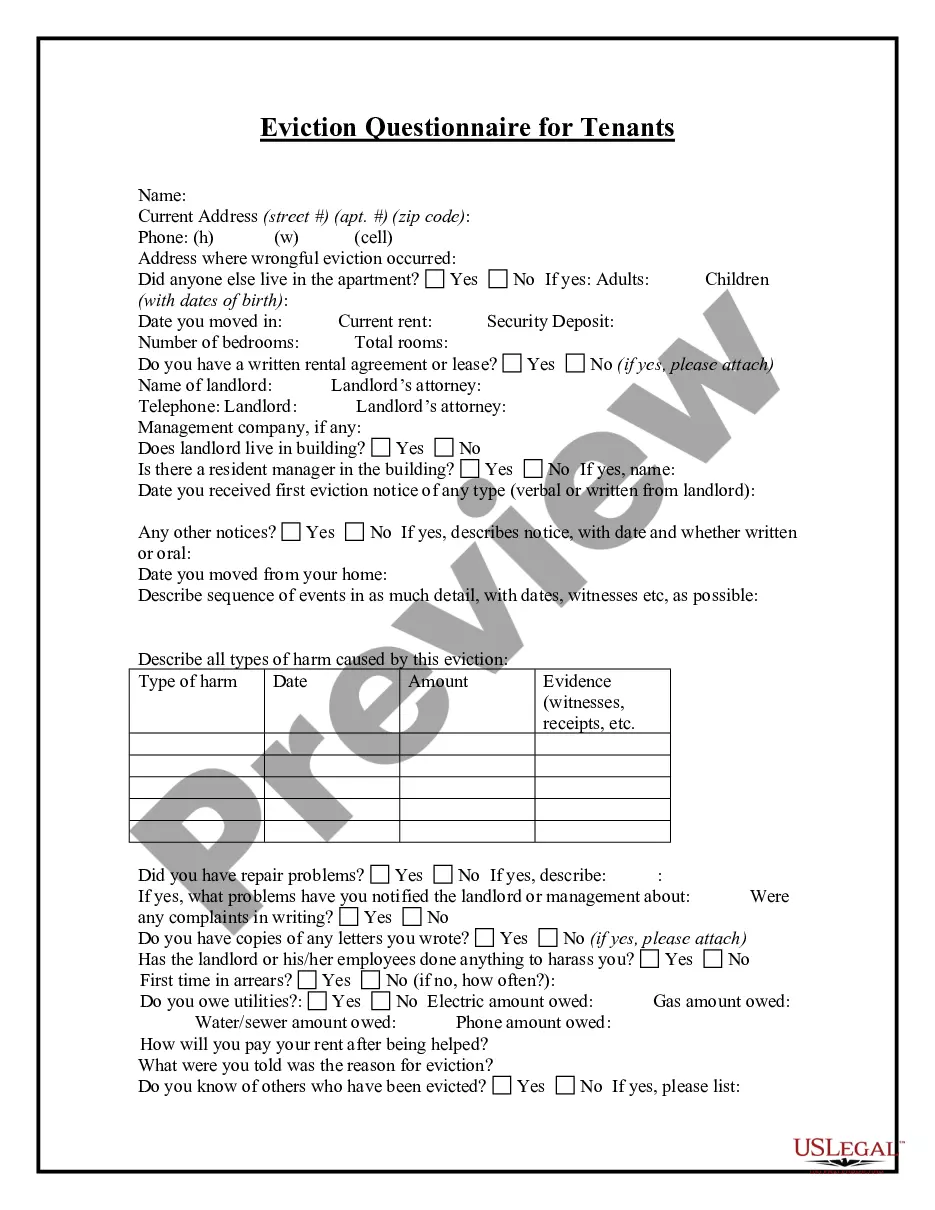
STEP 1 The Written Eviction Notice.STEP 2 The Landlord & Tenant Writ.STEP 3 The Appearance Form.STEP 4 The Notice of Hearing.STEP 5 Raising defenses at the hearing.STEP 6 The Writ of Possession.STEP 7 Asking for a Discretionary Stay.STEP 8 Filing a Notice of Intent to Appeal.