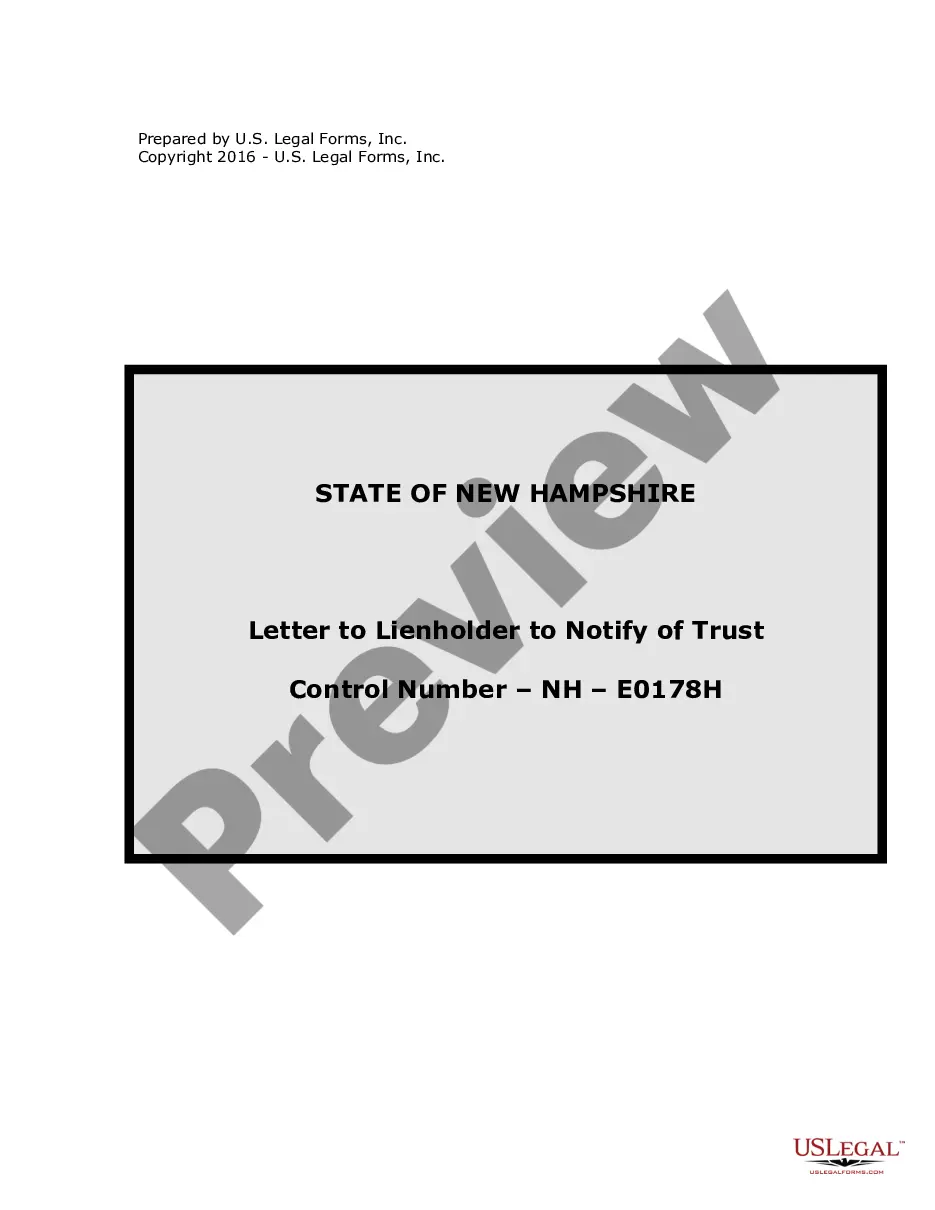
New Hampshire Letter to Lienholder to Notify of Trust
Understanding this form
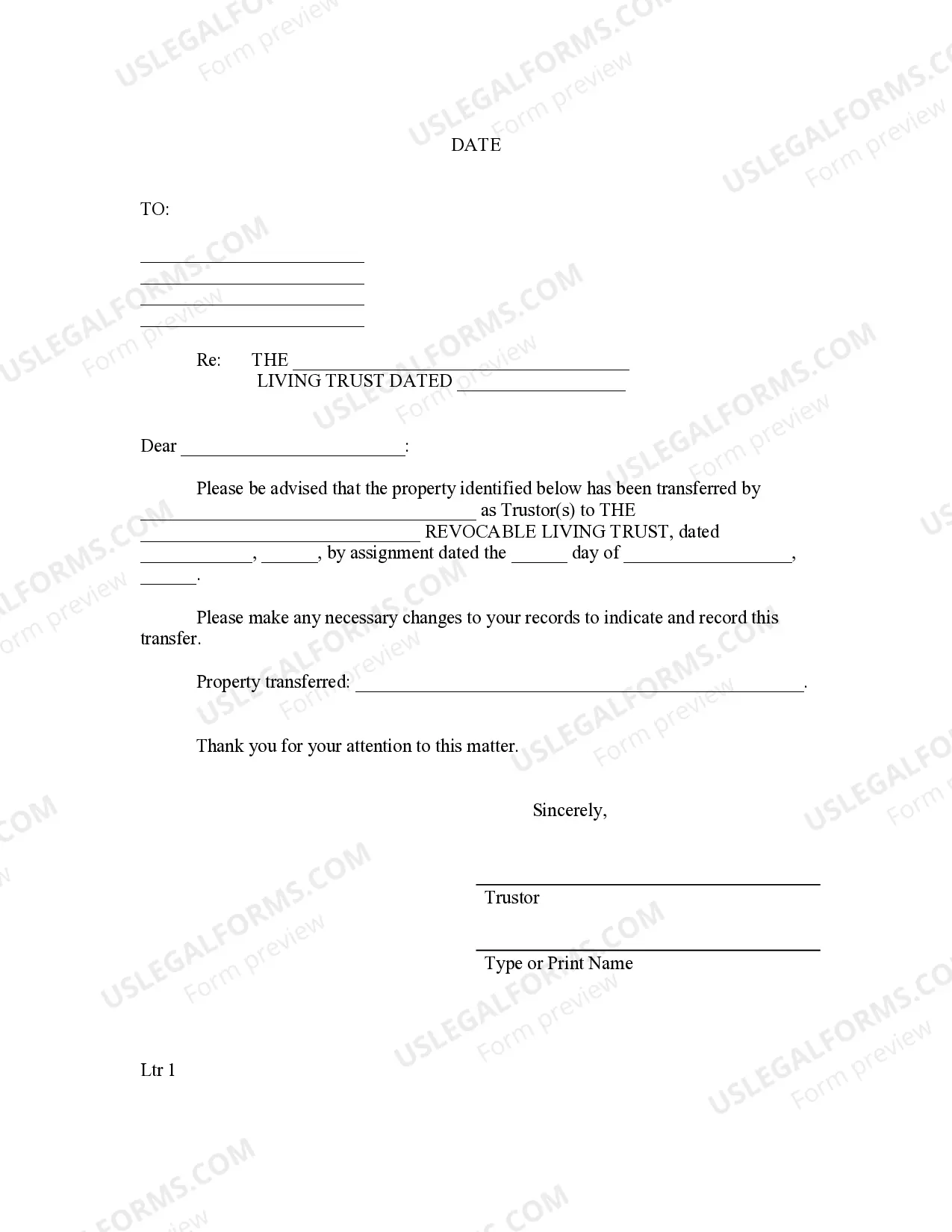
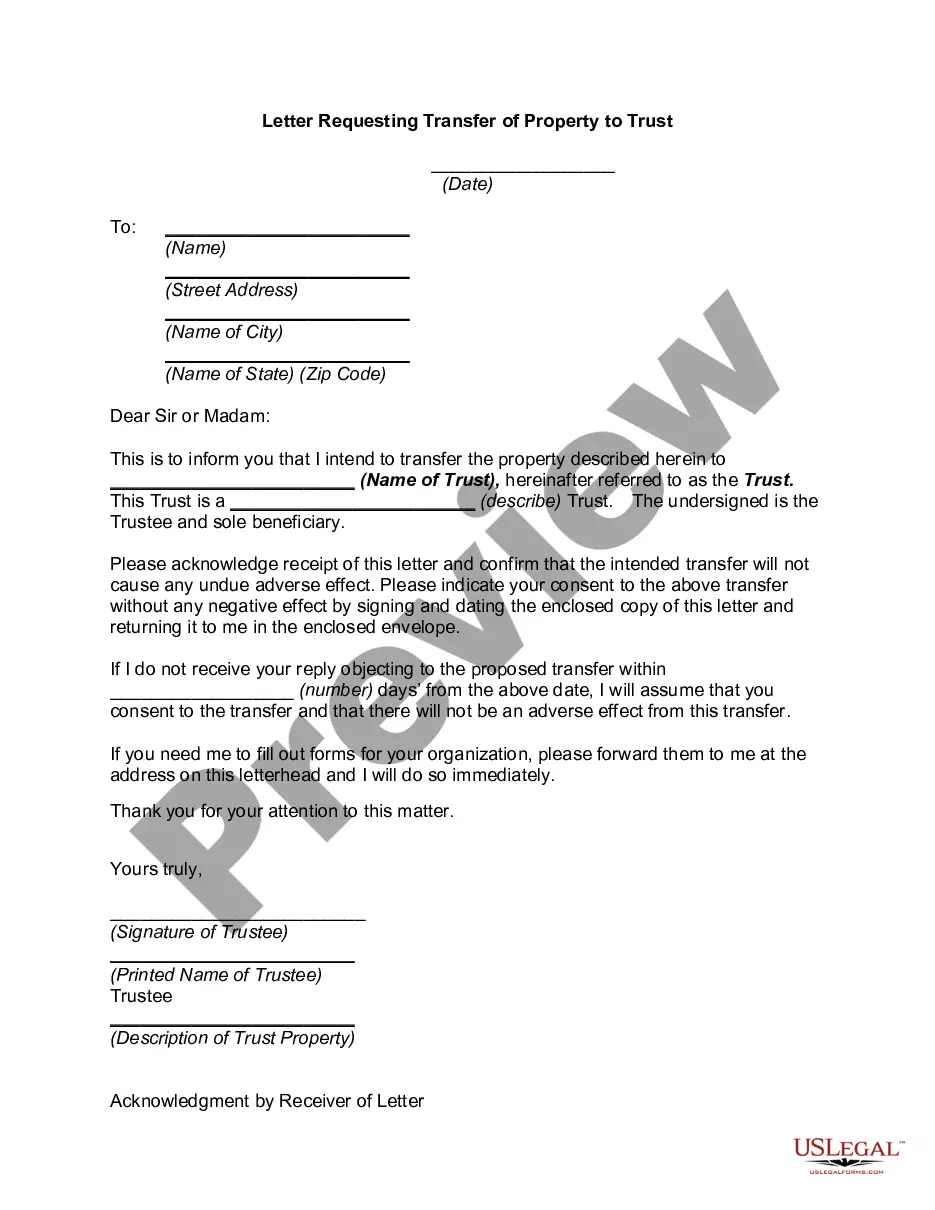
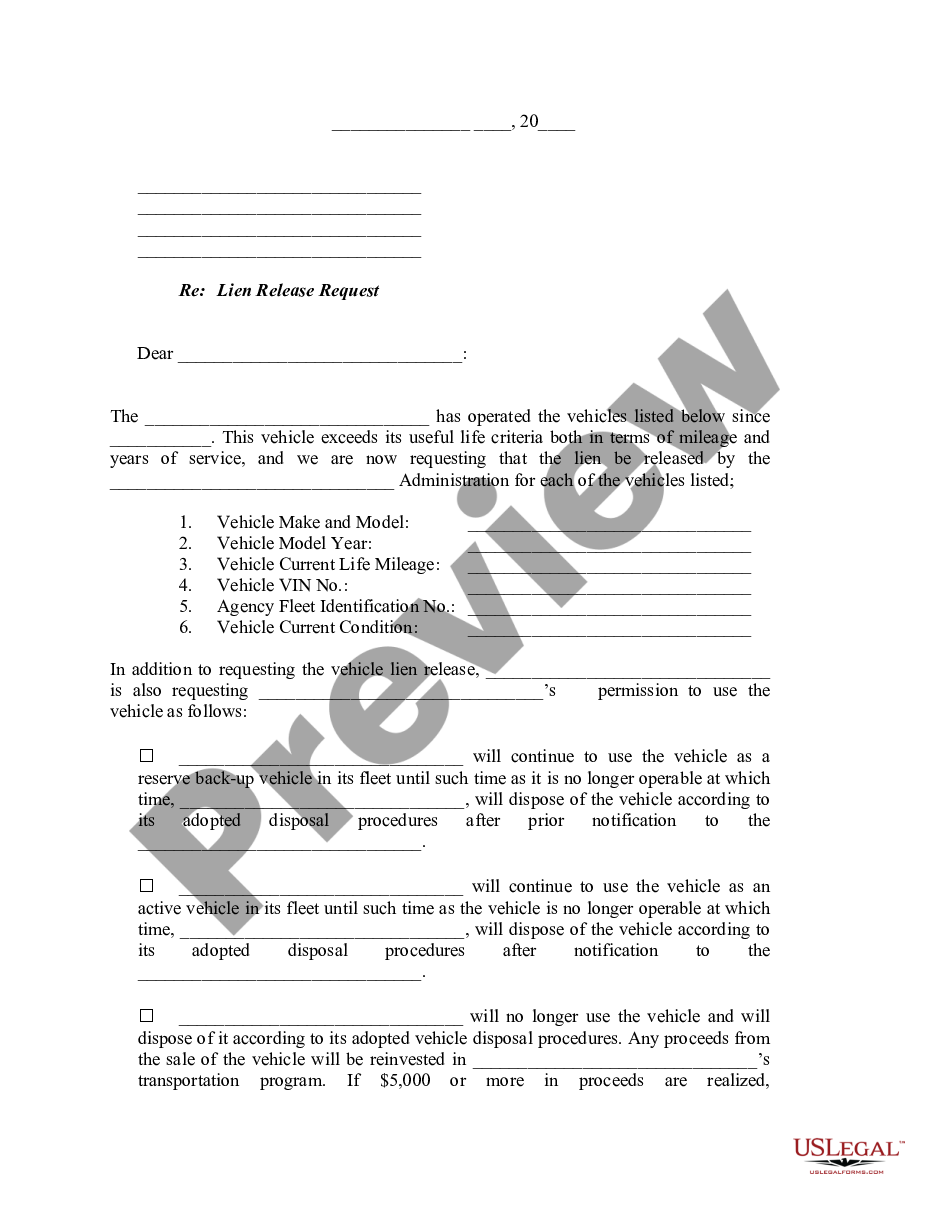
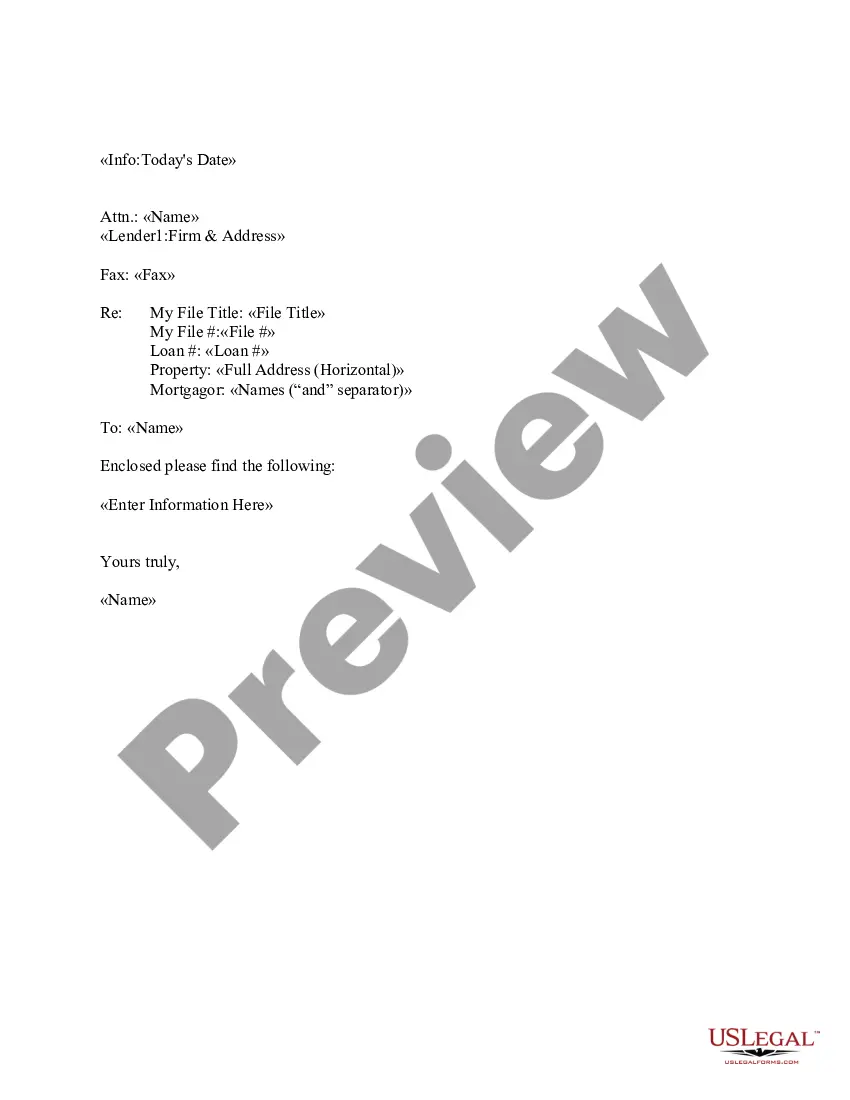
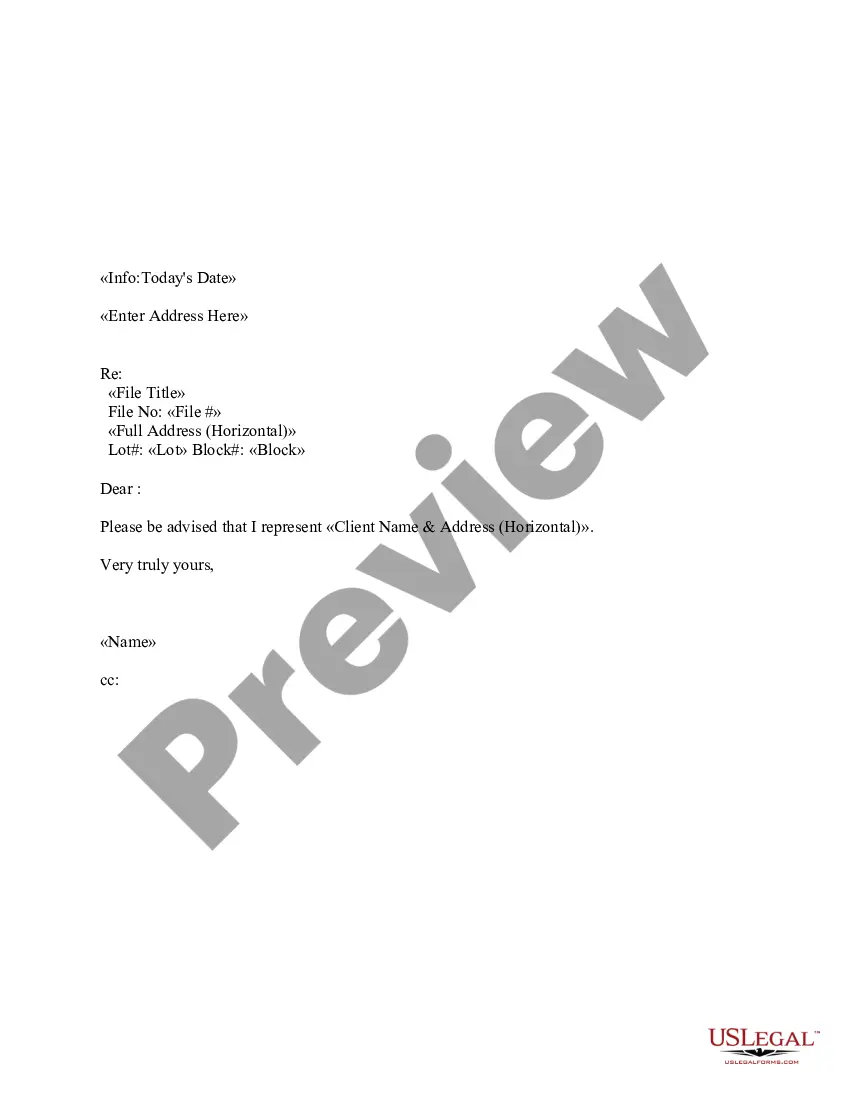
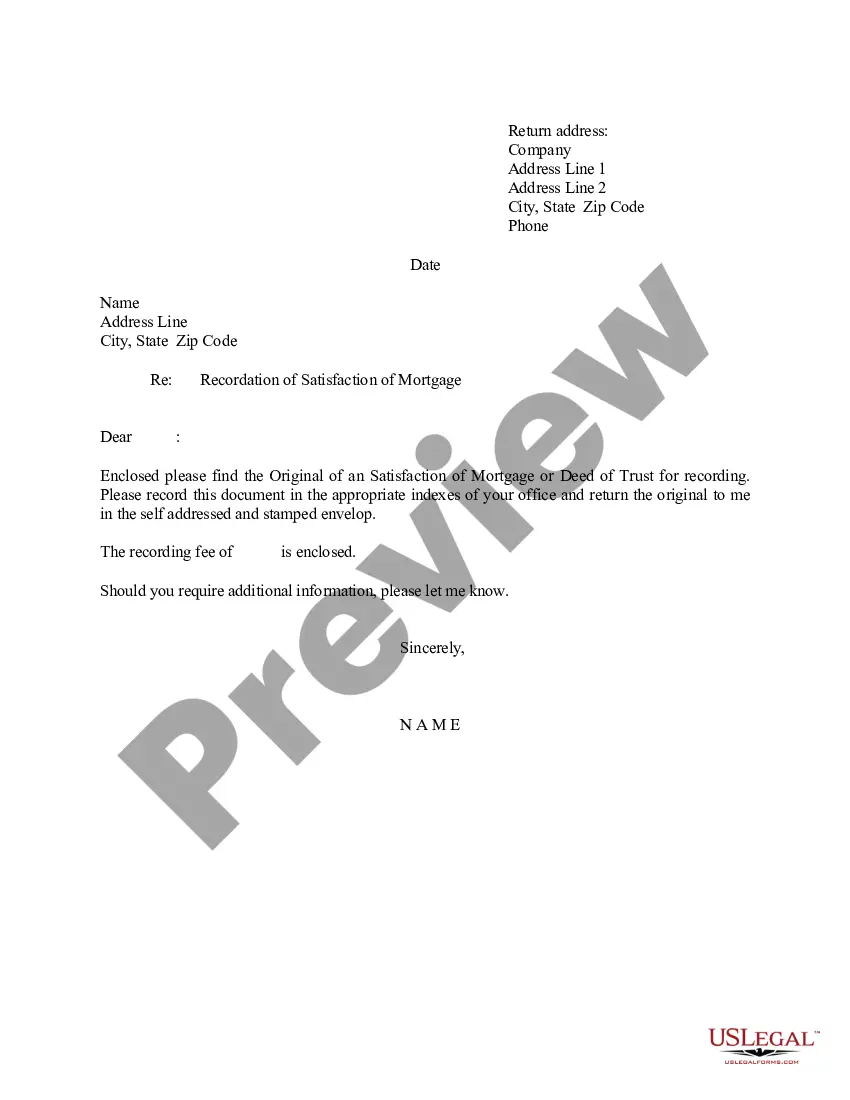
The Letter to Lienholder to Notify of Trust is a formal notification sent to a lienholder to inform them that specific property has been transferred into a living trust. This form is essential for estate planning, as it officially communicates the change in ownership or responsibility for the property held in the trust. It differs from other forms related to trusts by focusing specifically on notifying the lienholder about the transfer of property into the trust, ensuring proper record-keeping and compliance.
Key components of this form
- Date and recipient information.
- Identification of the living trust and the trustor(s).
- Description of the property being transferred to the trust.
- A request for the lienholder to update their records accordingly.
- Closing remarks and signature section.
When this form is needed
This form should be used when a property owner has transferred their property into a living trust and needs to notify the lienholder. Situations that may require this form include estate planning efforts where the trustor aims to manage their assets efficiently and reduce probate costs, or when a property is being reassigned to a trust as part of a broader financial strategy.
Who this form is for
- Individuals creating a living trust to manage their assets.
- Trustors who have recently transferred property into a living trust.
- Property owners who have lien agreements in place.
- Legal representatives assisting clients with estate planning.
Instructions for completing this form
- Enter the date of the letter at the top.
- Fill in the lienholder's name and address in the recipient section.
- Specify the living trust name and the date it was established.
- Describe the specific property being transferred to the trust.
- Sign the letter to validate the notification.
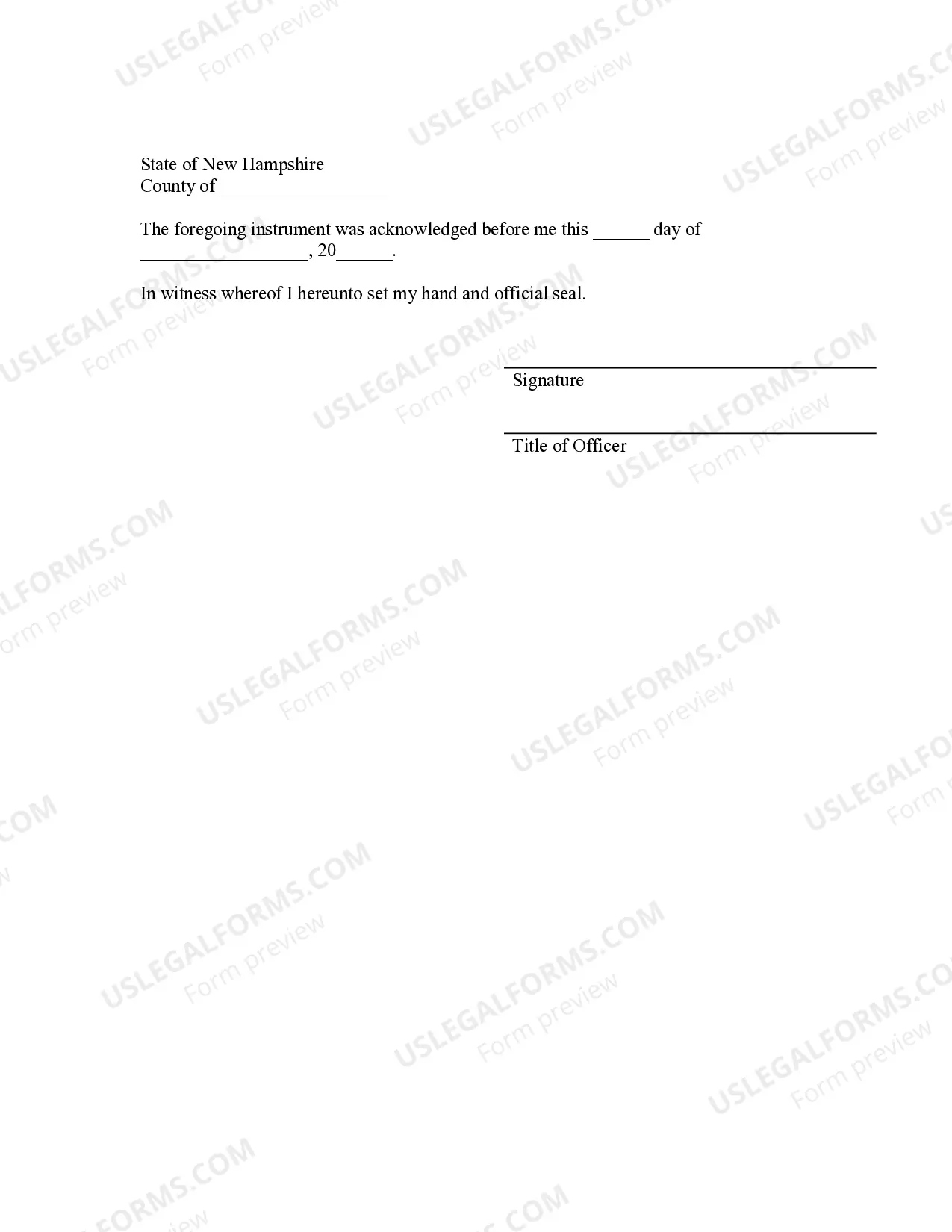
Notarization requirements for this form
This form does not typically require notarization unless specified by local law. Always check local regulations to ensure compliance.
Get your form ready online
Our built-in tools help you complete, sign, share, and store your documents in one place.
Make edits, fill in missing information, and update formatting in US Legal Forms—just like you would in MS Word.
Download a copy, print it, send it by email, or mail it via USPS—whatever works best for your next step.
Sign and collect signatures with our SignNow integration. Send to multiple recipients, set reminders, and more. Go Premium to unlock E-Sign.
If this form requires notarization, complete it online through a secure video call—no need to meet a notary in person or wait for an appointment.
We protect your documents and personal data by following strict security and privacy standards.

Make edits, fill in missing information, and update formatting in US Legal Forms—just like you would in MS Word.

Download a copy, print it, send it by email, or mail it via USPS—whatever works best for your next step.

Sign and collect signatures with our SignNow integration. Send to multiple recipients, set reminders, and more. Go Premium to unlock E-Sign.

If this form requires notarization, complete it online through a secure video call—no need to meet a notary in person or wait for an appointment.

We protect your documents and personal data by following strict security and privacy standards.
Typical mistakes to avoid
- Failing to include all required property details.
- Not properly identifying the trustor(s) and trust information.
- Omitting the date of the property transfer.
- Sending the letter without a signature.
- Not keeping a copy of the notification for your records.
Benefits of using this form online
- Convenience of filling out the form from anywhere, at any time.
- Editability allows users to review and adjust details easily.
- Access to attorney-drafted templates ensures legal compliance.
- Immediate download saves time compared to traditional methods.
- This letter serves as a formal notification to ensure lienholder acknowledgment of the trust ownership.
- Using this letter helps establish clear property rights under the trust, preventing future disputes.
What to keep in mind
- The Letter to Lienholder to Notify of Trust is crucial for affirming property transfers into a living trust.
- Completing the form accurately helps protect asset ownership during estate planning.
- Ensure compliance with state regulations by following the formâs requirements closely.