New Hampshire Commercial Real Estate Sales Disclosure Statement
Understanding this form
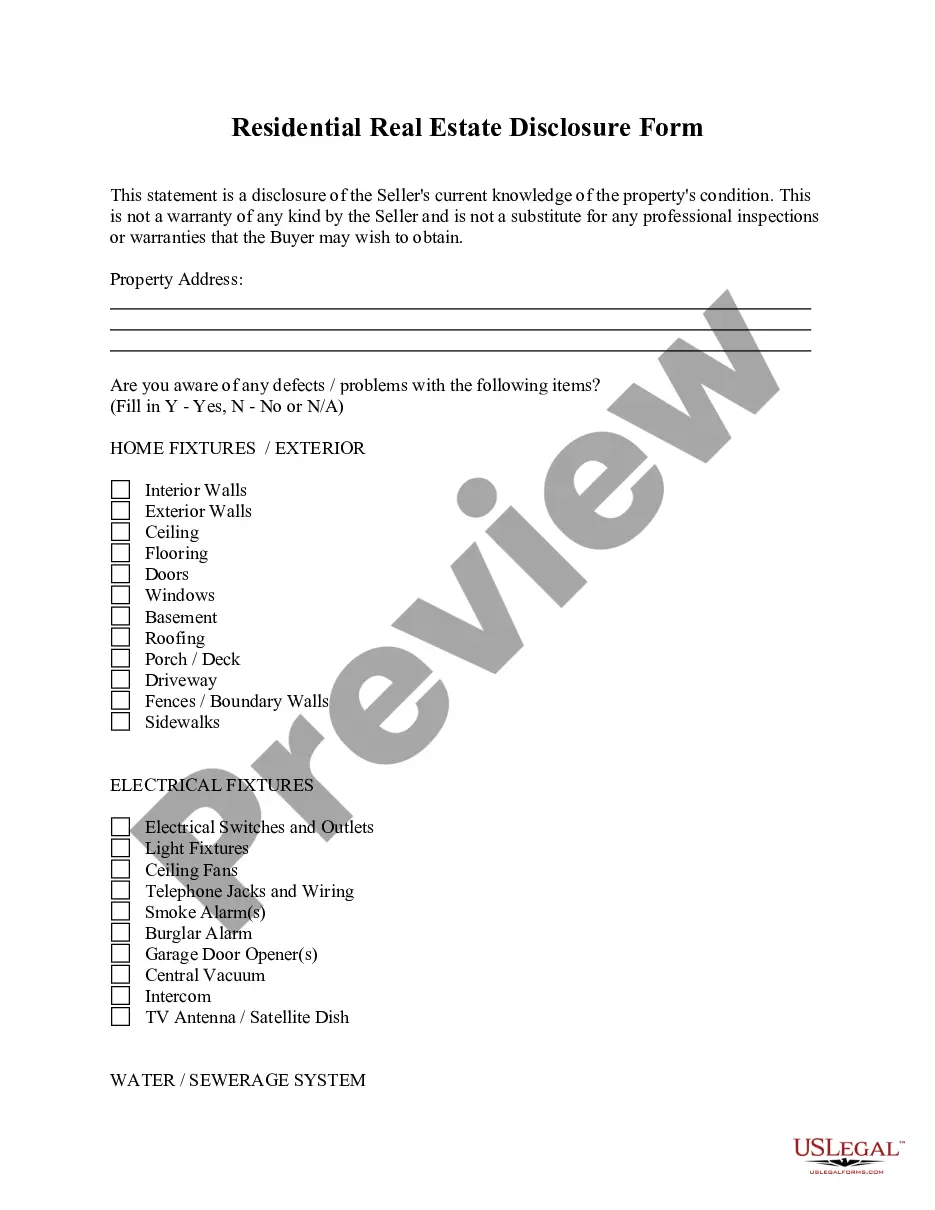
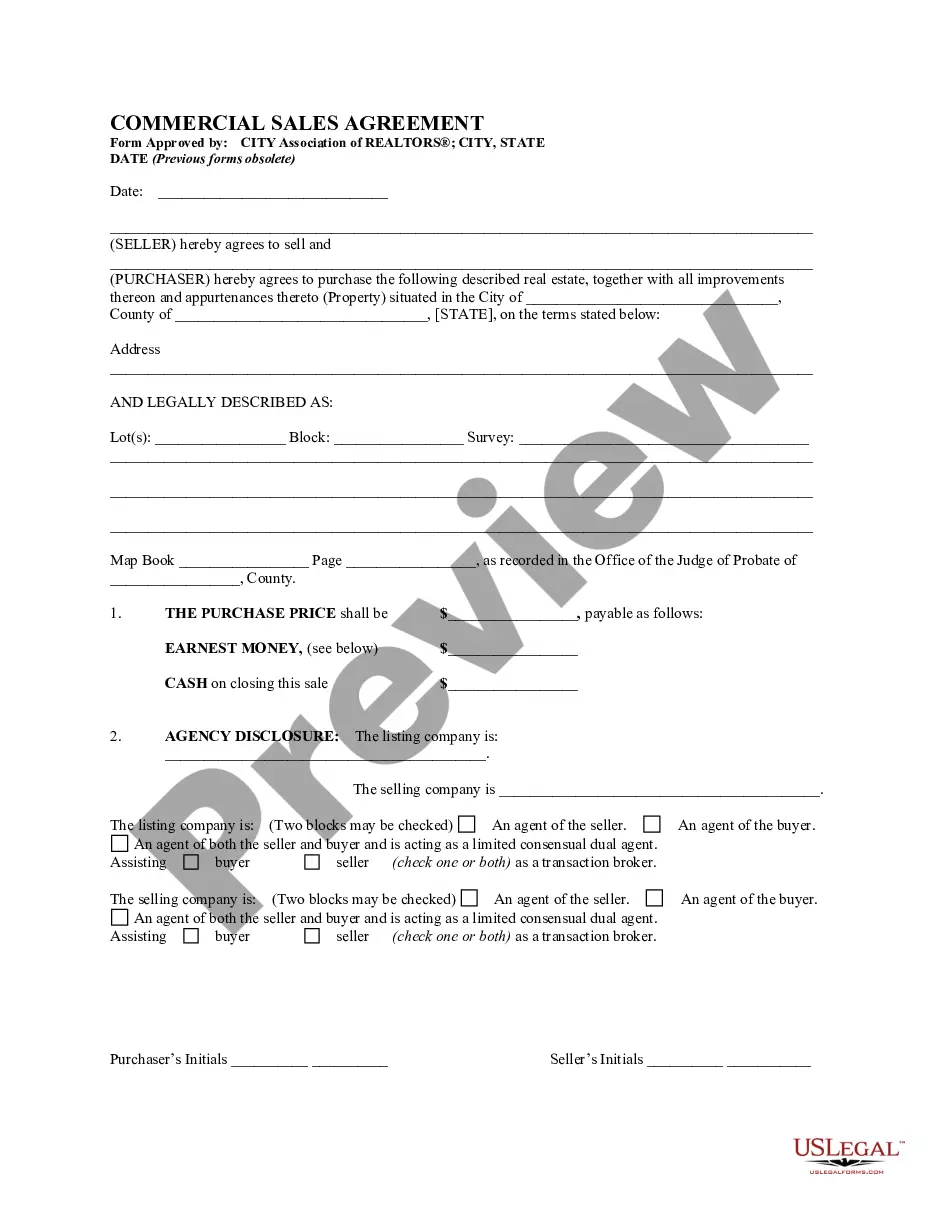
The Commercial Real Estate Sales Disclosure Statement is a legal document used by sellers to disclose important information about a commercial property to potential buyers. This form ensures transparency regarding the property's condition and any potential hazards, distinguishing it from general real estate sale forms by focusing specifically on commercial transactions.
Key parts of this document
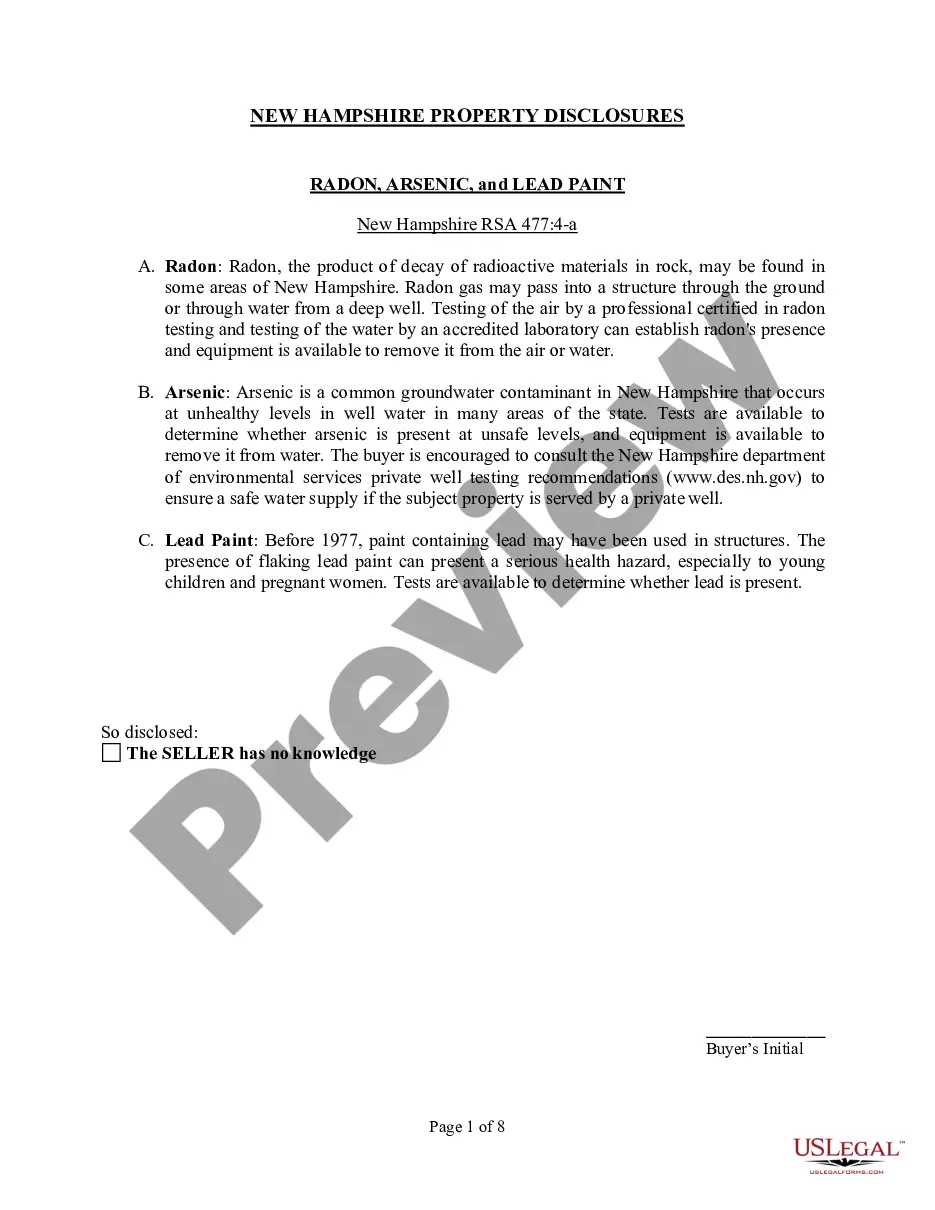
- Disclosure of known hazards: Information about radon, arsenic, and lead paint.
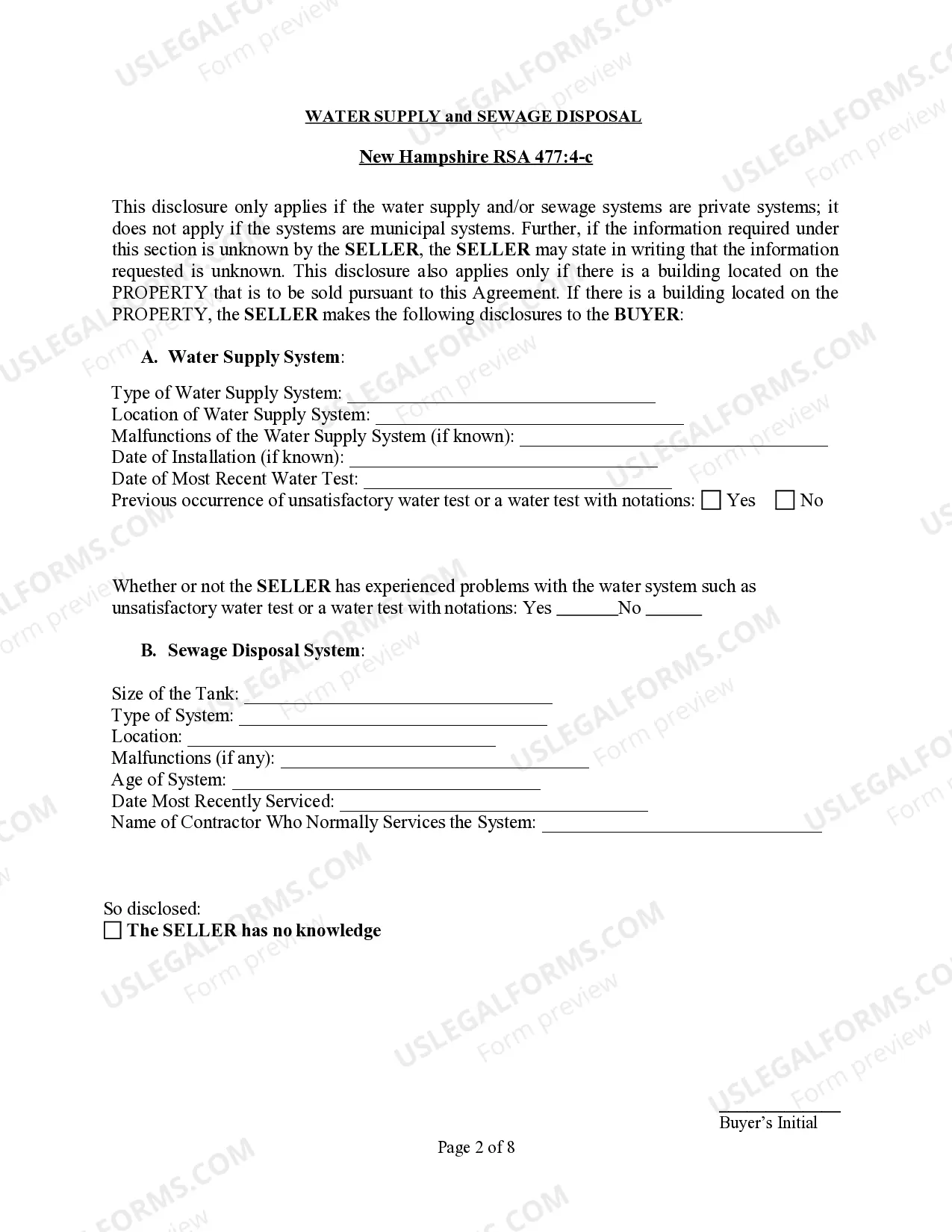
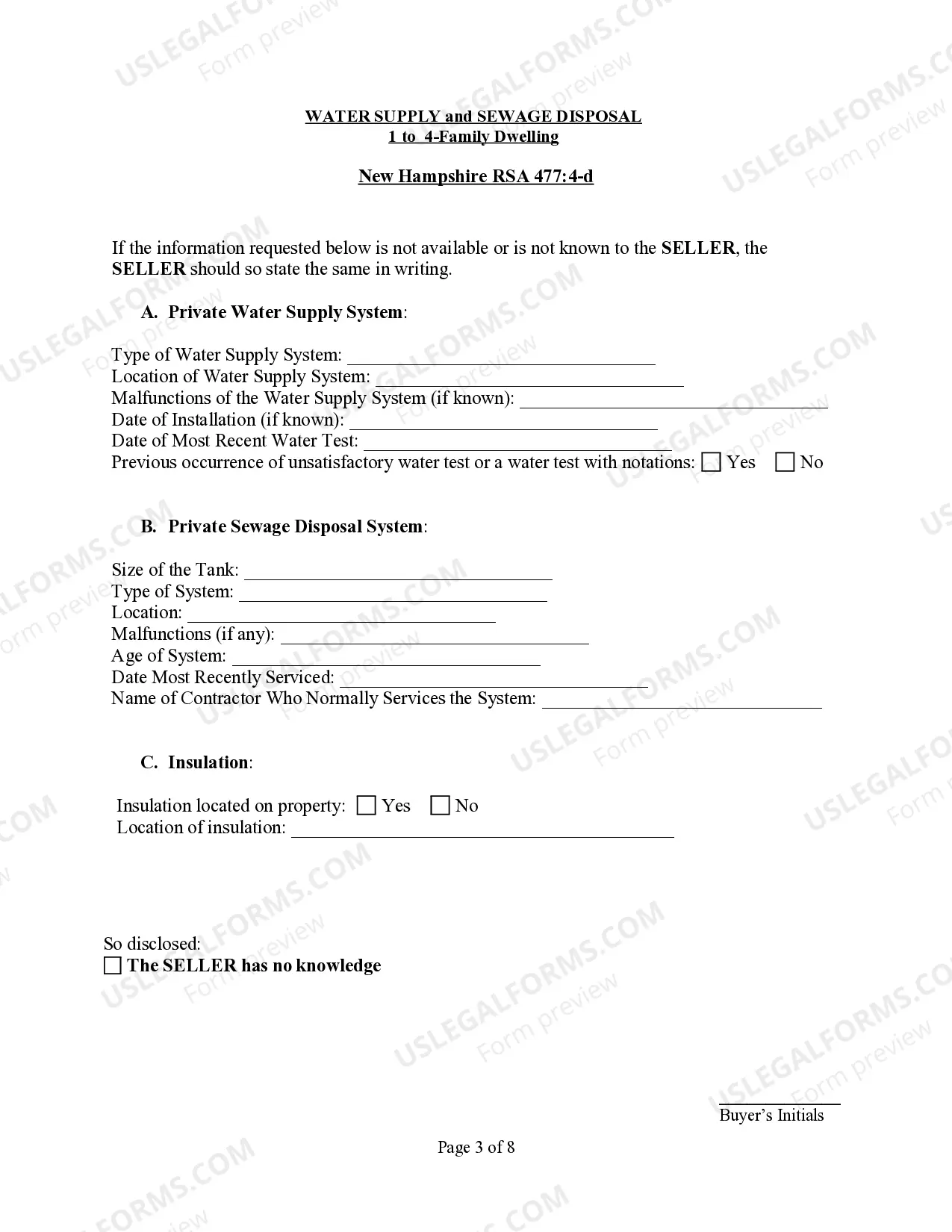
- Water supply and sewage disposal details: Requirements related to private systems.
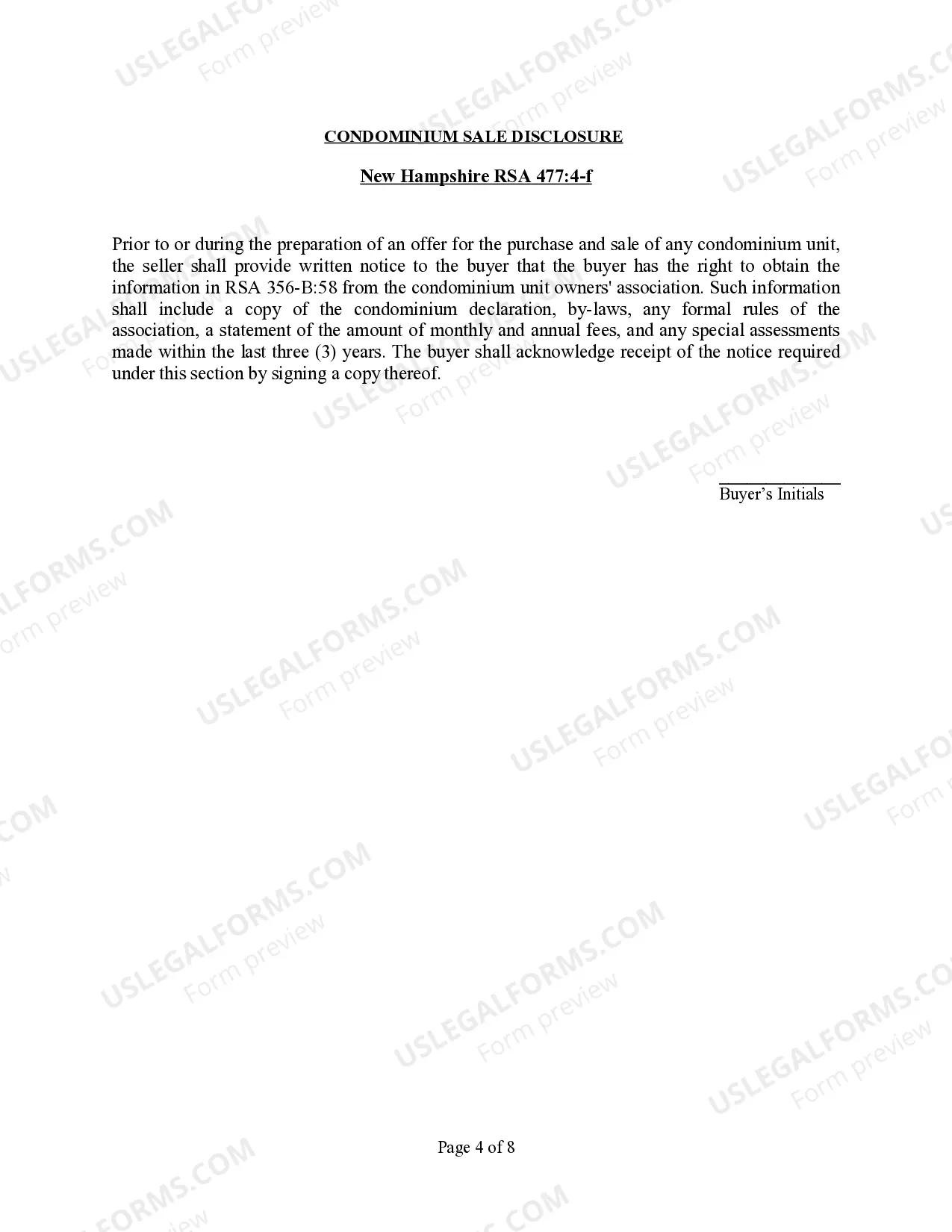
- Condominium sale disclosures: Information regarding the buyer's rights to obtain important documents from the owner's association.
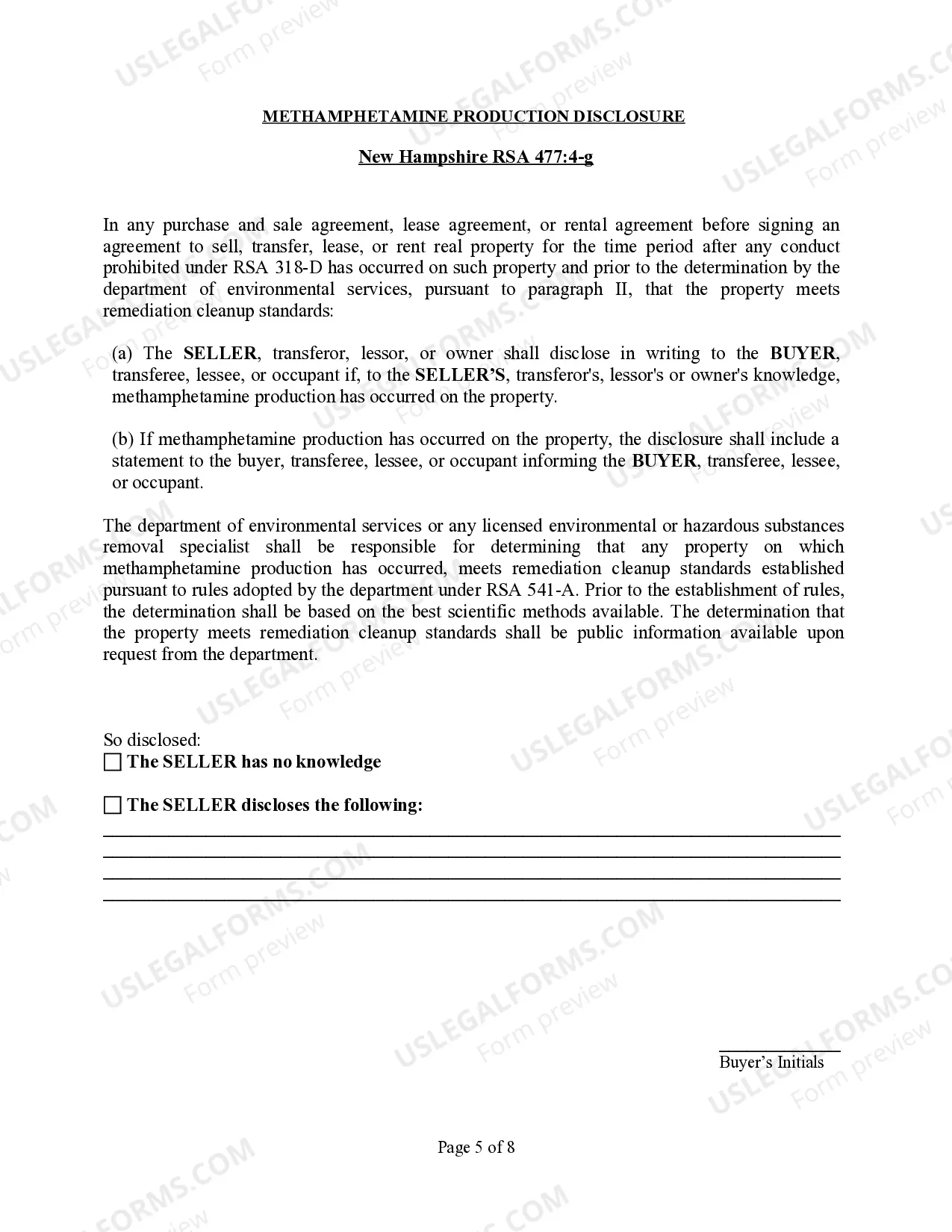
- Methamphetamine production disclosure: Obligation to inform buyers if such activity has occurred on the property.
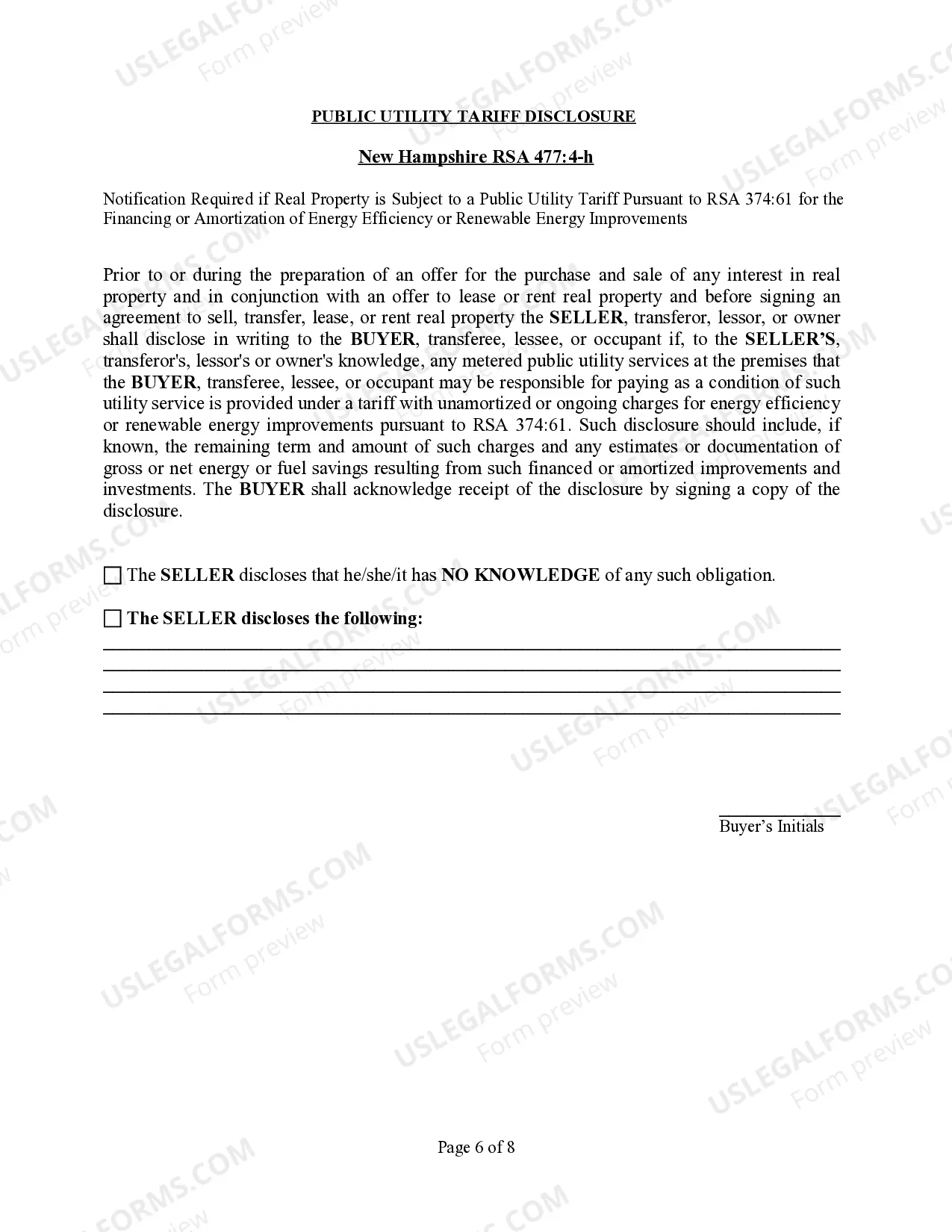
- Public utility tariff disclosure: Notification about any associated utility service charges.
- Asbestos disposal site confirmation: Clarification if the property is an asbestos site.
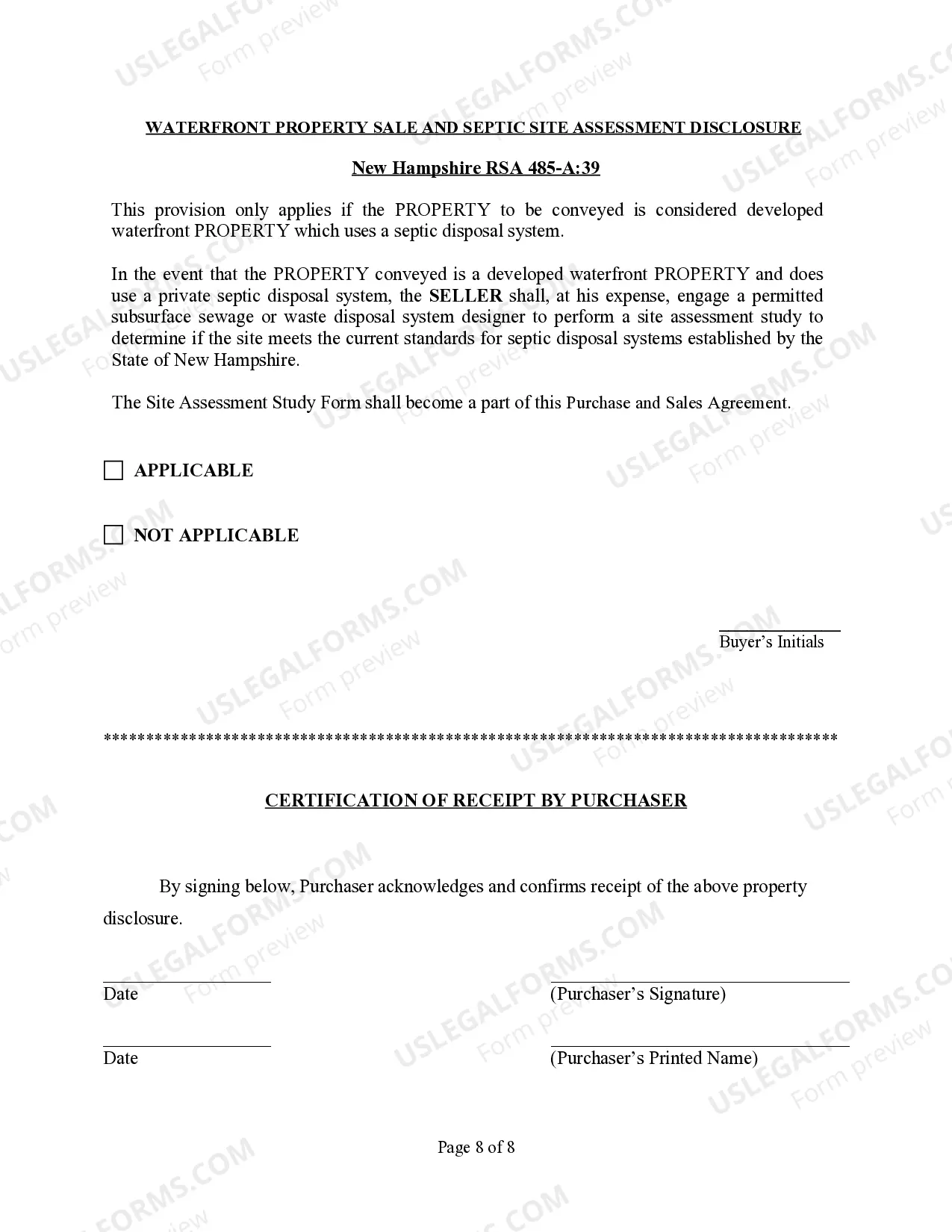
- Waterfront property septic assessment: Obligations for properties using septic systems.
When to use this form
This disclosure statement is essential when selling commercial real estate in New Hampshire. It should be used whenever a property is being sold, especially if it involves private water systems, sewage systems, or known environmental hazards. Using this form helps protect both the seller and buyer by providing clear and documented disclosures about the property's condition.
Intended users of this form
- Commercial property sellers in New Hampshire.
- Real estate agents representing commercial sellers.
- Buyers interested in purchasing commercial real estate.
- Real estate attorneys involved in commercial transactions.
Completing this form step by step
- Fill in the property details: Specify the address and relevant commercial information.
- Complete the hazard disclosures: Provide details about radon, arsenic, lead paint, and any knowledge of methamphetamine production.
- Detail the water supply and sewage systems: Include the type, location, and any known malfunctions.
- Disclose any applicable condominium information: State if the property is a condominium and include required documentation details.
- Have all parties sign: Ensure the buyer acknowledges receipt of the disclosures by signing the form.
Notarization requirements for this form
This form does not typically require notarization unless specified by local law. However, certain sections may require signatures from all parties involved, so it is advisable to check local regulations for any specific requirements.
Get your form ready online
Our built-in tools help you complete, sign, share, and store your documents in one place.
Make edits, fill in missing information, and update formatting in US Legal Forms—just like you would in MS Word.
Download a copy, print it, send it by email, or mail it via USPS—whatever works best for your next step.
Sign and collect signatures with our SignNow integration. Send to multiple recipients, set reminders, and more. Go Premium to unlock E-Sign.
If this form requires notarization, complete it online through a secure video call—no need to meet a notary in person or wait for an appointment.
We protect your documents and personal data by following strict security and privacy standards.

Make edits, fill in missing information, and update formatting in US Legal Forms—just like you would in MS Word.

Download a copy, print it, send it by email, or mail it via USPS—whatever works best for your next step.

Sign and collect signatures with our SignNow integration. Send to multiple recipients, set reminders, and more. Go Premium to unlock E-Sign.

If this form requires notarization, complete it online through a secure video call—no need to meet a notary in person or wait for an appointment.

We protect your documents and personal data by following strict security and privacy standards.
Mistakes to watch out for
- Failing to disclose known issues with the property.
- Inaccurately completing sections about water supply or sewage systems.
- Not obtaining necessary testing for radon or arsenic in private wells.
- Overlooking the requirement for buyer signatures on disclosures.
Why complete this form online
- Convenience: Easily download and complete the form at your convenience.
- Editability: Make changes or updates as needed before finalizing the document.
- Reliability: Access legally vetted forms prepared by licensed attorneys.
Looking for another form?
Form popularity
FAQ
Whenever you sell real estate, you are obligated to follow local mandatory disclosure laws. This involves informing the buyer about specific hazards or problems affecting the property before the sale is completed.
Other exemptions from of the TDS include transfers from one co-owner to another, transfers made to a spouse or child, grandchild, parent, grandparent or other direct ancestor or descendent; transfers between spouses in connection with dissolution of marriage, and various transfers to the state for failure to pay
If a seller fails to disclose, or actively conceals, problems that affect the value of the property; they are violating the law, and may be subject to a lawsuit for recovery of damages based on claims of fraud and deceit, misrepresentation and/or breach of contract.
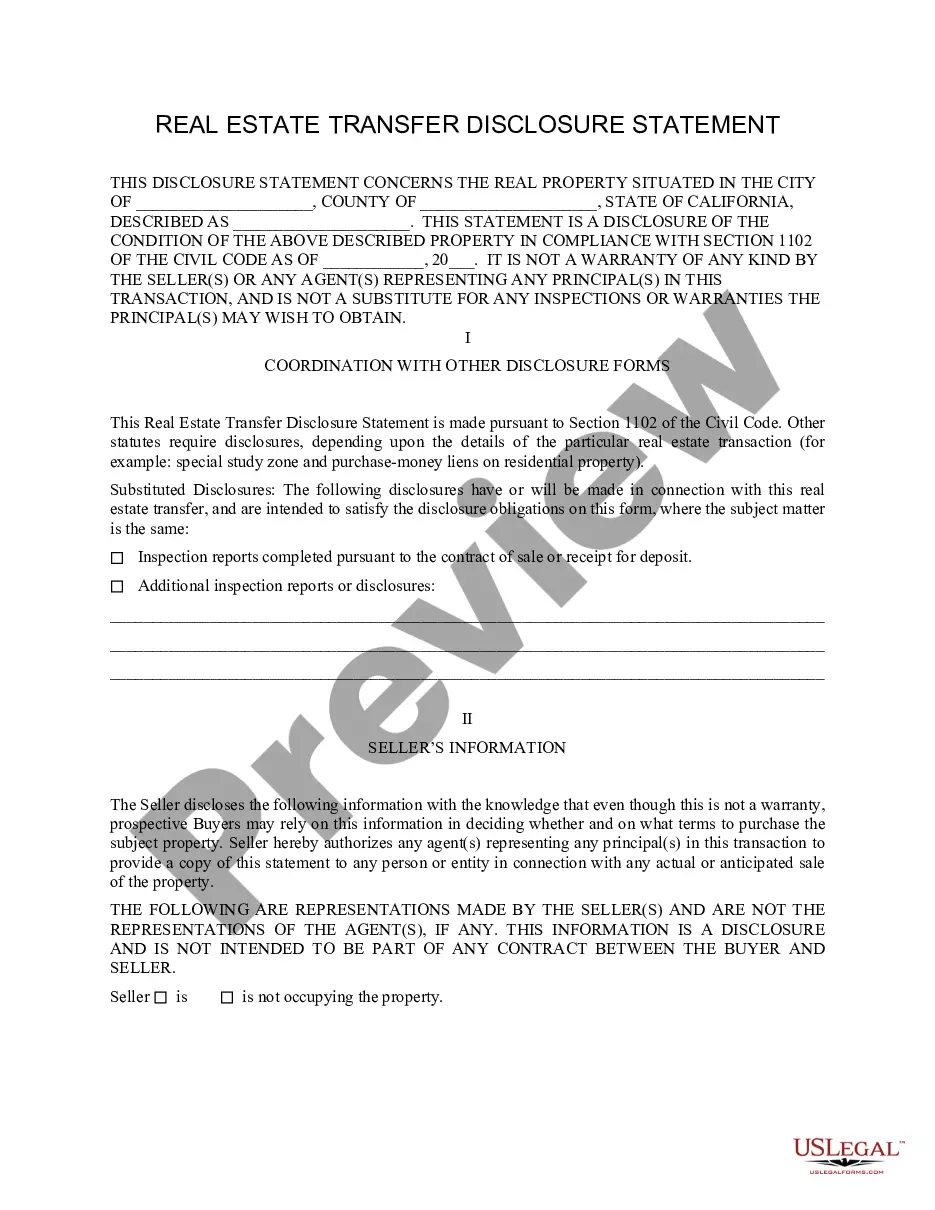
The Real Estate Transfer Disclosure Statement (TDS) describes the condition of a property and, in the case of a sale, must be given to a prospective buyer as soon as practicable and before transfer of title.
If a seller fails to disclose, or actively conceals, problems that affect the value of the property; they are violating the law, and may be subject to a lawsuit for recovery of damages based on claims of fraud and deceit, misrepresentation and/or breach of contract.
It includes the name of the organization, the party of the loans, approval, date, and place at which the document was signed, key terms such as tenure of the loan, interest charged, annual percentage rate, total processing fees, loan statement, prepayment terms, and various other information including the terms
While a TDS is not mandated for commercial property sales, commercial buyers are still protected by common law disclosure requirements.
Which seller is exempt from completing a transfer disclosure statement? A lender selling a property which they previously foreclosed upon.
What are the exemptions to the law requiring a seller to provide a TDS?Transfers pursuant to court order (such as court-ordered probate sales, sales by a bankruptcy trustee, writ of execution, eminent domain, and transfer resulting from a decree for specific performance).