Nebraska Easement Agreement
What is this form?
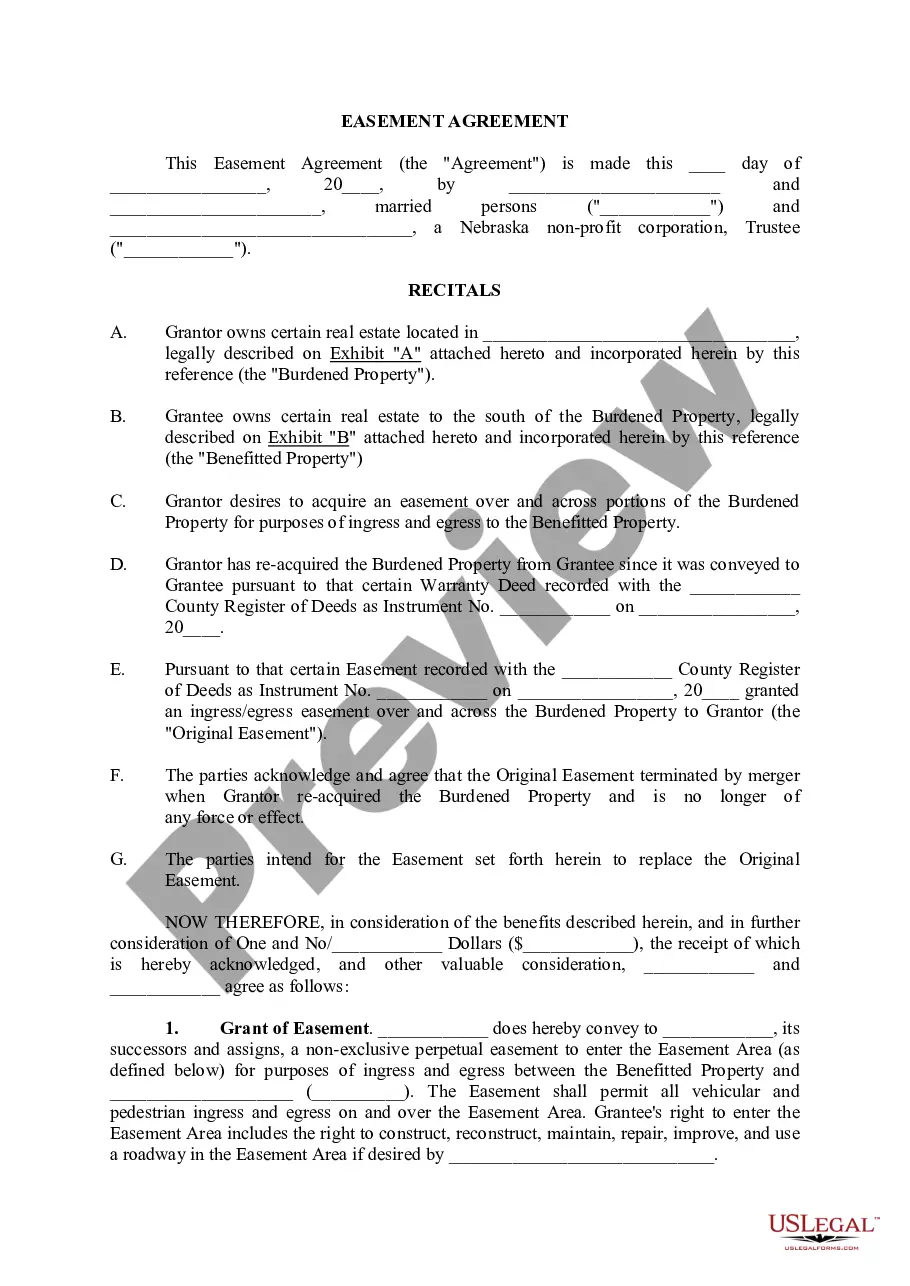
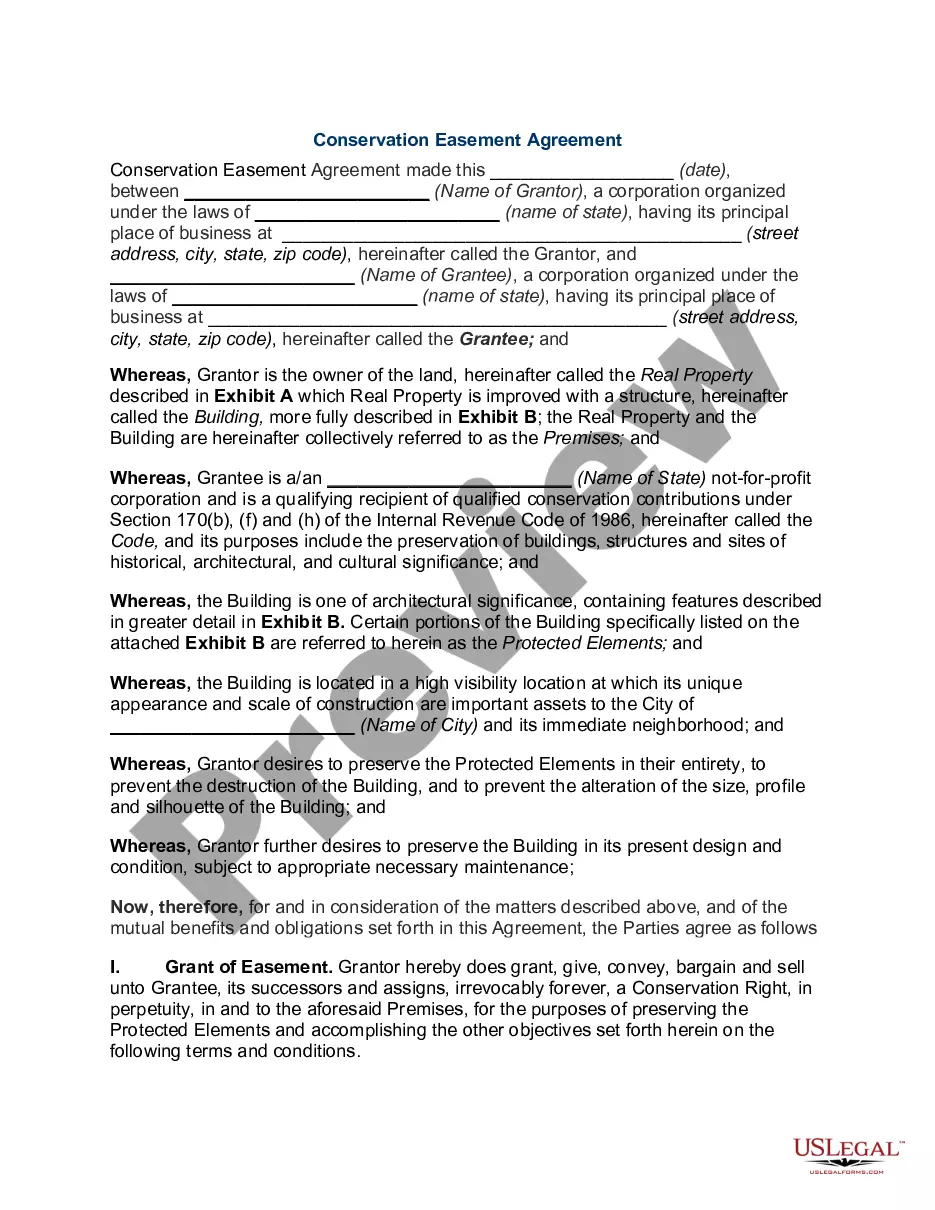
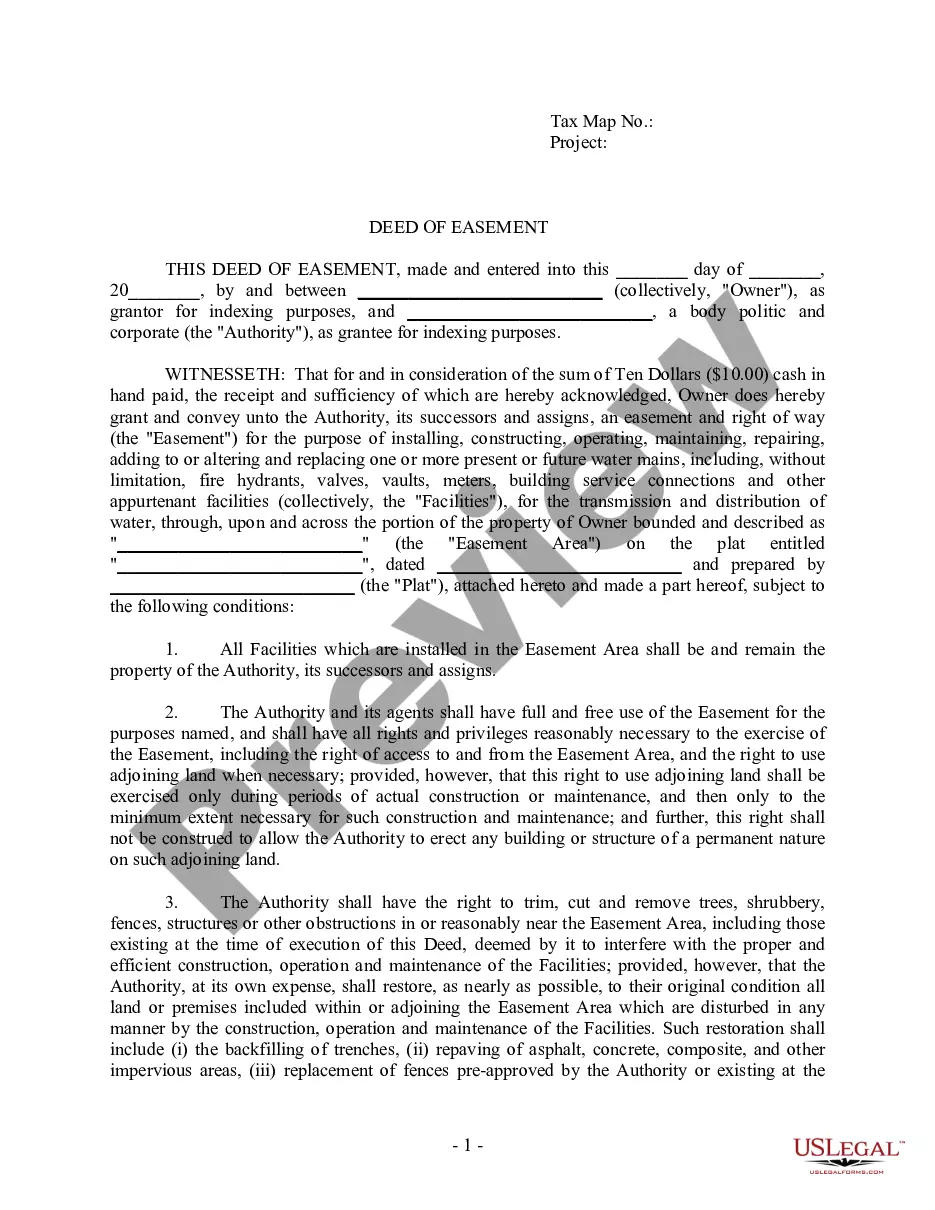
An easement agreement is a legal document granting one party the right to enter and utilize a specified area of another party's property. This agreement typically addresses rights of ingress and egress, enabling access for purposes like road usage or utility installations. Unlike other property-related agreements, the easement does not transfer ownership but allows specific use rights while maintaining the original ownership of the land.
Main sections of this form
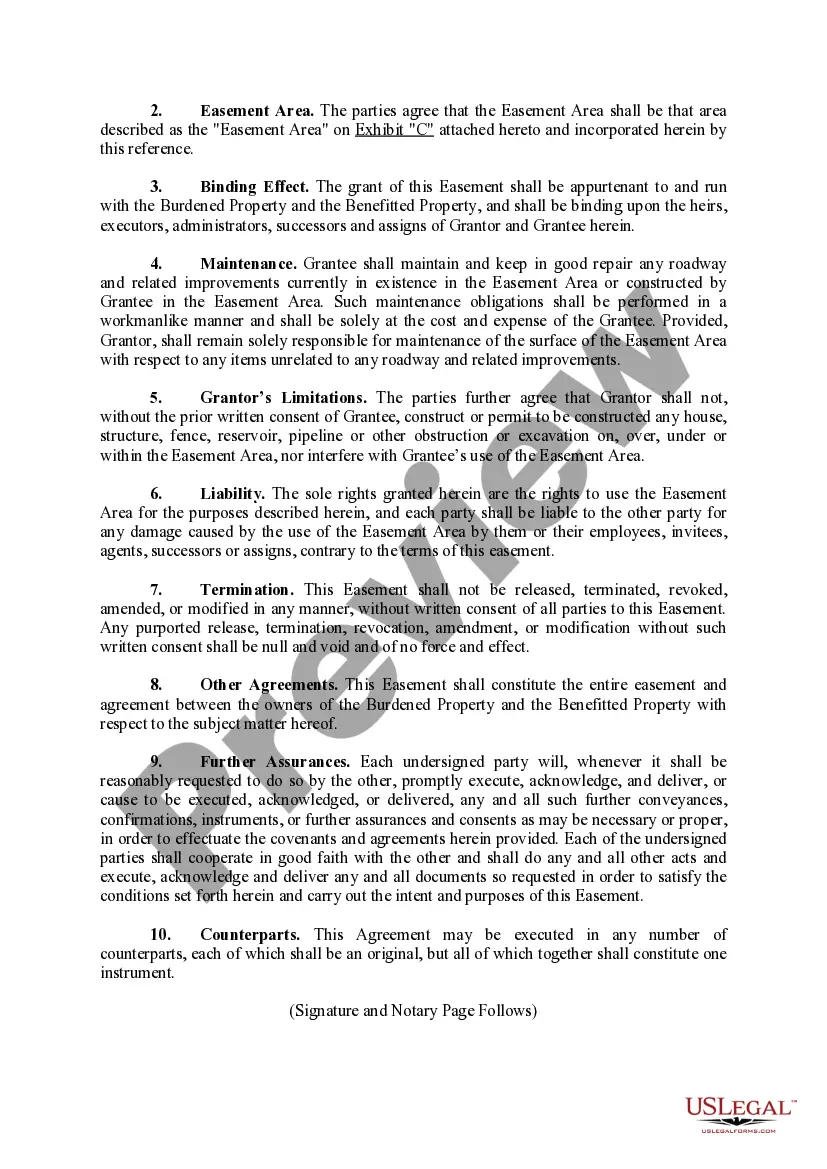
- Grant of Easement: Details the rights conveyed to the grantee for access over the burdened property.
- Easement Area: Specifies the location and extent of the easement as detailed in attached exhibits.
- Binding Effect: Clarifies that the easement runs with both properties and binds future owners.
- Maintenance Responsibilities: Outlines who is responsible for maintaining the easement area.
- Termination Clause: Conditions under which the easement can be modified or terminated.
Situations where this form applies
This easement agreement is essential when a property owner wishes to grant another party access to their property for specific use, such as constructing a road, running utility lines, or other similar activities. It is particularly useful when the properties involved are adjacent, and formalizing the access rights is necessary to prevent disputes in the future.
Intended users of this form
- Property owners who wish to grant access rights to their land.
- Businesses or utilities requiring easements to install infrastructure.
- Legal professionals assisting clients with property transactions involving easements.
- Individuals or organizations needing clear documentation of access rights for legal or planning purposes.
Steps to complete this form
- Identify the parties involved, including the Grantor and Grantee.
- Clearly describe the burdened and benefitted properties as outlined in the attached exhibits.
- Specify the terms of the easement, including the purpose and extent of use.
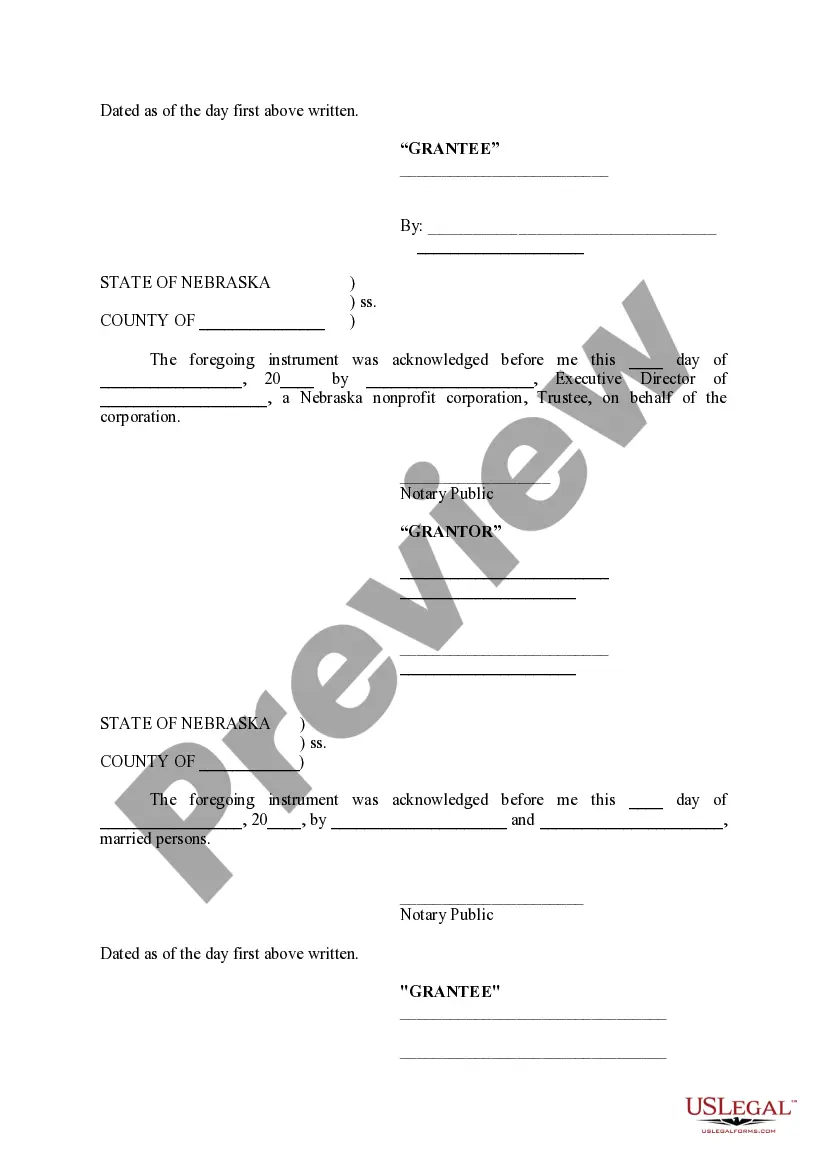
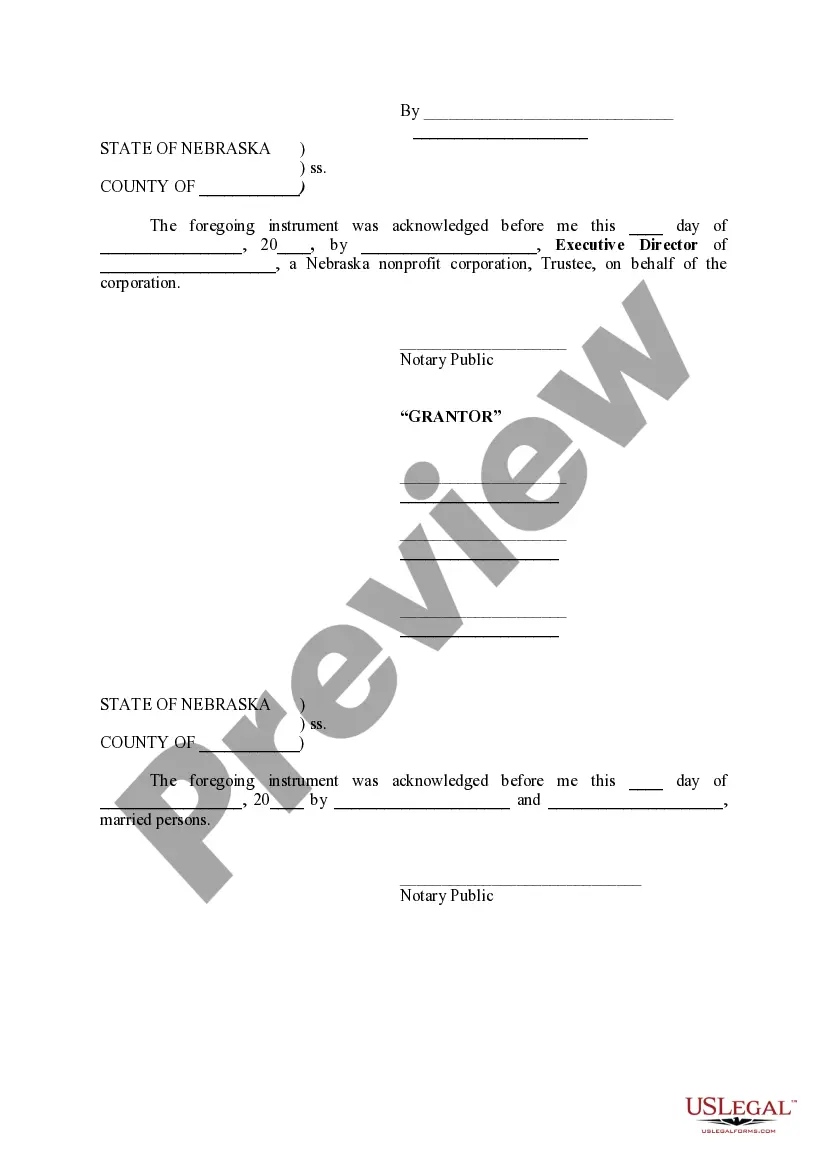
- Enter the consideration amount and sign the agreement in the presence of a notary.
- Ensure each party retains a copy of the finalized agreement for their records.
Notarization guidance
Yes, this form must be notarized to be legally valid. Completing this process ensures that the signatures are authenticated and prevents potential disputes about the authenticity of the document.
Get your form ready online
Our built-in tools help you complete, sign, share, and store your documents in one place.
Make edits, fill in missing information, and update formatting in US Legal Forms—just like you would in MS Word.
Download a copy, print it, send it by email, or mail it via USPS—whatever works best for your next step.
Sign and collect signatures with our SignNow integration. Send to multiple recipients, set reminders, and more. Go Premium to unlock E-Sign.
If this form requires notarization, complete it online through a secure video call—no need to meet a notary in person or wait for an appointment.
We protect your documents and personal data by following strict security and privacy standards.

Make edits, fill in missing information, and update formatting in US Legal Forms—just like you would in MS Word.

Download a copy, print it, send it by email, or mail it via USPS—whatever works best for your next step.

Sign and collect signatures with our SignNow integration. Send to multiple recipients, set reminders, and more. Go Premium to unlock E-Sign.

If this form requires notarization, complete it online through a secure video call—no need to meet a notary in person or wait for an appointment.

We protect your documents and personal data by following strict security and privacy standards.
Typical mistakes to avoid
- Failing to clearly define the easement area, leading to potential disputes.
- Not obtaining the necessary signatures from all parties involved.
- Leaving out the maintenance responsibilities, which could lead to neglect of the easement area.
- Not notarizing the document, which is critical for enforceability.
Benefits of using this form online
- Convenience of accessing and downloading the form any time.
- Editability to customize the agreement to specific needs.
- Reliability, as the forms are drafted by licensed attorneys to ensure legal compliance.
Looking for another form?
Form popularity
FAQ
Types of Easements An easement may be classified as either an easement appurtenant or an easement in gross. Easement Appurtenant. An easement appurtenant is an easement that benefits one parcel of land, known as the dominant tenement, to the detriment of another parcel of land, known as the servient tenement.
Action can be taken against if you interfere with their right to access the easement for example you can't lock or fence them out of the easement land, nor build over the easement land.
If an authority has an easement registered over your land, they have the right to access the easement to maintain or repair the easement land or their equipment on the land.
An easement is a right which the owner or occupier of certain land possesses, as such, for the beneficial enjoyment of that land, to do and continue to do something, or to prevent and continue to prevent something being done, in or upon, or in respect of certain other land not his own. Kinds/ Types of Easement -
An easement owner cannot claim another party has trespassed on their easement, because trespass involves interference with the plaintiff's exclusive possession. Easement holders do not have a right to exclusive possession. They may claim nuisance, but only if the interference is substantial and unreasonable.
The party gaining the benefit of the easement is the dominant estate (or dominant tenement), while the party granting the benefit or suffering the burden is the servient estate (or servient tenement). For example, the owner of parcel A holds an easement to use a driveway on parcel B to gain access to A's house.
Easement holders have the right to use the land to their enjoyment as long as it does not place an unreasonable burden on the servient estate. Landowners have the right to make whatever use of the land as long as it doesn't unduly affect the easement.
A permissive easement is simply permission to use the land of another. It is essentially a license, which is fully revocable at any time by the property owner.Use of this road is permissive and may be revoked at any time by the owner."