Nebraska Discovery Interrogatories for Divorce Proceeding for either Plaintiff or Defendant
What is this form?
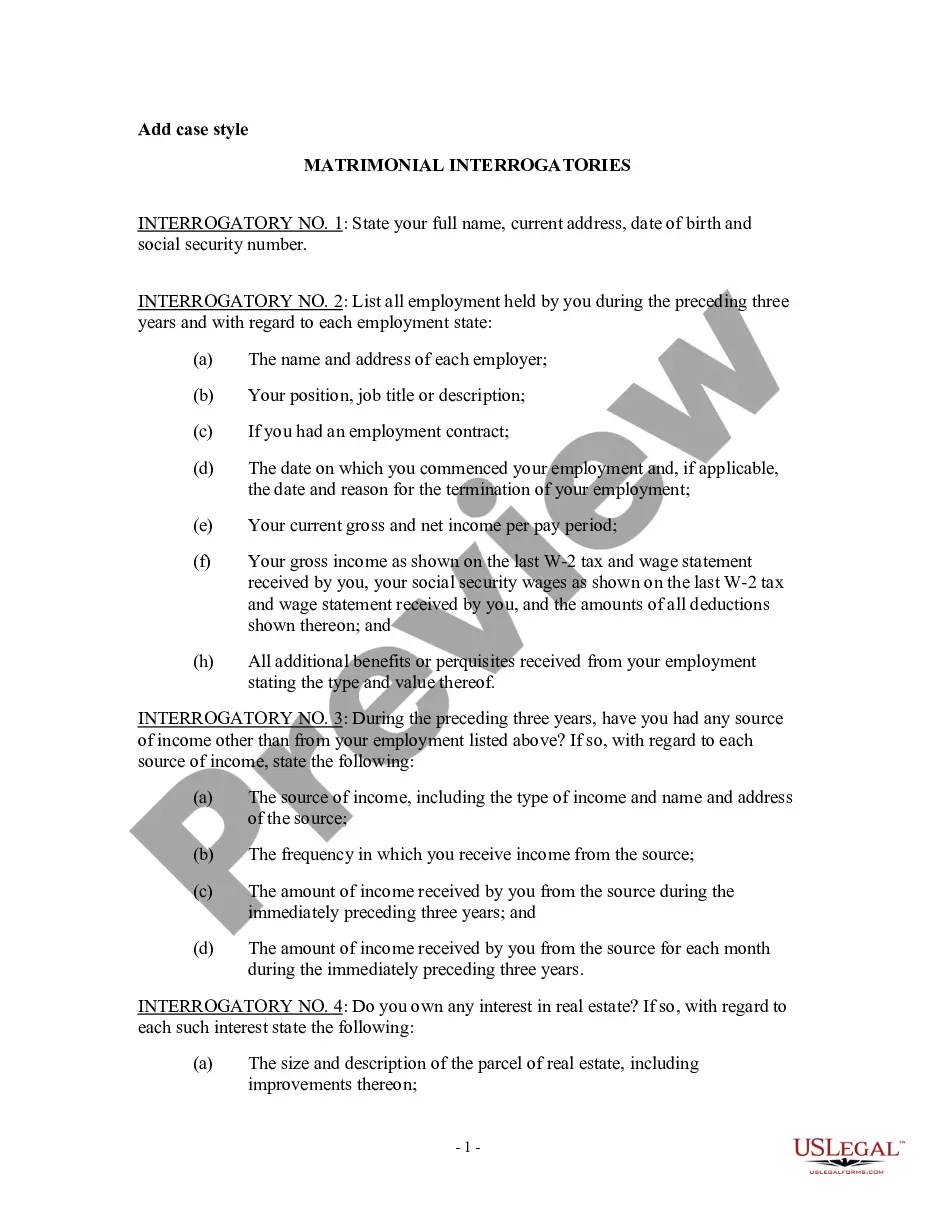
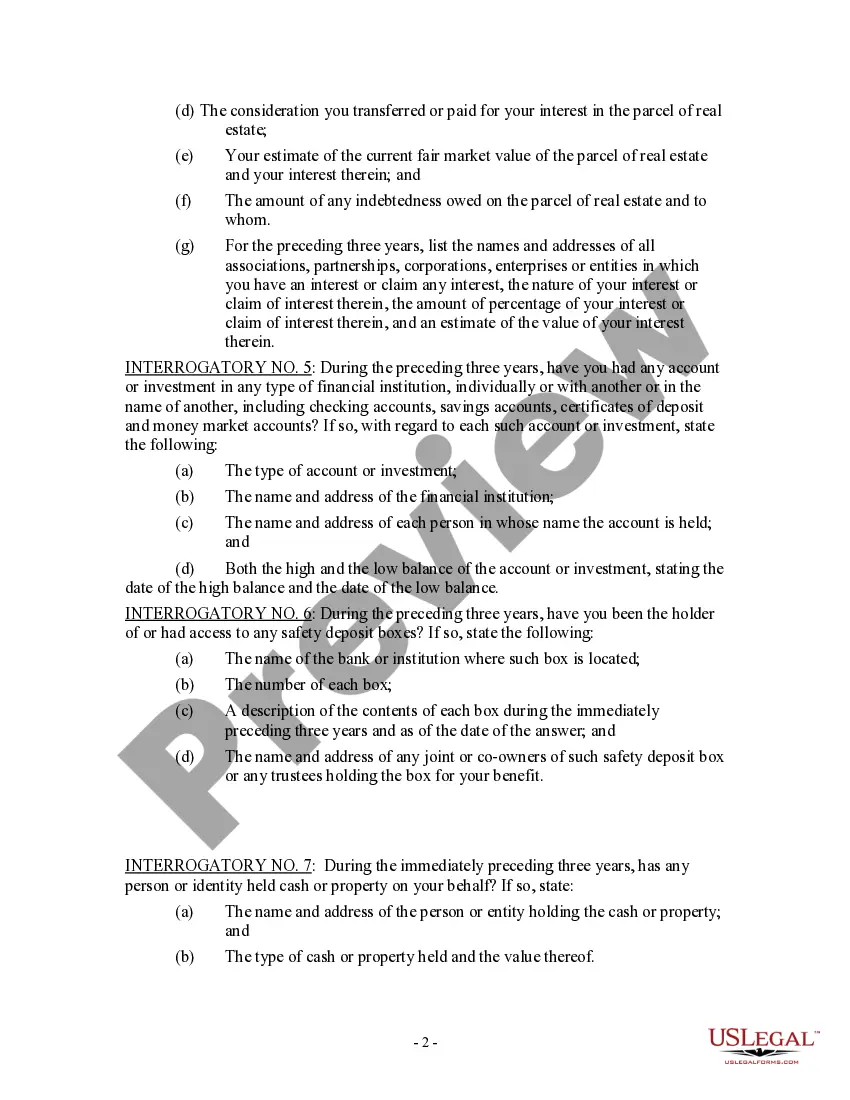
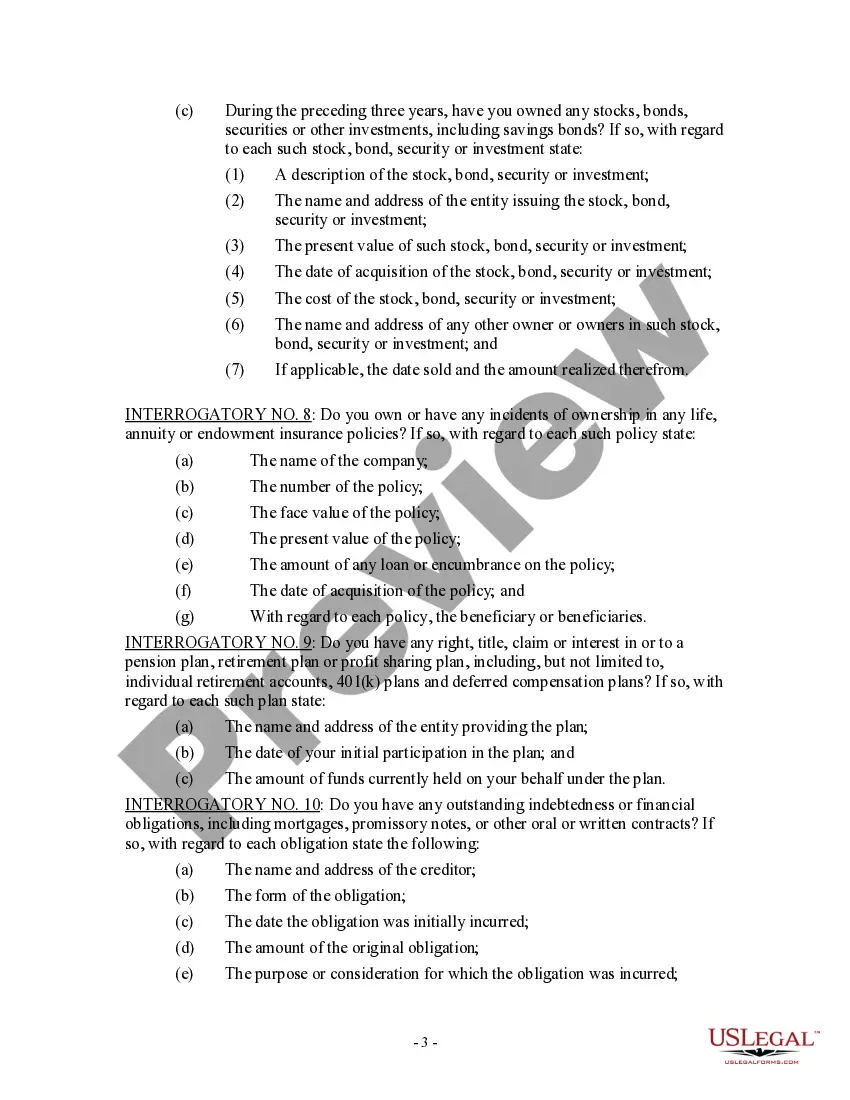
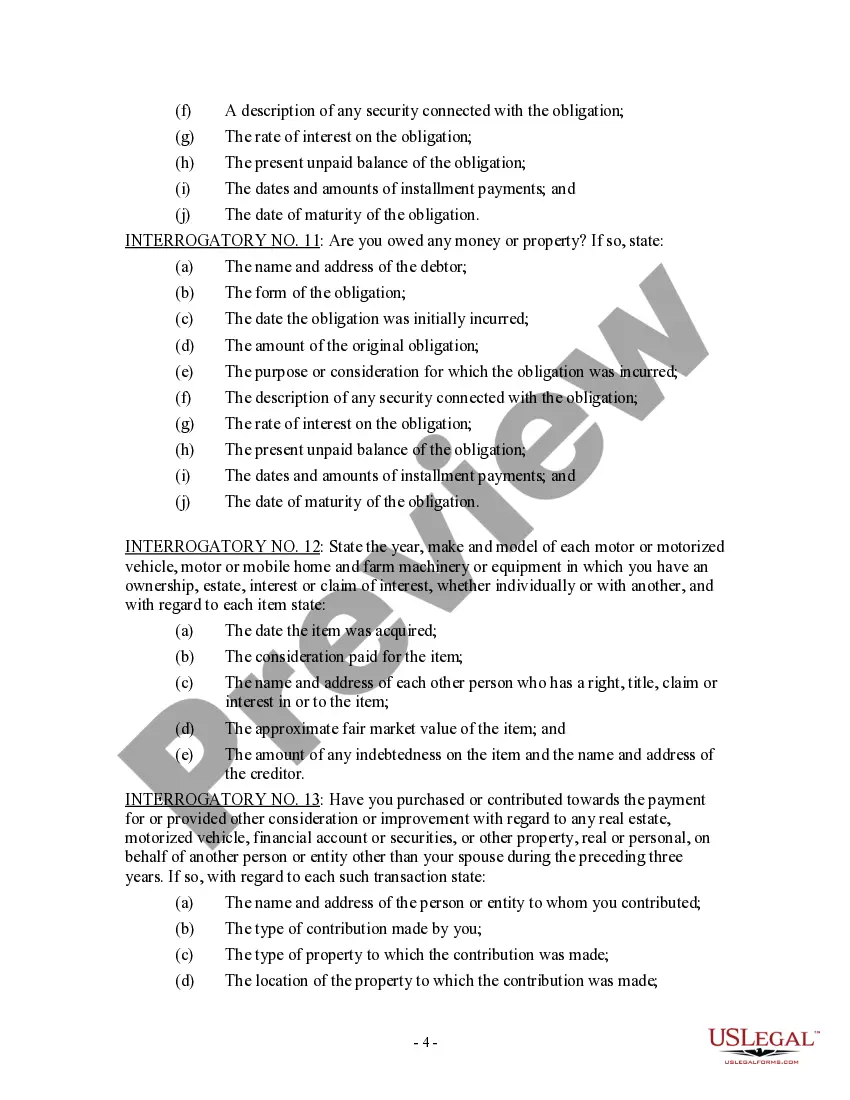
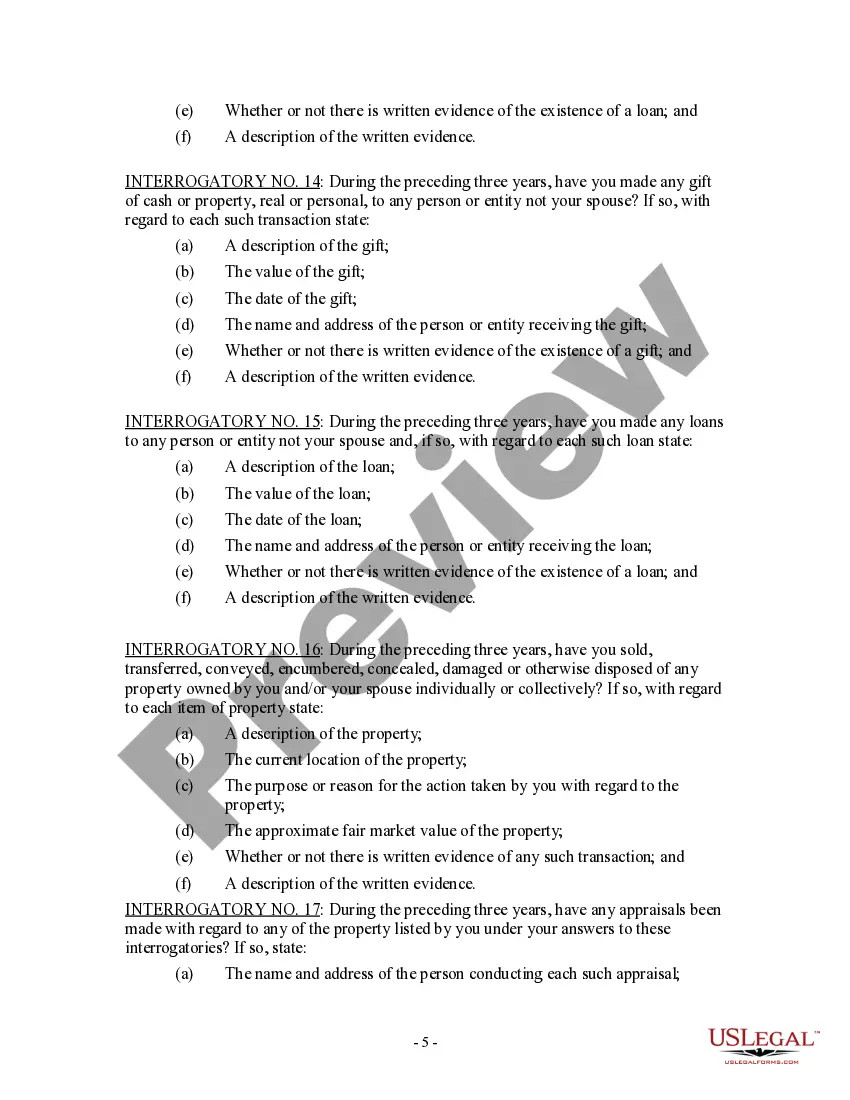
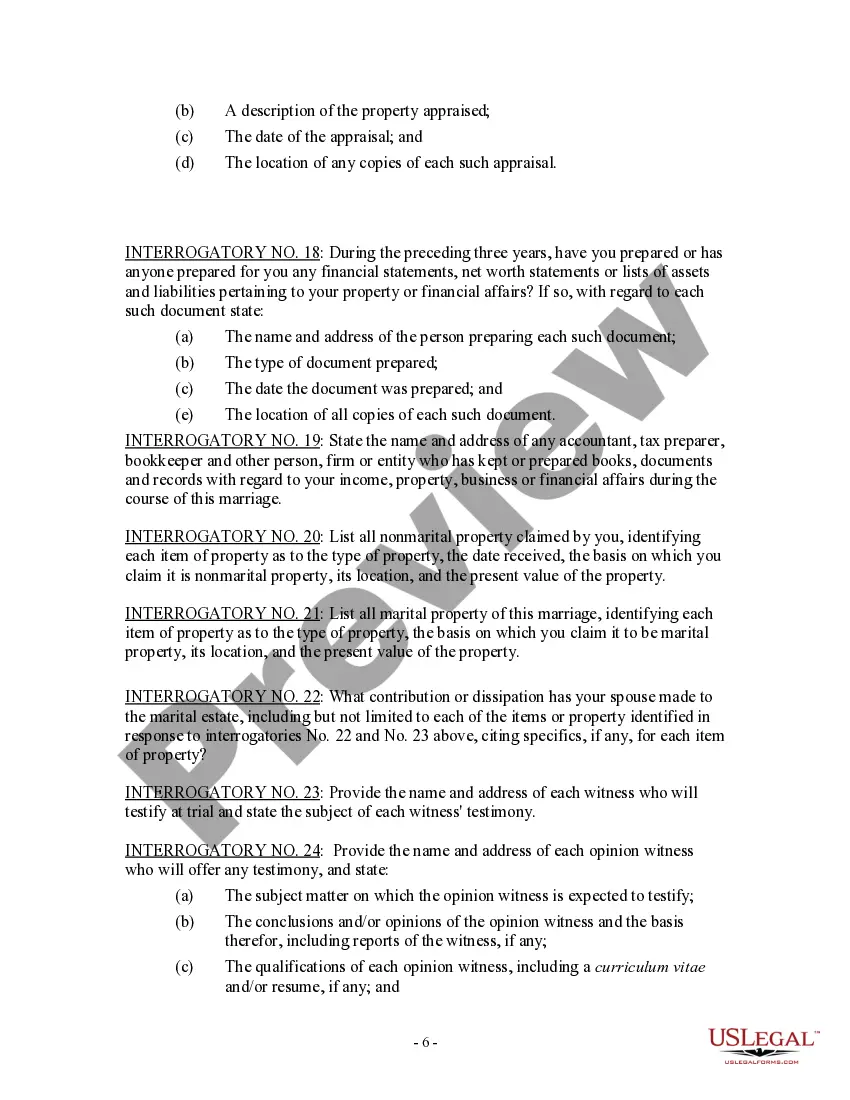
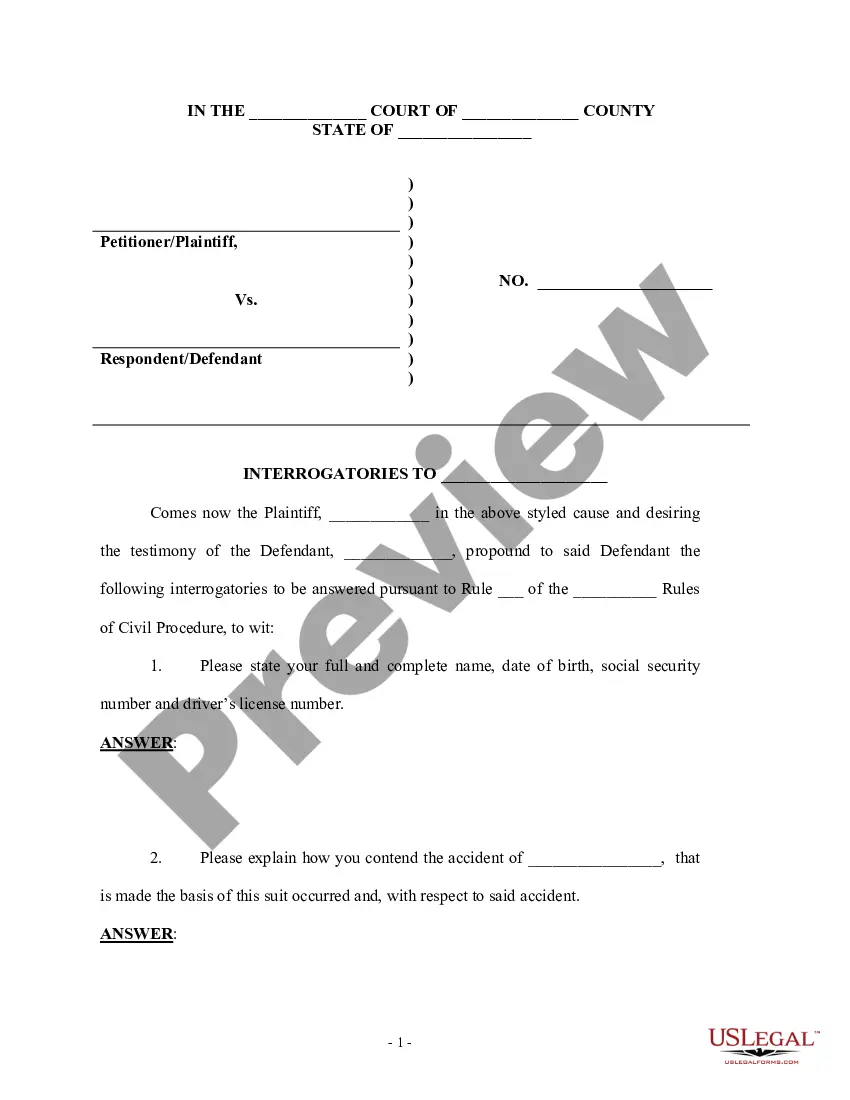
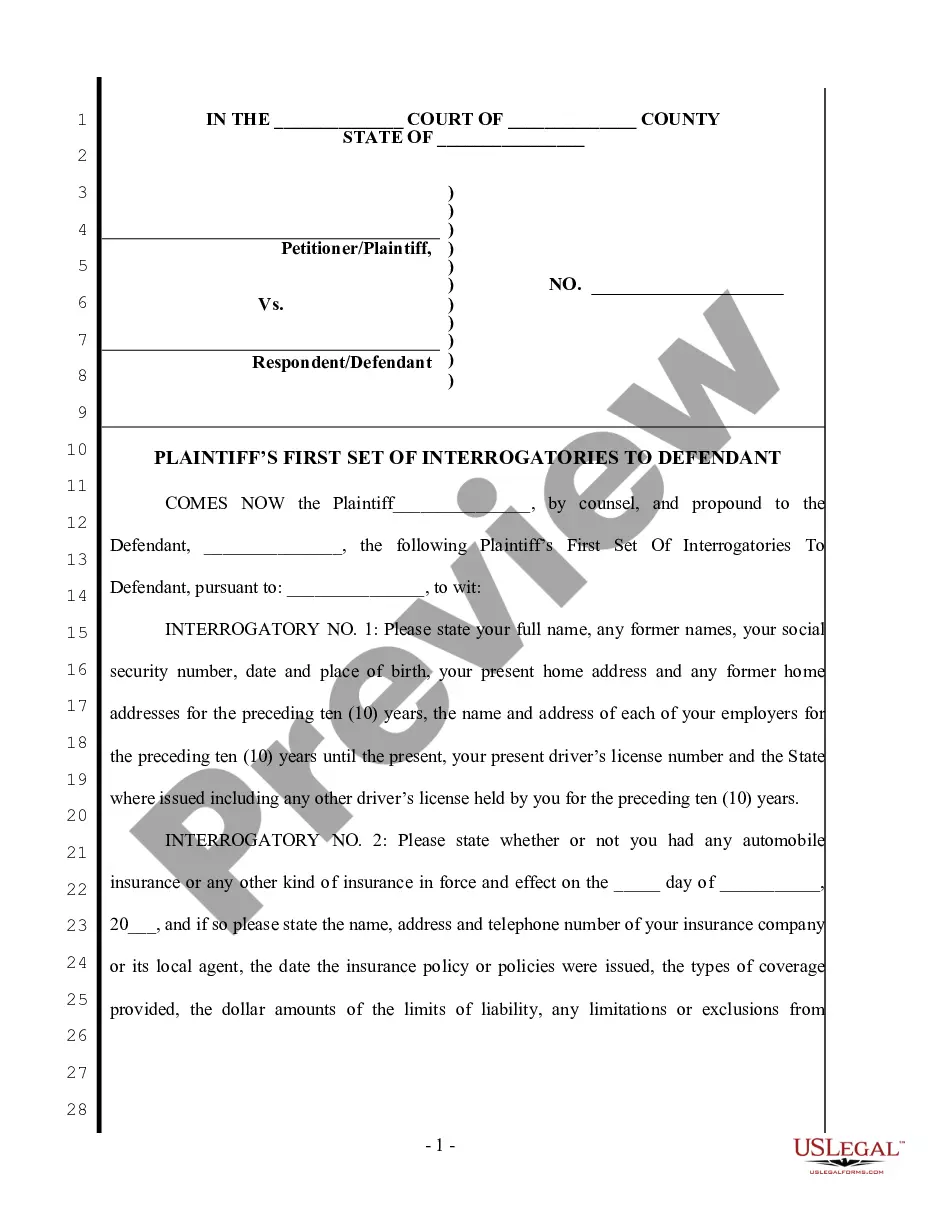
The Discovery Interrogatories for Divorce Proceeding is a legal form designed to facilitate the exchange of information between spouses during a divorce. This form allows the Plaintiff to question the Defendant, gathering necessary details about assets, income, and other key factors relevant to the divorce proceedings. Unlike other forms, this specific interrogatory form includes a request for the production of documents, making it a comprehensive tool for discovery in divorce cases.
Key components of this form
- Personal Identification: Full name, address, date of birth, and social security number.
- Employment History: Detailed information about the Defendant's employment over the past three years.
- Income Sources: Any additional sources of income aside from employment.
- Real Estate Interests: Details on any properties owned by the Defendant.
- Financial Accounts: Information about bank accounts and investments.
- Debts and Obligations: List of all financial obligations or debts.
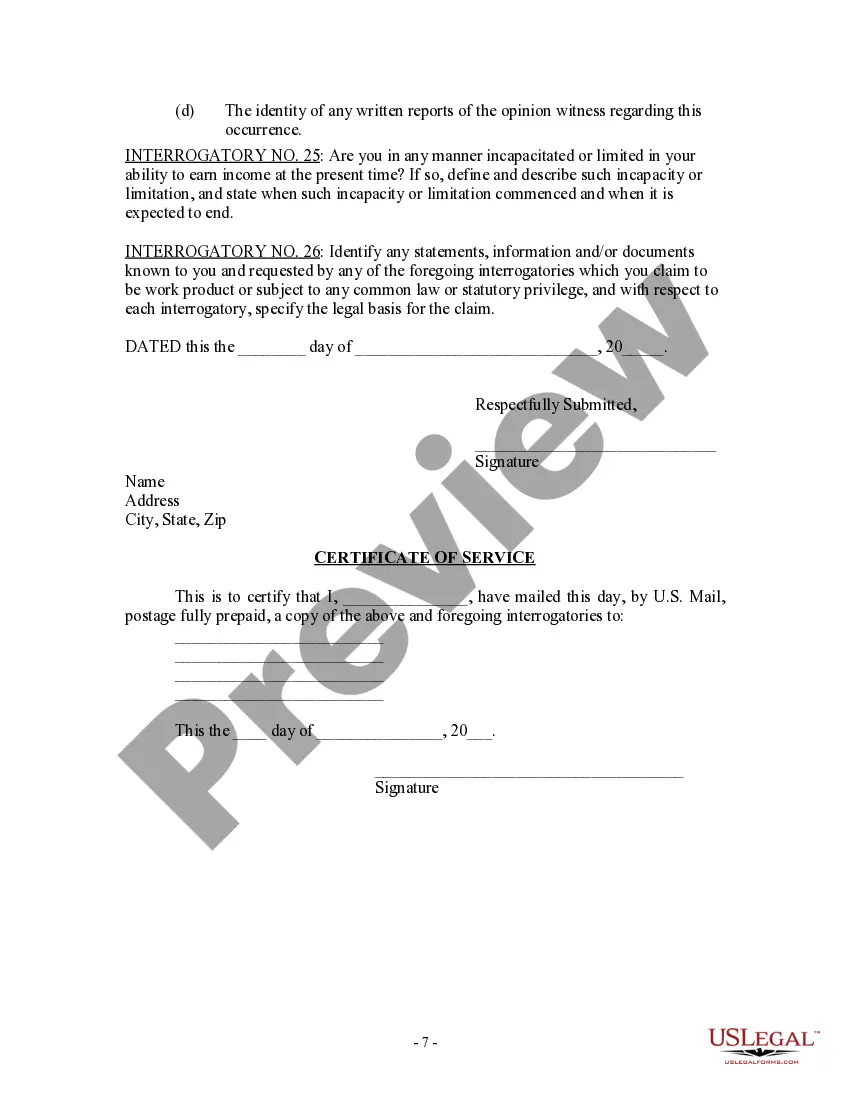
- Witness Information: Names and addresses of witnesses expected to testify.
Common use cases
This form should be used during divorce proceedings when one party (the Plaintiff) needs to formally request specific information from the other party (the Defendant). It is particularly useful in resolving disputes over assets, financial responsibilities, and other pertinent issues that may affect the outcome of the divorce settlement.
Who this form is for
The following individuals should consider using this form:
- Divorce Plaintiffs seeking to gather detailed information from the Defendant.
- Divorce Defendants who want to prepare their responses to interrogatories.
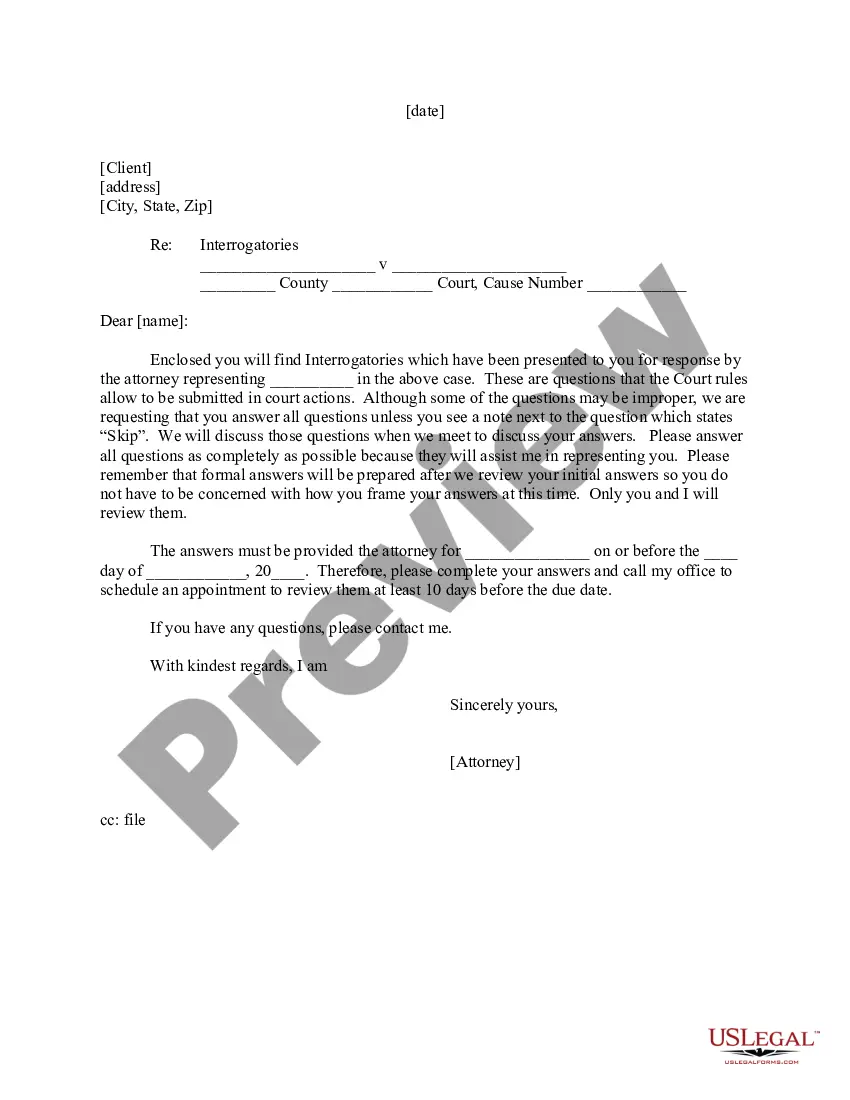
- Attorneys representing clients in divorce cases.
How to prepare this document
To complete the Discovery Interrogatories for Divorce Proceeding, follow these steps:
- Identify the parties involved in the divorce.
- Answer each interrogatory truthfully, providing all requested information.
- Include your signature and the date at the end of the document.
- Certify that you have sent the completed interrogatories to the appropriate parties.
- File the form with the court as required.
Does this form need to be notarized?
This form does not typically require notarization unless specified by local law. However, ensure to verify any notary requirements based on your jurisdiction's regulations.
Get your form ready online
Our built-in tools help you complete, sign, share, and store your documents in one place.
Make edits, fill in missing information, and update formatting in US Legal Forms—just like you would in MS Word.
Download a copy, print it, send it by email, or mail it via USPS—whatever works best for your next step.
Sign and collect signatures with our SignNow integration. Send to multiple recipients, set reminders, and more. Go Premium to unlock E-Sign.
If this form requires notarization, complete it online through a secure video call—no need to meet a notary in person or wait for an appointment.
We protect your documents and personal data by following strict security and privacy standards.

Make edits, fill in missing information, and update formatting in US Legal Forms—just like you would in MS Word.

Download a copy, print it, send it by email, or mail it via USPS—whatever works best for your next step.

Sign and collect signatures with our SignNow integration. Send to multiple recipients, set reminders, and more. Go Premium to unlock E-Sign.

If this form requires notarization, complete it online through a secure video call—no need to meet a notary in person or wait for an appointment.

We protect your documents and personal data by following strict security and privacy standards.
Avoid these common issues
- Failing to answer all interrogatories fully and truthfully.
- Neglecting to sign or date the document.
- Overlooking the need to provide supporting documentation if requested.
- Not serving the completed interrogatories to the Defendant properly.
Benefits of completing this form online
- Convenience of completing the form online and downloading it immediately.
- Editable fields allow customization to fit specific needs.
- Professionally drafted by licensed attorneys, ensuring legal validity.
- The interrogatories should be used solely for legitimate discovery purposes within the context of divorce proceedings.
- Responses must be truthful and complete; omission or falsification can lead to legal repercussions.
- This document serves as an important component in the equitable distribution of marital assets and determining support obligations.
Quick recap
- Discovery Interrogatories for Divorce Proceeding are vital for gathering necessary information in a divorce case.
- Properly completing this form can help clarify financial arrangements and responsibilities post-divorce.
- Review state-specific guidelines to ensure compliance and proper use of this form.
Looking for another form?
Form popularity
FAQ
The purpose of interrogatories is to learn a great deal of general information about a party in a lawsuit. For example, the defendant in a personal injury lawsuit about a car accident might send you interrogatories asking you to disclose things like: Where you live.
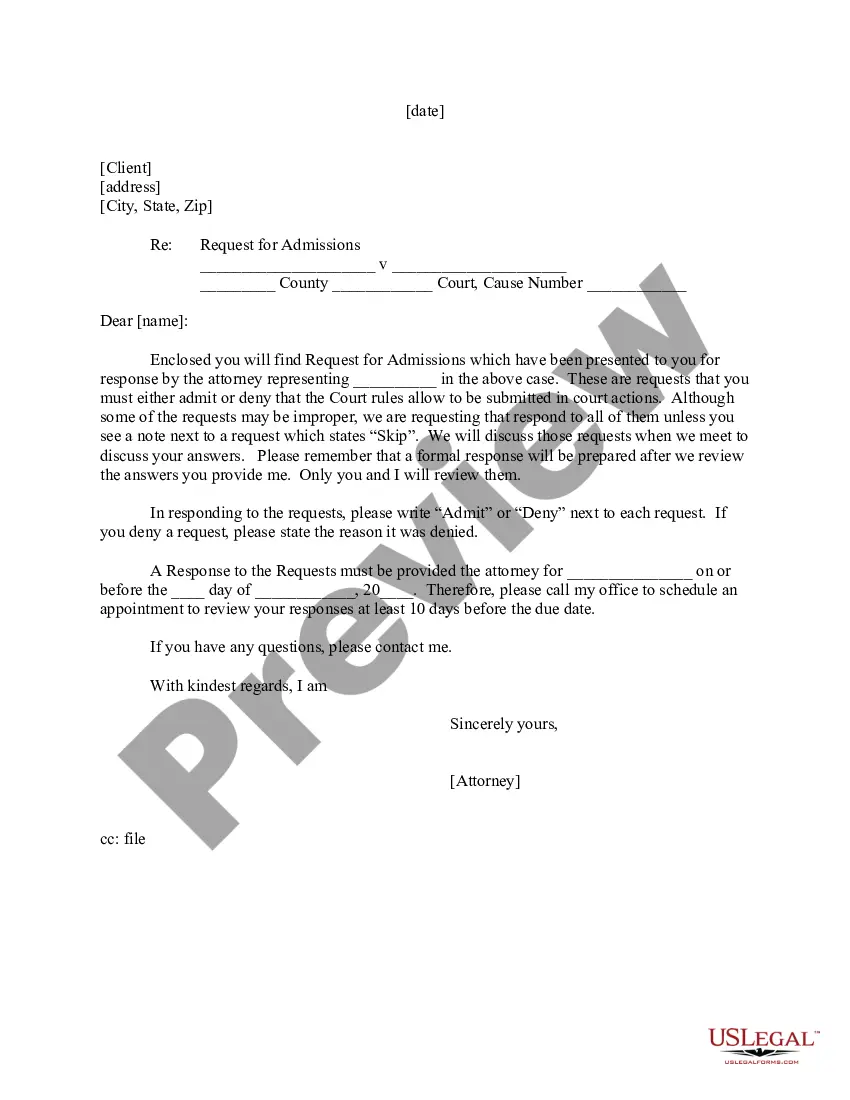
Written questions called interrogatories or requests for admission. Using these discovery tools, your spouse must answer questions in writing, or admit specific statements that you believe are true. Inspection demands. You can ask to inspect property like a safe deposit box or wine collection.
Request for Production of Documents: You can ask the plaintiff to produce documents that prove what they are claiming: like bills, their ledger and contract with you. Request for Interrogatories: You can ask the plaintiff to answer questions in writing about your case and the debt, like.
You can certainly make discovery requests that go further back than three years, especially if you have good cause to make such requests. There is nothing that prohibits you from making the request.
Interrogatories are part of the discovery process of divorce. They allow you and your soon-to-be/already ex spouse to ask questions that must be responded to in writing under oath. These answer are then used to determine facts in the case, as well as to question each side if/when the case goes to trial.
The type of discovery include: Interrogatorieswhich are written questions that must be answered under oath. Requests for production of documentsasking that certain documents be provided by you or your spouse. Requests for admissionsasking that certain facts be admitted or denied.
So, can you refuse to answer interrogatories? The answer is, no, you may not.That answer must either permit inspection of the requested information or object to the production of the information for a specific reason.
To sanction a party failing to comply with discovery, the court can order attorney's fees, or they can order the fact you are seeking to establish as having been established for purposes of your case, because the other side will not respond to the discovery on this issue.
What is the discovery phase of a divorce? By definition, discovery is part of the pre-trial phase of a divorce in which each side obtains evidence and information from the other side.Discovery can include interrogatories, requests for production of documents, requests for admissions, depositions and subpoenas.