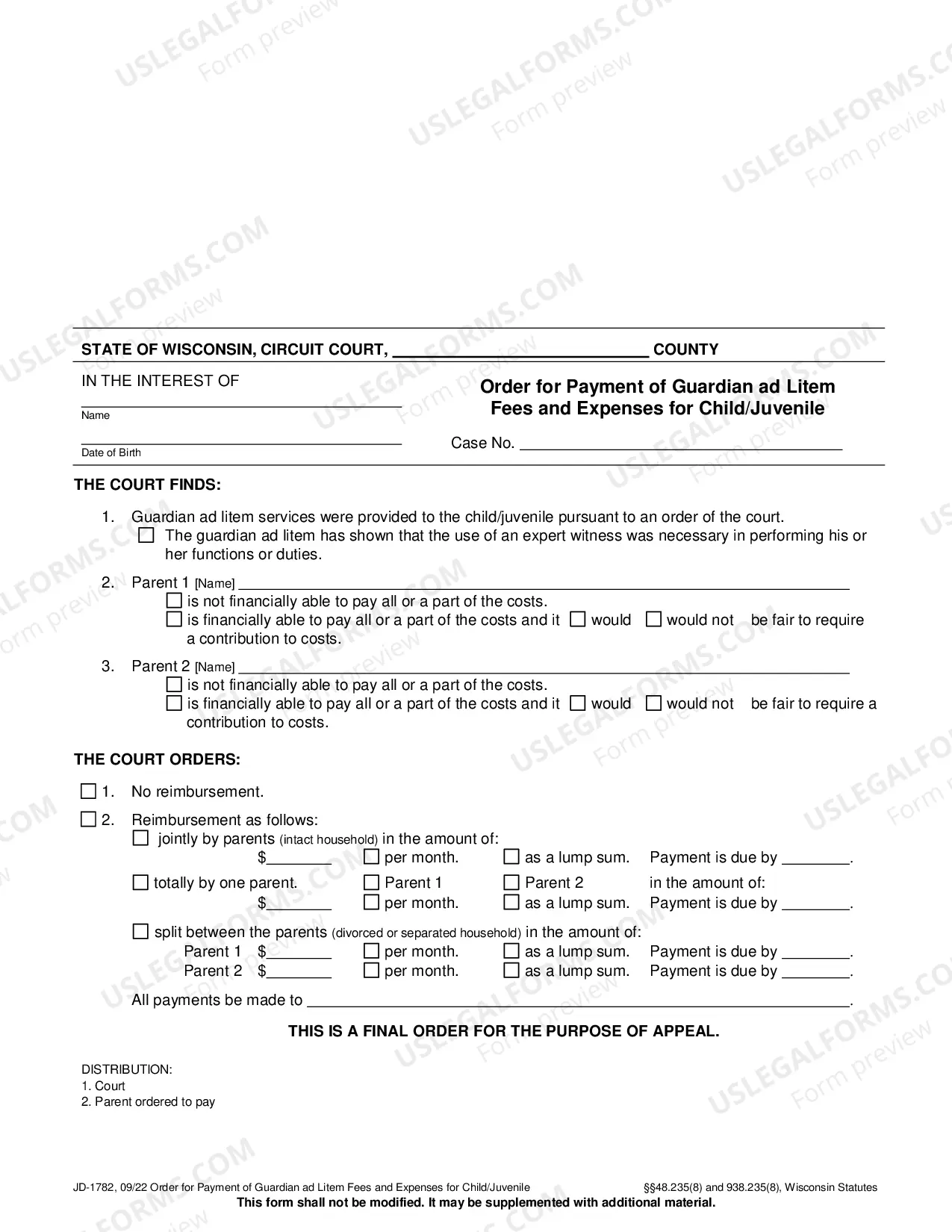
Nebraska Discovery Interrogatories from Defendant to Plaintiff with Production Requests

What is this form?
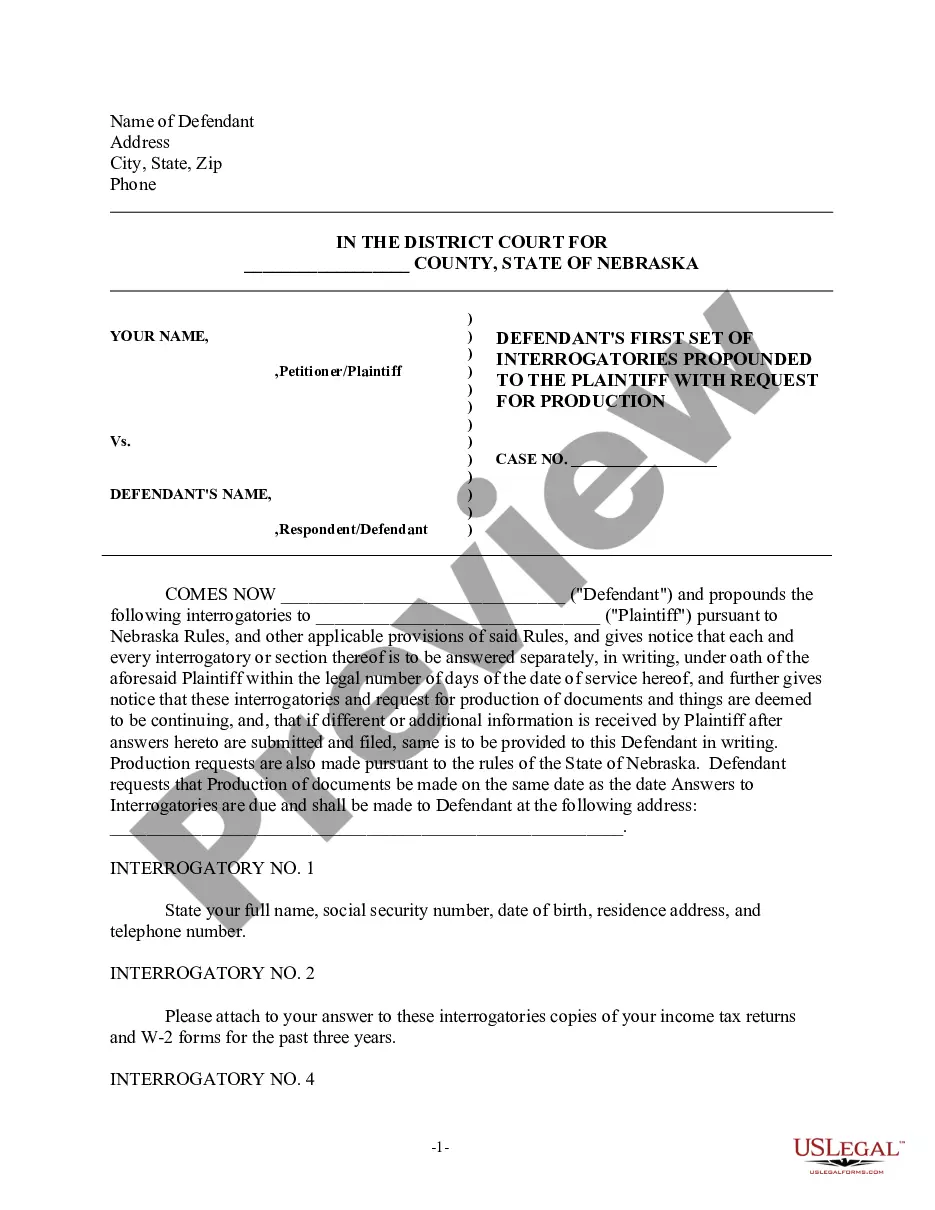
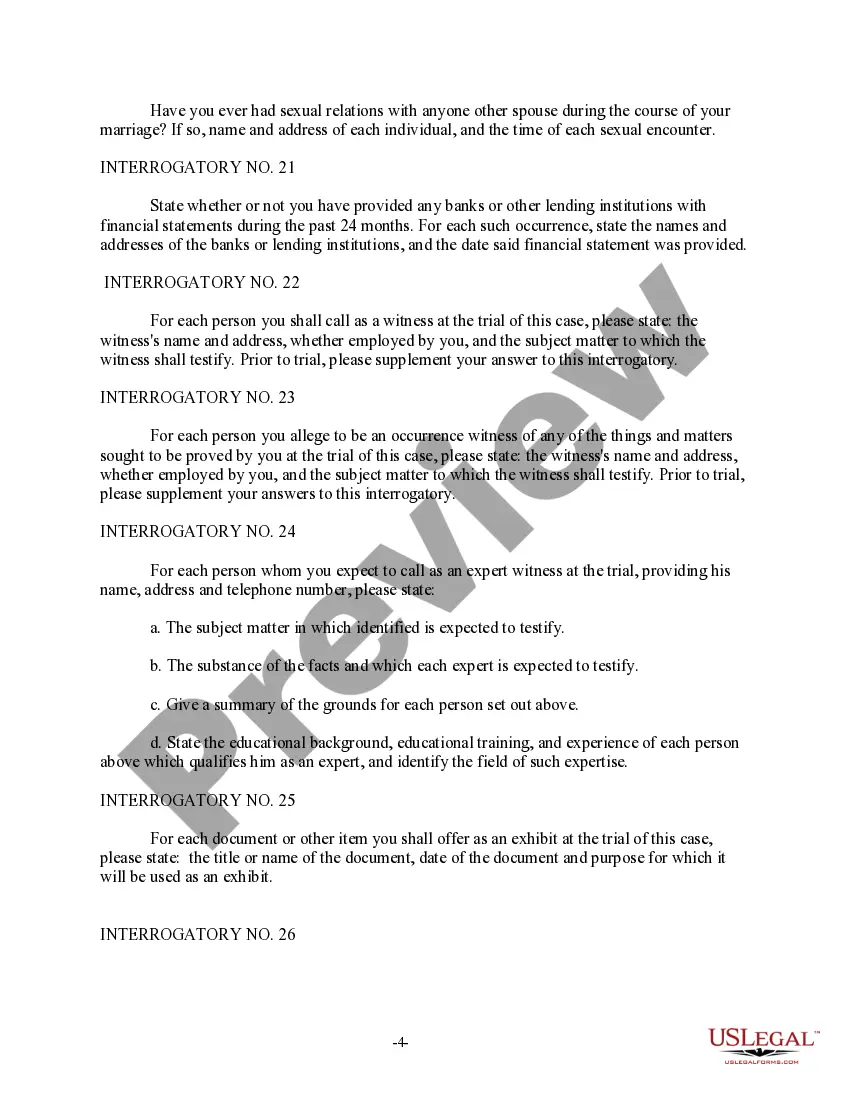
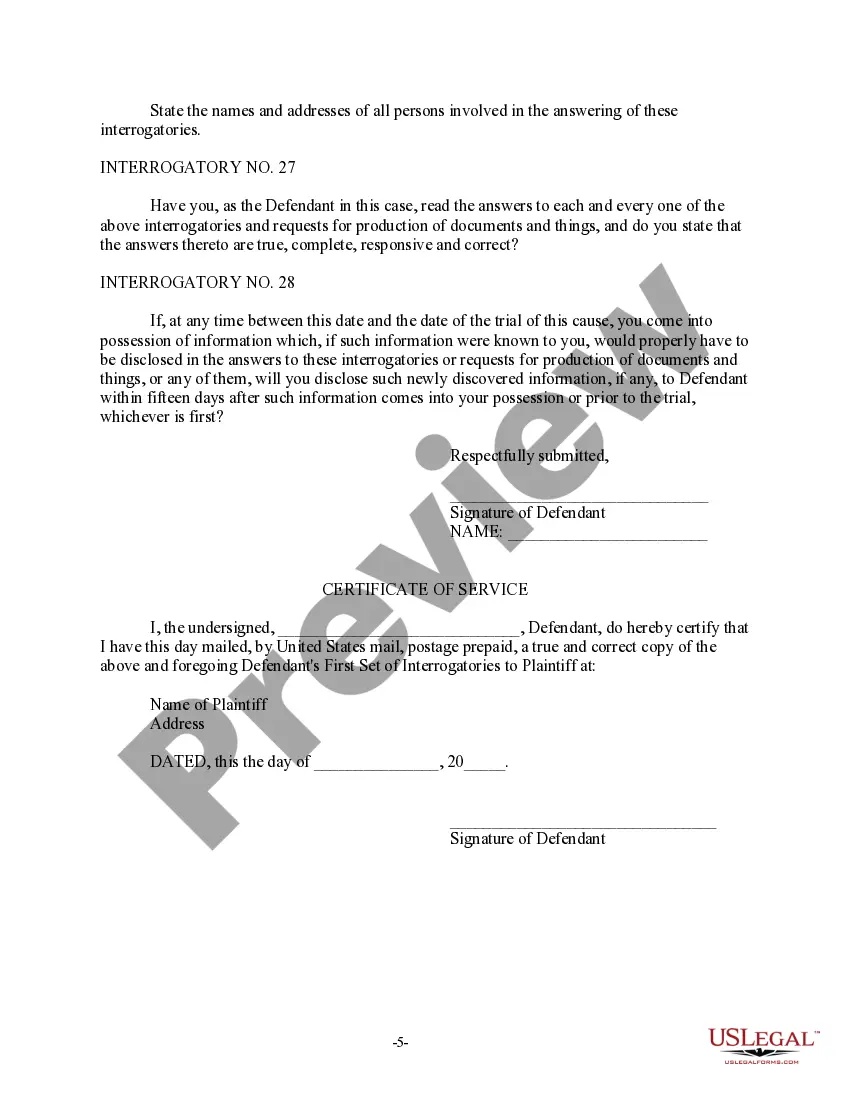
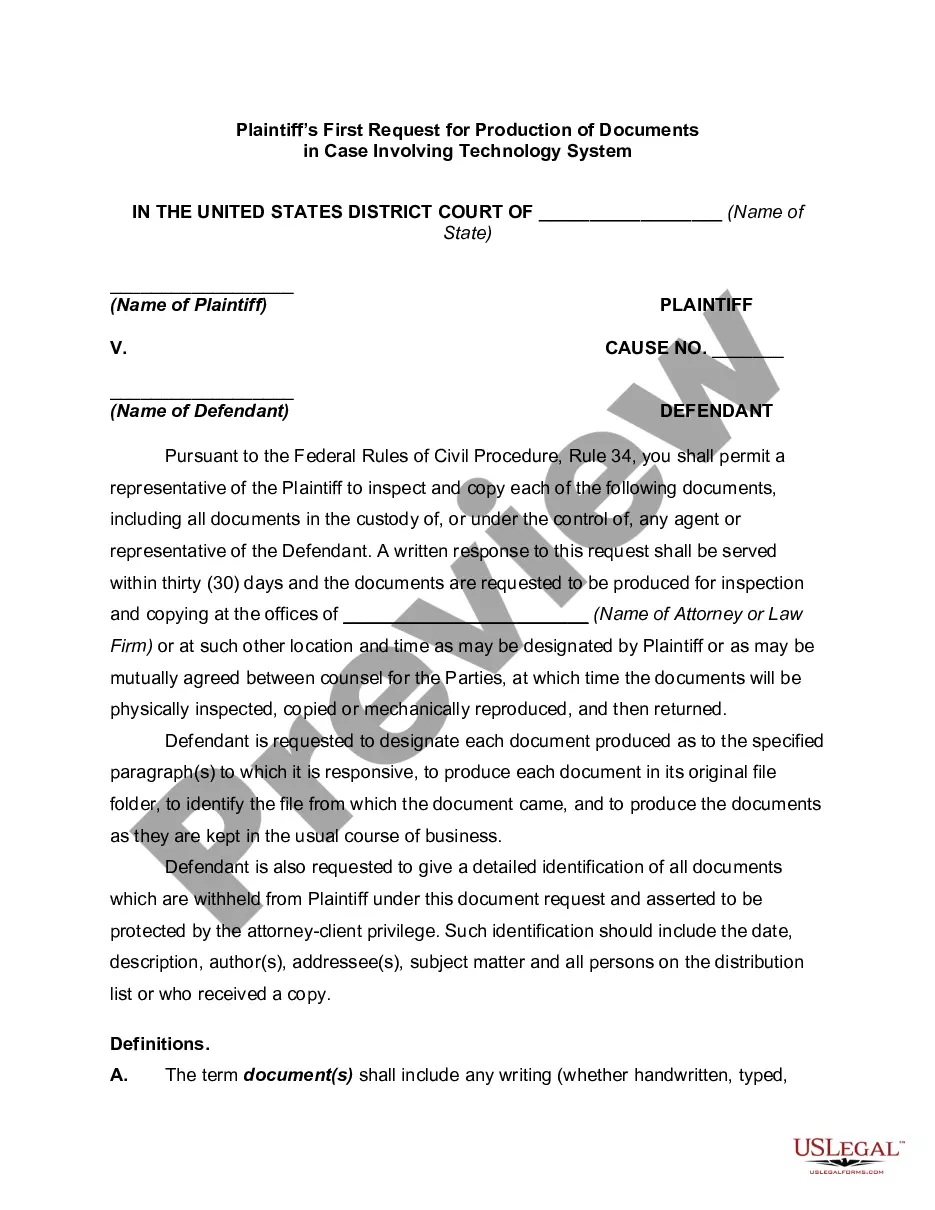
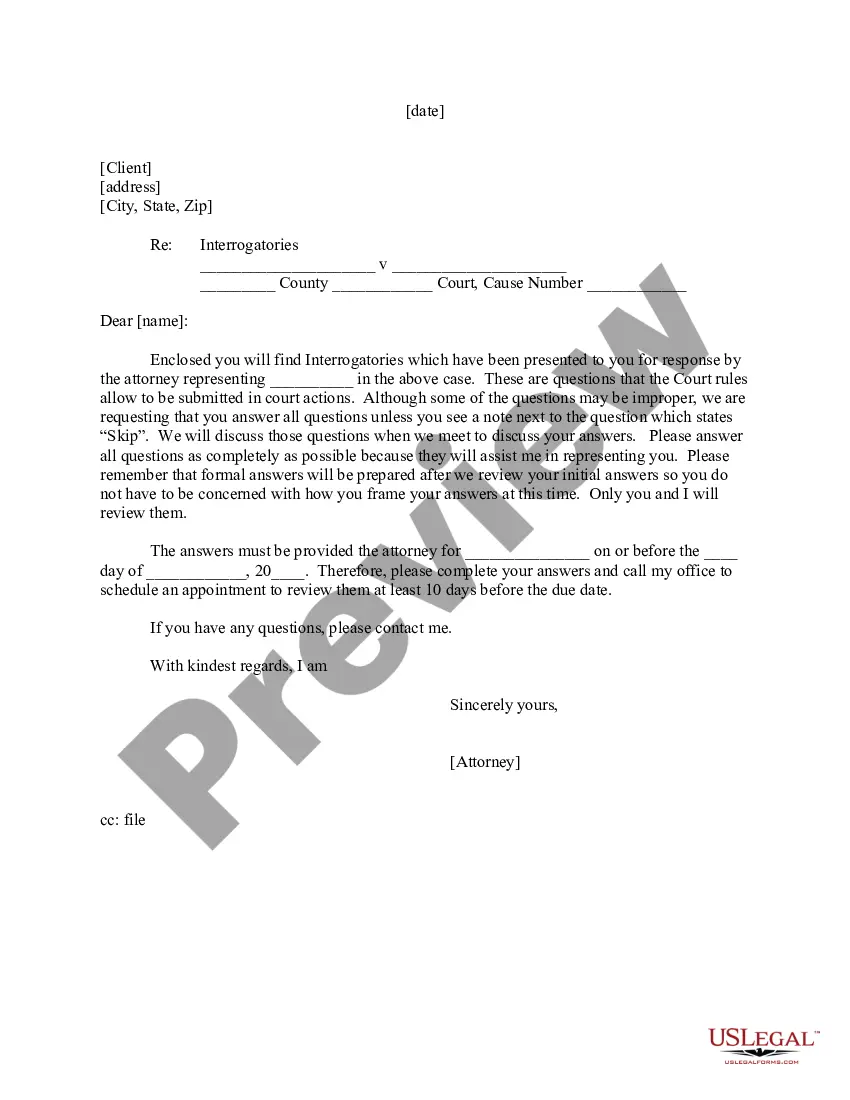
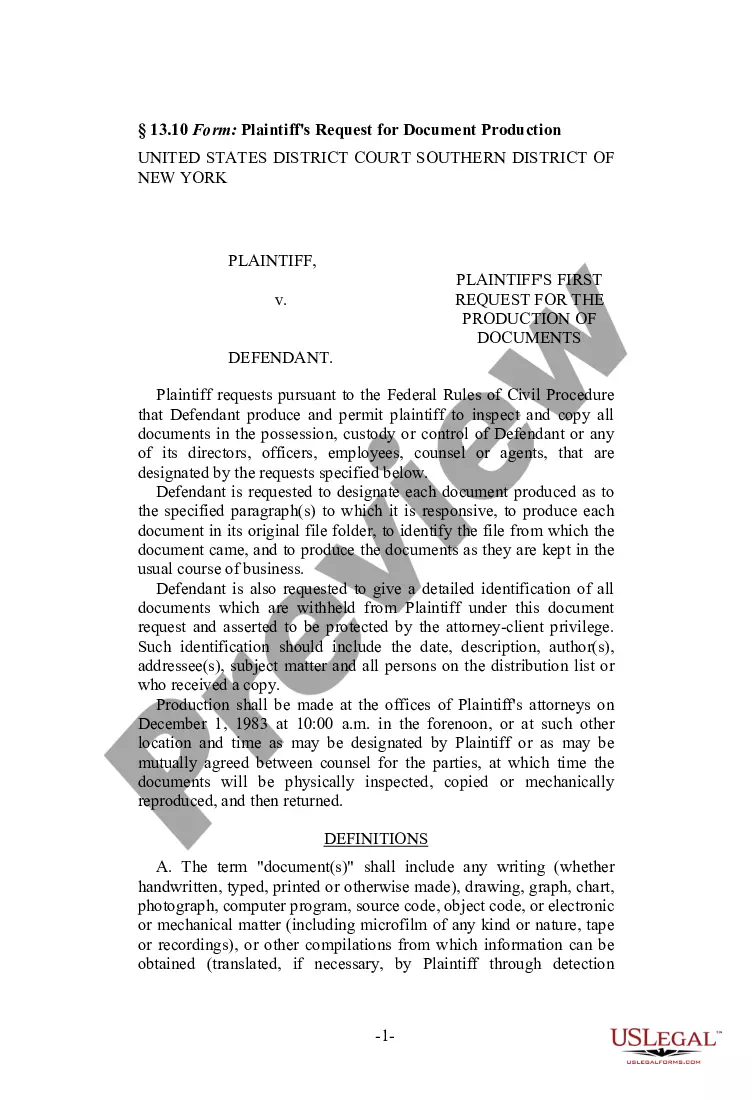
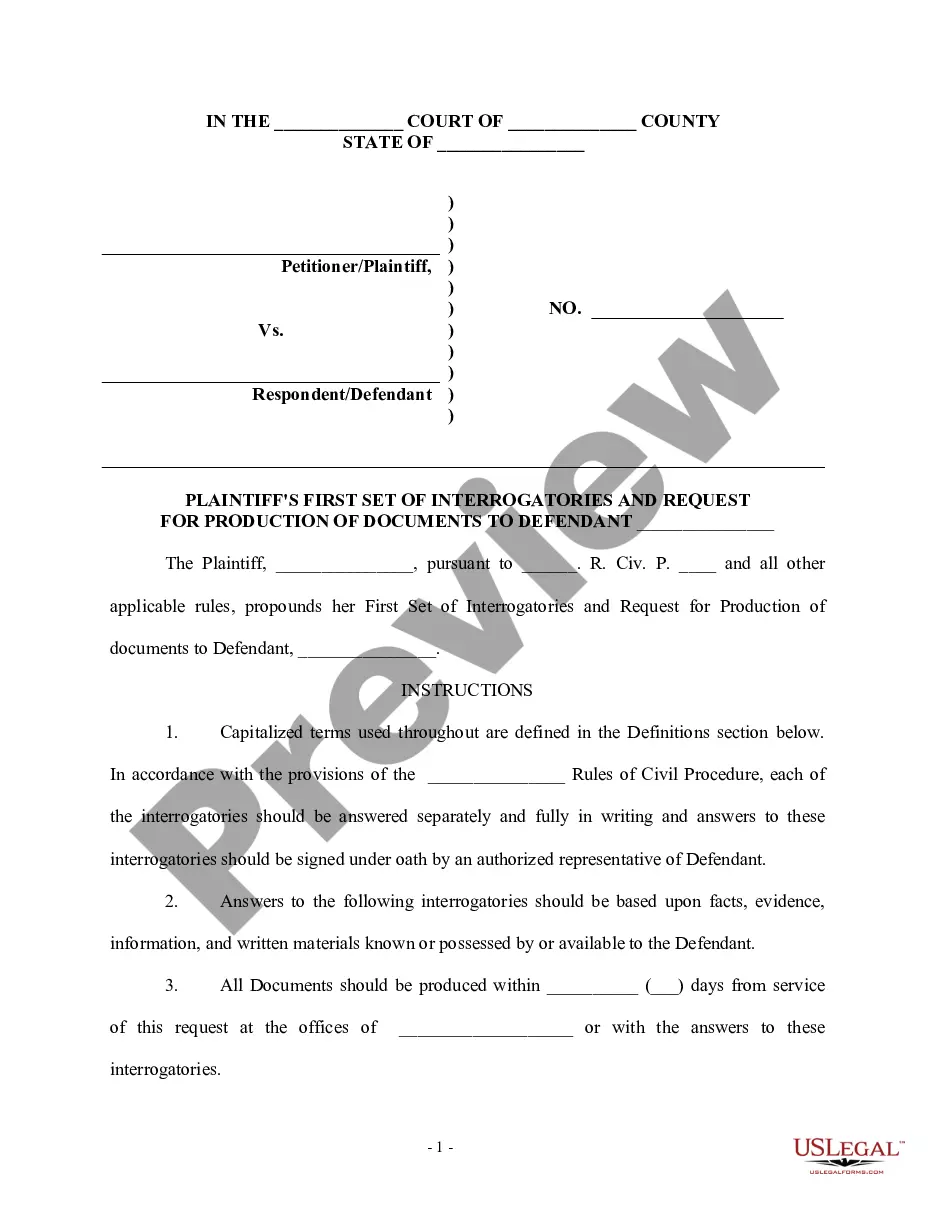
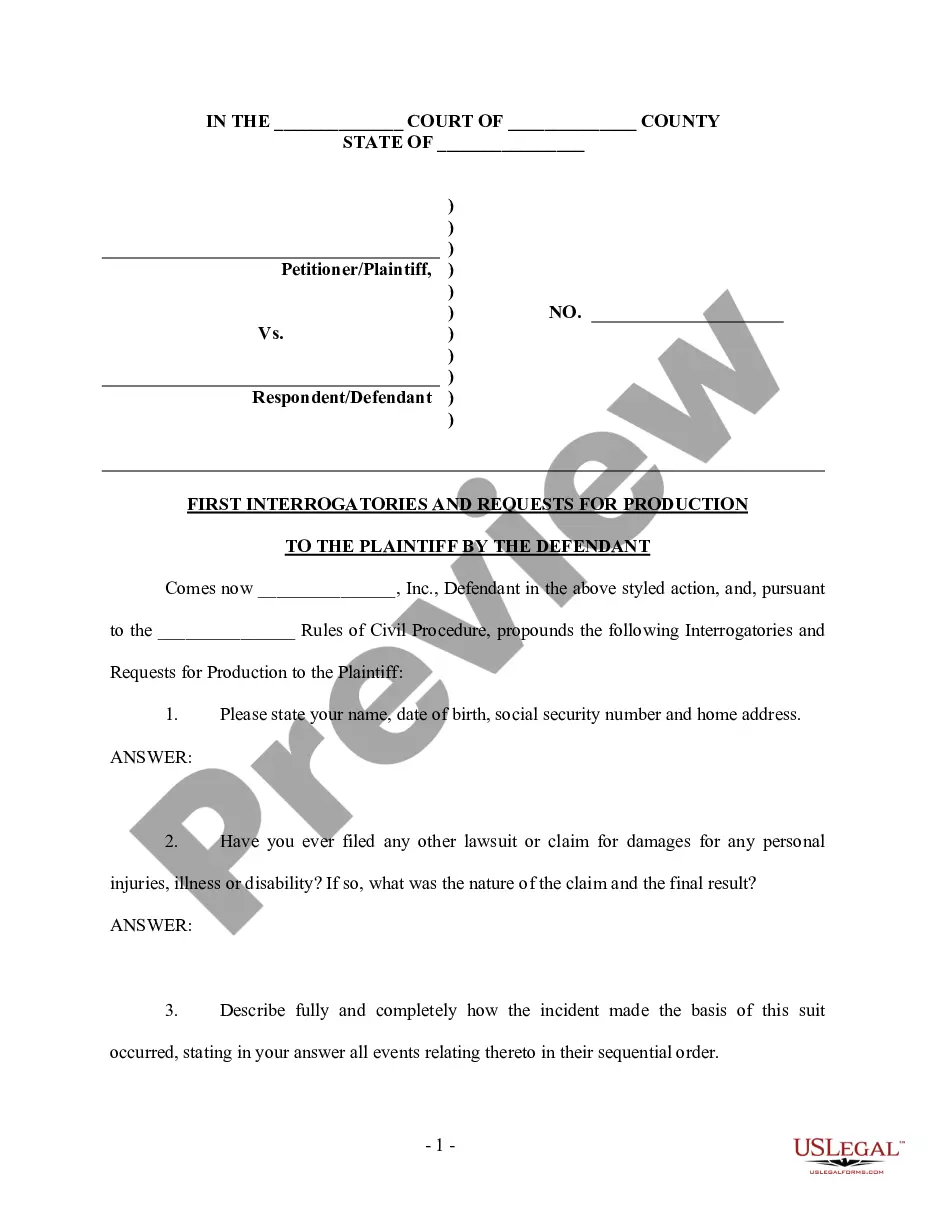
This form, known as Discovery Interrogatories from Defendant to Plaintiff with Production Requests, is used in divorce proceedings. It allows the defendant to ask the plaintiff a series of questions and to request the production of specific documents. This form serves to gather essential information that may influence the outcome of the case, ensuring that both parties share relevant details necessary for the court's considerations. Its structured nature aids in clarifying issues related to finances, assets, and other pertinent topics in divorce disputes.
Key parts of this document
- Full name and contact information of the plaintiff.
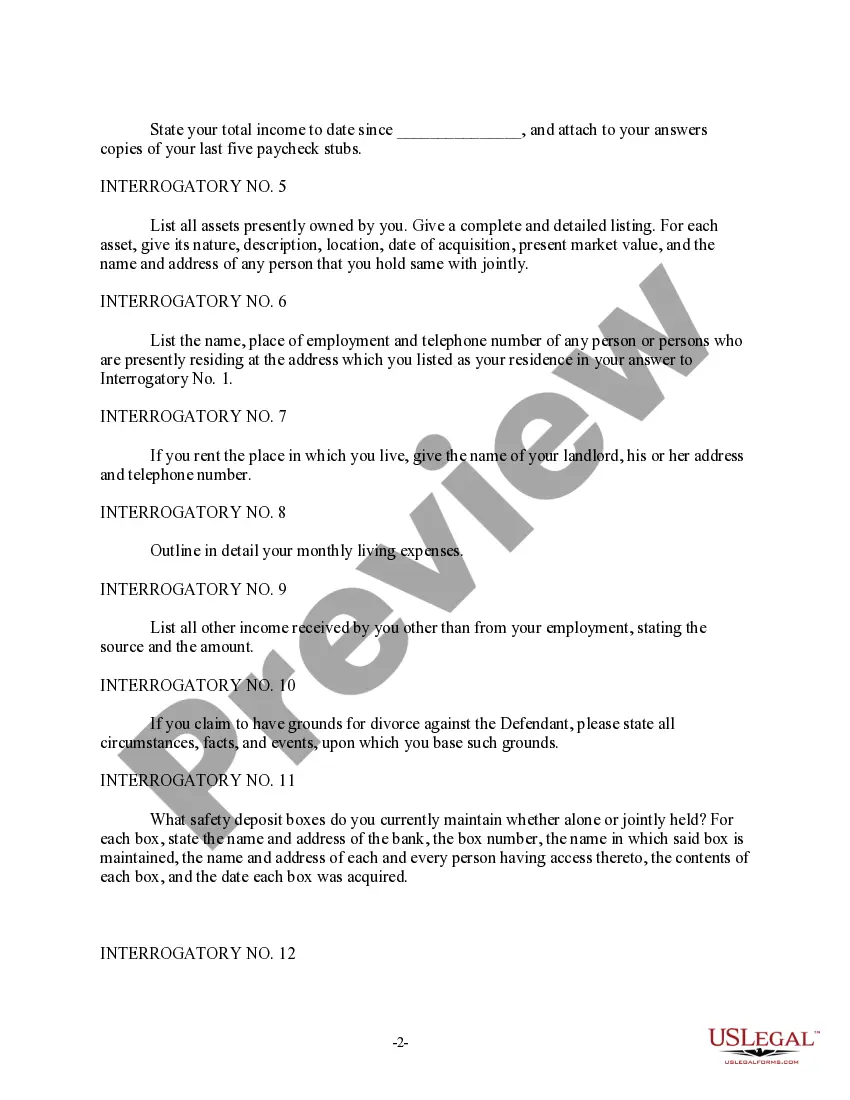
- Income tax records and financial disclosures.
- Detailed list of assets and their values.
- Information regarding living expenses and additional income sources.
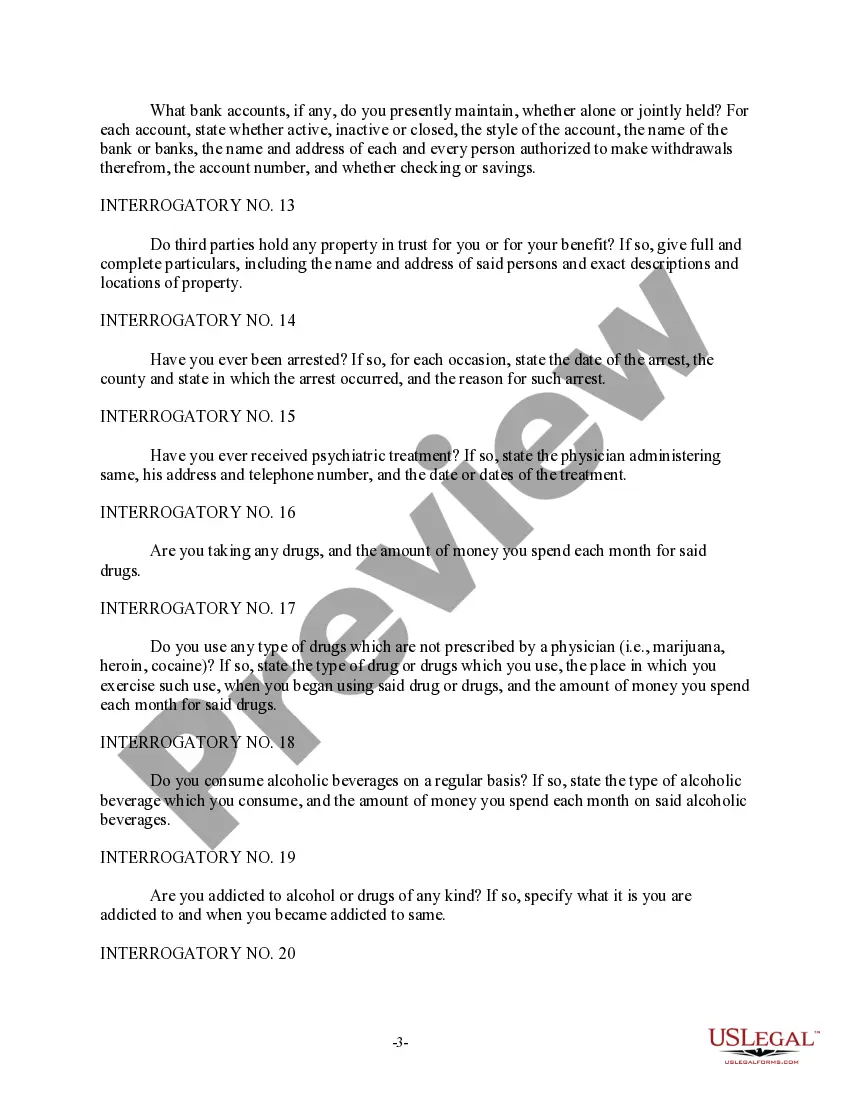
- Disclosure of any third-party property or financial statements previously provided to institutions.
Common use cases
This form should be utilized when a defendant in a divorce case wishes to formally request information and documentation from the plaintiff. It is appropriate to use this form if the defendant aims to clarify financial circumstances, understand asset distribution, or gather evidence related to the reasons for divorce. Completing this form is crucial for building a case and ensuring all relevant matters are addressed before trial.
Intended users of this form
This form is designed for:
- Defendants in divorce cases seeking information from the plaintiff.
- Attorneys representing defendants in family law matters.
- Individuals involved in divorce proceedings who need to gather comprehensive details about the plaintiff's circumstances.
Steps to complete this form
- Enter the parties' names and contact information at the beginning of the form.
- List each interrogatory precisely, providing clear and concise questions for the plaintiff.
- Specify any documents required from the plaintiff alongside the interrogatories.
- Include your signature and date at the end of the document.
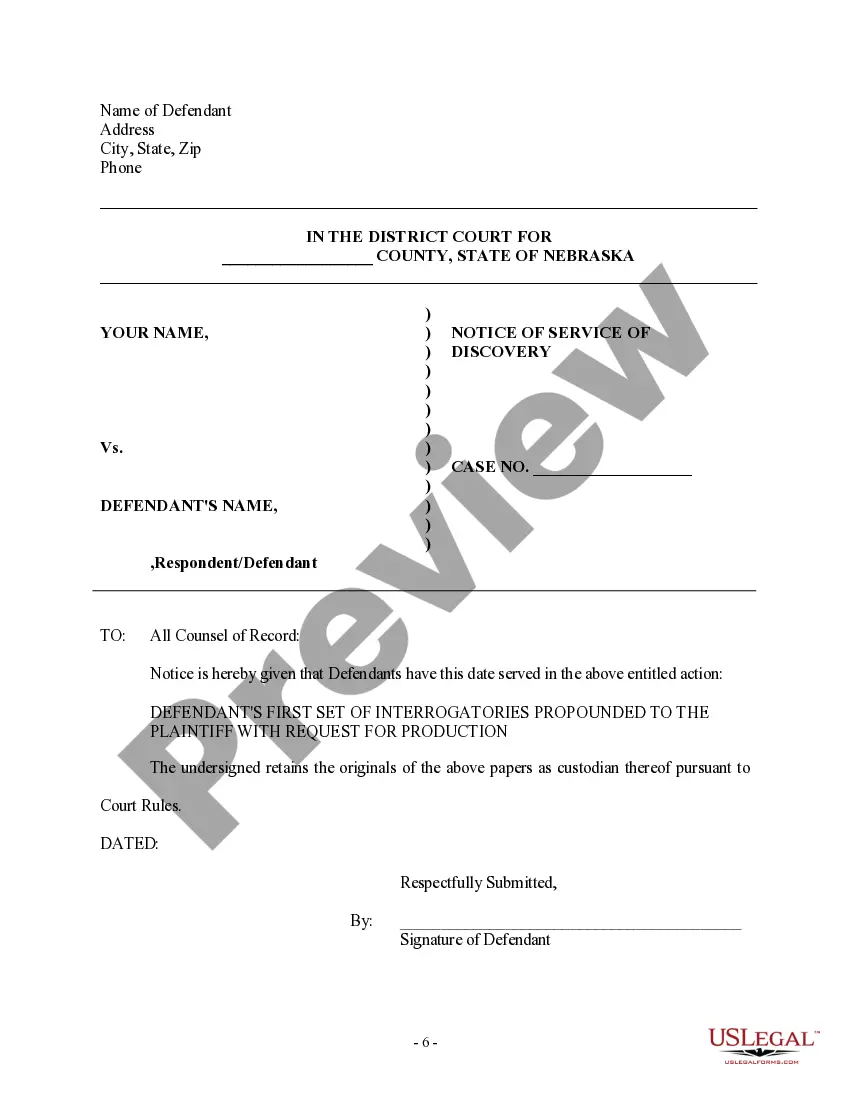
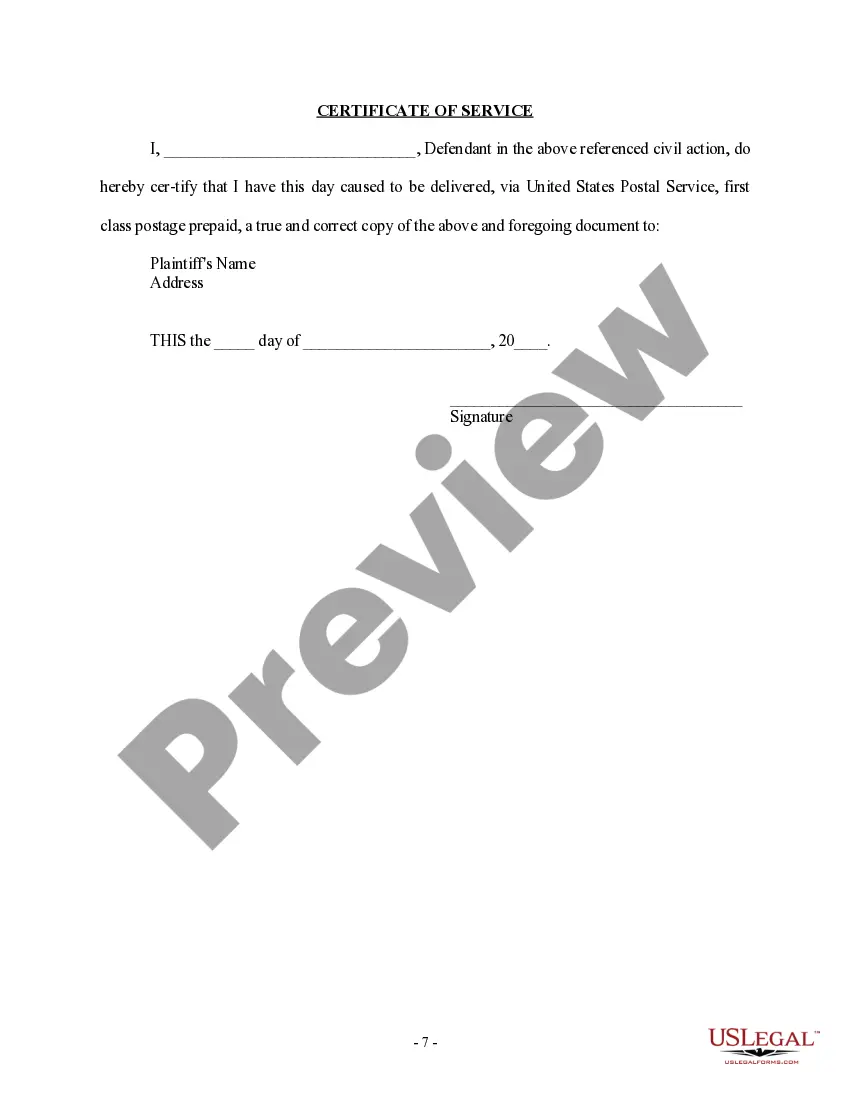
- Serve this form to the plaintiff, ensuring compliance with Nebraska's service requirements.
Notarization requirements for this form
This form does not typically require notarization unless specified by local law. However, having a notary public can add an extra layer of validity to the document.
Get your form ready online
Our built-in tools help you complete, sign, share, and store your documents in one place.
Make edits, fill in missing information, and update formatting in US Legal Forms—just like you would in MS Word.
Download a copy, print it, send it by email, or mail it via USPS—whatever works best for your next step.
Sign and collect signatures with our SignNow integration. Send to multiple recipients, set reminders, and more. Go Premium to unlock E-Sign.
If this form requires notarization, complete it online through a secure video call—no need to meet a notary in person or wait for an appointment.
We protect your documents and personal data by following strict security and privacy standards.

Make edits, fill in missing information, and update formatting in US Legal Forms—just like you would in MS Word.

Download a copy, print it, send it by email, or mail it via USPS—whatever works best for your next step.

Sign and collect signatures with our SignNow integration. Send to multiple recipients, set reminders, and more. Go Premium to unlock E-Sign.

If this form requires notarization, complete it online through a secure video call—no need to meet a notary in person or wait for an appointment.

We protect your documents and personal data by following strict security and privacy standards.
Mistakes to watch out for
- Failing to customize the interrogatories to suit the specifics of your case.
- Overlooking the inclusion of all relevant documents requested.
- Neglecting to provide clear timeframes for responses to interrogatories.
Why use this form online
- Easy access to customizable templates that can be adapted to your needs.
- Immediate download and printing capabilities for convenient use.
- Availability of legal support and guidance while filling out the form for improved accuracy.
Legal use & context
This form is essential in divorce proceedings as it serves to ensure that both parties disclose pertinent information, which can be crucial for equitable asset distribution and the overall resolution of the divorce. Failure to respond adequately can lead to legal penalties.
Quick recap
- Discovery interrogatories help defendants gather critical information from plaintiffs in divorce cases.
- The form requires personalization to fit the unique aspects of each case.
- It is essential to adhere to Nebraska's legal rules regarding the completion and submission of the form.
Looking for another form?
Form popularity
FAQ
If the plaintiff does not respond to the court order, then you can file a Motion to Dismiss and you may win your case. Send a final request. If they do not respond to the final request within 30 days you can send the court an application for entry of final judgment or dismissal.
Interrogatories are a part of the "discovery" stage of a civil case.During discovery, the parties request and exchange information and documents. Interrogatories and depositions form the bulk of the discovery process. Unlike many legal documents, interrogatories do not need to be filed with the court.
Interrogatories Interrogatories are written questions that are sent by one party to another.Requests for production are the means by which you can ask the other party to make copies of documents, photographs, records, etc. and to request the inspection of property.
You must answer each interrogatory separately and fully in writing under oath, unless you object to it. You must explain why you object. You must sign your answers and objections.
An interrogatory is part of the discovery process before the trial.The interrogatory is considered to be conducted under oath. Any information provided on it will be seriously reviewed by the court and the lawyers involved. Your lawyer can ask any question that he or she wants on the form.
Interrogatories ask questions; the responding party provides written answers. A request for production of documents requests the production of documents (or other tangible things); the responding party provides documents.
The purpose of interrogatories is to learn a great deal of general information about a party in a lawsuit. For example, the defendant in a personal injury lawsuit about a car accident might send you interrogatories asking you to disclose things like: Where you live. Where you work.
Interrogatories, which are written questions about things that are relevant or important to the case. (NRCP 33; JCRCP 33) Requests for production of documents or things, which are written requests that demand the other side provide particular documents or items.
You must answer each interrogatory separately and fully in writing under oath, unless you object to it. You must explain why you object. You must sign your answers and objections.