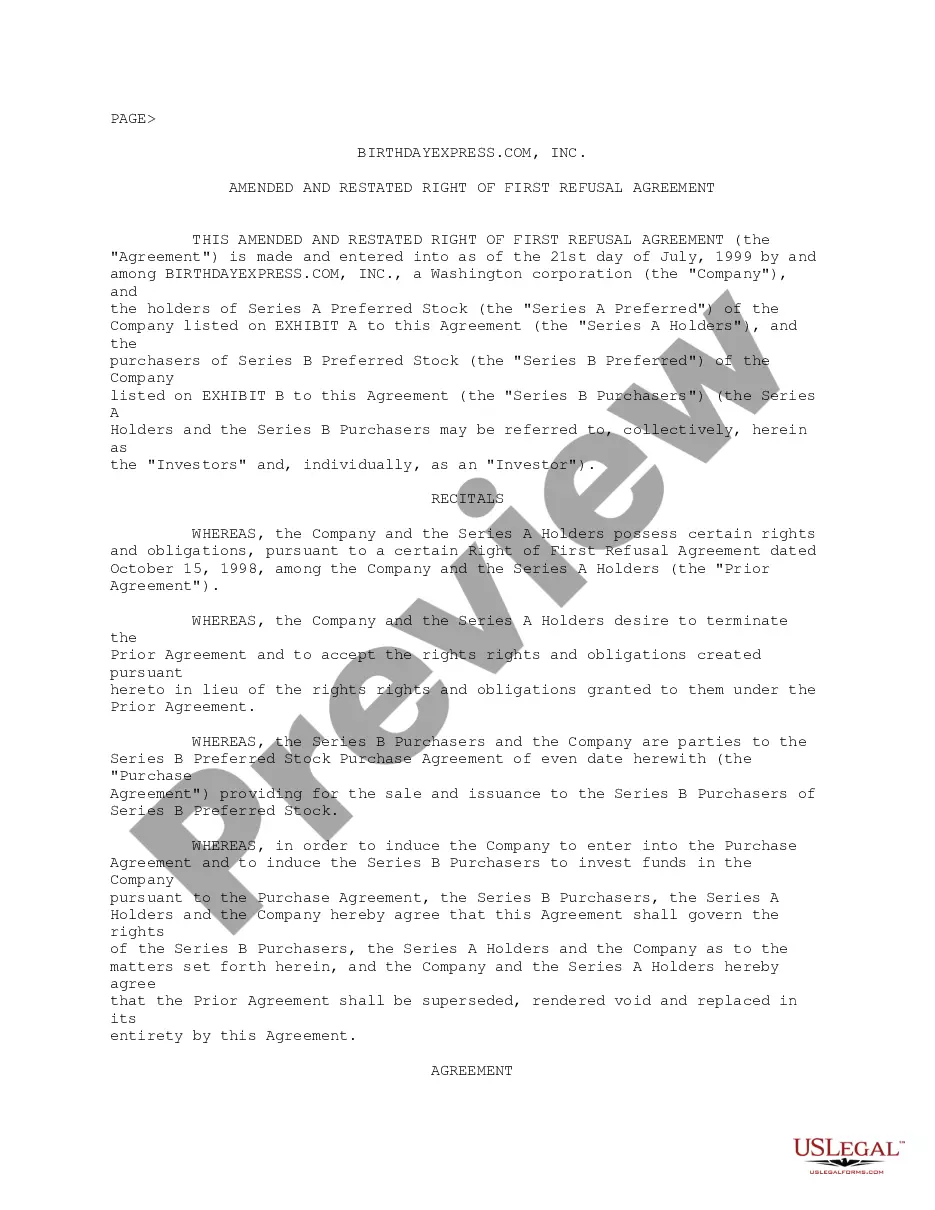
This guide provides an overview of intellectual property rights. Topics included cover trademarks, service marks, copyrights, patents, and trade secrets. Information on remedies for infringement is also provided.
North Dakota USLegal Guide to Intellectual Property Rights
State:
Multi-State
Control #:
US-GDE-22
Format:
Word;
Rich Text
Instant download
Description
Free preview

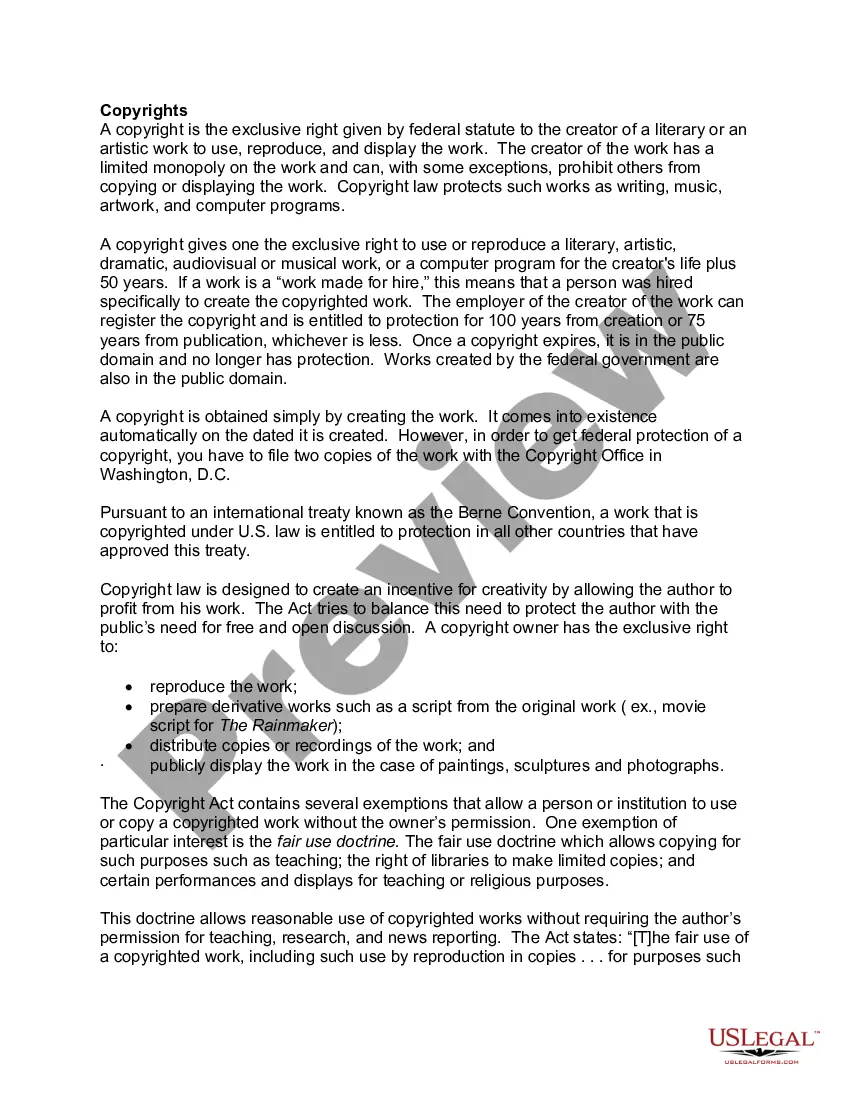
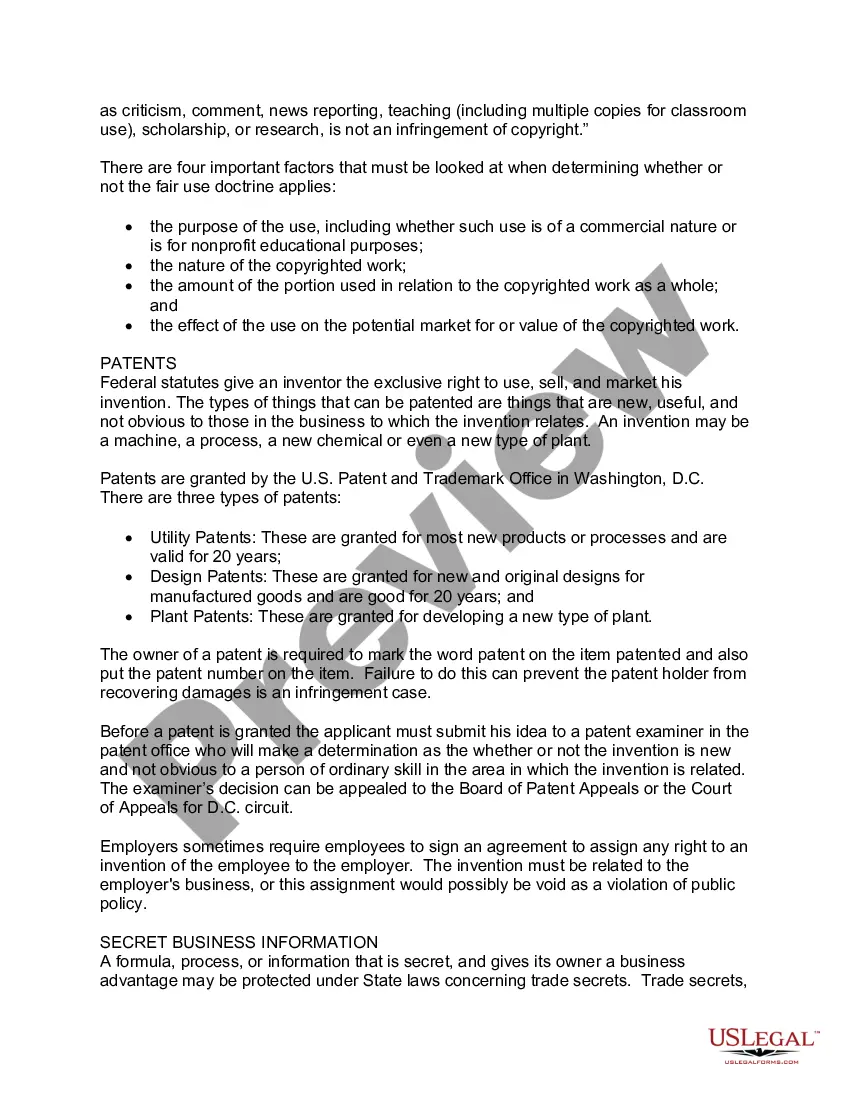
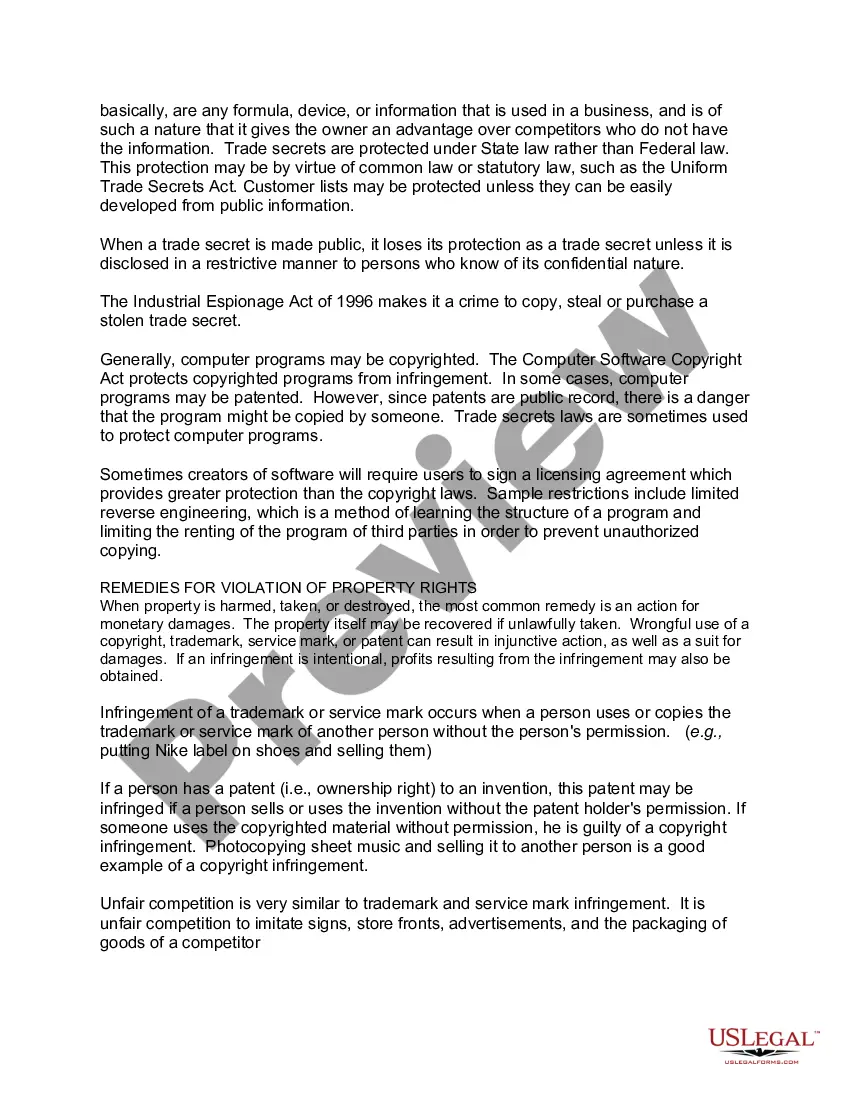
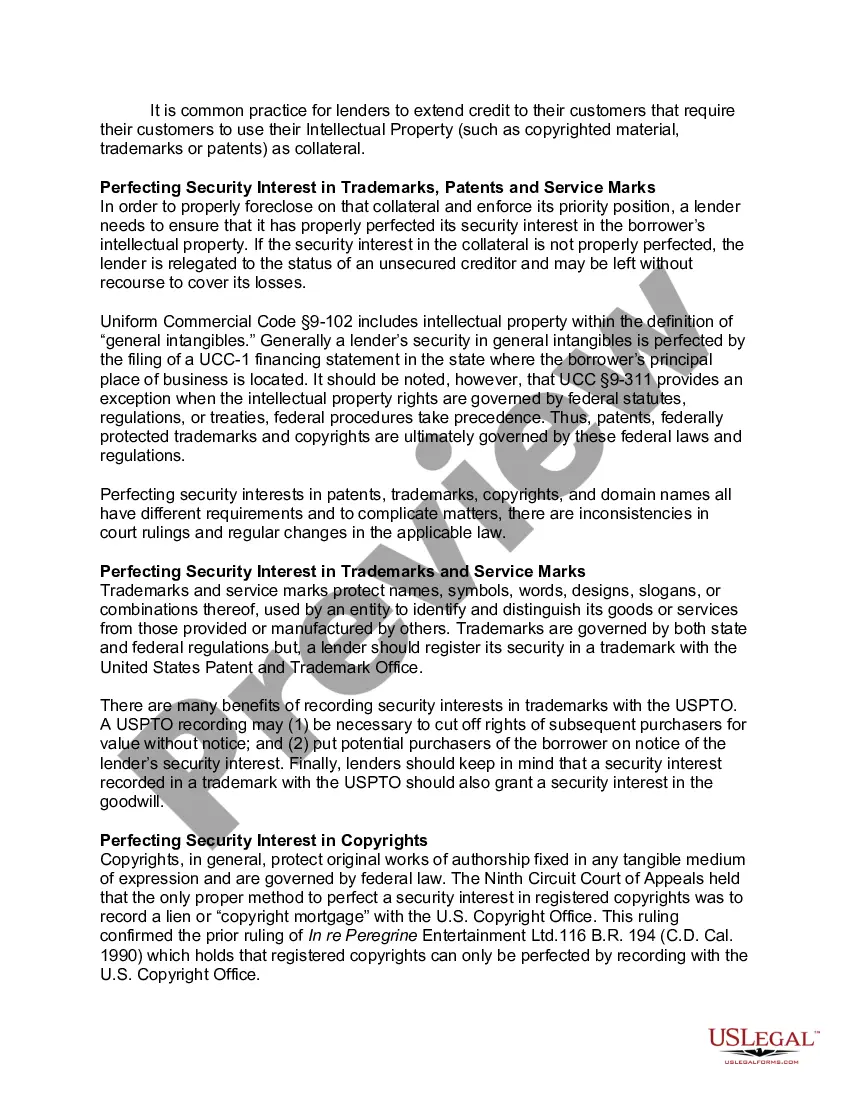
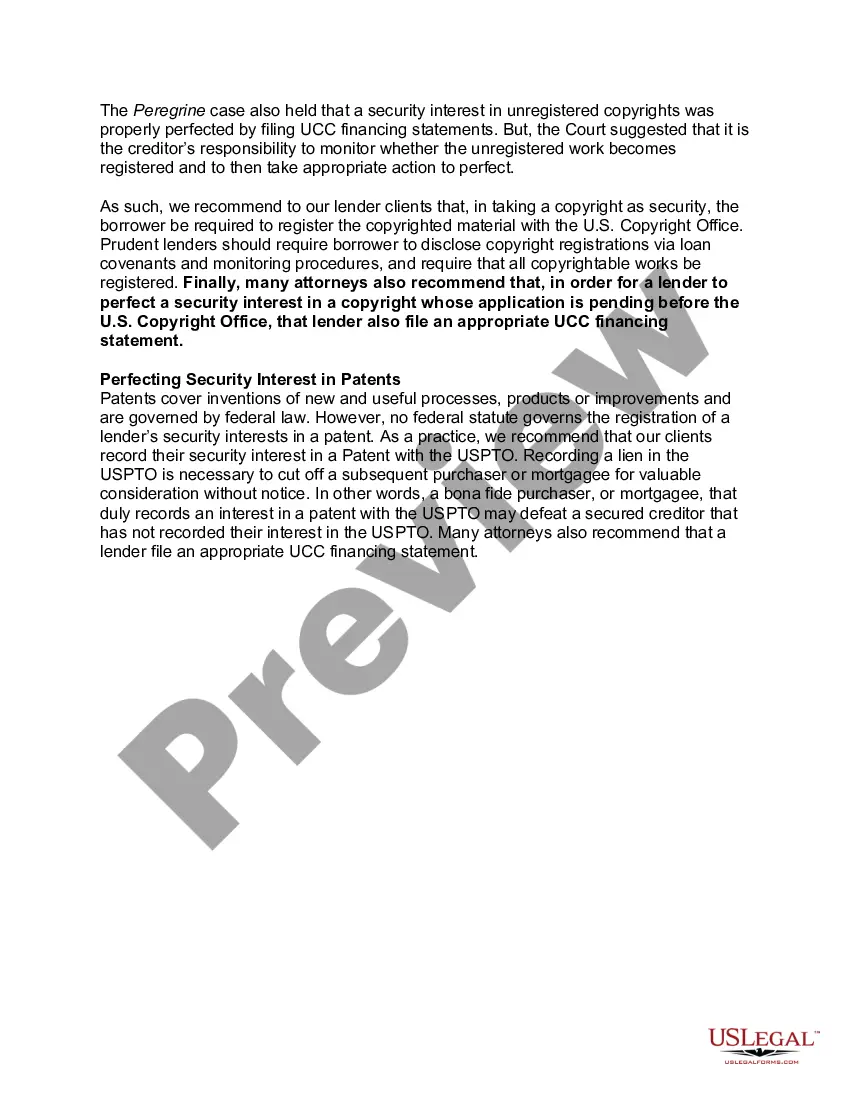

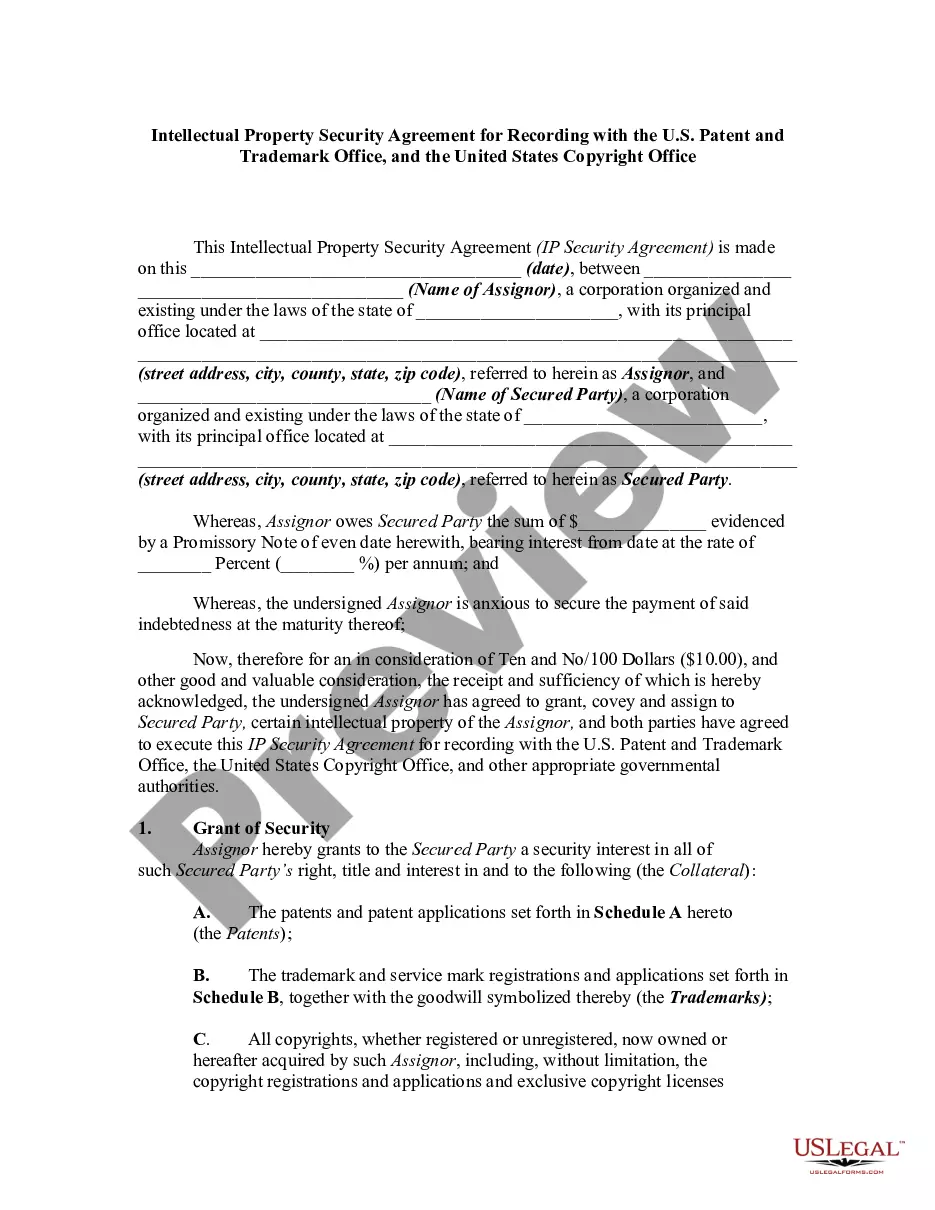
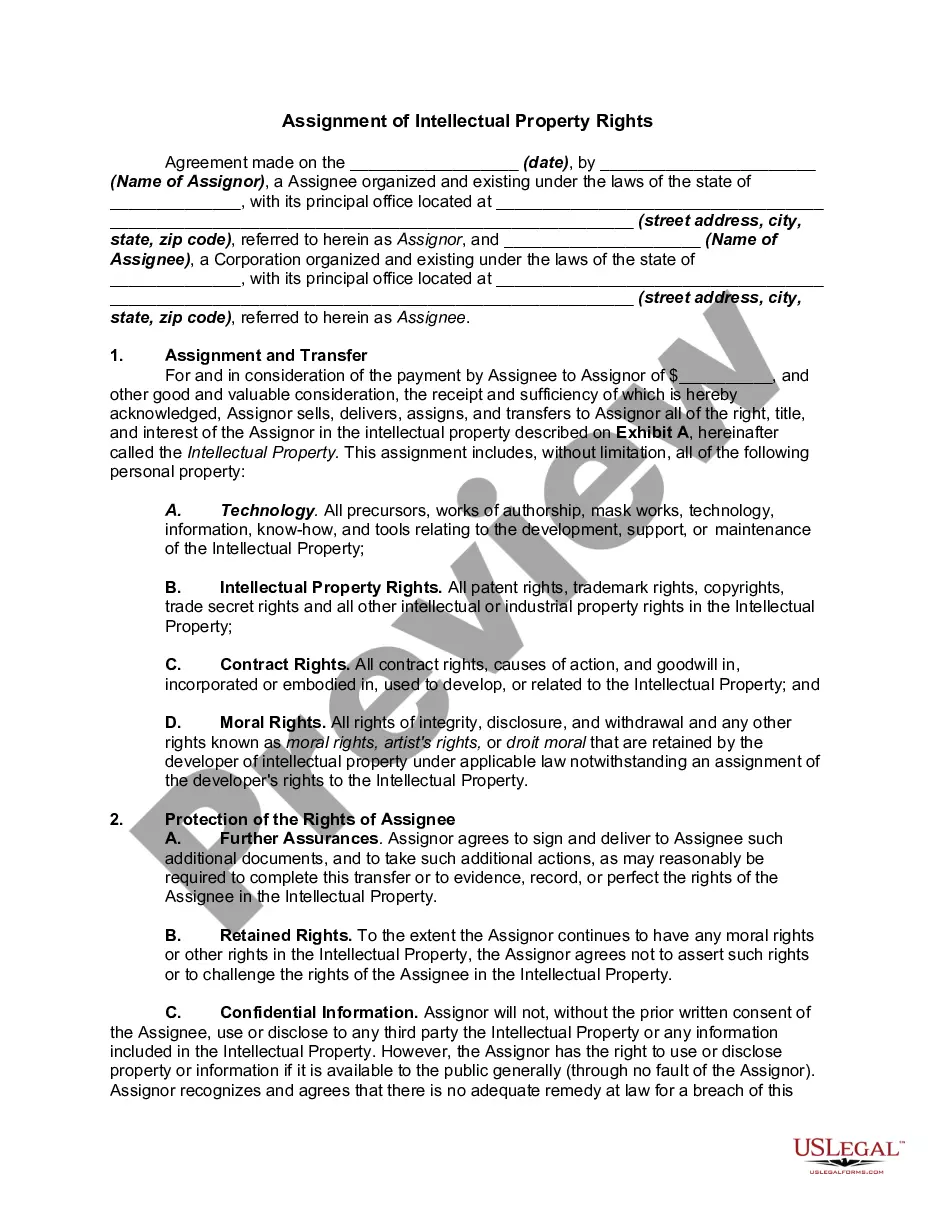


How to fill out USLegal Guide To Intellectual Property Rights?
You can invest hours online attempting to locate the legal document template that meets the state and federal requirements you require.
US Legal Forms offers thousands of legal documents that have been evaluated by professionals.
You can download or print the North Dakota USLegal Guide to Intellectual Property Rights from my service.
If available, use the Preview button to explore the document template simultaneously.
- If you possess a US Legal Forms account, you can Log In and click the Download button.
- Afterward, you can complete, modify, print, or sign the North Dakota USLegal Guide to Intellectual Property Rights.
- Every legal document template you acquire is yours for an unlimited time.
- To obtain an additional copy of any purchased form, navigate to the My documents tab and click on the corresponding button.
- If you are using the US Legal Forms website for the first time, follow the simple steps below.
- First, ensure you have selected the correct document template for your location/city of choice.
- Review the document description to confirm that you have selected the right form.
Form popularity
FAQ
Claiming ownership of intellectual property involves documenting your creation process and formally registering your rights. This registration can provide legal advantages if disputes arise over your work. By utilizing the North Dakota USLegal Guide to Intellectual Property Rights, you can clearly understand the necessary steps to protect your intellectual creations effectively.
To acquire intellectual property rights, you typically need to apply for a patent, register a trademark, or secure copyright for your creative work. This process may vary depending on the type of intellectual property you seek to protect. The North Dakota USLegal Guide to Intellectual Property Rights offers practical resources and instructions to help you successfully complete these applications.
Intellectual property guidelines outline the rules and regulations governing the use, protection, and management of creative works. These guidelines help individuals and businesses understand their rights regarding copyrights, trademarks, and patents. Following the North Dakota USLegal Guide to Intellectual Property Rights can help you navigate these complex rules effectively and legally.
To obtain permission for using someone else's intellectual property, you should first identify the owner of the rights. Once you locate them, reach out directly to request a license or permission. This process often involves discussing terms, such as payment or usage limitations. The North Dakota USLegal Guide to Intellectual Property Rights provides detailed steps and best practices to simplify this process.
The four types of intellectual property rights are copyright, which protects original works; trademark, which safeguards brand identity; patent, which covers inventions; and trade secrets, which secures confidential business information. Understanding these rights is vital for any creator or business owner. Explore the North Dakota USLegal Guide to Intellectual Property Rights for comprehensive insights into how each type can benefit you.
Intellectual property lawyers in the USA typically earn a range of salaries depending on their experience, location, and the complexity of cases they handle. On average, they can expect to make between $80,000 and $200,000 annually. For personalized legal advice, you can refer to the North Dakota USLegal Guide to Intellectual Property Rights for expert recommendations on finding the right lawyer.
The four basic types of intellectual property include copyrights, trademarks, patents, and trade secrets. Each type protects different forms of innovation and creativity. Understanding these categories is crucial for safeguarding your work and is thoroughly explained in the North Dakota USLegal Guide to Intellectual Property Rights.
To obtain intellectual property rights, you need to identify the type of intellectual property that applies to your situation. This may involve registering a trademark, filing for a copyright, or applying for a patent. The North Dakota USLegal Guide to Intellectual Property Rights can help you navigate these processes smoothly, ensuring you meet all necessary legal requirements.
The North Dakota USLegal Guide to Intellectual Property Rights covers various examples of intellectual property, including patents, copyrights, trademarks, and trade secrets. Patents protect inventions, while copyrights apply to creative works such as music, literature, and artwork. Trademarks safeguard brand logos and names, and trade secrets include formulas or processes that give businesses a competitive edge. Familiarizing yourself with these examples is essential for effective protection.
Acquiring intellectual property rights often begins with the creation of an original work, as detailed in the North Dakota USLegal Guide to Intellectual Property Rights. Depending on the type of protection you seek—be it copyright, patent, or trademark—you will follow specific application processes. Registration generally strengthens your claim and helps enforce your rights against infringement. Therefore, understanding the intricacies of each type can significantly aid you in securing your intellectual assets.