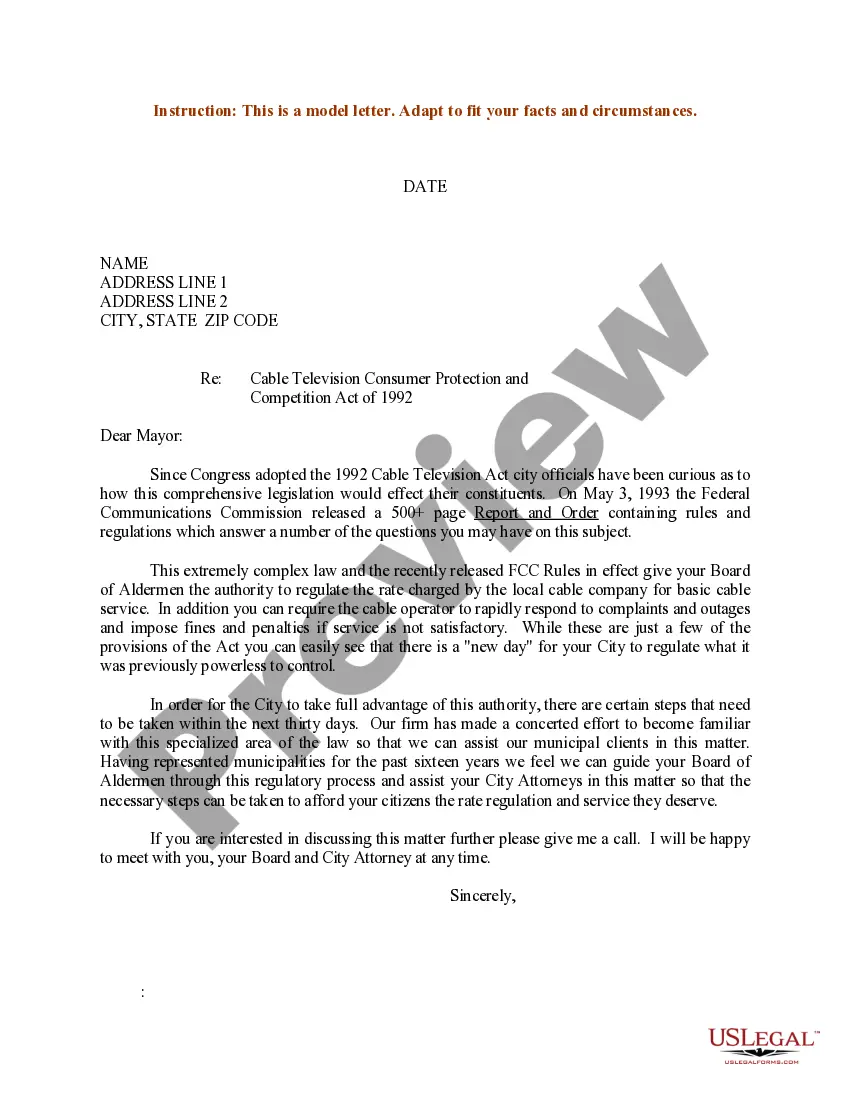
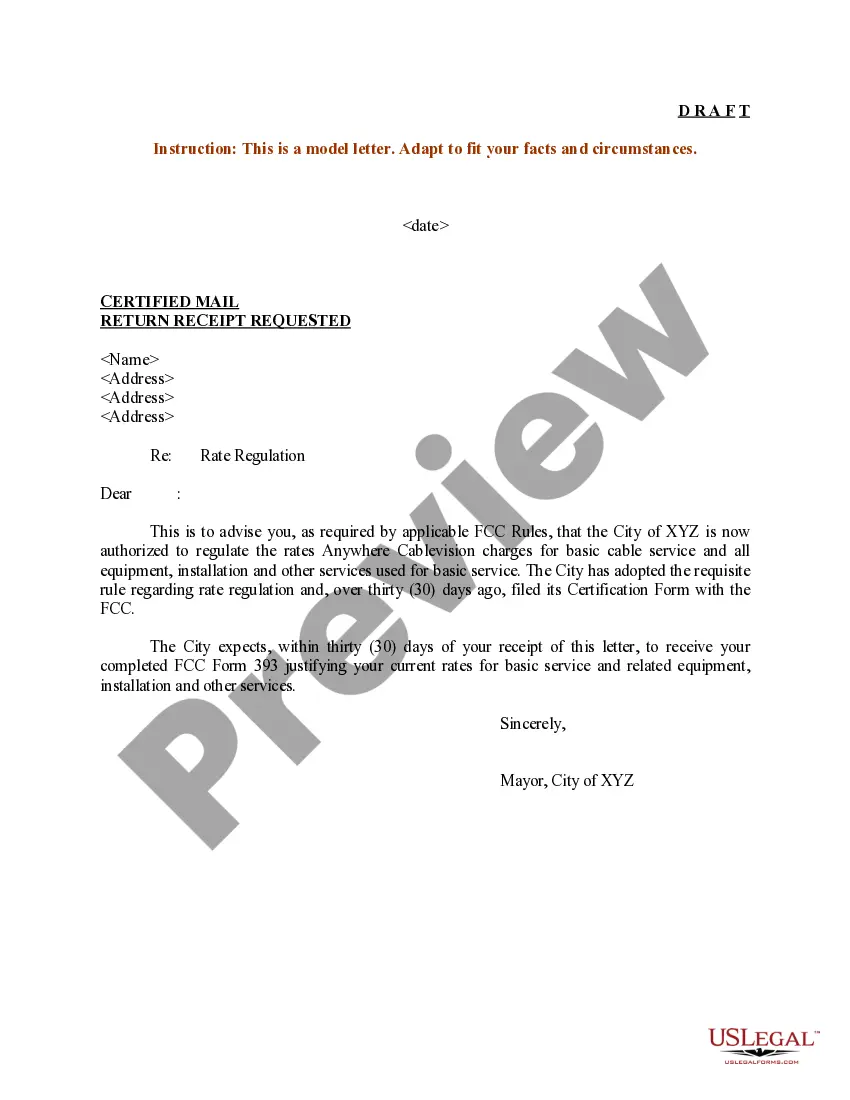
North Dakota Sample Letter to Mayor concerning Cable Television Consumer Protection and Competition Act of 1992
Description
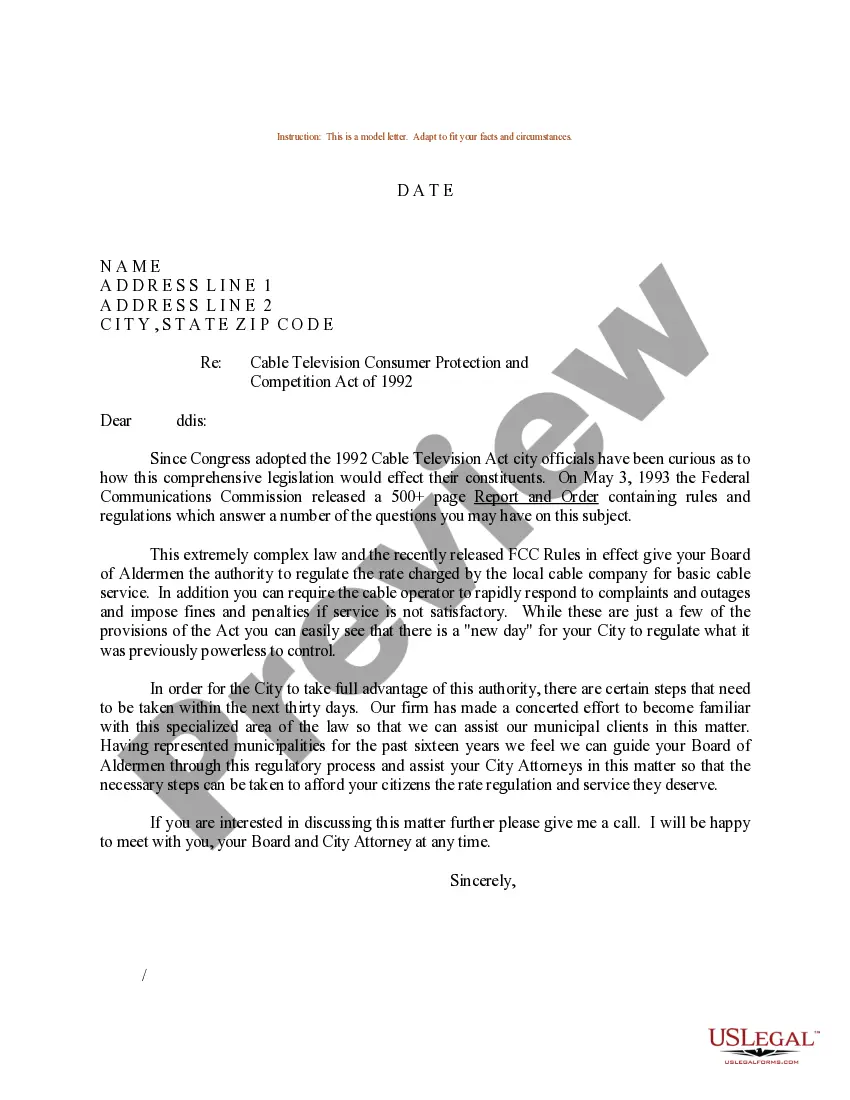
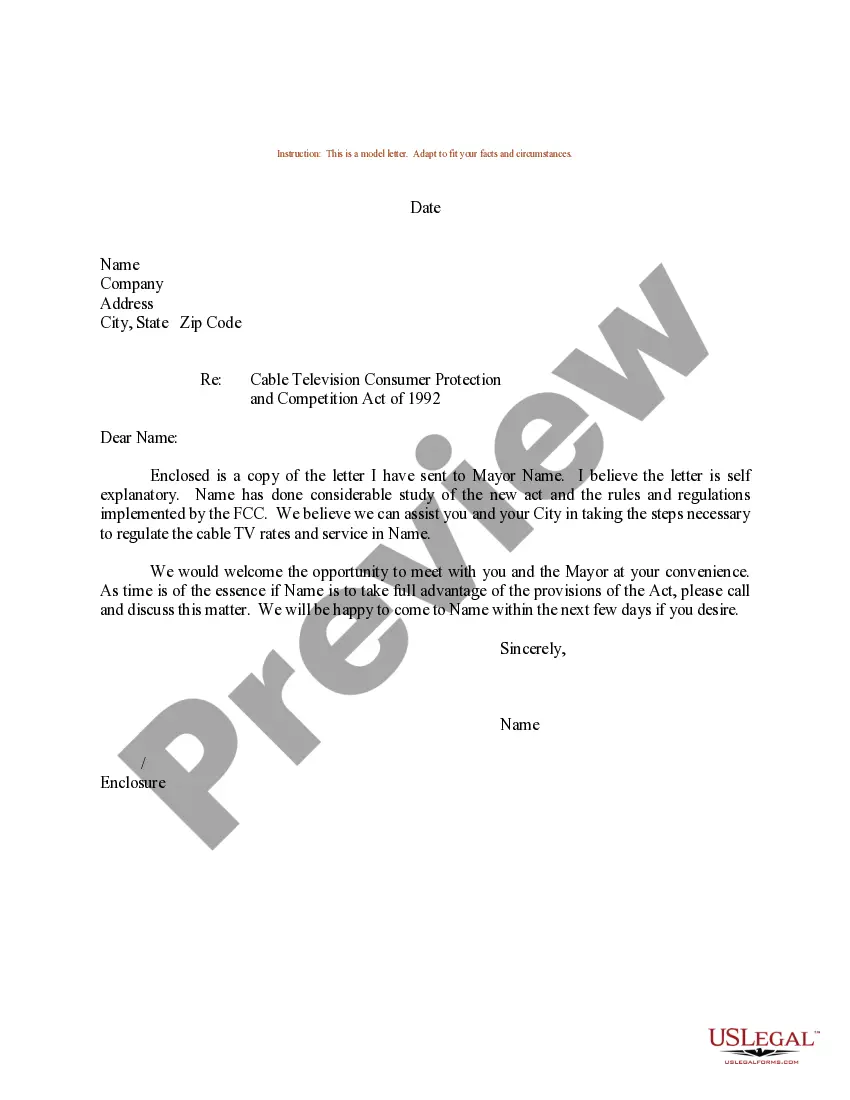
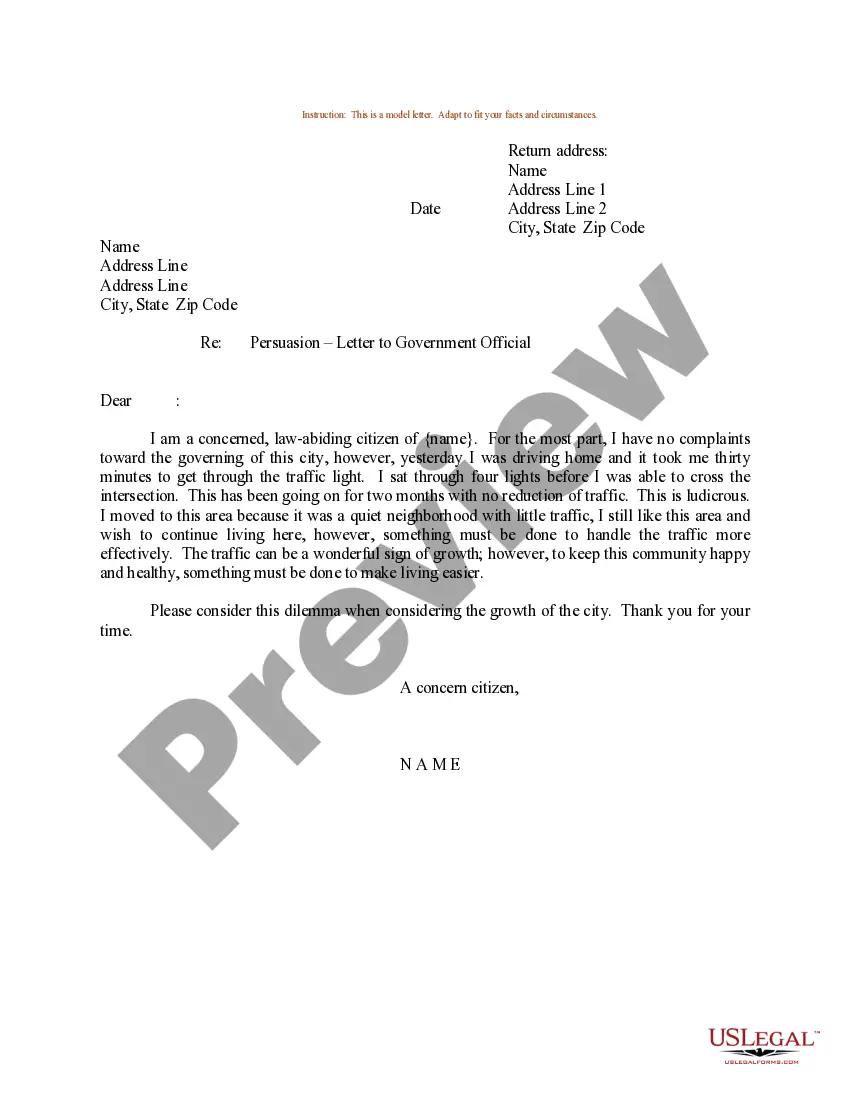
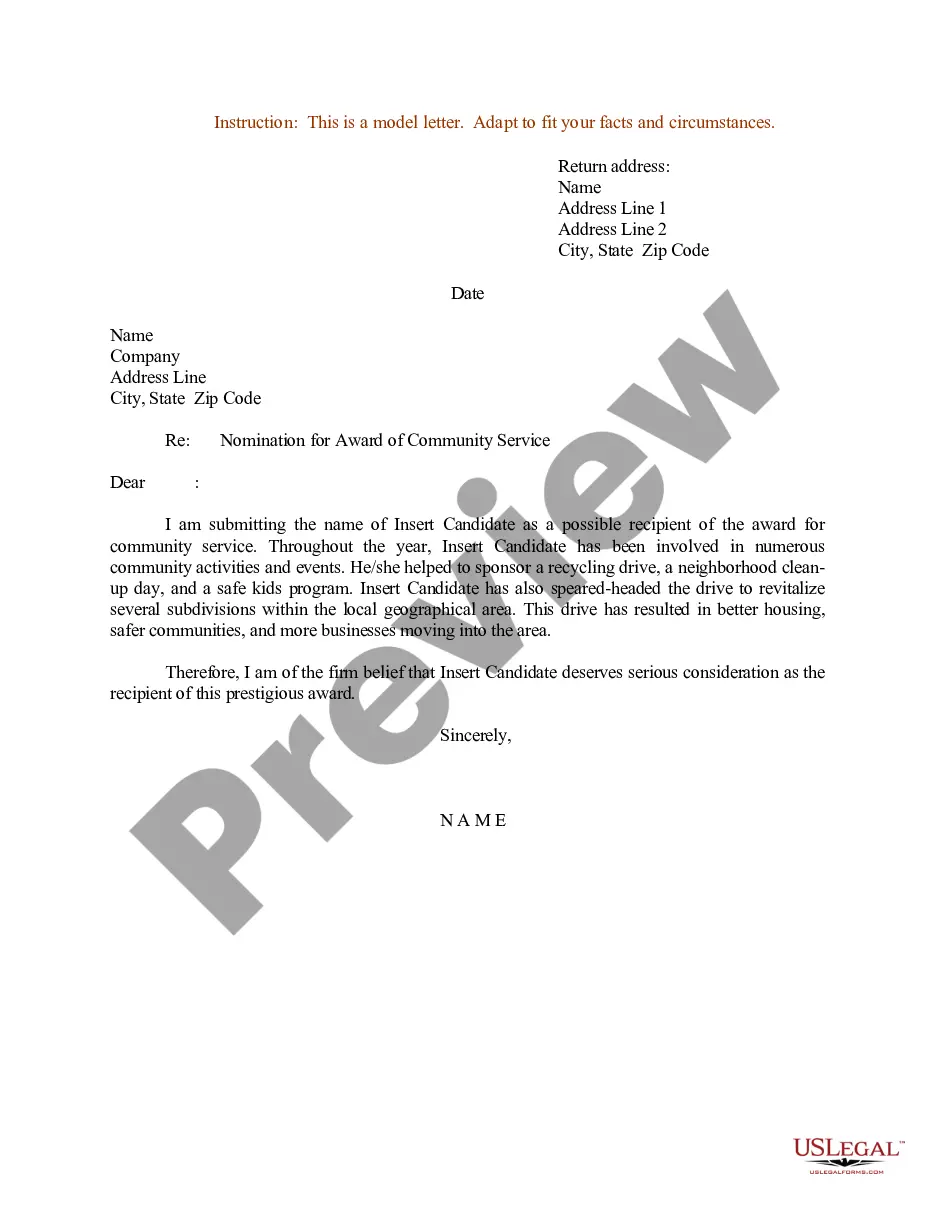

How to fill out Sample Letter To Mayor Concerning Cable Television Consumer Protection And Competition Act Of 1992?
Locating the appropriate legal document template can be quite challenging. It goes without saying that there are numerous templates accessible online, but how do you identify the legal type you require? Utilize the US Legal Forms website. The platform provides an extensive array of templates, including the North Dakota Sample Letter to Mayor regarding the Cable Television Consumer Protection and Competition Act of 1992, which you can employ for business and personal purposes. All forms are verified by experts and meet state and federal requirements.
Once you are registered, Log In to your profile and click the Download button to acquire the North Dakota Sample Letter to Mayor regarding the Cable Television Consumer Protection and Competition Act of 1992. Use your account to browse the legal forms you have purchased in the past. Navigate to the My documents section of your account and obtain another version of the document you need.
If you are a new user of US Legal Forms, here are some straightforward instructions for you to follow: First, ensure that you have selected the correct type for the city/county. You can examine the form using the Review button and read the form description to verify this is suitable for you. If the form does not meet your requirements, use the Search field to find the right form. When you are confident that the form is appropriate, click the Download now button to obtain the form. Choose the payment plan you wish and enter the necessary information. Create your account and complete the purchase using your PayPal account or credit card. Select the file format and download the legal document template to your device. Complete, modify, print, and sign the acquired North Dakota Sample Letter to Mayor regarding the Cable Television Consumer Protection and Competition Act of 1992.
Accessing legal templates has never been easier with US Legal Forms, ensuring you have the right documents at your fingertips.
- US Legal Forms is the largest collection of legal documents where you can find numerous document templates.
- Utilize the service to download properly crafted documents that comply with state requirements.
- Make sure to explore various options available on the platform.
- The templates are designed for both personal and business needs.
- All documents are reviewed to ensure legal compliance.
- Easy navigation makes it user-friendly for both new and returning users.
Form popularity
FAQ
The words and images that come via cable are not through public, broadcast airwaves, or what someone can get on a TV with an antenna. The FCC's regulation only applies to licensed, local broadcast outlets that transmit through the airwaves. This is largely because of the way these regulations came to be.
In response, the Congress passed the 1992 Cable Act, which established a combination of must carry and retransmission consent provisions. Stations were given the right to either require cable operators to carry their signal at no cost, or negotiate with cable operators for carriage fees that the latter could refuse.
1 Public Law 102?385, 106 Stat. 1460, approved Oct. 5, 1992. To amend the Communications Act of 1934 to provide increased consumer protection and to promote increased competition in the cable television and related markets, and for other purposes.
The Cable Television Consumer Protection and Competition Act of 1992 (also known as the 1992 Cable Act) is a United States federal law which required cable television systems to carry most local broadcast television channels and prohibited cable operators from charging local broadcasters to carry their signal.
In adopting the 1992 Cable Act, Congress stated that it wanted to promote the availability of diverse views and information, to rely on the marketplace to the maximum extent possible to achieve that availability, to ensure cable operators continue to expand their capacity and program offerings, to ensure cable ...
In theory the law was designed to grant women their own national identity; however, in practice, as it still retained vestiges of coverture, tying a woman's legal identity to her husband's, it had to be amended multiple times before it granted women citizenship in their own right.