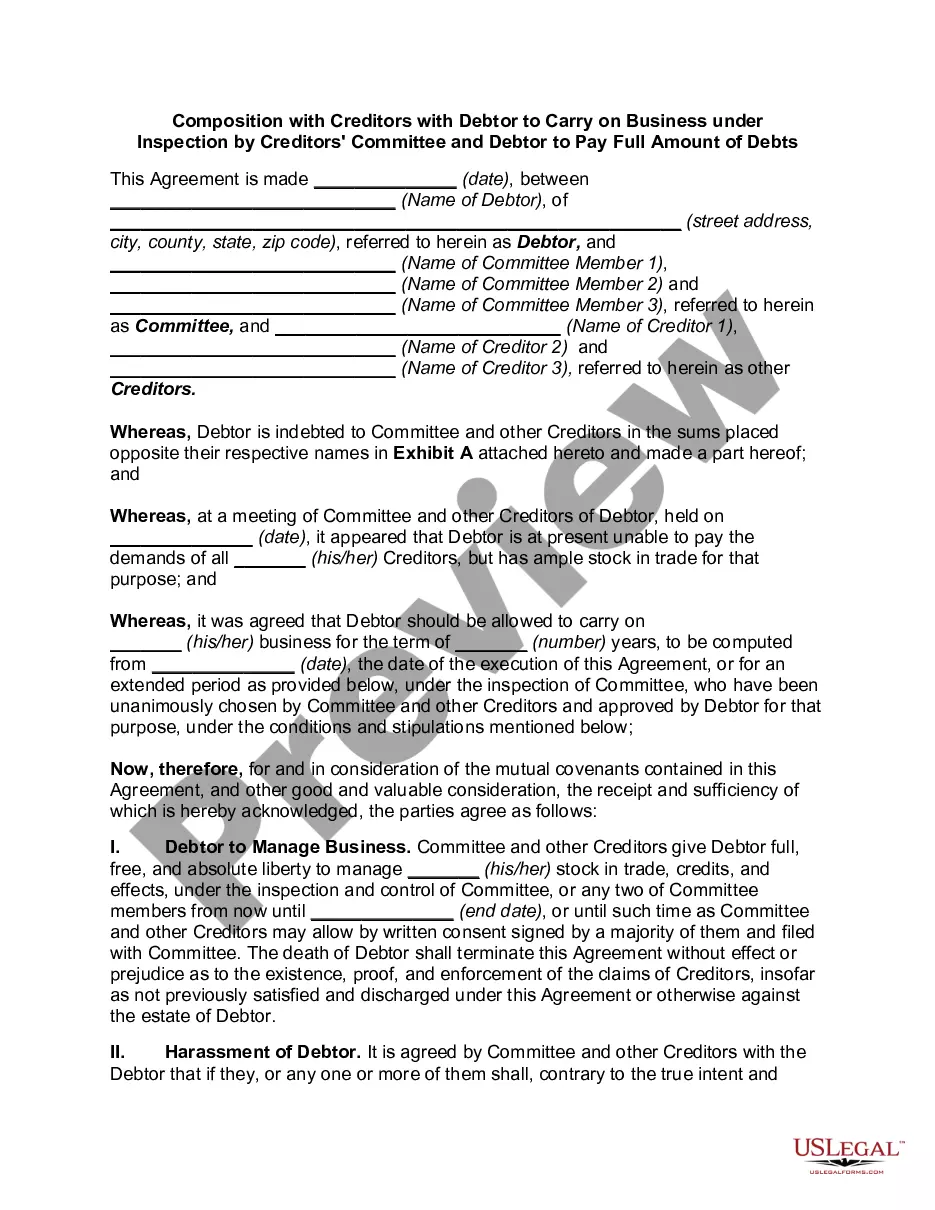
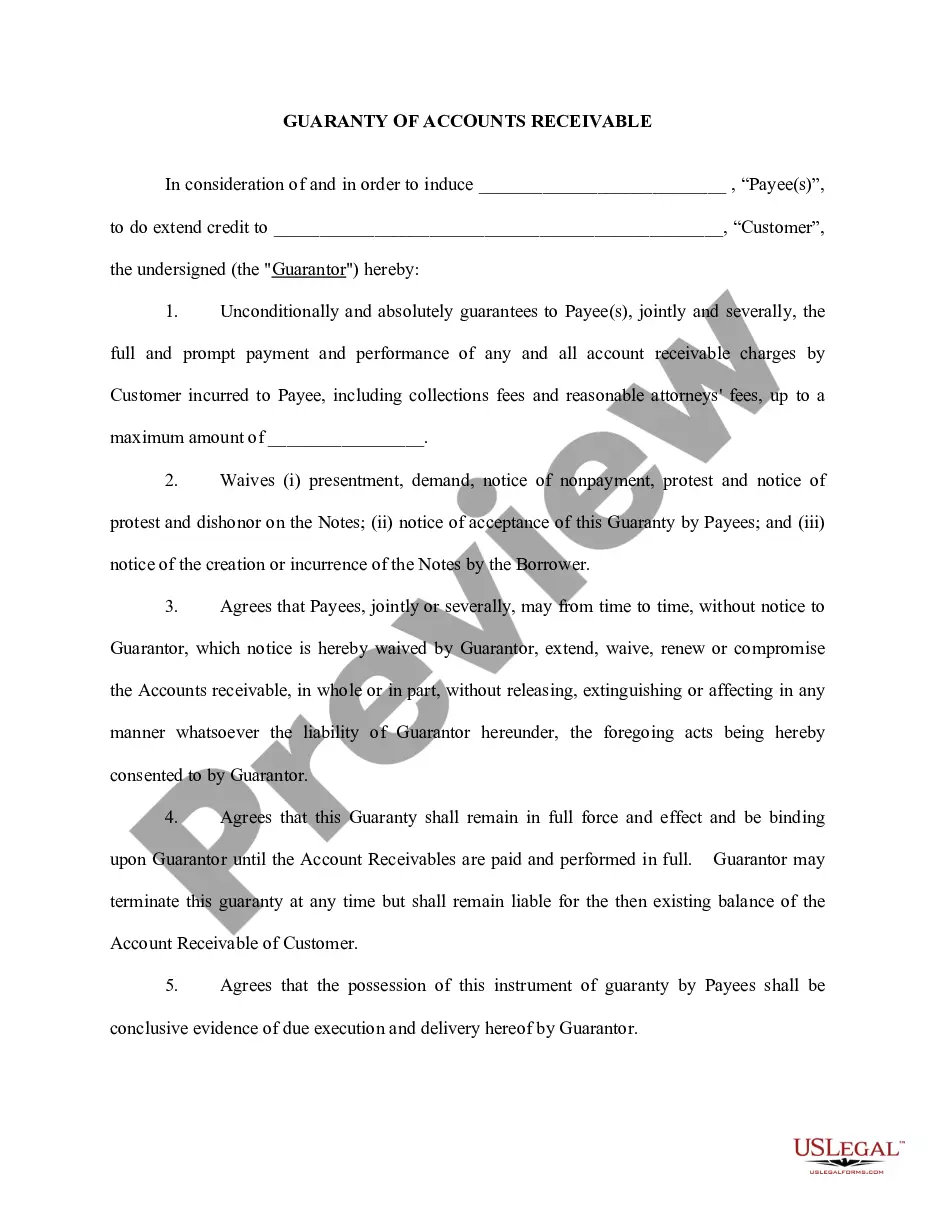
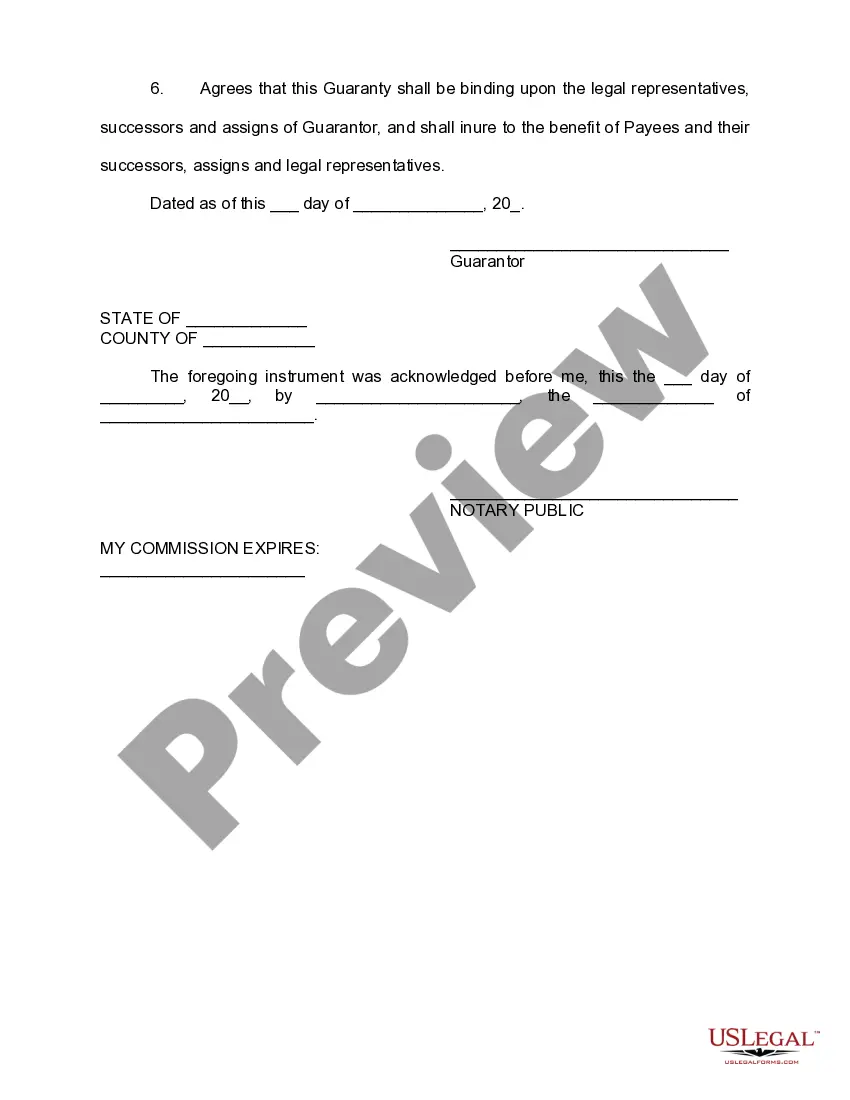
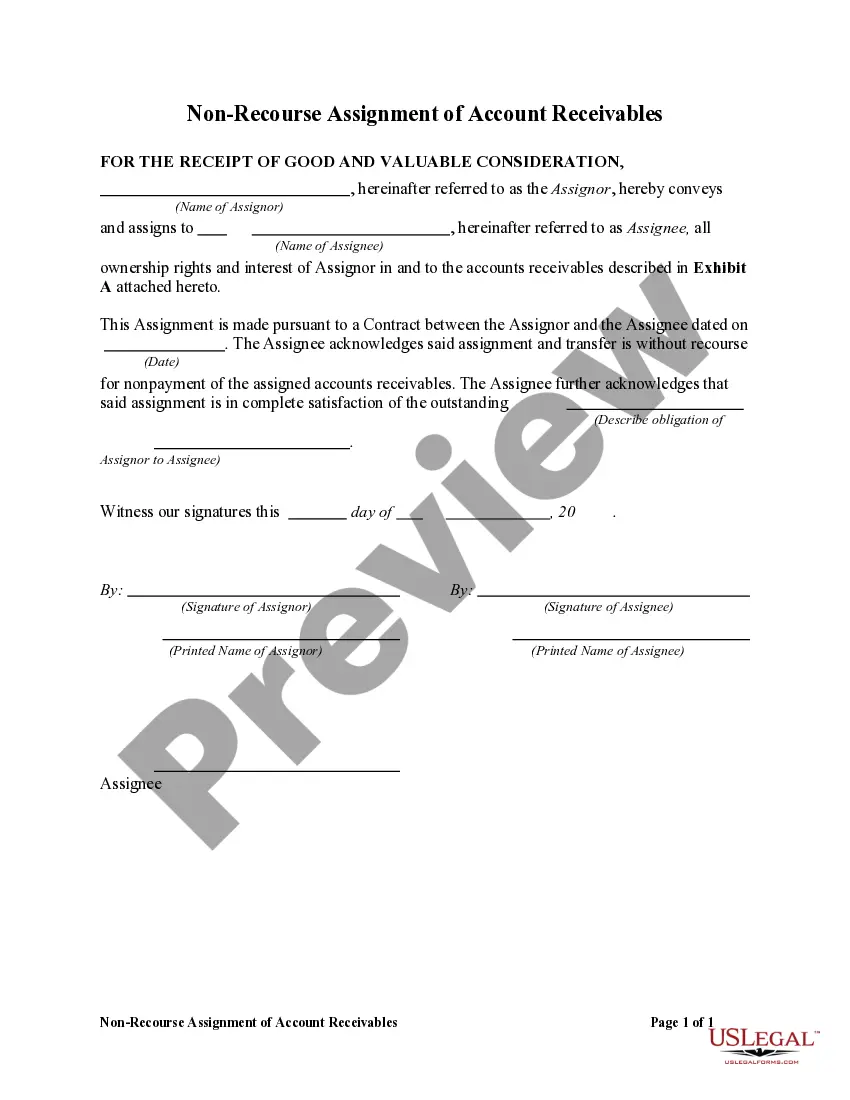
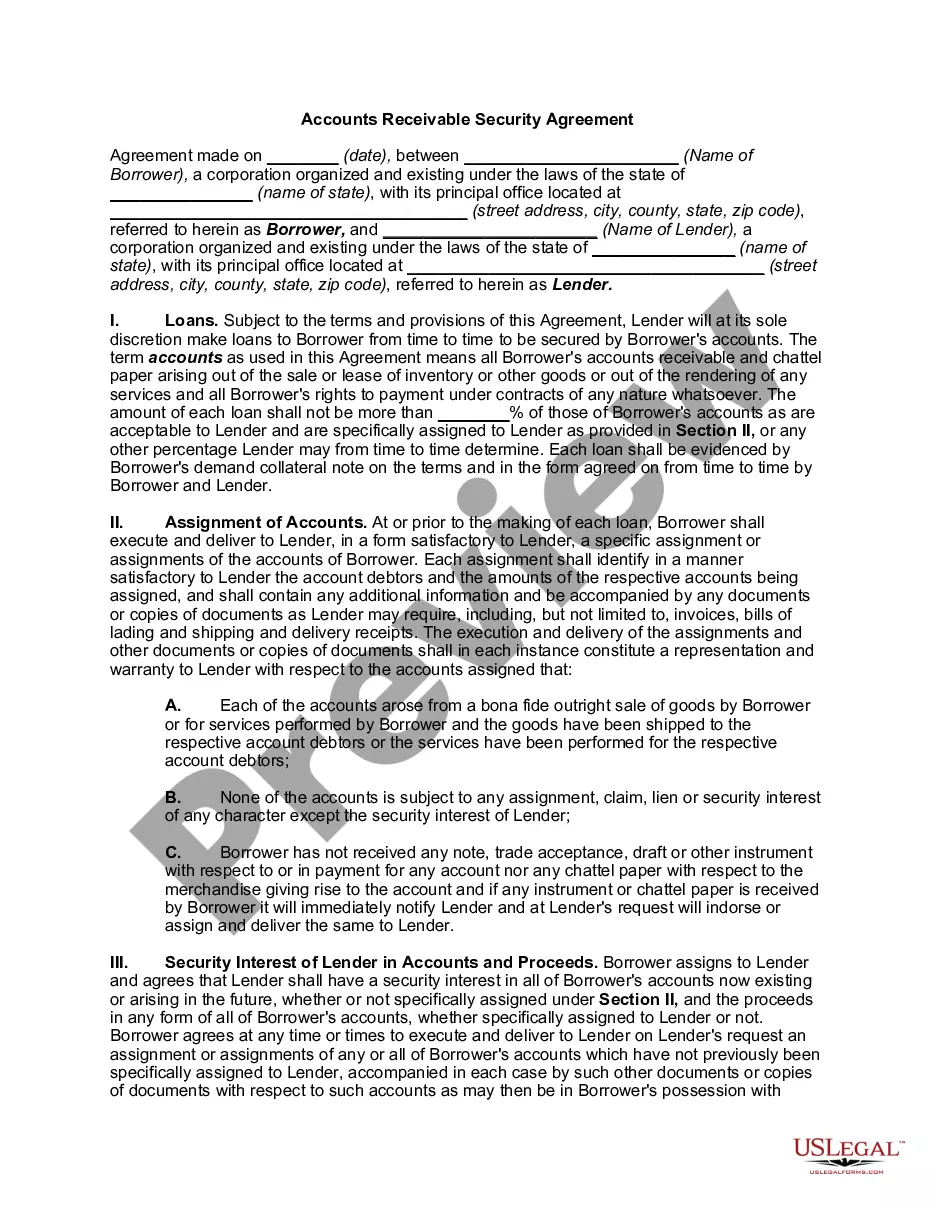
This form states that the guarantor unconditionally and absolutely guarantees to payee(s), jointly and severally, the full and prompt payment and performance of any and all account receivable charges by the customer incurred to the payee, including collections fees and reasonable attorneys' fees, up to a certain maximum amount.
North Dakota Accounts Receivable - Guaranty
Category:
State:
Multi-State
Control #:
US-00401
Format:
Word;
Rich Text
Instant download
Description
Free preview


Get your form ready online
Our built-in tools help you complete, sign, share, and store your documents in one place.
Built-in online Word editor
Make edits, fill in missing information, and update formatting in US Legal Forms—just like you would in MS Word.
Export easily
Download a copy, print it, send it by email, or mail it via USPS—whatever works best for your next step.
E-sign your document
Sign and collect signatures with our SignNow integration. Send to multiple recipients, set reminders, and more. Go Premium to unlock E-Sign.
Notarize online 24/7
If this form requires notarization, complete it online through a secure video call—no need to meet a notary in person or wait for an appointment.
Store your document securely
We protect your documents and personal data by following strict security and privacy standards.

Make edits, fill in missing information, and update formatting in US Legal Forms—just like you would in MS Word.

Download a copy, print it, send it by email, or mail it via USPS—whatever works best for your next step.

Sign and collect signatures with our SignNow integration. Send to multiple recipients, set reminders, and more. Go Premium to unlock E-Sign.

If this form requires notarization, complete it online through a secure video call—no need to meet a notary in person or wait for an appointment.

We protect your documents and personal data by following strict security and privacy standards.
Looking for another form?




How to fill out Accounts Receivable - Guaranty?
Are you in a location where you frequently require documentation for potential organization or specific tasks? There are numerous authentic document templates available online, but finding ones you can trust is not easy. US Legal Forms offers a vast array of form templates, such as the North Dakota Accounts Receivable - Guaranty, designed to meet federal and state regulations.
If you are already familiar with the US Legal Forms website and possess an account, simply Log In. After that, you can download the North Dakota Accounts Receivable - Guaranty template.
If you do not have an account and wish to start using US Legal Forms, follow these steps: Find the form you need and ensure it corresponds to the correct city/region. Use the Review option to examine the form. Check the details to make sure you have selected the right form. If the form is not what you’re looking for, utilize the Search field to find the form that suits your needs and requirements. Once you have the correct form, click Buy now. Choose the pricing plan you want, fill in the necessary information to create your payment, and complete the order using your PayPal or credit card. Select a preferred document format and download your copy.
- Access all the document templates you have purchased in the My documents section. You can retrieve another copy of the North Dakota Accounts Receivable - Guaranty at any time if needed. Click the desired form to download or print the document template.
- Utilize US Legal Forms, the largest collection of authentic forms, to save time and minimize mistakes. The service provides professionally crafted legal document templates that can be used for various purposes.
- Create an account on US Legal Forms and start making your life simpler.
Form popularity
FAQ
Claiming mineral rights in North Dakota involves several steps, including researching property ownership and filing the necessary claims with the state. Understanding your rights and obligations is essential in navigating this complex process. Utilizing resources and services like USLegalForms can simplify claiming mineral rights, ensuring that you adhere to local laws and regulations. This approach promotes successful management of your North Dakota Accounts Receivable - Guaranty.
In North Dakota, due diligence requirements for unclaimed property involve reaching out to property owners before reporting. Businesses must make reasonable efforts to contact individuals, providing them with information about their unclaimed assets. This step is a vital part of the North Dakota Accounts Receivable - Guaranty process, as it demonstrates your commitment to transparency and ethical practices. Following these guidelines can enhance your business's credibility and foster trust.
In North Dakota, a judgment typically lasts for ten years but can be renewed for an additional ten-year period. This duration is crucial for businesses engaged in North Dakota Accounts Receivable - Guaranty, as it impacts debt collection efforts. Keeping track of judgment expiration helps you manage your receivables effectively. Renewing judgments can also improve your chances of recovering debts.
Generally, you cannot claim unclaimed property that does not belong to you. However, North Dakota Accounts Receivable - Guaranty allows rightful owners or their heirs to reclaim their assets. If you believe you have a claim to unclaimed property, it's best to provide proper documentation to validate your ownership. This process ensures that property is returned to its rightful owner while maintaining legal compliance.
In North Dakota, the unclaimed property law outlines four key requirements: identifying unclaimed property, conducting due diligence, reporting the property, and remitting it to the state. Businesses must diligently track their accounts receivable to ensure compliance with these regulations. By understanding these requirements, you can better protect your assets under the North Dakota Accounts Receivable - Guaranty framework. This knowledge enables you to manage your obligations effectively.
A negative report for unclaimed property indicates that a business has no unclaimed property to report for a specific period. In the context of North Dakota Accounts Receivable - Guaranty, it’s essential for businesses to keep accurate records to avoid confusion. Submitting a negative report helps maintain compliance with state regulations and ensures transparency. This process can safeguard your business's reputation and streamline your operations.
?Disregarded entity? is a tax term. It refers to an entity that, as the name implies, will be disregarded ? or ignored ? for federal income tax purposes. The most common disregarded entity for federal income tax purposes is the single-member limited liability company (SMLLC).
Definition of a Disregarded Entity A disregarded entity is a single-owner business entity that the IRS disregards for federal income tax purposes. The owner, instead, pays the business entity's portion of the taxes on their own personal return.
There are pros and cons to owning a disregarded entity. The pros include pass-through taxation, easy tax filing, and limited liability protection. The cons include having a harder time obtaining investors as well as possibly paying self-employment taxes on top of other business taxes.
If you're a single member Limited Liability Company (LLC) that is a disregarded entity, then the ?Name? line on your W9 needs to be that of the owner of the LLC (who would file a federal tax return), and not the LLC business name.