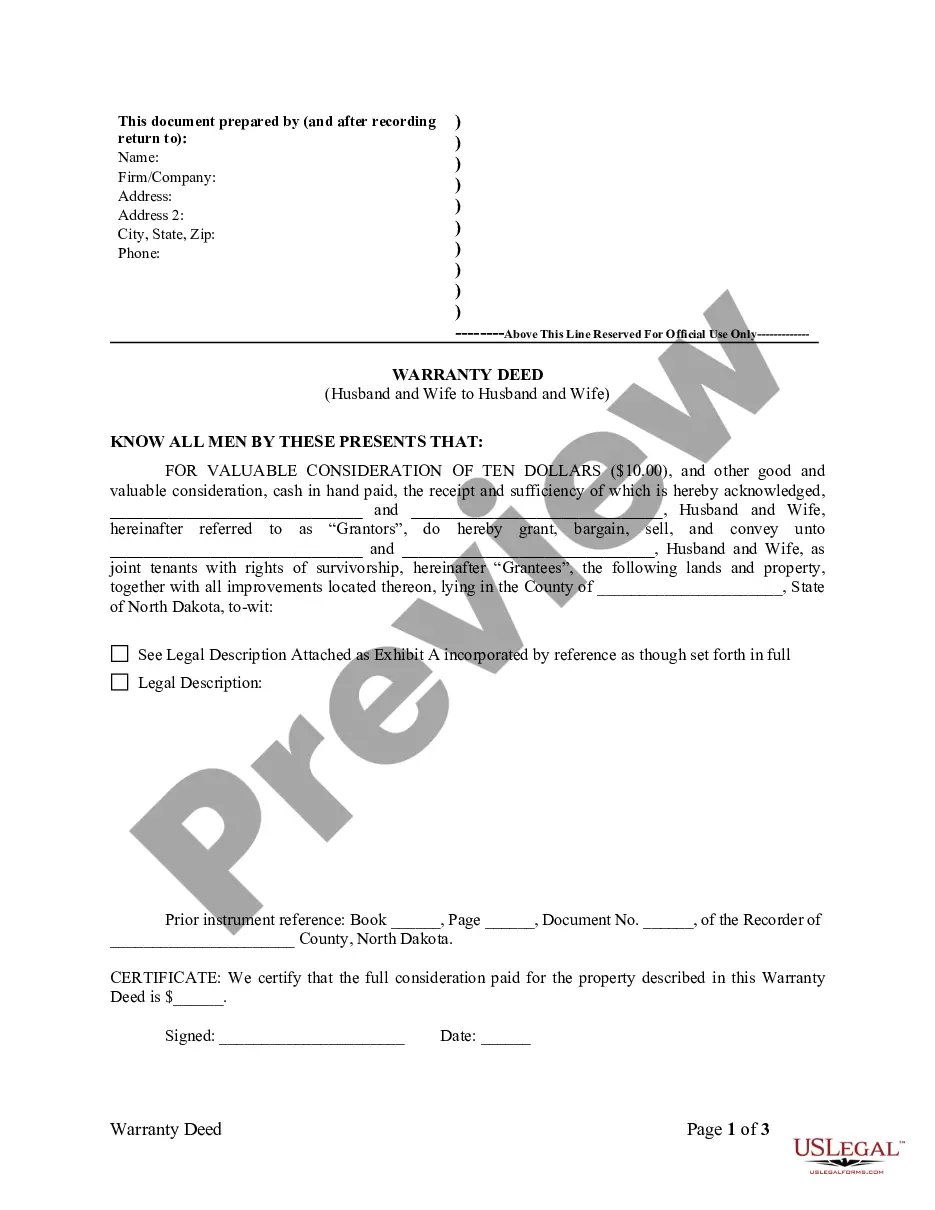
Nebraska Underground Power Line Easement
What this document covers
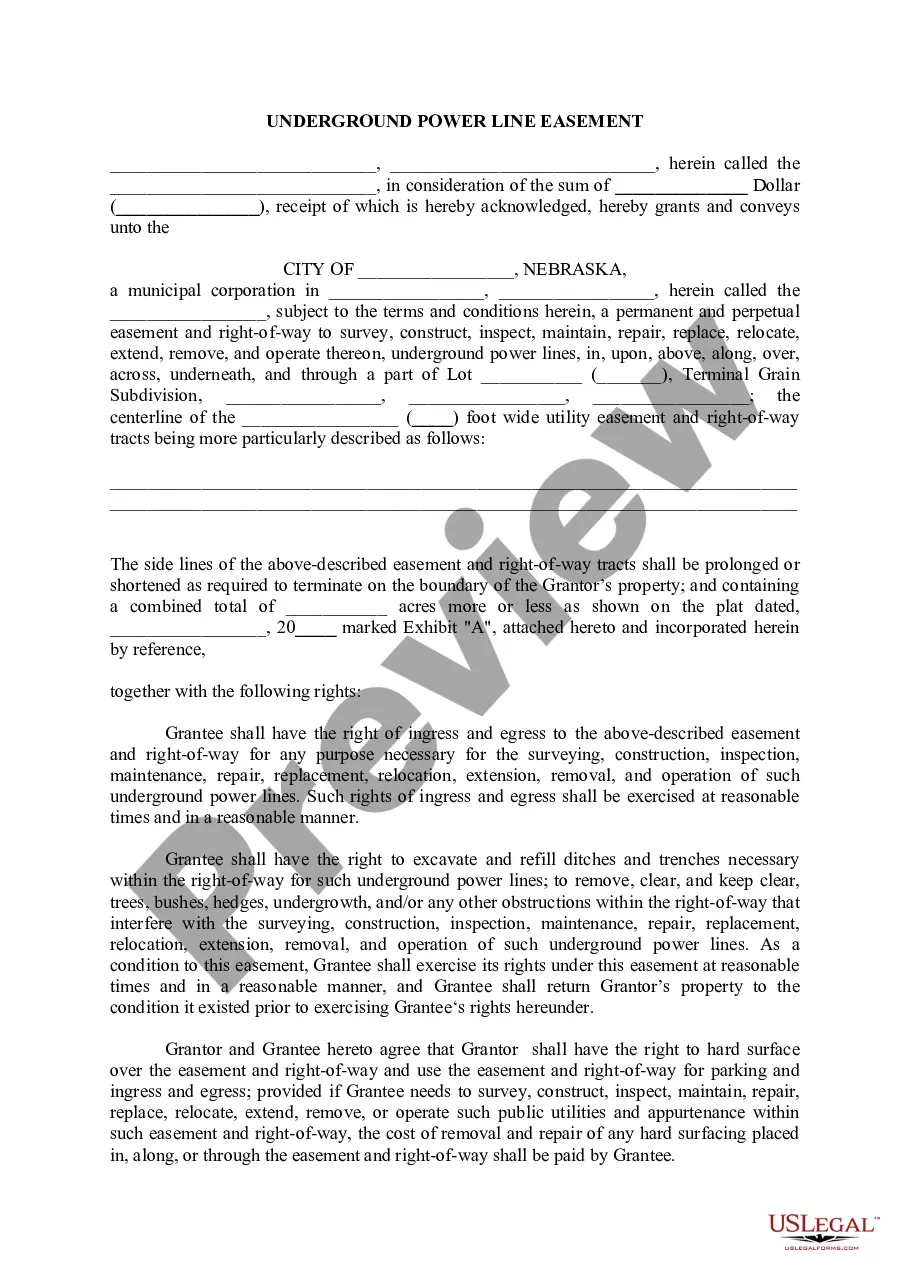
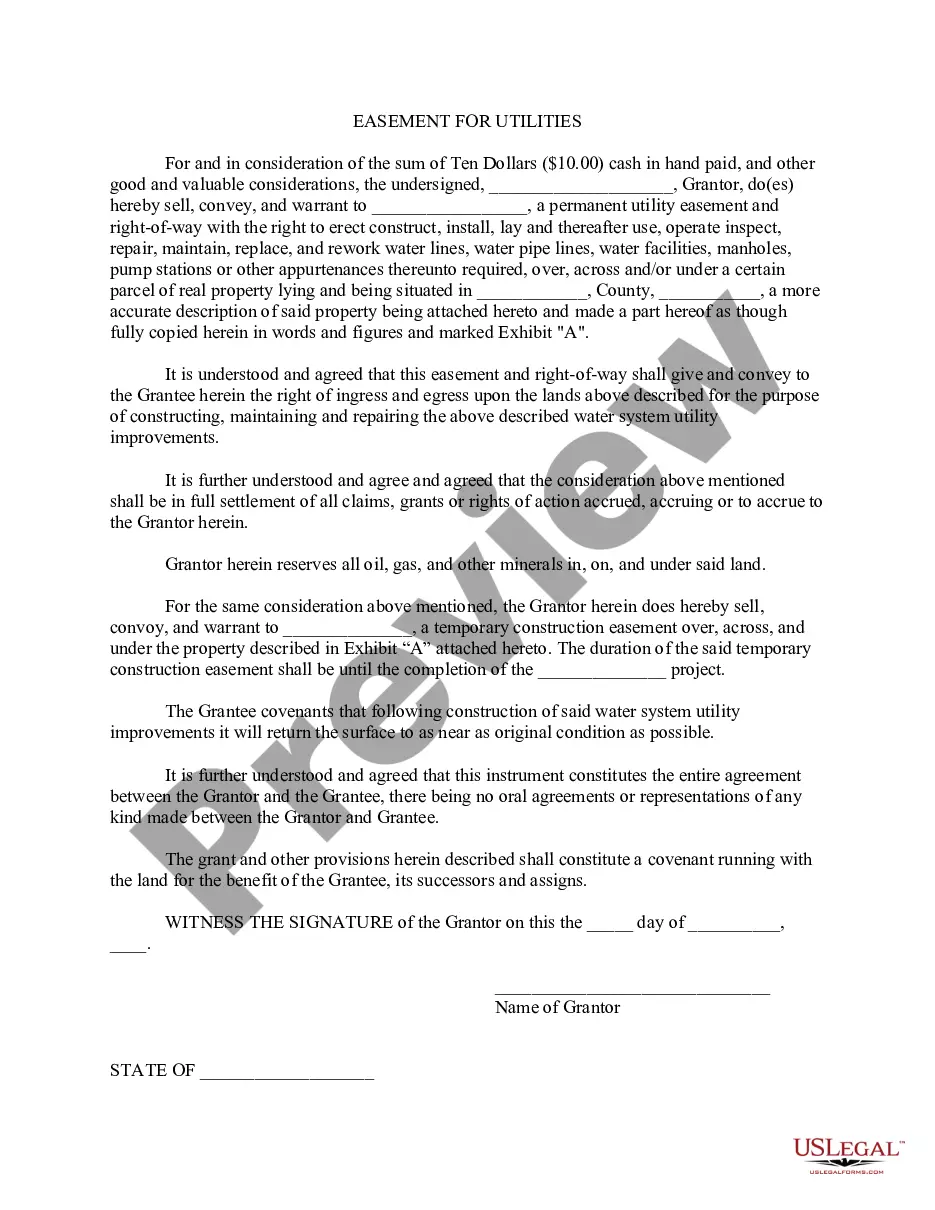
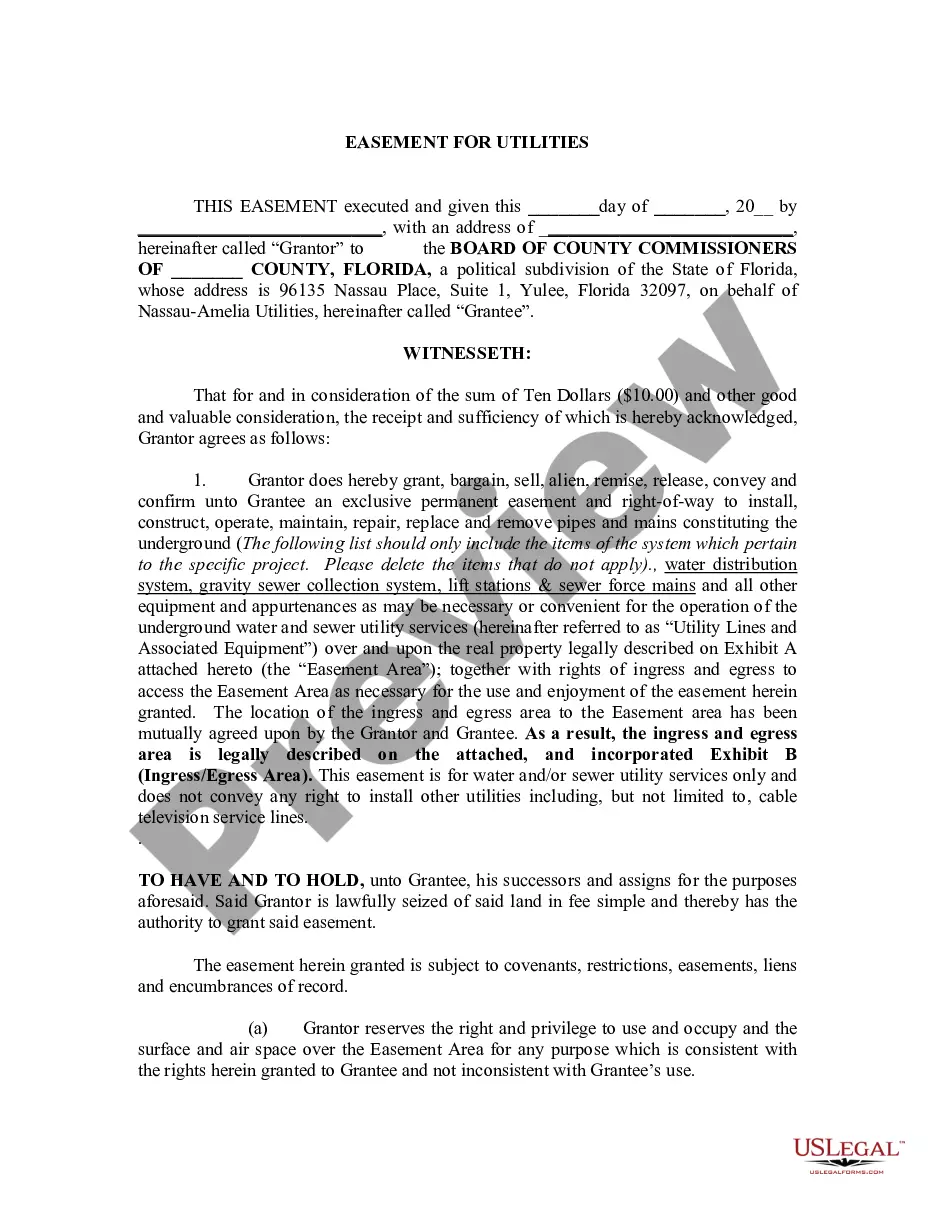
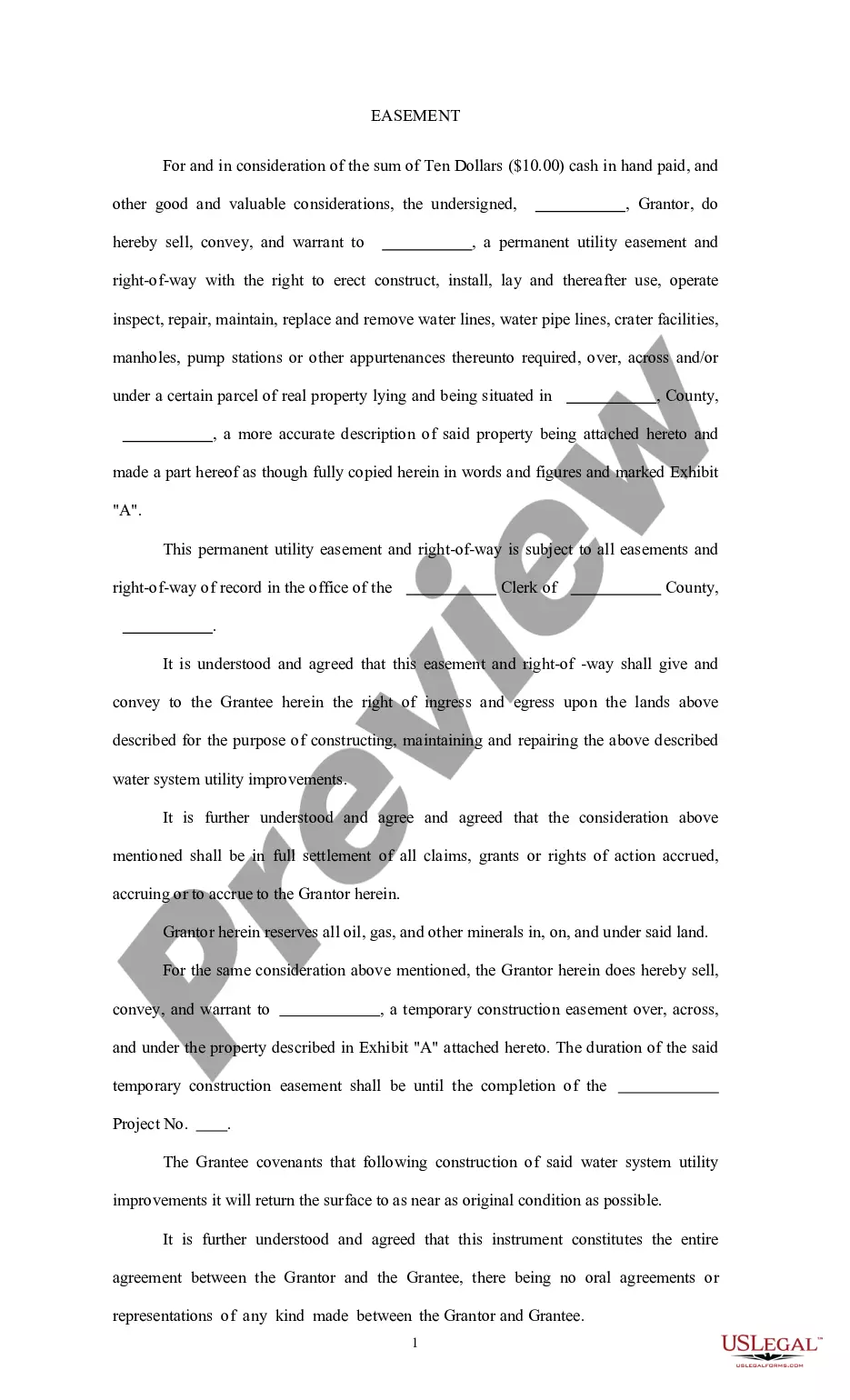
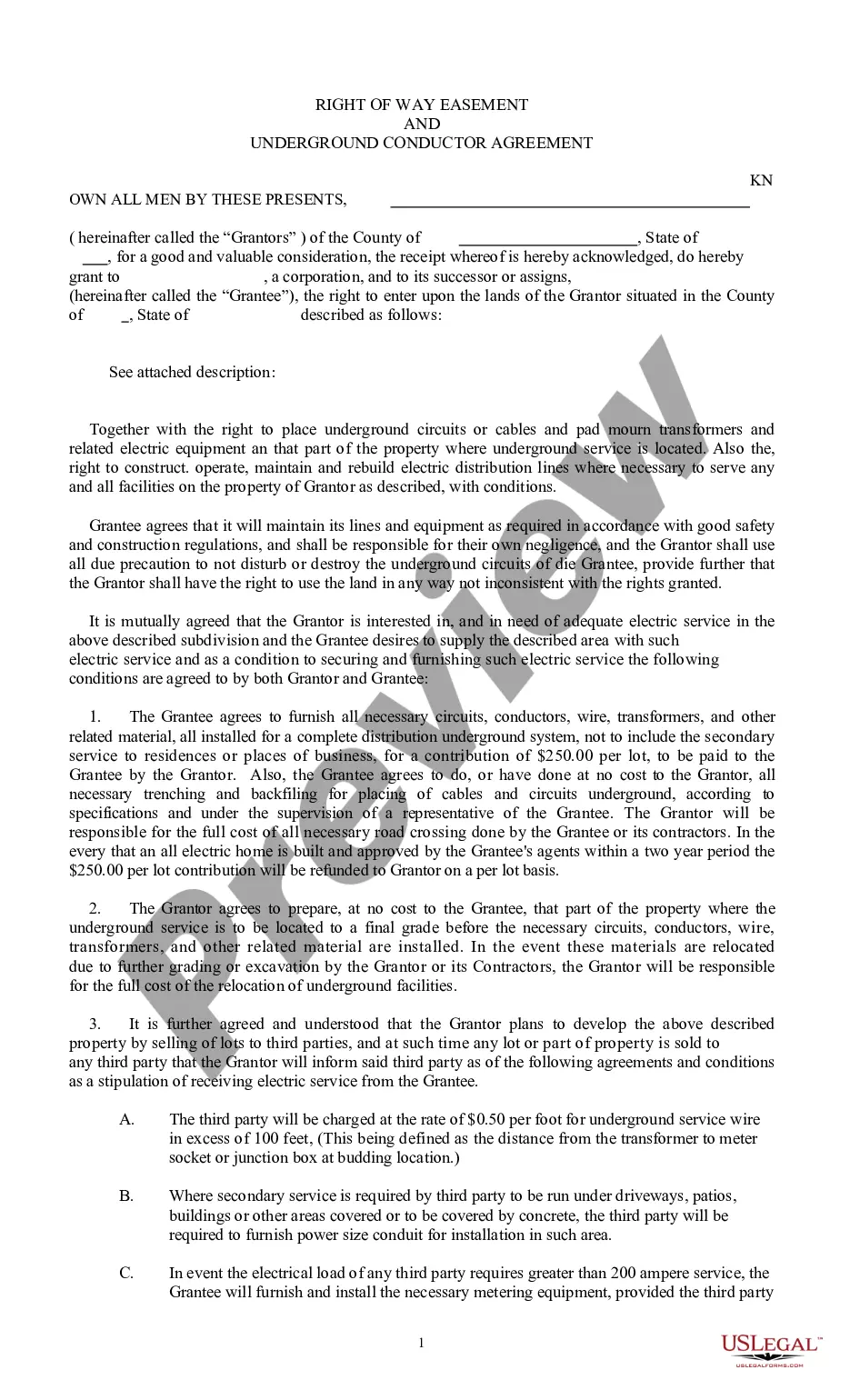
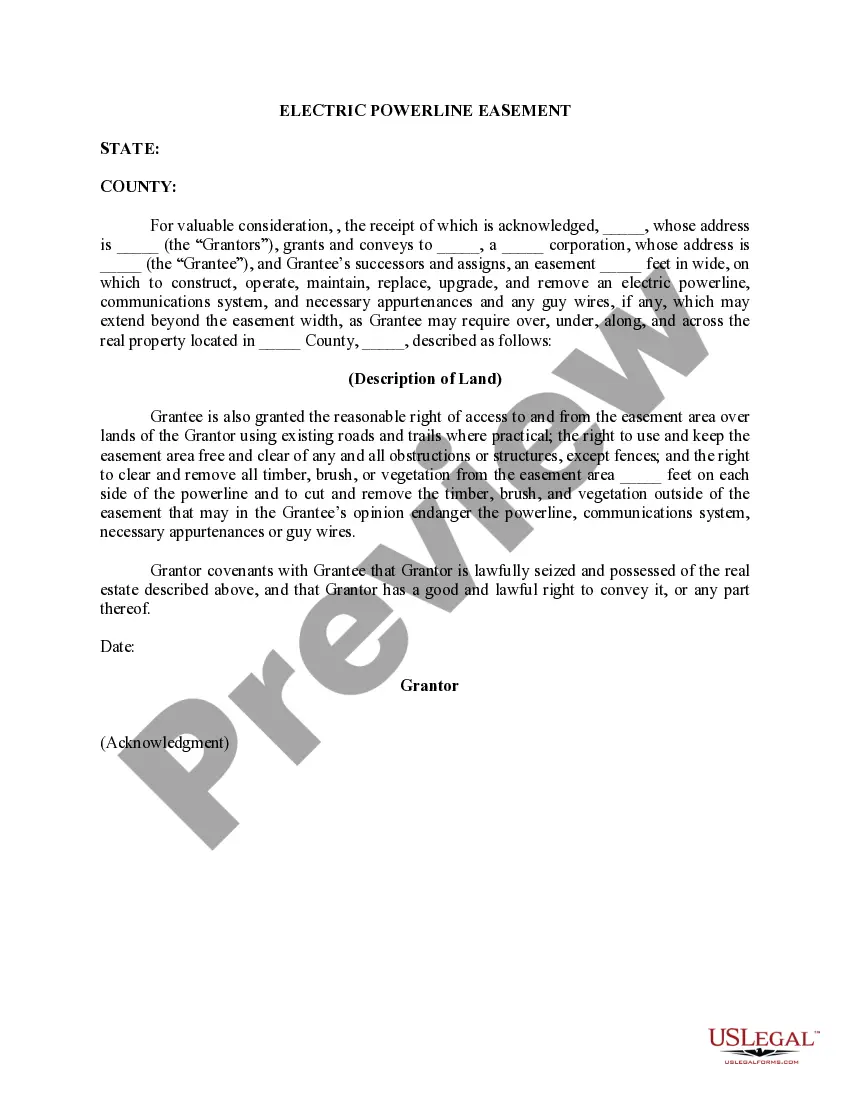
The Underground Power Line Easement is a legal document that grants a utility company permanent rights to construct, maintain, and operate underground power lines on a specified property. This easement ensures the utility can access the land for necessary activities related to the underground power infrastructure while protecting the interests of the property owner. Unlike temporary easements, this document establishes ongoing, perpetual rights, distinguishing it from other legal forms related to utility access.
Key components of this form
- Identification of the grantor (property owner) and grantee (utility company).
- Description of the property where the easement is granted.
- Specific rights granted to the grantee, including construction, maintenance, and repair of power lines.
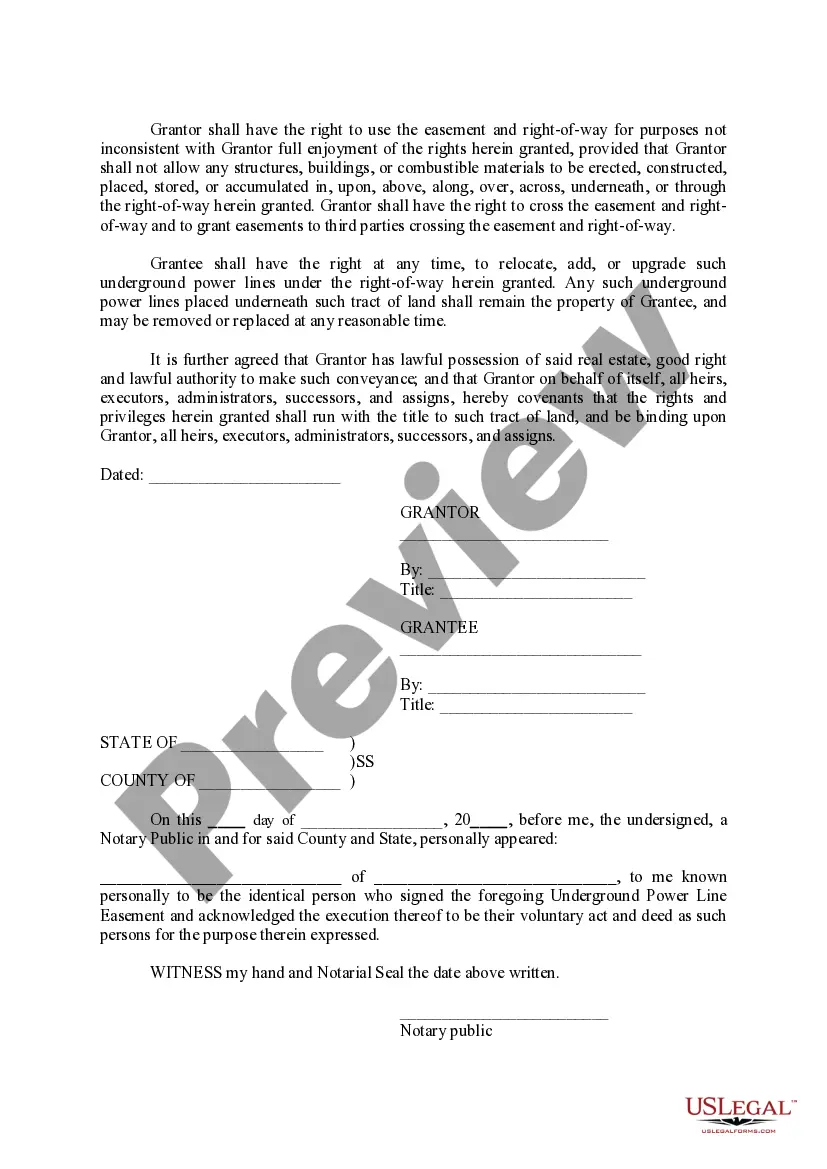
- Provisions concerning the responsibilities of the grantee to restore the property after work is completed.
- Rights granted to the property owner to use the land for non-inconsistent purposes.
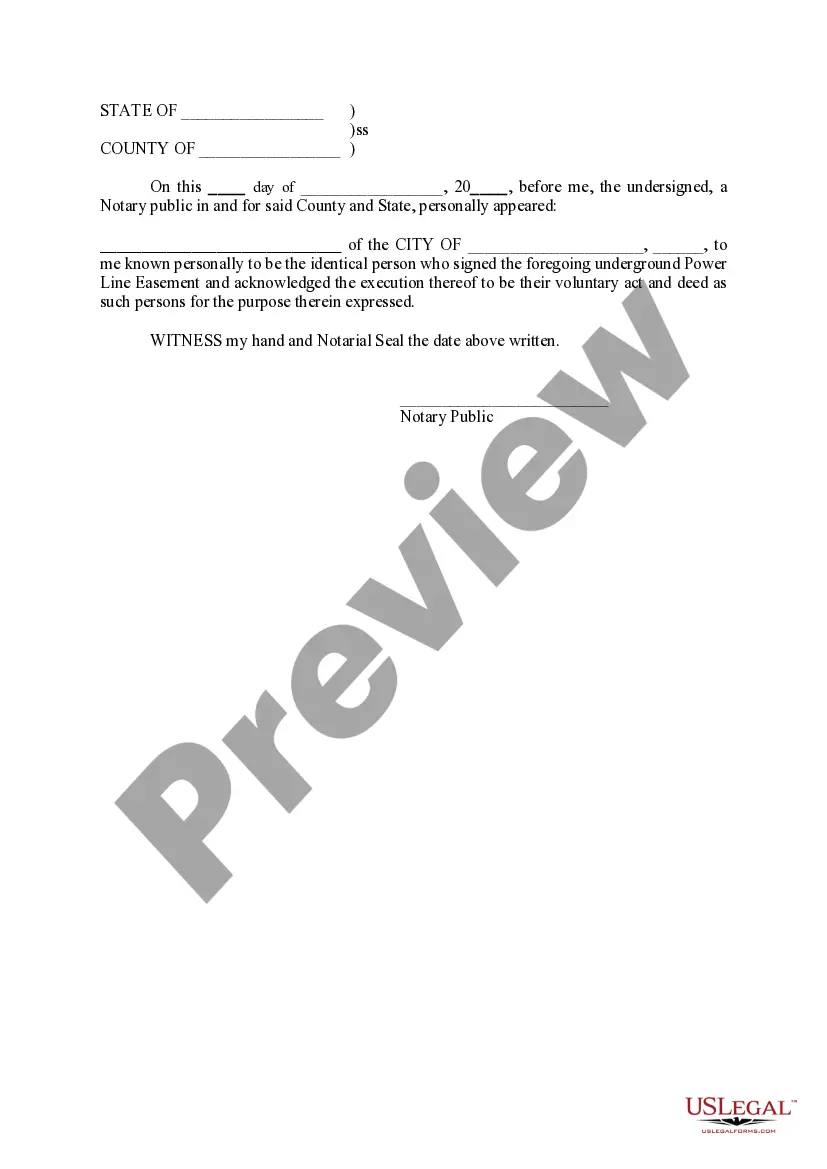
- Notarization requirements for the completion of the document.
When to use this form
This form is used when a property owner needs to allow a utility company to install and maintain underground power lines on their property. It is essential when significant infrastructure projects are involved, such as new residential developments or upgrades to existing utility services, where access under the surface of the land is required.
Who needs this form
- Property owners who are approached by utility companies to install underground power lines.
- Utility companies looking to formalize access to private property for underground infrastructure projects.
- Real estate professionals involved in property transactions that require easement agreements for utilities.
Completing this form step by step
- Identify the parties by entering the names and addresses of the grantor and grantee.
- Specify the property by including a clear description of the location where the easement is granted.
- Enter the payment amount being exchanged for the easement rights.
- Complete the details about the rights being granted, including any conditions or limitations.
- Sign the document in the presence of a notary public to ensure its legal validity.
Is notarization required?
Yes, this form must be notarized to be legally valid. Notarization helps to verify the identities of the signatories and the authenticity of the document. US Legal Forms offers integrated online notarization services, available 24/7 through secure video calls, ensuring a convenient experience without the need for physical travel.
Get your form ready online
Our built-in tools help you complete, sign, share, and store your documents in one place.
Make edits, fill in missing information, and update formatting in US Legal Forms—just like you would in MS Word.
Download a copy, print it, send it by email, or mail it via USPS—whatever works best for your next step.
Sign and collect signatures with our SignNow integration. Send to multiple recipients, set reminders, and more. Go Premium to unlock E-Sign.
If this form requires notarization, complete it online through a secure video call—no need to meet a notary in person or wait for an appointment.
We protect your documents and personal data by following strict security and privacy standards.

Make edits, fill in missing information, and update formatting in US Legal Forms—just like you would in MS Word.

Download a copy, print it, send it by email, or mail it via USPS—whatever works best for your next step.

Sign and collect signatures with our SignNow integration. Send to multiple recipients, set reminders, and more. Go Premium to unlock E-Sign.

If this form requires notarization, complete it online through a secure video call—no need to meet a notary in person or wait for an appointment.

We protect your documents and personal data by following strict security and privacy standards.
Common mistakes
- Failing to include a clear description of the property can lead to disputes about easement boundaries.
- Not obtaining the necessary signatures from both parties before notarization may invalidate the easement.
- Overlooking local state-specific requirements, which could affect the enforceability of the easement.
Why use this form online
- Convenient access to easily downloadable legal templates, saving time and effort.
- Editability of the form allows for customization specific to the user's situation.
- Reliable templates drafted by licensed attorneys ensure legal compliance and effectiveness.
Looking for another form?
Form popularity
FAQ
The bottom line is that developers and builders who are presented with utility company easement forms should not just sign them, but think about the kinds of issues they can present. It is easier to negotiate these concessions up front before the lines go in, than to ask the utility company to amend its easement later.
Simply put, an easement is a legal right given to cross or use another person's land for a specific purpose.Easements are more commonly granted to utility companies, such as telephone or electrical companies to run cable and power lines.
BPA does not recommend that anyone attempt to calculate how close they can come to a power line. As a general precaution, when under a line, never put yourself or any object any higher than 14 feet above the ground. The National Electrical Safety Code specifies a minimum safe clearance for each operating volt- age.
An easement held by an electricity provider allows it to erect and maintain electric power equipment on your land. The easement gives the electric power company the right to use a property for this specific purpose only.
Utility easements are one of the most common types of easements for private property, which generally allow public utility companies access to the property for the purpose of installing, repairing and maintaining utility lines.
The short answer is NO. It may be considered trespass.
What is a right-of-way? It is a legal agreement that allows us access to the property directly beneath and to either side of an electric power line. Also called an easement, the right-of-way allows us to enter the property at any time, to perform maintenance or repairs to our equipment.
An easement held by an electricity provider allows it to erect and maintain electric power equipment on your land. The easement gives the electric power company the right to use a property for this specific purpose only.