North Dakota Revocable Living Trust for Husband and Wife with No Children
Understanding this form
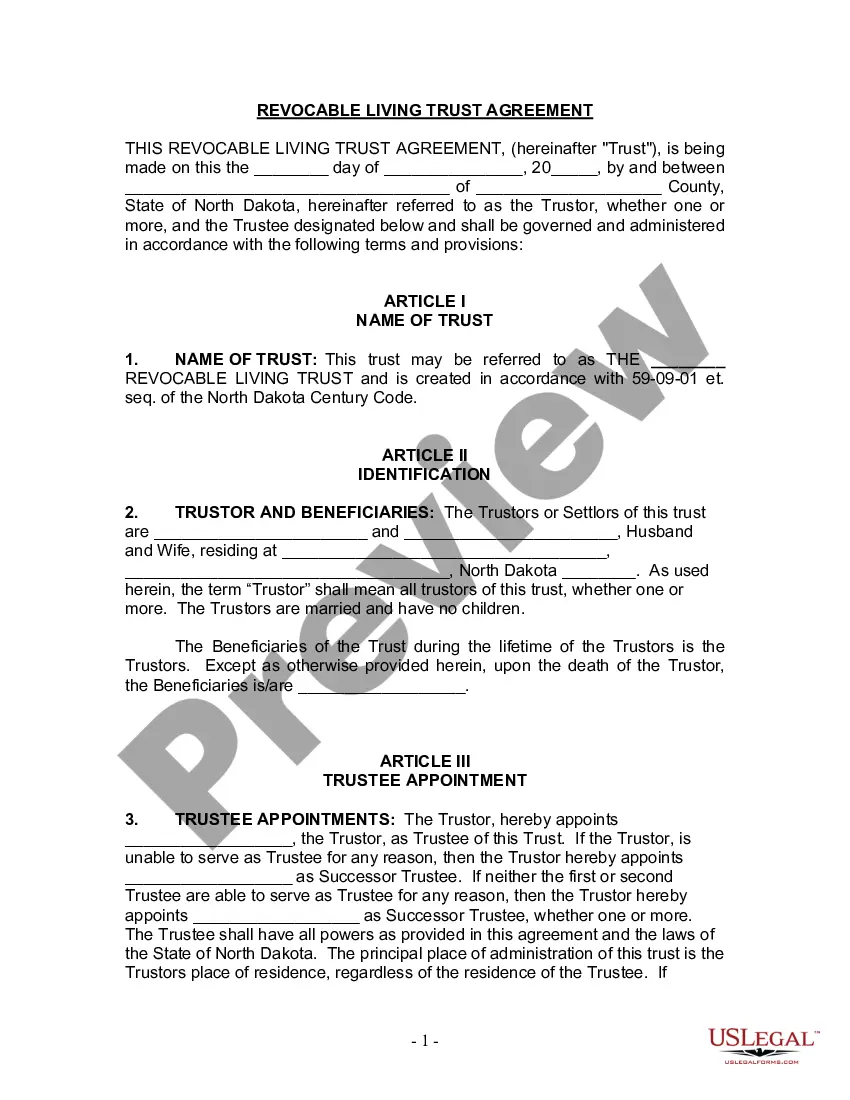
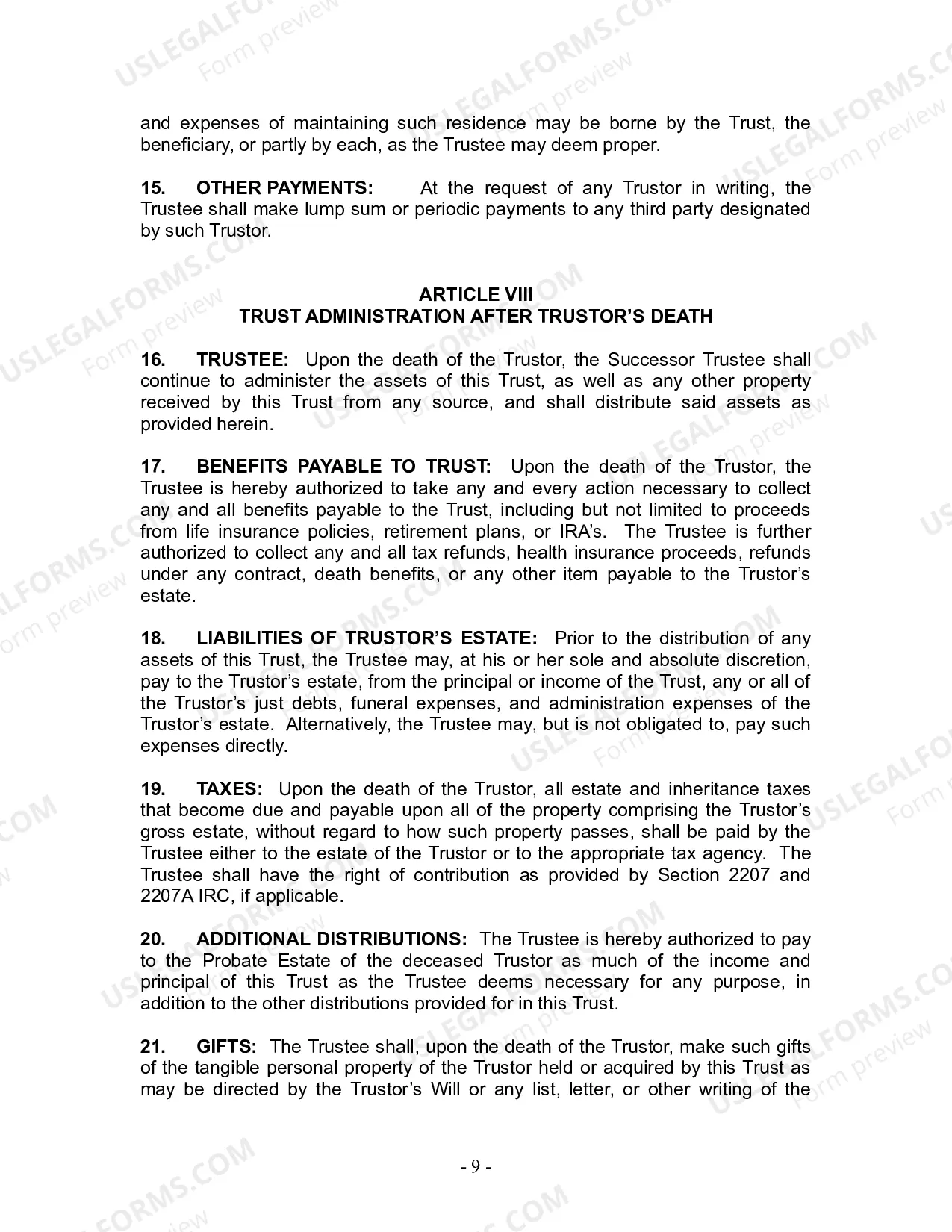
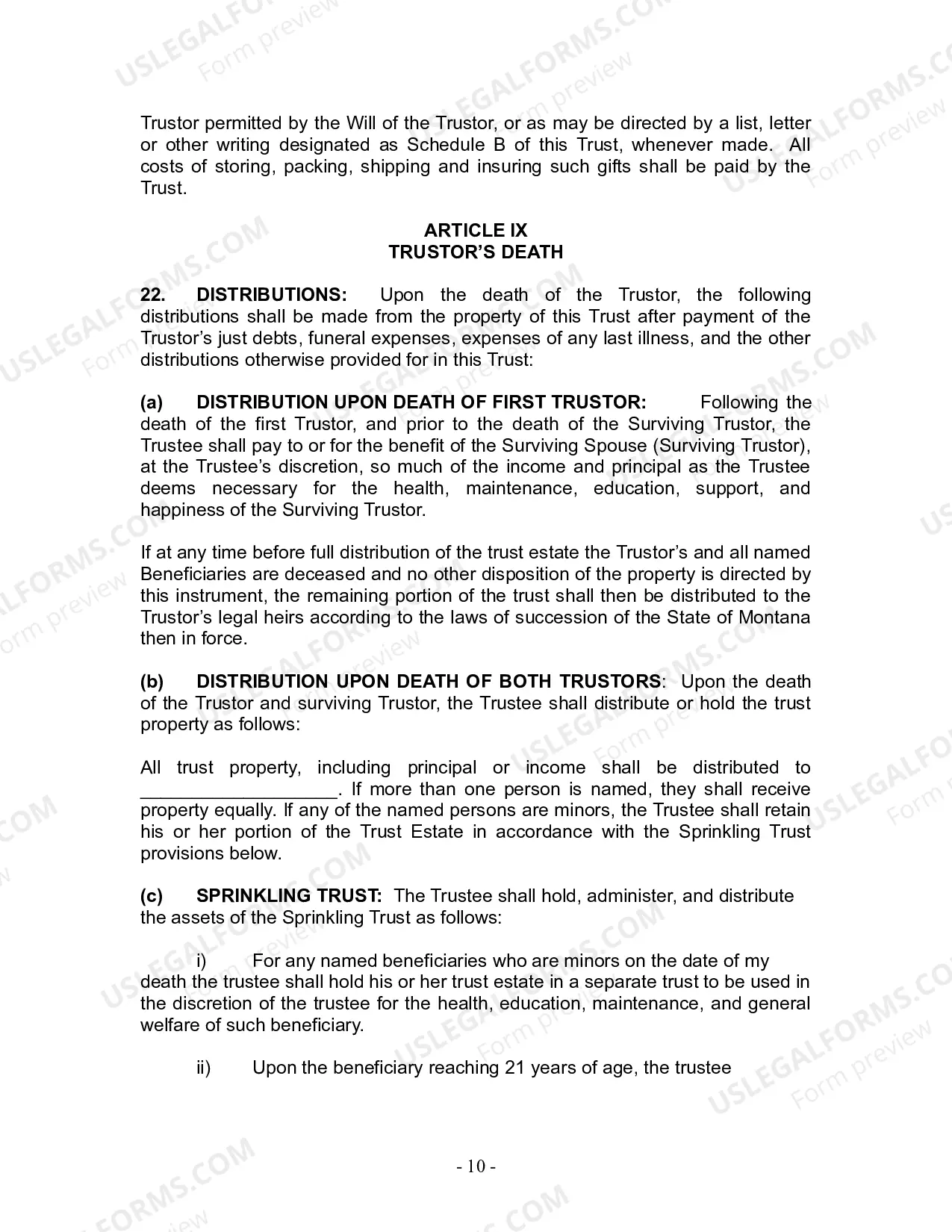
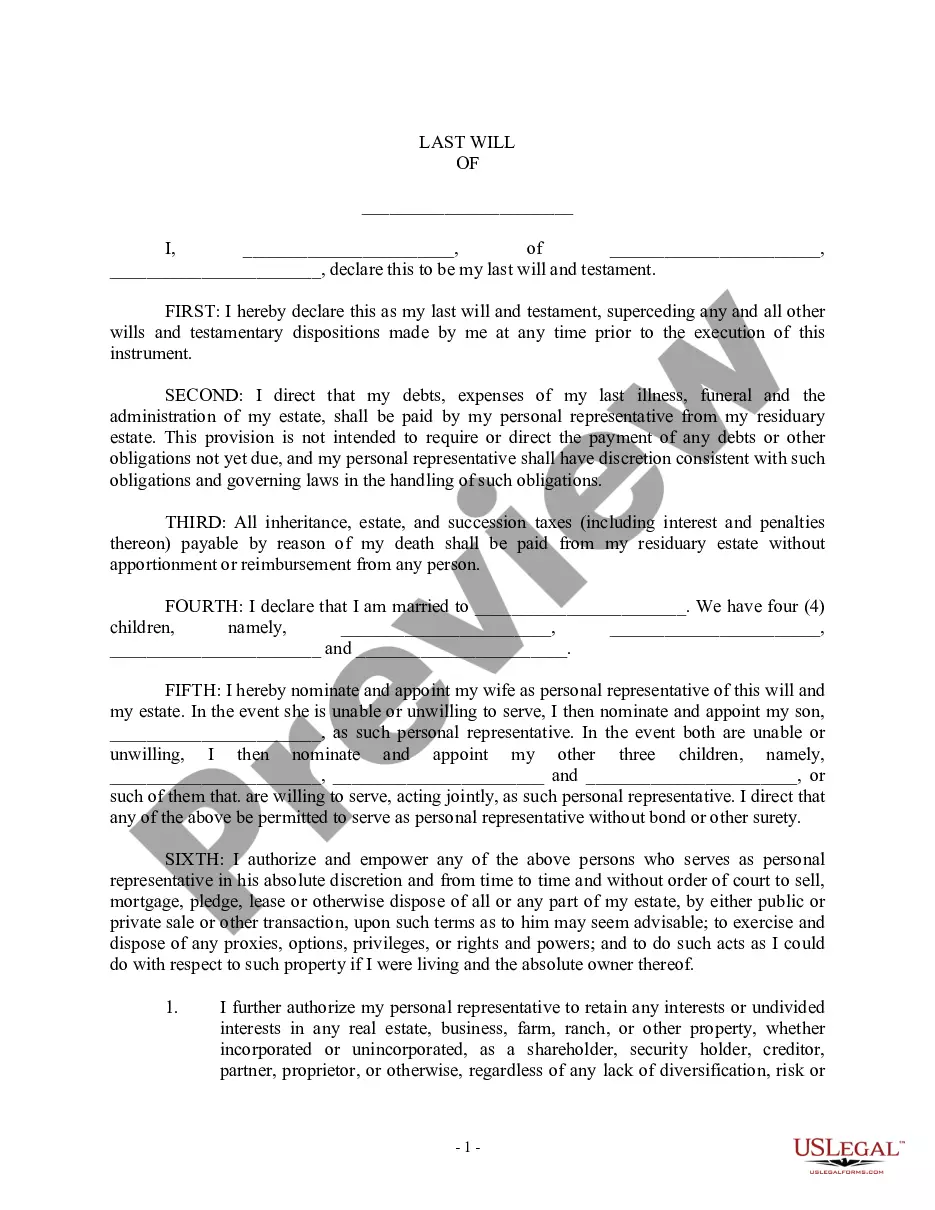
This Revocable Living Trust for Husband and Wife with No Children is a legal document that allows couples to manage their assets during their lifetime and set instructions for their distribution after death. Unlike a will, a living trust helps avoid probate, which can be a lengthy and costly process. This form is specifically designed for couples without children, ensuring that both spouses can control their assets in a tailored manner that meets their unique needs.
Key components of this form
- Name of Trust: Identifies the trust by a unique name.
- Trustor Information: Details about the husband and wife as Trustors and beneficiaries.
- Trustee Appointment: Identifies the roles of the initial and successor trustees.
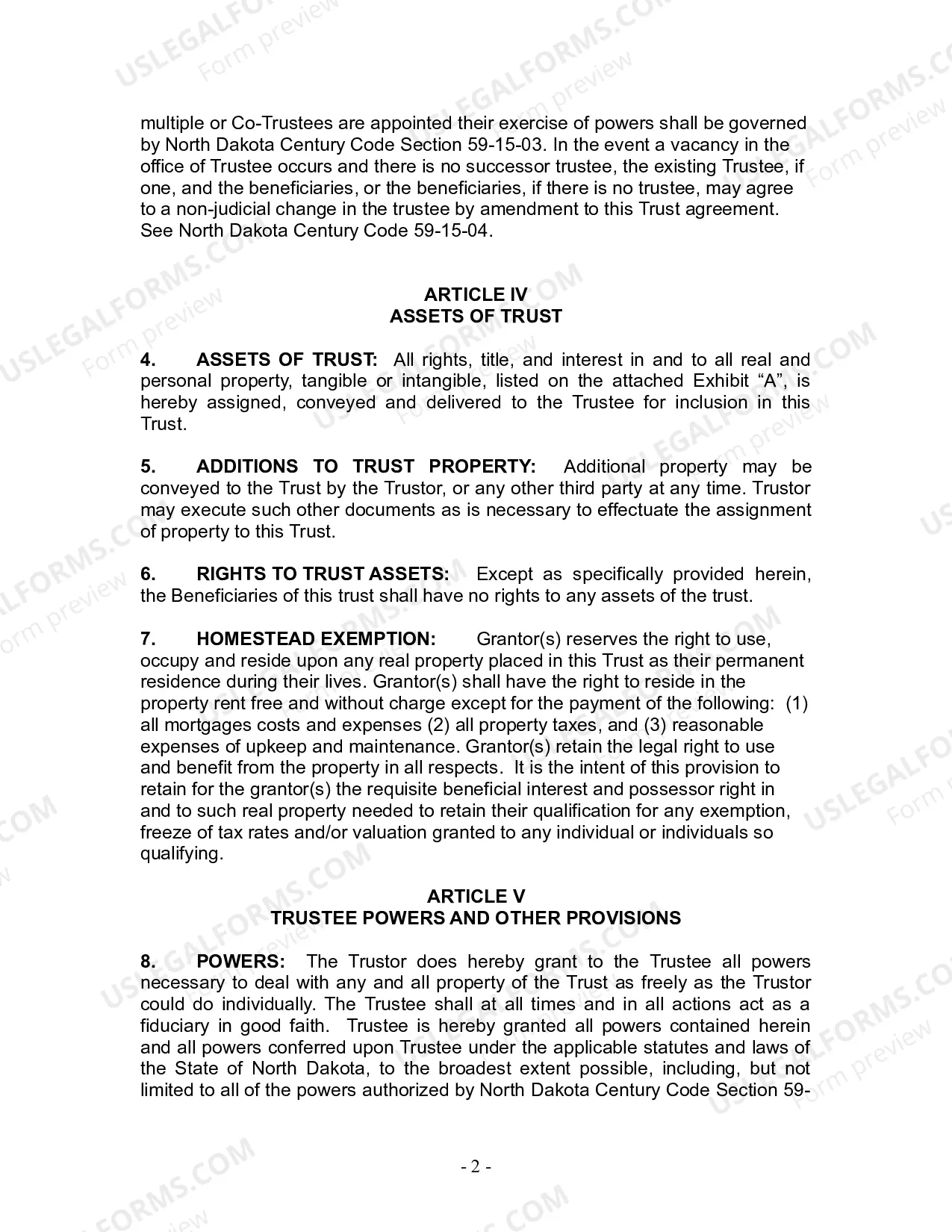
- Assets of Trust: Specifies the property and assets included in the trust.
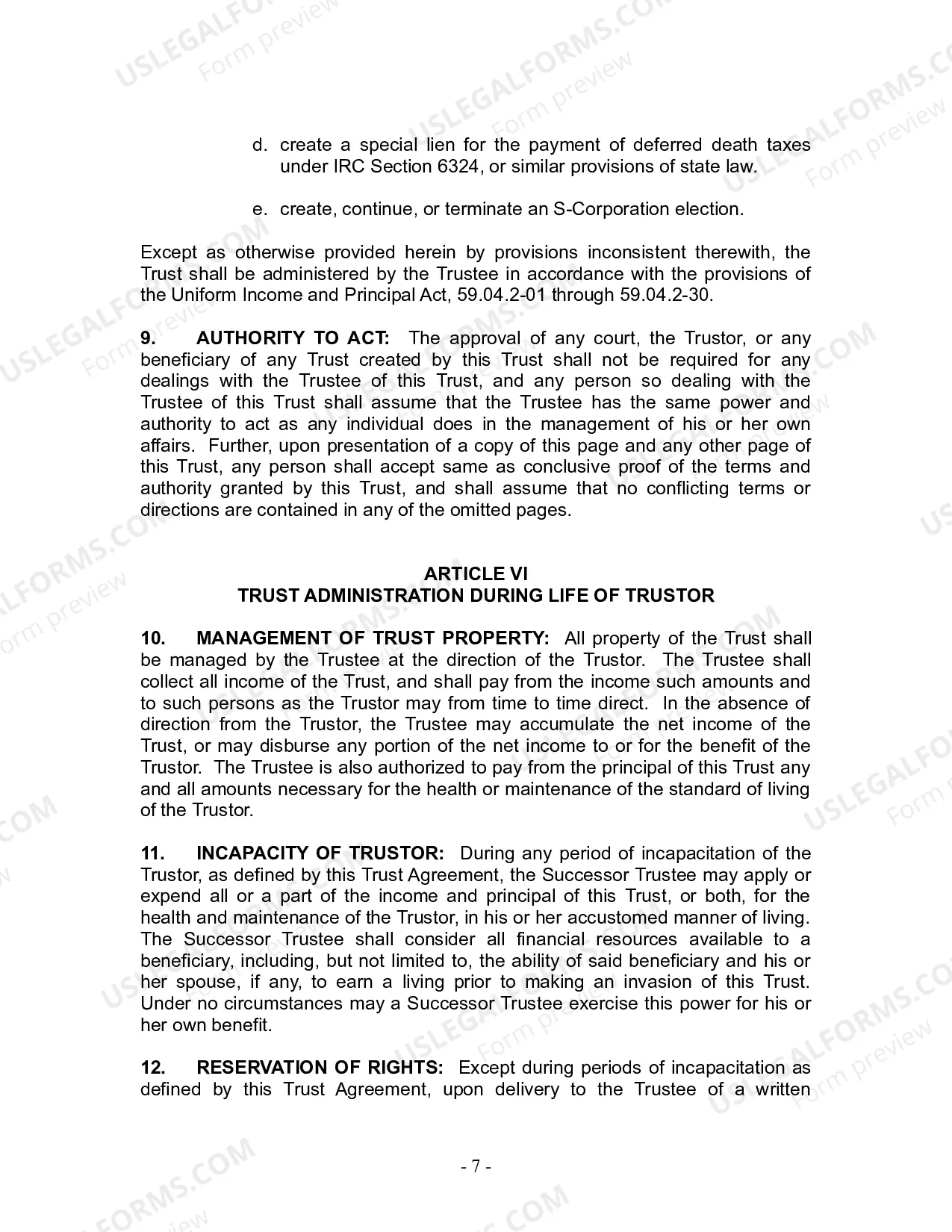
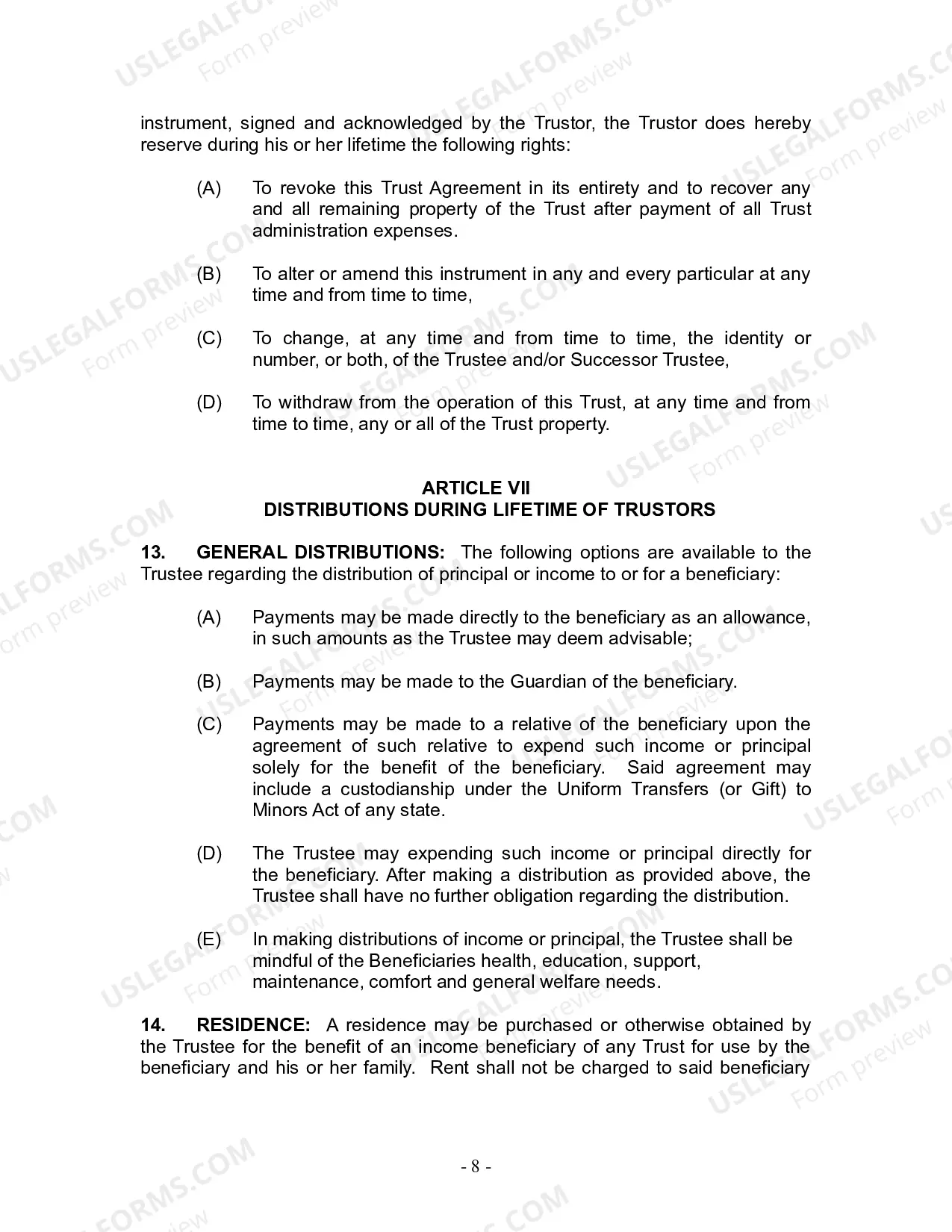
- Distribution Instructions: Outlines how assets are to be managed and distributed after the death of the Trustors.
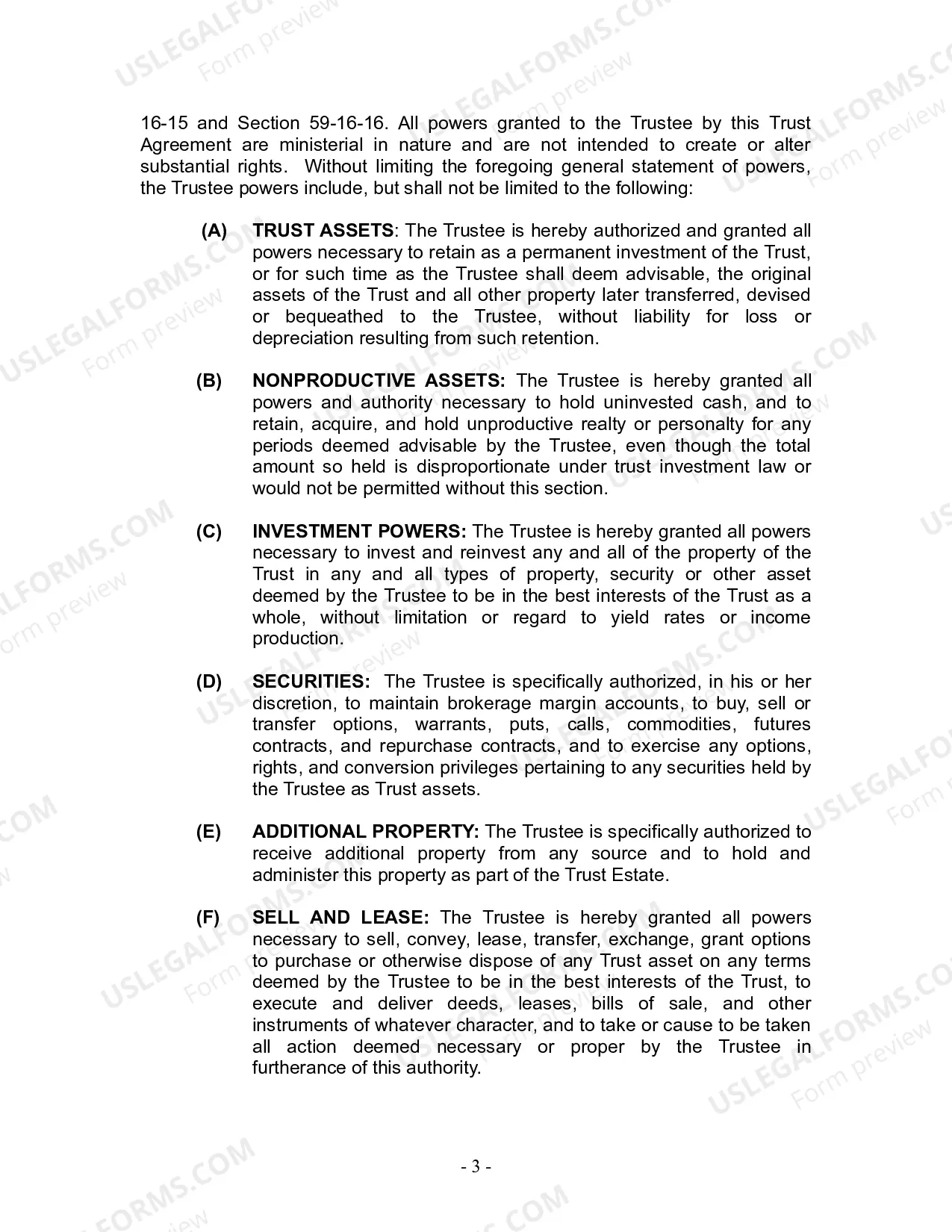
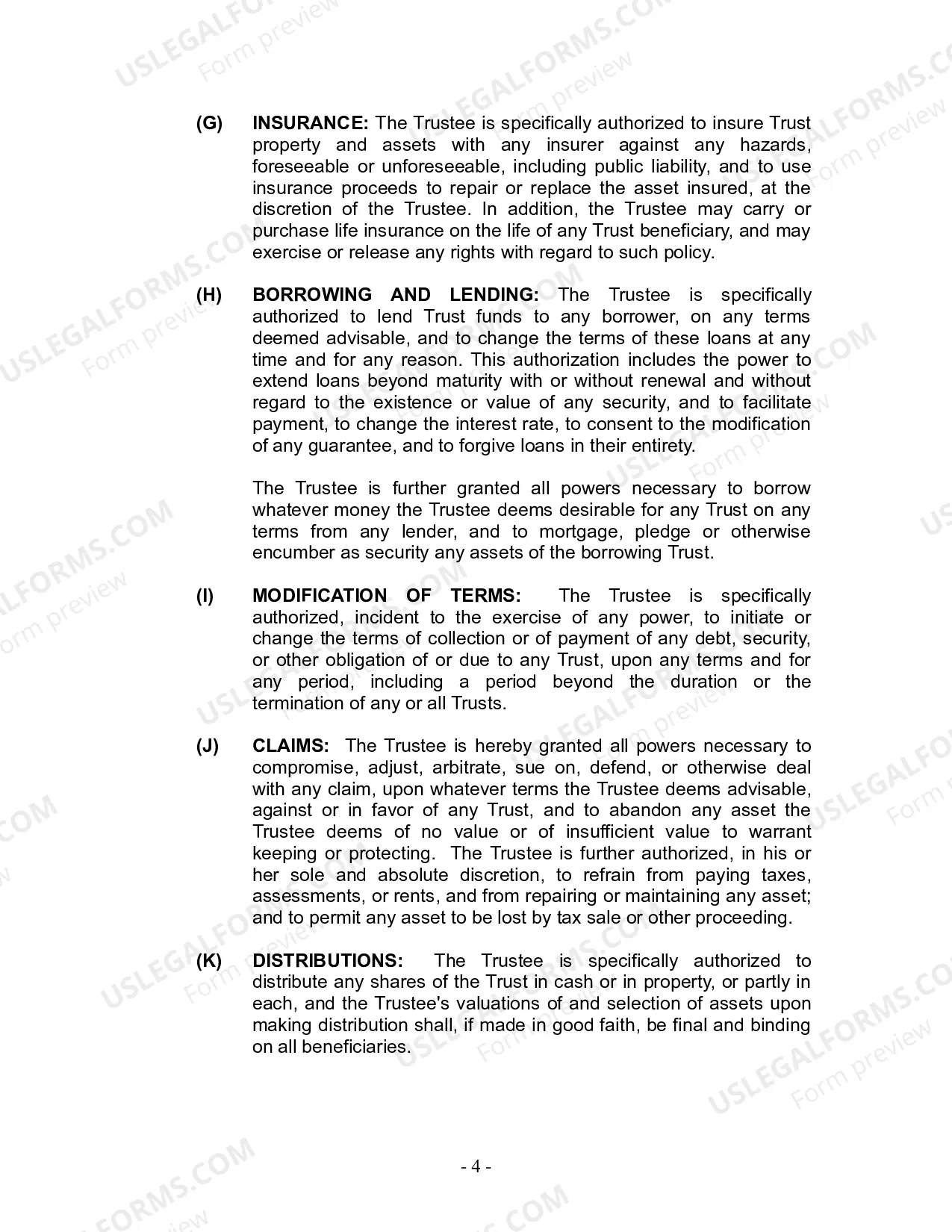
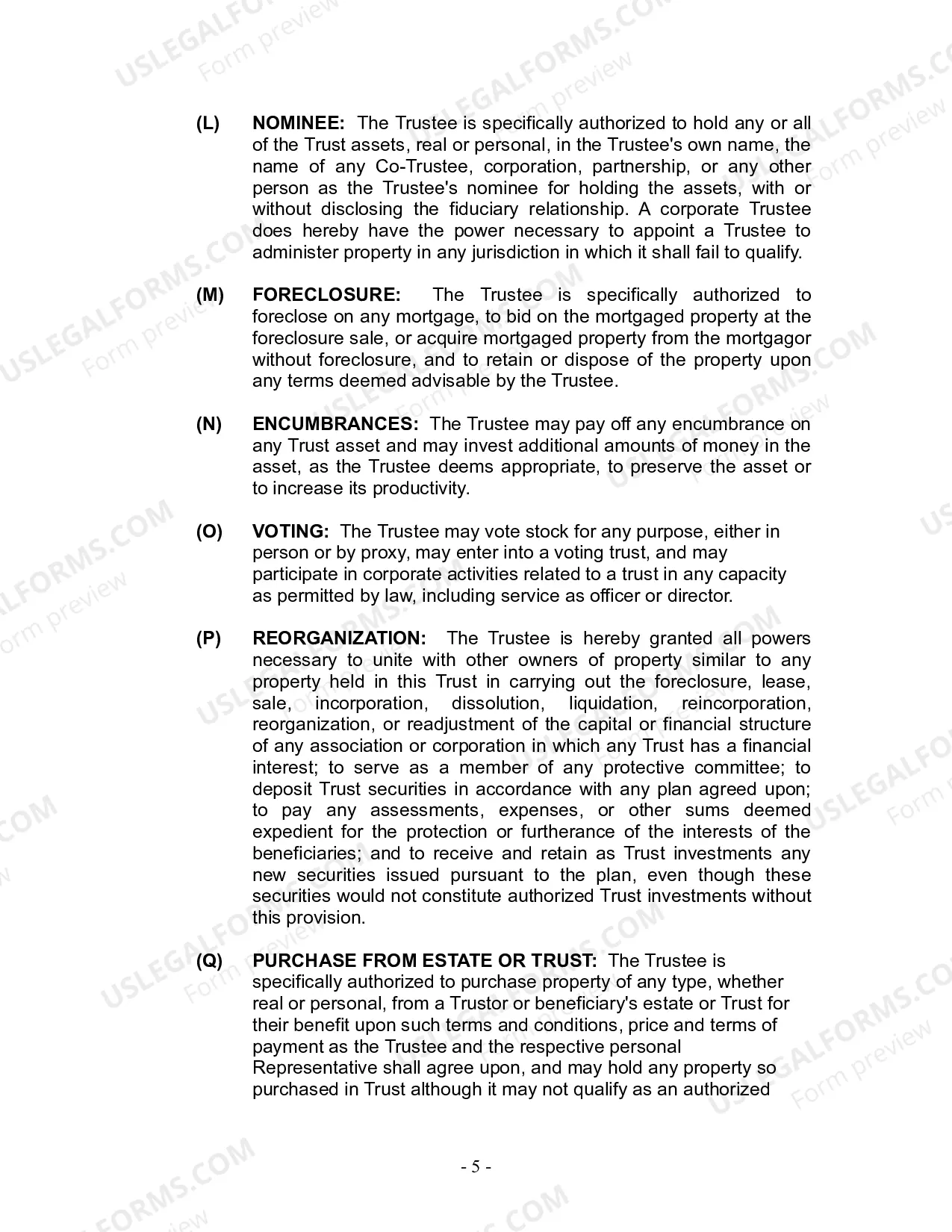
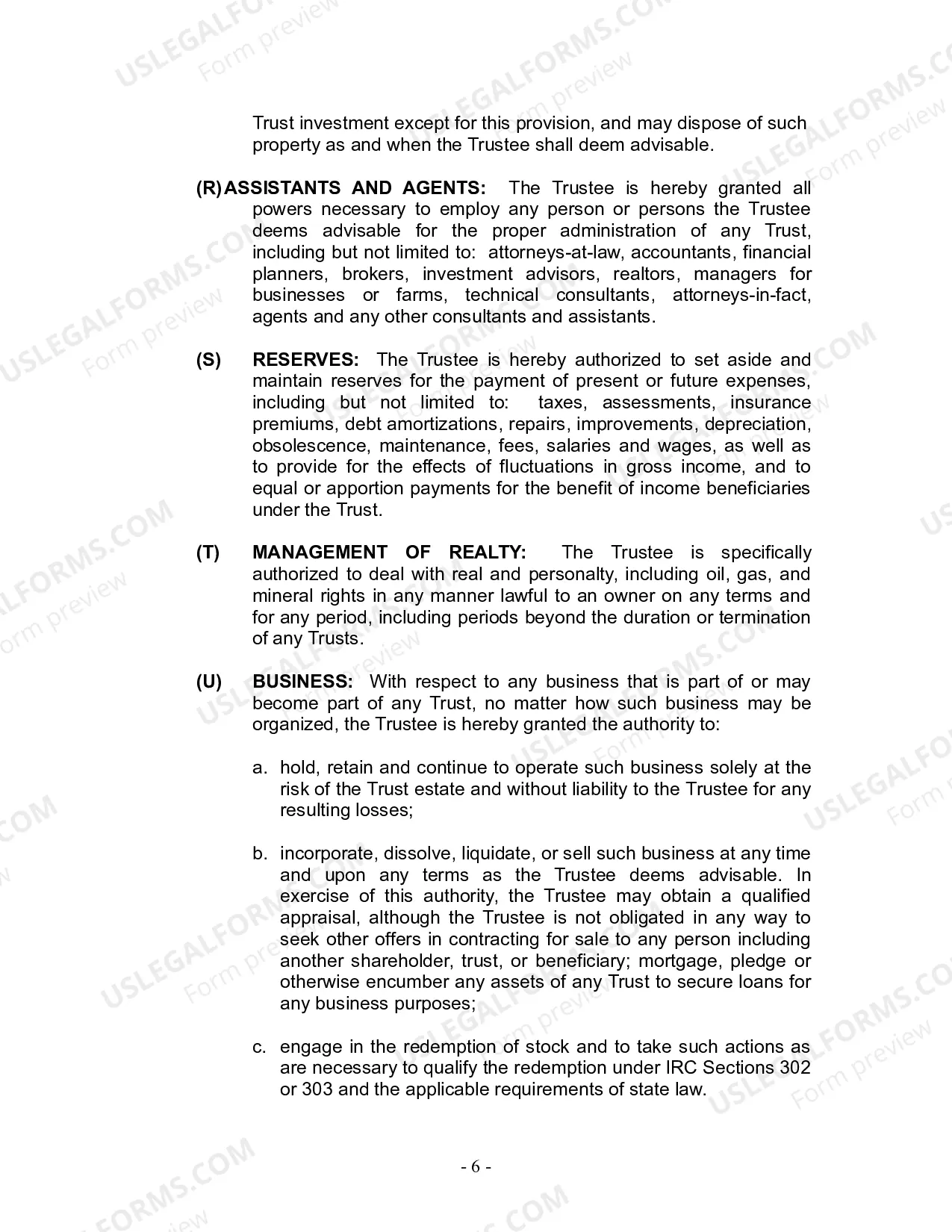
- Trustee Powers: Defines the authority and responsibilities of the trustee.



When to use this document
You may need this Revocable Living Trust if you are a husband and wife without children and want to manage your assets efficiently. It is particularly useful if you wish to avoid probate upon passing, ensure a smooth transition of asset management, and maintain control over your property. This form is also applicable if you want to provide instructions for the distribution of your assets to each other or to other beneficiaries after your death.
Who can use this document
- Couples intending to set up an estate plan.
- Husbands and wives without children looking to simplify asset distribution.
- Individuals seeking to maintain control over their assets during their lifetime.
- Those who want to avoid the probate process after their death.
Completing this form step by step
- Identify the parties involved as Trustors and the Trustee.
- Specify the name of the trust at the beginning of the form.
- List all assets and property to be included in the trust.
- Complete sections detailing the authority and responsibilities of the Trustee.
- Sign and notarize the document as required to make it legally binding.
Is notarization required?
This form must be notarized to be legally valid. US Legal Forms provides secure online notarization powered by Notarize, allowing you to complete the process through a verified video call.
Get your form ready online
Our built-in tools help you complete, sign, share, and store your documents in one place.
Make edits, fill in missing information, and update formatting in US Legal Forms—just like you would in MS Word.
Download a copy, print it, send it by email, or mail it via USPS—whatever works best for your next step.
Sign and collect signatures with our SignNow integration. Send to multiple recipients, set reminders, and more. Go Premium to unlock E-Sign.
If this form requires notarization, complete it online through a secure video call—no need to meet a notary in person or wait for an appointment.
We protect your documents and personal data by following strict security and privacy standards.

Make edits, fill in missing information, and update formatting in US Legal Forms—just like you would in MS Word.

Download a copy, print it, send it by email, or mail it via USPS—whatever works best for your next step.

Sign and collect signatures with our SignNow integration. Send to multiple recipients, set reminders, and more. Go Premium to unlock E-Sign.

If this form requires notarization, complete it online through a secure video call—no need to meet a notary in person or wait for an appointment.

We protect your documents and personal data by following strict security and privacy standards.
Typical mistakes to avoid
- Failing to list all intended assets in the trust.
- Not clearly specifying the successor trustee.
- Overlooking the need for signatures and notarization.
- Not updating the trust after significant life changes.
Advantages of online completion
- Convenience of download and immediate use.
- Editability to customize the trust to fit your specific needs.
- Reliability of templates drafted by licensed attorneys.
- Ease of access to support resources if needed.
Looking for another form?
Form popularity
FAQ
California is a community property state, which means that following the death of a spouse, the surviving spouse will have entitlement to one-half of the community property (i.e., property that was acquired over the course of the marriage, regardless of which spouse acquired it).
This law states that no matter what your will says, your spouse has a right to inherit one-third or one-half (depending on the state and sometimes depending on the length of the marriage) of your total estate. To exercise this right, your spouse has to petition the probate court to enforce the law.
California is a community property state, which means that following the death of a spouse, the surviving spouse will have entitlement to one-half of the community property (i.e., property that was acquired over the course of the marriage, regardless of which spouse acquired it).
California is a community property state, which means that following the death of a spouse, the surviving spouse will have entitlement to one-half of the community property (i.e., property that was acquired over the course of the marriage, regardless of which spouse acquired it).
In most states, if you have a will while you are married and then end the marriage, the will is automatically revoked. It's possible to leave an inheritance to your ex, but you have to write a new will that specifically states you are doing so. Disinheriting your spouse.
Many married couples own most of their assets jointly with the right of survivorship. When one spouse dies, the surviving spouse automatically receives complete ownership of the property. This distribution cannot be changed by Will.
The Spouse Is the Automatic Beneficiary for Married People A federal law, the Employee Retirement Income Security Act (ERISA), governs most pensions and retirement accounts.
But to protect spouses from being disinherited, most of these states give a surviving spouse the right to claim one-third to one-half of the deceased spouse's estate, no matter what the will provides. (For other limitations on what a will can do, see What a Will Won't Do.)
Most married couples own most of their assets jointly. Assets owned jointly between husband and wife pass automatically to the survivor.This requires the will to be probated and an executor to be appointed in order to secure the assets. There are exceptions to the probate requirement for estates of $50,000 or less.