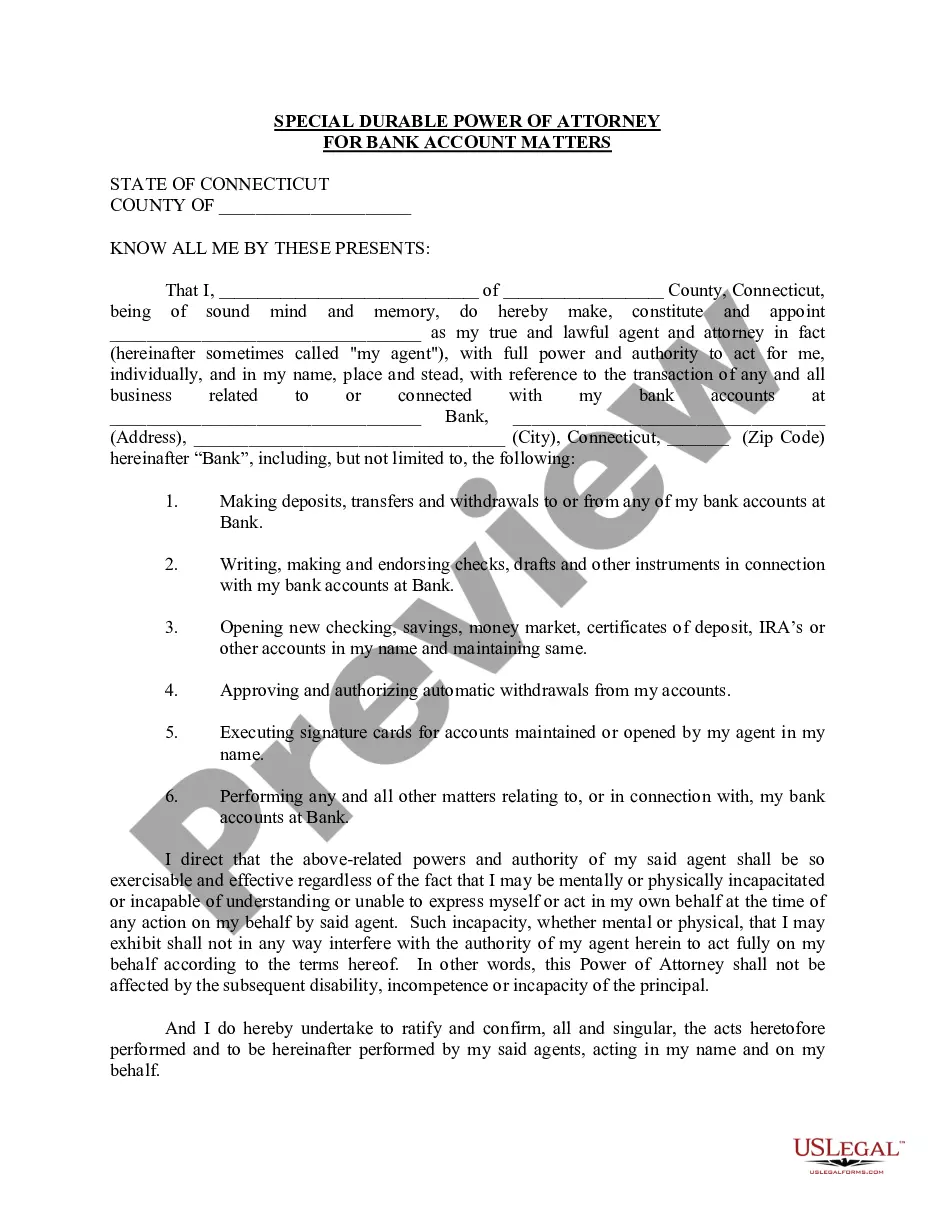
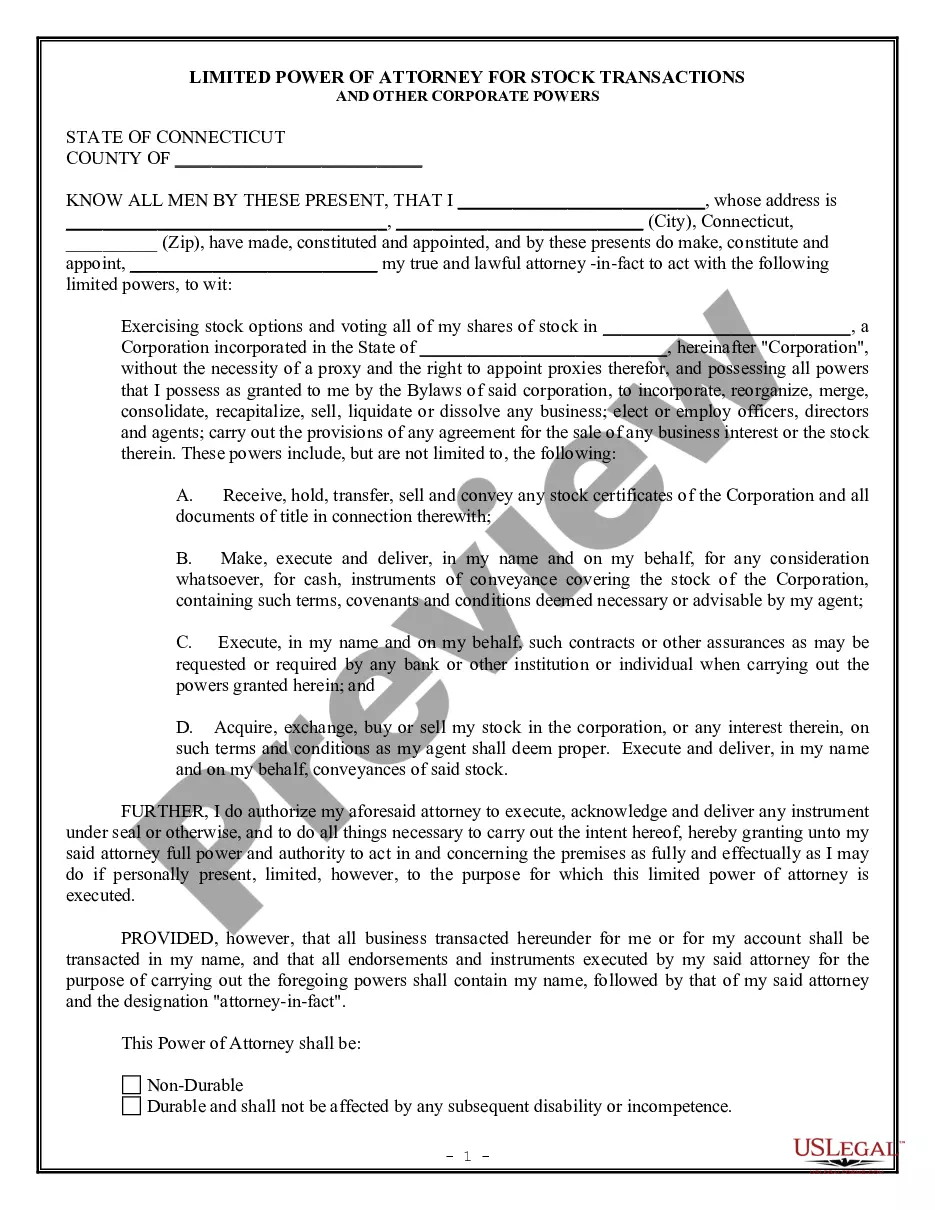
Mississippi Third Party Summons in a Civil Action
Overview of this form
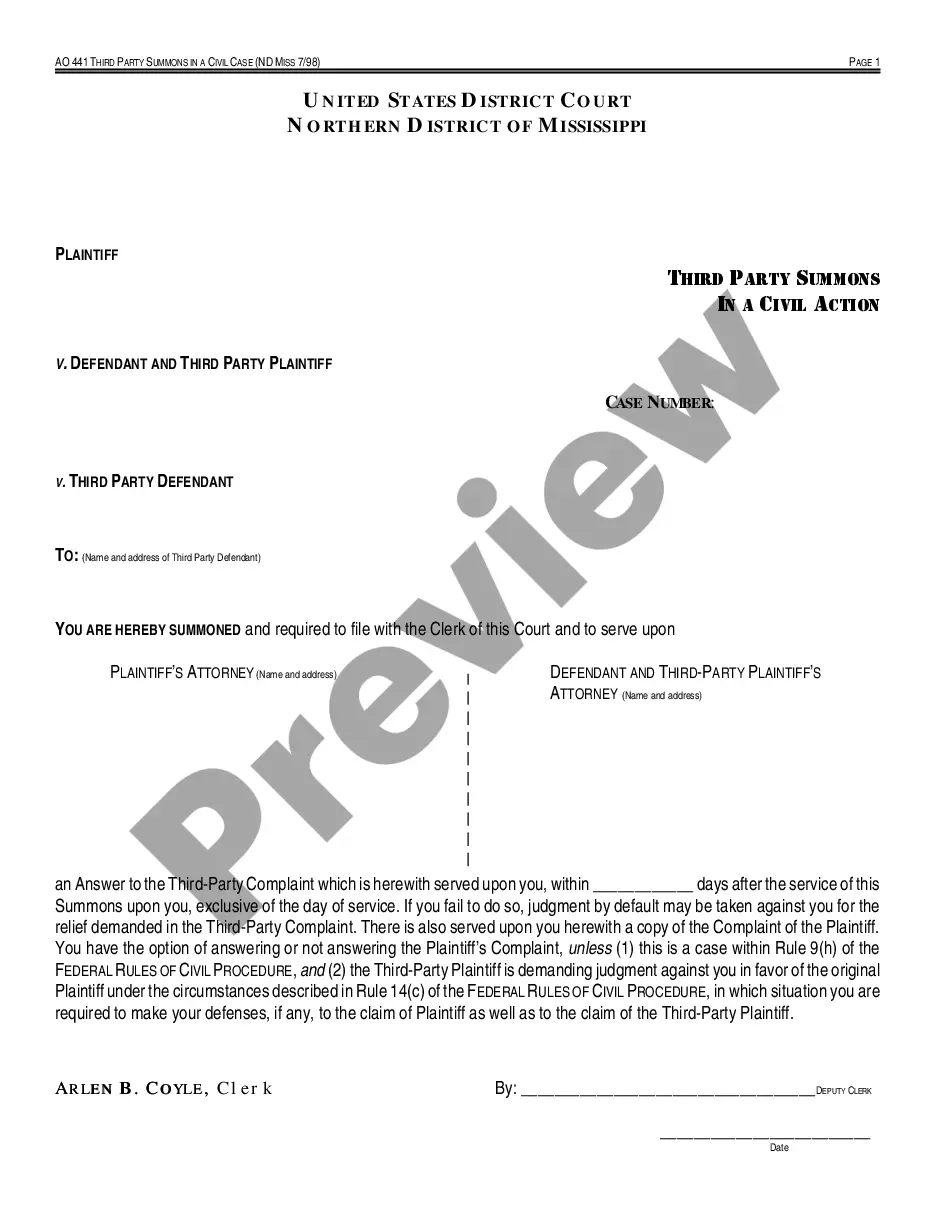
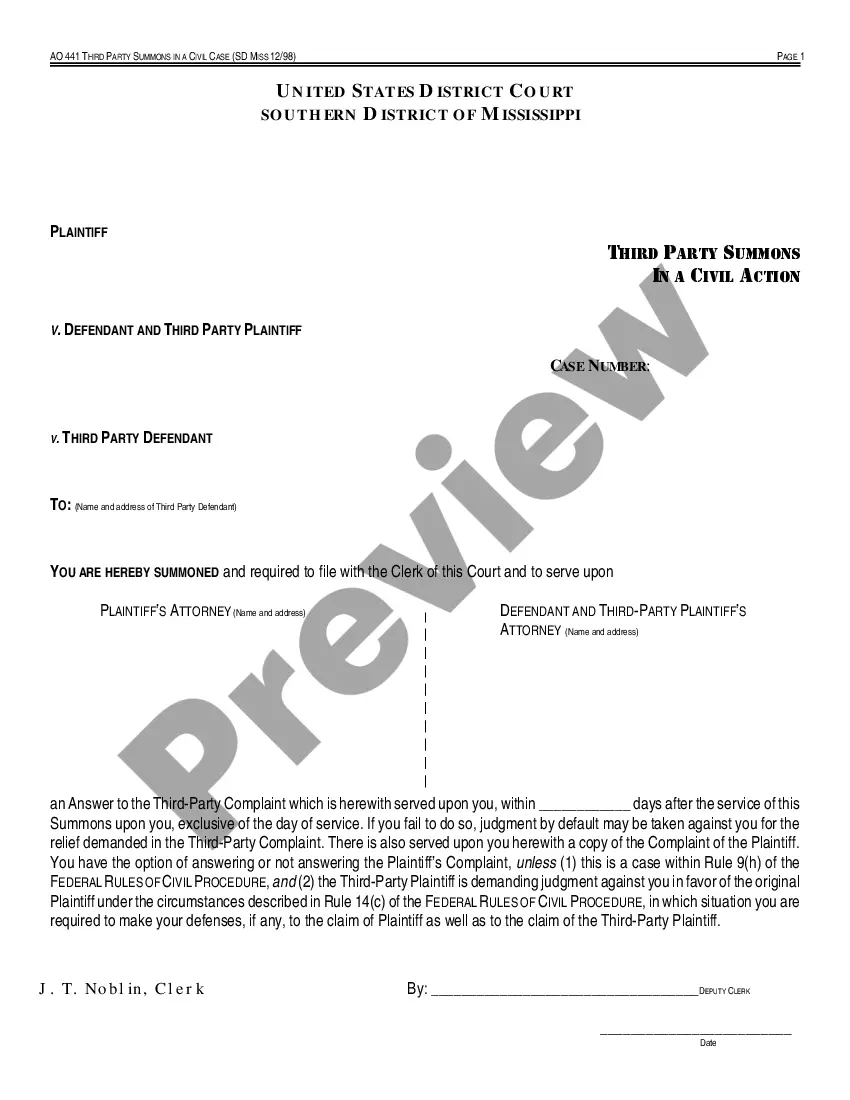
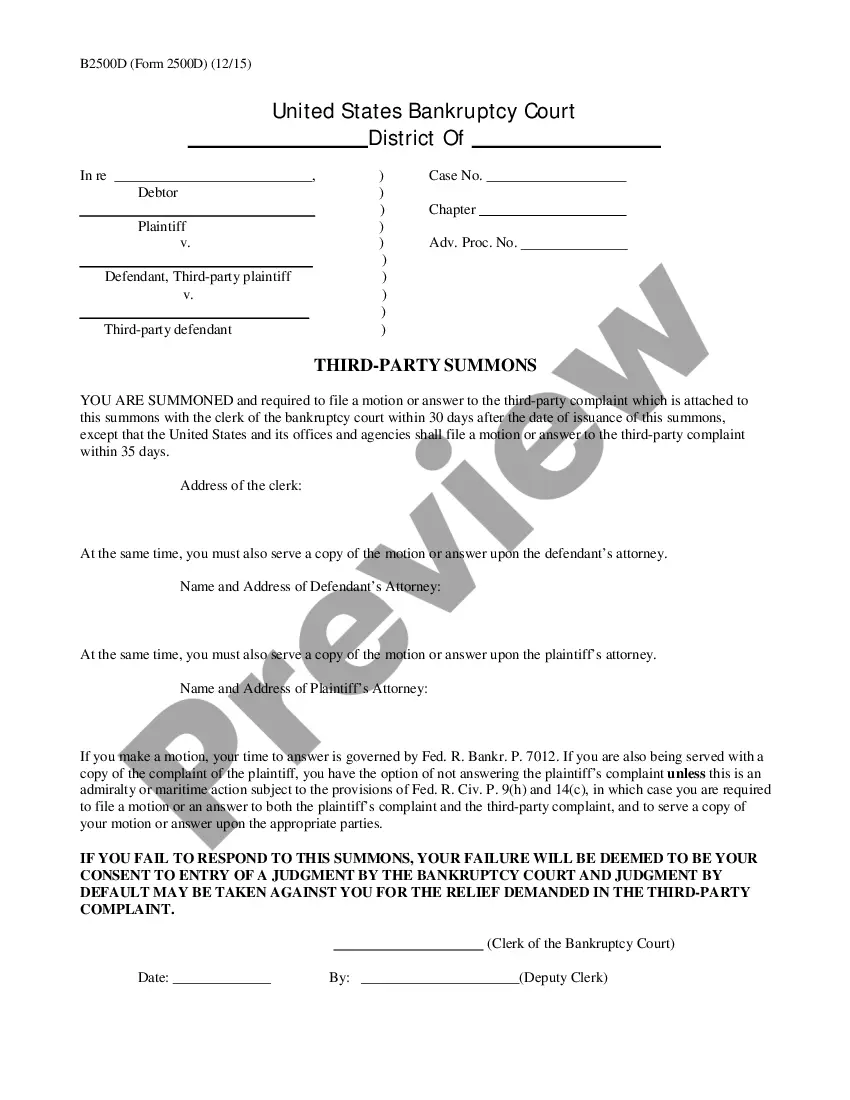
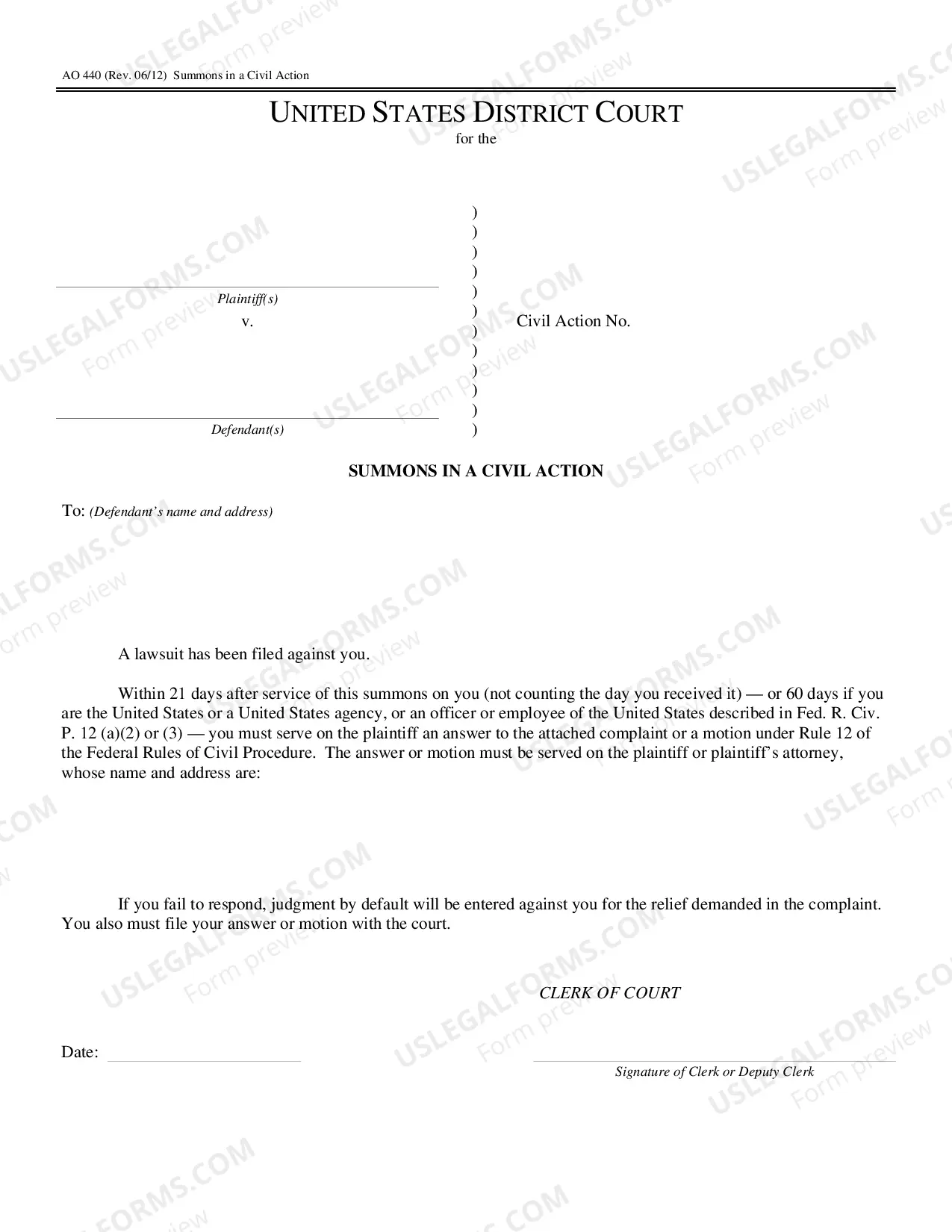
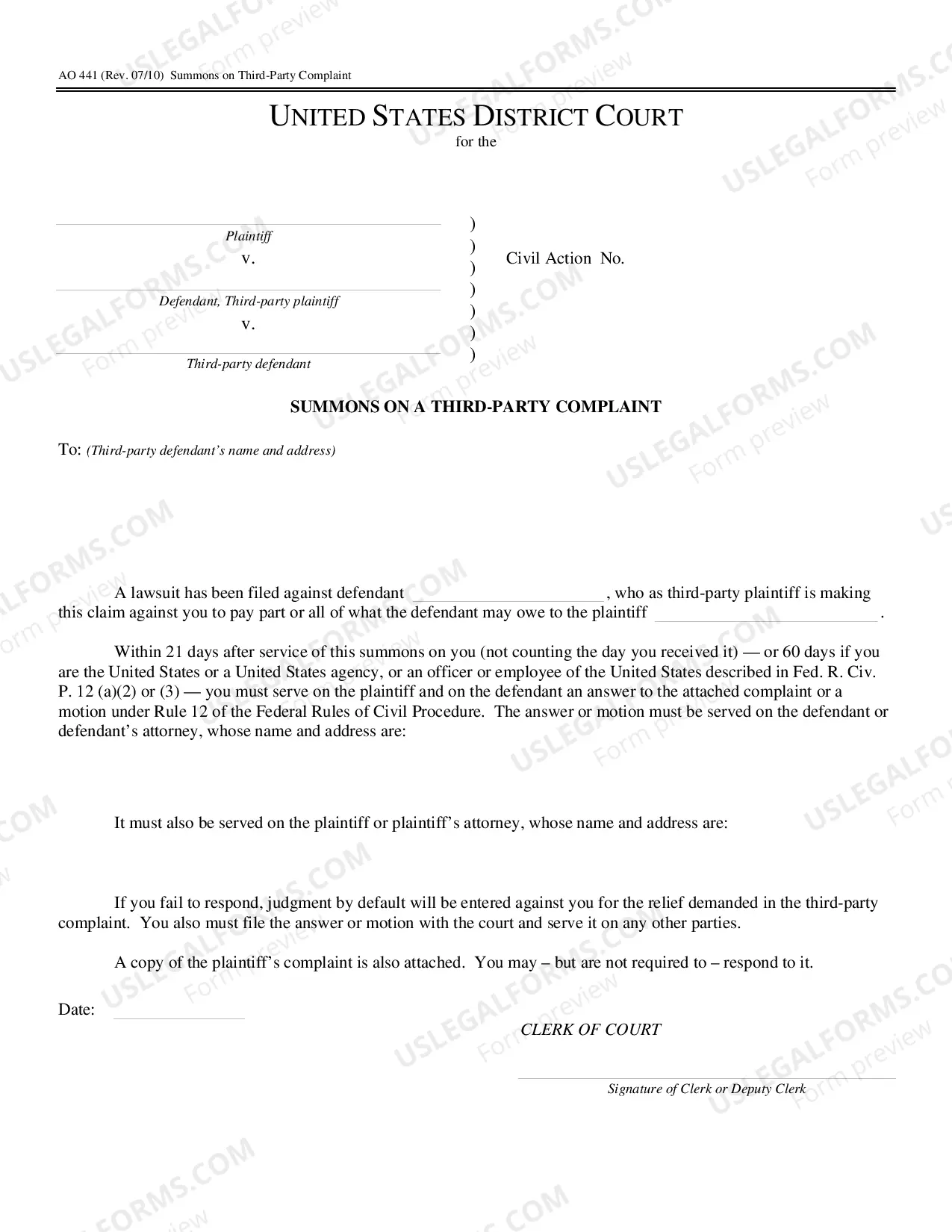
The Third Party Summons in a Civil Action is a legal document used in federal civil litigation to notify a third party that they are being summoned as part of a lawsuit. This form is specifically crafted for use in the U.S. District Court, Illinois Division. It differs from a standard summons in that it involves not just the primary parties but an additional party who may have involved legal obligations or liabilities. This document helps to formally bring the third party into the legal proceedings.
Main sections of this form
- Clerkâs information and case number
- Name and address of the third party defendant
- Instructions for filing an answer to the third-party complaint
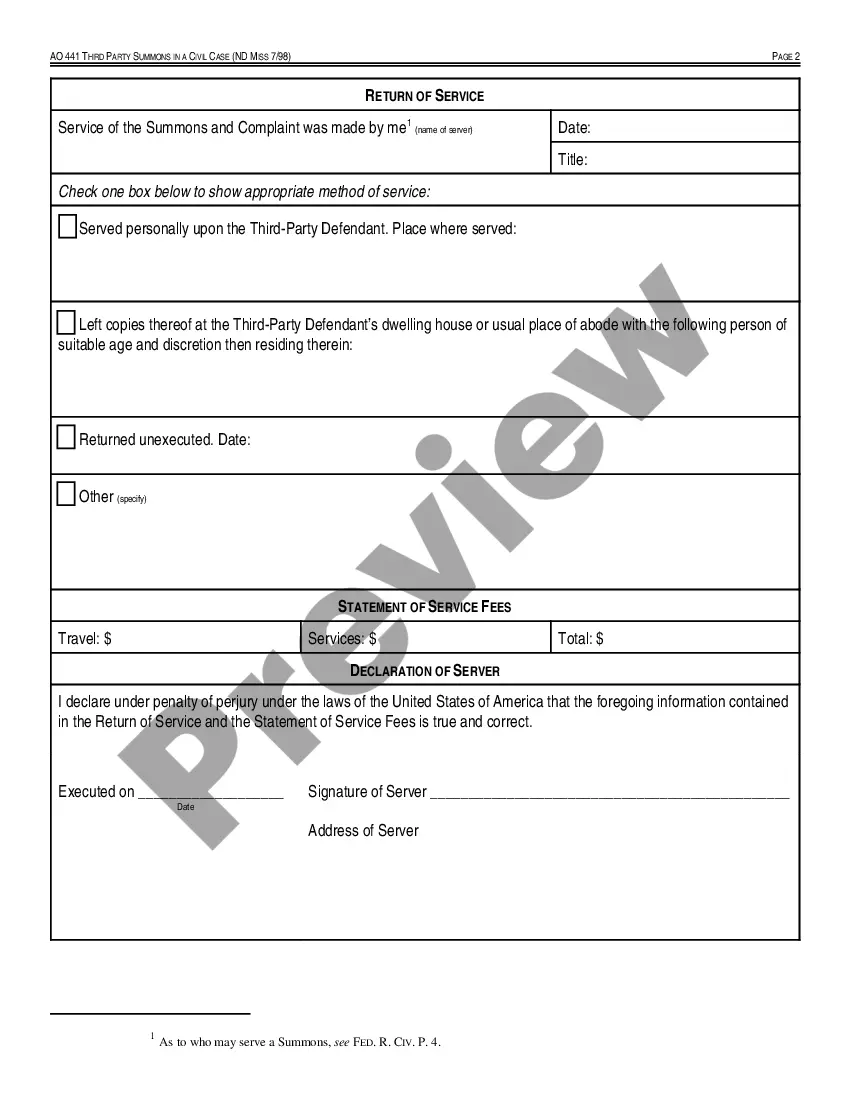
- Return of service section for the individual who serves the summons
- Declaration of server's credentials and truthfulness under penalty of perjury
Common use cases
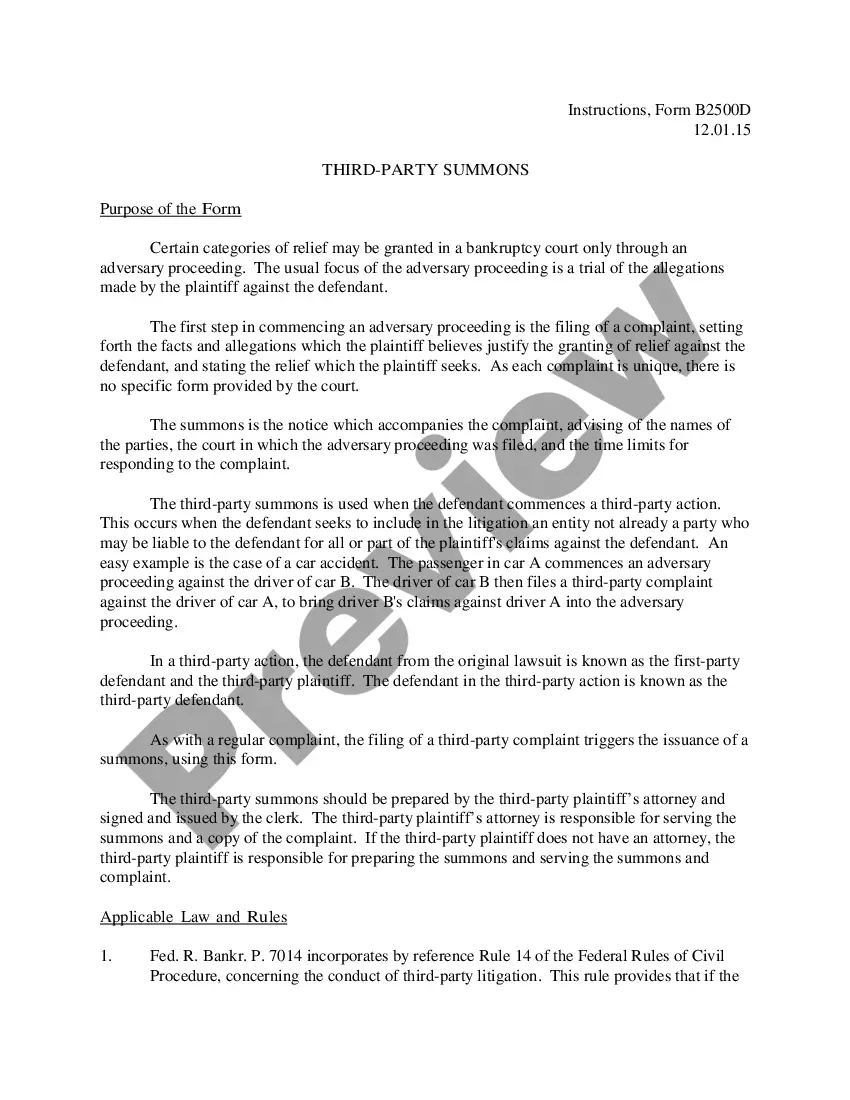
This form is needed when a defendant in a civil case believes that a third party is liable for some or all of the damages that the plaintiff is claiming. It formalizes the process of bringing that third party into a lawsuit, ensuring they have the opportunity to respond to the claims made against them. Common scenarios include cases of shared liability or when the third party might hold relevant information or assets related to the lawsuit.
Intended users of this form
- Defendants in a civil lawsuit who wish to implead a third party
- Attorneys representing defendants who need to bring in additional parties
- Any party involved in a civil action who may have claims against another individual or entity
How to complete this form
- Fill in the case number at the top of the form.
- Enter the name and address of the third-party defendant in the designated section.
- Specify the time frame for the third-party defendant to respond to the summons.
- Complete the return of service section after delivering the summons to the third-party defendant.
- Have the server of the summons sign and date the declaration of server at the end of the document.
Is notarization required?
This form does not typically require notarization unless specified by local law. It is important to check with your local jurisdiction for any specific requirements regarding notarization for summonses.
Get your form ready online
Our built-in tools help you complete, sign, share, and store your documents in one place.
Make edits, fill in missing information, and update formatting in US Legal Forms—just like you would in MS Word.
Download a copy, print it, send it by email, or mail it via USPS—whatever works best for your next step.
Sign and collect signatures with our SignNow integration. Send to multiple recipients, set reminders, and more. Go Premium to unlock E-Sign.
If this form requires notarization, complete it online through a secure video call—no need to meet a notary in person or wait for an appointment.
We protect your documents and personal data by following strict security and privacy standards.

Make edits, fill in missing information, and update formatting in US Legal Forms—just like you would in MS Word.

Download a copy, print it, send it by email, or mail it via USPS—whatever works best for your next step.

Sign and collect signatures with our SignNow integration. Send to multiple recipients, set reminders, and more. Go Premium to unlock E-Sign.

If this form requires notarization, complete it online through a secure video call—no need to meet a notary in person or wait for an appointment.

We protect your documents and personal data by following strict security and privacy standards.
Avoid these common issues
- Failing to include the correct case number, which can delay proceedings.
- Not specifying the proper time frame for response, potentially impacting enforceability.
- Omitting details in the return of service section, which is essential for proving service was completed correctly.
Advantages of online completion
- Convenient access to the form in downloadable formats, making it easy to complete and ensure legal compliance.
- Editability allows for customization to suit specific case details.
- Updates ensure that the form complies with the latest legal standards and requirements.
Looking for another form?
Form popularity
FAQ
A third-party complaint is a claim asserted by a defendant ("Third-party Plaintiff") against a nonparty (now a third-party defendant) who is or may be liable to the defendant for all or part of the claim it.
A third party is someone who is not one of the main people involved in a business agreement or legal case, but who is involved in it in a minor role. You can instruct your bank to allow a third party to remove money from your account.
2 attorney answersThird party claim requires you to add a party. Cross claim is against another defendant already in the case.
You may issue a third party notice if you claim the third party needs to be involved in the proceedings that the plaintiff issued against you, or that the third party owes you something that is connected with the proceedings. For more details, see Rule 4.4 of the District Court Rules 2014.
If another person or company (rather than your employer) caused your injuries, they're considered a third party. In these cases, you could have a claim for a third-party lawsuit. 39.6 million people visit a physician's office following an accident.
Accordingly, diversity was not destroyed when the Department was added as a third-party defendant and the district court properly retained subject-matter jurisdiction.