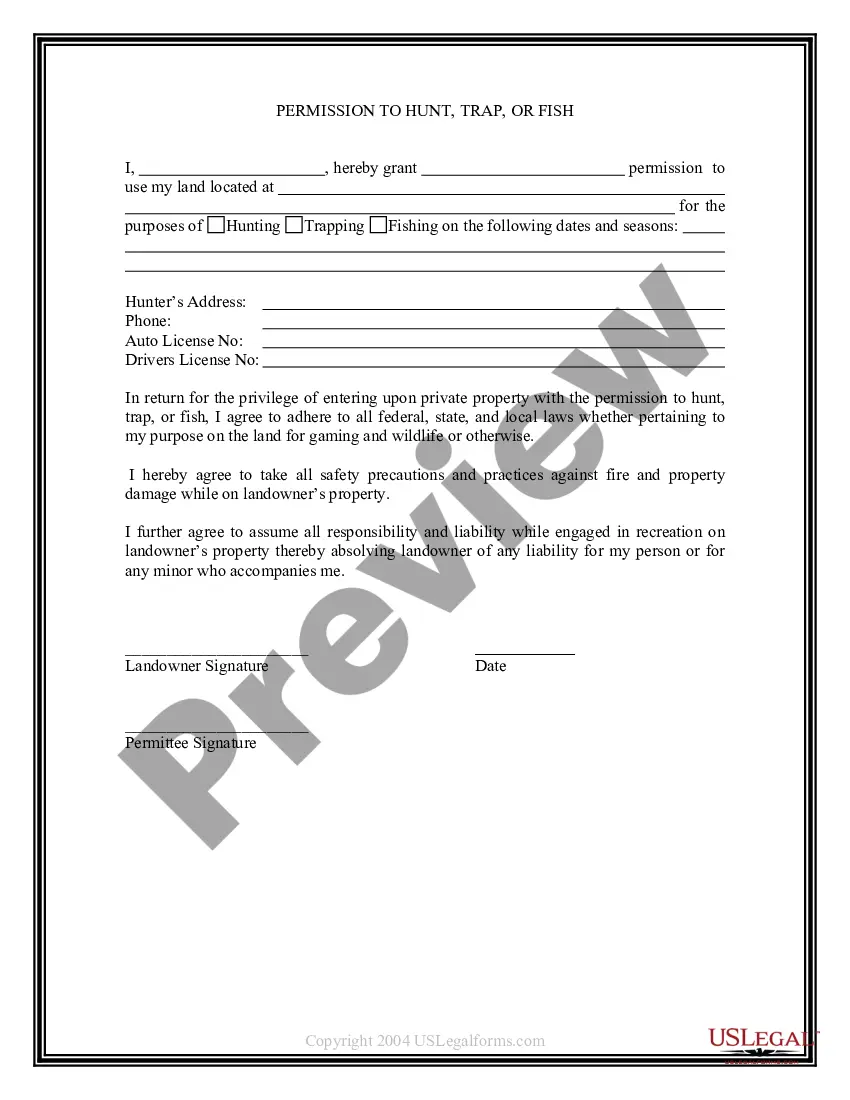
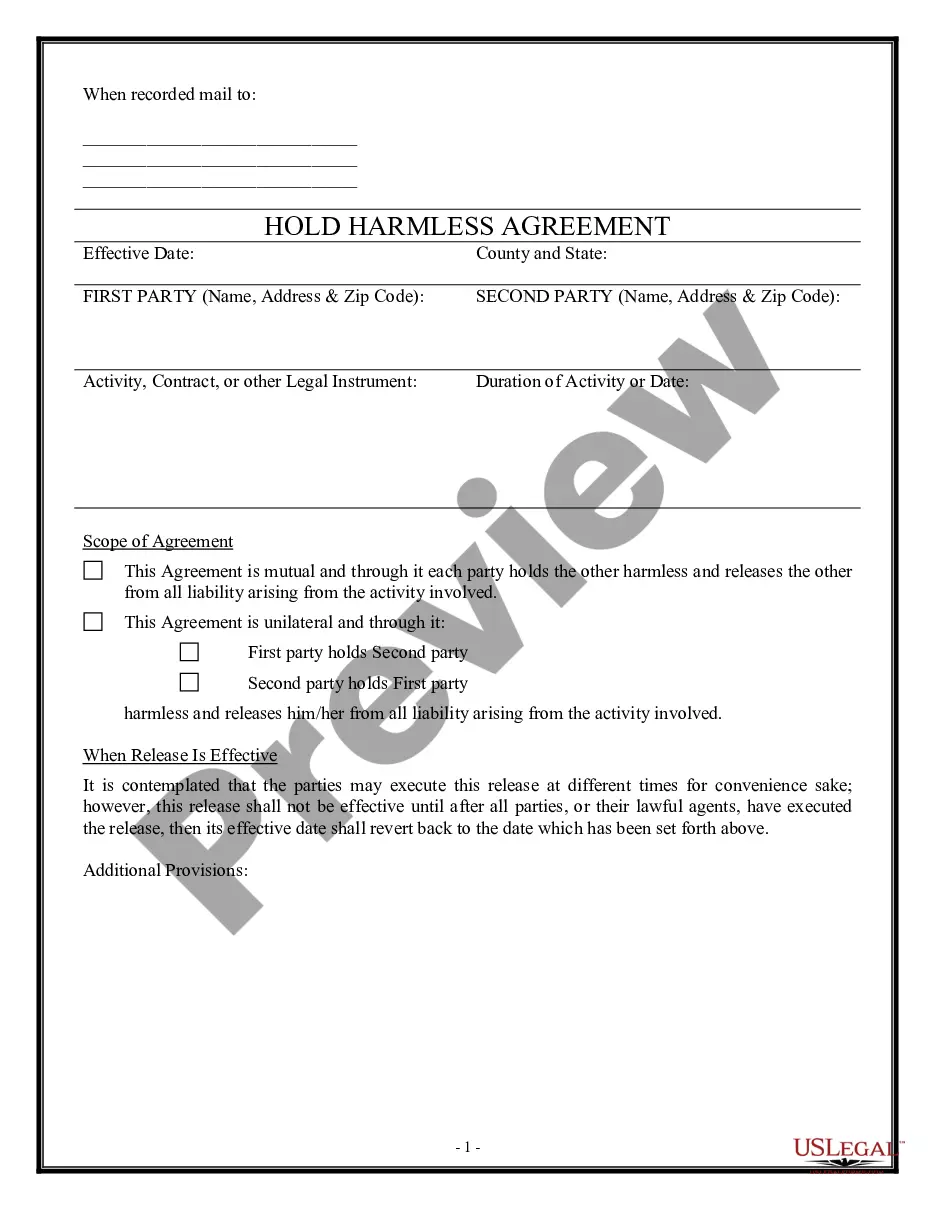
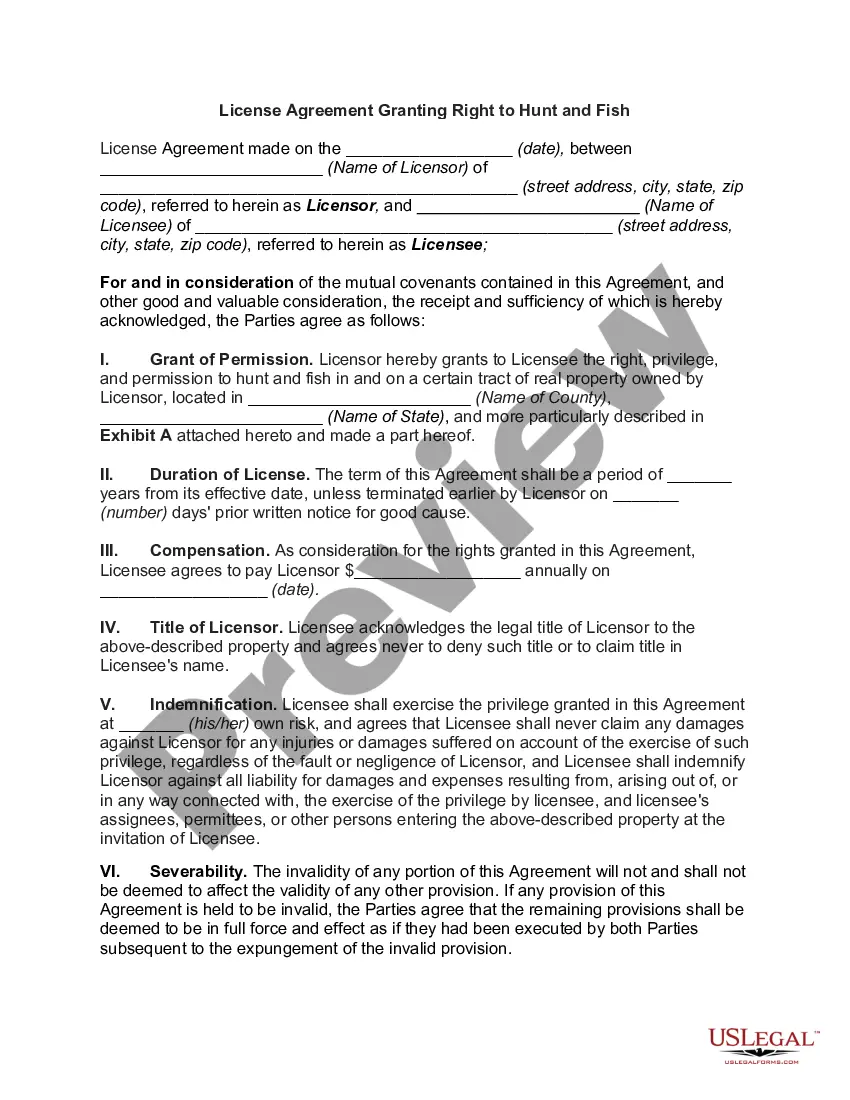
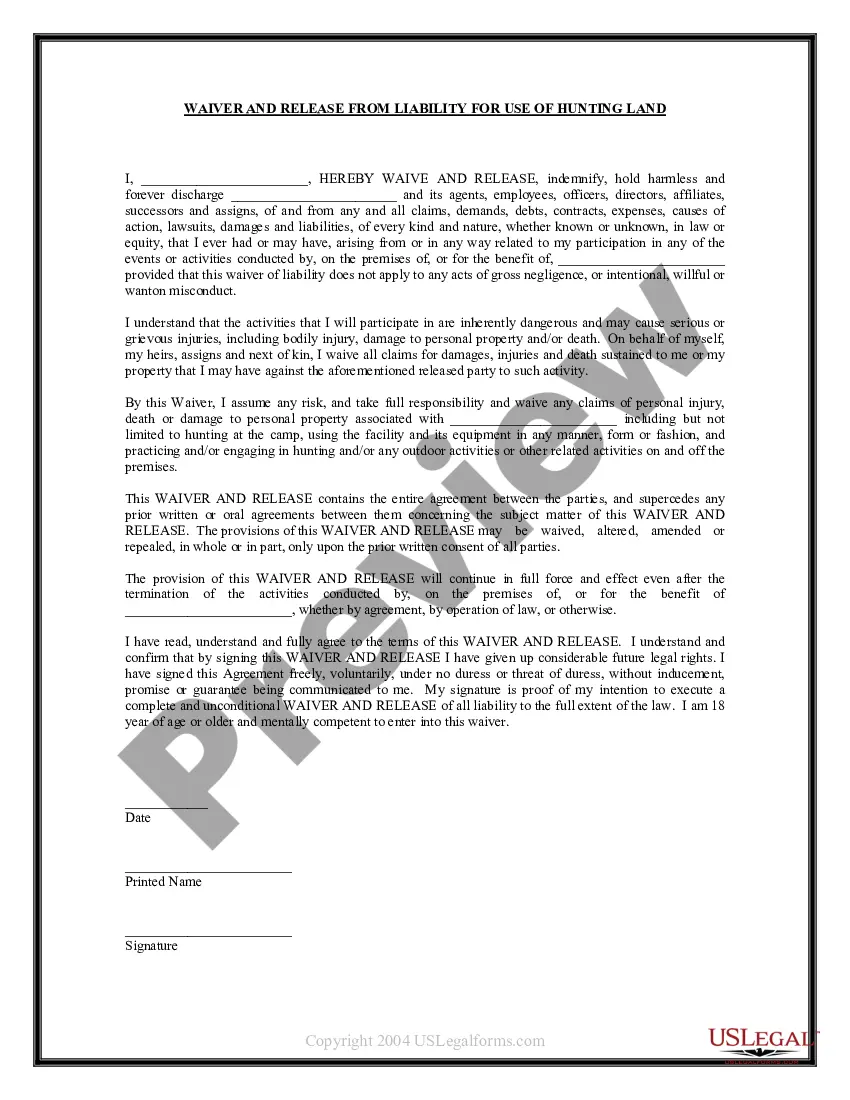
This form is completed by a landowner who is extending permission for an individual to hunt, trap, or fish on landowner's property. Both landowner and hunter (permittee) sign this form. Permittee also agrees to absolve landowner of any liability.
North Carolina Permission To Hunt Trap or Fish
State:
Multi-State
Control #:
US-PRM-15
Format:
Word;
Rich Text
Instant download
Description
Get your form ready online
Our built-in tools help you complete, sign, share, and store your documents in one place.
Built-in online Word editor
Make edits, fill in missing information, and update formatting in US Legal Forms—just like you would in MS Word.
Export easily
Download a copy, print it, send it by email, or mail it via USPS—whatever works best for your next step.
E-sign your document
Sign and collect signatures with our SignNow integration. Send to multiple recipients, set reminders, and more. Go Premium to unlock E-Sign.
Notarize online 24/7
If this form requires notarization, complete it online through a secure video call—no need to meet a notary in person or wait for an appointment.
Store your document securely
We protect your documents and personal data by following strict security and privacy standards.

Make edits, fill in missing information, and update formatting in US Legal Forms—just like you would in MS Word.

Download a copy, print it, send it by email, or mail it via USPS—whatever works best for your next step.

Sign and collect signatures with our SignNow integration. Send to multiple recipients, set reminders, and more. Go Premium to unlock E-Sign.

If this form requires notarization, complete it online through a secure video call—no need to meet a notary in person or wait for an appointment.

We protect your documents and personal data by following strict security and privacy standards.
Looking for another form?


How to fill out Permission To Hunt Trap Or Fish?
US Legal Forms - among the largest collections of legal documents in the United States - offers a vast selection of legal document templates that you can download or print.
By using the website, you will find numerous forms for business and personal purposes, categorized by types, states, or keywords. You can access the latest versions of forms such as the North Carolina Permission To Hunt Trap or Fish within moments.
If you already have an account, Log In and download the North Carolina Permission To Hunt Trap or Fish from the US Legal Forms library. The Download button will appear on every form you view. You can access all previously obtained forms in the My documents section of your account.
Make adjustments. Fill out, edit, print, and sign the downloaded North Carolina Permission To Hunt Trap or Fish.
Each document you added to your account has no expiration date and is yours permanently. Therefore, if you wish to download or print another copy, simply go to the My documents section and click on the form you need. Access the North Carolina Permission To Hunt Trap or Fish with US Legal Forms, one of the most extensive libraries of legal document templates. Utilize thousands of professional and state-specific templates that meet your business or personal needs.
- If you want to use US Legal Forms for the first time, here are simple steps to get started.
- Make sure you have selected the correct form for your city/region. Click the Review button to examine the form's details. Check the form information to confirm that you have chosen the correct form.
- If the form doesn’t meet your requirements, utilize the Search area at the top of the page to find one that does.
- Once you are satisfied with the form, confirm your selection by clicking the Buy now button. Then, choose the payment plan you prefer and provide your credentials to register for an account.
- Process the transaction. Use your Visa or Mastercard or PayPal account to complete the transaction.
- Select the file format and download the form to your device.
Form popularity
FAQ
Landowners often express concerns about hunters trespassing, leaving trash, or not respecting property boundaries. They may also complain about noise, lack of communication, and damage to crops or livestock. Understanding these issues is vital when seeking North Carolina permission to hunt, trap, or fish. Addressing landowners' concerns upfront can lead to a more positive experience for both parties.
A POS permit, or Property Owner's Statement, is essential for hunters in North Carolina who wish to hunt on private land. This permit allows landowners to grant permission to hunters legally. It is crucial to obtain North Carolina permission to hunt, trap, or fish to ensure compliance with state regulations. You can find more information on obtaining a POS permit through local wildlife agencies or online resources.
To gain North Carolina permission to hunt, trap, or fish on private property, you should directly contact the landowner. Prepare to explain why you want to use their land and offer to meet in person if possible. Being polite and acknowledging the landowner's concerns can foster a positive dialogue. Always remember to thank them for their consideration, regardless of their decision.
When seeking North Carolina permission to hunt, it is important to approach landowners respectfully. Start by introducing yourself and explaining your intention to hunt on their property. Be clear about the types of hunting you wish to do, and express your willingness to follow any specific rules they may have. Building a friendly rapport can increase your chances of receiving permission.
Yes, in North Carolina, if you plan to trap, you need to obtain a trapping license. The North Carolina Permission To Hunt Trap or Fish rules require this license to ensure responsible and sustainable trapping practices. To make the process easier, you can access helpful information and application forms on the US Legal Forms website. This ensures you have everything needed to enjoy your trapping experiences legally.
In North Carolina, you can legally use fish traps, but there are specific rules you must follow. The North Carolina Permission To Hunt Trap or Fish guidelines stipulate which types of traps are allowed and the regions where you can use them. It's essential to familiarize yourself with these regulations to avoid fines or penalties. You can find comprehensive resources on the US Legal Forms platform to ensure you comply with all local fishing laws.
To request North Carolina Permission To Hunt Trap or Fish, start by identifying the landowner or relevant authority. You can approach them directly or send a polite written request outlining your intentions. Be clear about the specific areas you wish to access and the type of activities you plan to undertake. Utilizing resources like US Legal Forms can help you create a formal permission request that conveys your respect for the land and its owner.