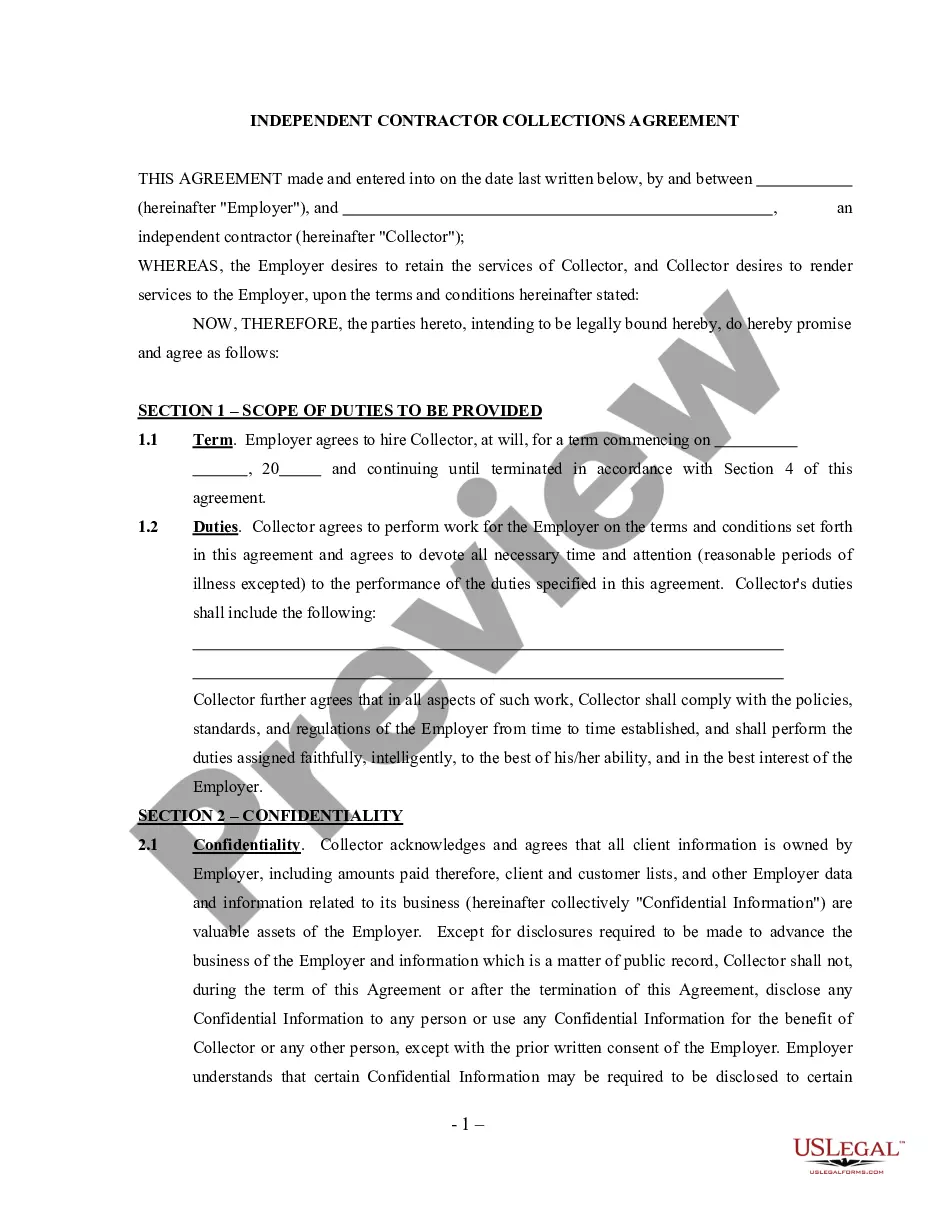
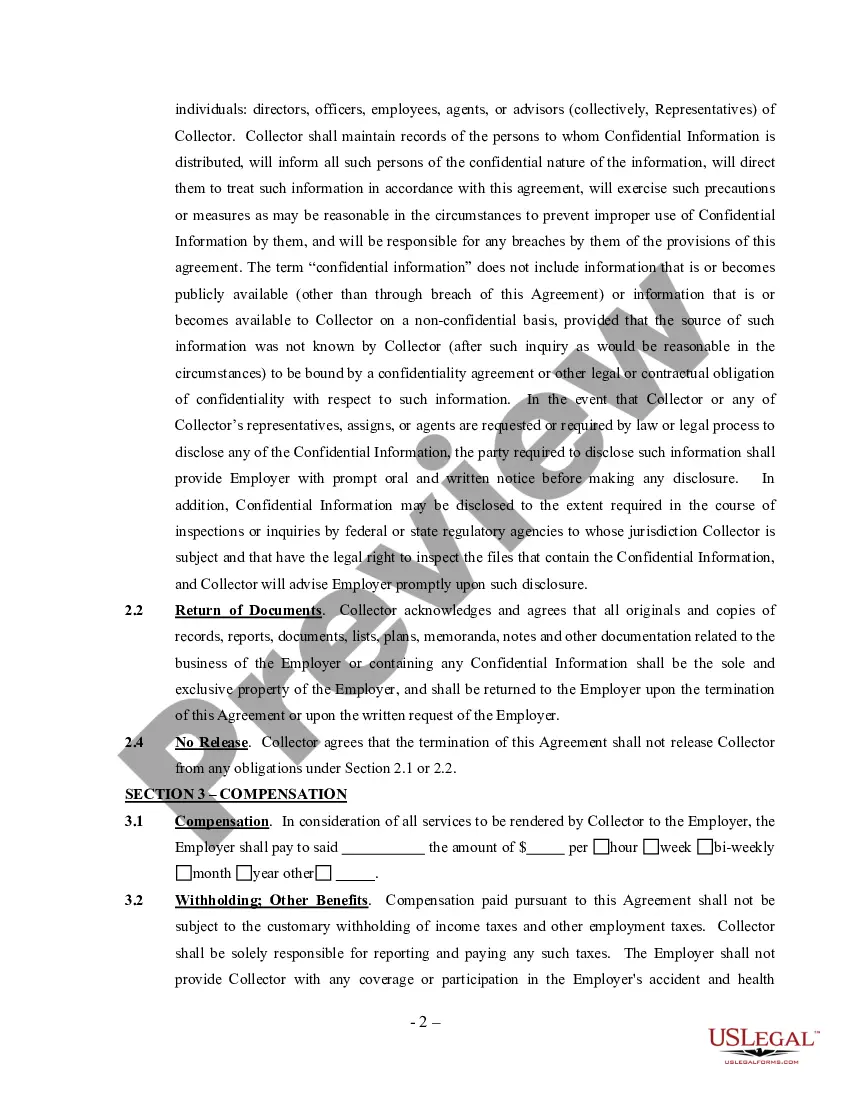
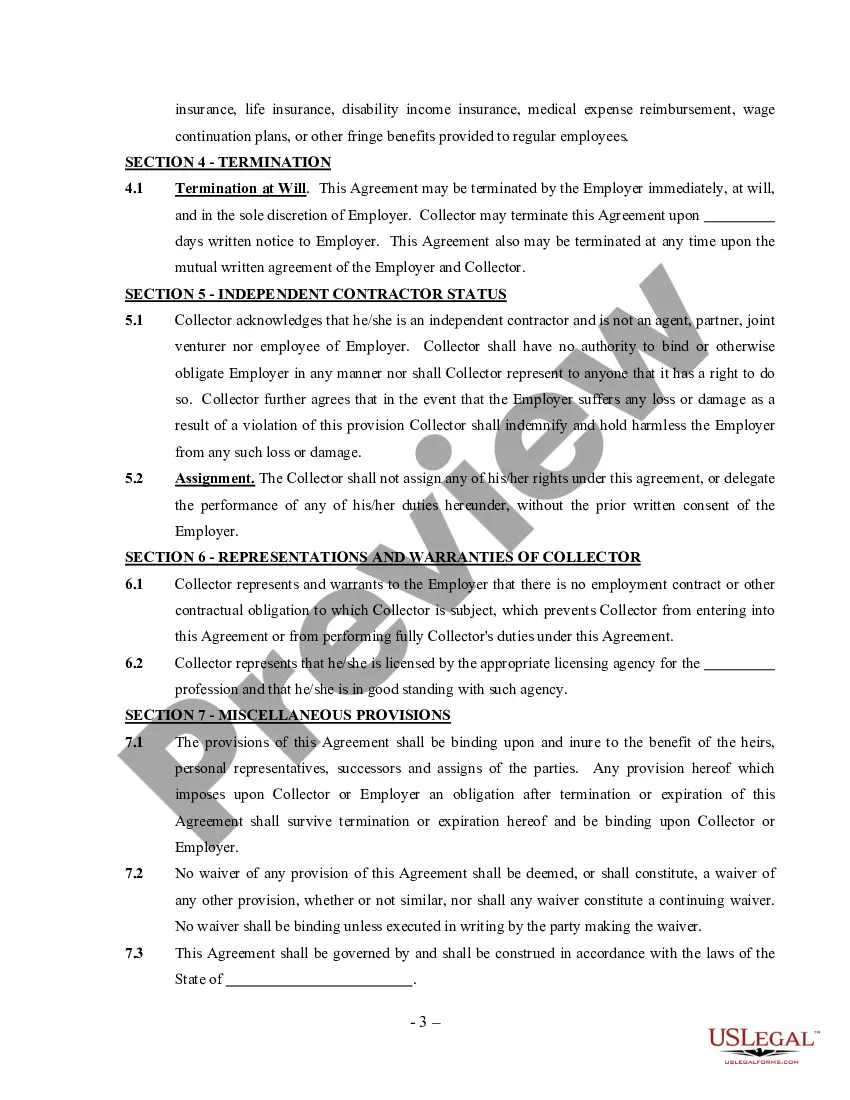
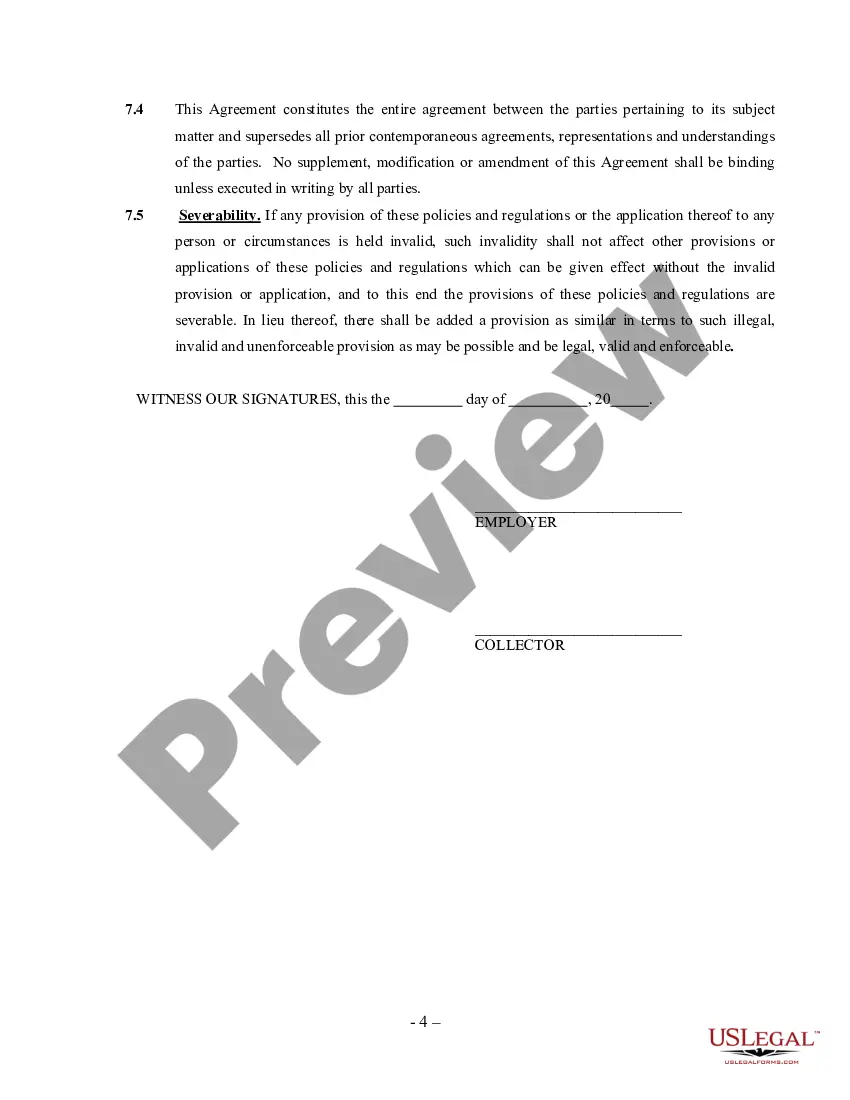
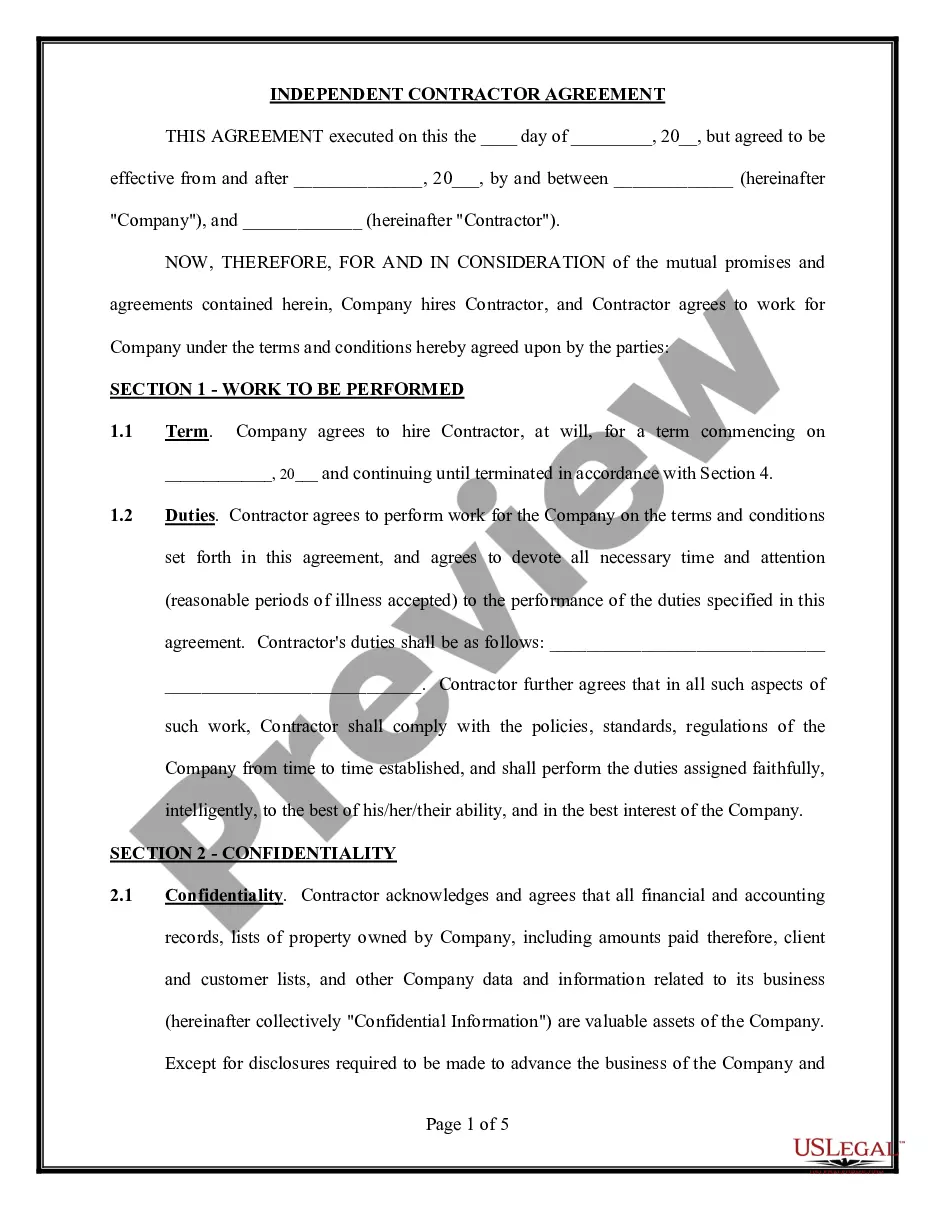
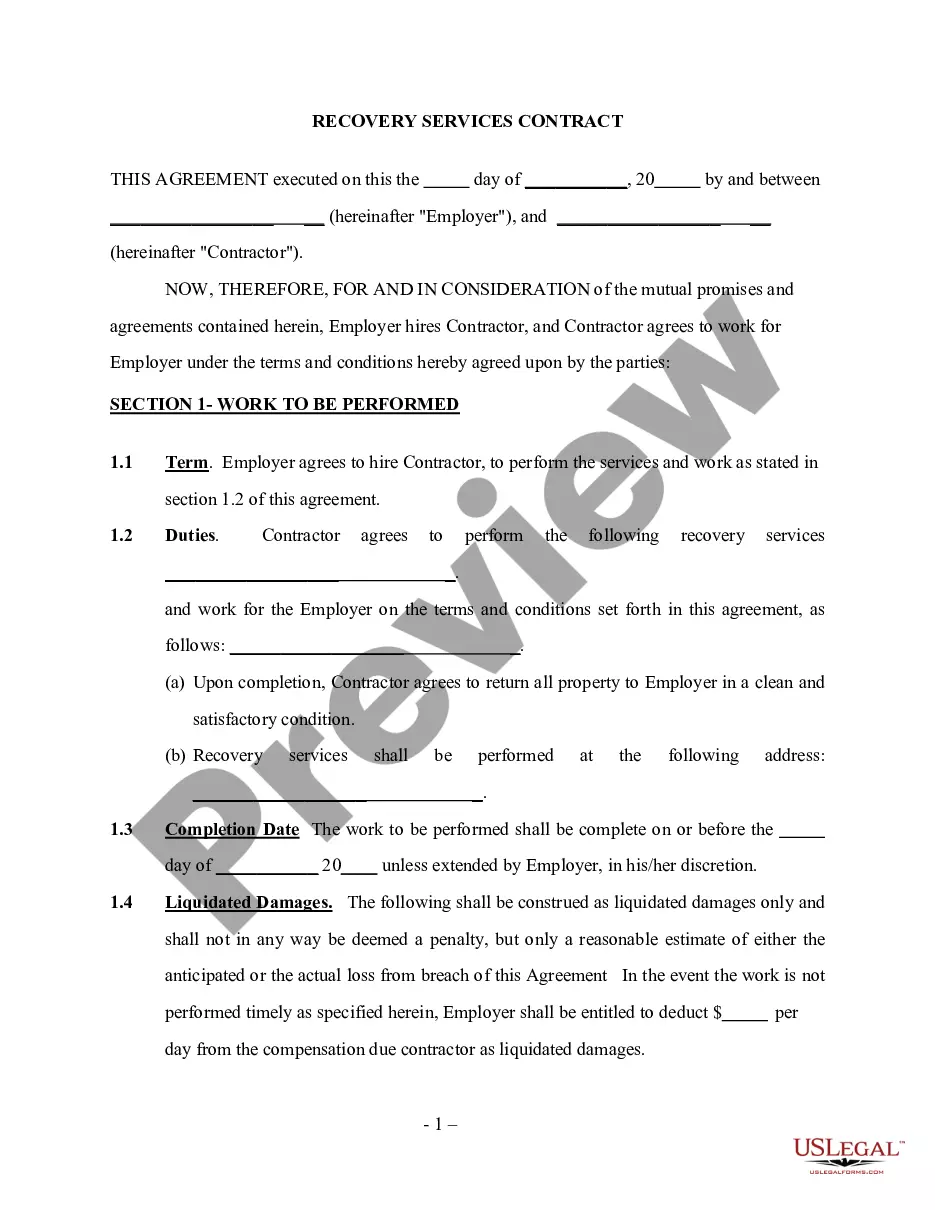
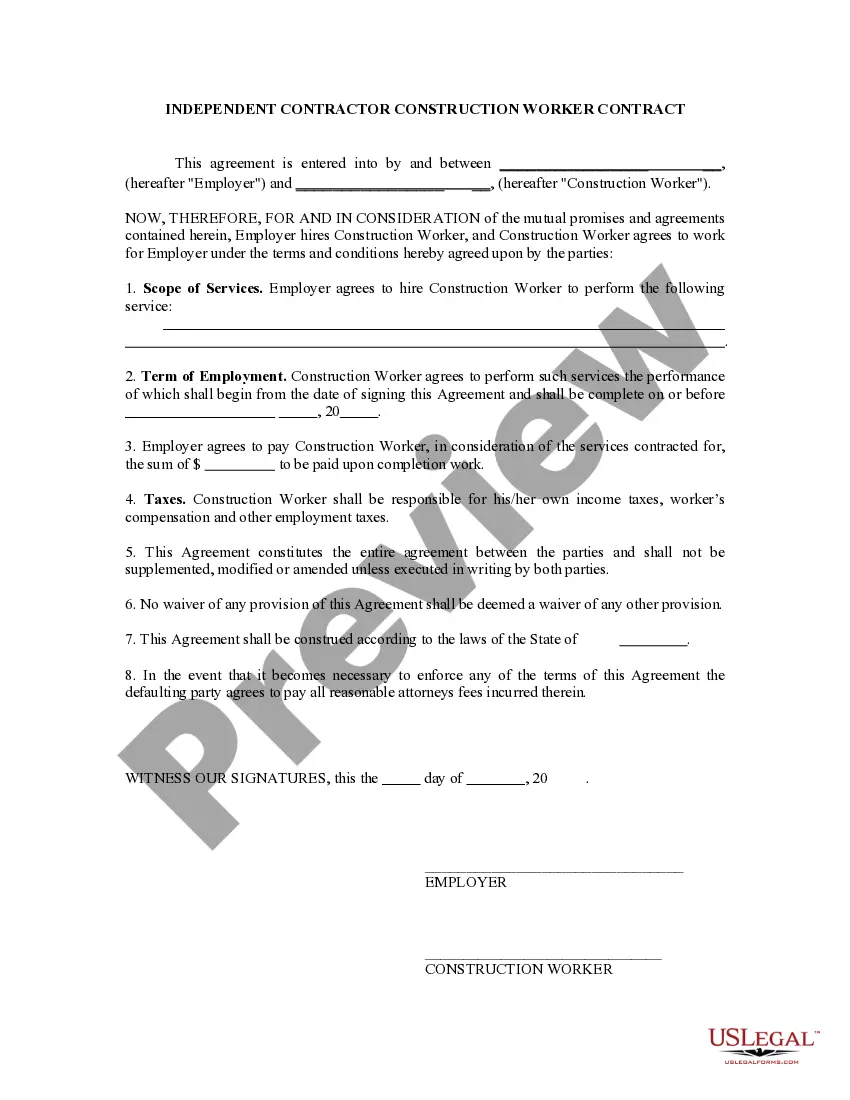
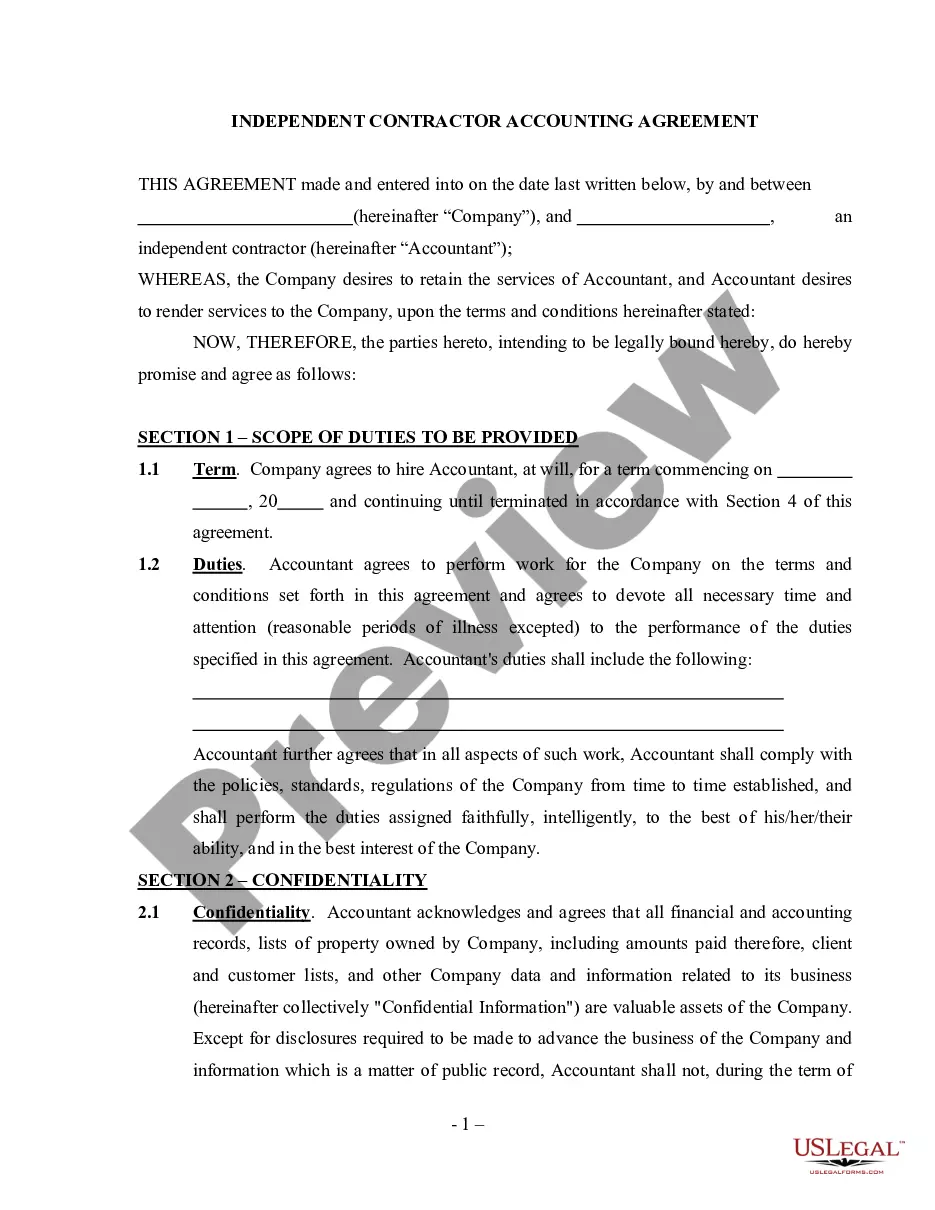
Employer hires a collections specialist on an independent contractor basis to provide collection services for employer as specified in the contract.
North Carolina Collections Agreement - Self-Employed Independent Contractor
State:
Multi-State
Control #:
US-INDC-237
Format:
Word;
Rich Text
Instant download
Description
Free preview
Get your form ready online
Our built-in tools help you complete, sign, share, and store your documents in one place.
Built-in online Word editor
Make edits, fill in missing information, and update formatting in US Legal Forms—just like you would in MS Word.
Export easily
Download a copy, print it, send it by email, or mail it via USPS—whatever works best for your next step.
E-sign your document
Sign and collect signatures with our SignNow integration. Send to multiple recipients, set reminders, and more. Go Premium to unlock E-Sign.
Notarize online 24/7
If this form requires notarization, complete it online through a secure video call—no need to meet a notary in person or wait for an appointment.
Store your document securely
We protect your documents and personal data by following strict security and privacy standards.

Make edits, fill in missing information, and update formatting in US Legal Forms—just like you would in MS Word.

Download a copy, print it, send it by email, or mail it via USPS—whatever works best for your next step.

Sign and collect signatures with our SignNow integration. Send to multiple recipients, set reminders, and more. Go Premium to unlock E-Sign.

If this form requires notarization, complete it online through a secure video call—no need to meet a notary in person or wait for an appointment.

We protect your documents and personal data by following strict security and privacy standards.
Looking for another form?







How to fill out Collections Agreement - Self-Employed Independent Contractor?
Are you in the situation where you need documents for potential business or personal purposes almost every working day.
There are numerous legal document templates available online, but finding reliable ones is challenging.
US Legal Forms provides a vast array of form templates, similar to the North Carolina Collections Agreement - Self-Employed Independent Contractor, that are designed to comply with state and federal regulations.
Once you find the correct form, click Acquire now.
Choose the pricing plan you prefer, complete the required information to create your account, and pay for the transaction using your PayPal or Visa or Mastercard.
- If you are already familiar with the US Legal Forms website and have an account, simply Log In.
- After that, you can download the North Carolina Collections Agreement - Self-Employed Independent Contractor template.
- If you do not have an account and wish to start using US Legal Forms, follow these steps.
- Obtain the form you require and ensure it is for the correct city/county.
- Utilize the Review button to evaluate the document.
- Check the description to confirm that you have selected the right form.
- If the form is not what you are looking for, use the Search field to find the form that meets your needs.
Form popularity
FAQ
Independent contractors in North Carolina generally do not need workers' compensation insurance, as they are not classified as employees. However, having this kind of coverage can protect you if you encounter work-related injuries. It's wise to assess the risks of your specific work situation, and obtaining a North Carolina Collections Agreement - Self-Employed Independent Contractor can guide you in making informed decisions about your coverage needs.
Two cons of being an independent contractor in North Carolina include the lack of job security and the burden of self-employment taxes. Unlike employees, independent contractors may face inconsistent income, making financial planning more challenging. Moreover, the responsibility of paying both halves of the Social Security tax can significantly impact your earnings. Understanding these challenges is crucial, and the North Carolina Collections Agreement - Self-Employed Independent Contractor can provide guidance on managing your status effectively.
As an independent contractor in North Carolina, you must handle your taxes differently than an employee. This includes paying self-employment taxes, which cover your Social Security and Medicare responsibilities. You also need to track your income and expenses carefully to file your taxes accurately. The North Carolina Collections Agreement - Self-Employed Independent Contractor can help you maintain clear financial records to simplify this process.
If you get hurt while working as an independent contractor in North Carolina, your options for compensation can be limited. Unlike employees, independent contractors typically do not receive workers' compensation benefits unless they have a personal policy. It's crucial to consider this risk up front, as having a North Carolina Collections Agreement - Self-Employed Independent Contractor can clarify the terms surrounding your work and safety.
Misclassifying an employee as an independent contractor in North Carolina can lead to serious consequences, including financial penalties and back taxes. Employers may face audits from the IRS or the state if their misclassification is discovered. Protecting your business from these risks is essential, and utilizing the North Carolina Collections Agreement - Self-Employed Independent Contractor can help establish clear working relationships.
An independent contractor in North Carolina is a self-employed individual who provides services to clients under a contract. Unlike employees, independent contractors manage their own work schedules and often work for multiple clients simultaneously. This status provides flexibility but also requires careful attention to tax responsibilities. The North Carolina Collections Agreement - Self-Employed Independent Contractor supports those navigating this work model.
Creating an independent contractor agreement involves several key steps. First, clearly define the scope of work, including specific tasks, deadlines, and payment terms. Next, outline the responsibilities of both parties and address any confidentiality or non-compete clauses. For an effective and compliant contract, consider using US Legal Forms, which provides a user-friendly platform to draft a North Carolina Collections Agreement - Self-Employed Independent Contractor that meets state requirements.