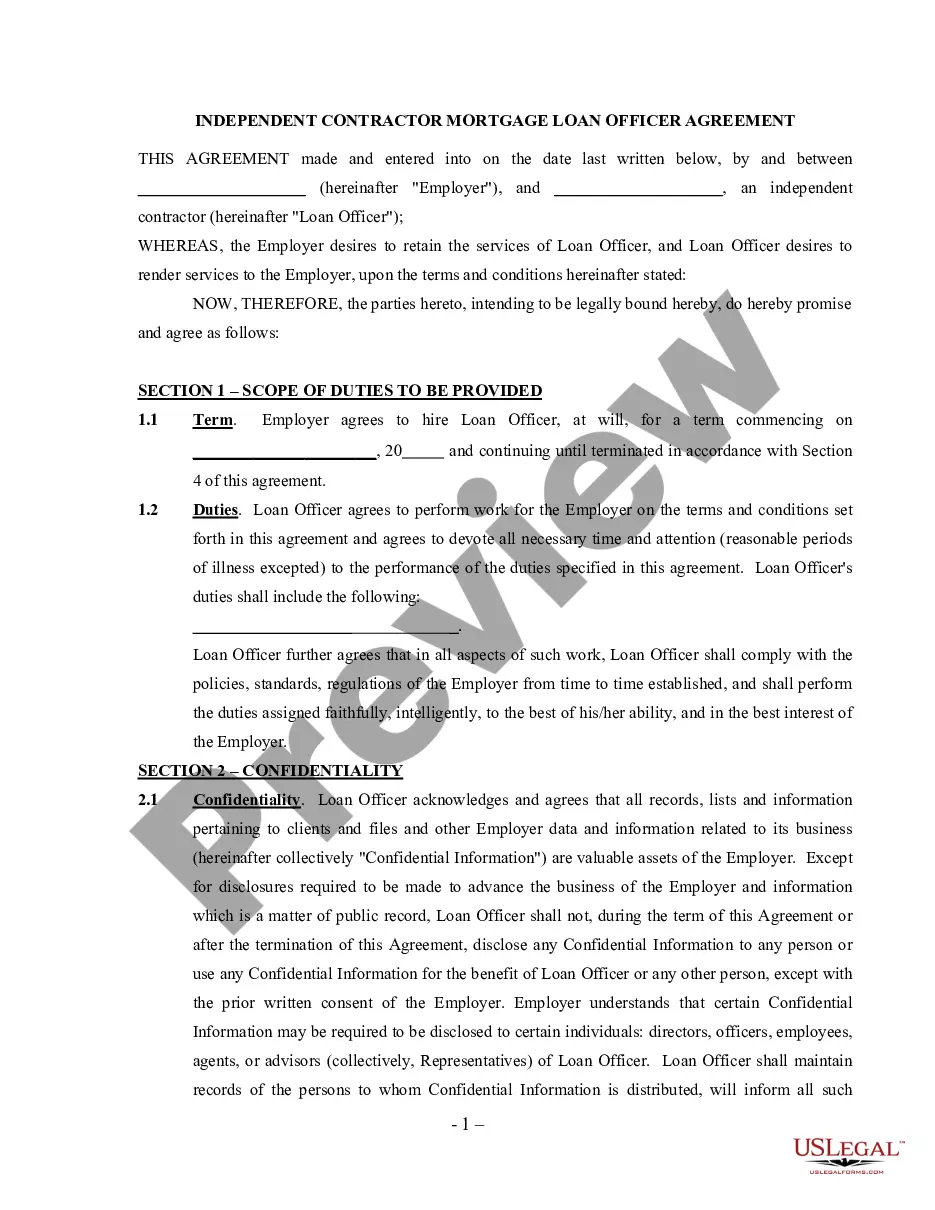
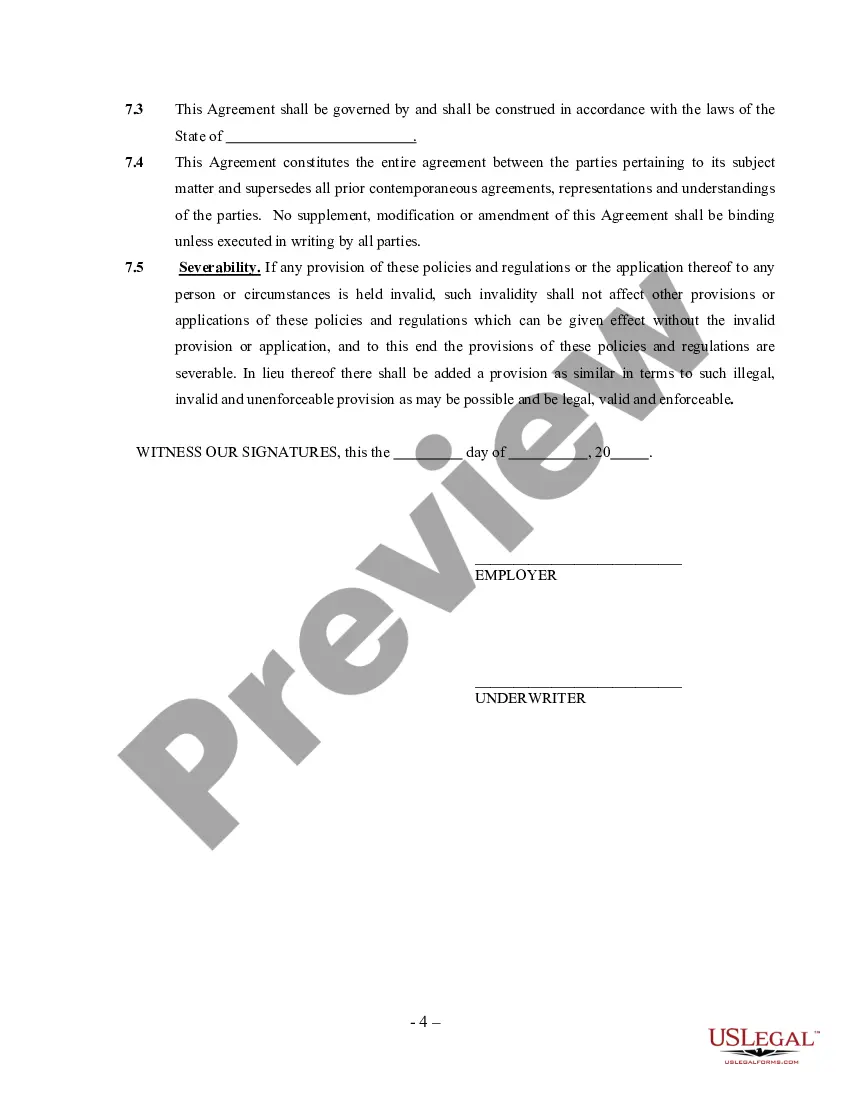
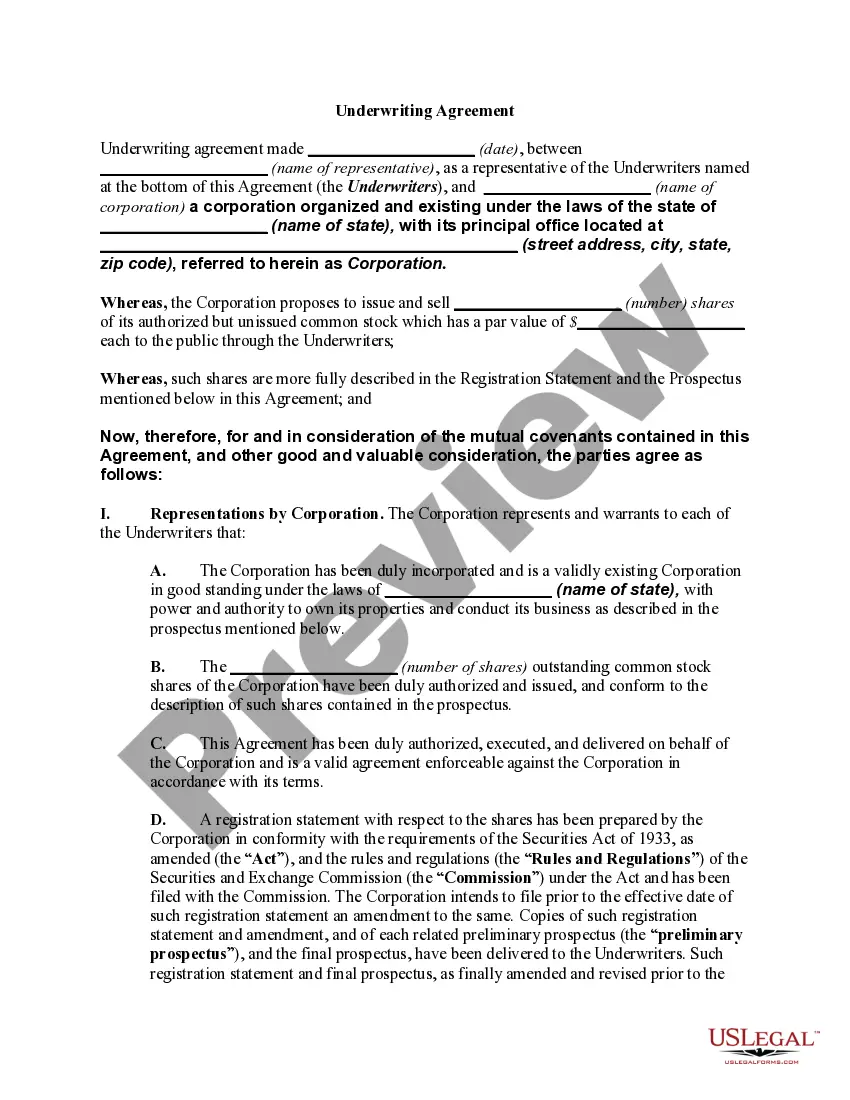
Employer hires an underwriter as an independent contractor to provide underwriting services for third parties as specified in the Agreement.
North Carolina Underwriter Agreement - Self-Employed Independent Contractor
State:
Multi-State
Control #:
US-INDC-191
Format:
Word;
Rich Text
Instant download
Description
Free preview
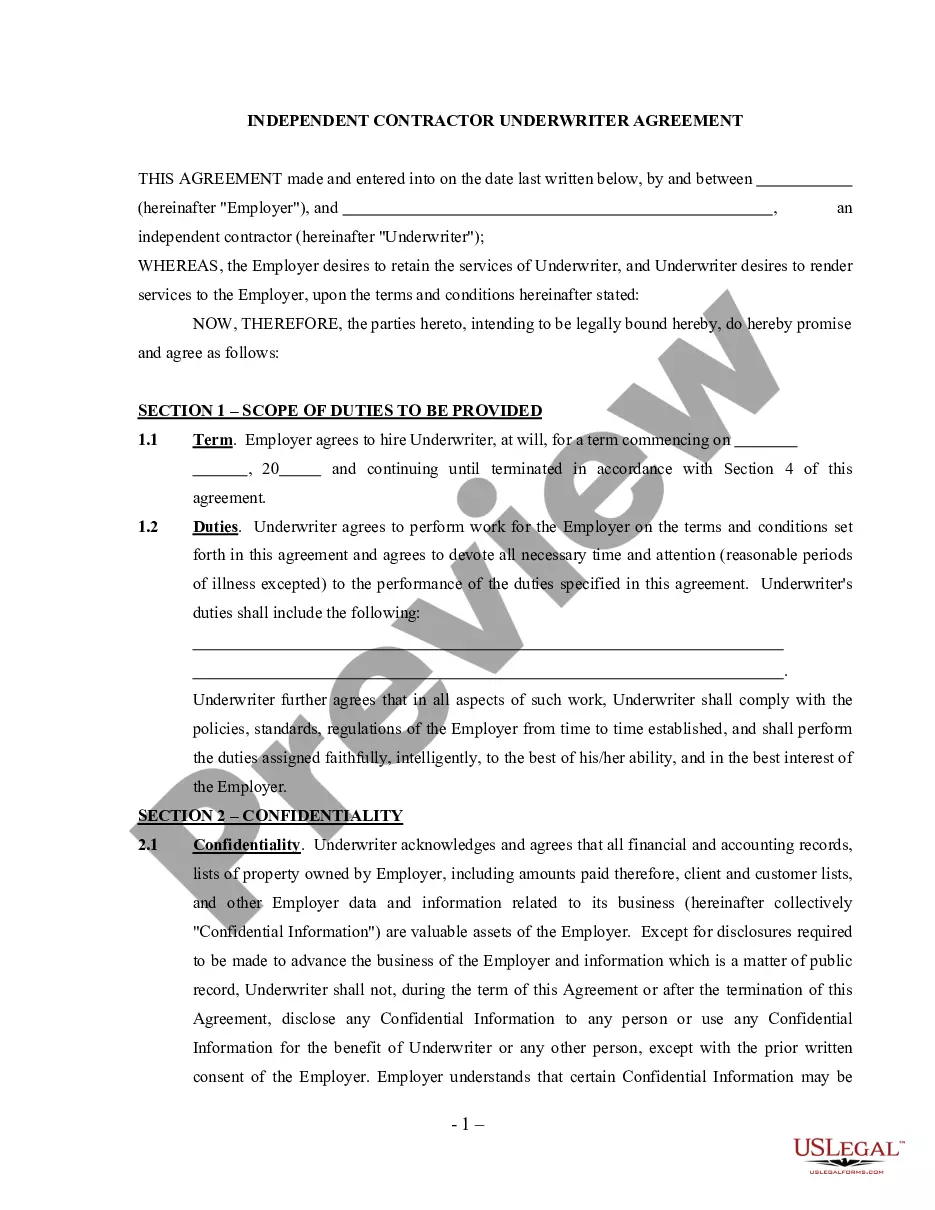
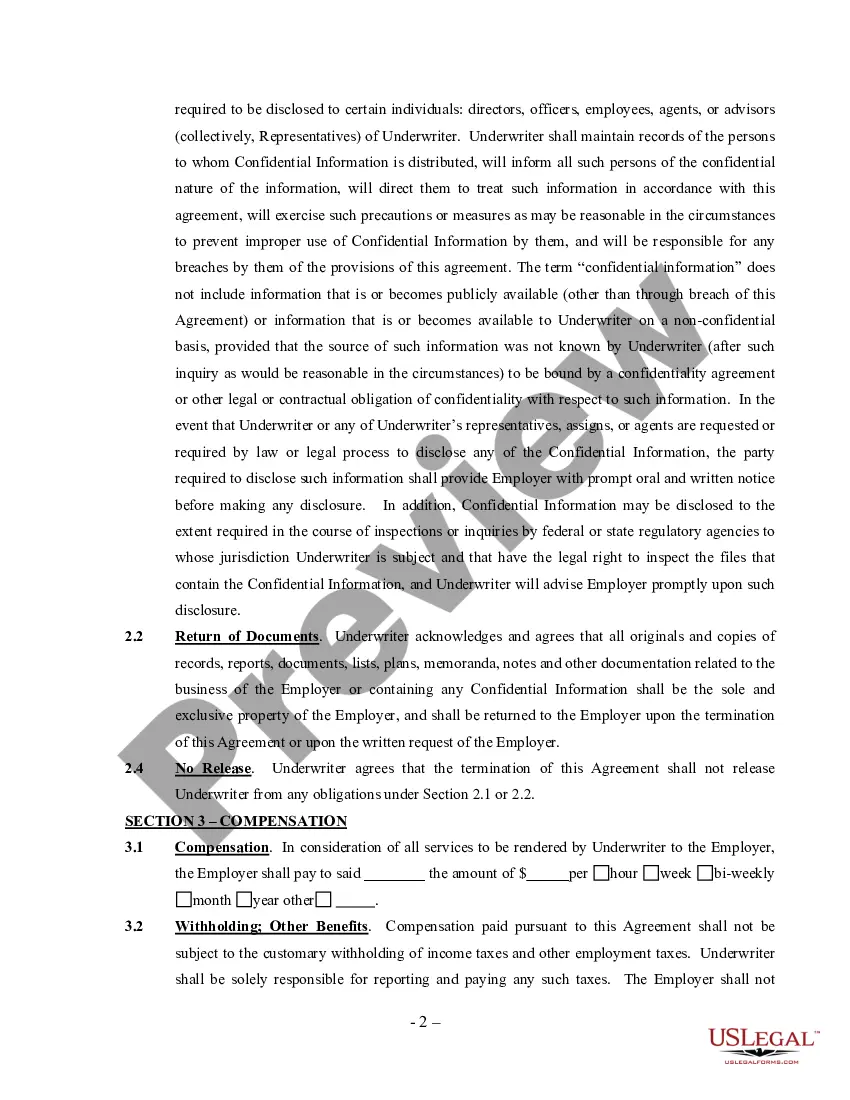
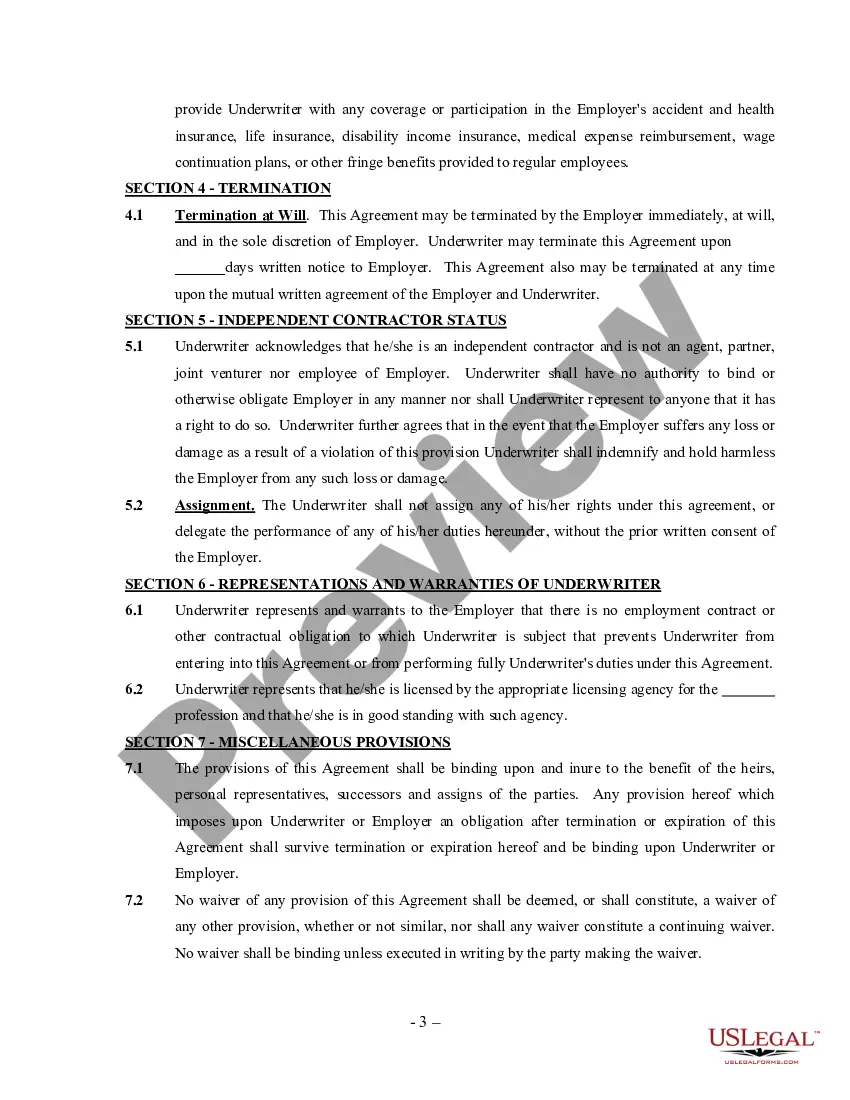
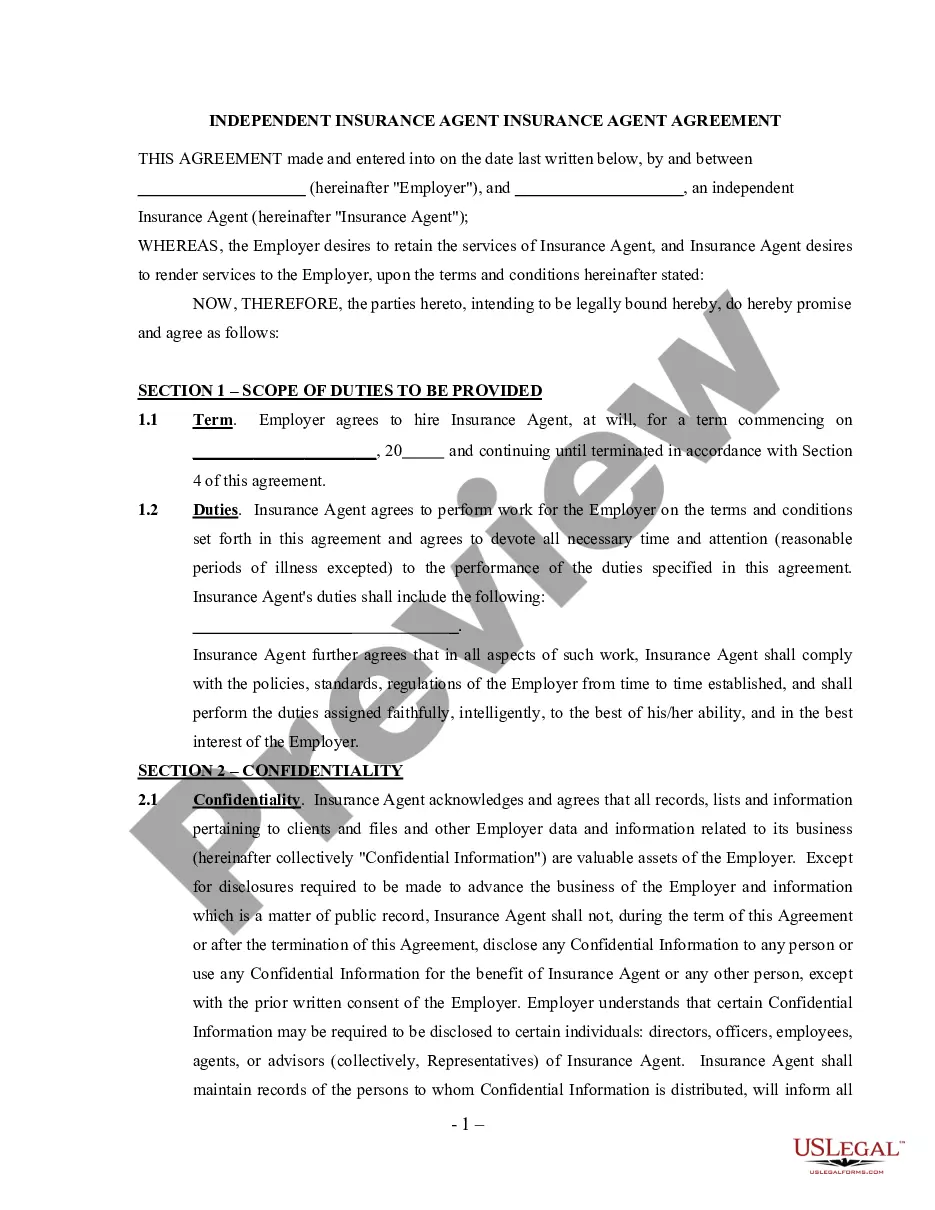
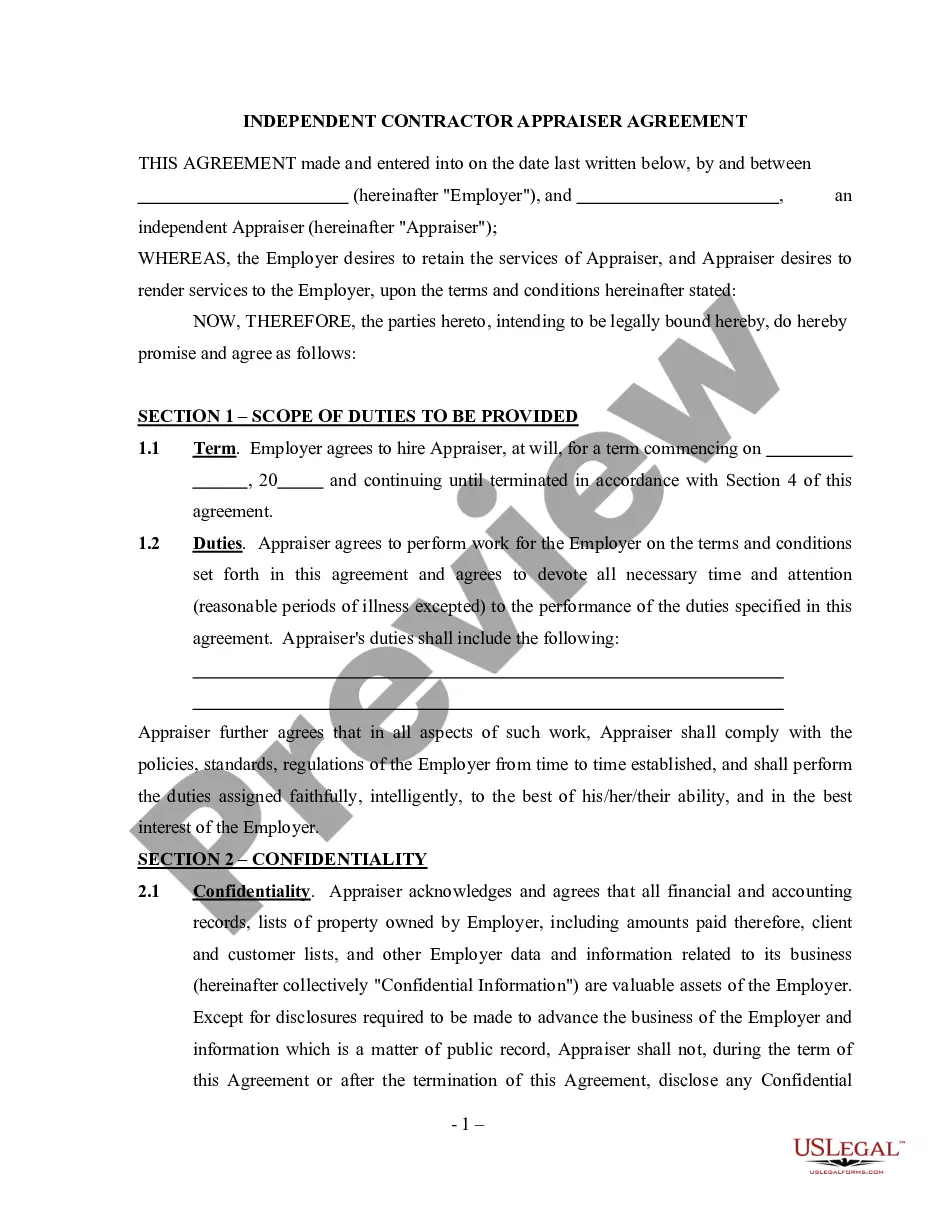

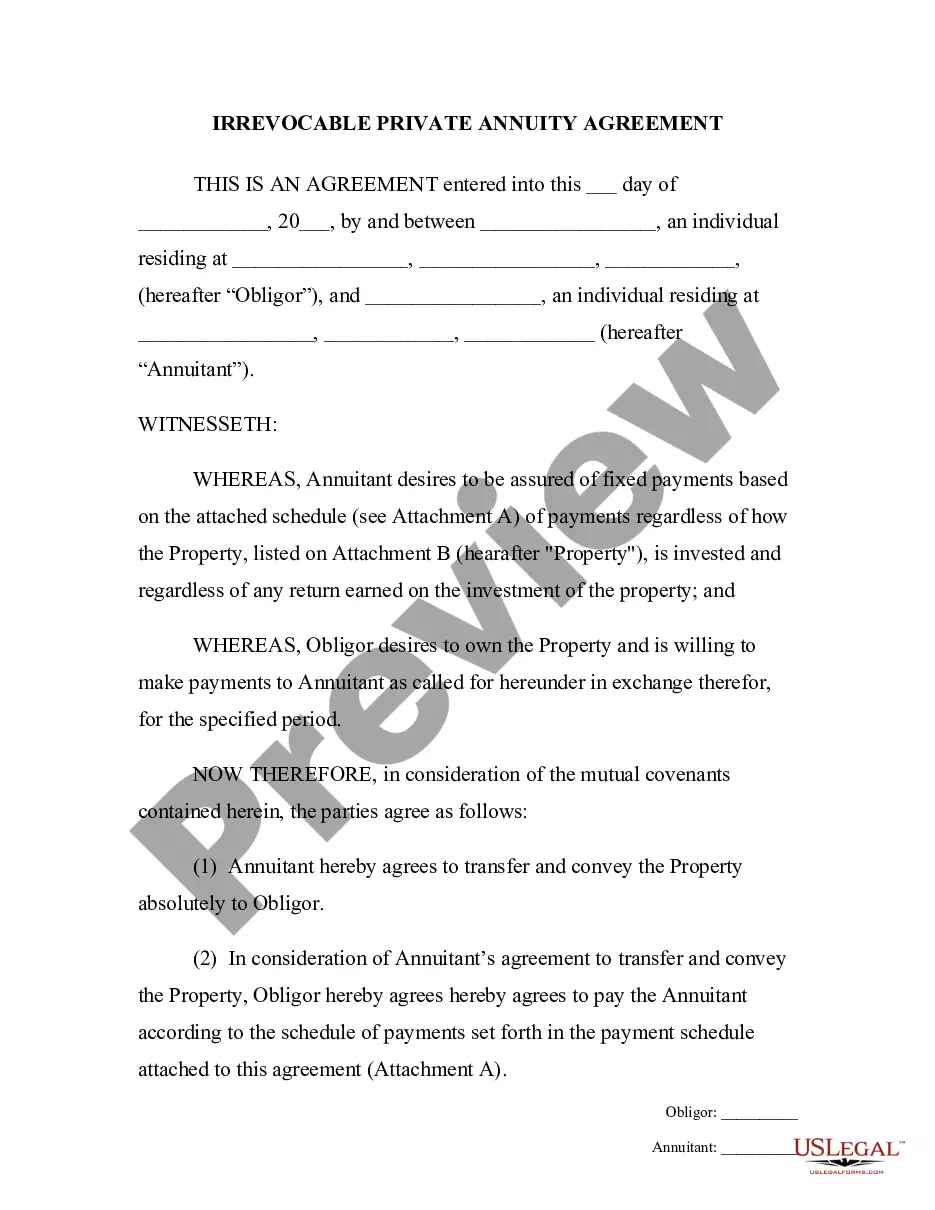
How to fill out Underwriter Agreement - Self-Employed Independent Contractor?
Finding the appropriate legal document format can be a challenge.
Of course, there are numerous templates available online, but how can you obtain the legal form you need.
Utilize the US Legal Forms website. The service provides thousands of templates, including the North Carolina Underwriter Agreement - Self-Employed Independent Contractor, that you can use for business and personal purposes. All of the forms are reviewed by experts and comply with state and federal requirements.
Once you are confident that the form is suitable, select the Get now button to obtain the form. Choose the pricing plan you want and enter the required information. Create your account and pay for the transaction using your PayPal account or credit card. Select the file format and download the legal document format to your device. Complete, modify, print, and sign the finalized North Carolina Underwriter Agreement - Self-Employed Independent Contractor. US Legal Forms is indeed the largest collection of legal forms where you can find various document templates. Utilize the service to download professionally crafted documents that adhere to state requirements.
- If you are already registered, Log In to your account and click the Obtain button to download the North Carolina Underwriter Agreement - Self-Employed Independent Contractor.
- Use your account to view the legal forms you have purchased previously.
- Visit the My documents tab in your account to get another copy of the document you need.
- If you are a new user of US Legal Forms, here are simple steps you can follow.
- First, ensure you have chosen the correct form for your city/state. You can browse the form using the Preview option and read the form summary to confirm it is the right one for you.
- If the form does not meet your needs, use the Search field to find the appropriate form.
Form popularity
FAQ
Becoming an independent contractor is one of the many ways to be classified as self-employed. By definition, an independent contractor provides work or services on a contractual basis, whereas, self-employment is simply the act of earning money without operating within an employee-employer relationship.
A 1099 employee is a US self-employed worker that reports their income to the IRS on a 1099 tax form. Freelancers, gig workers, and independent contractors are all considered 1099 employees. In contrast, actual company employees are considered W-2 employees.
Independent contractors are self-employed workers who provide services for an organisation under a contract for services. Independent contractors are not employees and are typically highly skilled, providing their clients with specialist skills or additional capacity on an as needed basis.
The three types of self-employed individuals include:Independent contractors. Independent contractors are individuals hired to perform specific jobs for clients, meaning that they are only paid for their jobs.Sole proprietors.Partnerships.
Remember that an independent contractor is considered to be self-employed, so in effect, you are running your own one-person business. Any income that you earn as an independent contractor must be reported on Schedule C. You'll then pay income taxes on the total profit.
What Is an Independent Contractor? An independent contractor is a self-employed person or entity contracted to perform work foror provide services toanother entity as a nonemployee. As a result, independent contractors must pay their own Social Security and Medicare taxes.
If you work for an employer, you're an employee. If you're self-employed, you're an independent contractor.
If you are an independent contractor, then you are self-employed. The earnings of a person who is working as an independent contractor are subject to self-employment tax. To find out what your tax obligations are, visit the Self-Employed Individuals Tax Center.
Becoming an independent contractor is one of the many ways to be classified as self-employed. By definition, an independent contractor provides work or services on a contractual basis, whereas, self-employment is simply the act of earning money without operating within an employee-employer relationship.