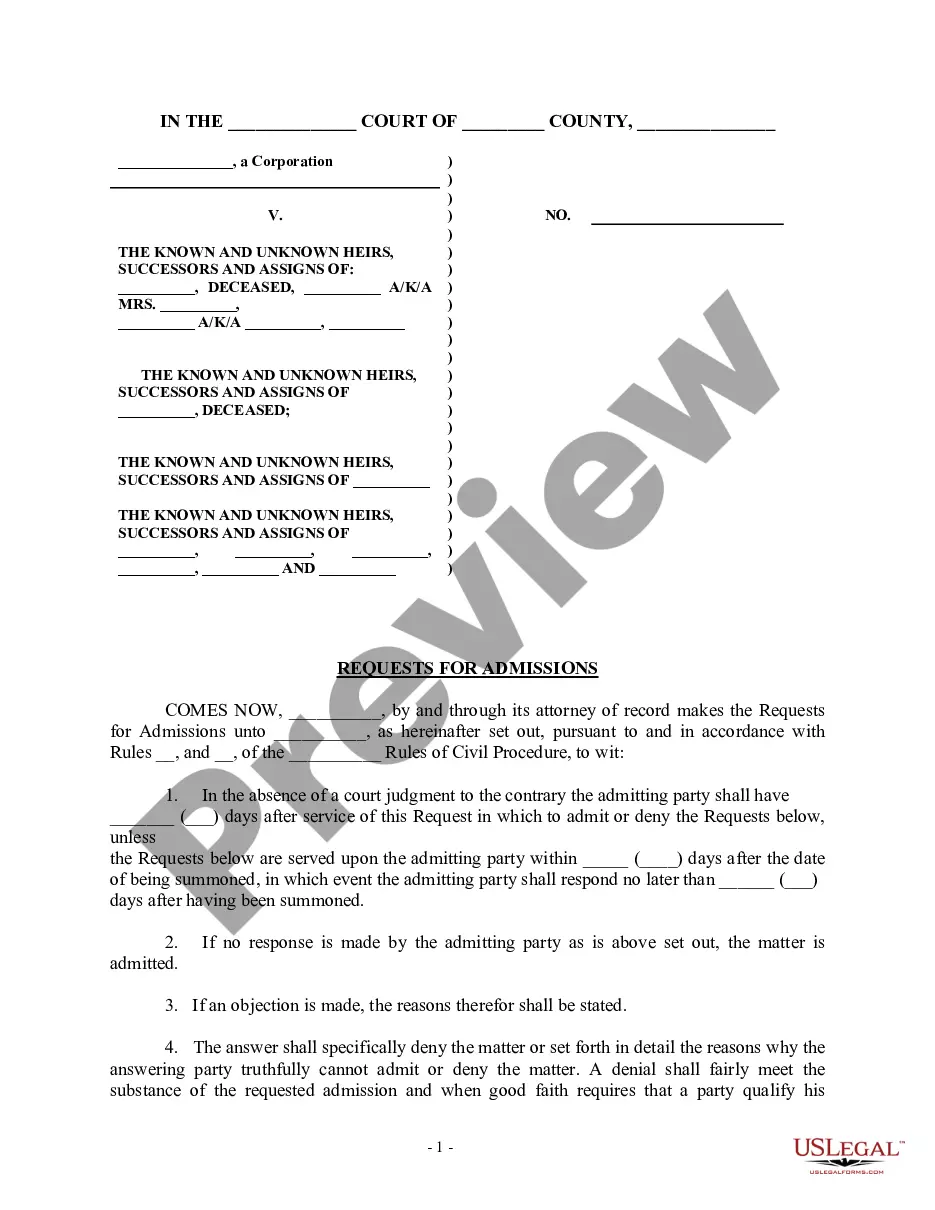
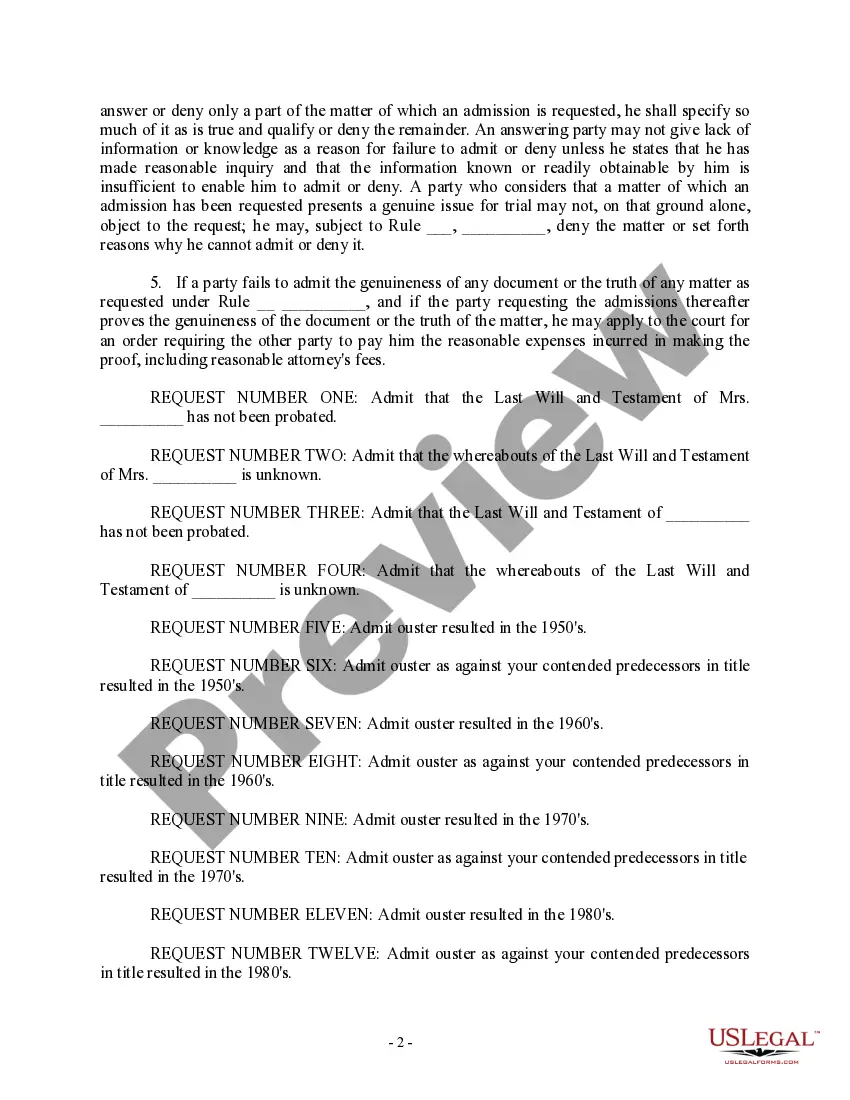
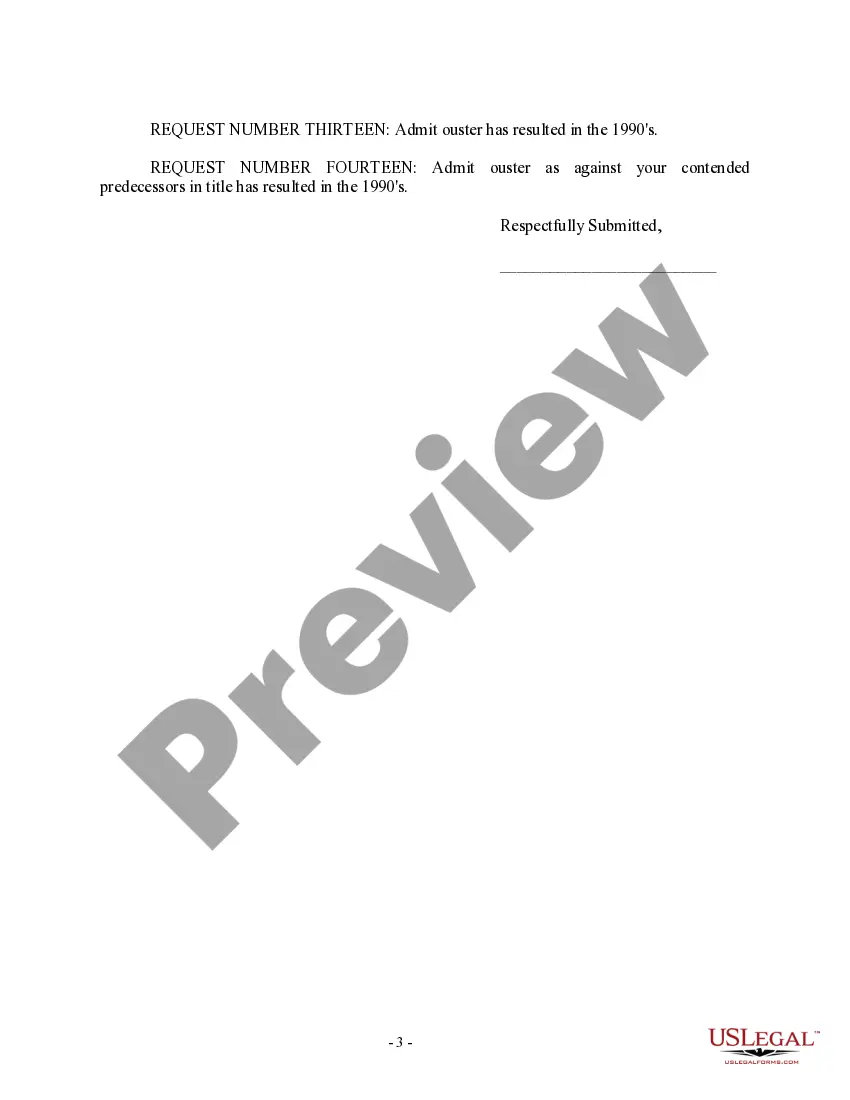
North Carolina Requests for Admissions
Description
Get your form ready online
Our built-in tools help you complete, sign, share, and store your documents in one place.
Make edits, fill in missing information, and update formatting in US Legal Forms—just like you would in MS Word.
Download a copy, print it, send it by email, or mail it via USPS—whatever works best for your next step.
Sign and collect signatures with our SignNow integration. Send to multiple recipients, set reminders, and more. Go Premium to unlock E-Sign.
If this form requires notarization, complete it online through a secure video call—no need to meet a notary in person or wait for an appointment.
We protect your documents and personal data by following strict security and privacy standards.

Make edits, fill in missing information, and update formatting in US Legal Forms—just like you would in MS Word.

Download a copy, print it, send it by email, or mail it via USPS—whatever works best for your next step.

Sign and collect signatures with our SignNow integration. Send to multiple recipients, set reminders, and more. Go Premium to unlock E-Sign.

If this form requires notarization, complete it online through a secure video call—no need to meet a notary in person or wait for an appointment.

We protect your documents and personal data by following strict security and privacy standards.
Looking for another form?

How to fill out Requests For Admissions?
Have you ever found yourself needing documents for both business or personal reasons almost all the time.
There are numerous legitimate document templates available online, but locating versions you can trust isn’t easy.
US Legal Forms offers thousands of form templates, including the North Carolina Requests for Admissions, which are designed to meet state and federal requirements.
When you find the appropriate form, simply click Get now.
Choose the pricing plan you prefer, complete the required information to create your account, and pay for your order using your PayPal or credit card.
- If you are already familiar with the US Legal Forms website and have your account, simply Log In.
- After that, you can download the North Carolina Requests for Admissions template.
- If you do not have an account and wish to start using US Legal Forms, follow these steps.
- Obtain the form you need and ensure it is for the correct state/region.
- Utilize the Preview feature to review the form.
- Check the description to make sure you have selected the correct form.
- If the form isn’t what you’re looking for, use the Search area to find the form that fulfills your needs and requirements.
Form popularity
FAQ
Proper Objections A responding party has four options: (1) admit; (2) deny; (3) admit in part and deny in part; or (4) explain why the party is unable to answer. It is possible to object to all or part of a request as well, but courts do not like parties who play ?word games? to avoid responding. Further, Civ.
4) Although there are no limits on how many requests you can include in an RFA they must pertain to the claims or defenses in your lawsuit. Consider limiting the content of your RFAs to: ? Whether a fact is true or false.
Pursuant to Rule 36 of the North Carolina Rules of Civil Procedure, any party to a lawsuit may serve written ?Requests for Admissions? on any other party. Many Plaintiffs' attorneys will serve Requests for Admissions with the Complaint and Summons.
There is not a specific limit on the number of requests, but the other party may object if responding would cause an unfair burden.
There is not a specific limit on the number of requests, but the other party may object if responding would cause an unfair burden.
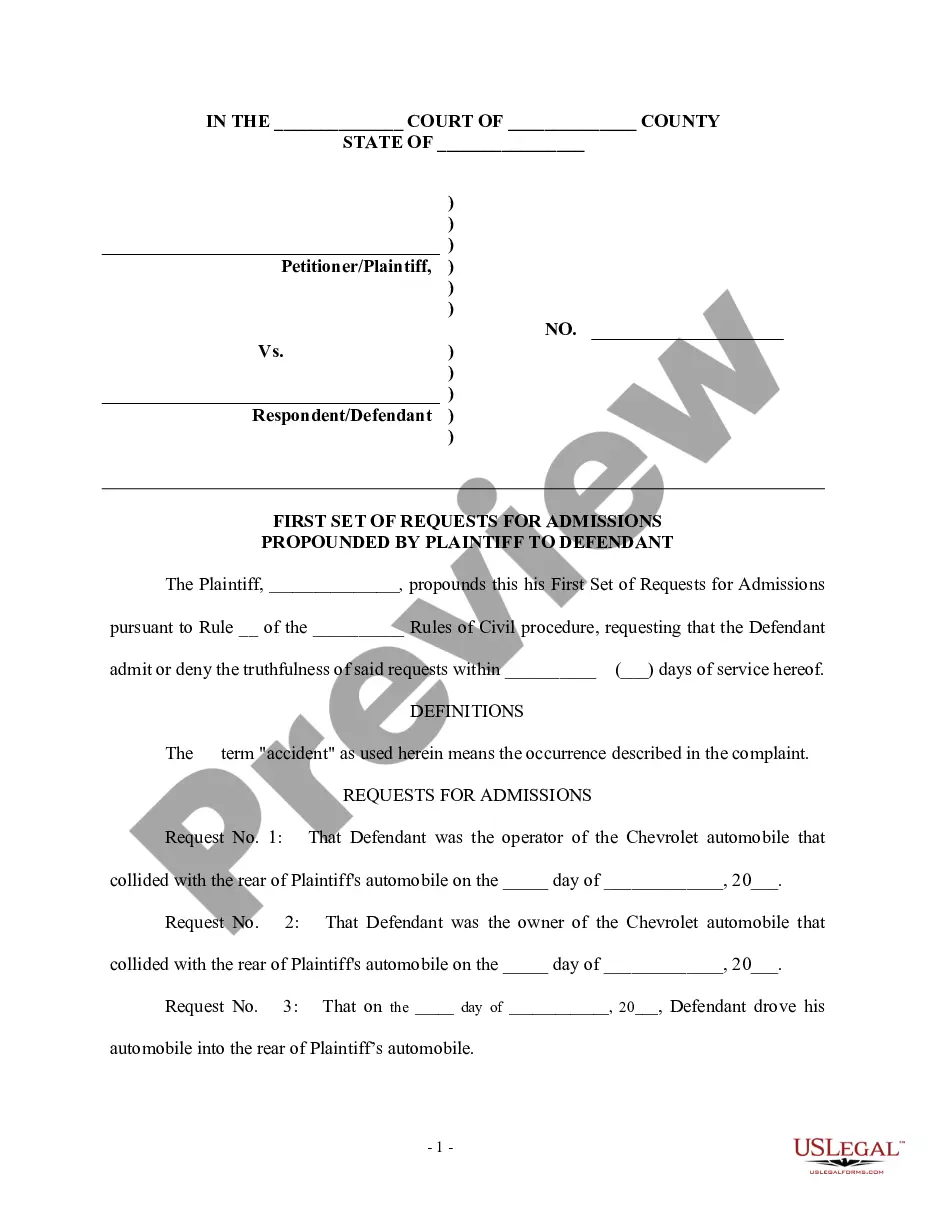
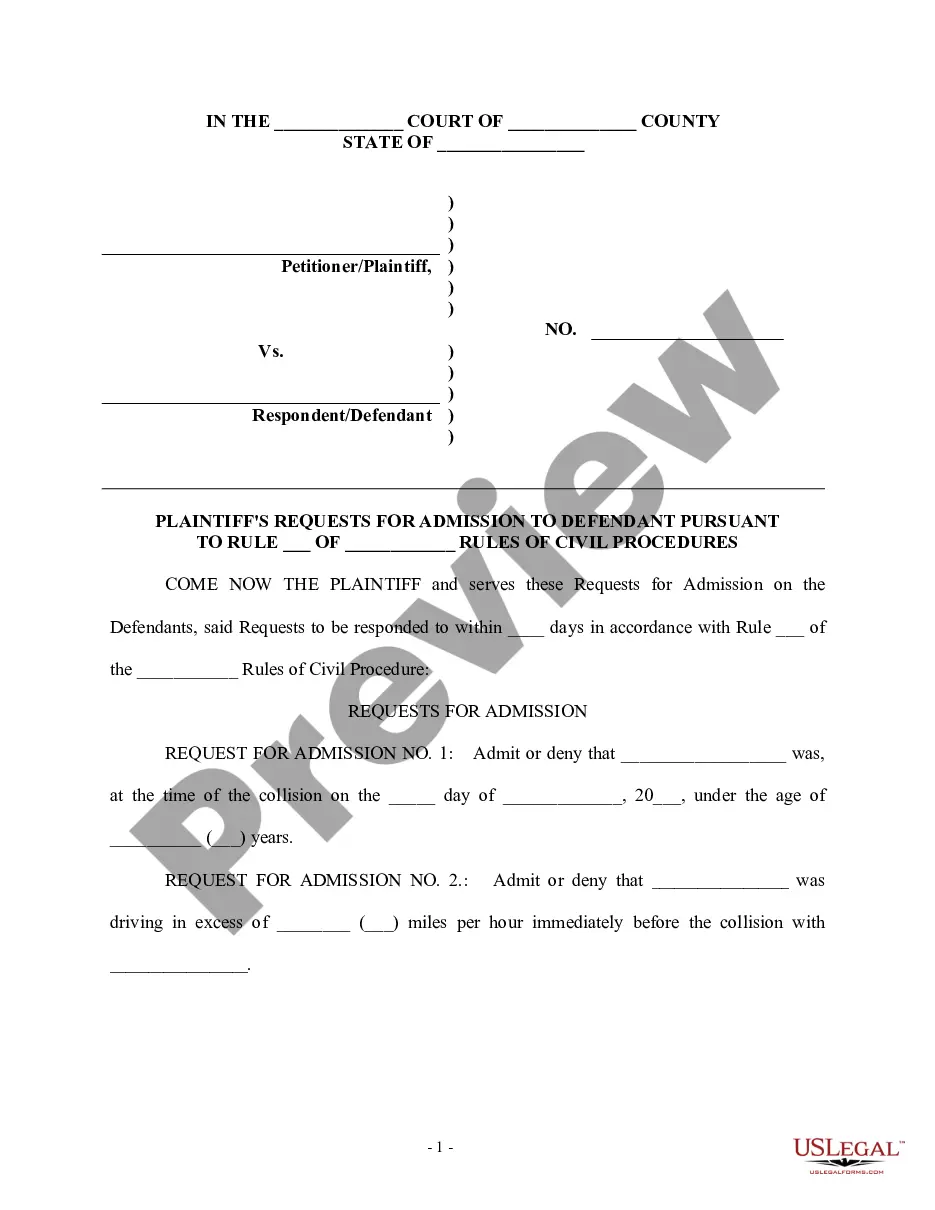
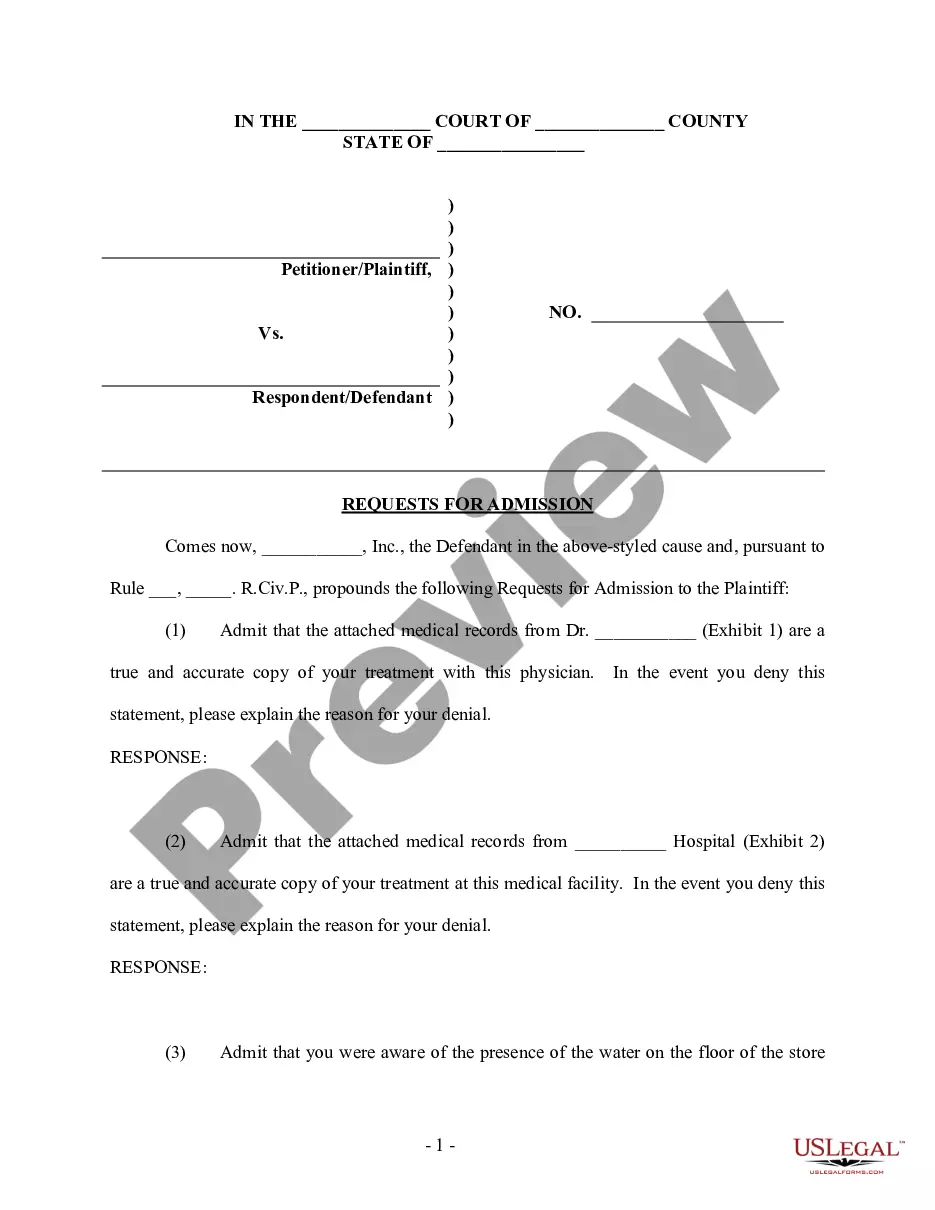
A Request for Admission asks the other side in your case to admit that a fact is true or that a document is authentic. If the other side admits that something is true or authentic, you will not need to prove that at trial.
In an unlimited civil case (cases over $25,000), each party may make 35 requests for admission. Any number over 35 may be asked if the request contains a declaration of necessity, a sworn statement in which the party or attorney declares under penalty of perjury that additional discovery is required.
NUMBER AND SCOPE OF INTERROGATORIES. Rule 33(a), Federal Rules of Civil Procedure, restricts to 25 (including all discrete subparts) the number of interrogatories a party may serve on any other party.