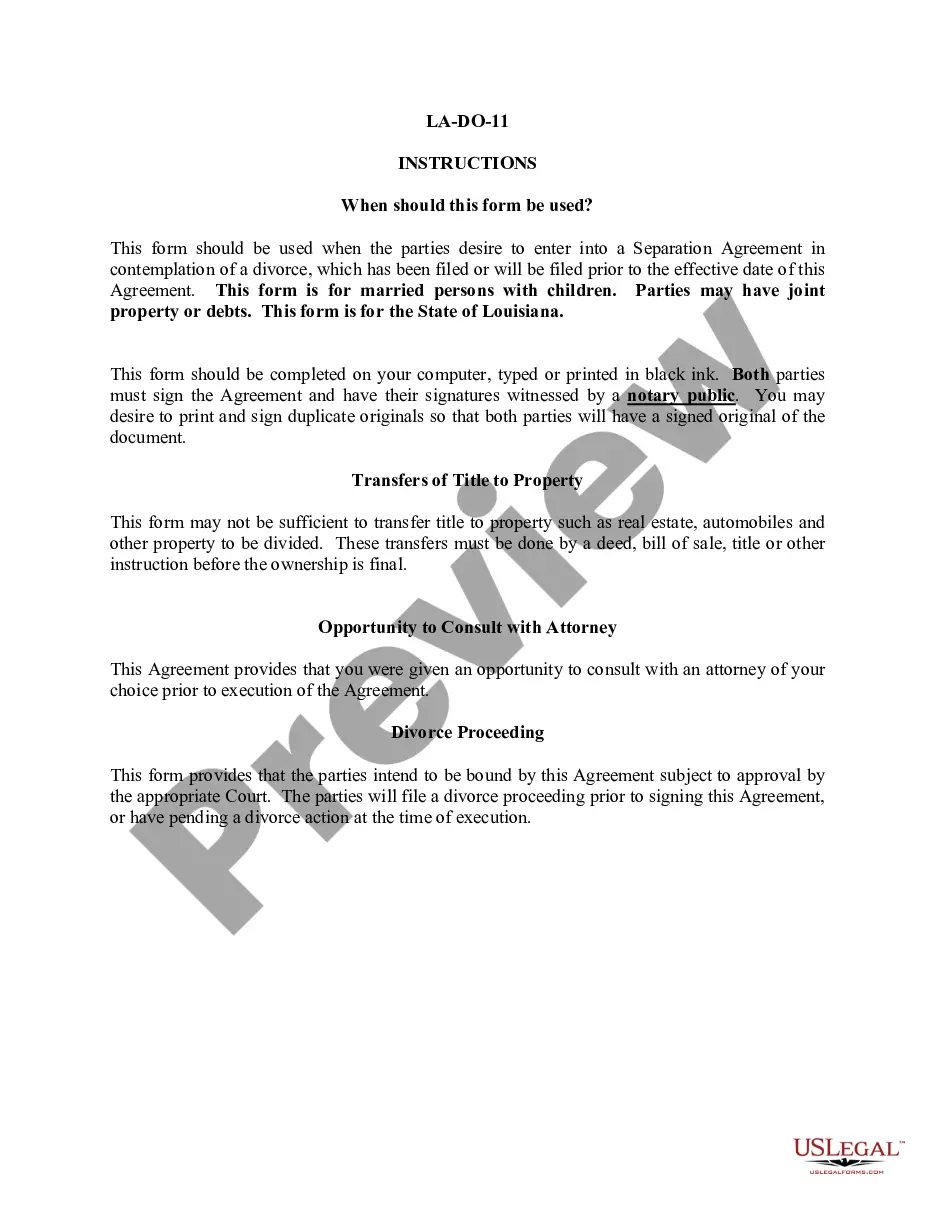
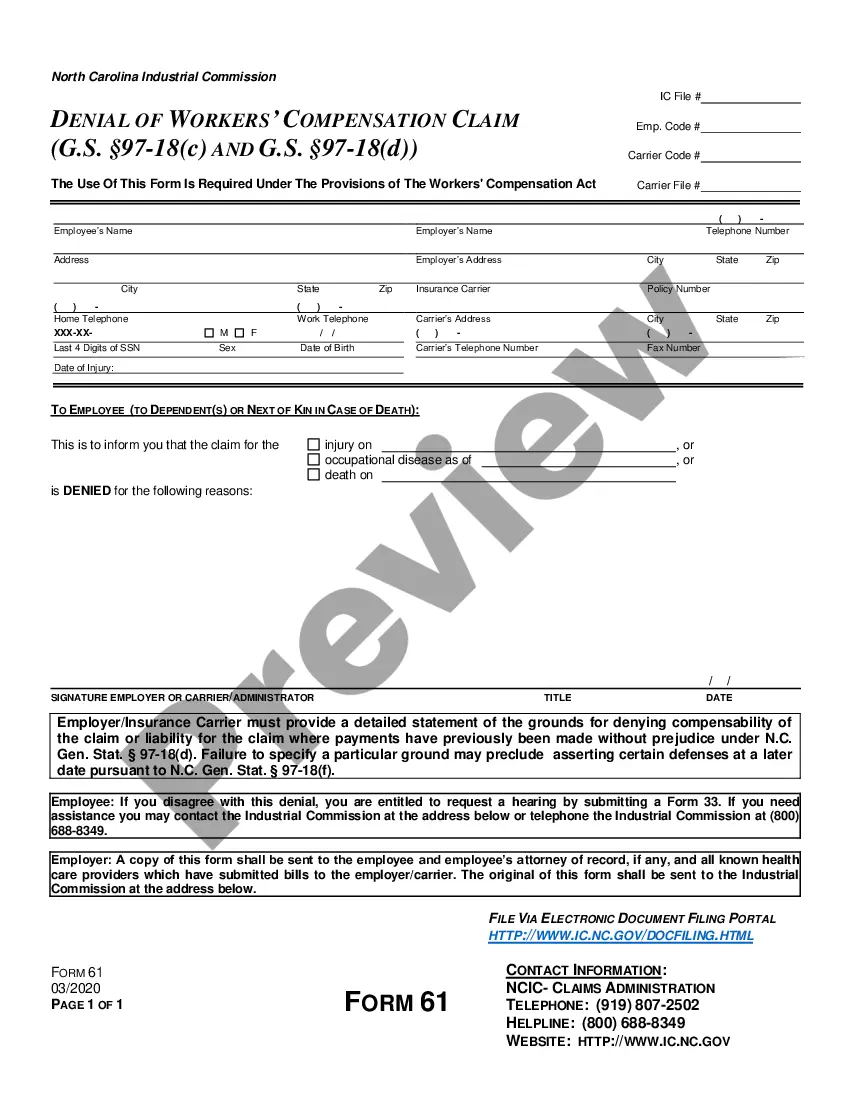
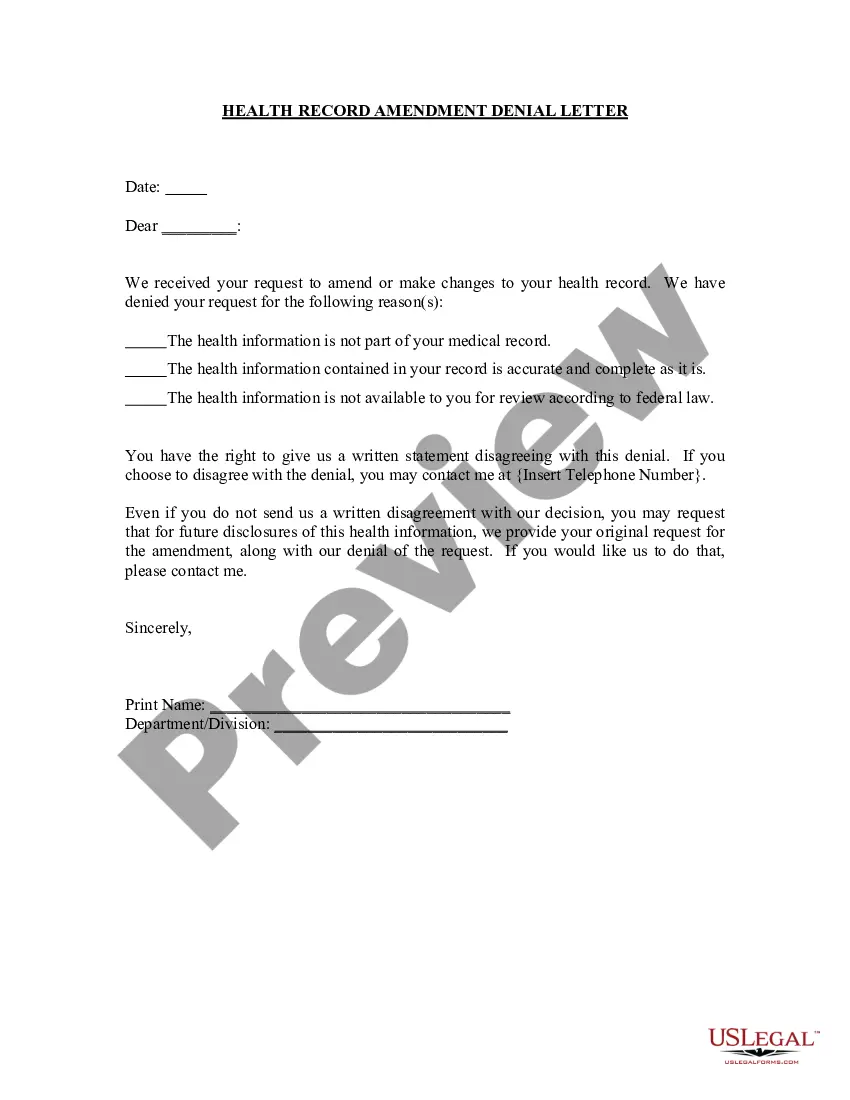
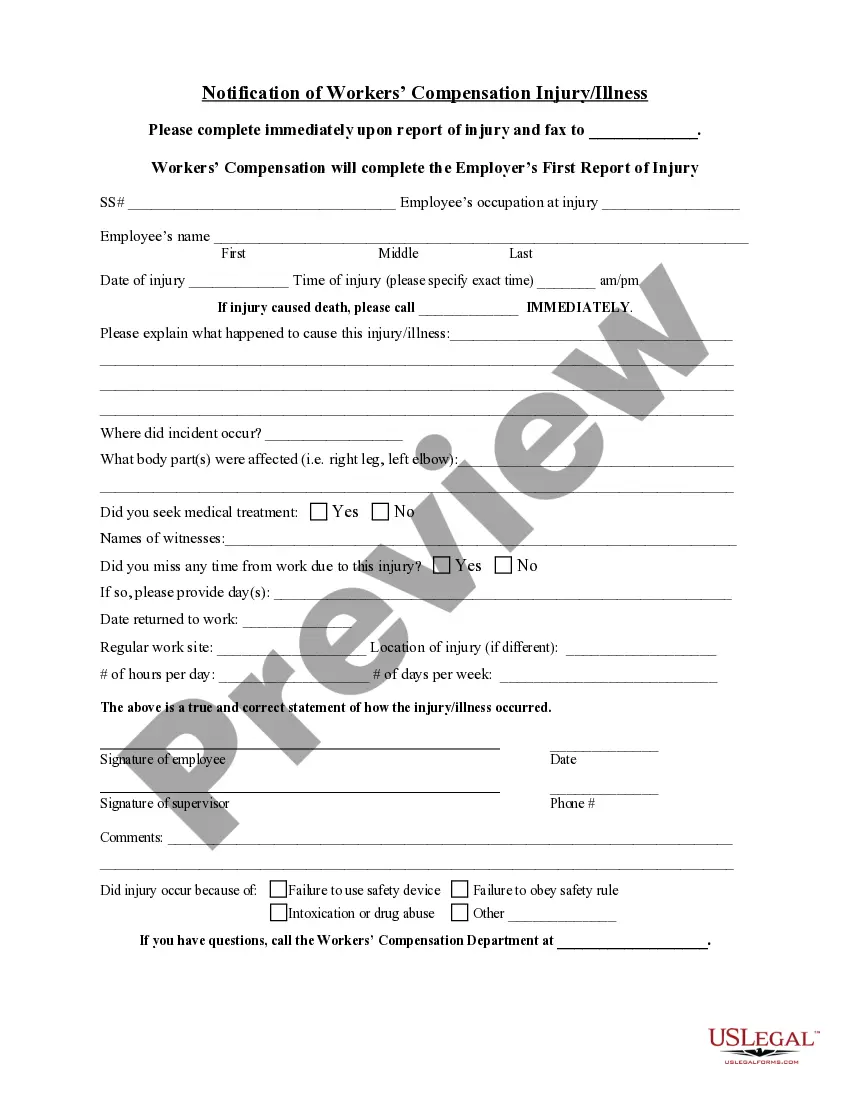
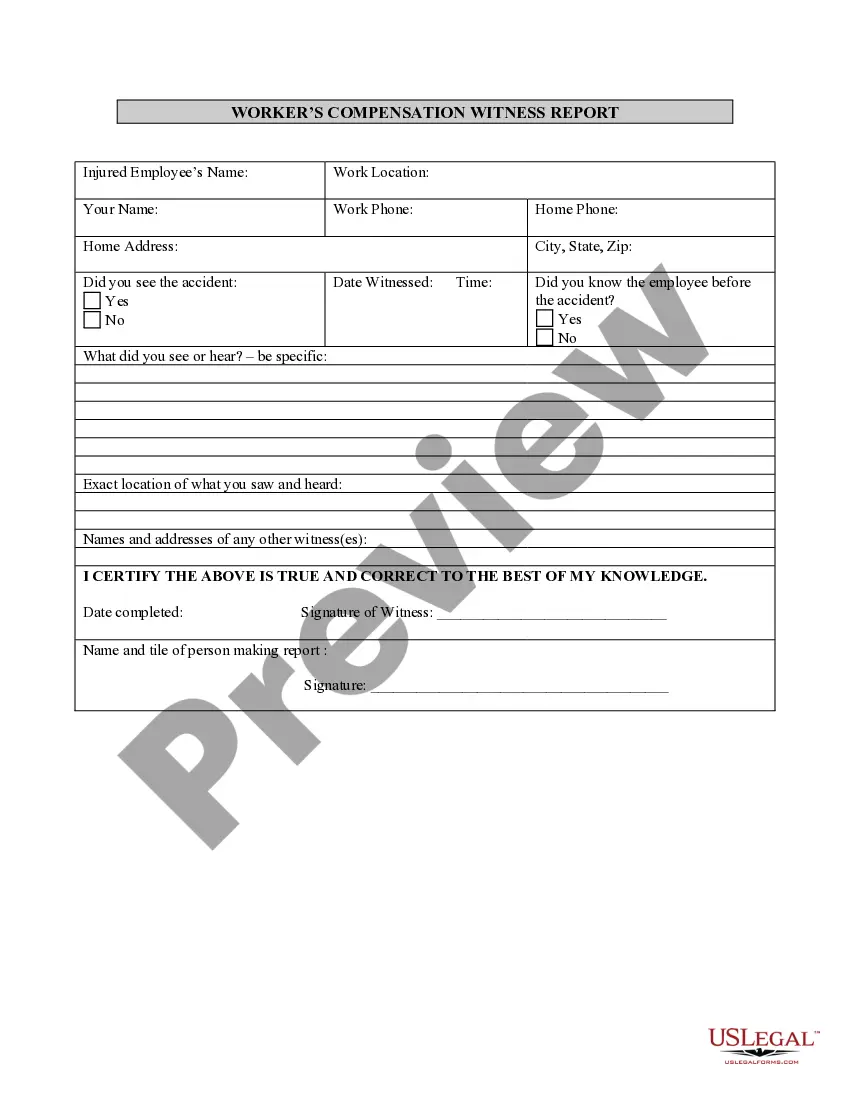
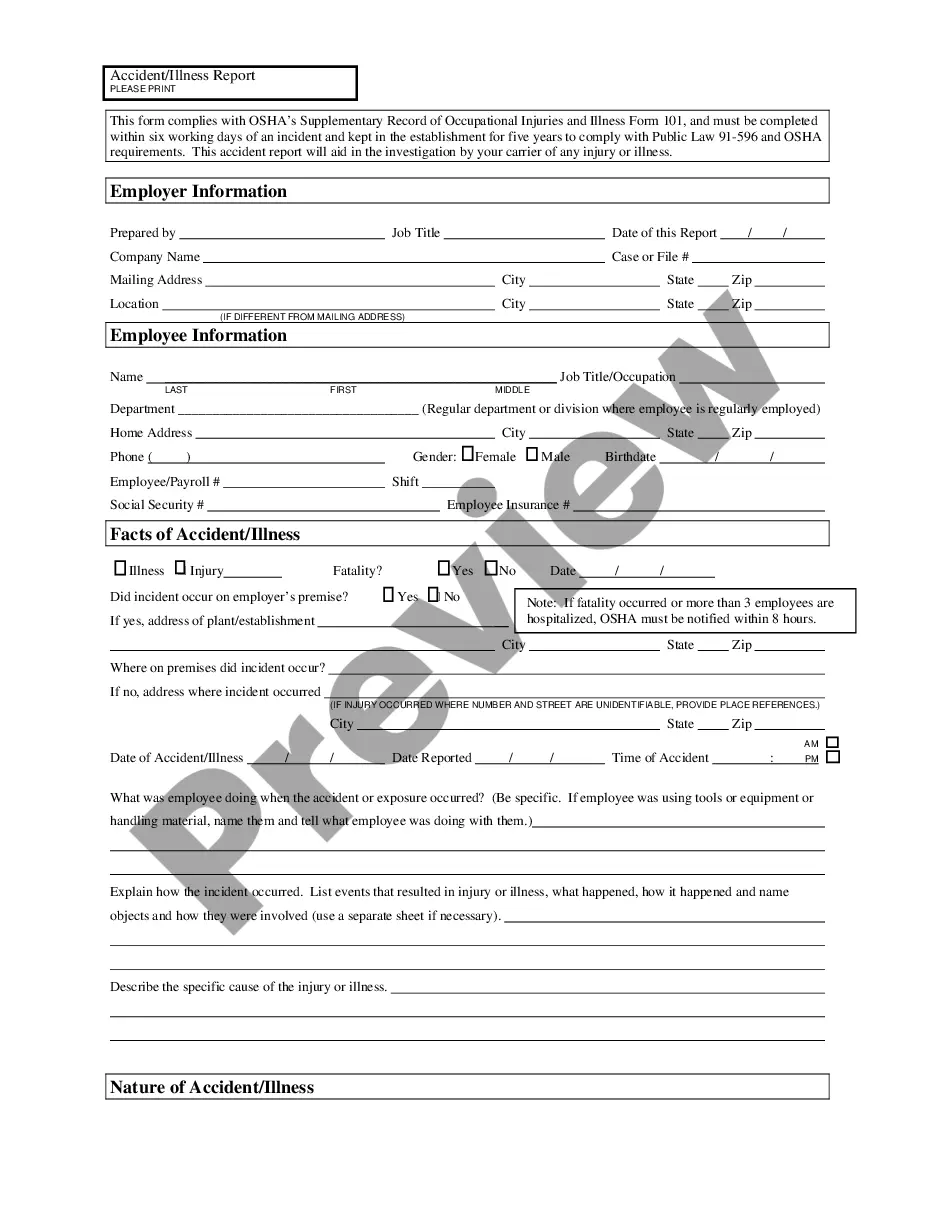
This is one of the official workers' compensation forms for the the state of North Carolina
North Carolina Denial Of Claim for Workers' Compensation
Instant download
This website is not affiliated with any governmental entity
Public form
Description
Get your form ready online
Our built-in tools help you complete, sign, share, and store your documents in one place.
Built-in online Word editor
Make edits, fill in missing information, and update formatting in US Legal Forms—just like you would in MS Word.
Export easily
Download a copy, print it, send it by email, or mail it via USPS—whatever works best for your next step.
E-sign your document
Sign and collect signatures with our SignNow integration. Send to multiple recipients, set reminders, and more. Go Premium to unlock E-Sign.
Notarize online 24/7
If this form requires notarization, complete it online through a secure video call—no need to meet a notary in person or wait for an appointment.
Store your document securely
We protect your documents and personal data by following strict security and privacy standards.

Make edits, fill in missing information, and update formatting in US Legal Forms—just like you would in MS Word.

Download a copy, print it, send it by email, or mail it via USPS—whatever works best for your next step.

Sign and collect signatures with our SignNow integration. Send to multiple recipients, set reminders, and more. Go Premium to unlock E-Sign.

If this form requires notarization, complete it online through a secure video call—no need to meet a notary in person or wait for an appointment.

We protect your documents and personal data by following strict security and privacy standards.
Looking for another form?

How to fill out North Carolina Denial Of Claim For Workers' Compensation?
Steer clear of expensive attorneys and locate the North Carolina Denial Of Claim for Workers' Compensation you seek at a reasonable cost on the US Legal Forms website.
Utilize our straightforward categories feature to discover and acquire legal and tax documents. Review their details and preview them before downloading.
Choose to download the document in PDF or DOCX format. Click on Download and locate your template in the My documents section. You can save the form to your device or print it out. After downloading, you can complete the North Carolina Denial Of Claim for Workers' Compensation either manually or with editing software. Print it out and reuse the form multiple times. Achieve more while spending less with US Legal Forms!
- Furthermore, US Legal Forms provides users with step-by-step guidance on how to download and fill out each form.
- US Legal Forms members simply need to Log In and download the specific document they require to their My documents section.
- Those who have not yet obtained a subscription should adhere to the steps outlined below.
- Ensure the North Carolina Denial Of Claim for Workers' Compensation is valid for use in your jurisdiction.
- If applicable, read the details and utilize the Preview feature before downloading the template.
- If you are certain the document is suitable for your needs, click on Buy Now.
- If the template is inaccurate, use the search tool to locate the correct one.
- Then, create your account and select a subscription package.
- Make payment via card or PayPal.
Form popularity
FAQ
A worker is disqualified where the injury: (1) is caused by the worker's own intoxication (alcohol or other controlled substance as defined by the Health and Safety Code; (2) is intentionally self-inflicted; (3) occurs out of an altercation (mutual combat) where the claimant was the initial physical aggressor; (4)
Some of the main reasons why workers' compensation insurers deny claims are the following: your injury was unwitnessed.you filed a workers' compensation claim after you were fired or laid off. you refused to give the insurance company a recorded statement or refused to sign medical authorizations.
Some of the main reasons why workers' compensation insurers deny claims are the following: your injury was unwitnessed.you filed a workers' compensation claim after you were fired or laid off. you refused to give the insurance company a recorded statement or refused to sign medical authorizations.
In most states, the employer or insurance company must decide whether you're eligible for workers' comp benefits promptly or within a reasonable time period. Some states also have strict deadlines for approving or denying a claimoften between 14 and 30 days.
In New South Wales, you can begin by asking the insurance provider for a review. You can do this by stating your reasons for the request on the application form supplied by the insurance provider. You should also provide additional evidence or information to support your case along with this form.
In most cases, employees cannot sue their employers for work-related injuries.State workers' compensation laws provide a trade-off: Employers must pay for most employee injuries regardless of fault; but, in exchange, their liability is limited, and they are immune from personal injury lawsuits in most circumstances.
When a claim is denied, it means the claims administrator believes your injury is not covered by workers' compensation. If the claims administrator sends you a letter denying your claim, you have a right to challenge the decision. Don't delay, because there are deadlines for filing the necessary papers.
WorkCover may also reject your claim if no one saw what happened; if there are any inconsistencies between your account of what happened (on the initial accident report) and evidence (including medical records); if there is reason to believe you were under the influence of drugs or alcohol at the time of the accident;
If your claim is rejected, you'll receive a letter from either your insurer or your employer rejecting your claim. 5) The injury was not severe enough to hinder your work abilities.