North Carolina Notice of Breach of Written Lease for Violating Specific Provisions of Lease with No Right to Cure for Residential Property from Landlord to Tenant
Description
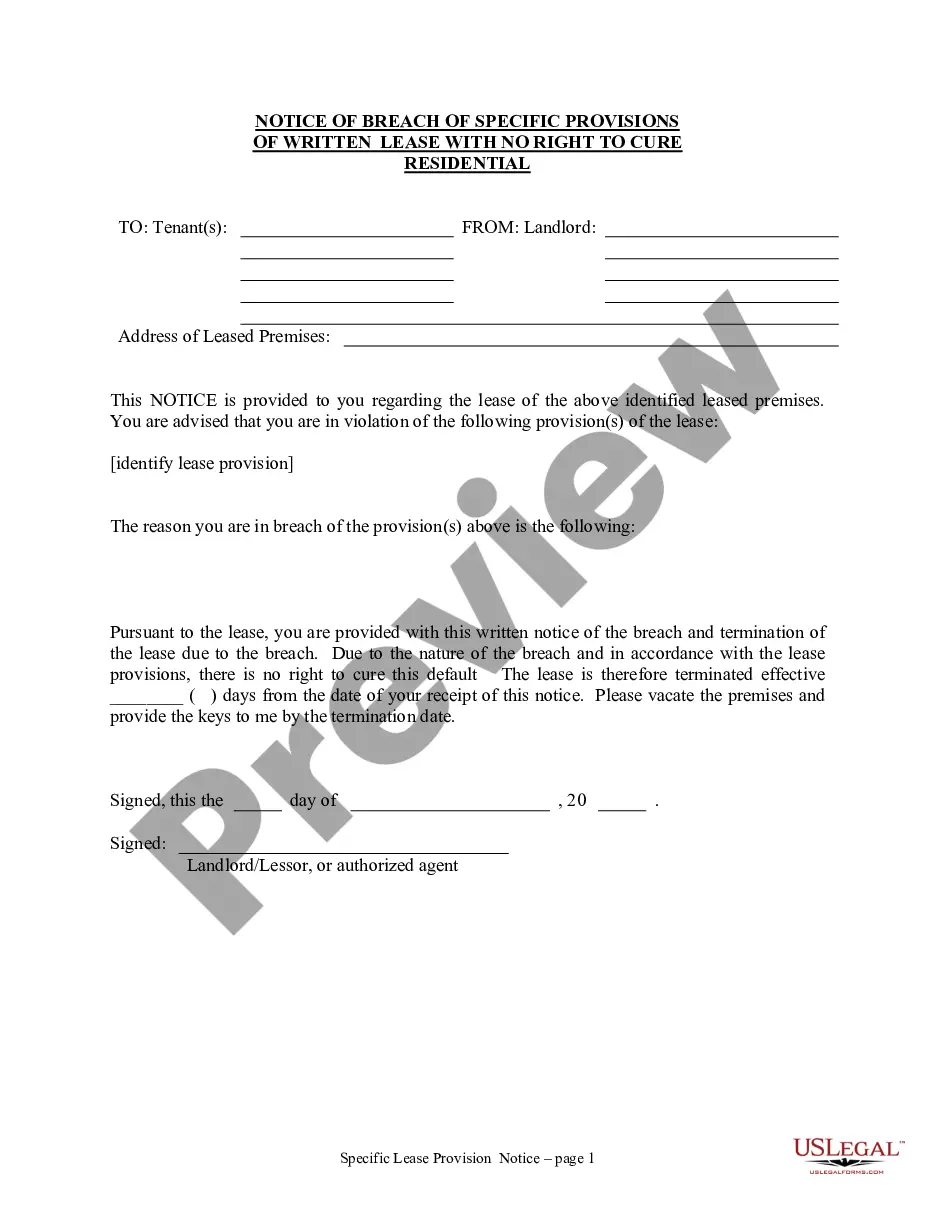
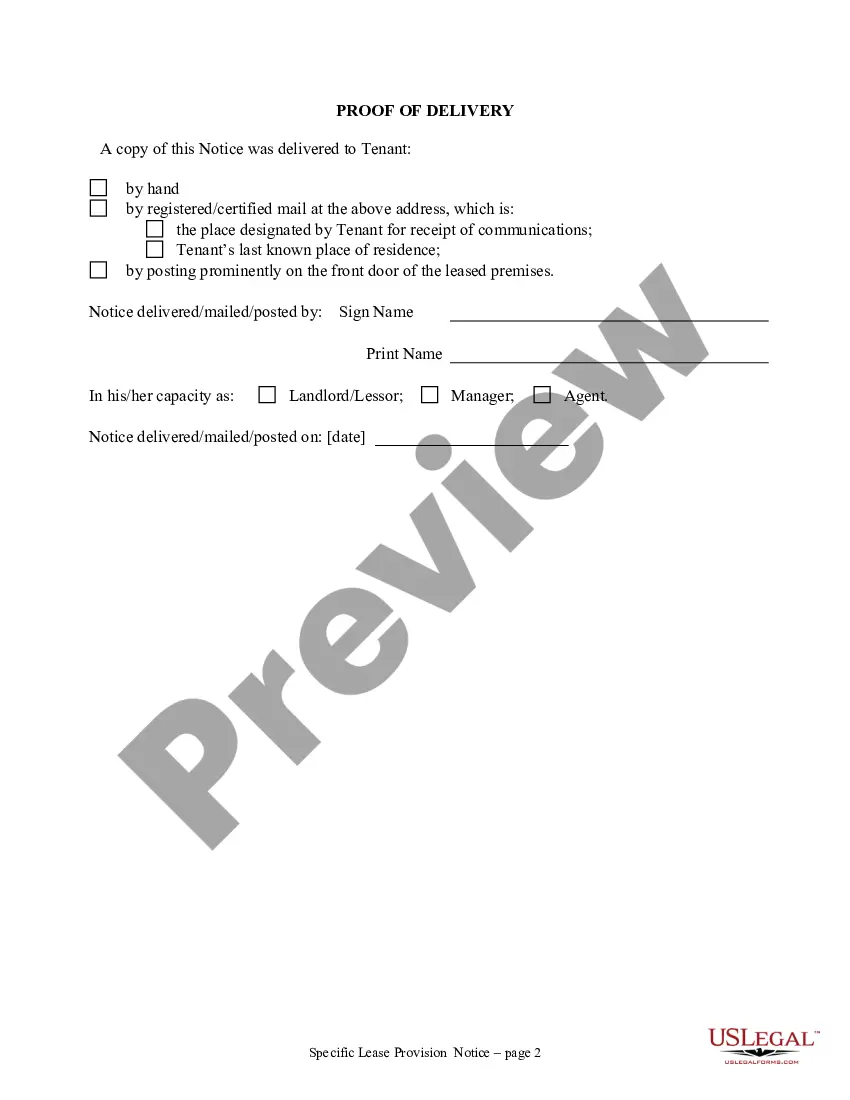

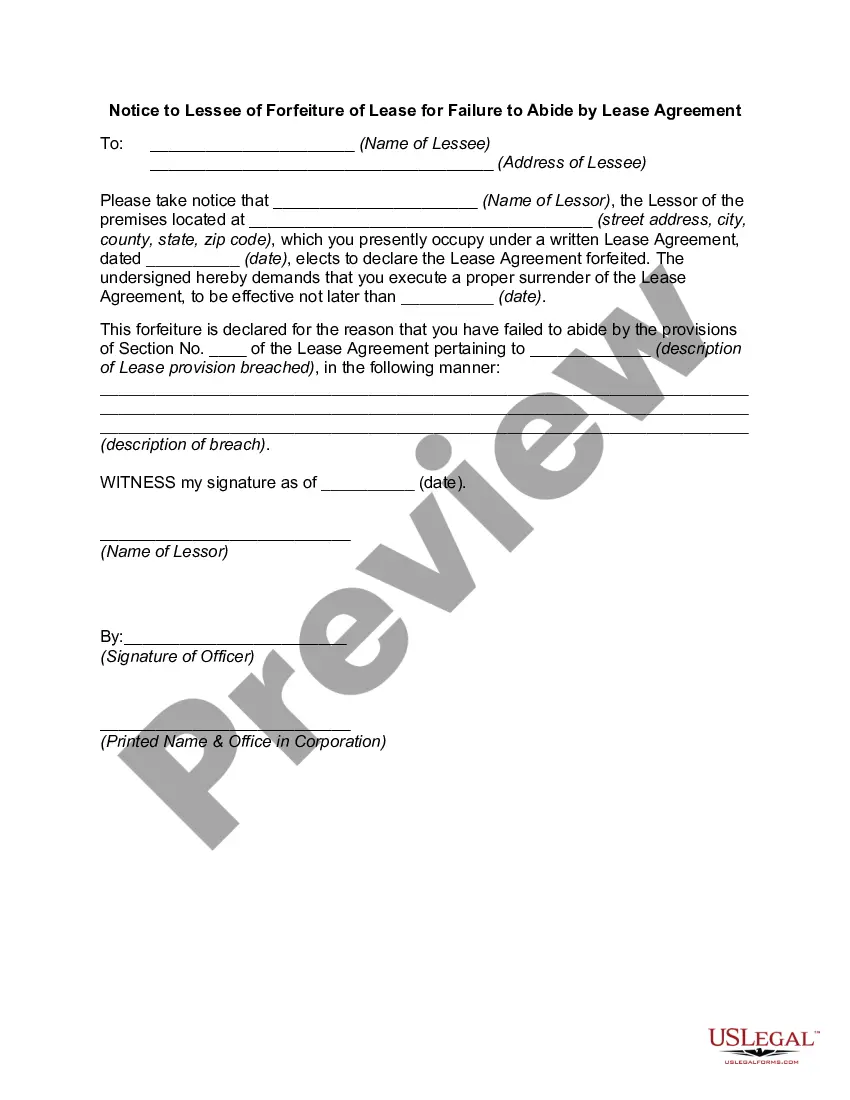
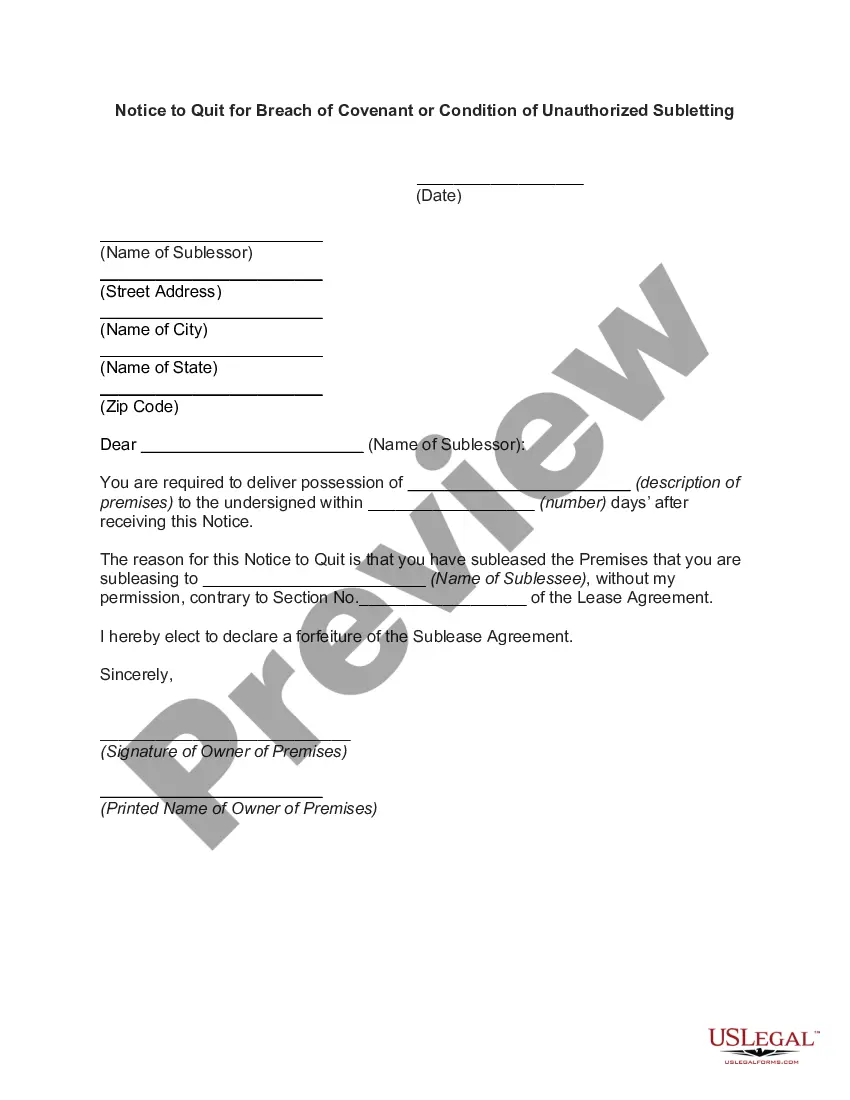






How to fill out North Carolina Notice Of Breach Of Written Lease For Violating Specific Provisions Of Lease With No Right To Cure For Residential Property From Landlord To Tenant?
Avoid costly attorneys and find the North Carolina Notice of Breach of Written Lease for Violating Specific Provisions of Lease with No Right to Cure for Residential Property from Landlord to Tenant you need at a reasonable price on the US Legal Forms site. Use our simple groups functionality to look for and obtain legal and tax files. Go through their descriptions and preview them well before downloading. Additionally, US Legal Forms enables customers with step-by-step instructions on how to obtain and fill out each form.
US Legal Forms customers simply have to log in and obtain the particular document they need to their My Forms tab. Those, who haven’t got a subscription yet must follow the tips below:
- Ensure the North Carolina Notice of Breach of Written Lease for Violating Specific Provisions of Lease with No Right to Cure for Residential Property from Landlord to Tenant is eligible for use in your state.
- If available, look through the description and use the Preview option prior to downloading the templates.
- If you’re confident the document fits your needs, click Buy Now.
- In case the template is wrong, use the search field to find the right one.
- Next, create your account and choose a subscription plan.
- Pay out by credit card or PayPal.
- Select download the form in PDF or DOCX.
- Just click Download and find your form in the My Forms tab. Feel free to save the template to the device or print it out.
Right after downloading, you are able to fill out the North Carolina Notice of Breach of Written Lease for Violating Specific Provisions of Lease with No Right to Cure for Residential Property from Landlord to Tenant by hand or with the help of an editing software program. Print it out and reuse the form multiple times. Do more for less with US Legal Forms!
Form popularity
FAQ
In some circumstances, a tenant can break a fixed-term agreement early without penalty. A tenant can give 14 days' written notice to end an agreement early without penalty if: they have accepted an offer of social housing (e.g. from DCJ Housing)
If you pay all outstanding charges before moving, including any back rent and fees, breaking a lease won't hurt your credit score. However, breaking a lease can damage your credit if it results in unpaid debt.Landlords generally don't report unpaid rent to credit bureaus.
In short, nothing in the CARES Act or Governor Cooper's Order prohibits evictions for reasons other than late payment or nonpayment of rent, such as evictions related to health, safety, or criminal activity. These types of evictions by a landlord would not violate the Order.
Notice Requirements for North Carolina Landlords A landlord can simply give you a written notice to move, allowing you seven days as required by North Carolina law and specifying the date on which your tenancy will end.
A landlord-tenant lease is a legally binding contract.In North Carolina, the rental laws specify that if breaking the lease is justified, you only need to provide your landlord with a notice of your intent. Although when not justified, you may be liable for paying all the rent due for the remaining lease term.
Give the landlord/agent a written termination notice and vacate move out and return the keys according to your notice, and/or. apply to the NSW Civil & Administrative Tribunal (NCAT) for a termination order.
You could face some hefty fees. You could get sued. You could hurt your credit score. You could have trouble renting your next apartment.
North Carolina law says that your landlord must keep your housing fit and safe. It also says that you, the tenant, must pay your rent, keep your home clean, and not damage your home. To make the law work, both the tenant and the landlord must do their part.