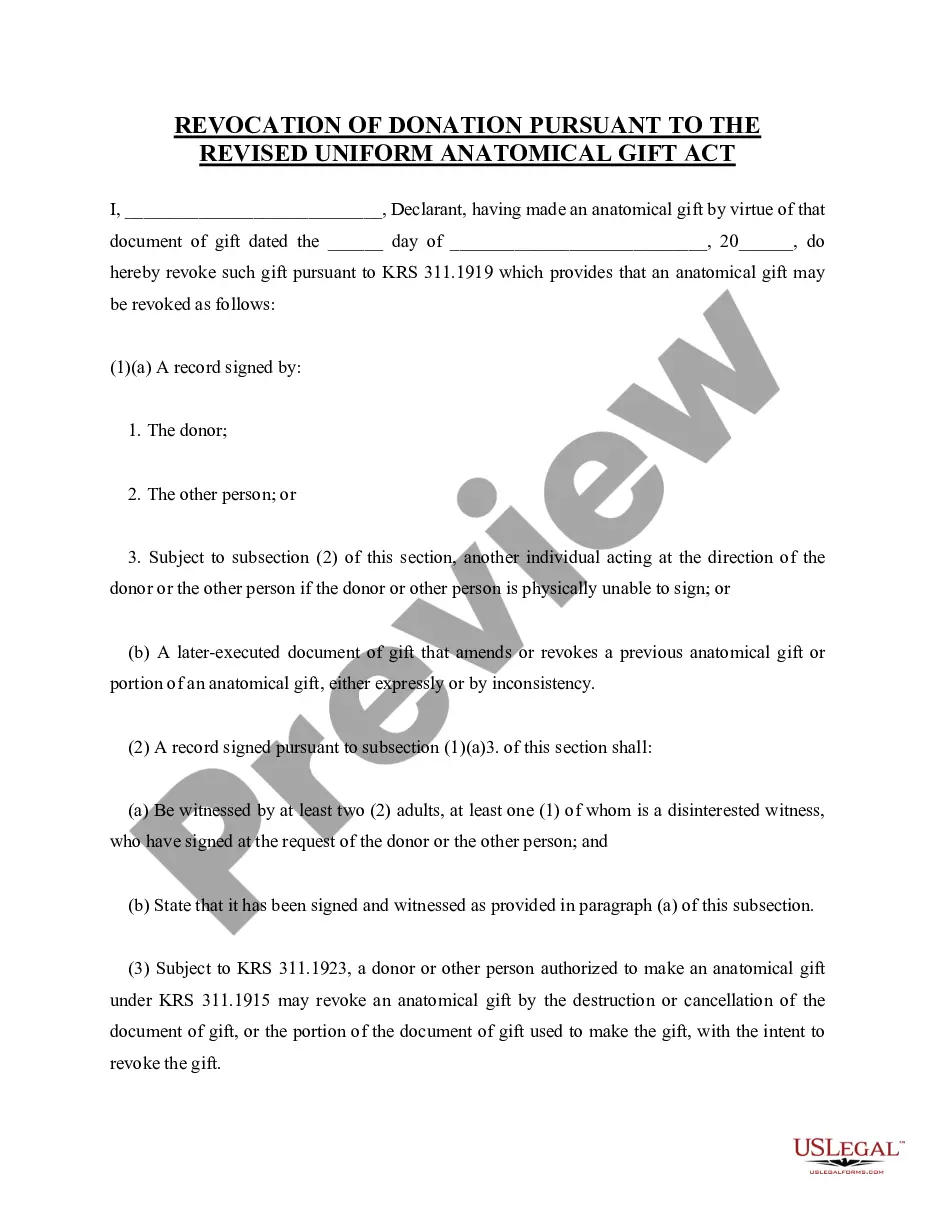
North Carolina Demolition Contract for Contractor
Understanding this form
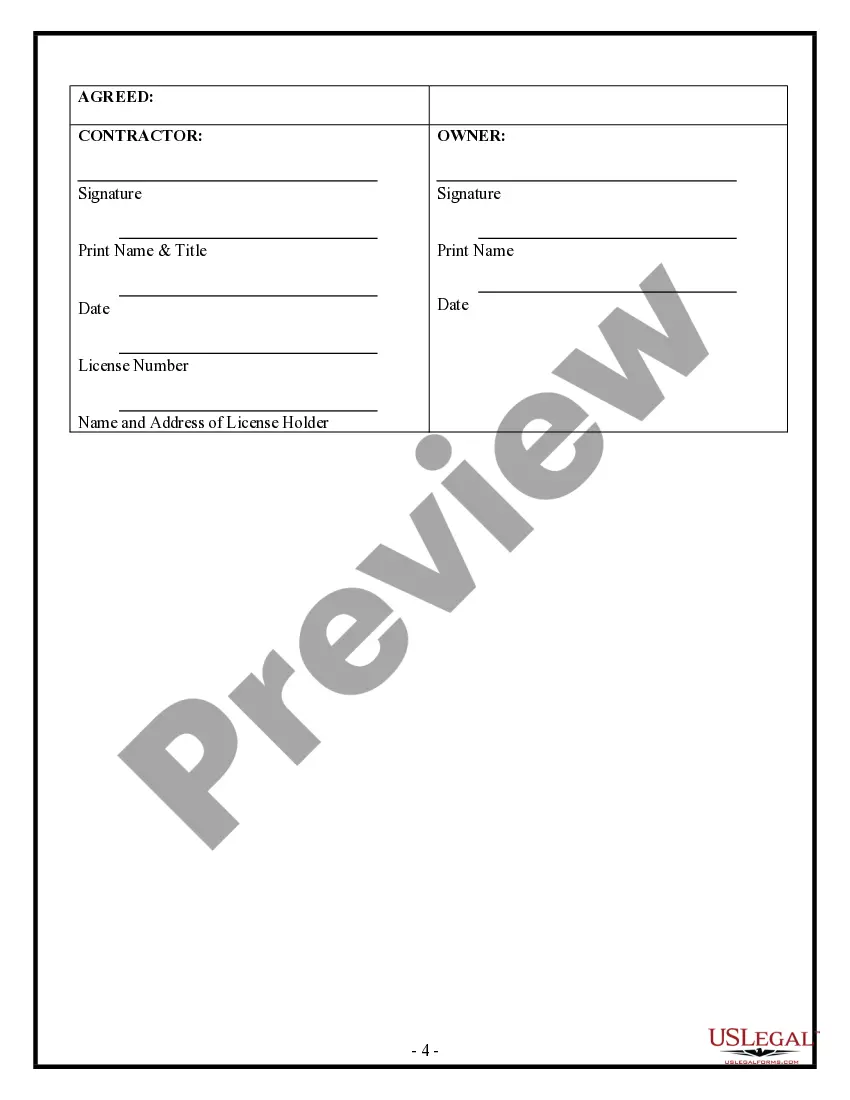
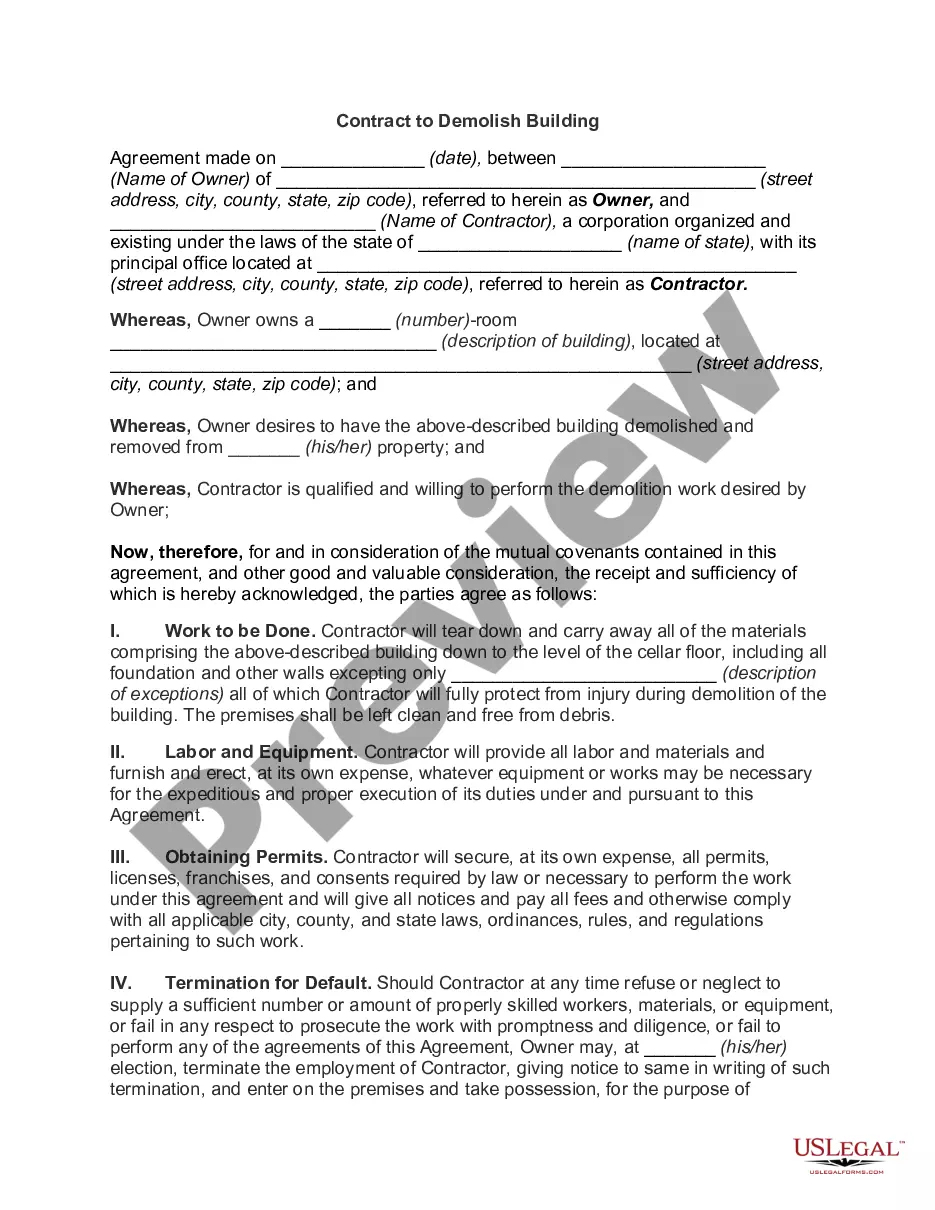
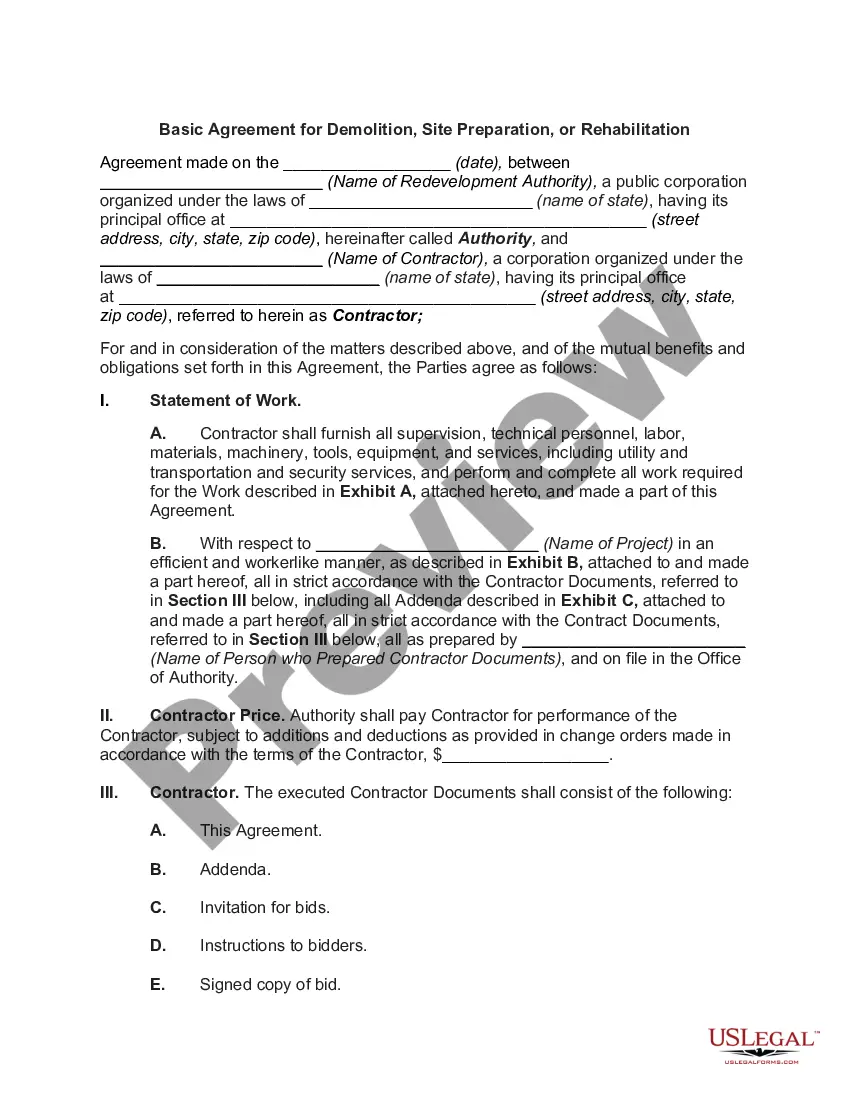
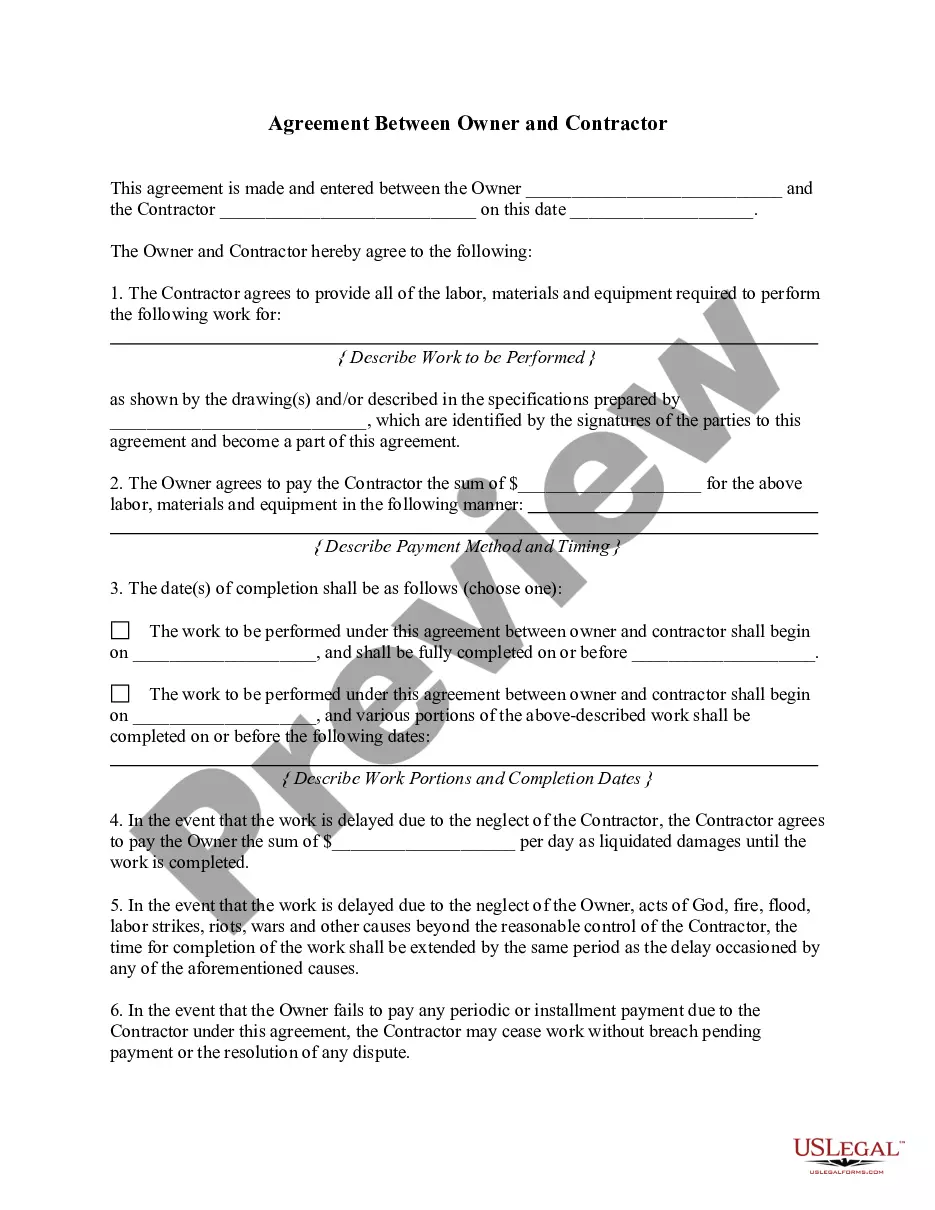
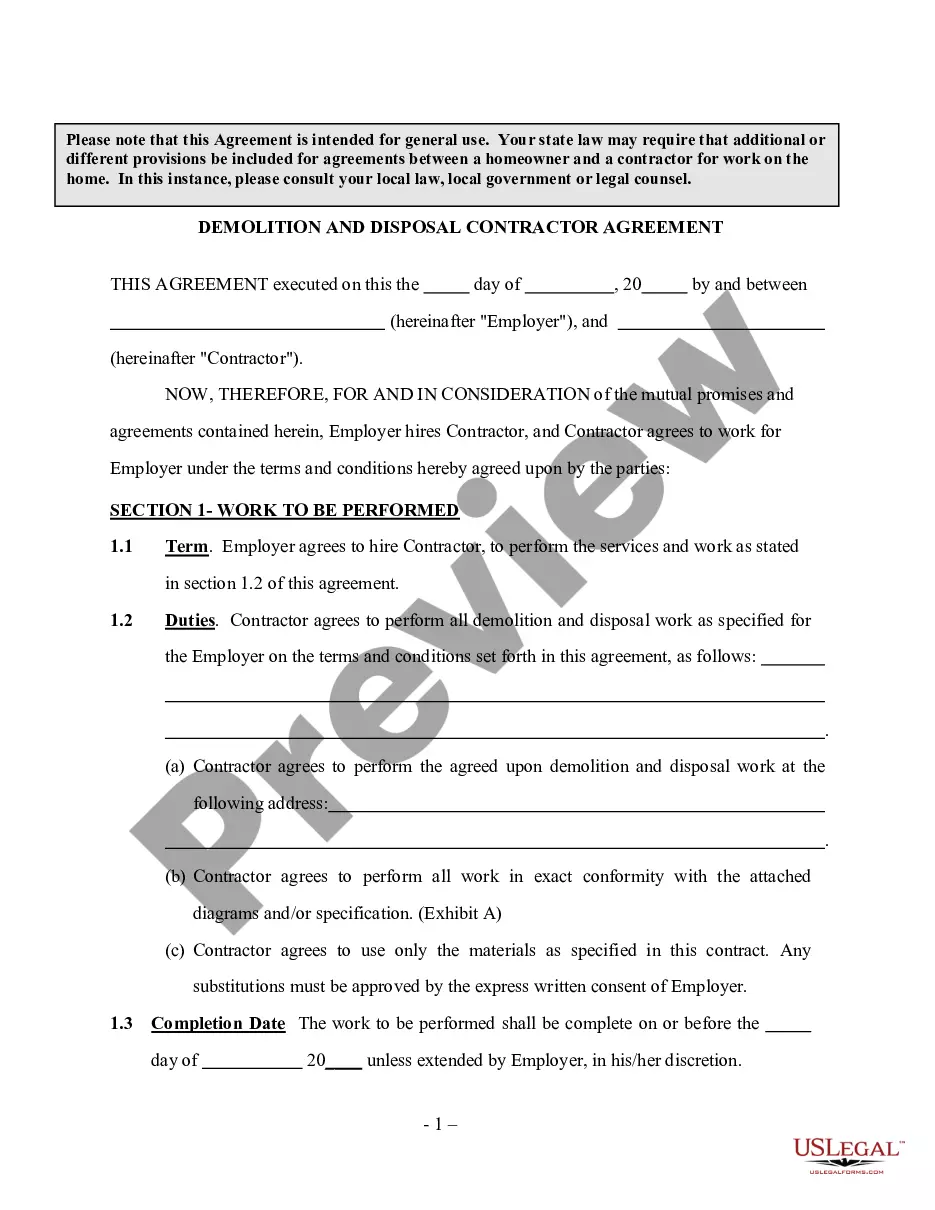
The Demolition Contract for Contractor is a legal document designed for use between demolition contractors and property owners. This contract outlines the terms and conditions under which demolition work will be performed, differentiating it from other contracts by addressing specifics like payment arrangements, change orders, and insurance requirements. It is tailored to comply with the laws of North Carolina, ensuring legal enforceability within that jurisdiction.
What’s included in this form
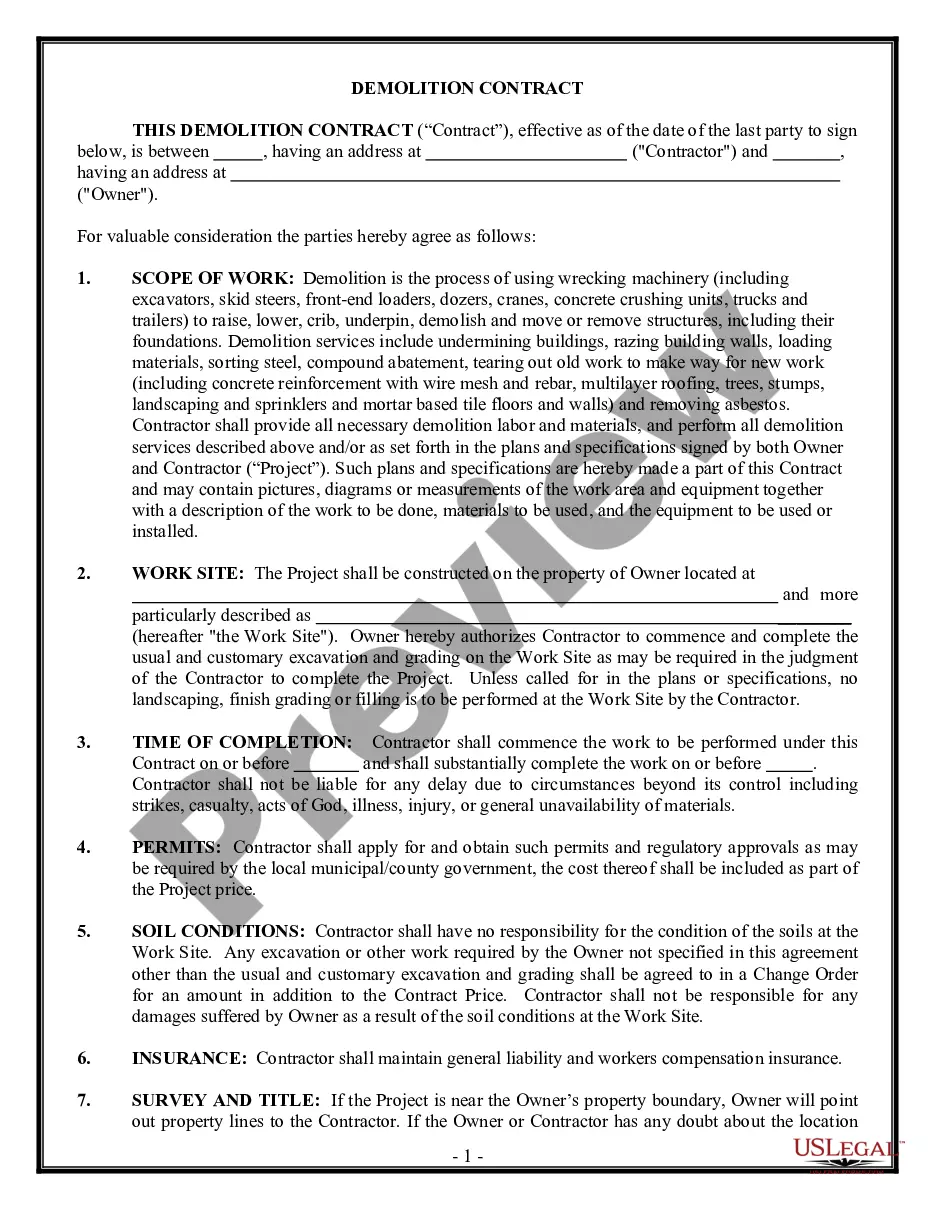
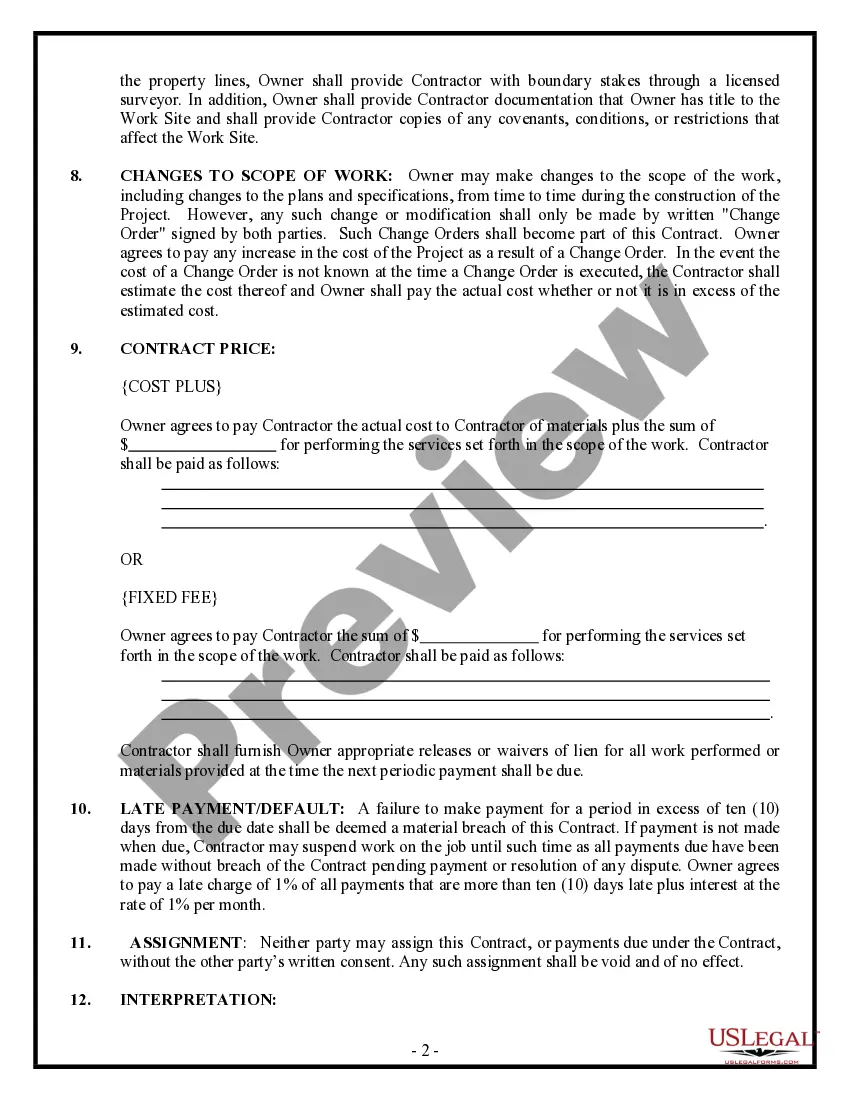
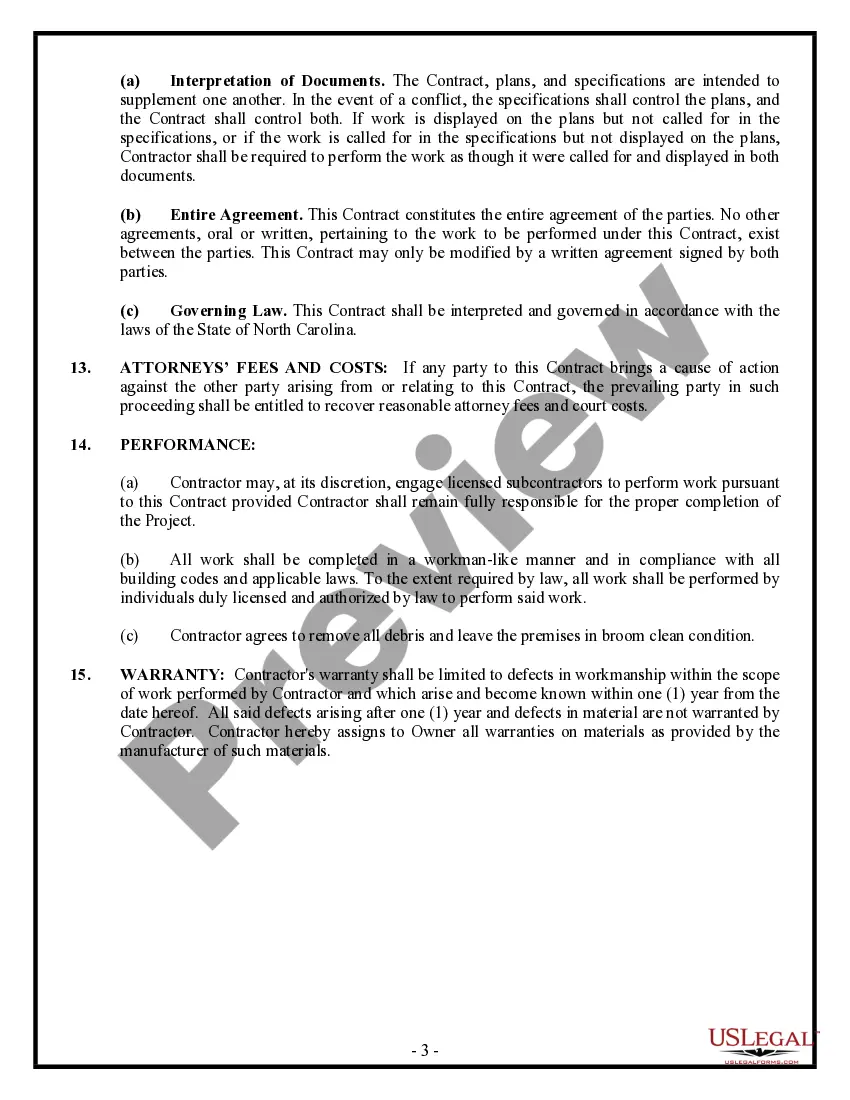
- Permits: Responsibilities regarding obtaining necessary permits from local authorities.
- Soil conditions: Clarifies the contractor's lack of responsibility for soil conditions at the work site.
- Insurance: Mandates that the contractor maintains general liability and workers' compensation insurance.
- Changes to scope of work: Details procedures for modifying the contract through written change orders.
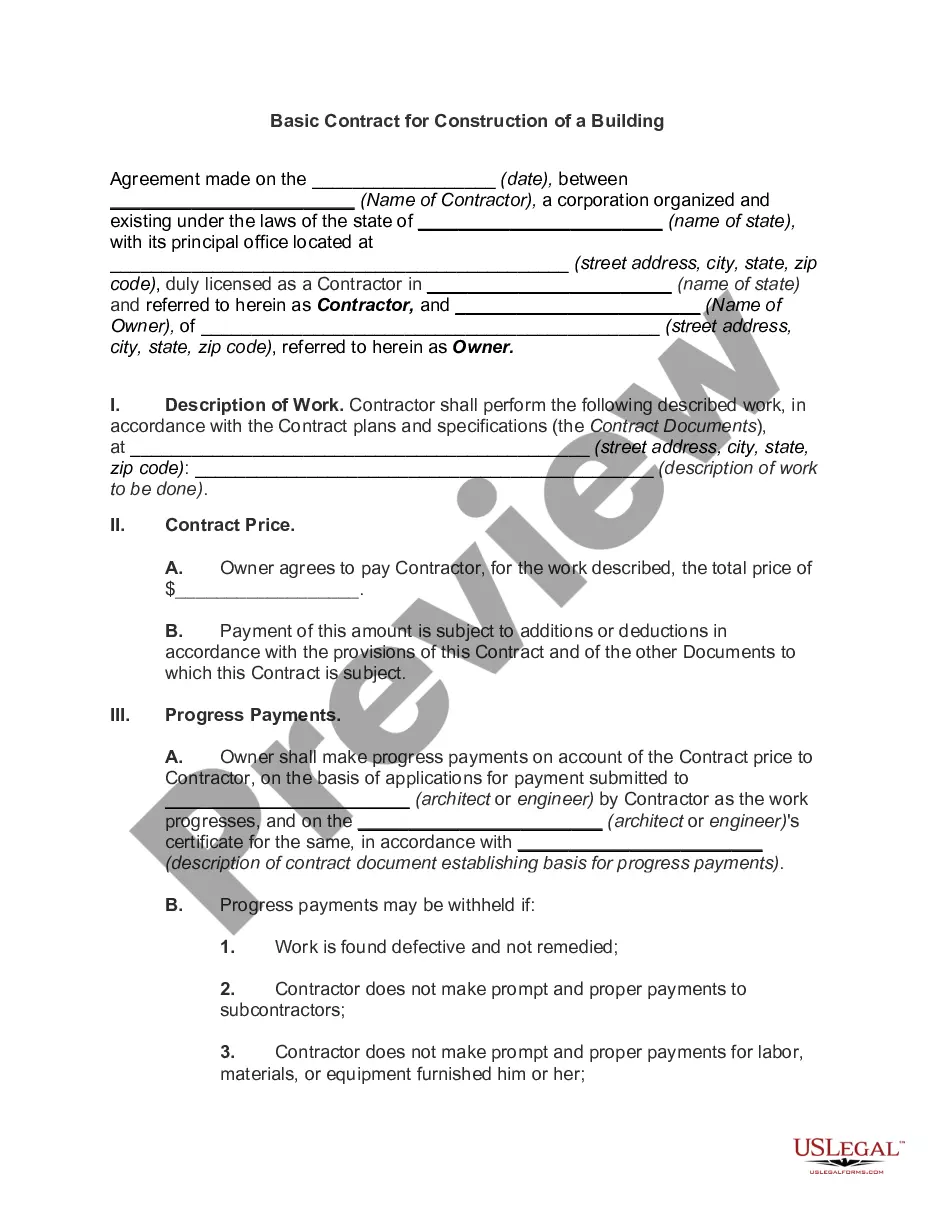
- Payment terms: Outlines cost structures, including cost plus and late payment penalties.
- Warranty: Specifies warranty limitations regarding workmanship for one year after project completion.
Common use cases
This form should be used when a property owner hires a demolition contractor to carry out demolition work. It is especially necessary when there are specific payment arrangements, maintenance of insurance, or project scope changes involved. Having a written contract ensures both parties are protected and understand their rights and obligations.
Intended users of this form
- Property owners looking to initiate demolition work on their property.
- Demolition contractors seeking to formalize agreements with clients.
- Anyone involved in a renovation or construction project that includes demolition tasks.
How to complete this form
- Identify the parties by entering the names and contact information of the property owner and contractor.
- Specify the work site by detailing the address and relevant property information.
- Choose the payment arrangement: indicate whether it will be a cost plus or fixed fee payment method.
- Outline any specific terms related to permits, insurance, and changes to the scope of work.
- Both parties should sign and date the contract to signify their agreement.
Does this document require notarization?
This form usually doesn’t need to be notarized. However, local laws or specific transactions may require it. Our online notarization service, powered by Notarize, lets you complete it remotely through a secure video session, available 24/7.
Get your form ready online
Our built-in tools help you complete, sign, share, and store your documents in one place.
Make edits, fill in missing information, and update formatting in US Legal Forms—just like you would in MS Word.
Download a copy, print it, send it by email, or mail it via USPS—whatever works best for your next step.
Sign and collect signatures with our SignNow integration. Send to multiple recipients, set reminders, and more. Go Premium to unlock E-Sign.
If this form requires notarization, complete it online through a secure video call—no need to meet a notary in person or wait for an appointment.
We protect your documents and personal data by following strict security and privacy standards.

Make edits, fill in missing information, and update formatting in US Legal Forms—just like you would in MS Word.

Download a copy, print it, send it by email, or mail it via USPS—whatever works best for your next step.

Sign and collect signatures with our SignNow integration. Send to multiple recipients, set reminders, and more. Go Premium to unlock E-Sign.

If this form requires notarization, complete it online through a secure video call—no need to meet a notary in person or wait for an appointment.

We protect your documents and personal data by following strict security and privacy standards.
Avoid these common issues
- Failing to specify the payment terms clearly can lead to disputes later.
- Not addressing the contractor's responsibilities regarding soil conditions.
- Omitting details on change orders which may complicate project modifications.
Why use this form online
- Convenience: Download and complete forms from home without the need for a lawyer.
- Editability: Easily customize the form to meet specific project needs.
- Reliability: Forms are drafted by licensed attorneys, ensuring legal compliance.
What to keep in mind
- The Demolition Contract for Contractor outlines essential terms for demolition projects.
- It is vital for both contractors and property owners to protect their interests.
- This contract must be signed by both parties to be legally binding.
Looking for another form?

Form popularity
FAQ
In California, contractors are required to provide warranties on work done for home and business owners for between one and 10 years. The warranties California law provides are a minimum, and longer warranties can be agreed to between the parties.
7. Set a payment schedule in the contract. You never want to pay a contractor more than 50% up front. Depending on the size of the job, your initial payment is ideally going to be no more than roughly 30% of the total cost of the project.
Most contractors do offer some kind of guarantee on their work, because doing so protects their interests as well as your own. While a contractor's warranty can protect you, the homeowner, from having to live with shoddy work, it also protects the contractor from having to return to fix things over and over again.
In accordance to California civil law, the contractor is liable for a stated minimum standard of construction for 10 years after building even if the house has been sold to new owners. However, certain defects can only be claimed for 1 or 4 years after completion.
You shouldn't pay more than 10 percent of the estimated contract price upfront, according to the Contractors State License Board.
North Carolina has a three-year statute of limitations period on actions for breach of contract and negligence. This means that claims based on a contract with the builder must be brought within this period, or they are barred.
Avoid Allowances. Establish Good Communication. Keep a Project Journal. Track All Changes in Writing. Check the Work. Pay Only for Completed Work. Be a Good Customer.
Never Tell a Contractor They are the Only One Bidding on the Job. Don't Tell a Contractor Your Budget. Never Ask a Contractor for a Discount if You Pay Upfront. Don't Tell a Contractor That You Aren't in A Hurry. Do Not Let a Contractor Choose the Materials.
The statute of repose in North Carolina is six years from substantial completion or last specific act or omission of the defendant to file suit.