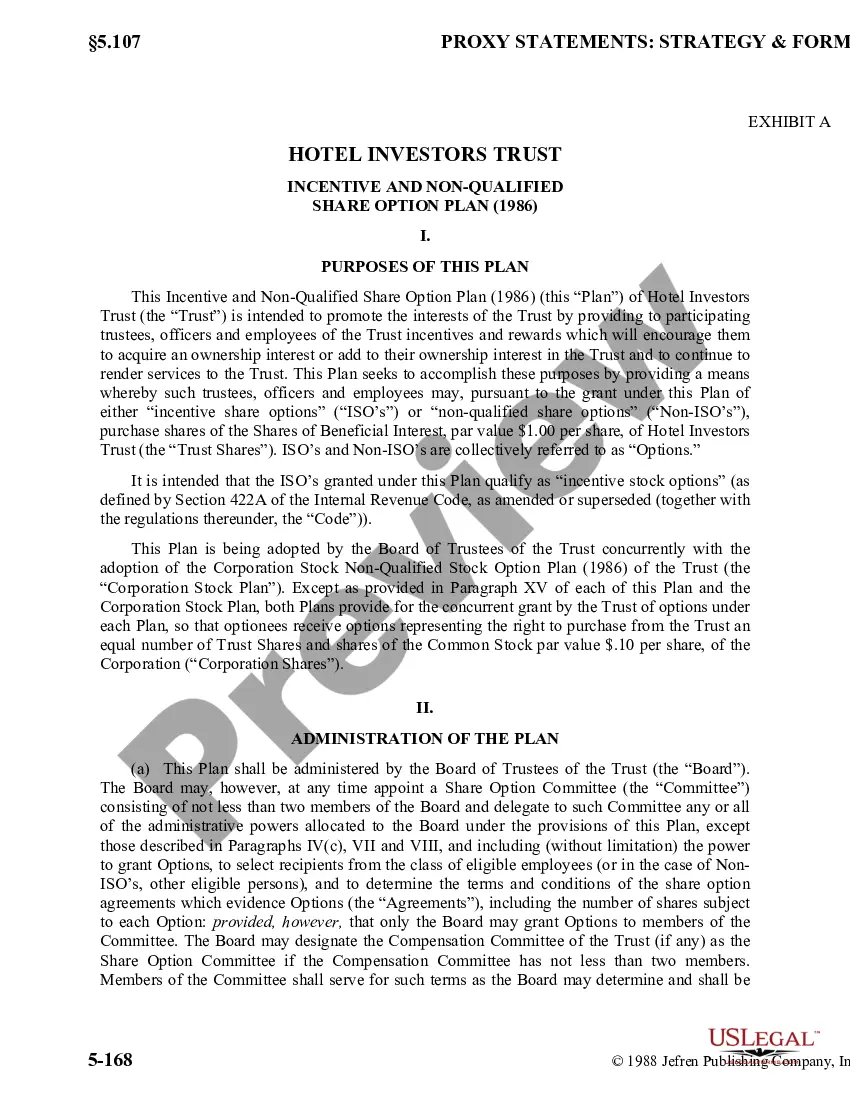
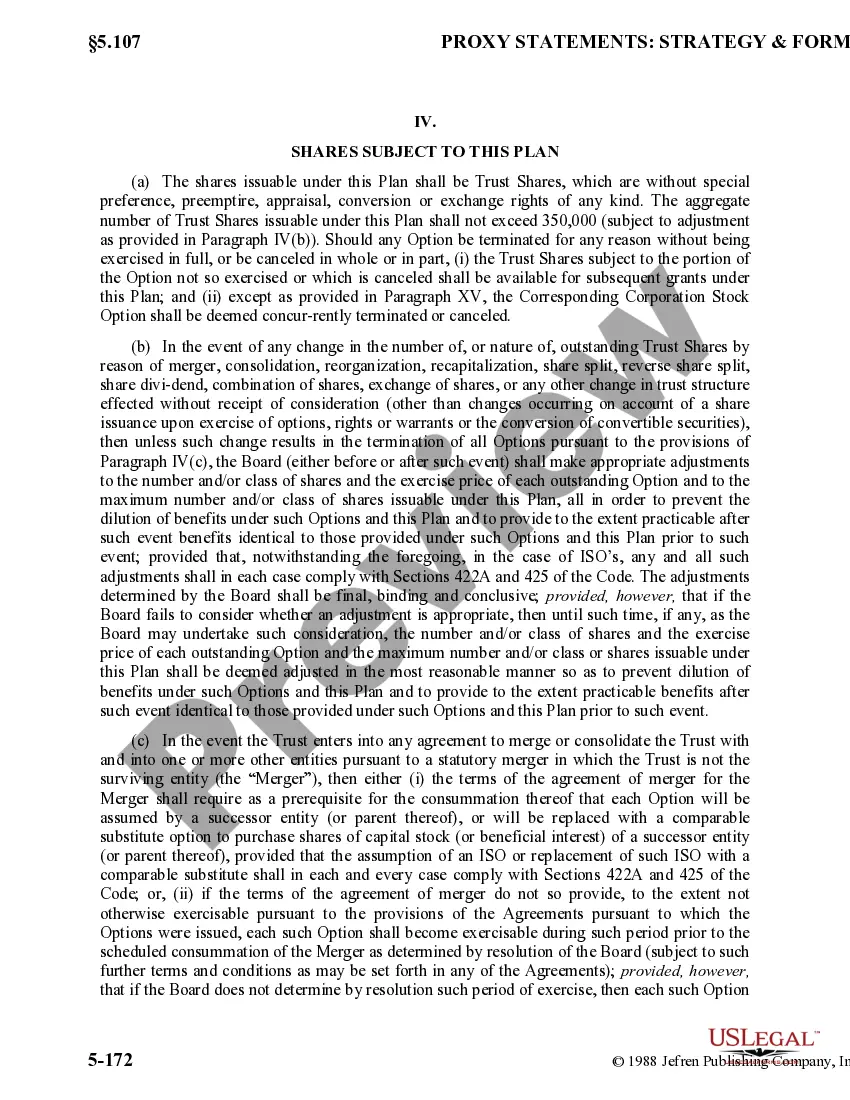
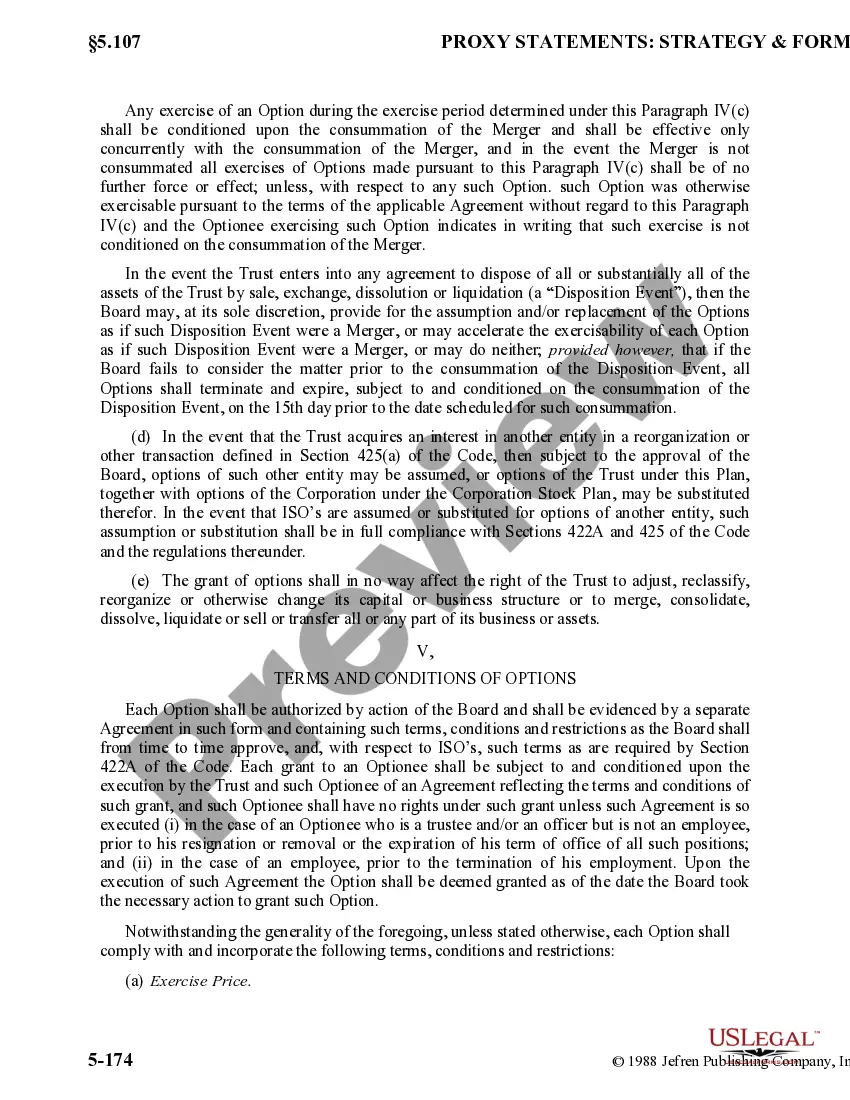
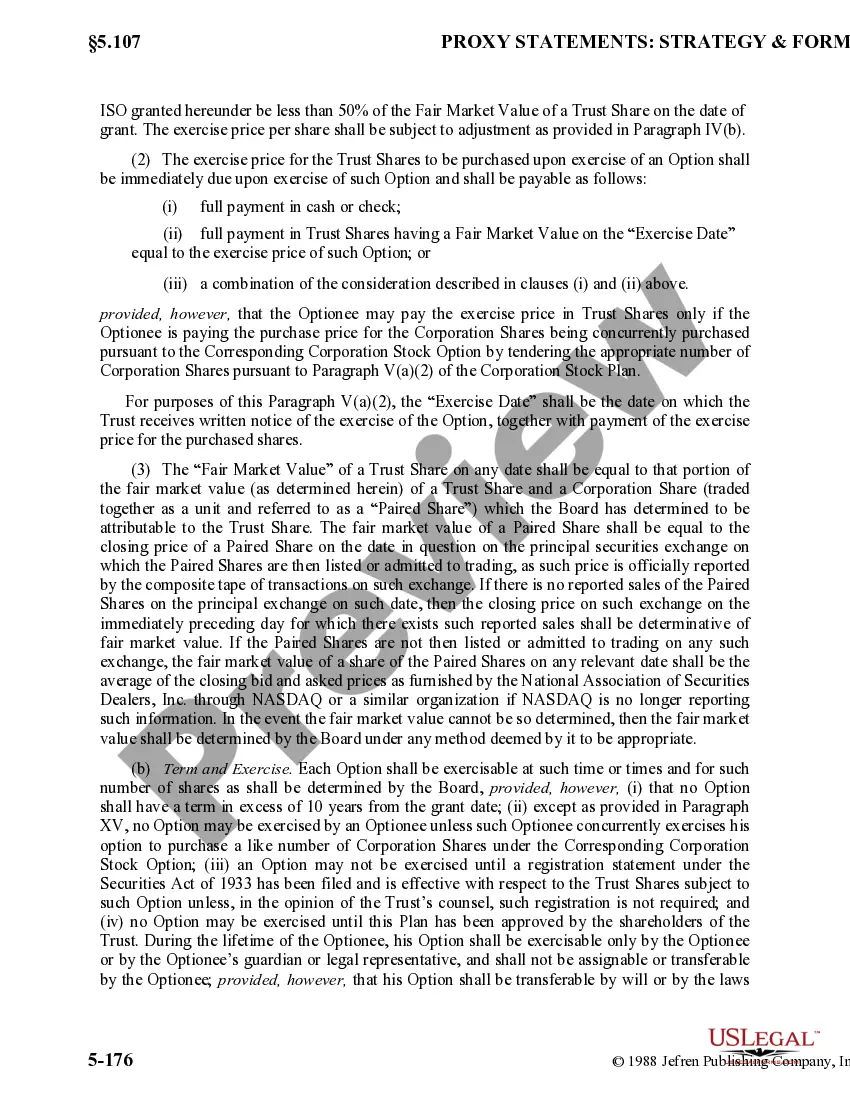
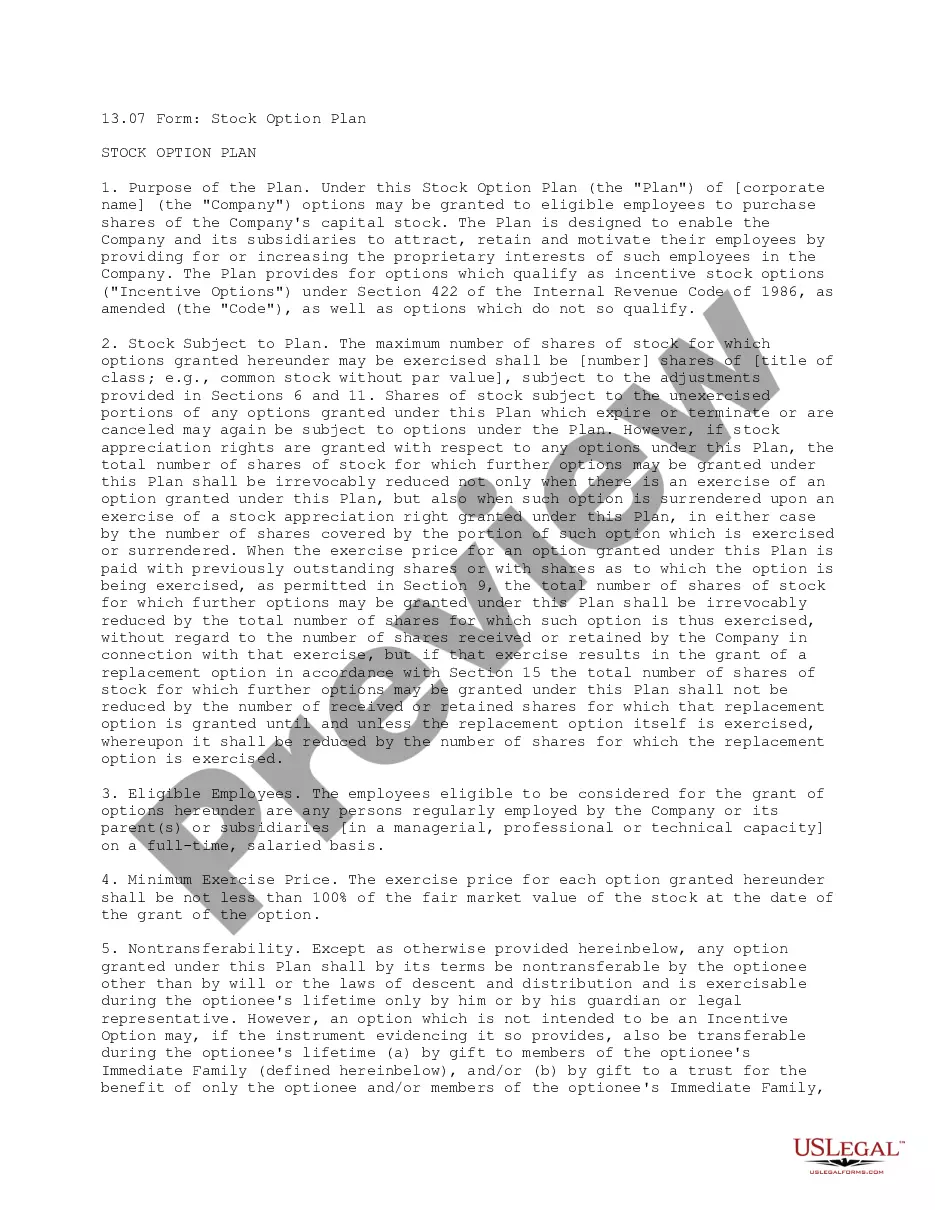
Montana Incentive and Nonqualified Share Option Plan
Description







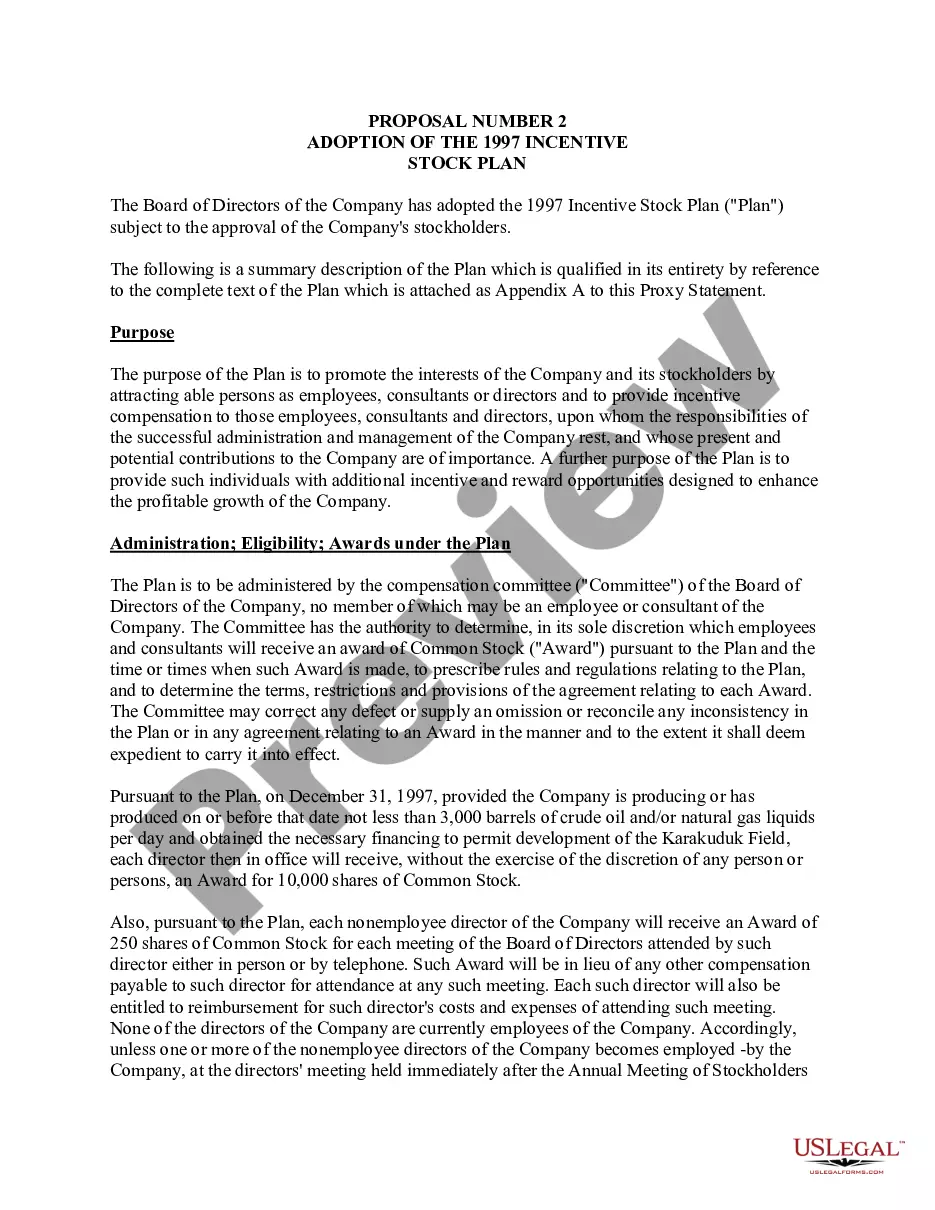
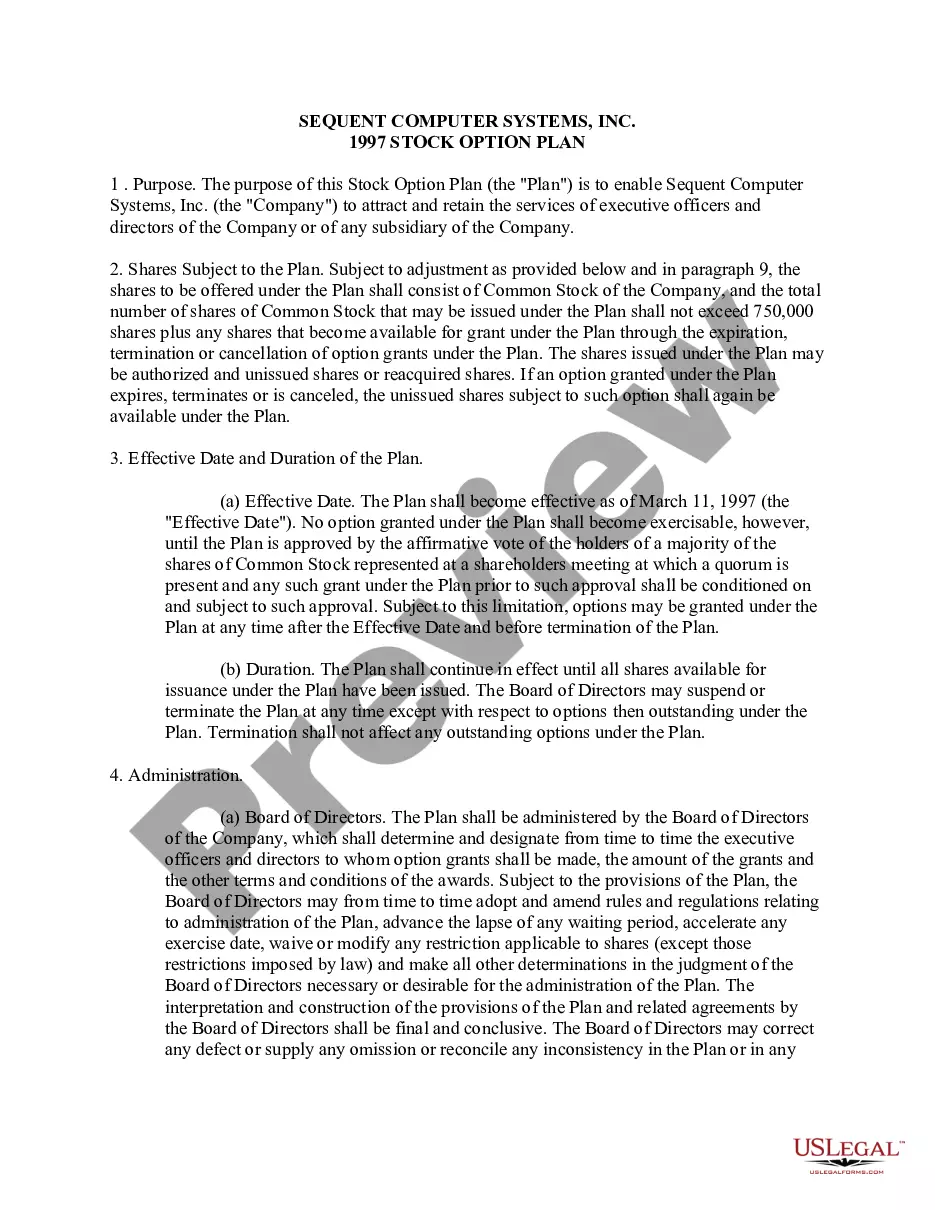
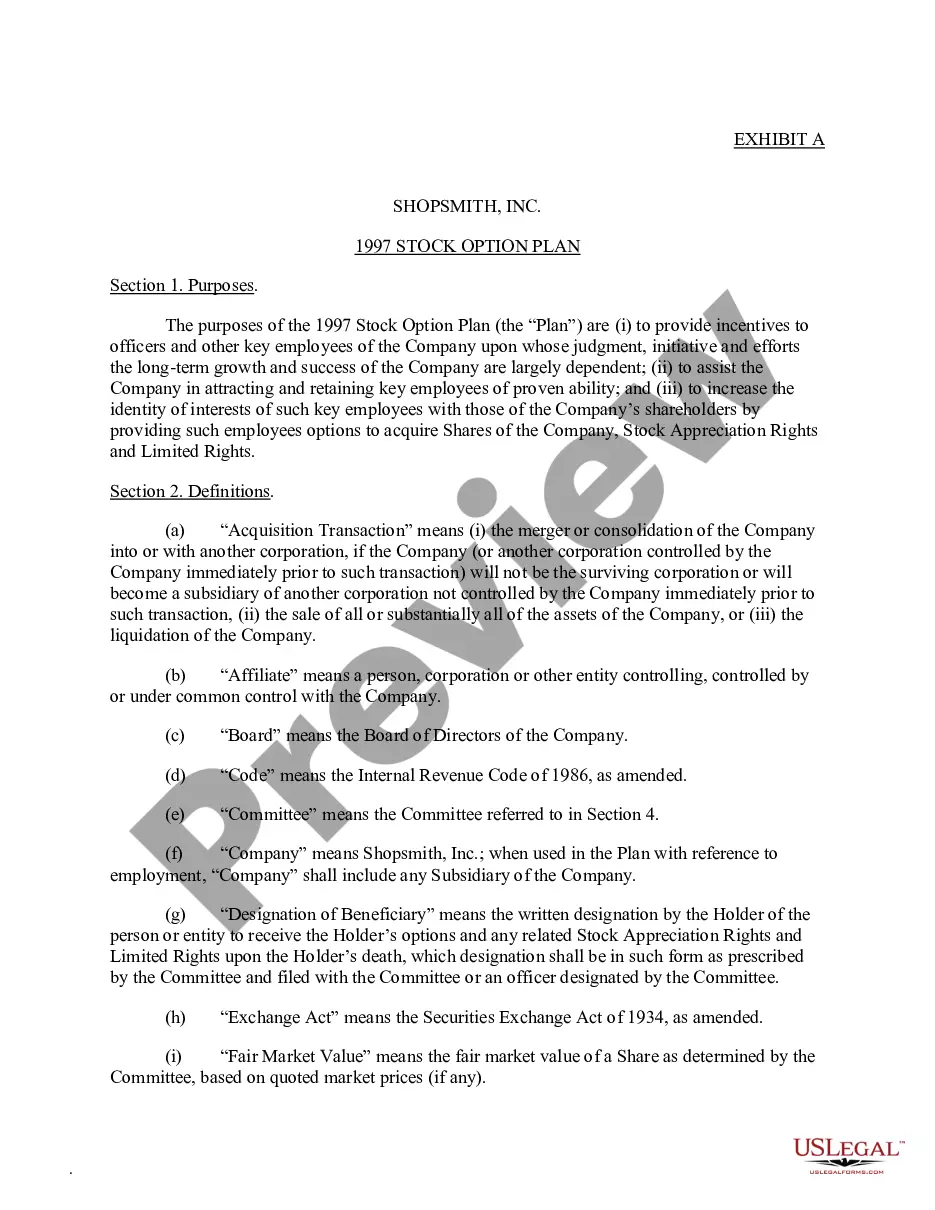
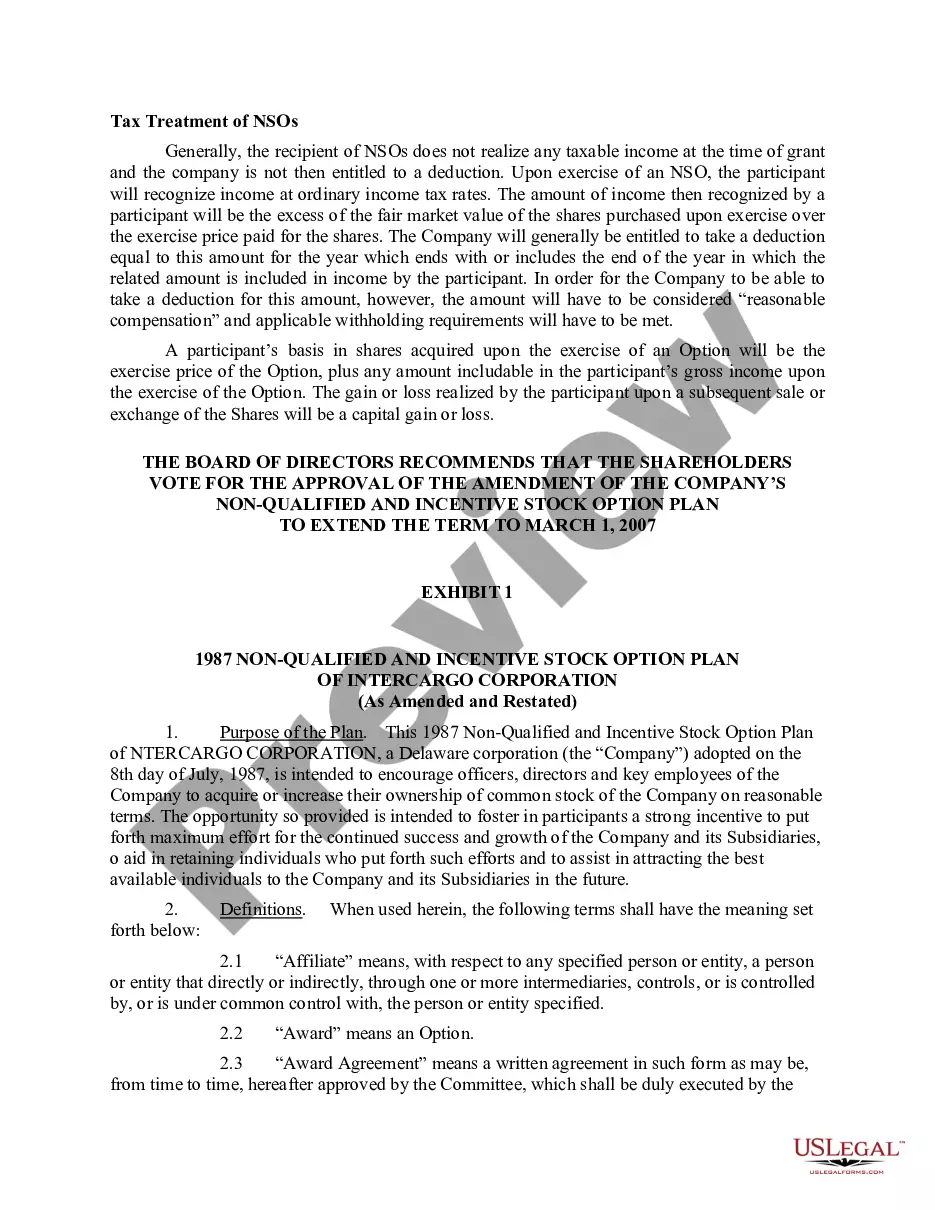
Get your form ready online
Our built-in tools help you complete, sign, share, and store your documents in one place.
Make edits, fill in missing information, and update formatting in US Legal Forms—just like you would in MS Word.
Download a copy, print it, send it by email, or mail it via USPS—whatever works best for your next step.
Sign and collect signatures with our SignNow integration. Send to multiple recipients, set reminders, and more. Go Premium to unlock E-Sign.
If this form requires notarization, complete it online through a secure video call—no need to meet a notary in person or wait for an appointment.
We protect your documents and personal data by following strict security and privacy standards.

Make edits, fill in missing information, and update formatting in US Legal Forms—just like you would in MS Word.

Download a copy, print it, send it by email, or mail it via USPS—whatever works best for your next step.

Sign and collect signatures with our SignNow integration. Send to multiple recipients, set reminders, and more. Go Premium to unlock E-Sign.

If this form requires notarization, complete it online through a secure video call—no need to meet a notary in person or wait for an appointment.

We protect your documents and personal data by following strict security and privacy standards.
Looking for another form?







How to fill out Incentive And Nonqualified Share Option Plan?
Finding the right legal document format might be a have a problem. Naturally, there are plenty of layouts available online, but how would you discover the legal type you want? Take advantage of the US Legal Forms site. The assistance provides a large number of layouts, including the Montana Incentive and Nonqualified Share Option Plan, which can be used for organization and personal demands. Each of the types are examined by professionals and meet federal and state requirements.
When you are already listed, log in for your account and click on the Obtain key to have the Montana Incentive and Nonqualified Share Option Plan. Use your account to check with the legal types you possess ordered earlier. Go to the My Forms tab of your own account and acquire an additional duplicate in the document you want.
When you are a fresh end user of US Legal Forms, allow me to share easy recommendations that you can stick to:
- First, be sure you have selected the appropriate type to your metropolis/county. It is possible to check out the shape utilizing the Preview key and look at the shape explanation to make sure it will be the best for you.
- When the type is not going to meet your preferences, take advantage of the Seach field to discover the appropriate type.
- Once you are certain the shape is acceptable, go through the Get now key to have the type.
- Choose the rates prepare you would like and enter the essential information and facts. Create your account and pay for your order utilizing your PayPal account or bank card.
- Opt for the file format and acquire the legal document format for your system.
- Comprehensive, modify and print and indication the attained Montana Incentive and Nonqualified Share Option Plan.
US Legal Forms may be the greatest catalogue of legal types where you can discover various document layouts. Take advantage of the company to acquire professionally-produced paperwork that stick to condition requirements.
Form popularity
FAQ
Unlike NQSOs, ISOs cannot be transferred to others (e.g. upon divorce or by gifting).
If a stock option isn't an ISO, it's typically referred to as a nonqualified stock option. NQOs don't qualify for special tax treatment. The favorable tax treatment is the main advantage of ISOs for employees, and this includes long-term capital gains and no recognition of income when they exercise their options.
Non-qualified Stock Options (NSOs) are stock options that, when exercised, result in ordinary income under US tax laws on the difference, calculated on the exercise date, between the exercise price and the fair market value of the underlying shares.
Nonqualified: Employees generally don't owe tax when these options are granted. When exercising, tax is paid on the difference between the exercise price and the stock's market value. They may be transferable. Qualified or Incentive: For employees, these options may qualify for special tax treatment on gains.
qualified stock option (NSO) is a type of ESO that is taxed as ordinary income when exercised. In addition, some of the value of NSOs may be subject to earned income withholding tax as soon as they are exercised. 5 With ISOs, on the other hand, no reporting is necessary until the profit is realized.
If a stock option isn't an ISO, it's typically referred to as a nonqualified stock option. NQOs don't qualify for special tax treatment. The favorable tax treatment is the main advantage of ISOs for employees, and this includes long-term capital gains and no recognition of income when they exercise their options.
ISOs have more favorable tax treatment than non-qualified stock options (NSOs) in part because they require the holder to hold the stock for a longer time period. This is true of regular stock shares as well.
There are good reasons to use both. ISOs offer a more favorable taxation for employees but come with more restrictions. NSOs can be useful as equity compensation to reward non-employees such as contractors and service providers.