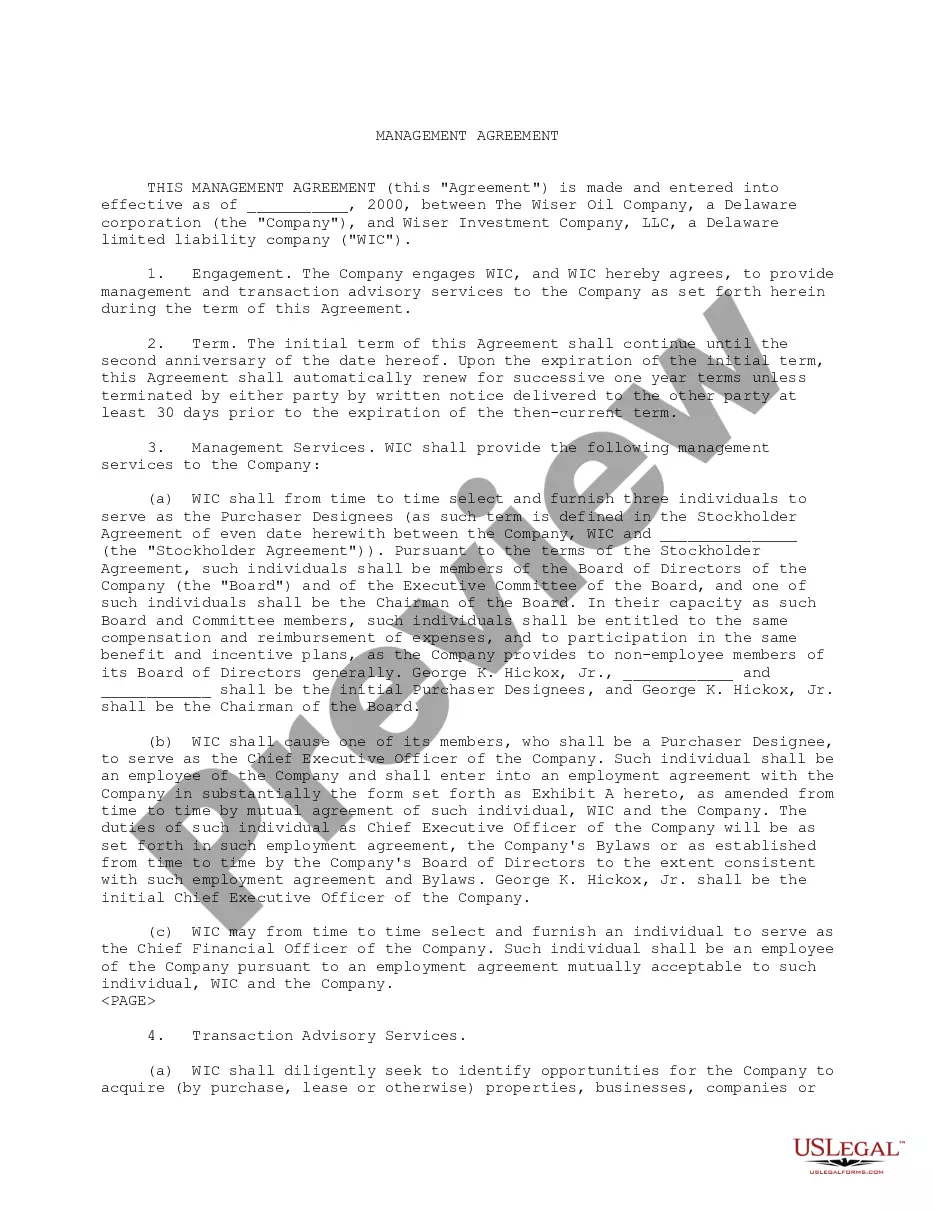
Employer contracts with an independent contractor to provide oil cleanup services as specified and agreed upon in the contract.
Montana Oil Cleanup Services Contract - Self-Employed
State:
Multi-State
Control #:
US-INDC-102
Format:
Word;
Rich Text
Instant download
Description
Free preview
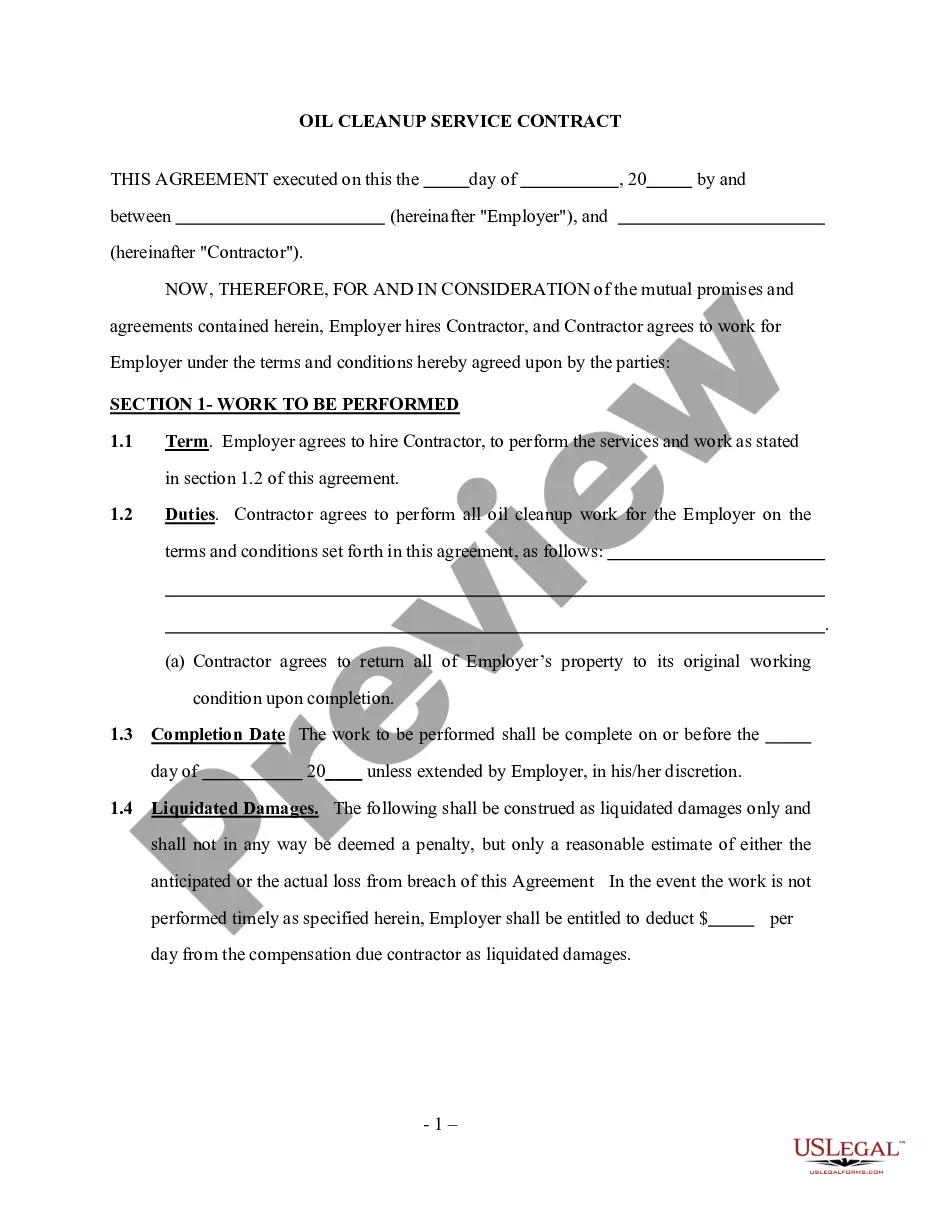
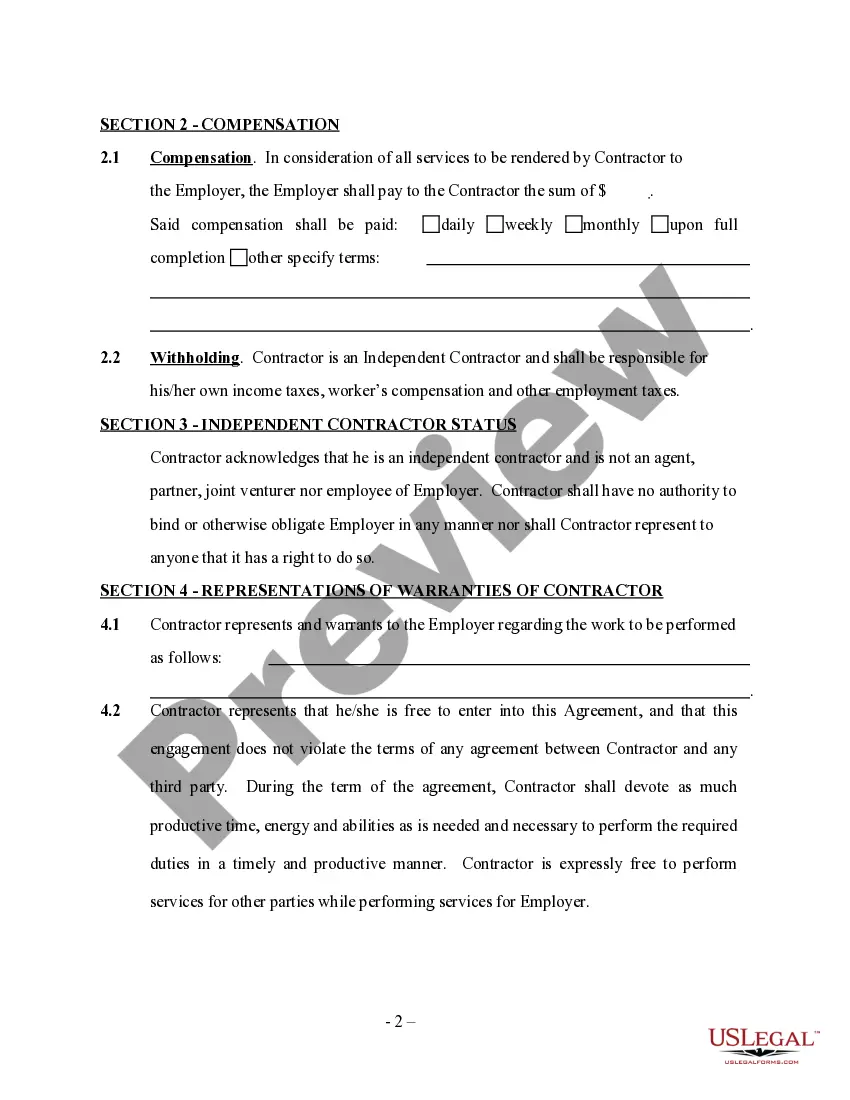
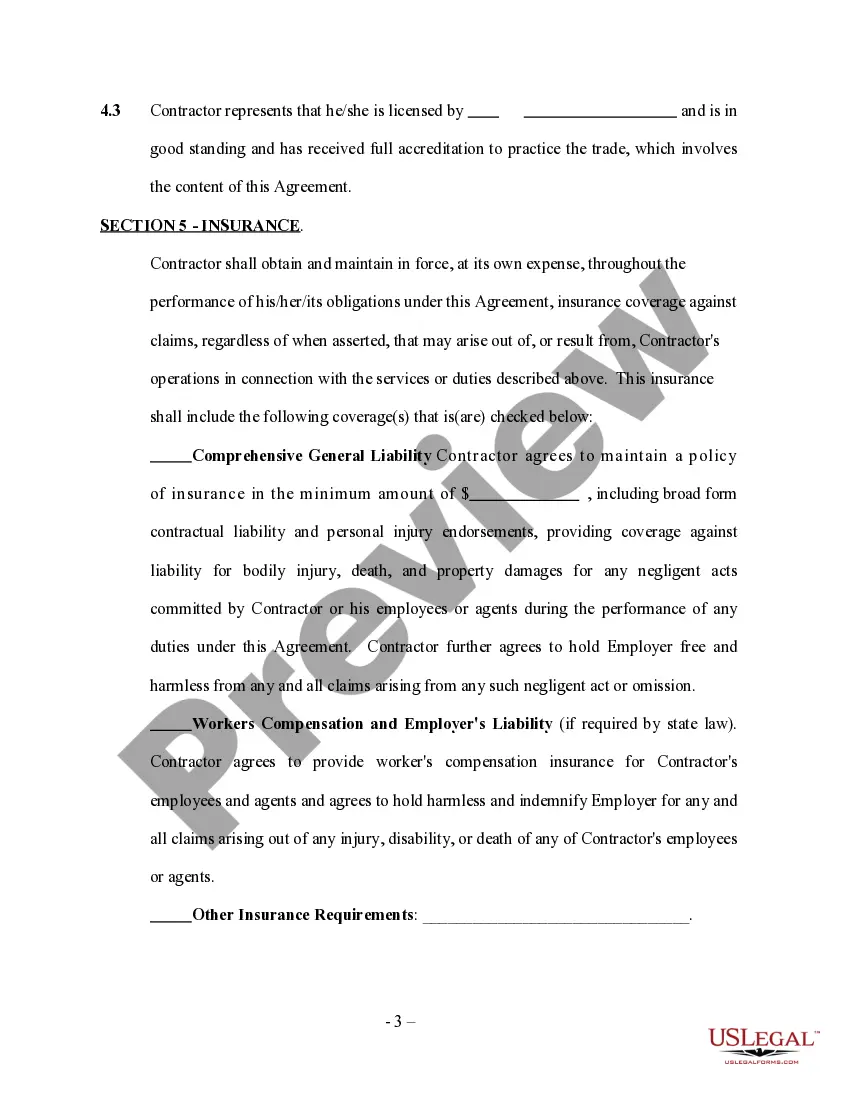
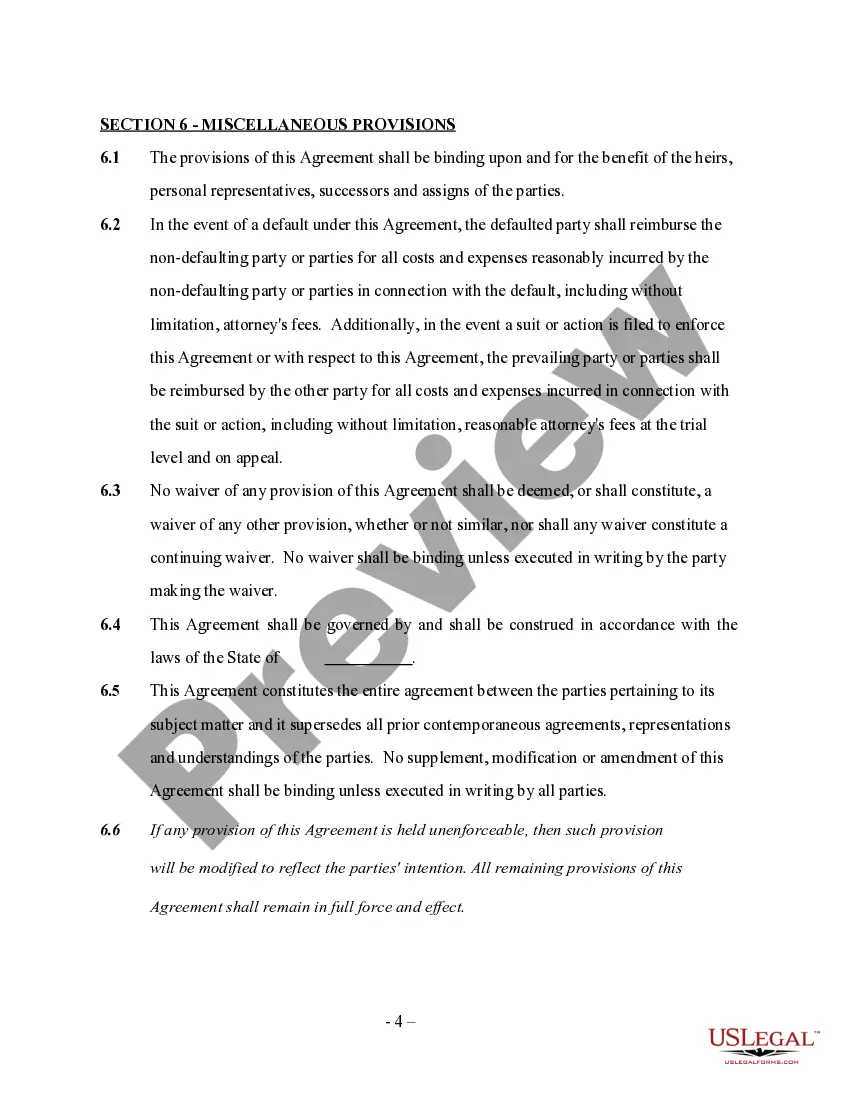
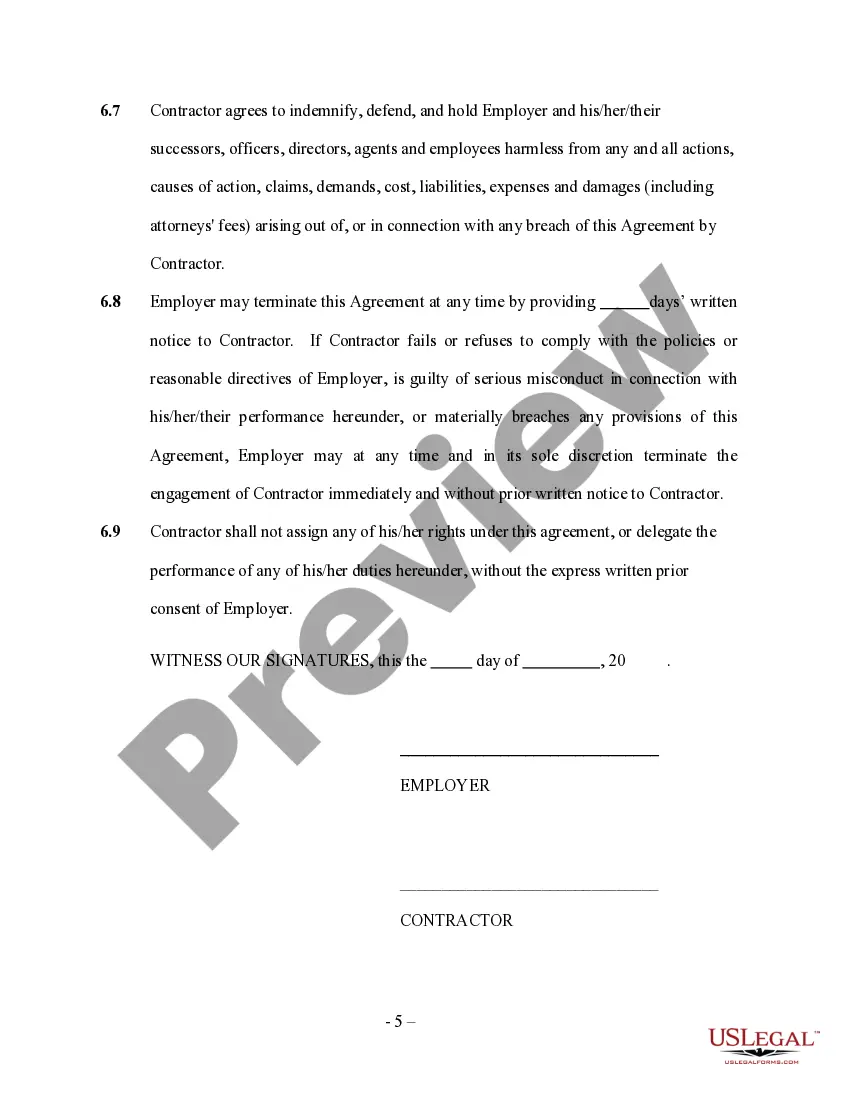
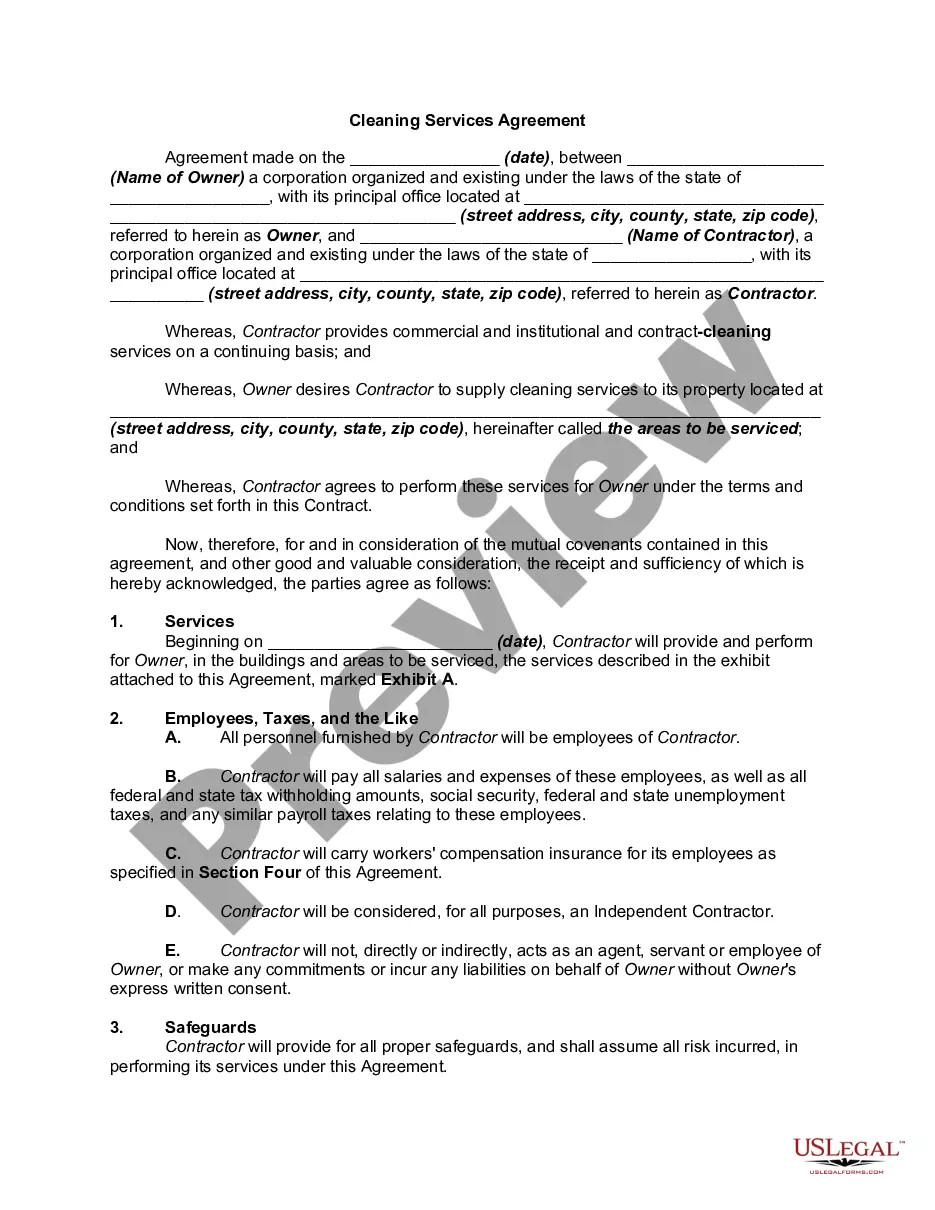
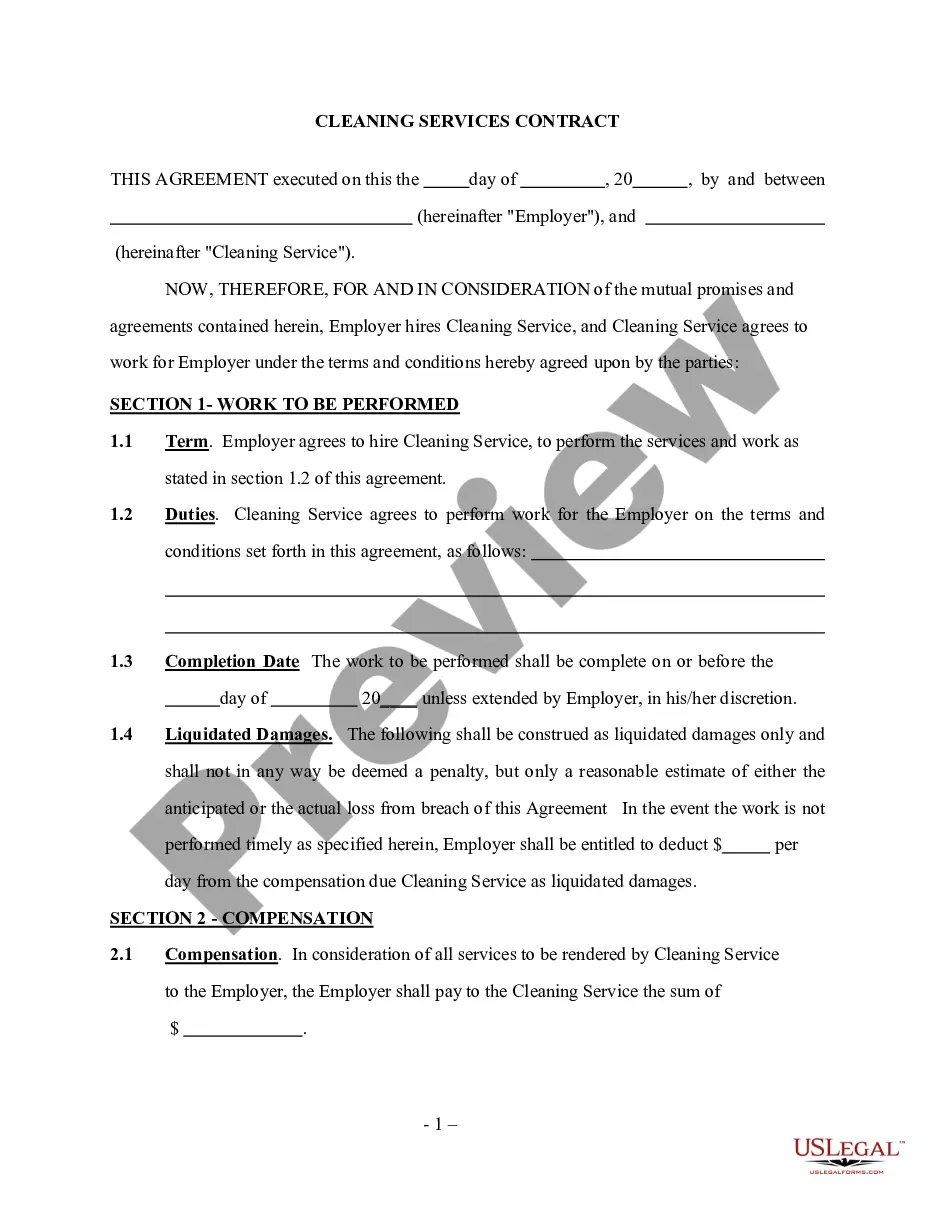
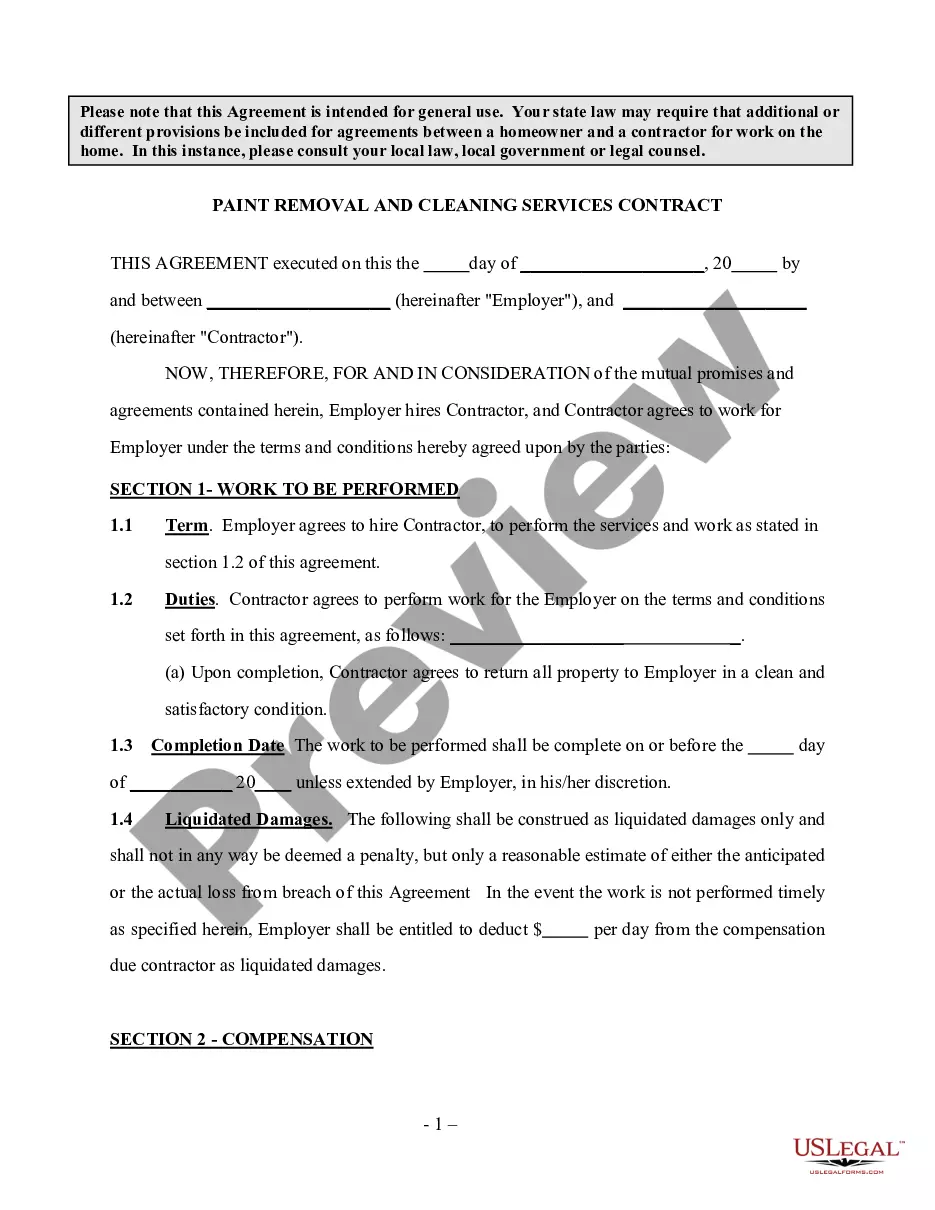






How to fill out Oil Cleanup Services Contract - Self-Employed?
Selecting the appropriate legal document template can be challenging. There are undoubtedly numerous templates accessible online, but how do you find the legal form you require? Utilize the US Legal Forms website. This service provides thousands of templates, including the Montana Oil Cleanup Services Contract - Self-Employed, which you can utilize for business and personal purposes. Each of the documents is reviewed by professionals and complies with federal and state regulations.
If you are already registered, Log In to your account and click the Download button to locate the Montana Oil Cleanup Services Contract - Self-Employed. Use your account to browse through the legal documents you have obtained previously. Navigate to the My documents tab of your account and retrieve another copy of the document you need.
If you are a new user of US Legal Forms, here are simple steps to follow: First, ensure you have selected the correct form for your area/region. You can review the form using the Preview button and read the form description to confirm it is suitable for you. If the form does not satisfy your needs, use the Search area to find the appropriate form. Once you are confident the form is correct, click the Get now button to acquire the form. Choose the pricing plan you prefer and provide the necessary information. Create your account and pay for the order using your PayPal account or credit card. Select the document format and download the legal document template to your device. Finally, complete, edit, print, and sign the acquired Montana Oil Cleanup Services Contract - Self-Employed.
US Legal Forms is the premier repository of legal documents where you can discover a diverse range of template documents. Take advantage of this service to download expertly crafted paperwork that adheres to state requirements.
- Choose compliant legal templates.
- Browse thorough collections.
- Access professional legal assistance.
- Utilize online resources.
- Follow easy registration steps.
- Download and manage documents.
Form popularity
FAQ
To establish yourself as an independent contractor specializing in Montana Oil Cleanup Services, begin by registering your business with the appropriate authorities. You should create a comprehensive Montana Oil Cleanup Services Contract - Self-Employed that outlines your services, payment terms, and client expectations. Additionally, ensure you obtain any necessary licenses or permits required in Montana for oil cleanup activities. Utilizing resources like US Legal Forms can simplify your contract creation process, helping you start your journey confidently.
Becoming an independent contractor in Montana involves several straightforward steps. Begin by crafting a Montana Oil Cleanup Services Contract - Self-Employed that details your services, payment terms, and other critical factors. Next, register your business with the appropriate state authorities and consider obtaining any necessary licenses or permits for your specific industry. Finally, leverage platforms like uslegalforms to access templates and guidance, which can simplify your journey to independence.
Independent contractors in Montana must comply with specific legal requirements to operate smoothly. First, you need to establish a contract that outlines the terms of your work, including payment and deadlines. Additionally, registering as a business with the state is essential, especially for those working under a Montana Oil Cleanup Services Contract - Self-Employed. Finally, ensure you manage your taxes accordingly, as independent contractors are responsible for their own tax obligations.
Starting as an independent contractor involves identifying your specific niche and gathering the required licenses and permits. Focus on building a network and marketing your services, especially if you aim to work with contracts like the Montana Oil Cleanup Services Contract - Self-Employed. Using platforms like uslegalforms can streamline the documentation process, enabling you to concentrate on growing your business.
Choosing between an LLC and working as an independent contractor depends on your business goals and risk tolerance. An LLC can provide personal liability protection, while operating as a self-employed contractor might offer simplicity in tax preparation. Understanding how each option affects the Montana Oil Cleanup Services Contract - Self-Employed can help inform your decision.
Becoming an independent contractor in Montana involves several key steps, starting with choosing a business structure that suits your needs. Register your business with the state and secure necessary licenses and permits, especially if you focus on areas such as the Montana Oil Cleanup Services Contract - Self-Employed. Additionally, consider getting insurance to protect your interests as you establish your independent contracting career.
Yes, Montana requires certain contractors to obtain a license based on the type of work they perform. While some general contractors must be licensed, others, particularly in specialized fields such as oil cleanup, may need a specific permit. Always check local regulations for your specific services under the Montana Oil Cleanup Services Contract - Self-Employed.
To become an independent contractor in Montana, you need a valid business license and, in many cases, a federal tax identification number. Depending on your services, certain permits may be required, particularly for specialized work like the Montana Oil Cleanup Services Contract - Self-Employed. It's beneficial to research specific regulations in your area to ensure compliance.
An independent contractor in Montana is a self-employed individual who provides services under a contract without becoming an employee of a company. This role is relevant for professionals focusing on Montana Oil Cleanup Services Contracts - Self-Employed, as it allows for greater autonomy and potential financial benefits. Contractors operate their own business and have the opportunity to work with multiple clients. Knowing the implications and responsibilities of this status is vital for success in your field.
The primary difference lies in the level of control and independence. An independent contractor operates under a Montana Oil Cleanup Services Contract - Self-Employed, allowing them to work independently with greater control over their methods. Employees, on the other hand, typically follow a company's direction and receive benefits like insurance and retirement plans. Understanding these differences can aid in making informed career choices and compliance with state laws.