Montana Installments Fixed Rate Promissory Note Secured by Commercial Real Estate
Overview of this form
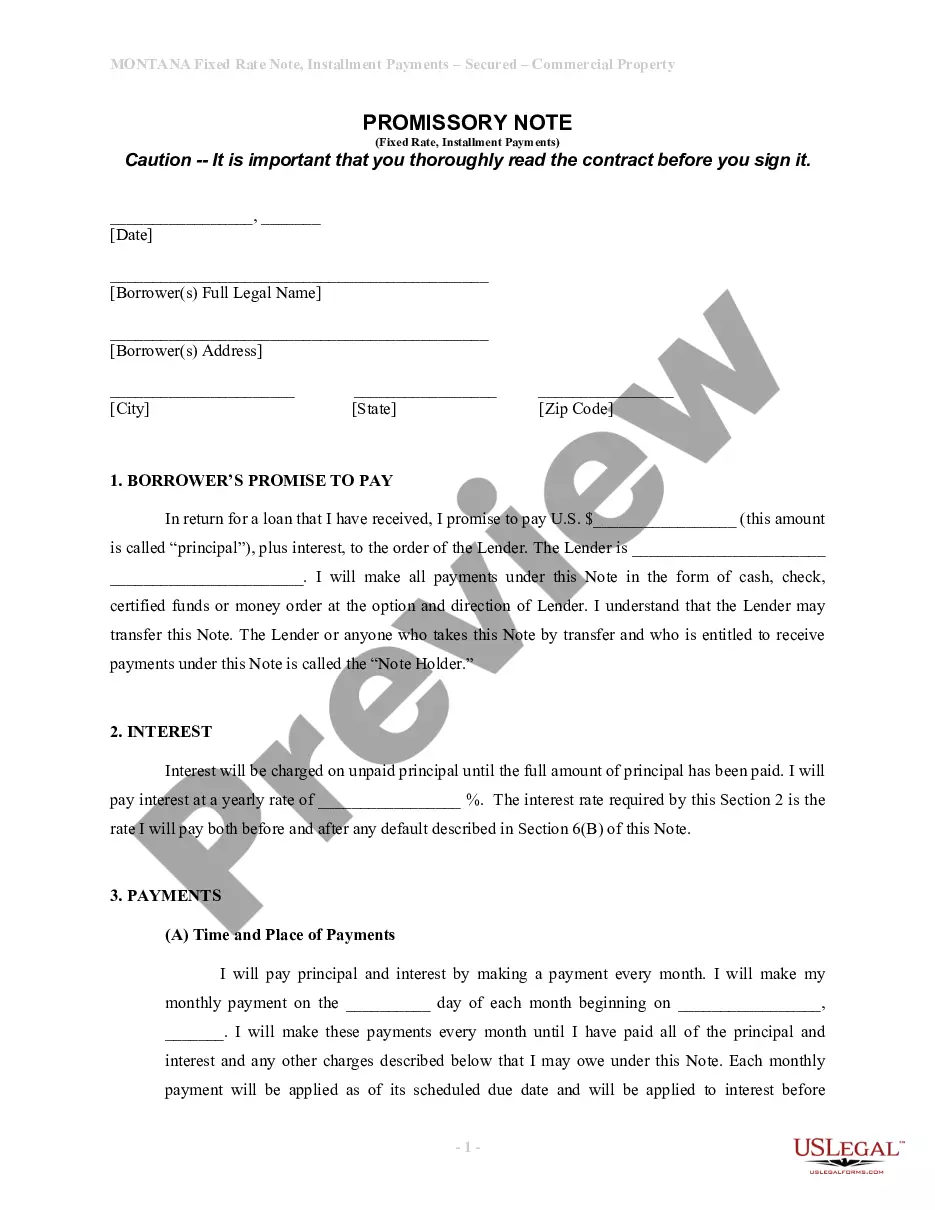
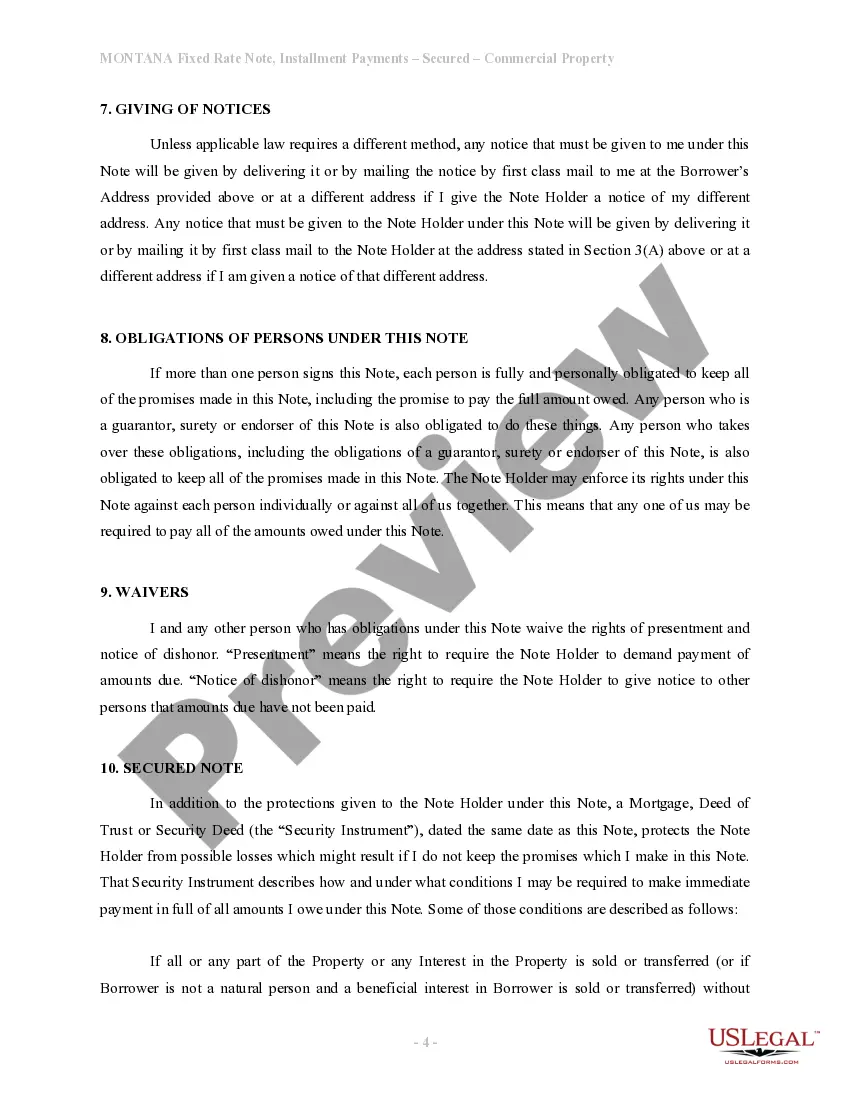
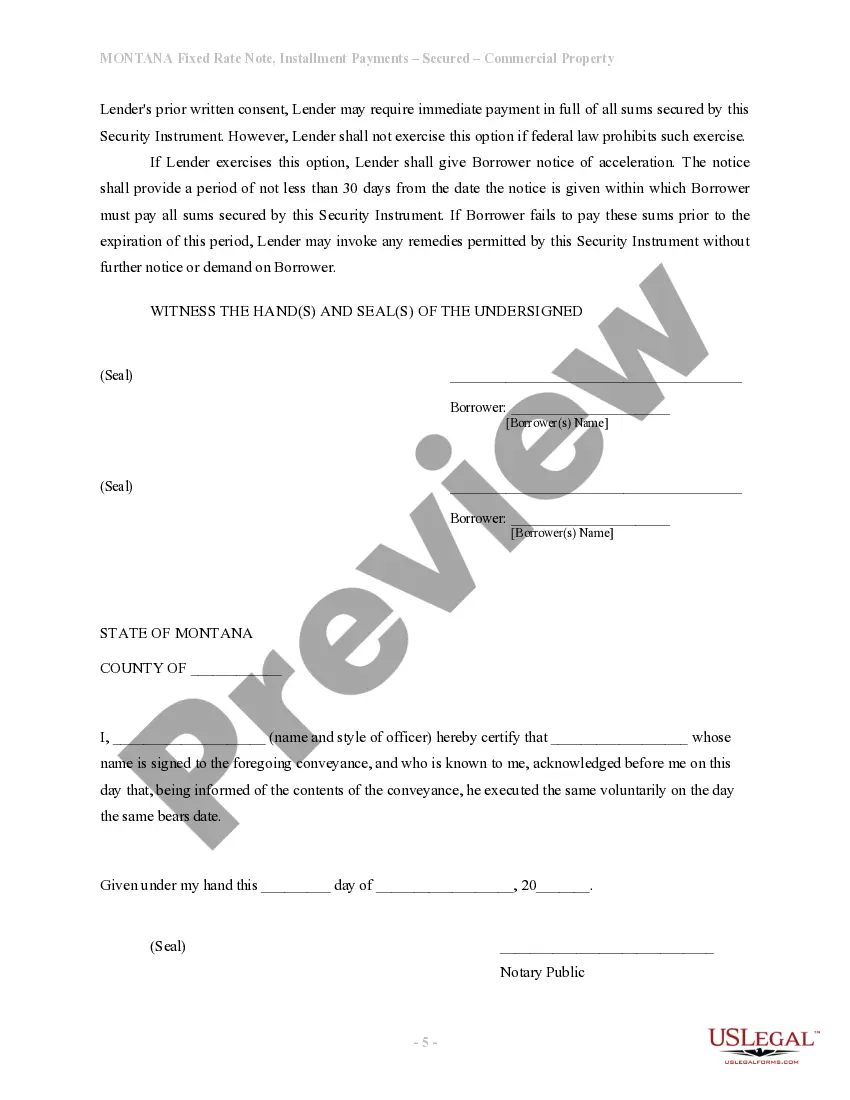
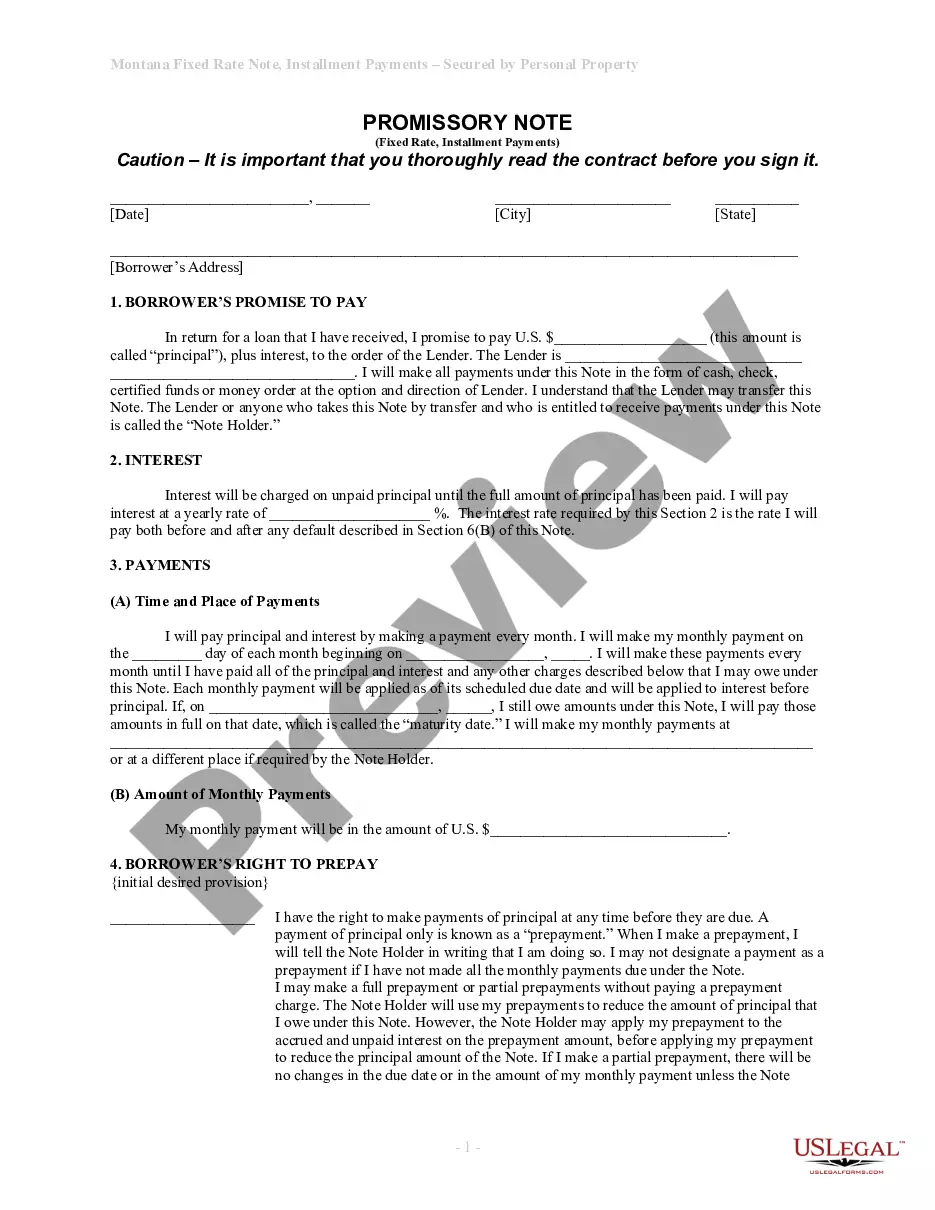
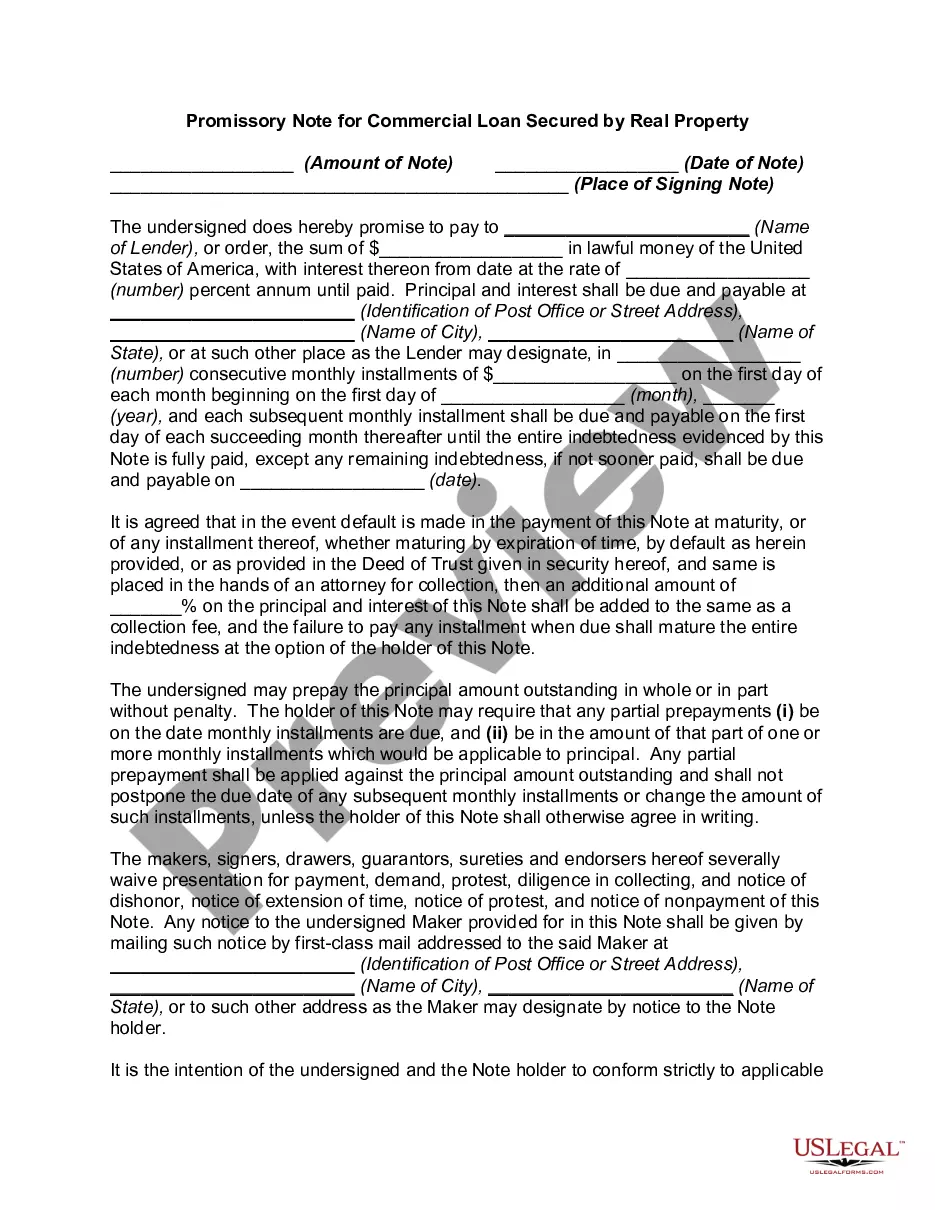
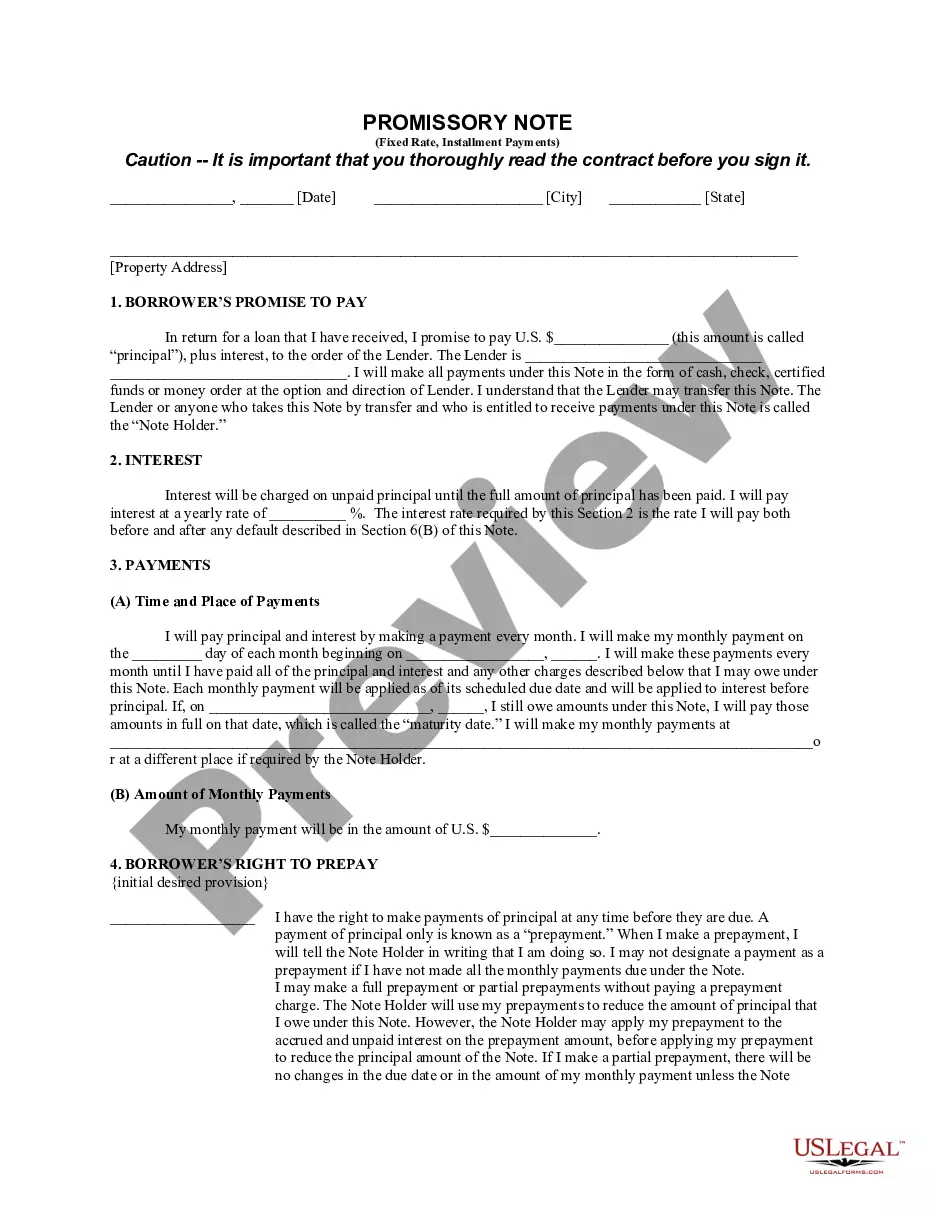
The Montana Installments Fixed Rate Promissory Note Secured by Commercial Real Estate is a legal document that establishes a borrower's promise to repay a loan with fixed installment payments, using commercial property as collateral. This form is distinct from unsecured notes or other types of promissory notes because it requires a separate deed of trust or mortgage on the property being financed.
Form components explained
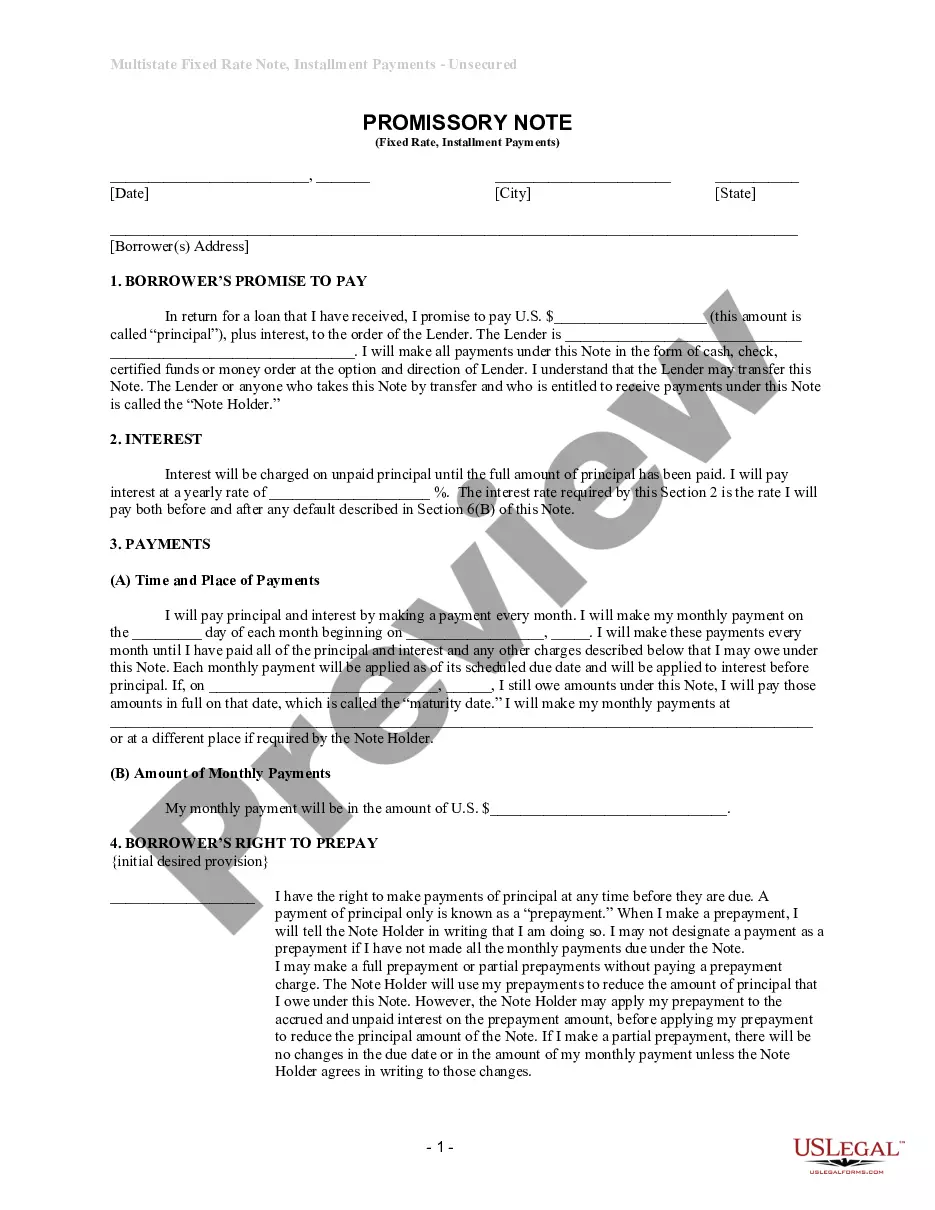
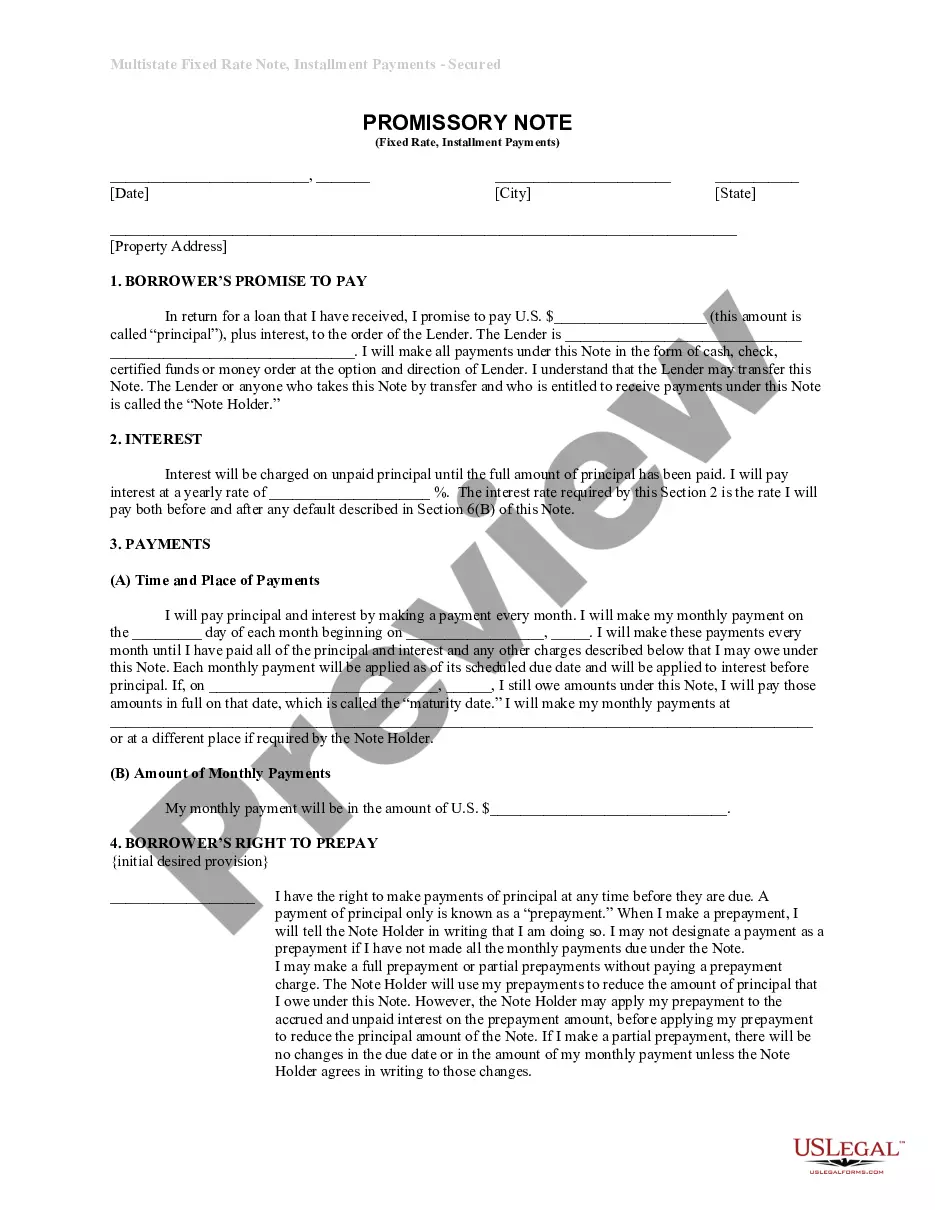
- Borrower's Promise to Pay: Details the borrower's commitment to repay the principal and interest to the lender.
- Interest Rate: Specifies the yearly interest rate applicable until the principal is paid in full.
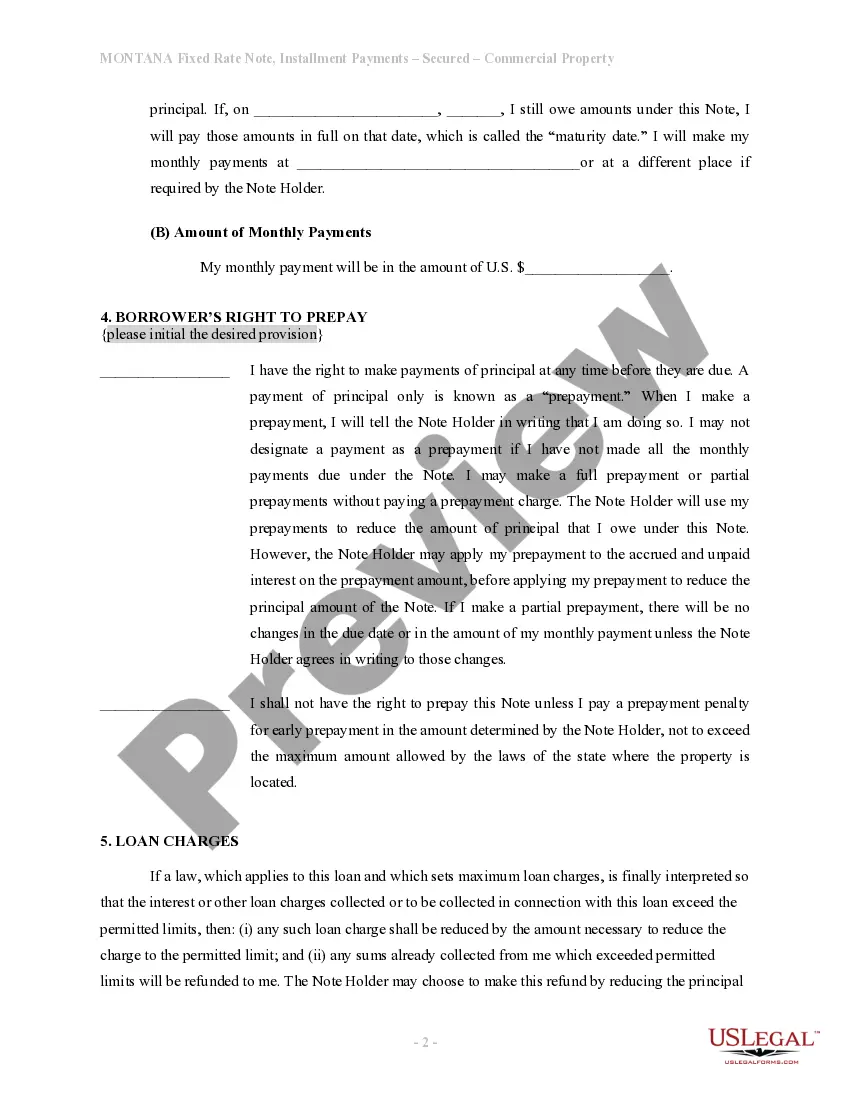
- Payment Schedule: Outlines the monthly payment structure and the maturity date for the loan.
- Right to Prepay: Provides the borrower with options for early repayment, including any associated penalties.
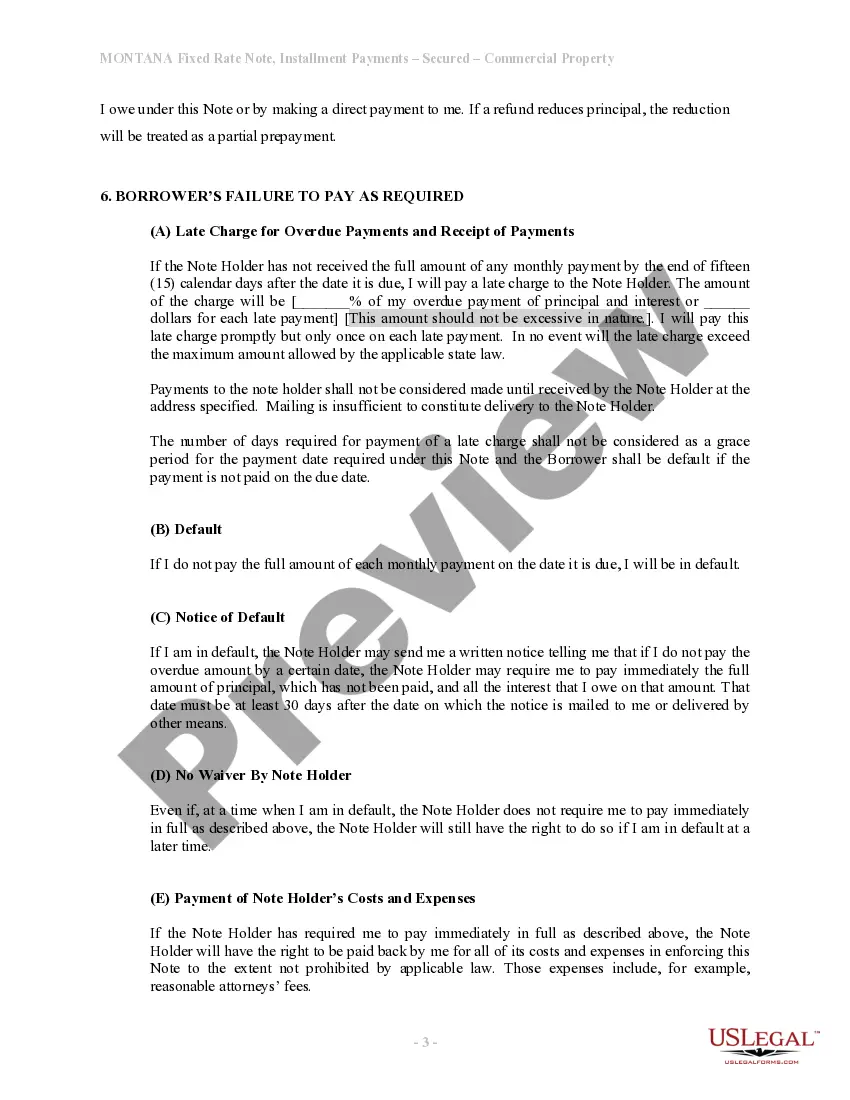
- Default and Notices: Defines what constitutes a default and the notice requirements if the borrower fails to make payments.
- Secured Note Clause: Describes the security interest in the commercial property to protect the lender in case of borrower default.
When to use this document
This form is used when borrowing funds with commercial real estate as collateral. It is ideal for business owners who seek financing for property purchase or development, ensuring that both the lender's and borrower's rights are clearly defined. Use this note when you want to formalize a loan agreement with structured payment terms.
Intended users of this form
- Business owners seeking financing secured by commercial real estate.
- Investors purchasing commercial property that requires a loan.
- Lenders offering loans where property collateral is necessary.
- Individuals or entities looking to establish clear legal obligations regarding repayment.
Instructions for completing this form
- Identify the parties involved: Fill in the names and addresses of both the borrower(s) and the lender.
- Specify the loan amount: Enter the principal amount being borrowed.
- Set the interest rate: Clearly state the annual interest rate applicable to the loan.
- Determine payment details: Indicate the monthly payment amount and the due date.
- Include right to prepay provisions: Decide on terms regarding early repayment, including any penalties.
- Sign and date: Ensure both the borrower(s) and lender sign the document for it to be legally binding.
Is notarization required?
This form does not typically require notarization unless specified by local law. However, notarization may be beneficial to authenticate the agreement, providing additional legal protection for both parties.
Get your form ready online
Our built-in tools help you complete, sign, share, and store your documents in one place.
Make edits, fill in missing information, and update formatting in US Legal Forms—just like you would in MS Word.
Download a copy, print it, send it by email, or mail it via USPS—whatever works best for your next step.
Sign and collect signatures with our SignNow integration. Send to multiple recipients, set reminders, and more. Go Premium to unlock E-Sign.
If this form requires notarization, complete it online through a secure video call—no need to meet a notary in person or wait for an appointment.
We protect your documents and personal data by following strict security and privacy standards.

Make edits, fill in missing information, and update formatting in US Legal Forms—just like you would in MS Word.

Download a copy, print it, send it by email, or mail it via USPS—whatever works best for your next step.

Sign and collect signatures with our SignNow integration. Send to multiple recipients, set reminders, and more. Go Premium to unlock E-Sign.

If this form requires notarization, complete it online through a secure video call—no need to meet a notary in person or wait for an appointment.

We protect your documents and personal data by following strict security and privacy standards.
Common mistakes
- Failing to clearly state the interest rate or payment schedule.
- Not providing accurate names and addresses of all parties involved.
- Neglecting to sign the document, leaving it unenforceable.
- Omitting information on the right to prepay the loan and associated penalties.
Benefits of completing this form online
- Convenient access to legal documentation without the need for in-person meetings.
- Edit and customize the form to meet your specific financing needs.
- Reliable templates drafted by licensed attorneys to ensure compliance with state laws.
Legal use & context
- This note serves as a binding agreement between borrower and lender.
- It is enforceable in court under Montana law if completed correctly.
- Understand that defaulting on this note can lead to legal action and potential foreclosure on the secured property.
Main things to remember
- The form secures a loan with commercial property, establishing clear repayment terms.
- Proper execution is crucial for enforceability and protecting the lender's rights.
- Be aware of state-specific laws that may impact the loan terms.
Looking for another form?
Form popularity
FAQ
Step 1 Agree to Terms. Step 2 Run a Credit Report. Step 3 Security and Co-Signer(s) Step 4 Writing the Promissory Note. Step 5 Paying Back the Borrowed Money. Calculating Total Interest Owed. Calculating the Final Payment Amount. Calculating the Monthly Payment Amount.
Writing the Promissory Note Terms You can use a template or create a promissory note online. But before you begin, you'll need to gather some information and make decisions about the way the loan will be structured. First, you'll need the names and addresses of both the lender (or "payee") and the borrower.
Full names of parties (borrower and lender) Repayment amount (principal and interest) Payment plan. Consequences of non-payment (default and collection) Notarization (if necessary) Other common details.
Navigate to the website: www.studentloans.gov. Click "Log In." Enter your FSA ID and Password. Click "Complete Master Promissory Note." Select the appropriate loan type. Enter Your Personal Information.
A simple promissory note might be for a lump sum repayment on a certain date. For example, you lend your friend $1,000 and he agrees to repay you by December 1. The full amount is due on that date, and there is no payment schedule involved.
Write the date of the writing of the promissory note at the top of the page. Write the amount of the note. Describe the note terms. Write the interest rate. State if the note is secured or unsecured. Include the names of both the lender and the borrower on the note, indicating which person is which.
The lender holds the promissory note while the loan is being repaid, then the note is marked as paid and returned to the borrower when the loan is satisfied. Promissory notes aren't the same as mortgages, but the two often go hand in hand when someone is buying a home.
In order for a promissory note to be valid, both the lender and the borrower must sign the documentation. If you are a co-signer for the loan, you are required to sign the promissory note. Being a co-signer requires you to repay the loan amount in the instance that the borrower defaults on payment.