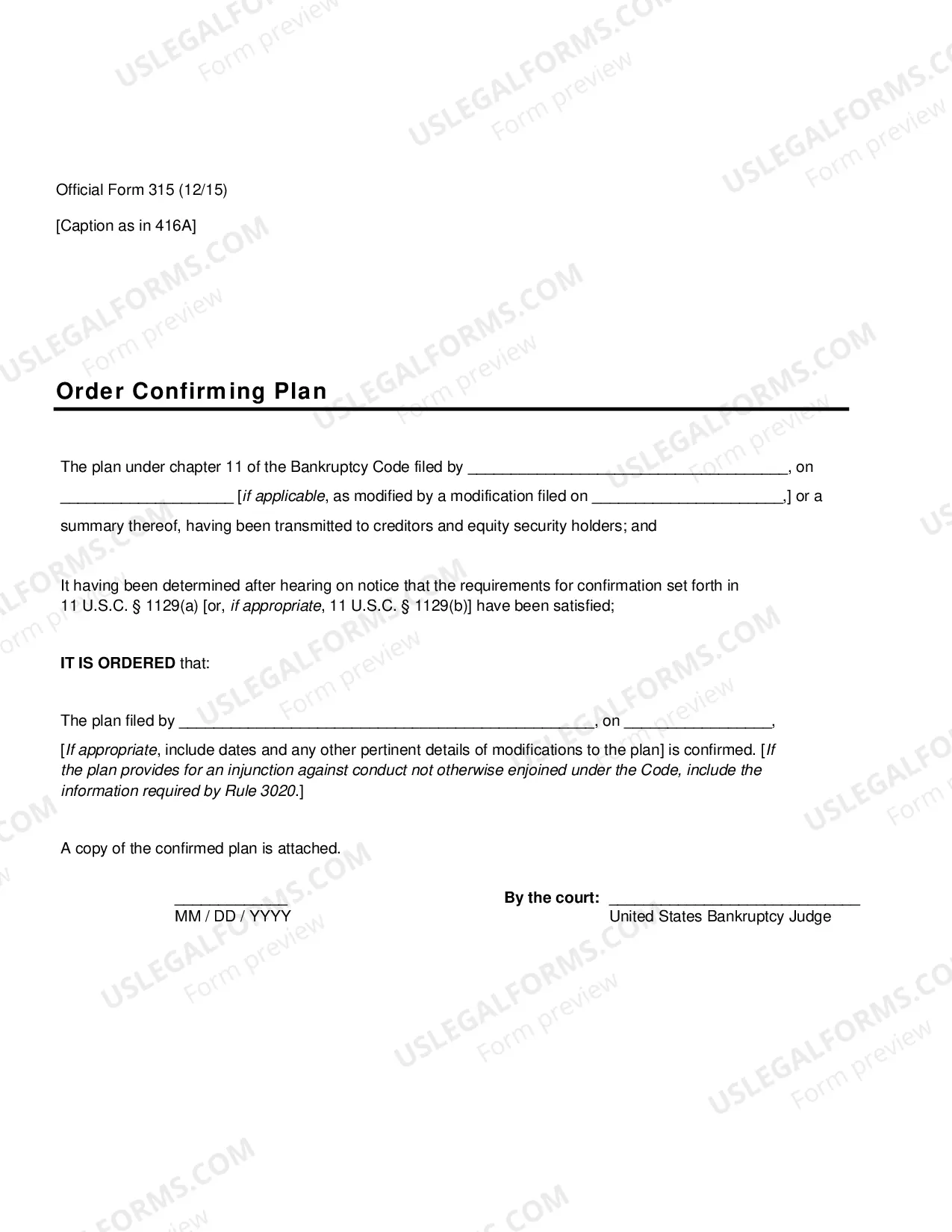
Indiana Verified Motion for Default Judgment And Certificate of Default Combined With Non-Military Affidavit
Understanding this form
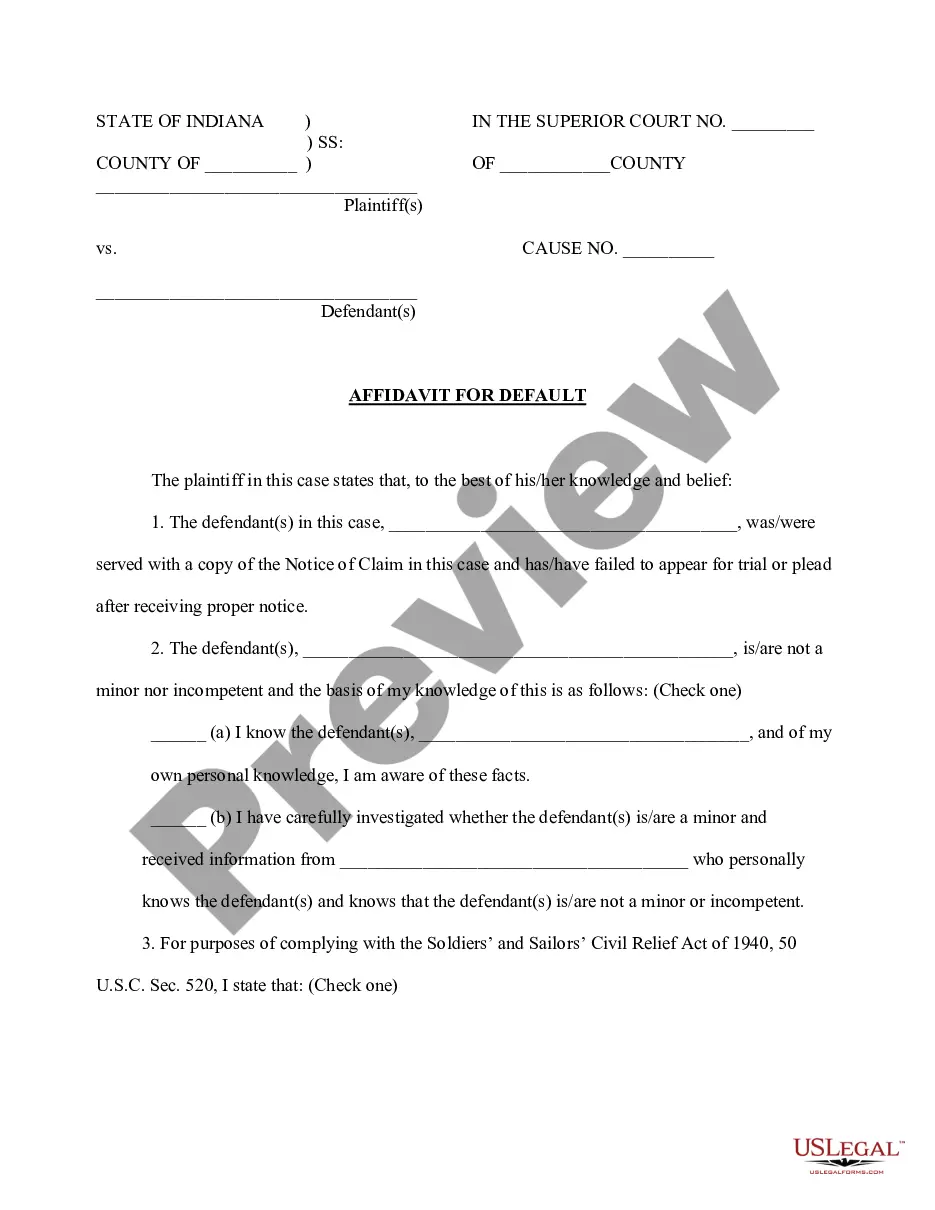
The Verified Motion for Default Judgment and Certificate of Default Combined with Non-Military Affidavit is a legal document used in Indiana courts. This form allows a plaintiff to request a default judgment against a defendant who has not responded to a legal complaint. This document confirms that the defendant is not actively participating in the legal process and ensures compliance with the Servicemembers Civil Relief Act, which protects military personnel from default judgments while they are on active duty. It differs from other motions in that it includes specific verifications regarding the military status of the defendant.
Form components explained
- Identification of the parties involved: includes names and roles of the plaintiff and defendant.
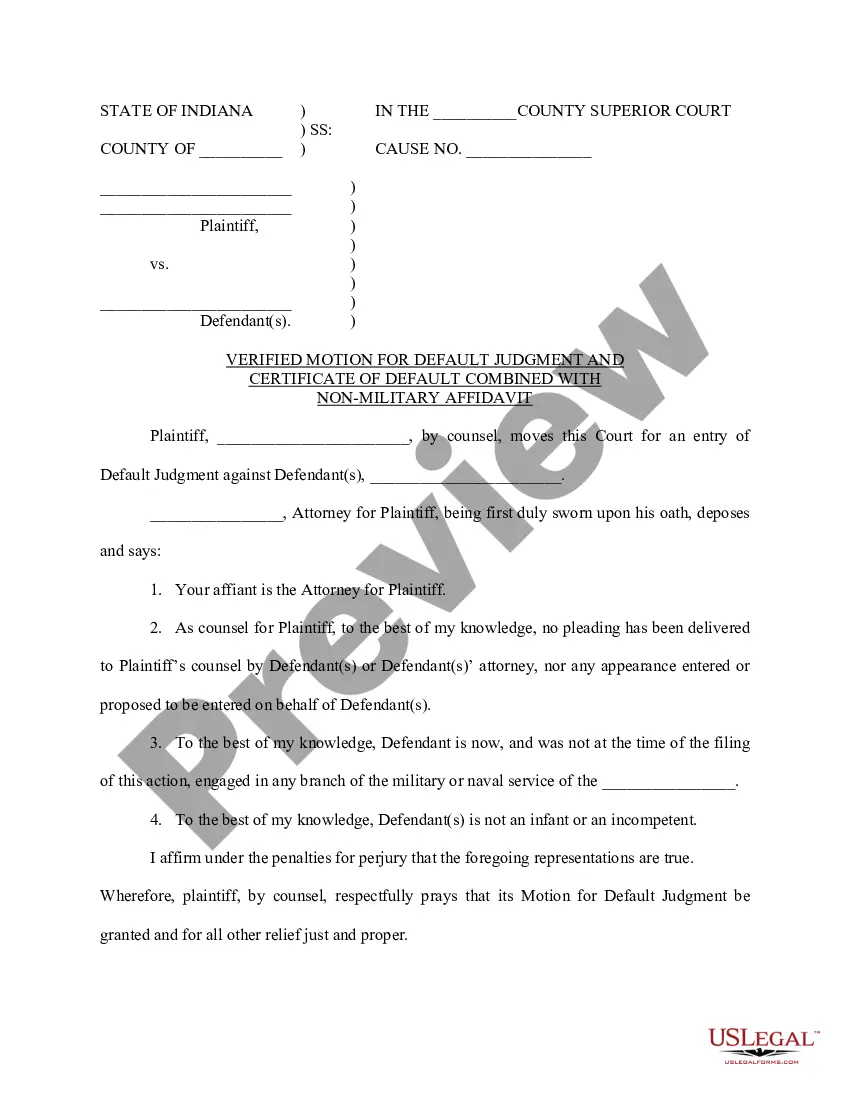
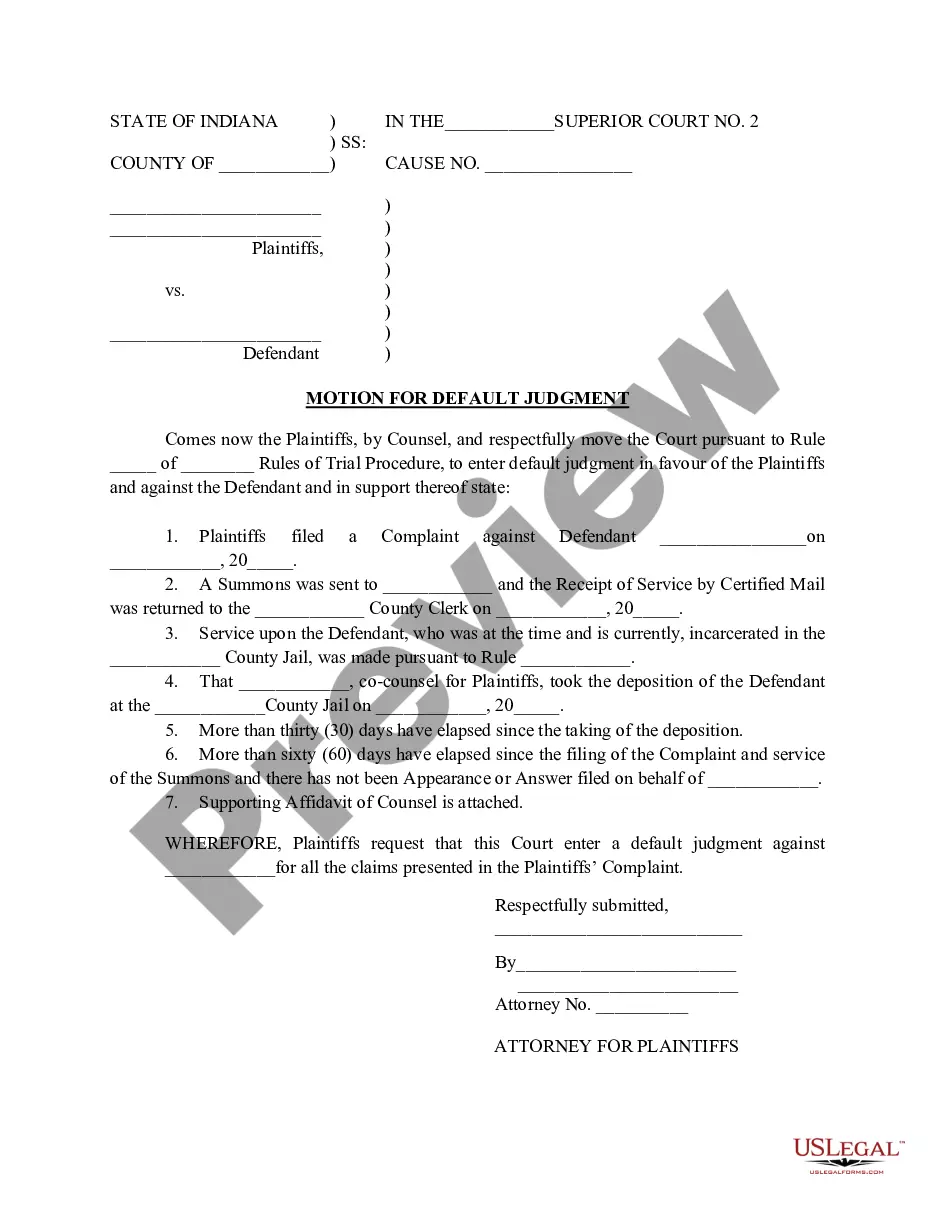
- Motion request: a clear statement from the plaintiff requesting the court to enter a default judgment.
- Verification of military status: assurances that the defendant is not in military service, protecting their rights.
- Attestation from the plaintiff's attorney: a declaration confirming facts are accurate under penalty of perjury.
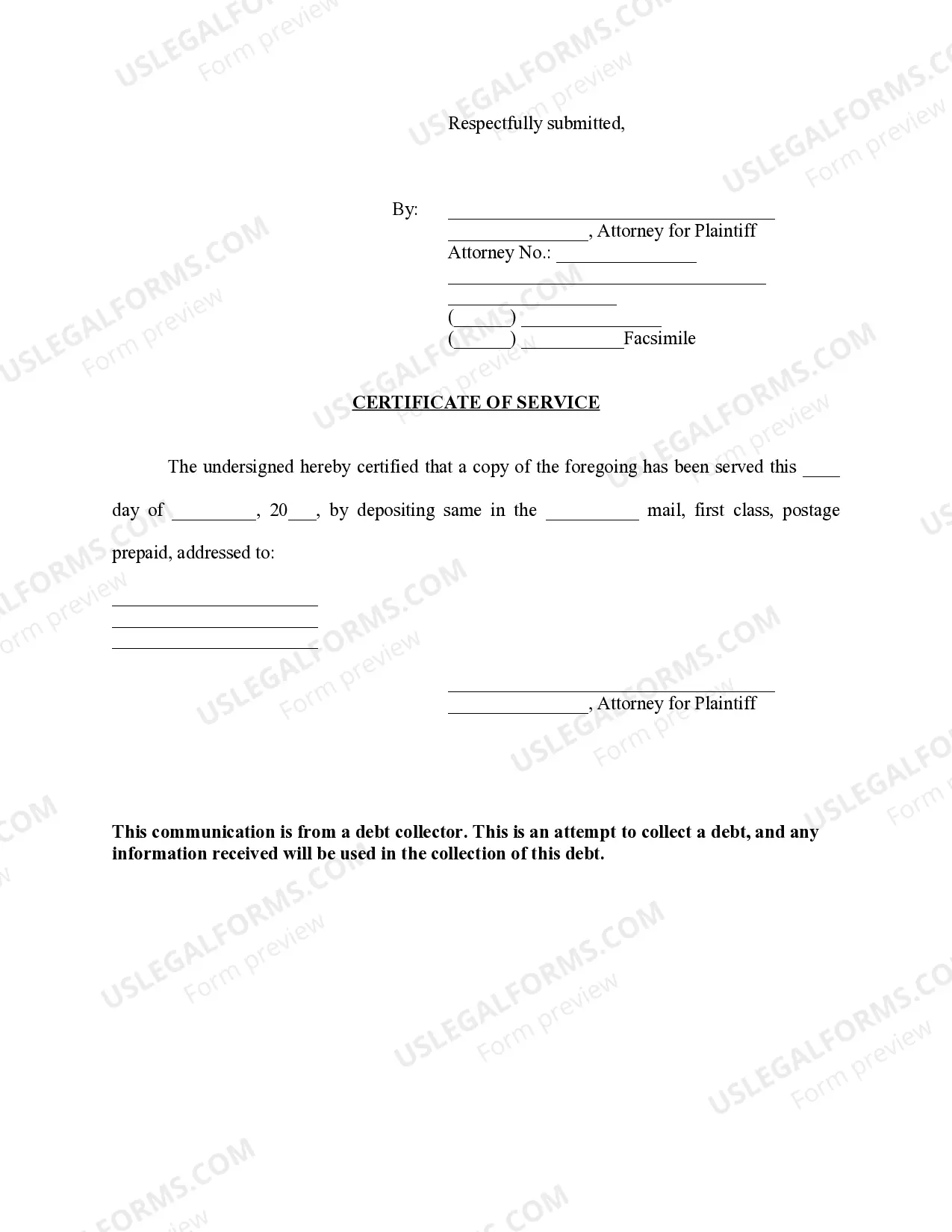
- Certificate of service: a confirmation that the required documents were sent to the defendant or their attorney.
When to use this document
This form is used when a plaintiff has filed a lawsuit, but the defendant has failed to respond or appear in court. It is particularly relevant in cases where the plaintiff believes the defendant will not contest the claims. This motion is applicable when the plaintiff needs to secure a default judgment to proceed with the case, such as in debt collection or breach of contract scenarios.
Intended users of this form
- Individuals or businesses acting as plaintiffs in civil litigation where they are pursuing a default judgment.
- Attorneys representing plaintiffs in cases against defendants who have not responded to legal actions.
- Any party seeking to confirm that a defendant is not in military service while pursuing a judgment.
Instructions for completing this form
- Fill in the names of the plaintiff and defendant.
- Include the case number and the court's name.
- Complete the verification sections, confirming the military status of the defendant and other relevant information.
- Sign the document as the plaintiff's attorney, including your attorney number and contact information.
- Ensure a certificate of service is filled out, confirming that a copy of the motion has been sent to the defendant.
Does this document require notarization?
This form does not typically require notarization unless specified by local law. However, always check specific court requirements for additional verification needs.
Get your form ready online
Our built-in tools help you complete, sign, share, and store your documents in one place.
Make edits, fill in missing information, and update formatting in US Legal Forms—just like you would in MS Word.
Download a copy, print it, send it by email, or mail it via USPS—whatever works best for your next step.
Sign and collect signatures with our SignNow integration. Send to multiple recipients, set reminders, and more. Go Premium to unlock E-Sign.
If this form requires notarization, complete it online through a secure video call—no need to meet a notary in person or wait for an appointment.
We protect your documents and personal data by following strict security and privacy standards.

Make edits, fill in missing information, and update formatting in US Legal Forms—just like you would in MS Word.

Download a copy, print it, send it by email, or mail it via USPS—whatever works best for your next step.

Sign and collect signatures with our SignNow integration. Send to multiple recipients, set reminders, and more. Go Premium to unlock E-Sign.

If this form requires notarization, complete it online through a secure video call—no need to meet a notary in person or wait for an appointment.

We protect your documents and personal data by following strict security and privacy standards.
Typical mistakes to avoid
- Failing to provide accurate information regarding the military status of the defendant.
- Neglecting to include the correct case number or court name.
- Omitting signatures or necessary contact information from the attorney.
- Forgetting to serve the motion properly and not including a certificate of service.
Why complete this form online
- Convenience: easily downloadable and accessible from anywhere at any time.
- Editability: forms can be filled out at your own pace before submission.
- Reliability: professionally drafted by licensed attorneys, ensuring legal compliance.
Looking for another form?

Form popularity
FAQ
A motion for default judgment is a formal request submitted to the court when one party fails to respond to a lawsuit. It essentially asks the court to rule in favor of the responding party due to the other party's inaction. The Indiana Verified Motion for Default Judgment And Certificate of Default Combined With Non-Military Affidavit is the specific filing that facilitates this process, allowing the court to grant relief based on the evidence provided.
Setting aside a default judgment in Indiana requires proving specific elements to the court. You need to show a reasonable excuse for failing to respond, present a meritorious defense, and file within a reasonable time after discovering the judgment. Understanding this process is crucial, and using the Indiana Verified Motion for Default Judgment And Certificate of Default Combined With Non-Military Affidavit can help clarify your situation.
To collect on a judgment in Indiana, start by obtaining a copy of the judgment from the court. You can then use various collection methods such as wage garnishment, bank levies, or placing liens on property. Utilizing the Indiana Verified Motion for Default Judgment And Certificate of Default Combined With Non-Military Affidavit can make the process easier, as it helps solidify your position as the judgment creditor.
A default judgment in Indiana occurs when one party does not respond to a lawsuit. This allows the court to rule in favor of the other party without further proceedings. The Indiana Verified Motion for Default Judgment And Certificate of Default Combined With Non-Military Affidavit is the key document to seek this judgment, demonstrating the lack of response from the other party.